INTERVIEW: Kevin Renick

27 01 2010

If you have read this blog with any sort of frequency over the past month, you will undoubtedly know that I have something resembling an obsession with the movie “Up in the Air.”  So when I found out that Kevin Renick, the singer of the film’s titular song, had discovered my blog and posted a link on his website to me, saying “lots and lots about UP IN THE AIR can be found at this info site,” I was ecstatic.

I perused around his site and found an e-mail address for the singer.  An idea pulsed through my head: why not humbly ask for an interview?  Much to my surprise, Renick happily agreed.  He couldn’t have been more kind throughout the process, offering to conduct the interview in whatever manner was easiest for me.  We opted for e-mail because it allowed more time for thoughtful and more eloquent answers.

We talked plenty about “Up in the Air” – the movie and his song – and also about what lies ahead for him in the music industry.  Renick’s words were incredibly profound.  Despite the spotlight that has been shined on him from this burst of fame, he remains wholeheartedly humble.  For those who do not know Renick’s story, he gave a demo tape of his song to Jason Reitman at a lecture.  The director loved the song enough to include it in the movie “Up in the Air.”  According to Renick, “Jason liked the ‘D.I.Y. aesthetic’ of my song….[and he stated that] it gave an “authentic voice” to all the people in the U.S. who’ve lost their job and their direction.”

Read the rest of this entry »


LISTFUL THINKING: Ten Under – Best of 2009

1 01 2010

It is hard to nail all the great movies of a year in ten slots.  So, in order to fully honor 2009 in movies, I have also concocted a list that would be the equivalent of my #11-20.  I call it “Ten Under.”  When you someone is ten under in golf, it’s a great thing.  So rather than focusing on the fact that these movies are not in the top 10, I want to celebrate their merit in a positive way.

Note that rather than ranking them, I will present them in alphabetical order.

“ADAM”

Tender but never maudlin, “Adam” is unparalleled in the number of “aww”s elicited.  Hugh Dancy’s affectionate performance as the titular character with Asperger’s syndrome is the crucial element to the movie’s success, and you can feel the care put into every twitch and line.  It is sure to warm your heart, if not melt it entirely.

“AVATAR”

James Cameron’s “Avatar” will be remembered not just as a movie but as a watershed in the history of cinema.  The movie’s astounding effects are enough to make you forget some of the flaws in the script, and they really do have the power to create a new world.  Cameron goes all out to make sure Pandora is not just brought to life, but also flourishes.  How quickly can he get to work on the sequel?

“THE COVE”

“The Cove” is a powerful documentary that alerts us to a crisis we need to correct – and it is completely void of Al Gore lecturing.  While systematically running down everything wrong with the slaughter of dolphins in Japan, the filmmakers show us how they verified the massacre.  This never feels like a documentary because they wisely set it up like a crime/heist film, and the excitement builds up until it breaks and we feel nothing but a fervent urge to aid their cause.

“DISTRICT 9”

Thank heavens for viral marketing because without it, I would never have seen “District 9,” which appeals and amazes on all fronts.  Smarts?  An elaborate Apartheid metaphor and undertones of racism, check.  Acting?  An incredibly physically and emotionally committed performance by South African actor Sharlto Copley, check.  Visuals?  Aliens that make James Cameron’s output look like the Smurfs putting on a production of “Cats,” check.  There is no doubt about it, “District 9” has the goods and delivers.

“DRAG ME TO HELL”

For me, “Drag Me to Hell” was the year’s biggest surprise.  I’m not usually the horror movie type, and I generally consider mixing horror and comedy about as toxic as drinking and driving.  But Sam Raimi’s movie made me reexamine my policy.  “Drag Me to Hell” is scary good, frightening and hilarious often at the same time.  Featuring electrifying action scenes and some purposefully atrocious one-liners, it’s a movie that keeps getting better the more I think about it.

“FANTASTIC MR. FOX”

Who would have thought that Wes Anderson’s humor would transfer like carbon paper to animation?  Anyone who instantly recognized that “Fantastic Mr. Fox” contained the same spirit as previous projects surely did.  It’s the same undeniable, albeit a little peculiar, fun that Anderson has sharpened with each movie.  There’s never a dull moment here, and whether it’s filled with clever wordplay or amusing animation tricks, this stop-motion joy delights at soaring levels.

“FUNNY PEOPLE”

I’ll admit to not being entirely won over by Judd Apatow’s “Funny People” at first sight.  But I think “Up in the Air” shed some light on the director’s aim with the movie.  I have concluded that it fell victim to my incredibly high-expectations after “Knocked Up” rocked my world.  “Funny People” tones down the laughs and amps up the deep thoughts.  Adam Sandler’s comedian George Simmons is absolutely miserable in his isolation, and the news that his life will end soon only makes him realize how alone he actually is.  Over the course of the movie, which never feels as long as it actually is, Simmons tries to forge a meaningful relationship with a green comic played by Seth Rogen.  It doesn’t quite have Jason Reitman’s insight, but “Funny People” is an impressive rumination on similar themes.

“I LOVE YOU, MAN”

If a bromantic comedy genre ever catches on, “I Love You, Man” will be its “The Great Train Robbery.”  The movie follows the relationship between Peter Klaven (Paul Rudd) and Sidney Fife (Jason Segel) that forms after the former’s wife worries about him not having any guy friends.  Their adventures are dastardly hilarious, but the movie’s unforeseen strength is its brain.  “I Love You, Man” is a brilliant satire of how we see relationships, executed by the juxtaposition of a romantic partnership and a casual friendship.  Slowly but surely, the functions of both of Peter’s relationships begin to switch.  If we weren’t aware of the context of Sidney and Peter’s male camaraderie, would we see them as lovers?  Would the casual observer?  Look deeper into “I Love You, Man” because it is the most understatedly brilliant movie of the year.  Slappin da bass?

“THE PRINCESS AND THE FROG”

The hand-drawn animation glory days are revived with great verve through “The Princess and the Frog.”  There is plenty to evoke these classics of my childhood, but even more is new – and no, I’m not talking about the race of the princess.  The movie is as lively as its New Orleans setting, with some larger-than-life characters that amuse and enchant.  Randy Newman’s jazzy score is a vivacious addition to a vibrant movie, and the songs aren’t too shabby either.  With Anika Noni Rose’s silky smooth voice behind the tunes, “The Princess and the Frog” is a high-spirited time as only Disney can give us.

“WHERE THE WILD THINGS ARE”

Spike Jonze’s adaptation of the classic children’s book “Where the Wild Things Are” earned plenty of enemies for its rather despondent outlook while aiming to entertain the youngsters.  It packs plenty of rollicking fun for that demographic, but the movie definitely means more to those who can look back on childhood for what it really is.  While there is plenty of bliss in this time, our youthful years are also filled with questioning and struggles.  Jonze gets the big picture, and his movie provides one of the few honest portrayals of childhood in cinema.  Stark and grim as it may be, we can’t argue with it.



LISTFUL THINKING: The Top 10 Movies of 2009

31 12 2009

As strange as it is to say, 2009 is over.

As the bookend of the first decade of the new millennium, this year has come to represent the changing scope of the 2000s.  Technology, as it always seems to, has reached soaring heights.  But as the man who created the most revolutionary of these advancements this year, James Cameron, said in an interview with Newsweek, “Filmmaking is not going to ever fundamentally change. It’s about storytelling. It’s about humans playing humans. It’s about close-ups of actors. It’s about those actors somehow saying the words and playing the moment in a way that gets in contact with the audience’s hearts. I don’t think that changes.”

With that in mind, I celebrate 2009 for all the incredible stories that enchanted me as only cinema can with my top 10 list.

Read the rest of this entry »


FEATURE: Define “Best Picture”

14 09 2009

For those of you not familiar with the movie industry, several high-profile film festivals (Toronto, Telluride, Venice) have occurred over the past week, inciting much talk about the upcoming onslaught of movies that will be highly considered for Academy Awards.  For those who read the factoids, it is hardly a secret that this season also brings a rush of euphoria for me.  I will keep you posted with trailers and buzz, and I will also soon be posting early predictions for nominees.  But as kind of a warm-up for what is to come, I wanted to give my answer to the question an age-old question: how do you define “Best Picture”?  What you will read below is an English paper that I wrote last year for a compare and contrast essay, mainly what critics think and what audiences think about the best movie of the year.

One Sunday in February or March every year, all the focus of popular culture turns to the Kodak Theater in Los Angeles, California, for the Academy Awards.  The glitz and glamour dominates the red carpet, yet the two most important people glide down the red carpet almost inconspicuously. Cameras do not flash in their face; people do not ogle at their outfits or speculate about whether or not they will end up in the tabloids; Ryan Seacrest from E! might interview them just for kicks.  Although just accountants, these two people hold a briefcase filled with twenty-four envelopes that will change the lives of many people.  Millions of moviegoers across the world watch the ceremony to find out the names inside the envelopes, but they stay tuned in to hear the presenter call out a movie, not a name.  They want to see what over 5,810 people working in the movie industry voted as the Best Picture.  However, for many moviegoers across America, their opinions do not match the Academy’s. Many of them have never heard of some of the nominated movies; some of the movies might not have played in their town.  With each passing year, a divide between what the general public perceives as Best Picture and what the Academy chooses as its Best Picture has grown wider and wider.

The Academy gave two awards for motion pictures at the first ceremony: one for “Outstanding Picture” and “Unique and Artistic Picture.”  At the next awards ceremony, they merged the two awards into “Best Picture,” claiming that the two categories were similar enough that they only merited one award.  And still to this day, the Academy Award for Best Picture represents the ultimate prize for any movie.  But are the members of the Academy voting for a movie that is outstanding or one that is unique and artistic?  Any movie can be outstanding, yet few merit the term “unique and artistic.”  It appears that they choose to award the outstanding because such an adjective is so opinionated that it can easily be swayed by many factors.

Recently, the process of selecting a Best Picture in recent years has become less subjective and more political.  The most well known case occurred in 2005 when “Crash” won Best Picture over “Brokeback Mountain,” the latter of which had won almost every award possible.  Because the movie focused on the lives of two closeted homosexual men, most people attributed its loss to homophobia.

The voters are often hand out Best Picture to a director that they like.  Handing out Best Picture along with Best Director has become all but standard practice: 59 of the 81 Best Picture winners also won Best Director. Many people assume that 2006’s Best Picture winner, “The Departed,” won only because they felt obliged to give an award to Martin Scorsese, then the perennial Oscar bridesmaid.

The Oscar voters also like to play it safe, rarely awarding controversial or provocative films.  In 1993, they awarded Best Picture to “Schindler’s List,” a film about the Holocaust.  Although many acclaimed movies were produced about the subject in the 50 years since the horrific genocide, “Schindler’s List” marked the first nomination for Best Picture for a film about the Holocaust.  The Academy generally receives movies set in the past more favorably than movies set in the present or future.  In 2008, “Slumdog Millionaire” was the only movie set in the present day.

The voters are notorious for selecting similar types of movies, which have become known as “Oscar Bait.”  To qualify as “Oscar Bait,” a movie needs an acclaimed director, a respected cast, and a subject matter that appeals to the Academy.  The Holocaust, elaborate period pieces, and biographies have become recent favorites.

It is difficult to gauge what the general public perceives as the Best Picture of the year.  Are box office grosses telling of the Best Picture?  Clearly not, otherwise Best Picture winners from this decade would include such classics as “Spider-Man 3,” “Star Wars: Episode I – The Phantom Menace,” and “How the Grinch Stole Christmas.”  Usually the highest grossing movie of the year involves an adaptation of a comic book or another popular book series; often times sequels top the list.   These movies are made to pack audiences into the multiplexes.  The People’s Choice Awards cannot truthfully depict the public’s perception because they pick the same kind of movies that dominate the box office.

Perhaps the most accurate indicator of the moviegoer’s Best Picture is the IMDb (Internet Movie Database) poll.   On this website, hundreds of thousands of moviegoers rate movies on a scale of one to ten stars.  IMDb uses a weighted average to get a rating of the movie, and they maintain a chart of the 250 best-rated movies.  The ratings give a fairly accurate representation of how the public feels about a movie; however, the system has a few flaws.  When a movie initially hits theaters, people flood the site and rate the movie very highly.  After some time, people revisit their ratings and lower them, and the average drops.   Readers often give movies with controversial subject matter one star to drop their average.  “Milk,” a 2008 Best Picture nominee about the first openly homosexual man to hold public office in the United States, was in the IMDb’s 250 highest rated films before it received the nomination.  But once the nomination highlighted the theme of the movie, homophobic voters rushed to IMDb to rate it one star.  Now, “Milk” has received 1,146 ratings of one star; unforgettable films like “Paul Blart: Mall Cop” and “Fool’s Gold” have less one star ratings.  With no completely legitimate means of discovering what movie audiences across America think is the Best Picture, maybe the Academy voters discount the opinion of the average moviegoer in general.

So why can’t the mainstream moviegoer and the Academy voter find harmony in a pick for Best Picture?  Perhaps the Academy has forgotten what Best Picture really means.  David Carr of The New York Times said, “It should be the kind of movie that is so good that it brings both civilians and the critical vanguard together.”  Ideally, a mixture of box office success and critical praise would result in a Best Picture win (or at the very least a nomination).  But if the Academy believed in such a formula, “The Dark Knight,” the film with the highest critical praise and box office gross, would have won Best Picture in 2008.  And while that year’s Best Picture winner, “Slumdog Millionaire,” was a box office sensation, the film relied on the awards season to fuel its box office.  According to Boxofficemojo.com, over 65% of its gross was accumulated after it received the nomination for Best Picture.

The average moviegoers of America have a way to show the Academy how they feel about the Best Picture choices.  Ratings of the Academy Awards telecast have shown how pleased America is with the likely winner.  When “Titanic,” the highest grossing movie in history, won Best Picture in 1997, over 57 million people watched the show.  The highest ratings that the show has received came from when the Best Picture winners were box office successes, such as “The Lord of the Rings.”  But when the Best Picture went to low-budgeted, little seen independent films like “Crash” and “No Country for Old Men,” the ratings fell to all-time lows.

Every individual looks for something different in a Best Picture.  Some are looking for a movie with cultural resonance.   Some are looking for the movie that can make them laugh until they cry.  Some are looking for a movie that makes a unique, artistic statement.  Some are looking for a movie with most exhilarating car chase.  Although the process of choosing a Best Picture winner is subjective, maybe a day will come when a movie will find us that can satisfy all that we are looking for, both for Academy voters and normal moviegoers alike.

What do you think?  Is it possible to have a movie that can unite the critical vanguard and the audience at the megaplex?  How do you define Best Picture?  How many questions do I have to pose before you comment?!?

Until the next reel,
Marshall


FEATURE: What’s All The Fuss About “Avatar”?

22 08 2009

It has been 12 long years since James Cameron’s “Titanic” took the movie world by storm, becoming the sixth highest selling movie ever (NOTE: I didn’t say “highest grossing” movie because ticket prices have fluctuated so much over the years that the most fair way to gauge a movie’s success is through its adjusted gross.  This method takes the amount of tickets sold and multiplies it by the ticket price in the current time).  With “Titanic,” he got girls to come back week after week, swooning at Leonardo DiCaprio for over 3 hours.

Now, Cameron is aiming for a new group of moviegoers: the visual effects nerds.  “Avatar” has been hyped for years, and now we are finally getting to see what Cameron has been crafting for over a decade.  He has had the idea for quite a while, but he wanted to wait for the technology to be developed to make the movie the marvel that he imagines.  Because Cameron so deeply values the role of technology in making movies, I figure I should briefly explain how they are making this fantasy world.  The movie uses an advanced version of the motion capture technology used for movies like “The Polar Express,” allowing Cameron to see and control the virtual environment, normally added later, alongside the actors on the virtual stage.  They are also experimenting with allowing the actors while they are on the motion capture stage to interact fully with computer-generated characters.  The team has also made improvements to the motion capture technology, making the characters and their expressions look even more real.

The project has been mysterious for many years, and the first time that the general public really got a glimpse at it was at Comic-Con in San Diego a few weeks ago.  It was there that Cameron announced that he would be screening 15 minutes of the movie in select IMAX 3D theaters across the country, calling it “Avatar Day.”  That was yesterday, August 21st, and I was fortunate enough to view it.  The first official trailer for the film was released the day before, and all of a sudden, “Avatar” is everywhere.  Yet due to the project’s enigmatic nature, many normal moviegoers have no idea what all the buzz is about.  So, hopefully I can answer the question I posed in the title of this post. Read the rest of this entry »


F.I.L.M. of the Week (August 21, 2009)

21 08 2009

The new feature that I hyped up (OK, I briefly mentioned in a post that no one read) is here!  The F.I.L.M. of the week will be unveiled every Friday; F.I.L.M. is an acronym for “First-Class Independent, Little-Known Movie.”  But the movies will not be limited to independent films, although I would like to highlight them.  The word just works better in forming a strategic acronym.
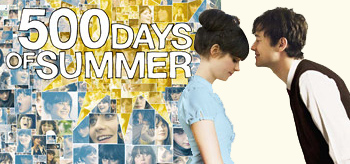
The whole point of this weekly feature is to suggest a movie that you might not have seen, considered, or even heard about (barring you are a major film buff like myself).  So if you are browsing Netflix or walking around Blockbuster, rather than picking up “17 Again” or, God forbid, “Paul Blart: Mall Cop,” you will be armed with the knowledge of at least one movie that is a safe bet for excellent entertainment.

It is my distinct pleasure to award the distinction of the first “F.I.L.M. of the Week” to the exquisite “Little Children.”  The movie is just on the outside of my top 10, although given more viewings, it just might move into the elite ranks.   It is one of very few movies that I can say are practically flawless.  Every performance is great.  Every character is well-developed.  Every minute of it is absolutely spellbinding. Unfortunately, audiences didn’t pick up on its brilliance; it grossed about $5 million at the box office, most of which was from Oscar season. The movie was nominated for Academy Awards for Best Actress (Kate Winslet), Best Supporting Actor (Jackie Earle Haley), and Best Adapted Screenplay. The Golden Globes nominated it for Best Picture.

The movie is based on the novel by Tom Perrotta, but he decided to take the movie in a distinctly different direction than the book rather than just make a carbon copy.  The screenplay is about as good as it gets.  It complexly weaves together the tales of Sarah (Kate Winslet), the resistant mother stuck among droves of Stepford wives, Brad (Patrick Wilson), the stay-at-home-dad emasculated by his wife (Jennifer Connelly) and her success, Larry (Noah Emmerich), a disgraced police officer out for vengeance, and Ronnie (Jackie Earle Haley), a pedophile who moves in with his loving mother.  They all impact each other in ways they cannot even fathom, and the film’s overlying messages become clear through their encounters.

Everyone is magnificent in the movie, but I do have to single out a few names.  Director Todd Field gives the film narrative poise unlike any movie of the decade, and his presence and guiding hand is clearly felt throughout the movie.  He skillfully handles the very tough material that the movie tackles, treating it with the respect and dignity that they deserve.  Despite its heavy themes, Field also allows it to function as a very dark comedy as well.  This should have been Kate Winslet’s Oscar-winning performance.  It is nuanced, emotional, and absolutely gripping.  She immediately draws you in and never lets go.  Jackie Earle Haley does the unthinkable by turning a feared sexual predator into someone we can ultimately feel compassion for and empathize.  He moves you almost to the verge of tears, especially in scenes with his gentle and loving mother (Phyllis Sommerville).  Here, we see him as emotionally raw and not a pedophile, but as an insecure human being just like the rest of us.

But it’s time for me to stop writing and let the movie speak for itself.  I will say that the movie might be disturbing for some easily squeamish, mainly because of its brutally honest and often graphic portrayal of things that exist in our society.  Nevertheless, for a movie that will keep you thinking for days, drop everything and watch “Little Children.”  If you do see it, write your thoughts in a comment, or if you have seen it, still express yourself in a comment.

Until the next reel,
Marshall

P.S. – Watch the trailer.  It’s one of the rare ones that doesn’t give away anything about the plot. And it also sets you up for the ride that “Little Children” offers.


FEATURE: Mindless Moviegoing?

11 08 2009

I’ve heard a fair few jokes that start with “There are only two kinds of people in this world.” Many people think there are two kinds of moviegoers in the world: those who rush to go see the latest blockbuster just because of its stars or because it has stuff blowing up, and those who prefer what they perceive to be more substantive and tasteful filmmaking, usually independent or art house films. I say, why can’t you be both? I most certainly am. I love little indies like “The Hurt Locker” and “(500) Days of Summer,” but I also enjoy movies like “The Hangover” and “Star Trek.” I live for November and December when the majority of the movies nominated at the Oscars are released, but I also get excited for May and June when the summer puts forth movies for all tastes.

But, alas, I am one of very few people my age that can make such a claim. I can guarantee you most of my friends haven’t even heard of “The Hurt Locker;” heck, some of you all reading this probably haven’t. And that’s alright, but we won’t be seeing any movies like it in the future if Americans consciously choose senseless entertainment like “Transformers: Revenge of the Fallen” over higher-brow movies. On occasion, the two have been able to blend successfully, in movies like “The Dark Knight.” Yet few will dispute that movies with such a plot might not have been so commercially viable if they had not worn the front of your typical blockbuster.

The legendary movie critic Roger Ebert has some harsh words for my generation, saying that we may be headed for a “Dark Age” in cinema, mainly due in part to teens who throw their money mindlessly at the big-budget studio movies. He thinks that because we don’t read reviews from critics regularly, we are more prone to drink the blockbuster Kool-Aid. He even goes as far as to suggest that we don’t even care about reviews and that we don’t even have the brainpower to go see the movie that isn’t showing on the most screens at the multiplex. The root of this mindset is “the dumbing-down of America” that has sprung from our worthless education, failing to provide us any sort of curiosity in anything beyond what we see constantly advertised.

Ebert does bring up some good points. It is the teens who swarm the theater every weekend and never fail to go see the hit movie of the week. It is the teens who demand more action, more star power, and bigger explosions. It is the teens who line the pockets of Michael Bay and the studios that let him put such garbage on the screen.

But I don’t think he is entirely right. There is hope for this generation, and I have seen it. Back in December, I was among the first to see “Slumdog Millionaire.” Before it was the sensation that it became, I couldn’t get anyone to go see it. I had a friend who ridiculed me for seeing it instead of “The Day the Earth Stood Still.” That same friend is now one of the movie’s biggest fans. I also convinced him to go see movies like “Frost/Nixon” and “The Reader” before they were nominated for Best Picture over movies like “The Unborn” and “Paul Blart: Mall Cop.” I spread the word about these movies and I got my friends to see them, and I think they were pleasantly surprise when they not only knew, but had seen many of the nominated films at the Oscars.

That hope is extending past Oscar season, when it is easy to support indies. Many of my friends are discovering “(500) Days of Summer” and “The Hurt Locker” without a huge media push (or even my own push). These are the same people who saw movies like “Transformers: Revenge of the Fallen” and demanded more for their money and their time. I think what Ebert fails to comprehend is that although many of us go see these movies, that doesn’t mean we love every one we see. We are a curious bunch: curious to find the next “The Dark Knight” in a heap of blockbusters and curious to find the next “Slumdog Millionaire” in a mass of indies. Critics and parents often have different tastes from ours, and how will we know unless we take a look for ourselves? One man’s “G.I. Joe” may be another man’s “Citizen Kane.”

It is easy to look at all the terrible movies that have been released recently and think that American cinema is in a bad state. And yes, my generation has been the driving force behind the spawning of so many of them. But give us a break. We want to be enthralled by movies just as much as any adult. We seek out good entertainment too, but blockbusters are usually the first place we look. We teens are the target audience of comic-book movies, and that has produced beloved critical darlings like “The Dark Knight” and “Star Trek.” We love raunchy comedies, and that genre brought “Knocked Up” and “The Hangover,” both of which were lauded more than Best Picture nominee “The Reader” (according to Metacritic). We are not the root of the problematic dearth of great entertainment at the movies, but we are the easiest to blame. Even if you were to eliminate the types of movies that give critics such a headache, such as comic book adaptations and frenetic action movies, there would still be bad movies. But whether you prefer blockbusters or indies, we can all do our share to demand better quality from the movies that we watch.

Until the next reel,
Marshall


“Baby Mama” and “Pineapple Express”: Still Laughin’

3 08 2009

Identify the movie quote: “What we do in this life echoes in eternity.”

Did you immediately think of Russell Crowe as the hulking Maximus in “Gladiator?”  If you did, you’re only half right.  At around 11:45 P.M. last night, I discovered with a little help from Starz that it is hardly the most memorable utterance of the quote.  In “Pineapple Express,” as Danny McBride’s scene-stealing dealer Red mercilessly beats James Franco’s Saul with common household items, he quotes “Gladiator” completely out of context (at 0:44 in the YouTube video, if you like to take my links).  And the best part about it: I had seen “Pineapple Express” about 10 times and never noticed that line.

Earlier that day, I found myself entranced on Cinemax by “Baby Mama,” another uproarious comedy from 2008.  Just like later that evening, I was surprised by a line I hadn’t caught the first few times.  Infertile career-woman Kate and her white-trash surrogate mother Angie (played by “SNL” alums Tina Fey and Amy Poehler, respectively) are in counseling at the surrogate agency, and the much more advanced in years Chaffee Bicknell (played by Sigourney Weaver) announces that she is expecting.  Angie retorts, “Expecting what?  A social security check?”

Thanks to channels like Starz and Cinemax, I can flip through the channels and find these movies on about every 3 hours.  So to any of you with these very nice stations, or anyone looking for a good comedy, here’s why I recommend these two:

  1. I’m still laughing. One of my tests for a really good comedy is if I still laugh after multiple viewings.  I howled when I saw “Pineapple Express” for the first time, and it still delivers countless belly laughs.  And while I giggled more than cracked up the first time I saw “Baby Mama,” countless subsequent viewings have really made me appreciate the sophisticated humor.  A common thread between the two movies is that they pack so much humor into a fairly small running time that I still haven’t caught it all.
  2. I can quote most of the movie. My favorite kind of comedy is one that relies on the spoken word to be funny; in other words, it needs to be infinitely quotable.  “Baby Mama” features clever and witty one-liners like “I don’t want to be dramatic, but I would literally rather be shot in the face than eat this stupid food.”  On the other hand, “Pineapple Express” offers a little bit more ridiculous lines, such as, “If you’re a man and act heroic, you’ll come back as a dragon … or Jude Law.”  But its absurdity makes it no less quotable.  I can rattle off lines from both of these movies for days.
  3. They both get the comic man-straight man routine. If you read my review of “Funny People,” I gave it quite harsh criticism for not executing the comic man-straight man routine.   The straight man is supposed to be funny, mainly in their reactions to the the zany comic man.  In “Pineapple Express,” Saul often suggests ridiculous ideas, and Dale Denton’s (Seth Rogen) best reaction is when he states, “You know, when you say things like that, I’m really flabbergasted” (to which Saul replies, “Really?  Thanks, man”).  And in “Baby Mama,” Kate constantly has to put up with Angie’s lack inability to act her age.  The most hilarious example is when Angie cannot open the protective child lock on the toilet and pees in the sink; Angie claims that she didn’t know that was against the rules, and Kate shoots back, “Isn’t peeing in the sink against everyone’s rules?!?”
  4. They have a cast of hilarious supporting characters. The most hilarious scenes in “Pineapple Express” come whenever Danny McBride’s Red is on screen, who says such profound things as “I’m not going to wake up murdered tomorrow!”  But the movie also features hilarious antics from a dysfunctional team of hitmen, Mathison and Budlofsky, who constantly accuse each other of going soft.  “Baby Mama” also has great turns from its supporting cast, including Steve Martin as the quirky CEO of Kate’s company who rewards her with 5 minutes of uninterrupted eye contact, Greg Kinnear (“As Good As It Gets”)  as Kate’s love interest who operates a smoothie store, Maura Tierney (TV’s “ER”) as Kate’s sister who has kids of her own, and Holland Taylor as Kate’s mother who is frustrated by Angelina and Madonna showing off their adopted babies.
  5. The overarching messages are good ones. Many people are probably wondering, “How can a movie about a bunch of potheads have a good message?”  To those people, I say that “Pineapple Express” to me portrays marijuana in a negative light, showing all the trouble that smoking it can bring.  It shares with “Baby Mama” the theme of friendship and how one can form between the most unlikely of people in the most unlikely of circumstances.  I find it refreshing to see the “opposites attract” concept (which has become so trite in romantic comedies) featured in movies that promote it as a positive aspect in friendships among the same gender.

So, if you’re in a mood to laugh, flip your TV over to Starz for “Pineapple Express” and Cinemax for “Baby Mama” (although it will switch to HBO soon) or get in the car and go to your nearest Blockbuster.  Either will provide nonstop fun and entertainment – even if you’ve seen them before.