F.I.L.M. of the Week (June 24, 2011)

24 06 2011

Documentaries often criticize institutions and expose corruption, garnering the genre as a whole a sort of muckraking infamy.  However, not all fit the stereotype.  Take, for example, “The Most Dangerous Man in America: Daniel Ellsberg and the Pentagon Papers,” a Oscar nominated documentary that’s my pick for this week’s F.I.L.M.  The movie celebrates the First Amendment right to the freedom of speech against the backdrop of an infamous incident in American history, focusing on one man who made a stand for the rights of American citizens to be informed.

Daniel Ellsberg is not your average Pentagon worker during the Vietnam War.  After becoming gradually disillusioned with the country’s mission after seeing the war both from a combat and administrative perspective, he began working at a think tank called RAND.  However, he still contributed to a study covering the conduct of the war; the documents would later be classified top-secret and known as “The Pentagon Papers.”

Knowing that these papers would implicate the Johnson administration in deliberately lying to the American people about the Vietnam War, Ellsberg decided to make copies of the Pentagon Papers and leak them to the media.  To the fury of Nixon and his staff, excerpts were published in The New York Times in June 1971.  The fallout eventually led to a Supreme Court case, which upheld the right of the newspaper to publish classified material without government censure.

“The Most Dangerous Man in America” also provides a very interesting portrait of Ellsberg himself, showing us what psychological forces led this man to take such drastic action in order to inform the American citizens of what their government was really doing.  But the beauty of the documentary is in the questions that it raises: what is the role of the media in maintaining transparency of the government?  Of the citizens?  Do we have a right to know everything the government does?  These questions are especially relevant now with WikiLeaks and their publishing of American defense secrets.  While the movie gives you Ellsberg’s answers, it also lets you ponder your own response to these big ethical questions all while celebrating the liberty our Constitution so vigorously protects.


F.I.L.M. of the Week (June 17, 2011)

17 06 2011

In preparation for “The Tree of Life,” I made my way through the entire Terrence Malick filmography (which, by the way, isn’t hard since he has made all of four films in 37 years) for the first time.  I had heard so much praise for the director’s movies, yet the only one I thought was unequivocally worthy of it was “The Thin Red Line,” my pick for the “F.I.L.M. of the Week.”  Malick’s distinct style and imagery seem uniquely fitted for a movie like this, where men with killing machines are juxtaposed with the beauty of nature and the people who live in harmony with it.

Set in 1942 during the American offensive on Guadalcanal, Malick’s nearly three-hour film has the ambition and grandeur of an epic poem, and it certainly feels like one.  The beauty and the savagery Malick captures with the lens tells another story all on its own, and together with a script that plumbs for perspectives on the most primal questions of human existence, the movie’s visceral intensity can make for sensory overload.  In my opinion, it’s the only one of his films where I felt truly moved by the imagery and rambling philosophical narrations (both trademarks of his work).

Of course, I’m not going to pretend like I have a deep understanding of the movie, only that at surface level with some shallow analysis, it’s a satisfying watch.  It certainly doesn’t feel as esoteric or obscure as his other films.  I will say that I don’t think it’s any coincidence that the only one of his movies I really liked was his only adapted script.

The characters, although I’m sure still twisted for Malick’s own purposes, come from the novel of the same name by James Jones.  The men in the movie – with the exception of the now extremely famous – all look alike, so it gets a little confusing at times to separate the individual storylines of C Company.  However, as long as you are willing to accept “The Thin Red Line” as a movie of ideas and images instead of a movie of events, then you will be swept off your feet by Malick’s fim that doesn’t fall anywhere on the typical pro-war/anti-war spectrum.  It celebrates life in the most threatening settings known to mankind.


F.I.L.M. of the Week (June 10, 2011)

10 06 2011

With “True Grit” now available to watch at home, I figure the celebration shouldn’t be just of the Western genre but of the Coen Brothers in general!  I haven’t made it through their entire filmography – don’t shoot me when I say I haven’t seen “Blood Simple” or “Barton Fink” – but I have found a gem among their movies that deserves more attention and laud.  I present “The Man Who Wasn’t There,” a quintessential example of the film noir style but still a flawless example of the Coens’ own unique filmmaking conventions.  (And for the record, I think it’s much more deserving of a Best Picture nomination than “A Serious Man.”)

Billy Bob Thornton, complete with his low and thick Southern drawl, plays the solemn and stern Californian barber Ed Crane, completely unremarkable in just about every way.  He feels emasculated and numb to the world around him, somewhat because he couldn’t serve in World War II due to his flat feet and also because he senses his wife Doris (Frances McDormand) is having an affair with her boss Dave (James Gandolfini).  Yet the game changes a shady salesman shows up with a proposition that could make Ed a very rich man.  What ensues is a crazy, unforeseeable chain of events that pushes Ed to the brink … and he still manages to stay stolid.

“The Man Who Wasn’t There” could easily be labeled a textbook for the conventions of neo-noir, just as “Double Indemnity” could be the textbook for the original school of noir filmmaking.  The lighting and the sets really shift our moods to darkness, and the crisp, clean cinematography of Roger Deakins makes the film’s look simply irresistible.  But any fan of the Coens know that they can’t just stick to outlines or formulas, usually blending in elements of dark comedy and nihilism with any genre they tackle.  Their take on film noir is just sublime, and any fan of the directors will certainly love watching a movie that feels straight out of the 1950s but has their signature spin.


F.I.L.M. of the Week (June 3, 2011)

3 06 2011

If “X-Men: First Class” becomes as big of a hit as the critics think it should be (it currently stands at 87% on Rotten Tomatoes), then you will most definitely want to be familiar with the name Michael Fassbender.  As Magneto, he will get mainstream recognition.  However, if you really want to sound like a film connoisseur, drop this in a conversation: “Oh, he was fine in ‘X-Men,’ but I really liked his earlier work in independent film.”

I’ve already covered one of Fassbender’s independent efforts, “Hunger,” which is a grueling experience ultimately made worthwhile and watchable by his incredibly committed performance.  However, a much more stomachable way to get acquainted with his lesser-known films to watch my pick for the “F.I.L.M. of the Week,” Andrea Arnold’s “Fish Tank.”  It’s a rich, deep movie that is a real treat to dig into.

Newcomer Katie Jarvis stars as Mia, a troubled teen growing up in Britain’s public housing with her much younger sister Tyler and her alcoholic single mother who pays her virtually no attention.  She longs for independence, for attention, and ultimately for escape.  Mia finds the latter in hip-hop dancing, which she only does in isolation.

But things change some when her mother brings home Connor (Fassbender), a charming Irishman who actually shows interest in her.  He manages to get Mia to put aside her loathing of family outings to go the countryside and encourages her to pursue her passion in dancing.  Their relationship becomes the focal point of the film, and its ups and downs will forever change Mia and her outlook on life.

Powerful performances from Fassbender and Jarvis make “Fish Tank” more than just your average teen angst movie; they make it relevant, personal, and authentic.  The latter is especially true for Jarvis, who was cast in the movie with no professional experience after a casting director saw her arguing with a boyfriend in a train station.  But it’s Arnold who makes the movie artful and resonant through her combination of solid writing and directing.  The film is packed with symbols, motifs, and ideas that float around in your head for days and make “Fish Tank” a movie you won’t soon forget.

(By the way, if you are wondering where on earth you can find this independent gem, look no further than Netflix instant streaming.)


F.I.L.M. of the Week (May 27, 2011)

27 05 2011

With Woody Allen’s “Midnight in Paris” earning its place in the box office record books (but still nowhere to be found in Houston theaters), I figured the right way to kick off the return of the “F.I.L.M.” (First-Class, Independent Little-Known Movie) of the Week was to shine a light on one of star Rachel McAdam’s finest flicks, “Red Eye.”  The phrase “killer thriller” gets thrown around a lot in regards to chilling cinema due to alliteration, yet few actually merit the descriptor.  This one does.

Say what you will about “Scream 4” being a critical flop and a box office disaster, but you can’t deny that director Wes Craven can send chills up your spine.  “Red Eye” is more in the vein of “A Nightmare on Elm Street” than it is in horror-comedy of “Scream,” and even on DVD and the second watch, it’s still as frightening as ever.  Running at only 85 minutes, the compact volume of terror keeps the tension so taut it could be cut with a knife at any moment.

McAdams stars as Lisa Reisert, a hotel manager taking the red eye home to Miami from her grandmother’s funeral.  Little does she know, however, that she is in the thick of a terrorist plot spearheaded by the devilishly charming man in the seat next to her, Jackson Rippner (Cillian Murphy).  His plan of terror is not to hijack the plane but rather hijack Lisa’s sanity, exploiting her position, threatening her, and playing intense psychological games with her.

Murphy, channeling his eerie performance from “Batman Begins,” is an absolutely terrifying villain.  He keeps most of Jack’s ferocity bubbling under the surface, just waiting to explode, and it keeps the viewer on the edge of their seat awaiting the moment when he finally snaps.  Thanks to Murphy, “Red Eye” keeps the blood pumping and the heart pounding all the way to the movie’s climactic moments.


F.I.L.M. of the Week (February 11, 2011)

11 02 2011

Wes Craven has made many a good horror movie, helming such classics as “The Last House on the Left” and “A Nightmare on Elm Street” but arguably leaving his biggest mark on the genre with the revolutionary self-aware “Scream” series.  He merges the two together to form the irresistible guilty pleasure “Cursed.”

Yes, I fully realize that by labeling it a guilty pleasure, I’m saying that you could easily hate this movie.  But if you love that seamless blend of comedy and horror with a touch of irony, I think you will be drawn in by the cultish appeal of “Cursed.”  In an era marked by movies that are emasculating such fearsome beasts as werewolves and vampires, Craven delivers a werewolf movie with true bite!

Not to mention that it features fun performances from plenty of ’90s stars like Christina Ricci and Joshua Jackson that have disappeared, as well as providing one of cinema’s first glances at an Academy Award-nominated actor by the name of Jesse Eisenberg.  In one of his earliest screen roles, Eisenberg still has the same fast-talking and dorky awkwardness that has marked his career ever since.  (“The Social Network” just served to refine and harness that power.)

As for the movie’s plot, it’s a mash-up of the typical werewolf curse stories as two siblings, Eisenberg’s high-school dork Jimmy and Ricci’s professional Ellie, are attacked and are forced to confront and kill the beast if they want to avoid total transformation.  But along the way, they find little changes make a big difference.

…Ok, it sounds dumb on paper, but I loved this movie because in all the ways it should have failed, it somehow worked!


F.I.L.M. of the Week (February 4, 2011)

4 02 2011

Surely I can’t be the only one who’s a little shocked that Christian Bale is just receiving his first Oscar nomination, and if there’s any justice in the world, his incredible performance in “The Fighter” will earn him a statue on his first time to the big dance.  Bale is one heck of an actor who really can do it all: headline blockbusters like “The Dark Knight” and “Terminator: Salvation” but also step into unconventional leading man roles in independent movies such as “Rescue Dawn,” my pick for the “F.I.L.M. of the Week.”

Bale plays real-life Dieter Dengler, a U.S. military pilot shot down over Laos in the early years of the nation’s involvement with Vietnam.  He survives the crash and attempts to run to safety, but he gets caught by hostile militant forces who take him to a P.O.W. camp.  There, Dieter meets other prisoners, including Duane (Steve Zahn) and Gene (Jeremy Davies), all gaunt from their extended stays.

Dieter won’t be held back or held in and almost instantaneously begins plans for escape.  After getting the lay of the land, it takes him a while to find the perfect way and the perfect time.  He and Duane manage to get away unscathed, but that leaves the two of them with very little food in the middle of the jungles of Laos.  Lost and desperate, the two embark on a journey for survival that is both harrowing and inspiring.

Sure, Bale makes another one of his trademark physical transformations to make the role believable; however, this is not what makes “Rescue Dawn” such a fantastic watch.  It’s his emotional transformation that’s so gripping. Bale’s stripping away of all acting instincts to portray the most primal instincts with such raw power is nothing short of astonishing.  (And on a lesser note, will someone give Steve Zahn his own movie?  The guy kills every supporting role has gets – it’s time for him to move up to the big leagues.)


F.I.L.M. of the Week (January 28, 2011)

28 01 2011

It’s forgivable to ask who the $#%@ John Hawkes is upon hearing 2010’s Academy Award nominations.  He’s not an incredibly recognizable name, largely because he’s been a character actor making his way around the indie circuit.  In “Winter’s Bone,” the movie that earned him a nomination, he played a hard-as-nails uncle to Jennifer Lawrence’s Ree with a bit of a soft side.  While I wasn’t entirely sold on the performance, I did see some real talent and acting prowess.

So, after Hawkes earned the nomination (which I should have seen coming given his SAG recognition), I hit Netflix and flipped through his filmography.  He’s been lurking in the shadows for most of his career, but he had a phenomenal leading turn in an incredibly quirky but ultimately winning indie called “Me and You and Everyone We Know.”  The Sundance breakout written and directed by star Miranda July is a strange meditation on connection in the digital age paired with a story of teenage sexual awakening.  Does it sound weird enough yet?

Hawkes plays separated shoe salesman Richard, clumsily trying to be a good father to his children while they are totally absorbed in the world of the computer.  He begins a cordial relationship with the off-kilter modern artist Christine (July), whose works would look strange in the universe of “Napoleon Dynamite.”  Their courtship is unconventional, but it’s charming through and through.

Meanwhile, Richard’s sons, a curious teenager and a naive youngster, do some searching of their own.  Perhaps it’s because they can’t feel connected to their father, or maybe they just need escapism.  But they are only one of the movie’s subplots involving kids and coming-of-age.  There’s also a young neighbor preparing her dowry and two adolescent teenagers trying to front as sexual beings.

These stories are peculiarly juxtaposed, but they hit home with an unexpected resonance.  “Me and You and Everyone We Know” predates the Facebook age, but it’s still a fascinating look at how the digital disconnect affects us in all aspects of our lives.  Our relationships, our feelings, and even art – all of it, irrevocably changed.


F.I.L.M. of the Week (January 21, 2011)

21 01 2011

Melissa Leo seems to have emerged as the frontrunner for Best Supporting Actress for her work in “The Fighter.”  I wasn’t a huge fan, but if you want to see her in a performance that does deserve an Oscar, look no further than her turn in 2008’s “Frozen River,” which earned her an Oscar nomination for Best Actress.  My pick for the “F.I.L.M. of the Week,” the ultra-indie tale of how far a single mother will go to provide for her family will knock you out with its raw power.

Living along the New York-Canada border, Ray Eddy (Leo) is scrapping to get by, pulling coins out of furniture to pay the bills.  Her job at the Yankee Dollar hardly pays enough to feed her kids, and she’s often forced to resort to feeding them popcorn and Tang for multiple meals.  But she has hope enough to put down a sizable deposit for a bigger trailer, something which would substantially improve their quality of life.

However, Ray can’t pay what’s left on the trailer since a promotion at her job has yet to materialize and her husband has gone missing with some crucial cash.  Thanks to a chance encounter, she meets Lila (Misty Upham), a Mohawk Indian involved in smuggling foreigners across the border through reservation lands.  Ray has a car with a trunk big enough to fit three people, and she begins making regular runs for the money.

The movie would be just any other woman-on-the-edge movie if it weren’t for Leo’s incredible performance. She makes Ray’s desperation practically tangible with her raw and real approach to the character.  The powerhouse performance that put her on the map is still her best work, two years and potentially an Oscar win later.


F.I.L.M. of the Week (January 14, 2011)

14 01 2011

As a stage actor in high school, I’ve gained a certain appreciation for how in-tune the performances have to be.  The actor must always be acting as any member of the audience can simply shift their gaze on him at any time.  Cinema has marked a new era for the actor, where he doesn’t have to be finely in-tune for hours at a time.  The camera can cut away from him when he doesn’t speak, finding something that the filmmakers believed that impatient audiences will be more interested in than a mouth not sputtering out dialogue.

Yet it’s in those stray moments where we really see the power of the actor.  It’s in these moments that usually get left out of movies where we can truly visualize an actor’s vision for their character.  Through extensive use of split-screen, “Conversations with Other Women,” my pick for the “F.I.L.M.” of the week, is able to capture those moments and bring them to a largely unfamiliar destination: the silver screen.

After spending 80 minutes with Aaron Eckhart and probable 2010 Oscar nominee Helena Bonham Carter in “Conversations with Other Women,” you’ll have no doubt that they have complete understanding and mastery of not only their characters, but of the craft of acting as well.  They play unnamed people, but just because we can’t identify them through nomenclature doesn’t mean that we can’t connect with them.

Eckhart and Carter strike up amicable conversation at a wedding reception, but the dynamic slowly changes to reveal that these aren’t just perfect strangers.  The methodical unraveling makes for a fascinating watch, as does their banter, which is very much like something that would be performed on stage.  Eckhart and Carter’s two-actor conversation works marvelously well, and the fact that they can keep us drawn in for the entire movie without ever letting go or letting up is nothing short of astounding.  With comedy, drama, and intrigue, “Conversations with Other Women” is a quirky but immensely satisfying showcase of two actors doing what few screen actors dare.


F.I.L.M. of the Week (January 7, 2011)

7 01 2011

It’s a new year for the “F.I.L.M.” column, but more importantly, it’s the home stretch of the Oscar season!  Soon enough, the intense politics will start to die down and we will just be left to reflect on the performances and the movies.  To celebrate the season, the next seven weeks of the “F.I.L.M. of the Week” series will be devoted to covering little-seen and underrated gems from the 2010 nominees.

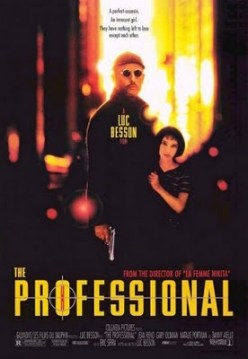
This week, I’m unequivocally recommending “The Professional,” Natalie Portman’s first movie, made when she was just 12 years old.  It’s an especially fun watch for any of Portman’s fans who have followed her work for many years as most of the mannerisms and techniques she still uses are on full display here.  It’s a little rougher, sure, but “Black Swan” was hardly the first time she commanded the screen.  16 years ago, she delivered a stunning performance of incredible mastery for someone so young.

As Matilda, Portman plays a tough young girl out to get revenge on the ruthless and merciless hitman, Stan (Gary Oldman), after he massacres her family including her four-year-old little brother.  While she hated her abusive and neglectful parents, the thought of someone slaying her younger brother makes her run to the assassin across the hall, Leon (Jean Reno).

The “cleaner” on the floor is a bit of a loner, executing his jobs with professionalism and precision.  Leon takes Matilda in at first for her own protection but reluctantly keeps her after she wins a sliver of his affection.  But she wants something more than shelter; Matilda wants training so she can take out Stan.  Again with reluctance, he agrees, and their time together brings Leon a sort of paternal pleasure.

This intense action movie directed by Luc Besson stands out among stacks of other movies in the same vain because it’s not a movie about the action; it’s about the performances, characters, and the story.  Aside from Portman’s incredible debut, there’s also solid work for Jean Reno, who truly deserves better and prominent roles than he usually takes nowadays.  And Gary Oldman also shines as the borderline demented killer Stan, so frightening and so brash that he makes for one heck of a villain.  Oldman really is one of the most utilitarian actors working today, and “The Professional” really does show that off.

Yet somehow, even at 12, Portman steals the movie in a manner indicative of how she would rule the screen for the next 17 years.  Sure, it’s child’s play compared to “Closer” or “Black Swan,” but anyone who made a bet back in 1994 on her becoming an Academy Award-winning actress could be cashing in big time pretty soon.


F.I.L.M. of the Week (December 31, 2010)

31 12 2010

I don’t quite know how to end a year in movie reviewing … that’s a little awkward.

But want to know something more awkward?  “Man on the Moon,” my pick for the “F.I.L.M. of the Week.”  (And to close on a good note, F.I.L.M. stands for First-Class, Independent Little-Known Movie.)  Perhaps awkward isn’t the right word for it, though you’ll undoubtedly feel the strange sentiment many times while watching the movie.  It’s intelligently quirky and undeniably of the oddball variety, which makes it one of the most wonderful off-color movies I’ve ever seen.

The nomadic comedian Jim Carrey has never been so at home than here as Andy Kaufman, the comedian of the ’70s and ’80s who became an incredible enigma for audiences nationwide.  His unique style was meant to be, as he called it, an “experience” for the audience meant to drum up laughs, affection, and hate.  This roller-coaster ride of emotions wasn’t exactly something that sold, and his refusal to budge from his principles made it hard for him to get many jobs on TV.

The movie, directed by two-time Academy Award-winner Milos Forman, does more than just chronicle the bizarre career of Kaufman; it attempts to resurrect the man himself.  “Man on the Moon” gives us largely the same experience that Kaufman wanted his audiences to have.  We are meant to raise an eyebrow when he stands motionless for a minute on the first episode of “Saturday Night Live” or when he reads the entire novel “The Great Gatsby” instead of doing his routine for a rowdy college crowd.  We question his alter ego, the crude and crass Tony Clifton, a fat bar-singer parody.  And then we don’t quite know what to make of a lot of it, but his refusal to conform is often hilarious and always entertaining.

As movies like “Little Fockers” tear up the box office charts but inspire groans from the audience, this may be the perfect time to watch “Man on the Moon.”  Andy Kaufman, who dared to be different, found humor in silence – and his comedy is a wacky experience that no one has ever repeated since.


F.I.L.M. of the Week (December 24, 2010)

24 12 2010

With “True Grit” hitting theaters this week, I thought it would be as good a time as ever to visit a very different side of the Coen Brothers with the “F.I.L.M. of the Week” – their romantic comedy side.  Yes, believe it or not, the two quirky violent directors made one, although “Intolerable Cruelty” isn’t much like the normal ones that Hollywood churns out.  It’s a fascinating examination of our divorce and marry-for-money culture that’s a true winner.

In Los Angeles, Miles Massey (George Clooney) is a wildly successful divorce attorney.  He’s well-known by all in the field for his “Massey Prenup,” an agreement which has proven to be impenetrable.  He’s vicious in the courtroom and can figure out a way to get their clients exactly what they want in the divorce settlement, even if that means leaving their ex penniless.

But he soon meets his foil in Marilyn Rexroth (Catherine Zeta-Jones), a quintessential gold digger, using marriage only to gain wealth and financial freedom from a quick divorce.  In order to ensure a more favorable settlement from her husband Rex, she hires Gus Petch (Cedric the Entertainer), a private investigator, to “nail his ass.”  But even with their documented evidence, she’s no match for Miles in the courtroom who leaves her with nothing.  Bitter, she concocts a plan to enact revenge on Miles that hits him where it hearts the most: in the heart.

It’s easy to call “Intolerable Cruelty” the least “Coen Brothers”-y movie that the brothers have directed since it’s their only movie to date not based on an idea by them.  But everything you love, minus the gruesome violence, is on display here with a bit of a lighter touch thanks to actors like Clooney and Zeta-Jones.  It’s well-written with many fascinating plot twists and witty one-liners.  While there’s still some mainstream humor on display, there’s definitely some of that trademark dark and quirky Coen Brothers humor.  So if you’re looking to enjoy one of their movies and can’t quite stomach “No Country for Old Men,” plop yourself down for “Intolerable Cruelty” for all the fun of the Coen Brothers without all the darkness.


F.I.L.M. of the Week (December 17, 2010)

17 12 2010

There’s no place like home for the holidays … unless its the home of your boyfriend’s overbearing family.

Such is Christmas for Meredith Morton (Sarah Jessica Parker) in the “F.I.L.M. of the Week,” Thomas Bezucha’s “The Family Stone,” a winter dramedy with a perfect balance between the two genres.  It’s enjoyable to watch at any time of the year, but it has a particularly warm and loving embrace around the holiday season.  With a fantastic ensemble and pitch-perfect writing, this movie has been a favorite of mine ever since it hit theaters five years ago today.  (And yes, I was there to see it on its first showtime that day.)

It’s always tough meeting the potential in-laws, and the uptight Meredith doesn’t leave the best first impression as she tries to simultaneously be herself and be charming.  The odds are against stacked against the potential new addition to the Stone family as Amy (Rachel McAdams) has it in for her after a dinner in New York didn’t exactly endear her to the incessantly blabbering throat-clearer Meredith.  The tension is only heightened by matriarch Sybill (Diane Keaton), determined not to give her mother’s wedding ring to Everett (Dermot Mulroney) for him to put on Meredith’s finger.

Yet not everyone is determined to see her demise: the fun-loving prodigal son Ben (Luke Wilson) does his best to bring out the welcome wagon, and the ever-reasonable father Kelly (Craig T. Nelson) is determined to give her a chance.  But after a day, Meredith mixes with the Stone family like oil mixes with water, and things go haywire as the holiday spirit combines with mean spirits.  The result is a hilariously potent comedy about the importance of family, both the ones we are born into and the ones we create.

I’d be remiss, though, if I didn’t mention the heavier side of the movie.  Much of what happens in “The Family Stone” is due to an unpleasant truth about the future of a member of the Stone family, and it had been quietly kept secret until Meredith arrives.  The movie is not only a comedy but also a deeply touching and heartfelt look at our families and how much we value each member of them.  Around the holidays, there’s simply nothing better than a movie that can make you laugh and cry with the people you love the most.


F.I.L.M. of the Week (December 10, 2010)

10 12 2010

With the release of David O. Russell and Mark Wahlberg’s collaboration “The Fighter” today (albeit in only four theaters), I thought today would be as good a time as ever to feature the duo’s first movie together, “Three Kings,” in the “F.I.L.M. of the Week” column.  The poster and topic may make it seem like your average war movie, but Russell’s knack for style and substance both in his script and direction elevate it to one of the most unconventional and exciting entries in the genre.

Iraq, 1991.  Operation Desert Storm is over, but four soldiers who see little action feel a little unfulfilled.  They wonder what they actually accomplished during the mission since they were so uninvolved.  Boredom, curiosity, and intrigue combine to bring together a group of four unlikely people together on a strange mission.

The burnt out Major Archie Gates (George Clooney) leads family man Troy Barlow (Mark Wahlberg), dumb redneck Conrad Vig (Spike Jonze), and hard-as-nails Chief Elgin (Ice Cube) on a search for Kuwaiti bullion they think is hidden in Saddam’s bunkers.  Following a map they found in a prisoner’s butt and their unbounded desires to strike it rich, they traverse through dangerous territories in Iraq waving the banner of freedom as a Kevlar vest for their journey.  However, what they find amounts to a whole lot more than gold.

“Three Kings” is not just about an expedition for gold; it’s about what happens when humanity gets in the way of things.  Along the way, the four soldiers encounter a number of situations with two choices: helping themselves or helping innocent Iraqi citizens.  Gates and company find it harder and harder to choose in self-interest despite getting closer and closer to the gold.  Russell’s movie is a powerful testament to the kindness of the human soul and how it can remain intact even during war.

Clooney, Wahlberg, Ice Cube, and the hysterical Jonze are all fantastic in helping the movie to shine, but “Three Kings” is David O. Russell’s movie, and he knocks it out of the park.  His script is a strange mix of comedy, drama, and action, but it never fails to satisfy, often on multiple levels at once.  Behind the camera, he toys with several experimental techniques to produce one of the most eccentric-looking war movies I’ve ever seen.  He provides a very different sort of artistry for the genre, and it’s a fantastic retrospective statement on our time in Iraq (before our second entry) that packs one heck of a punch.