 The Toronto International Film Festival (TIFF) gets underway today, and plenty of films vying for Oscar glory will be seen for the first time. Other holdovers from Sundance, Berlin, Cannes, and Venice will also get a moment in the sun, a reintroduction for North American audiences.
One film of the latter variety is Jacques Audiard’s “Dheepan,” the controversial Palme D’Or winner at this year’s Cannes Film Festival. Many people chalked up the film’s unexpected victory to its director simply being due for the prize after coming up short numerous times. One such missed opportunity was back in 2009 when Audiard debuted “A Prophet.”
I first watched the film after it received a nomination for the Best Foreign Language Film award at the Oscars back in 2010 … and found myself quite underwhelmed. For whatever reason, I just could not connect with it. But once “Dheepan” took the big prize in Cannes, I felt obliged to give it another go. The second time around, I was actually quite taken by the film. I still think “Fish Tank” deserved the Palme D’Or, but “A Prophet” is certainly worth of my pick for the “F.I.L.M. of the Week.”
Audiard’s film is a patiently paced prison drama that goes for slow, longitudinal change rather than explosive incidents. Think “The Shawshank Redemption,” but as an art film instead of something so commercial. “A Prophet” follows Tahar Rahim’s Malik, a most curious double agent, as he games both sides of a Corsican/Muslim prison gang tussle. He wants to make a big move one day in the future – even though that forces him to assume a subservient position for the ruthless, spineless Corsican ringleader (Niels Arestrup).
Audiard was smart to cast Rahim, a novice actor when he filmed “A Prophet.” A well-versed thespian might have tried to slip hints towards a greater intellect humming beneath the surface of Malik. Rahim, however, plays him as a rather ordinary man of no particular intelligence, just sort of making it up as he goes. He’s playing the long game, not necessarily because he focuses on the ends but mostly because he cannot sufficiently navigate the present.
Malik’s rise to power, when watched in the right state of mind, makes for truly riveting cinema. While it might not always be pulse-pounding action, the novel-like breadth of its narrative provides a rich experience for serious-minded movie lovers.
 Jill Soloway appears in just about any feature being published these days about the changing face of television for women behind the camera and trans representation in front of it. Even before “Transparent” landed at Amazon, she was making waves as a writer and producer on shows like “Six Feet Under,” “Grey’s Anatomy,” and “United States of Tara.” And somewhere in her schedule, she found time to make a narrative film.
 I will not attempt to argue that “The Wrecking Crew” is some kind of groundbreaking piece of documentary art. Frankly put, it does not begin to approach those things. But it probably made my jaw drop in awe-struck amazement more than any movie I can think of recently, and for that alone, the film qualifies to receive the title of my “F.I.L.M. of the Week.”
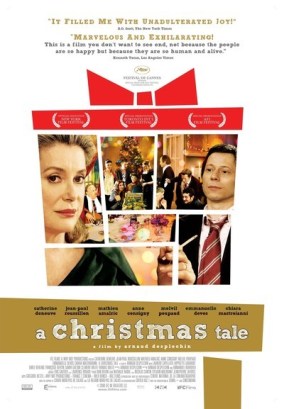 It’s hotter than Hades here in Houston, so I ventured into Arnaud Despelchin’s “A Christmas Tale” for some escapism. (Just kidding, I watched it mostly because the Criterion Collection deemed it worthy of inclusion in their hallowed ground of cinephilia.) Despite the title, this is a film that should not be dusted off every December to watch ritualistically like “
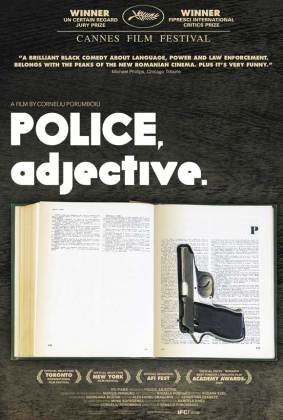 How has someone yet to remake the Romanian New Wave film “Police, Adjective” for an American audience? Seriously, this needs to happen. Though the action of the film takes place on another continent, this could easily be a film about the United States with just a quick change of language and setting.
 Leave your feelings about Obamacare at the door and enter with nothing but your humanity for “Code Black,” my pick for the “F.I.L.M. of the Week.” This documentary takes one of the most hotly politicized issues of our time and makes it about people again. Healthcare is a far too important topic to blindly accept a party line, director Ryan McGarry suggests, and we all ought to seriously consider what steps are really necessary to ensure the simplest way to preserve the doctor-patient relationship.
 In light of the recent spate of thinkpieces written without having seen the movie in discussion, I do not wish to continue this shameful trend by discussing the (at the time of publishing) unseen “
 Had I not known “C.O.G.” was based on a David Sedaris story prior to viewing the film, my reaction would probably have been less enthused. I would have chided it for being slight and meandering, simply jumping around a bunch of mini-stories without ever settling.
 Most people – well, most Americans – have a sibling. So, naturally, sibling rivalry commonly appears as an aspect or subject in film. This usually involves pairing off actors who scarcely know each other prior to the shoot and asking them to fill in a lifetime of close, personal experience with that person. Almost inevitably, it feels forced and not entirely believable.
 I abide by many mantras, but one I use often in assessing and criticizing movies is, “Never judge a director by their debut film.” In the case of Andrey Zvyagintsev, however, such would actually be acceptable. His first feature, 2004’s “The Return,” shows a remarkable command of suspense and tone that results in a gripping experience.
 Caitlyn Jenner’s very public transition has brought a big spotlight to transgender issues and rights, although some of the discourse (from all sides) seems to reduce her to a mere cultural object. When such rhetoric arises, it becomes easy to lose sight of the humanity that all people possess irrespective of how they choose to identify their gender or sexuality. In this void, cinema can step in to help bridge the empathy gap.
 In a matter of days, Todd Haynes will unveil his latest film under the bright lights of the Cannes Film Festival’s red carpet. Just a quarter of a century ago, however, Haynes operated on the fringes of cinematic culture but emerged onto the indie stage with a bang thanks to “Poison.” This early Sundance winner sparked what critics often call the New Queer Cinema with its fearless embrace of gay themes and stories.

 Marshall and the Movies
Recent Comments