REVIEW: Self/Less

10 07 2015

The central conceit of Tarsem Singh’s “Self/Less” is effortlessly appealing, if not incredibly novel.  A new technological breakthrough allows for the transfer of a nimble mind from a decaying body into a more spry figure.  As Matthew Goode’s well-coiffed scientist Albright puts it, think of what Albert Einstein, Thomas Edison, or Steve Jobs could have accomplished with a few more years.

The man who receives this revolutionary soul transplant seems to share little in common with those three luminaries, though.  Ben Kingsley’s Damian Hale simply amassed a fortune as a real estate baron.  When he sheds his cancer-addled body and reemerges in the toned physique of Ryan Reynolds, Damian uses the new lease on life not to help humanity but rather to please himself.  In pursuit of nothing but hedonism, he beds plenty of women and never once shows why he deserves an extension of his time on earth.

Beyond Damian’s clear lack of merit to receive the shedding treatment, “Self/Less” suffers from plot holes and shallow thinking aplenty.  Writers David and Alex Pastor do add in a few complications to the concept, mostly resulting from the incomplete erasure of the mind that used to inhabit Damian’s new frame.  (Side note: Why not just clone these new bodily vessels?)  The ethical questions surrounding who really owns a physical body or a life are fascinating ones indeed…

…that will have to be answered by another movie, because “Self/Less” would much rather just cut to a mindless car chase than linger on a mindful discussion.  The Pastor brothers placed their fingers on a topic that could inspire meaningful, relevant debate.  Perhaps if they were able to complete two or three more drafts of the screenplay, they might have stumbled on something really profound.  But as is, the potential for a great movie gets squandered to produce a merely passable one.  C+2stars


F.I.L.M. of the Week (July 9, 2015)

9 07 2015

No matter how his projects turn out in the end, no one can accuse Werner Herzog of being lazy or complacent.  As he floats freely between fiction and documentary, Herzog always manages to find some unique angle to examine humanity and its place in both culture and nature.

“Grizzly Man,” though, marks peak Herzog.  This documentary is my pick for the “F.I.L.M. of the Week” because it exemplifies all his best qualities as a filmmaker: a distinct vision, an unlikely subject, and a clearly articulated worldview that shines through a narrative that fascinates the senses and enraptures the brain.

Herzog works mostly with the found footage of Timothy Treadwell, a self-styled nature expert and wannabe television personality.  For over a decade, he spent his summers observing and interacting with grizzly bears in the Alaskan wilderness.  And rather than writing something pedestrian like a journal or research text, Treadwell recorded his adventures like a Discovery Channel show.  Through Treadwell’s lens, he fashioned himself like an even greater version of Steve Irwin, toeing the line between bear and man, the animal and the human.

This treasure trove of footage discovered after Treadwell met a grizzly end (sorry, terrible pun) being mauled by one of the creatures he loved forms the backbone of Herzog’s “Grizzly Man.”  Though he pads the recordings with traditional documentary-style interviews of friends, family, and colleagues, neither they nor Treadwell get the final word.  Herzog himself actively narrates the film, offering his own commentary on what transpired from his removed yet engaged perspective.

Herzog’s presence over “Grizzly Man” makes the experience less like watching a film and more like a thrilling presentation of critical analysis about a filmmaker yet to exhibit a film.  That may sound dry and boring, yet it proves anything but. He dares to look beyond the surface of Treadwell’s recordings, which many would immediately dismiss as hubristic or insane.  When processed by Herzog, Treadwell serves as a cautionary tale about someone who processes life as characters and images rather than actual living things.

In addition, the filmmaker in Herzog sees something that most people locked in a perspective of pure humanism would be unable to discern.  Since Treadwell operates as a renegade cameraman without a unionized crew, he could shoot the world without being encumbered by regulations or safety concerns.  (Given his fate, however, he could have used some.)  Herzog lets some of this pure beauty shine through.

As F. Scott Fitzgerald once wrote, “The test of a first-rate intelligence is the ability to hold two opposed ideas in mind at the same time and still retain the ability to function.”  Herzog’s “Grizzly Man” is one heck of an intelligent film, then, as it allows for a portrait of Treadwell as both profound and profoundly stupid to emerge.


REVIEW: The Overnight

8 07 2015

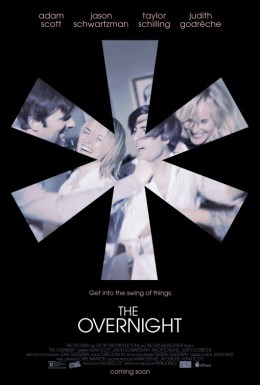
The OvernightSome films revel in pushing boundaries and norms to expose the ridiculousness of those limitations.  Others, like “The Overnight,” simply dance on these taboos to milk them for cheap laughs.
Writer/director Patrick Brice is far too amused by impressionistic paintings of anal orifices, marijuana-induced hazes, and exaggerated prosthetic penises to interrogate the shackles of monogamy and parenthood.  (You get the feeling that Brice probably laughs until it hurts at the final scene of “Boogie Nights.”)  As a night of friendship blooming between two adult couples slowly devolves into something resembling a swingers party, it’s hard not to feel as uncomfortable as the guests played by Adam Scott and Taylor Schilling.

The end does ultimately show that the evening is a bit of a fantasy, one that can only take place while the kids are safely tucked away in bed.  But if Brice wanted to take this angle on the story, why not go all out with “Hangover“-style antics?  Something feels disingenuous about a tale concerning the loss of inhibitions and release of pent-up desires that is itself holding back something.

Still, within the relatively uninspired chain of events, the cast finds ways to spruce up the proceedings.  Scott and Schilling make for a convincing everyman and woman, reacting like every sane person would to the escalating oddity of their hosts.  Jason Schwartzman, most widely recognized as the mouthpiece for quirky Wes Anderson dialogue, also adds a great deal of fun to “The Overnight” with his articulate, confident eccentricity.  Unlike the stilted, clearly scripted cadences of his most frequent collaborator, Brice gives Schwartzman dialogue that actually sounds like it could come from an actual human being.  And that makes his character all the more hilarious and exciting to watch.  C+2stars


REVIEW: Gabriel

7 07 2015

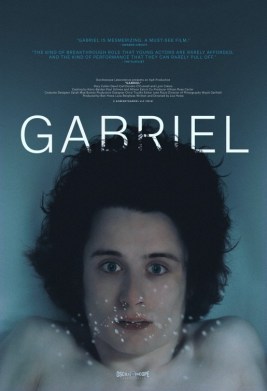
GabrielLou Howe’s “Gabriel” relies almost exclusively on two storytelling techniques: the slow parsing of details (as opposed to expository information) and dramatic irony.  From the outset, we can tell that Rory Culkin’s eponymous protagonist has something slightly off in his personality.  We do not know what this affliction is, but we can suspect his condition has been medically diagnosed and ineffectively treated.

Then, from our privileged position as spectators rather than participants, we can watch knowing that his increasingly erratic behavior will likely result in some sort of dramatic incident worth the price of admission.  If Howe wanted to start a discussion about mental illness, why not explicitly name Gabriel’s condition from the beginning (or make a documentary)?  No, we know that all his uncomfortable dealings with family and alienated friends can only lead to one end … and it certainly does not look promising or pretty.

The thousand dollar question for “Gabriel,” then, is whether the journey is worth taking, the descent worth watching?  The answer, for the most part, is yes.

Rory Culkin makes his character consistently compelling as he runs the gamut from sympathetic to indefensible and then to helpless.  Gabriel’s motives may appear unreasonable or irrational to us, but they clearly make sense to him.  Culkin always communicates that certainty, which often results in a successful eliciting of empathy as his actions fail to match his intentions.

His conduct drives most everyone predictably mad (or scared), though the most compelling scenes in “Gabriel” come when Culkin shares the screen with Deirdre O’Connell, who plays his long-suffering mother, Meredith.  She really knows how to hold Gabriel’s feet to the fire, and her complex response of understanding mixed with exasperation best mirrors our own as the audience.  B / 2halfstars


REVIEW: Slow West

6 07 2015

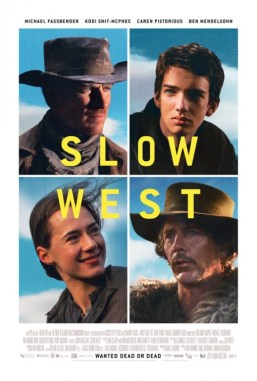
Slow WestIf there is one compliment I can pay writer/director John MacLean’s “Slow West,” it is that the film bears a particularly apt title.  It is slow, and it is set in the west.
This revisionist genre flick follows Scottish traveler Jay Cavendish (Kodi Smit-McPhee) as he moseys through the American West with sporadic guidance from grouchy nomad Silas Selleck (Michael Fassbender).  He’s in pursuit of his love, Rose (Caren Pistorius), but the goal seldom seems as important as the experience of wandering.  As foreign visitors often do, Jay sees the landscape differently, a view that MacLean echoes through Robbie Ryan’s photography that shakes up the expected Western playbook.

“Slow West,” even in its tediousness, interrogates the land rather than gaze in wonder at it.  MacLean’s incorporation of humor serves as further evidence of his revisionist – and borderline parodic – intent.  But aside from his hilarious send-up of the classic “wanted” signs, the comedy of the film feels indeterminate.  He switches from cruel irony, which is drier than the deserts that Jay and Silas travel through, to slapstick humor at the drop of a hat.

The voyage ultimately does pay off in one hell of a climax with quite the statement of the genre’s gunfire.  But whether the conclusion is enough to salvage the sluggish start is a decision up to each moviegoer.  Since “Slow West” only runs 84 minutes, I figure the relatively small expenditure of time is more worth it than not.  B-2stars


REVIEW: Senna

5 07 2015

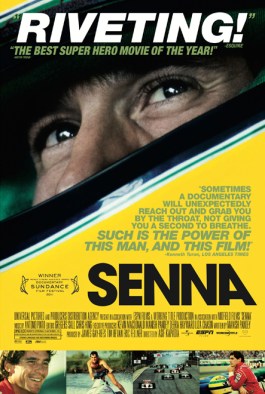
SennaI saw Ron Howard’s “Rush,” a film fictionalizing a storied Formula 1 rivalry, and found no problems following it or being (marginally) entertained by it.  Ditto the F1 documentary “Weekend of a Champion,” which amounts to little more than Roman Polanski following around driver Jackie Stewart.  I thought it was fascinating enough to stay awake at the screening in Cannes, which is actually a pretty big feat.

So, objectively, there is no reason I should not be able to connect with Asif Kapadia’s documentary “Senna,” which presents the story of legendary F1 driver Ayrton Senna.  Yet I never found an entry point in the film. For someone rather unversed in the sport like myself, this story proved rather impenetrable.

I suppose hardcore fans would probably praise the film because of my disdain, glad “Senna” does not pander to the uninitiated.  Kapadia constructs the film, which follows Senna’s rise to the top and its tragic ending, solely from archival footage and pre-existing interviews.  No talking heads, no perspective presented with the benefit of hindsight.  In other words, he tells the story entirely in the present tense – a true rarity for a documentary.

The structural ambition is commendable, but it also serves to limit the audience. Anyone who needs to know how Formula 1 operates or why Senna mattered gets left in the dust by Kapadia.  C2stars


REVIEW: Faults

4 07 2015

FaultsDon’t believe the marketing – “Faults” is NOT a cult movie. The film is, however, a story a pathetic middle-aged man, Leland Orser’s Ansel, looking to pull a quick swindle by “deprogramming” the brainwashed daughter of some gullible people.

Ansel needs of money because his ex-wife took the rights to his best-selling book, so now he resorts to peddling a cheap knockoff of the text and giving canned speeches at hotels that make the backpack talks from “Up in the Air” look like a State of the Union address. Here, two concerned parents approach him for help with their daughter, Mary Elizabeth Winstead’s Claire, whom they recently rescued from a fringe religious group known as “Faults.”  Since Ansel probably rented a VHS of Jane Campion’s “Holy Smoke” at a Hollywood Video, he takes on the duty of bringing her back to help pay off some debts.

His not-so-elaborate ruse doesn’t feel convincing for a second, and Ansel seems resigned before he even begins.  Fatigue sets in early with his questioning of Claire, largely because their conversations go nowhere. Writer/director Riley Stearns reveals precious little about the religious cult through Claire, so it becomes hard to tell if she is deliberately being vague about the titular cult … or if Stearns just didn’t think that far.

Winstead gives it her all, admirably, trudging on despite how little she has to work with from Stearns.  “Faults” does get slightly more interesting when Claire manages to flip the script and start asking the questions to Ansel.  But by the time the conclusion rolls around, Stearns’ call for gasps just elicited a big groan from me.  As if a big twist at the end of the road could somehow make the rest of the wandering worthwhile… C2stars


REVIEW: Infinitely Polar Bear

3 07 2015

Infinitely Polar BearMaya Forbes’ “Infinitely Polar Bear” is undoubtedly a drama, yet I was on the edge of my seat practically the entire movie.  That’s not because the movie also doubles as a thriller, though.  The film makes for a nerve-wracking experience because it follows manic depressive father, Mark Ruffalo’s Cameron, whose fragile stability of mind gets a real test when he has to assume sole parenting duties for his two daughters.

The decision is not one that he comes to lightly, but he takes on the responsibility to impress his estranged wife, Zoe Saldana’s Maggie, who impulsively married him in the ’60s when everyone was somewhat crazy.  But as the manic energy of that decade gave way to the headache of the late ’70s, Maggie discovers she needs an MBA to provide for her family.  She gets a generous scholarship from Columbia University, which is great … except that she cannot afford to relocate her two daughters from Boston to New York City.

Cameron appears to be on the mend, but nothing seems certain for him.  One of the first scenes in “Infinitely Polar Bear” shows him suffering a mental breakdown, a sight Forbes makes us desperately afraid of seeing again.  The stakes are high for Cameron as caretaker since another episode means more than self-destruction; it could directly harm two innocent young girls.

Ruffalo plays his character with a fierce commitment, never overzealously veering into exaggeration or stereotype.  Cameron really does mean well, and it proves extremely frustrating to watch him get in the way of his own good intentions.  He slowly learns how to parent Faith and Amelia, but thankfully, Forbes never tries to peddle the “love cures mental illness” message proffered by “Silver Linings Playbook.”  All progress here is hard-fought and earned.

“Infinitely Polar Bear” also looks beyond Cameron’s struggles and shines a light on those that Maggie must face.  As a mother and wife, she makes tough choices and tremendous sacrifices – only to have powerful men make sexist assumptions that she selfishly abdicated her duties.  Where pain abounds, love must rush in to soothe the hurt, and Forbes powerfully and movingly demonstrates the many different forms that love can assume.  B+ / 3stars


F.I.L.M. of the Week (July 2, 2015)

2 07 2015

The Color WheelMost people – well, most Americans – have a sibling.  So, naturally, sibling rivalry commonly appears as an aspect or subject in film.  This usually involves pairing off actors who scarcely know each other prior to the shoot and asking them to fill in a lifetime of close, personal experience with that person.  Almost inevitably, it feels forced and not entirely believable.

Alex Ross Perry’s “The Color Wheel,” on the other hand, might be the most convincing on-screen portrayal of siblings I have ever seen.  Perry not only directed the film, but also co-wrote it with his co-star Carlen Altman.  Every moment, every barb, every heartfelt appeal for approval struck a nerve with me.  Such seldom-found recognition makes this a perfect pick for the “F.I.L.M. of the Week.”

Perry’s naturalistic, grainy black & white film look nicely complements the raw emotional scabs being picked apart by the brother and sister at the heart of the film.  (Often times, those aesthetic choices just come across as showy and pretentious.)  Carlen Altman’s JR, an aspiring news anchor with exaggerated perceptions of her own talent, decides to make a move after breaking off a relationship with her former professor.  Since her prickly personality alienated most of her friends, JR has little recourse but her brother, Perry’s Colin, to help her make the journey.

I have taken many a long road trip in my day, and “The Color Wheel” captures the frustration and exhaustion that comes from the taxing mental tolls they exact.  After a long day of driving, patience is thin and emotional regulation is low.  JR and Colin trade really authentic and acerbic banter from either side of the center console.  Their digs wound deeply because siblings know each other perhaps better than anyone and can make brutally honest assessments of each other.  Every few minutes, I whispered to myself, “That’s something I might say to my brother.”

Family is a contact sport in “The Color Wheel,” both in terms of the pain of a tackle and the warmth of a hug.  JR and Carlen come to important realizations about where they need to move in their lives.  They see the disparity between how they present themselves to their peers and how they naturally act to a family member, which motivates them to make some changes.  Perry and Altman even prove willing to critique the narcissism that many accuse the so-called “mumblecore” movement of demonstrating so unabashedly, and the result is a film as enlightening as it is hilarious and frank.


REVIEW: Jimmy’s Hall

1 07 2015

Over a year ago, I rolled my eyes when I read that acclaimed British director Ken Loach called “to sack the critics and get ordinary punters in. People experienced, who know life.”  Now, after finally seeing “Jimmy’s Hall,” I can somewhat see his rationale.
His final film is an anthem to the hard-working, salt of the earth Ireland people who put in a hard day’s work and only request a fair wage as well as the ability to celebrate in joyous dance.  The titular hall, constructed by good old boy James “Jimmy” Gralton (Barry Ward), once served as a lynchpin of the small town of Leitrim.  After ten years exiled away in America, he returns to reopen the cultural center and restore a sense of community to the town torn apart by years of civil strife.

But, of course, it cannot be that simple.  The immensely powerful Irish Catholic Church stands steadfast in opposition to the hall, which wants to keep the impressionable youth away from any place apart from the church’s supervision and where they might receive a contradictory education.  (“Footloose,” is that you?)  Jimmy gets his name drug through the mud by one particularly malicious priest, who accuses him of the era’s catch-all phrase to drum up fear of suspect outsiders: communist.  This only leads to the small conflict simply growing in size and the sides further entrenching their interests.

Jimmy, practically a mouthpiece for Loach’s social democratic ideology, gets several opportunities to ascend a soapbox and deliver rousing sermons of his own.  His philosophy, highly formed by seeing the greed of the American Roaring Twenties usher in the Great Depression, simply calls for institutions to pay greater attention to the common people and lesser to themselves.  In these moments, “Jimmy’s Hall” proves decently rousing in spite of its preachy, conventional storytelling.  Loach’s calls for toleration, liberty, and justice feel pressing and relevant, even though it might serve more as a personal statement than an illumination on present-day issues.

Loach says that “by and large [reviewers] reflect their own perception through their hostility.”  While I do not necessarily attempt to say I am an exemplary human being or film reviewer, I can say that “Jimmy’s Hall” awakened the empathy within me.  Though I am not a member of the working class, the movie definitely made me think and feel a little more deeply about their concerns, both then and now.  B / 2halfstars


REVIEW: Hungry Hearts

30 06 2015

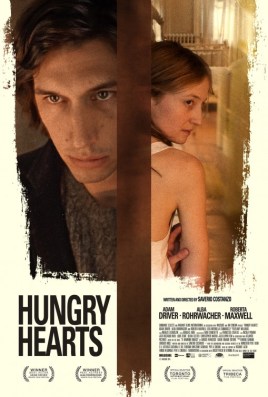
Hungry HeartsSaverio Costanzo’s “Hungry Hearts” pits two philosophies of child-rearing against each other to haunting effect.  After a meet-cute while trapped in the restroom of a Chinese restaurant, Adam Driver’s Jude and Alba Rohrwacher’s Mina begin a relationship that inadvertently spawns a child (and thus a marriage). Jude indulges some of his wife’s whims while pregnant, assuming she will return to a less heightened state of being once she delivers.

But Mina only firms in her resolve to practice unconventional and hyper-protective parenting once their child is born.  She wants the baby on a vegan diet and cannot bear the thought of him leaving the house and receiving exposure to the outside world’s toxicity.  After nine months protecting him in a womb, she feels the need to extend that shelter.  In other words, Mina is the kind of enlightened ignoramus who reads one email and decides not to vaccinate her child.

In theory, helicopter parenting has the best of intentions, but Jude sees its negative externalities whenever the baby appears malnourished and underweight.  Parenting quickly becomes a competition, not a collaboration, as Jude starts taking definitive steps to ensure the security of his offspring.  The claws come out as the couple manipulates the legal system to get their way with the child.

This duel of the fates feels so momentous because of the powerful acting of Adam Driver, who recalls vintage DeNiro in his releases of righteous aggression.  Many roles over the past three years have hinted at this pent-up rage, and “Hungry Hearts” finally provides the vessel for it to reach the surface.  Rohrwacher, while spookily compelling in her own right, far too often relies on playing an absent-minded fruit loop to really give her on-screen counterpart a run for his money.

Costanzo’s film mostly matches their intensity, though hints at a supernatural dimension like “Rosemary’s Baby” that he never intends to portray get a little frustrating.  His film is at its best when the camera, with shakiness and grain, captures the unbearable tension and claustrophobia between two radically different people tied together by the one thing that drives them apart.  B+3stars


REVIEW: Far from the Madding Crowd

28 06 2015

All period films should feel as urgent as Thomas Vinterberg’s “Far from the Madding Crowd.”  Though the story might take place in Victorian England, none of the characters ever feel preserved in amber.  This adaptation of Thomas Hardy’s novel illuminates present-day issues faced by women as they seek agency and independence through a heroine, Carey Mulligan’s Batsheba Everdene, who bristles with the norms of her time.

You would think, in the 140 years since the novel’s publication, that the world has progressed some in respecting the dignity of women.  But alas, two chauvinists sitting next to me served as a potent reminder of just how necessary this story continues to be.  In their eyes, any decision Batsheba made that did not lead her down a path of submission or domesticity evinced that she was a reckless whore.

Bathsheba never aligns herself as opposed to the institution of marriage; at one point, she memorably remarks that she would be a bride if she didn’t have to get a husband.  Her needs are rather peculiar due to a unique set of circumstances that grants her ownership of a sizable portion of land in the English countryside.  Rather than surrender the property to an able-bodied man, Bathsheba possesses enough self-confidence to run the farm herself.

Read the rest of this entry »


REVIEW: Me and Earl and the Dying Girl

27 06 2015

Me and EarlOn its face, Alfonso Gomez-Rejon’s Me and Earl and the Dying Girl” amounts to a fairly simple calculation.  Jesse Andrews, adapting his own novel for the screen, takes the YA weepie “The Fault in Our Stars” and makes teen cancer more palatable by injecting a healthy dosage of hyper-mature, cinematically literate narration comparable to “Easy A.”

If someone asked me to quickly describe this movie, I would probably use some combination of the two movies listed above – and it would be a positive recommendation.  But, like any good movie, “Me and Earl and the Dying Girl” is far more than just its sales pitch or just the sum of its influences.

For starters, the film features a vividly realized protagonist in Thomas Mann’s Greg Gaines.  I am still a little uneasy by the egocentric nature of the tale, especially given his interactions with Olivia Cooke’s Rachel Kushner, a classmate undergoing grueling treatment for leukemia.  But the more I reflect on the movie, the more I come to assume this was intended.  After all, “Me” does come first in the title.

Greg reminds me a lot of myself in high school, and I suspect anyone like me who takes the time to write out their thoughts about “Me and Earl and the Dying Girl” will probably have some line to the same effect in their review.  He’s a droll, quick-witted teenage cinephile who would rather create and consume fabricated narratives than blaze one of his own.  Greg fashions himself as nothing more than a loser trying to quietly suffer beneath the cliques that dominate the high school hallways, though his detailed taxonomy of every social group demonstrates that he believes himself above them as well.

At first, I wondered why I had such a hard time connecting with Greg.  If he reminds me so much of myself, why should I not embrace this character with whom I so often nod in painful recognition?  Then, I made an important realization – maybe people like Greg (and, by extension, myself) are not the easiest to love.  Especially towards the end of the film, where I slowly stopped identifying with him, Greg begins drowning himself in a toxic combination of self-loathing and self-awareness.

Read the rest of this entry »


REVIEW: Escobar: Paradise Lost

26 06 2015

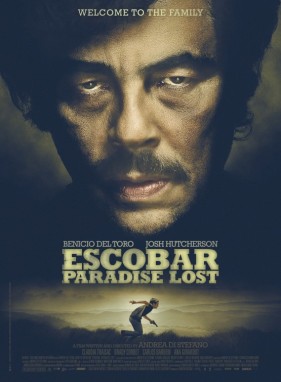
EscobarDespite what the title might imply, “Escobar: Paradise Lost” is not really a film about Colombian cocaine kingpin Pablo Escobar.  The name must have its roots in a marketing meeting because Benicio del Toro’s titular figure shows up about as often as Robert DeNiro’s Al Capone in “The Untouchables.”

For the uninitiated, writer/director Andrea di Stefano provides a little more information about the drug lord than season 3 of “Entourage” can give.  In lightly sketched detail, Escobar’s appeal to the dispossessed in his country becomes a little more clear.  Whether willfully or naively, the film implies most Colombians remained in the dark about his lucrative illegal enterprises but were not asking questions so long as the money kept flowing.

The true protagonist of “Escobar: Paradise Lost,” Josh Hutcherson’s Canadian surfer bro Nick Brady, encapsulates this journey from tentative acceptance to fearful resistance.  Nick falls in love with Escobar’s niece while working in the forests near the Colombian beaches, and he graciously accepts an offer to work on the family farm rather than face harassment from armed thugs.  He suspects something might be awry with his relative and employer but remains silent, to his ultimate detriment.

Read the rest of this entry »


F.I.L.M. of the Week (June 25, 2015)

25 06 2015

The ReturnI abide by many mantras, but one I use often in assessing and criticizing movies is, “Never judge a director by their debut film.”  In the case of Andrey Zvyagintsev, however, such would actually be acceptable.  His first feature, 2004’s “The Return,” shows a remarkable command of suspense and tone that results in a gripping experience.

To be clear, “The Return” is not my pick for the “F.I.L.M. of the Week” simply because I am grading Zvyagintsev on a curve.  Regardless of whether this were a director’s first or fifteenth film, I still would have been bowled over by its power.  But anyone who saw this on the festival circuit a decade ago should have easily been able to foresee Zvyagintsev’s Oscar nomination for “Leviathan” last year.

Unlike his film recognized by the Academy, however, “The Return” focuses smaller scale rather than on the state of the entire Russian nation.  Zvyagintsev primarily follows three characters over the course of the film: baby-faced Ivan, his older teen brother Andrei, and their estranged father Otets.  After a twelve year absence, the patriarch mysteriously returns home to command his old family, and he does so with an iron fist.

Tensions already run high between Ivan and Andrei, as shown by an opening scene where the eldest sibling allows a bully to heap masses of humiliation on his petrified brother.  Otets’ arrival simply lights the long fuse to the powder keg of familial tensions.  But Zvyagintsev refuses to let us see the full length, thus keeping us in stomach-clenched agony watching their male bonding trip slowly go south.  Animosity over his absence provides many a heated debate, as does Otets’ favoritism of Andrei and patronization towards Ivan.

The default reaction of the kids, in response to the feuding with their father, is to shut down entirely and offer nothing but a mopey, downcast frown.  Zvyagintsev never tries to psychoanalyze them in “The Return.”  He simply lets us see how each instance of frustration incrementally sets the wheels of chaos in motion.  From our distance, we can only watch in anger, helpless to stop what we know is coming.  Yet anyone paying attention will be hard-pressed to turn their eyes away…