REVIEW: Selma

7 01 2015

Selma” is not a Martin Luther King, Jr. biopic.

Or, I should say, “Selma” is not just a Martin Luther King, Jr. biopic.  It is so much more than just the story of one man.

Director Ava DuVernay and writer Paul Webb create their “Lincoln,” a film concerning the premier orator of his era set in the twentieth century’s ’65.  This man, standing with little more than ideology and conscience, must work against a political establishment stacked against them.  What is right, in the minds of these officials, must take a backseat to what the voting public is ready to accept.

But DuVernay, thankfully, disposes of Spielberg’s hagiography of Honest Abe that reeked of cinematic mothballs.  She opts for a portrayal of Dr. King that focuses on who he was and what that allowed him to accomplish.  In a way, not receiving the rights to use King’s actual speeches makes “Selma” a stronger movie.  Whether organically or out of necessity, he becomes so much more than a collection of recognizable catchphrases that trigger memories of a high school civics class.

“Selma” certainly does not shy away from some character details that the history books often elide, such as his vehement opposition to the Vietnam War and his marital infidelities.  Dr. King, as portrayed by David Oyelowo, does not always don his shining armor, either.  The film’s most powerful display of racially motivated violence takes place when hundreds of protesters attempt to cross Selma’s Edmund Pettus Bridge, only to be brutally attacked by a cabal of police and townsmen alike.  King is not there with them.  He is at home, trying to smooth over a marital rough patch with his wife Coretta (Carmen Ejogo).

Read the rest of this entry »


REVIEW: Water for Elephants

6 01 2015

I read Sara Gruen’s acclaimed best-selling novel “Water for Elephants” at the zenith of its popularity and found myself rather underwhelmed.  (What self-respecting novel gives only the most cursory explanation of its title?)  Francis Lawrence’s cinematic adaptation did little to change my opinion.  His “Water for Elephants” is pleasant and watchable, which is about all it has to offer.

In the film, Robert Pattinson stars as Jacob Jankowski, a veterinary student whose life takes a screeching detour when his parents both die during his last exam.  Saddled not only with his own grief but also with their debts, he opts for a somewhat cliched escape route by joining the circus.  He stows away and quickly moves up from shoveling horse droppings to taking care of the show’s star animals.

He quickly discovers that his humane veterinary practices have little use in the profit-hungry Banzini Brothers circus, run by the shrewd but cruel August (Christoph Waltz).  As if that is not enough to make him worry about both occupational and personal security, Jacob finds himself smitten for the boss’s wife, star performer Marlena (Reese Witherspoon).   Romantic rivalry quickly runs cold as Jacob’s arrival quickly accelerates the dismembering of Marlena and August’s already fragile relationship.

Lawrence prefers to leave the tensions at a standstill rather than letting them progress towards their boiling point.  As a result, “Water for Elephants” often feels flat and unexciting.  At the very least, when the sparks fail to fly at the clashing of the three leads, the environment is always believable and interesting.  The film does a nice job romanticizing the elegant, balletic movement of the circus performance as well as the extravagant moveable architecture of the spectacle.

In a sense, it adds to the story a visual element that has to remain imaginary when experienced on the page.  Too bad Witherspoon, Waltz, and Pattinson could not add more flavor with their characters.  C+2stars


REVIEW: The Interrupters

4 01 2015

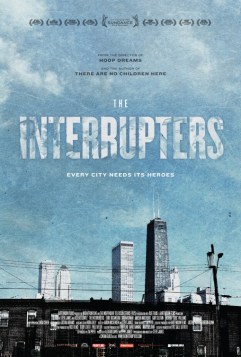
The InterruptersTo fight violence, you need to know what it is. And in “The Interrupters,” a documentary that follows the CeaseFire group as they work to halt youth violence in Chicago, many somber explanations are proffered that really give us a sense of what these fighters are up against. Violence is learned behavior and also a disease – it’s what these kids expect to be their cause of death.

Steve James’ documentary ultimately proves to be about as untidy as the task of fighting this epidemic. The narrative he crafts out of his observations is rather scattershot, and very little attention is given to developing the arcs of certain important figures in the story.

Still, “The Interrupters” collects some rather moving moments that make the documentary a worthwhile watch. In one particularly somber montage, we see several makeshift mausoleums erected to honor murdered children. What else really needs to be said?

James makes sure we understand the fear that the normalcy of constant violence inflicts on the children of these Chicago communities. But, at the same time, he also makes sure we understand that this problem can’t just be solved by well-meaning white ladies like “The Blind Side” intimates. James unquestionably communicates the passion of these violence interrupters to turning the tide on youth violence, and we can see that they have slowly begun to inspire their community.

“The Interrupters” is at its best in these instances where can see and hear from the boots on the ground fighting the battle. CeaseFire’s CEO Tio Hardiman provides some very profound commentary, as do many other of his foot soldiers.  They do their job with near perfection and noble intent; James, in telling their story, brings merely the latter of those two attributes.  B2halfstars


REVIEW: The Wonders

3 01 2015

The WondersNew York Film Festival, 2014

Alice Rohrwacher’s “The Wonders” is a tender film of quiet power, offering full satisfaction on a relatively modest scale.  Maria Alexandra Lungu plays Gelsomina, the eldest of four children in a rural Italian beekeeping family.  Her corner-cutting father sets a tone of putting their financial stability above all else, even sacrificing physical well-being in order to protect their honey.

Trying to better their quality of life, Gelsomina submits her family’s farm to compete on the reality show “Countryside Wonders,” which puts pastoral communities on display for the whole nation.  (For those who might not know too much about contemporary Italian culture, watch Matteo Garrone’s savage satire “Reality” to see just how firmly entrenched reality TV is in their collective psyche.)  Her proposal meets vehement opposition from the stern patriarch, who would rather take in a German juvenile delinquent to rescue them from dire straits.

Even with her small amount of power in the family, Gelsomina does her best to make responsible moves on their behalf.  This does require a kind of hardening into adulthood, making the film a bitter coming-of-age tale.  “The Wonders” is as much about innocence lost as it as about maturity gained, placing it in good company with films like “Hide Your Smiling Faces.”

Read the rest of this entry »


F.I.L.M. of the Week (January 1, 2015)

1 01 2015

Mike Leigh’s films are certainly not everyone’s cup of tea; I, myself, often find his movies rather impenetrable.  His scripts, with their precise and emphatic characterization, often feel like the most episodic instances of linear plots imaginable.  Leigh takes his sweet time in getting to his final destination, which can be maddening for those not on board.  The leisurely pace can often provide quite the opposite of leisure, as a matter of fact.

All these things are true of his 1999 film “Topsy-Turvy,” a historical biopic of British opera masters Gilbert and Sullivan set at the development of their great production, “The Mikado.”  The movie boasts all the hallmarks of a period piece – namely, extravagant attire and luscious set design – but little of the stuffiness or self-importance that usually accompanies them.  This is my pick for the “F.I.L.M. of the Week” for the way it eschews that style of opulence-focused filmmaking in favor of its talented ensemble.  Leigh cares far more about what feelings lie underneath their wardrobe instead of the fabrics that adorn it.

Sorry to keep limiting the audience, but the film will carry far more meaning for those who have spent any time working on a theatrical production.  The stage draws a particular kind of personality and ego towards it, and “Topsy-Turvy” packs its cast full of these personages.  These are not just “Waiting for Guffman”-like archetypes, though. All the players feature a depth of character that makes them all the more recognizable as people, not just as figures.  Common sense would not dictate the logic behind granting so much screen time to those who execute Gilbert and Sullivan’s work, yet it somehow works.

The two titans of the operetta hardly go underdeveloped, however.  “Topsy-Turvy” offers plenty of insight into the working relationship of two talented artistic creators, showing how their professional collaboration turns sour after over a decade.  Sullivan (Allan Corduner) seeks to craft a breakthrough opus while Gilbert (Jim Broadbent) seems hardly phased by their relative creative stasis so long as it continues to pay the bills.  They almost dissolve their partnership over simple disagreement, not because of some extraordinary circumstance that usually tears musicians apart in cinematic renderings.

Ultimately, they pull it together and create something fresh and exciting with “The Mikado,” and Mike Leigh arguably achieves the same feat with “Topsy-Turvy.”  The film is funny as well as insightful, in sneaky ways that are not entirely apparent until it concludes.


REVIEW: The Disappearance of Eleanor Rigby

29 12 2014

Eleanor RigbyThe basic premise of writer/director Ned Benson’s “The Disappearance of Eleanor Rigby,” to be clear, is nothing particularly special.  James McAvoy and Jessica Chastain star as Connor Ludlow and Eleanor Rigby, respectively, a married couple in New York City hitting a devastating rough patch after a miscarriage.  Each deals with the tragedy in their own way, and Benson gives each story a feature’s length to develop.

Meant for consumption as one, “Him” follows Connor as he attempts to shake off the funk by throwing himself into his work for external validation while “Her” takes Eleanor’s point of view as she searches for greater meaning through introspection and education.  By isolating rather than integrating Connor and Eleanor’s journey, Benson makes perspective and subjectivity the prime focus of “The Disappearance of Eleanor Rigby.”

(Note: I did not bother to watch the streamlined edit that intercuts their stories, subtitled “Them,” because it seemed to defeat the purpose of the unconventional style.)

Students of narrative will relish this schismatic storytelling, analyzing what can be gleaned from one section that cannot be discerned in another.  Scenes shared by the former couple lend themselves to entirely different interpretations depending on the amount of information at hand on approach.  Integral figures in one person’s life are entirely irrelevant or nonexistent in that of the other.  Benson inquisitively asks how much can anyone know about others when trapped to see the world only through their own eyes, a question with strongly felt reverberations.

By all accounts, “The Disappearance of Eleanor Rigby” serves as a reminder that everyone has their own narrative.  Even the entrance (or exit) of a spouse does not create a shared story.  As important as that person is, they are merely another character in a grander arc.  Benson’s shedding of illusions surrounding coupling allows for a rich, nuanced portrayal of individual identity reclaimed and reasserted.

As such, “Him” and “Her” are both successful features as independent entities, not merely as half of a whole or only as an object for juxtaposition.  McAvoy commands his section by seizing the day and rallying to action to keep himself afloat; he is also bolstered by a strong dramatic turn from Bill Hader as a coworker and companion.  Meanwhile, Jessica Chastain proves irresistibly compelling as she mines the deepest recesses of her psyche for any kind of redemptive discovery.  In their contrast, Benson finds a beautifully dissonant harmony.  B+3stars


REVIEW: Stranger by the Lake

28 12 2014

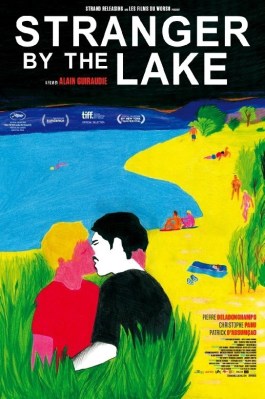
Stranger posterStranger by the Lake” is a film for those who love deliberating why a shot was taken from a certain length or held for a certain time. All others need not apply, as it will likely appear as little more than a rarified gay porn film.  Though the displays of sexuality in “Stranger by the Lake” are not extended set pieces like “Blue is the Warmest Color,” director Alain Guiraudie manages to pack more graphic images into their truncated length.

At a lakeside cruising spot, which is apparently France’s best kept secret, Franck develops a puppy love crush on the Adonis-like Michel. This powerful attraction blinds him to Michel’s sketchy behavior, ultimately drawing him into a danger far greater than he had bargained for.  And that’s saying a lot since Franck even makes the ill-advised decision to have unprotected sex with fellow cruisers.

Those who stick with “Stranger by the Lake” will quickly get over the constantly exposed male genitalia, viewing it as merely the proper costume for the location, and experience a top-notch thriller.  Though the cruisers are physically naked, they do not bare their souls and keep plenty of secrets.  While the proceedings begin with the consistency of the lake’s controlled calm, they quickly spiral into an aesthetically masterful tale of intrigue and terror.

Guiraudie directs everything from suspense to sex scenes with a stringent precision that conceals as much as it reveals and suggests as much as it shows.  Those who can get over the sight of a penis will see one heck of a film.  B+3stars


REVIEW: Big Eyes

27 12 2014

Big Eyes

Director Tim Burton (“Alice in Wonderland,” “Dark Shadows“) is accustomed to working on canvases larger than life.  But in his latest directorial outing “Big Eyes,” he has a hard time creating an environment that feels true to life.  The film is the rare Burton picture not set in any realm of fantasy or imagination, and he feels uncomfortable in the domain of average human beings.

His response to every question that arose in production, it seems, was to opt for exaggeration.  “Big Eyes” has the tense spousal dynamic of “The Color Purple” where the exploitation in the marriage is artistic rather than sexual.  Walter Keane (Christoph Waltz) aspires to be a renowned and revered artist yet cannot achieve such status with his own paintings.  Thus, he claims the resonantly kitschy big-eyed paintings of his wife Margaret (Amy Adams) for his own and forces her into a glorified form of indentured servitude.

Burton uses a narrator to constantly remind the audience that this all happened “back then” as if the whole thing were some kind of fairy tale.  Yet “Big Eyes,” sadly, derives its strength from the nagging sensation that this could just as easily be happening in 2014.  The kind of cultural diminution and symbolic rape committed in the film is still endemic in today’s society, but Burton seems content with hermetically sealing it in some kind of dolled-up past.

Read the rest of this entry »


REVIEW: The Interview

26 12 2014

Separating the movie “The Interview” from the international event that its release has become feels futile, if not entirely impossible.  Ironically, writers and directors Seth Rogen and Evan Goldberg (as well as their screenwriter, Dan Sterling) almost seem to anticipate the ramifications.  “In ten years, Ron Howard is gonna make a movie out of this,” proclaims James Franco’s TV personality Dave Skylark after scoring a sit-down with North Korean dictator Kim Jong Un.

He – or perhaps maybe Ben Affleck – will have quite the material for a high-stakes thriller, yet all of it comes from the story outside “The Interview” rather inside of it.  The film offers pretty much what could be expected of any Seth Rogen comedy, which is namely crude jokes about pop culture, women, and buttholes.  It just happens to reside in the same film as a satire which depicts the assassination of a sitting world leader in good fun.

This is not “Inglourious Basterds” where (SPOILER) Hitler gets riddled with bullets to rapturous cheers from the crowd.  “The Interview” is so goofily implausible and patently ridiculous that anyone who takes its execution at face value might consider taking up residence in North Korea and worshiping their Supreme Leader’s bizarre cult of personality.

Rogen and Goldberg do not hold back on highlighting some bullet points from the country’s despicable human rights record, yet they also take steps to humanize that target.  Brought to life by Randall Park (Chung from “Veep”), Kim Jong Un actually receives more agency and personality than Lizzy Caplan’s CIA agent in charge of the mission to kill him.  He has daddy issues, struggles with his sexuality, and desperately seeks approval from people he admires – such as Skylark.  Then again, he also starves his own people and plays fast and loose with nuclear weapons…

Read the rest of this entry »


F.I.L.M. of the Week (December 26, 2014)

26 12 2014

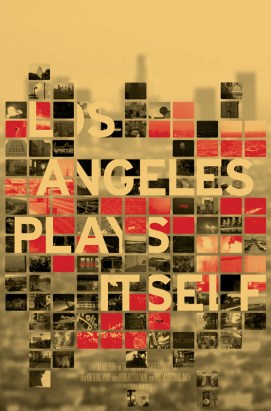
Los Angeles Plays Itself

Back in 2011, I saw “The Tree of Life” at home in Houston.  Towards the end of the film, Sean Penn’s Jack wanders out in front of a well-known building (which true Houstonians will still refer to as the Transco Tower).  Then, inexplicably, Terrence Malick cut to a shot of the Dallas skyline.  My entire theater erupted in boos.

When representations of a place fail to match their reality, we as both moviegoers and citizens feel angered by the disconnect.  The list of movies set in Houston are relatively small, but the same could not be said for Los Angeles, however.  Often called “the most photographed city in the world,” the city that hosts the home of the film industry has naturally served as both character and subject for a whole host of movies.

Thom Andersen’s documentary “Los Angeles Plays Itself,” made a decade ago but only just now hitting home video due to clashes over the rights to clips, follows the interplay between the concept of Hollywood and the actuality of Los Angeles.  Though the cinematic mythologizers may attempt to spin it as an atypical locale, plenty of its residents lead lives as ordinary as any other American.

While the narrator speaks in the first person plural as if all viewers are Angelenos, it ought not scare away anyone else.  It probably holds more meaning for those who have experience cruising the streets in the City of Angels (and thus understand the frustration of getting stuck in its inevitable traffic jams), but “Los Angeles Plays Itself” is a movie for anyone who loves the movies.  This is my selection for the “F.I.L.M. of the Week” because it makes an excellent case that the history of Los Angeles on-screen is the history of 20th century America and is thus worth attention.

Had I written down all the fascinating titles highlighted, my ever-growing list of movies I need to see would probably double.  Andersen covers everything in his comprehensive overview of films set in the city.  There are classics by Billy Wilder to Roman Polanski, B-movie genre trifles, and even gay porn flicks.  His saga of the rivalry between Hollywood and L.A. (as the cinema would have the world abbreviate it) reflects so much about American culture as a whole, yet it never loses its locally-minded specificity.

“Los Angeles Plays Itself” has all the depth of thought of field-leading scholarship.  (Andersen, I have since found out, is a professor at CalArts.)  But rather than packing his research into a dense textbook or monograph, he smartly fashions it in the form of a video essay, which has since popularized by editors like Nelson Carvajal and Kevin B. Lee.  The film’s intermission, on the other hand, suggests that maybe you ought to split up your absorption like reading a book rather than binging it all at once.  At nearly three hours, the documentary is a dense watch brimming with valuable information.

Even so, I felt like I could easily have watched another three hours.  The wry narrative voice of Encke King assumes an authoritative tone, although he occasionally interrupts his matter-of-fact delivery with a bluntly stated opinion that inspires a good chuckle.  And after a film like Paul Thomas Anderson’s “Inherent Vice,” I feel certain that there is enough material for a postscript about the past decade…


REVIEW: Leviathan (2014)

25 12 2014

LeviathanIn the past few years, both the Coen Brothers in “A Serious Man” and Terence Malick in “The Tree of Life” have explored the perpetually head-scratcher of a Biblical story that is Job.  The perceived human disparity between is and ought as well as the unfathomable question of why bad things happen to seemingly good people is always relevant.  These American directors, to varying degrees of success, managed to pose the questions raised by Job without explicitly mentioning it to the audience.

Russian writer/director Andrey Zvyagintsev displays no such reticence in his film “Leviathan.”  His central character Kolya, a provincial man facing a potentially unlawful government seizure of his coastal property, is explicitly told within the film itself to reconsider his woes in light of Job’s struggles.  The complete lack of subtlety denies some of the joys of discovery for the viewer, yet it does little to detract from this astute depiction of contemporary Russia.

Zvyagintsev sets his sights big with a clear allegory for the state of the nation.  The plain, unassuming Kolya is the Russian everyman whose home and town already appear to be in a state of disrepair.  His nemesis is a corrupt civil servant, the mayor Vadim, who wishes to have the property for a “communications center.”

As if his position alone did not indicate a reference to Russia’s president, the swaggering, oafish bully is a visible Putin acolyte.  A picture of the country’s leader hangs in his office, and Vadim has, whether consciously or subconsciously, even modeled his hairstyle after Putin.  The deck seems stacked against Kolya from the very beginning as Vadim has enormous power to wield and support from the Russian religious establishment.

“Leviathan” makes quite the condemnation of these large societal forces and their perverse collusion, but Zvyagintsev never loses sight of the human collateral damage taken by the conjoined church-state beast.  While the first portion of the film is rather heavy on dialogue and plot development, the concluding sections are more ambient and brooding.  Everyday torments shine a powerful light on existential tussles, a powerful connection that resonates tremendously.  B+3stars


Classics Corner: It’s a Wonderful Life

24 12 2014

BEFORE

Everyone, including people like me, has blind spots in their knowledge of classic films from the cinematic canon.  In the past few months, I have only just seen “Gone with the Wind,” “Lawrence of Arabia,” “The Birds,” and “Dead Poets Society.”

Now, I am someone who loves Christmas movies (if you have any doubt, I’ll direct you to my insanely detailed moviegoer’s challenge for “Elf”) and Frank Capra films like “Mr. Smith Goes to Washington” (though I am rather blasé about “It Happened One Night“).  So, you would expect that by now, I would have seen the holiday classic “It’s a Wonderful Life.”  If you assumed I had, you would be wrong.

To be clear, it is not for lack of effort.  Two years ago, some friends and I attempted to see a screening held at a local theater.  We deduced that since it was readily available for people to watch at home, the theater would not be crowded.  And we were wrong.  (A humorous aside: they spelled the movie wrong on their marquee. It was a “wonderderful” life, apparently…)

I have also pretty much absorbed the story through cultural osmosis.  Everyone knows the story of “It’s a Wonderful Life” to some extent, just like they know the shower scene in “Psycho.”  My primary exposure to the film came through – and this will date me tremendously – the 2002 TV movie “It’s a Very Merry Muppet Christmas.”

(Oh, and “Shrek Forever After” too, I suppose.)

But last night, Christmas Eve Eve, I decided it was time to end my ignorance.  Armed with a copy of the DVD acquired from the Houston Public Library, I would finally figure out why the movie is a mainstay of the Christmas season on television.

How to turn it into an interesting blog post, though?  I had the epiphany to essentially live blog my viewing experience and then add in a reflection at the close.  All times listed are from the 60th anniversary DVD (unsure if that changes anything but thought it might be worth noting).  So, without further ado, enjoy my thought process as I experience “It’s a Wonderful Life” for the very first time…

Read the rest of this entry »


REVIEW: The Gambler

23 12 2014

In Rupert Wyatt’s “The Gambler,” Mark Wahlberg plays Jim Bennett, an English professor by day and a high-stakes better by night.  When he gets himself into a tight situation with creditors coming to collect a big debt, Bennett resists help from his put-out mother (Jessica Lange) and a prodigious student (Brie Larson).  Instead, he responds by digging his hole deeper to vault himself out on an even larger scale.

Wahlberg plays the character with a vulnerability and self-deprecation when spitting out screenwriter William Monaghan’s rapid-fire dialogue.  Yet when his lips are still, Wahlberg imbues Bennett with a staggeringly ambivalent sense of hubris.  Viewing a week in his quickly disintegrating life is a strange experience because so much about him seems contradictory.

Bennett is best understood by not trying to understand him at all, simply watching and observing rather than identifying or analyzing.  Monaghan, working from a forty-year-old New Hollywood flick of the same name, harkens back to the era of the characterization’s conception.  Bennett exemplifies the ’70s-style impenetrable antihero, but Monaghan cleverly reassembles him for relevance in the time of TV’s current “difficult men” like Don Draper and Walter White.

Bennett cannot be explained by nor reduced to a few biographical details. Nothing indicates some massive familial implosion. His condition does not appear to have any psychological roots at all, in fact. Bennett has simply shed all illusions about life and convinced himself that the only game worth playing is one where the stakes are all or nothing.

Read the rest of this entry »


REVIEW: Top Five

22 12 2014

Too bad for “Top Five” that the title “The Interview” was already claimed for 2014.  Chris Rock’s film, a starring vehicle which he also wrote and directed, gets its narrative motor from a day-long conversation between his character Andre Allen and the probing New York Times reporter Chelsea Brown (Rosario Dawson) for a newspaper profile.

Chelsea happens to catch Andre, a successful comedian struggling for credibility as a dramatic actor, on a particularly stressful day.  Not only is it the opening day of his new film about a Haitian slave rebellion, which resembles “12 Years a Slave” more than “Django Unchained,” but it is also the weekend of his marriage to a Kardashian-style Bravo reality star (Gabrielle Union).  That much pressure all at once is about enough to make him relapse into the alcoholism he has controlled for years.

Rather than chew out his publicist for such horrific planning, Andre responds to the stacked schedule by baring his soul in responses to Chelsea (in a manner similar to Rock’s own refreshing candor on the “Top Five” press tour).  He rambles on about moments both somber and hilarious from his career, and Rock usually captures the back-and-forth in a two-shot.  This character arrangement, perfect for verbal volleying like in “Before Midnight,” allows the simultaneous enjoyment of Andre’s outrageous delivery and Chelsea’s often dumbfounded reaction.

Read the rest of this entry »