REVIEW: White Bird in a Blizzard

27 09 2014

White Bird in a BlizzardGregg Araki’s “White Bird in a Blizzard” begins with the interesting premise of hybridizing two familiar generic forms, the missing person thriller and the adolescent sexual flowering drama.  The body of Eva Green’s Eve Connor disappears mysteriously while her 17-year-old daughter Kat (Shailene Woodley) “was becoming nothing but [her] body.”

Though the blend starts off curiously, it eventually just feels blandly noncommittal.  The film lacks a clear, purposeful narrative through-line to propel it forward.  It progresses largely on the basis of “here are scenes of things that happen to Kat,” an assuredly unsatisfying way to watch a film.

The wishy-washy, always vacillating plot of “White Bird in a Blizzard” is certainly not helped by the fact the leading actress has already explored its central issues.  We’ve seen Woodley deal with family trouble ensuing from an absent mother in “The Descendants,” and we’ve watched her carnal awakenings in both “The Fault in Our Stars” and “The Spectacular Now.”

Woodley still has intermittent flashes of inspired breakthrough, which is a testament to just how talented of a performer she truly is.  Making a put-out teen watchable on its fourth reheat is certainly an achievement.  But “White Bird in a Blizzard” could mark the moment where she started to find brick walls where she once found niches in her archetypical adolescent.  I fear that the film’s lasting legacy will not be that Woodley revealed intimate parts of her soul but rather that she bared intimate parts of her body.

If that’s what Shailene Woodley needs to grow into an adult performer, then the film is certainly not a waste.  But I can’t help but think “White Bird in a Blizzard” does not serve anyone else particularly well, especially not its screenwriter and director Gregg Araki.  His work as a pioneer of New Queer Cinema broke boundaries; yet here, turning in a much more mainstream product, Araki seems lost and leaves a rather indistinct stamp as an artist.  C+ / 2stars


F.I.L.M. of the Week (September 26, 2014)

26 09 2014

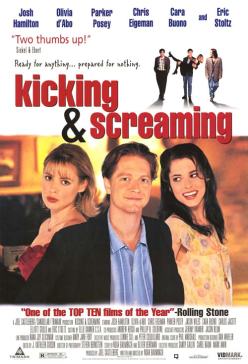
Kicking & ScreamingIn a few weeks, I will turn 22, the same age as the characters in Noah Baumbach’s “Kicking & Screaming.”  While watching the film, I couldn’t help but wonder if I was getting a glimpse of my very own future.  Hopefully I’ll get my life in a bit more order than these washed-up college grads struggling to find direction after their paths are no longer pre-ordained…

Though the movie is nearing its second decade, it does not appear to have aged at all.  “Kicking & Screaming” provides a portrait of prolonged adolescence and delayed adulthood that is both entertaining and enlightening.  It takes the cake as my “F.I.L.M. of the Week” because my identification with the film went beyond just recognizing the characters.  I think I may be these characters.

Baumbach effortlessly captures the seemingly timeless sensation of emerging from college and knowing all the ideas that changed the world yet having very few ideas of one’s own.  (Or perhaps he was just one of the first people to observe what A.O. Scott recently lamented as “The Death of Adulthood in American Culture.”)  His film is less concerned with forward plot progression as a kind of stewing yet spirited stasis, aligning rather nicely with the disposition of the characters.

“Kicking & Screaming” presents the lives of four male pals from their graduation night onward, letting us watch as they bicker pithily at each other to delude themselves of their own importance while doing relatively little with their newly printed degrees.  Sure, the sniping is quite pretentious, but at least they are educated and self-aware enough to realize that.

As they continue to interact with the milieu of their university from the perspective of a lingerer, pathetic hilarity ensues with every remark.  So long as you can find their musings palatable, “Kicking & Screaming” will have you hooting and hollering.  And perhaps you might not; it’s entirely possible that I will no longer find the film amusing if once I move beyond the current stage in my life.  But I get the sense I’ll always enjoy this movie given its sharp understanding of a very specific condition.

(And just to clear the air, this is NOT the same “Kicking and Screaming” that stars Will Ferrell, Robert Duvall, Mike Ditka, and Josh Hutcherson.  Classic mixup.)


REVIEW: Tusk

25 09 2014

TuskI see so many movies that it’s easy to slip in to the comfortable delusion that I’m an unflappable moviegoer.  Nothing can scare me (save a cheap jump-out), nothing can shock me … you get how the fallacy operates.
Then I went to see “Tusk,” and I got an unfortunate reminder that I can still stare agape at the screen.  This came at the same time as remembering that there are certain sights I cannot unsee.  Here, that sight was Justin Long enveloped in a walrus suit made of human flesh.  (Because his ’70s porno mustache wasn’t frightening enough.)

Not that it was any more disgusting or scary than anything else I’d seen before.  I mainly sat in stunned, stupefied silence that someone had this idea and felt compelled to bring it to life for a paying audience.  I just wish there were some way to withdraw the $7.75 admission charge from financing, and thus implicitly encouraging, Kevin Smith’s bizarre and puerile stoner fantasies.

It was more than just the nasty walrus at its center that ticked me off about “Tusk,” though.  The entire enterprise seems ill-advised for a feature-length film.  Its beginning concept, the unsuspecting person stumbling into a den of horror and depravity, has been done by everything from “Psycho” to “Misery.”  Smith’s crazy of choice is Michael Parks’ Howard Howe, a Canadian backwoods-dweller intent on finding a man who he can transmute into the walrus, Mr. Tusk, with whom he fell in love with decades prior.

Smith’s take finds nothing new in the previously trodden territory, and the odd narrative structure and bloated length compound the imbecility of his specific story.  “Tusk” is the kind of idea that might make for a provocative YouTube video, but it lacks the depth and intrigue to sustain its 100 minute duration.  Even Johnny Depp, who shows up about an hour into the film in a baffling supporting role, cannot enliven the dead organism.

“Tusk” is all superfluous blubber with no meat.  Smith means to startle, but without providing any good cause for doing so, all he can do is elicit groans.  D1star


REVIEW: Salvo

24 09 2014

SalvoCannes Film Festival – Critic’s Week, 2013

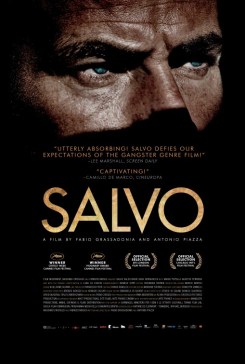
In my second year at the Cannes Film Festival, I told myself I would expand my viewing beyond the Official Competition to enrich my experience.  (For those who might not know, the festival also has two officially recognized sidebars that boast impressive selections of their own.)  I feared I had run out of time to check out a film from Critic’s Week but noticed that, in a small pocket of freedom, I could catch a repeat screening of the winner, Fabio Grassadonia and Antonio Piazza’s “Salvo.”

Perhaps seeing the high expectations surrounding a newly crowned champion are to blame for my intensely negative reaction.  Or maybe I was just fatigued given that this was my fourth film of the day.  But I don’t think I had a more miserable viewing experience at that festival than “Salvo.”

The filmmakers commit themselves to minimalism, which is certainly not an immediate cause for dismissal.  But the reservedness does not draw us in further or illuminate the characters.  It’s the case where nothing just means nothing. “Salvo” has an interesting enough plot – an Italian mafia hitman has a crisis of conscience when faced with the prospect of having to whack a blind girl – but it’s executed with such an excruciating lack of urgency that it renders the final product practically unwatchable.  D / 1star


REVIEW: Tracks

23 09 2014

TracksLondon Film Festival, 2013

Maybe this is something I will grow out of as I get older, but I have always identified most with the wandering protagonists of the cinema.  From Benjamin Braddock in “The Graduate” to Ryan Bingham in “Up in the Air,” these perpetual seekers seemed to forge the strongest and longest-lasting connection with me.

So I seemed predisposed to click with Robyn Davidson, the protagonist of the film “Tracks” who perilously treks with camels through the Australian desert just to learn something about herself.  I found myself nodding in vigorous agreement with the film’s epigraph from Davidson, “Some nomads are at home everywhere.  Others are at home nowhere, and I was one of those.”

Yet once the film began in earnest, I related to Davidson’s journey with mild intensity at best.  I felt distant from her the entire way, kept at arm’s length by Mia Wasikowska’s generic performance.  She and the film meander towards no particular destination, although that wouldn’t be a problem if the journey yielded any significant personal developments (and “Tracks” really doesn’t).

The film is still interesting to watch, even if it doesn’t inspire reflection at the level suggested by its opening quotation.  The cinematography by Mandy Walker captures all the sweeping beauty of the inhospitable outback, and Adam Driver (from “Girls”) makes for some amusing comic relief as Rick Smolan, a National Geographic photographer who sporadically documents her progress.  But sadly, “Tracks” never satisfyingly captures the psychology of its subject.  B2halfstars


REVIEW: Stoker

22 09 2014

When I left “Stoker,” I was not entirely sure whether I liked or loathed it.  The sentiment was distinct from the normal ambivalence that I feel about rather bland, unremarkable films.  Rarely had such conflicting emotions about a work of art seemed so passionless to me.

Chan-wook Park’s English-language debut certainly has a cool neo-Hitchcock vibe to it, particularly in its impressive editing and heavy dependence on atmosphere.  Very little happens in “Stoker,” which revolves around an odd teenager India Stoker (Mia Wasikowska), once her uncle Charlie (Matthew Goode) moves in to “comfort” her recently widowed mother Evelyn (Nicole Kidman).  They interact in cryptic ways, which are often so vague that only the language of the camera gives any clue as to what to make of it.

At first, this indistinctness is chillingly beguiling.  But after a while, “Stoker” just starts to feel like a bunch of smoke and mirrors.  I had no idea where the movie was going until the last 30 minutes, largely because it lacked a firm narrative.  And when there is little story to follow, all attention shifts to aesthetics.  With all that extra attention, Park’s style reveals itself as rather empty.

Perhaps “Stoker” can approximate a Hitchcock thriller in terms of finesse. But Hitch had compassion for his characters, which is such a crucial X factor that has led his work to retain such a foothold in the public imagination.  Park, on the other hand, builds such a distance between us and the characters that I found myself retreating into my own imagination to think about the next movie on my agenda.  B-2stars


REVIEW: Starred Up

21 09 2014

Starred UpStarred Up,” not unlike its apparent next-of-kin “Bronson,” falls firmly into the category of great but not sensational British prison movies.  It’s entirely engaging and entertaining, even though it does not look beyond its confined setting.  And I’m totally fine with it.

The film begins with a silent bang as its protagonist, Eric Love, arrives to be locked away.  He’s the spiritual progeny of anarchic Randall P. McMurphy from “One Flew Over the Cuckoo’s Nest” and James Dean’s renegade Jim Stark from “Rebel Without a Cause.  Already hardened by years in a juvenile facility, Eric arrives to play with the big boys and establish his position at the top of the pre-ordained social structure.

Rising star Jack O’Connell brings writer Jonathan Asser’s creation to vivid life with a viciously physical performance.  O’Connell neither entirely humanizes nor animalizes Eric, yet he’s still a staggering force.  Even as he erects barriers preventing us from really sympathizing with Eric, he becomes all the more enticing of a character.

His insurgency, of course, causes conflicts with other hardened criminals in the pen.  But it also draws the interest of two figures who feel compelled to save Eric from his foolish youthful mistakes.  One is, somewhat predictably, prison counselor Oliver Baumer (Rupert Friend) who takes more interest than usually in psychologically stabilizing a potentially dangerous inmate.  More surprisingly, the other is Eric’s estranged father Neville (the highly underappreciated Ben Mendelsohn), who wants to make sure his son finds his place in the pecking order.

There’s no conventional battle for Eric’s soul.  There’s no giant climax the film towards which the film heads.  And, yes, there’s also nothing of particularly extraordinary merit in “Starred Up.”  But it has great storytelling and great acting that is wholeheartedly effective for the film’s entire duration.  Sometimes that in itself is sufficient.  B+ / 3stars


REVIEW: This Is Where I Leave You

20 09 2014

This Is Where I Leave YouIt took me until a college intro-level theater class to realize it, but the term melodrama actually means “music drama.”  In Shawn Levy’s adaptation of the novel “This Is Where I Leave You,” he really deploys that definitional dimension to convey all the film’s emotion.

As if we couldn’t already tell that two family members alone together was going to result in clichéd conversation, Levy cues each scene up with Michael Giacchino’s gentle piano score to softly amplify the forced profundity.  Or maybe if we’re lucky, Levy will treat us to a mellow Alexei Murdoch ditty.  (The singer is employed far less effectively than he was by Sam Mendes in “Away We Go,” for the few out there who care.)

The film seems to move forward solely on the logic that everyone needs to almost cry alone with each other.  It doesn’t matter to what extent the actors can manage authenticity – usually they don’t manage at all – because it’s impossible to escape the hoary hokeyness of the directorial heavy-handedness.

“This Is Where I Leave You,” which follows a family of four estranged siblings coming back to sit shiva for their deceased father, brings a lot more under its roof than it can handle.  Levy recruited a heck of a cast but seems unsure of how to deploy them in roles that require more than easy comedy.  The film’s dialogue makes more than a few attempts at humor, yet its talented players seem to timid to explore that element.

The reserve of the cast only serves to exacerbate the awkward blending of three distinct comic stylings: the reactionary stoicism of Jason Bateman, the strung-out loquaciousness of Tina Fey, and the live wire erraticism of Adam Driver.  (As for Corey Stoll, their eldest sibling … well, every family needs one serious member).  They don’t feel like family members so much as they come across as uncommonly adept scene partners who can feign a passable relationship until someone yells cut.

Read the rest of this entry »


F.I.L.M. of the Week (September 19, 2014)

19 09 2014

All About My MotherIf you’ve been paying attention to recent trends in cinema, you’ll note that this isn’t a particularly great time for women.   Oscar-nominated actress Jessica Chastain recently remarked, “the female characters, very rarely do they get to speak to another female character in a movie, and when they do it’s usually about a guy, not anything else. So they’re very male-centric, Hollywood films, in general.”

Five years after Kathryn Bigelow won Best Director, women still only direct less than 5% of studio releases and 10% of indie films.  Not to mention, they comprised only 14% of the lead roles in 2013.  And yet, women make up half the population and a slight majority of the cinematic viewing audience.  What gives?

If you are looking for a film that actually gives women the spotlight and attention they deserve, you ought to check out my pick for “F.I.L.M. of the Week,” Pedro Almodóvar’s “All About My Mother.”  This Academy Award winner for Best Foreign Language Film boasts a female-centric ensemble probing all sorts of gender issues.  Almodóvar takes the time to give each character real humanity and inner life, two things which should sadly be a no-brainer for women in film (but often are not incorporated).

If you have the chance, be sure to familiarize yourself with “All About Eve” and “A Streetcar Named Desire” before dipping your toes in “All About My Mother.”  They certainly aren’t required to understand the film, but having some knowledge of them will unlock reservoirs of meaning beneath its surface.  Almodóvar engages audiences who enter with this cultural context in a very astutely observed conversation about the ways in which we internalize meaningful works of art.

Flowing from that, “All About My Mother” mainly concerns itself with the roles females play in society.  The film follows Cecilia Roth’s Manuela, a consummate matriarch mourning the tragic loss of her only son, as she brings and holds together a group of women all struggling with gender-related issues.  Pregnancy, cross-dressing, jealousy, suspicion … you name it, this film has it.  Almodóvar expertly juggles many characters and ideas, somehow managing to never drop a single one.  The experience feels nothing short of enlightening (and even 15 years later, still needs to make its way onto some Hollywood executives’ desks).


REVIEW: The Missing Picture

18 09 2014

The Missing PictureLondon Film Festival, 2013

Rithy Panh’s “The Missing Picture” shares more than a passing resemblance to Joshua Oppenheimer’s “The Act of Killing,” as both use the capabilities of cinema to confront the blood-stained past.  While the latter focuses on the perpetrators of mass murder in Indonesia, the former takes a painful look at the victims of a genocide in Cambodia at the hands of the Khmer Rouge.

Panh is himself a survivor of this brutal attempt at extinction, and “The Missing Picture” transforms his personal story into the political.  Through the use of claymation figures, Panh reconstructs his memories of oppression in a work camp.  These recreations also serve as a rejoinder to the recorded history of the period, which the Khmer Rouge attempted to whitewash with blatantly false propaganda.

The very form of the film is fascinating, although I couldn’t help but feel Panh’s reach exceeded his grasp on occasion.  The intellectual premise just doesn’t feel fully realized in “The Missing Picture.”  It’s not for lack of effort; it’s more for lack of discretion and tight focus.

Yet there’s a haunting power to the narrative that’s impossible to deny.  I knew nothing of the Khmer Rouge’s tyranny before entering the theater, but that hardly impeded the film from affecting me.  Panh makes the film feel searingly real, even though we’re watching patently fake clay figurines and having the story narrated to us by a disembodied, impersonal booming voice.  B2halfstars


REVIEW: The Drop

17 09 2014

In nearly every film appearance over the past five years, Tom Hardy has established himself as a man’s man.  Be it through delivering brutal beatings in “Bronson,” “Warrior,” and “The Dark Knight Rises” or by providing a portrait of masculinity both polished (“Inception“) and rugged (“Lawless“), he’s been a paradigm of behavioral virility.

In “The Drop,” however, Hardy tries on a different persona: a mild-mannered, soft-spoken simpleton.  When juxtaposed with all his previous films – even “This Means War” – the contrast is jarring enough to grab some attention.  As Bob Saginowski, the bartender unwittingly drawn into a robbery of dirty money from his establishment, Hardy is still effective even in his quietude.

All the shenanigans that follow don’t really give Hardy much of a chance to show any range in this newly subdued register.  He gets a quasi-romantic arc with Noomi Rapace’s Nadia, who really feels like little more than the means to introduce the film’s primary antagonist, Matthias Schoenarts’ Eric Deeds.  Bob does manage to draw some sympathy, though, by adopting and caring for a beaten pitbull that seems to have sauntered out of a Sarah McLachlan SPCA commercial.

But beyond its leading man, “The Drop” has very little to offer that we have not already seen countless times (not to mention better).  Director Michael R. Roskam does not seem to inflect the action with any stakes, so it subsequently comes across as low intensity.  Though it runs a slender hour and 45 minutes, the film feels substantially longer.

Perhaps fans of James Gandolfini, who appears in his last on-screen role here as Bob’s business partner, will want the action to drag on so they can maintain the illusion that he is still with us. He gives a good performance, to be clear.  Yet I found myself asking the same question as when I left “A Most Wanted Man,” which will be Philip Seymour Hoffman’s last non-“Hunger Games” role: is this really the movie on which a great actor would want to go out?  Just another ho-hum, forgettable mob thriller?  C+2stars


REVIEW: Bullhead

16 09 2014

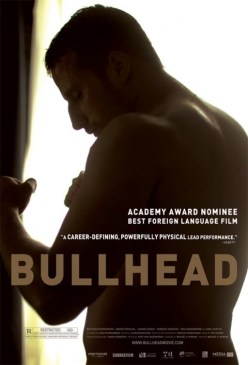
BullheadWhen I sat down to write this review, it had been roughly two months since I sat down and watched “Bullhead.”  Even in spite of the relatively small window – sometimes I’ll shamefully go much longer from viewing to writing – I found that I remembered fairly little about the film.  Perhaps that’s telling as to the kind of film this is: not terrible, but also not particularly memorable.

“Bullhead” does boast a ferocious leading turn by Matthias Schoenarts that makes the film ultimately worthwhile.  Though the Belgian actor has since impressed in films such as “Rust and Bone” and “Blood Ties,” this is by far Schoenarts’ best foot forward.

As Jacky Vanmarsenille, a farmer with masculinity issues abounding due to an unfortunate childhood incident, Schoenarts is a bull with massive pent-up rage he’s trying to unleash.  All he needs is someone to throw a red cape in front of his face.  Yet he performance isn’t all brute force and physicality; director Michael R. Roskam often poignantly captures the brooding soul inside Jacky with close-ups.

Beyond its towering leading performance, however, “Bullhead” struggles to offer little more than the ordinary.  The film has a relatively simple agrarian story that gets convoluted by poor character definition.  Its narrative is also further clouded by unclear ethnic tensions between the Belgians and Flemish, which might be more clear in its native country but came across as confounding to this particular American viewer.

So unless you really love gorgeous establishing shots or feel an insatiable urge to see every Schoenarts performance in case he becomes the next Michael Fassbender, there’s no reason to check out “Bullhead.”  It’s not entirely bull—- (think of the most common phrase involving the word bull), but Roskam certainly misses the bullseye.  B-2stars


REVIEW: Finding Vivian Maier

15 09 2014

Vivian MaierAfter “Searching for Sugar Man” won the Oscar, it seems only natural that distributors would begin searching for more artist biography-cum-investigative journey documentaries to exhibit.  “Finding Vivian Maier” thus feels like the kind of kindred spirit to 2012’s Academy Award-winning doc that we could expect to ride its wake to moderate success.  While the film certainly boasts an intriguing angle on its subject, it never fully delivers on its premise.

An apples-to-apples comparison between the two films is not entirely fair, although Vivian Maier’s quiet genius can’t help but summon parallels to Rodriguez.  Maier, employed most of her life as a nanny in Chicago, surreptitiously took some of the most stunning street photography of the 20th century.  As stunning as it was, she never bothered to publish it; heck, plenty of film rolls were left undeveloped!

Documentarian John Maloof stumbled upon her work by accident and has since dedicated himself to making her work known to the world.  Maloof has mounted numerous exhibitions of her work, and now, he and Charlie Siskel have made “Finding Vivian Maier.”  Though the documentary is not without its merits, it does have the feel of an overlong informative video that you would watch on an uncomfortable, crowded bench before entering a gallery.

Maloof and Siskel spend a good chunk of the film delving into Maier’s private life, hoping to come to some resolution as to why she seemingly chose to keep her work secret.  If one of their interviewees is to be believed, “Had she chosen to make herself known, she would have been a world-famous photographer.”  It’s not a tragedy that “Finding Vivian Maier” cannot provide a grand answer to the bizarre questions its subject raises, but all the time spent on her personal life does not really inform her artistic output.

When the film just shows Maier’s photos, however, the work does speak for itself.  The way she captures life in one suspended moment is nothing short of stunning.  I just wish I could have really lost myself in them by looking for the amount of time I deem sufficient.  Though “Finding Vivian Maier” does not focus enough on the why of Maier’s work, it is still entirely possible to appreciate the what of it.  B / 2halfstars


REVIEW: Gloria

14 09 2014

GloriaIn a recent article published through Variety, David S. Cohen recounts a story told to him by a film editor.  He was frustrated with the dailies, lamenting that the leading actress wasn’t giving him much of a performance.  In the end, however, she won the Oscar for the part.

Speculate away on who that might be, but the anecdote highlights a truth that many movie lovers often ignore.  In film, we tend to give all the credit to the actors in crafting their role as if they were on the stage.  Yet in this medium, an editor is every bit as crucial in getting their character across to an audience.

If you have any doubts about this, I recommend you check out “Gloria” and see how film editors can create the most memorable moments of a movie by the shot of an actor they choose, where they position it in the story, and how long they choose to hold it.  The inserts of leading lady Paulina García are more interesting than any acting she ever does or any storytelling that writer/director Sebastián Lelio ever attempts.

I’ll give Lelio credit for trying to explore a subject that isn’t particularly commercial, that of a 58-year-old woman’s love life.  (As Tina Fey quipped at the Golden Globes, “Meryl Streep, so brilliant in ‘August: Osage County,’ proving that there are still great parts in Hollywood for Meryl Streeps over 60.”)  Furthermore, he does it with all the candor towards sexuality and nudity that makes Lena Dunham’s “Girls” such a lightning rod for controversy.

Unfortunately, García’s Gloria just isn’t a very interesting or complex character to follow.  The film is further hampered by an unclear and vague romantic conflict at its core.  Though Lelio gives the film a fun ending, the journey there is rather dreary and insipid.  García’s performance isn’t much to impress on the way, either.

Save, of course, the occasional shot of her hungover head in a purse or lying back on a couch in anguish.  But saying that’s great acting is a stretch.  Your kid can scribble lines on a page, but you wouldn’t hang it next to Jackson Pollock, would you?  Intent separates artists from average joes, and editors can manufacture that in place of an actor if need be.  C2stars


REVIEW: Child’s Pose

13 09 2014

Child's PoseMother-son conflicts have been a consistent source of compelling drama in storytelling.  Be it Oedipus the King, Hamlet, or “Psycho,” the primal tensions never seem to stop inspiring writers and entertaining audiences.

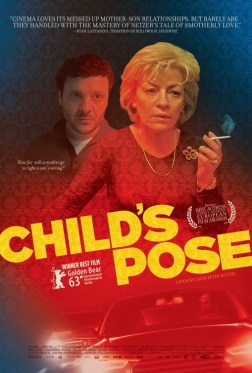
Add another to the pile with “Child’s Pose,” a Romanian film by Calin Peter Netzer that explores rather familiar territory, but put it far away from the aforementioned classics.  It recalls the 2009 drama “Mother,” by Korean director Bong Joon-Ho, in particular as both follow cryptic mothers determined to keep a beloved son from facing judicial consequences for committing a crime.  (Here, it’s vehicular manslaughter.)

Luminita Gheorghiu’s matriarch Cornelia is part Eleanor Iselin from “The Manchurian Candidate” and part Claire Underwood from “House of Cards,” an interesting combination that makes her character worth following down this strange path.  It’s clear from the outset that she’s doing this largely for self-preservation, although her character does have some nice complexity.

The film drags on for nearly two hours towards a very predictable end, largely gliding by on the strength of Cornelia alone.  “Child’s Pose” falters mainly because the tensions with her son, Barbu,  never really reach a satisfying boil.  That might have to do with the fact that Barbu is so pathetic that we never quite understand why he’s worth protecting.

This “slice of crisis” piece is very much in line with the tenets of the Romanian New Wave, though if you’re seeking to learn about the country’s emerging cinematic presence, don’t start here.  Go to something like “4 Months, 3 Weeks, and 2 Days,” where you’ll get all the stylistic elements of “Child’s Pose” but with the addition of a compelling narrative.  C+2stars