F.I.L.M. of the Week (May 25, 2017)

25 05 2017

No book I’ve read in the past few years has changed the way I think (and thus, the way I write) quite like Chuck Klosterman’s “But What If We’re Wrong?” The text is worth reading for a number of reasons, but what’s really stuck with me are his notes on canonical thinking. This weekly column is, by definition, an attempt to set aside movies and put them on some kind of elevated pedestal above the riff-raff of the multiplex. And in time, very few of these will be remembered.

The Kafka of our time, Klosterman argues, “will need to be a person so profoundly marginalized that almost no one currently views his or her marginalization as a viable talking point.” His chief example? Native Americans. They are out of sight and out of mind for most of the country. Their vantage point on so many issues is so underrepresented that we scarcely even notice it missing. Rhetorically, he asks, “When the Academy Awards committee next announces the nominations for Best Picture, how many complaints will focus on the lack of films reflecting the Native American experience?” To answer, odds are very few.

And yet … this is their country. Americans like myself, descended from Europeans, are mere immigrants.

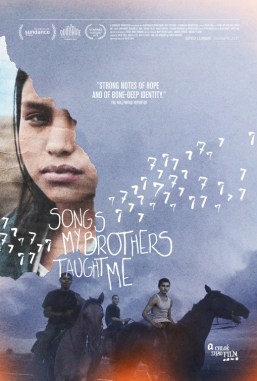
To be fair, “Songs My Brothers Taught Me” is not written or directed by a Native American. The creative force behind the project is Chloé Zhao, who made her feature film debut delving deeply into reservation life and culture. There’s not a moment that feels inauthentic, though. In a remarkably assured first film, Zhao illuminates a portion of the country that many people forget exists. And, ironically, that very fact makes her film far more likely to stand the test of time than many others I have heaped praise upon in the “F.I.L.M. of the Week” column.

In her lyrical interpretation of a South Dakota Native American reservation, Zhao adopts the roving, windswept look we come to associate with Malick. But that’s where the conversation should start, not where it should end. “Songs My Brothers Taught Me” is incredibly grounded and less ethereal. Zhao’s interests are noticeably more tactile. In a sex scene, for example, she hones in on tangible elements in the frame: the hymen blood, the friction of the sheets, the shimmering surfaces of two teenagers discovering the possibilities of their bodies.

The film is far from plotless, though it’s definitely not plot-driven or thematically motivated. Zhao simply gets us into the state of mind of two teenagers, free-wheeling John and his green younger sister Jashuan, as they watch the dust settle following the death of their largely absent father. Most events chronicled in “Songs My Brothers Taught Me” are actions taken by John, which are then observed or secondarily experienced by Jashuan. But the perspective of the film belongs to her.

Technically, this narrative could fall under the “coming of age” category. Zhao, however, seems less concerned with charting progress and more interested in extracting one vivid cross-section. In “Songs My Brothers Taught Me,” we come to understand her naïveté and curiosity inside and out. Through it, we also receive a filtered look at the poverty and neglect that run rampant through Native American reservations. It’s a glance that could replicate Zhao’s own in studying this community – but very likely resembles far too many in the country.




REVIEW: Baywatch

24 05 2017

In the opening credits sequence of “Baywatch” – unoriginally set to the tune of Notorious B.I.G.’s “Hypnotize” – Dwayne Johnson’s Mitch converses with a surfer bro on the beach where he lifeguards. The chat has to be subtitled because, of course, Florida English is practically unintelligible to the untrained ear. It’s one of the few subversive or creative tricks the film has up its sleeve in a waterlogged two hour runtime.

What passes for clever throughout “Baywatch” is Mitch and the rest of his bathing suit-clad team engaging in middle-school level taunting by pulling out some new name to taunt Zac Efron’s Matt Brody, a Ryan Lochte-esque “him-bo” has-been swimmer. (The film appears to have wrapped before that Olympian’s robbery scandal in Rio, so the parallels do feel a little eerie.) “21 Jump Street” this most definitely is not. Seth Gordon’s film, which passed through the hands of six writers, takes far more pleasure in fitness porn and over-the-top humor than any kind of satirization or interrogation of its source television show.

There are hints here and there of a movie “Baywatch” could have been. Various instances of fraternizing between men display the faintest whiff of parodic homoeroticism – only to fade into a low-grade gay panic joke. The film plays like a studio-massaged bauble, selling products (shout-out to the Tag-Heuer product placement) and its stars’ chiseled physique above all else. It’s like a two-hour aquatic Equinox ad with some narrative propulsion added in for good measure – even complete with an unearned feminist zinger in its climax! The hit-or-miss humor is a generous life preserver to keep us from drowning in their consumerist ocean. C+


REVIEW: The Wedding Plan

23 05 2017

As one afflicted by chronic singleness syndrome (mostly by choice, or for lack of trying – look, this isn’t about me, ok?), many of the emotions along the journey in Rama Burshtein’s “The Wedding Plan” felt all too familiar. There’s the isolation of being an adult who hasn’t found a life partner as everyone else finds theirs, the impatience and judgment of everyone around you, and the occasional spurts of anger directed at the cosmic authorities for imposing what feels like a curse.

Burshtein’s protagonist, Michal, treks on towards the goal of a wedding in the ultimate act of defiance against these internal and external pressures. She holds a date for her nuptials on the final day of Hanukkah without a groom in place. Trusting in both her own charm and determination as well as divine providence, Michal bends the will of love to her own timeframe.

Michal’s oft-hapless desperation lends some levity to “The Wedding Plan,” though labeling Burshtein’s film a “rom-com” doesn’t do the experience justice. This trek towards the altar assumes continued gravity as Michal puts the cart before the horse in the matter of love. The unconventional move garners a wide variety of reactions from Michal’s suitors, though Burshtein’s lens on events also collects valuable information on her female counterparts. The men of this orthodox Jewish society espouse patriarchal beliefs, but the women also internalize and parrot them. One woman tells Michal that of course all men want an obedient wife; Michal, and Burshtein by extension, cast back a doubtful and inquisitive glance. 


REVIEW: Dheepan

22 05 2017

Jacques Audiard’s “Dheepan” tells an extraordinary tale rather ordinarily. The titular name does not technically refer to the protagonist but rather a man whose identity he must assume in order to flee Sri Lanka. Dheepan must enter France with the passport of a deceased man, along with a fake wife and daughter, in order to get past the country’s vetting. He’s willing to work hard for the future, but that future would likely not be possible if they knew his past involvement in the wars of his native country.

Most of the film takes place in their shanty housing in the outskirts of Paris, where the makeshift family attempts to survive in their new environment. The best moments of “Dheepan” take place when Audiard’s camera catches the moments of realness behind their adopted guises. It’s here we get the whole of the immigrant experience summed up in a glance. We can see the gratitude for a new country to take them in and the yearning for a country where they could no longer stay. We notice the desire for normalcy coupled with the constant fear of disapproving neighbors watching their every move with suspicion.

Where the film starts to sputter is when Dheepan gets drawn into the local drug and gang violence of his area. We know this story of hard choices in ignored, underprivileged areas outside the purview of urban hubs. Even with a topical, political spin, the back half of “Dheepan” lands with a thud. It’s not enough to blow all the goodwill from Audiard’s perceptive look at the perils of entry into France’s hostile environment. But it comes perilously close. B-


REVIEW: Daddy Longlegs

21 05 2017

Josh and Benny Safdie were not the first people to assume verité-style camerawork guaranteed emotional authenticity, nor will they be the last. But their Cassavetes clone “Daddy Longlegs” might just be the film that made me far too aware of how low-budget filmmakers can hollow out techniques just as easily as their studio counterparts.

The Safdie brothers obtain a remarkable quality of naturalism that pervades their shaky camera and grainy look … but in service of what? The filmmakers are so focused on the how that they lose sight of the what. “Daddy Longlegs” tells the story of a deadbeat dad that essentially amounts to little more than a cross between the first act of “Kramer vs. Kramer” (pre-Dustin Hoffman’s redemption) and “Blue Valentine.” He’s a mess to the point of being a danger for his two young children, but he does love them! That’s true in both the first frame and the last.

The film feels less like a character study and more of a chain of cringe-worthy events that further convince us of his complete lack of qualifications to be a parent. Narrative journeys are not a mandatory feature of cinema, and the stasis of a character often speaks just as loudly as a drastic evolution. But given the self-conscious naturalism the Safdies work so hard to obtain, it’s a shame that “Daddy Longlegs” amounts to little more than the latest variation on a familiar stock character. B-


REVIEW: Prince of Broadway

20 05 2017

The working class appear a decent amount in contemporary cinema, but few directors take the time to understand their world like Sean Baker. His technique is more than just an aesthetic superiority of neorealism or “poverty porn” meant to coddle the bleeding hearts of the audience. Baker gets down into the weeds and grapples with poverty on its own terms, examining how getting dealt a single bad hand can trigger a cascade of negative outcomes.
At the beginning of “Prince of Broadway,” the Queens street vendor Lucky (Prince Adu) sees his life take such a turn when an old girlfriend shoves a baby into his arms. She needs childcare for two weeks for some unexplained reason while she jumps town, and we get the sense that Lucky is her last resort. Not only does he have no parenting skills under his boat, but he lives by the seat of his pants hocking off-brand designer bags and, as an undocumented immigrant from Ghana, Lucky can scarcely fall back on a network of extended family to shoulder the burden of watching the baby.

Leaving an ill-equipped individual in possession of a baby has classically entailed the trappings of comedy (“Three Men and a Baby”) or poignant drama (“Kramer vs. Kramer”) … so long as the protagonist comes from means. In “Prince of Broadway,” the same inciting incident triggers the basic mechanisms of economic survival as Lucky wonders how to feed, house and monitor his son. The sacrifices and trade-offs he must make in order to fulfill the most basic human compassion to the young life in his care involve his very livelihood.

Baker understands that a story as seemingly commonplace as this one in Lucky’s world cannot involve mere transposition from an upper-middle-class milieu. Every decision carries enormous weight. Every event comes with massive aftershocks, many of which cannot be met with adequate preparation. He’s taken the time to understand the mechanics of Lucky’s situation, and while “Prince of Broadway” might not necessitate its full 100 minute runtime (subplots involving his boss could easily have been streamlined), there’s not a moment that does not demonstrate his empathetic eye for detail. B


REVIEW: Mediterranea

19 05 2017

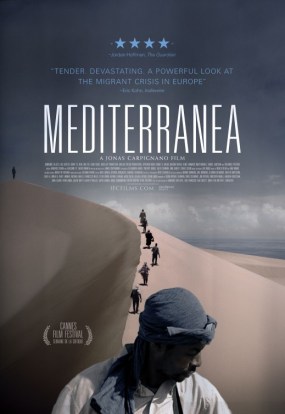
As the refugee crisis in Europe continues to persist, we’re starting to see its effects in the continent’s cinema. Documentaries like “Fire at Sea” and numerous Oscar-nominated shorts are paying attention to the harrowing voyage to shelter in Europe, while narrative filmmakers like the Dardenne brothers and Michael Haneke are crafting narratives around the influx of migrants.
Jonas Carpignano’s “Mediterranea” offers a perspective that, as of yet, seldom receives treatment on screen. It looks at refugees fleeing their homelands as more than just the physical incarnation of their tragedy. Carpignano surveys the whole of their existence, from low-wage labor to forming impromptu communities of support among fellow migrants. (As it turns out, one force that transcends national borders is an infectious pop ditty by Rihanna.) The characters complete the boat ride across the titular sea by the 30-minute mark of the film.

“Mediterranea” is far from revelatory in its narrative, but its simplicity and quiet dignity are worth the watch. When the fearful Italian villagers grow suspicious and disrupt the refugees’ shaky equilibrium, the effect is startling. More experienced, perceptive filmmakers will likely tackle similar stories to greater effect. But for now, Carpignano’s treatment provides a satisfactory window into a humanitarian emergency. B-


F.I.L.M. of the Week (May 18, 2017)

18 05 2017

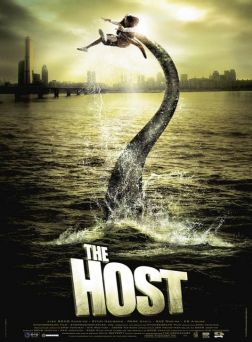
Recently, I waxed existential on Nacho Vigalondo’s “Colossal” in regards to what the monster represented thematically. To avoid reruns, I’ll spare the long introduction to symbolic genre interpretation and simply say my take on Bong Joon Ho’s “The Host” utilizes a similar analytical framework – but from a different angle. Sometimes it’s not just the monster we should be looking at. The victims are also worth further inspection.
When the strange Korean river monster emerges from under the bridge in “The Host,” the creature snarls a certain type of person. The girl distracted on her phone. The family too busy watching TV to notice something out of the ordinary. If you choose to interpret obesity as a product of personal laziness rather than genetic predisposition, maybe you could lump the guy in a jersey two sizes too small for him in with this group. The monster is pretty clearly targeting people who are impeding contemporary society with their habits.

That’s far from the extent of Bong’s commentary on the time, part of the reason “The Host” is my “F.I.L.M. of the Week” (as a reminder, that’s a contrived acronym for First-Class, Independent Little-Known Movie). He crafts a great action movie that’s thrilling to watch from an entertainment perspective. As a rip-roaring adventure for Gang-du to recover his daughter Hyun-seo from the sewer prison of the monster, it’s a blast.

But if you come for the genre fare, stick around for the ribbing political satire. At every step of the way on their rescue of Hyun-seo, some arcane bureaucratic procedure or cruel governmental intervention holds them up. (From a current perspective, it looks like a sharpening of the knives for “Snowpiercer” just a few years later.) There’s comedy, malevolence, malfeasance and terror lurking in just about every scene – often times all at once, a pretty remarkable feat for any director to execute.


REVIEW: The Cut

17 05 2017

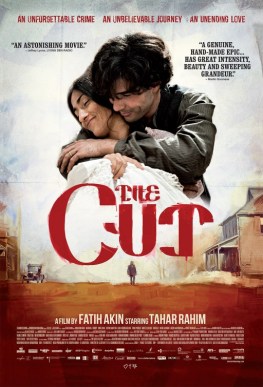
Perhaps the worst claim that can be leveled against Fatih Akin’s “The Cut” is that it fails to elicit a reaction proportional to the scope of its production. This story of a father, Tahar Rahim’s Nazaret, rendered mute during the Armenian genocide of World War I trying to reunite with his long-lost daughters has an epic scope. Take a look during the end credits, which run well over 10 minutes, at just how many crew members in how many countries came together to bring this story to life. This is a journey spanning decades, and Akin gives his film the sprawling canvas it needs.
And yet, while watching the film, I never really felt overwhelmed and enveloped by the sheer magnitude of “The Cut.” The film never flags in the forward motion of its storytelling or the firm humanist rooting of Rahim’s performance. I was compelled by every minute. Still … I wanted a little something more from it.

Akin’s direction is missing a sense of urgency. (It’s still leagues better than most filmic depictions of genocide – heck, many big-budget tentpoles downplay or flippantly dismiss it!) I’ll note that “The Cut” is not a film about the Armenian genocide so much as it’s a story of a father’s love diverted by the atrocity. But when you brooch such a weighty subject, you can’t just respond in the size of the production. It must also resonate in the gravity of individual decisions. B


REVIEW: My Golden Days

16 05 2017

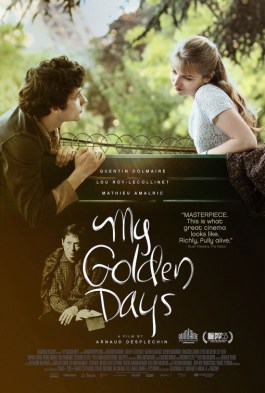
Maybe I’m missing something by not watching Arnaud Desplechin’s “My Sex Life … How I Got Into an Argument” before heading into “My Golden Days,” since both films revolve around Mathieu Amalric’s Paul Daedalus. (I blame the film’s lack of streaming availability in the U.S.) With no prior attachment to a character who spends the entire movie reflecting back on how three childhood and adolescent memories shaped him, the film felt self-indulgent and even a little self-serving.

And of course, the thread that I found the most fascinating – where a teenaged Daedalus sneaks into the USSR to give a forged passport to a Jewish dissident – lasts about just 20 minutes. Desplechin doles out a disproportionate amount of time to Daedalus’ first bombshell romantic experience with Esther (Lou Roy-Lecollinet). From my perspective, this seemed like the kind of coming-of-age story we’ve all seen a hundred times.

The distinguishing feature of “My Golden Days” is that Desplechin frames these experiences through the lens of memory, in all the ways it softens the edges of and selectively omits from the historical record. It’s present both in the hazy narration of Daedalus and the techniques he uses, such as the early-cinema iris effect. But these memories were just that – memories – for me. If they were hinting at some kind of larger truth or grander developments in the Daedalus character, they were lost on this viewer. C+


REVIEW: Graduation

15 05 2017

It’s only natural for parents to wish that their children fare better than they do, but I would be genuinely curious to see how many would act with the vigor of Adrian Titieni’s Romeo in “Graduation” to ensure such a thing. Locked in a loveless marriage, trapped in a dead-end romantic affair and bored professionally, Romeo is Romania’s equivalent of a tiger father to his daughter Eliza (Maria Dragus). She has the opportunity to spend her collegiate years on scholarship in the “more civilized” United Kingdom pending a passing grade on her final exams, and he will do everything in his power to ensure she escapes the mire of their native country.
Except, on the day before the test, a stranger batters Eliza on the way to school and wounds her as he attempts rape. For whatever arcane reason, the authorities simply cannot accommodate her at a later date, so Eliza must take the multi-part exam with her writing hand severely injured. Faced with the threat of his daughter’s escape route vanishing, Romeo decides to take independent measures to ensure she passes.

Romeo and his wife Magda (Lia Bugnar) are no stranger to rigged systems that present themselves as fair. After all, they fled the Communist regime in Romania and returned to raise a child in a post-Soviet Bloc nation. But Eliza comes from a generation that only knows democracy, and she does not take kindly to knowing fingers are on the scale for her benefit. This divide over who sets the rules and when those rules are enforced proves a fascinating fissure to observe throughout “Graduation” as it increasingly isolates Romeo from his family and community.

Mungiu, in classic Romanian New Wave fashion, takes his time delivering the audience to such realizations. Two hours of wading through such intense moral morass is a bit much, especially given the time spent on a subplot of broken glass on Romeo’s belongings. These incidents amount to little more than a red herring, a projection of Romeo’s fretting over the precariousness of his situation. They’re a bit at odds with the studied naturalism of the film – which, for the record, feels a bit de rigeur for Mungiu by now. B /


Multicultural Motherhood (REVIEWS: Fill the Void, Mother of George)

14 05 2017

For two years, I’ve been thinking of running this piece on Mother’s Day. And twice, I’ve put it off in favor of posting something else. The procrastination ends in 2017!

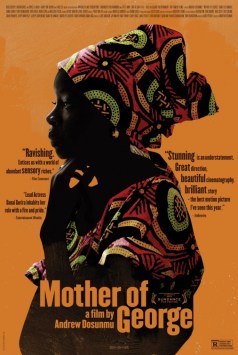
I watched Rama Burshtein’s “Fill the Void” and Andrew Dosunmu’s “Mother of George” in short succession and was struck by some surprising parallels. Both are films that explore the complications of maternity outside of a dominant Western understanding but do so in wildly different – yet tellingly effective – ways.

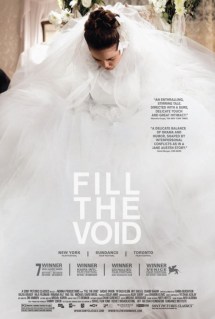
“Fill the Void” unfolds in an orthodox Jewish community following the tragic death of Esther during childbirth. In the wake of her passing, Esther’s younger sister Shira (Hadas Yaron) faces a difficult choice. At 18, she has her whole life ahead of her and looks forward to an arranged marriage to a man she quite fancies. But the hole in the community demands her action, and Shira’s family comes to her with an unconventional plan: marry her former brother-in-law Yochay and raise her nephew Mordechai as she would a son.

The film’s tightly contained action and deliberation have the dimensions of a stage drama, yet Burshtein films it as anything but. She trains her director of photography Asaf Sudry to direct the lens towards Shira’s face, framing it tightly and making her internal tussle play out in prolonged close-ups. With this technique, Burshtein achieves that strange paradox of cinema: the film becomes more universal as it delves into the specifics of its insular community.

Mother of George” takes place on the opposite side of the world, in a Nigerian community nestled in Brooklyn. A newly married couple, Ayodele and Adenike Balogen (Issach de Bankolé and Danai Gurira), begins working towards building a family since expecting is the expectation for them. But their pregnancy journey hits a rocky patch primarily due to male-factor infertility from Ayodele. His patriarchal attitudes make him stubborn and reluctant to receive any kind of help since, in his mind, any impediment to conception comes from the female end.

Unlike the searing intimacy of “Fill the Void,” Andrew Dosunmu’s film takes a much wider look at his character’s struggles. Cinematographer Bradford Young (who has since shot “Selma,” received an Oscar nomination for “Arrival,” and is currently filming the Han Solo spinoff) uses long shots to reflect just how small Adenike feels in her time of anguish. Stricken by the seemingly arbitrary force of infertility, she’s left with few options – and one involves Ayodele’s brother.

So as we celebrate mothers today, in all shapes and forms, let us never forget the many paths that women can forge towards maternity. And, on the flip side, there are plenty of women who are not celebrating Mother’s Day but so desperately wish to be. Let us be understanding of their current standing not as a final destination, but rather just one point on their journey. Shaming women who do not follow conventional trajectories, whether by choice or by chance, helps no one.


REVIEW: Alien: Covenant

13 05 2017

Comparisons are inevitable when it comes to long-standing movie franchises, particularly when they tell standalone stories. More than, less than, greater than, better than … “Alien: Covenant” is all over the map as it relates to the other films in the series, particularly the 1979 original and Ridley Scott’s last outing with the xenomorphs, 2012’s “Prometheus.”

The film boasts two obvious strengths. The first and most obvious is its fidelity to the body horror of “Alien,” moving away from the more restrained suspense and action-style trappings of its predecessor. “Alien: Covenant” is unabashedly trying to scare us, and it works – especially given the airborne alien pathogen that quickly infects the Covenant crew. You know, in case the tactile terror of the usual entry wasn’t frightening enough.

Screenwriters John Logan and Dante Harper also endow the film with a keen sense of cosmological curiosity. “Prometheus” dabbled in issues of faith through the character of Dr. Elizabeth Shaw, a devout Christian forced to confront her notions of God in the wake of both scientific discoveries and the cruelty of nature. Though there’s one overtly religious character in “Alien: Covenant,” Billy Crudup’s Captain Oram, the existential questions are more deeply rooted in the story than just one character’s experience. The film locates something more terrifying than chest-bursting extraterrestrial life: artificial intelligence with a God complex and an intent to create (and thus destroy).

*mild spoilers after the break – continue at your own risk*

Read the rest of this entry »


REVIEW: Hounds of Love

12 05 2017

The words of Roger Ebert often rattle around in my head when thinking about how to process a movie – especially during ones that don’t seem to register with me. (Better than tuning them out entirely.) I keep coming back to the way he wrote about Robert Bresson, the great French director who made films of intensely repressed emotions. In an obituary for Bresson, Ebert wrote:
“He shunned displays of emotions in his work, rehearsing and shooting a scene over and over, until the actors seemed to be going through the motions without thought. Oddly, this style created films of great passion: Because the actors didn’t act out the emotions, the audience could internalize them.”

When movies make feel nothing, and I sense that’s the point, I force myself to wonder if the filmmaker is pulling a kind of Bressonian perverse inversion of emotion. By distancing us from our feelings, are we forced to examine them all the more? This was the big question for me during Ben Young’s “Hounds of Love,” a fictional depiction of a real-life crime story in 1980s Australia.

The film centers on a teenage girl’s abduction by a depraved couple; when they officially make Vicki (Ashleigh Cummings) their captive, Young films the imprisonment an extreme long shot of a door frame within the frame. It’s the kind of shot meant to intentionally create a remove from the action, drawing attention to the cinematic qualities of the moment and asking us to react in kind. Instead of plugging into our fear and terror, it simply suggests such emotions.

Yet far too often in “Hounds of Love,” this kind of effect suggests ambivalence rather than ambiguity. It’s not a film of submerged emotion – heck, the kidnapper Evelyn (Emma Booth) goes from flogging her victim to fellating her co-conspirator John (Stephen Curry) with a minute! It’s a film of someone who’s studied lots of films with submerged emotion, which admittedly is understandable given that “Hounds of Love” marks Young’s debut feature. His strength lies in understanding of the power of slow-motion camerawork. He uses it to suspend motion and grab our attention in a fast-moving world, morphing the familiar activities of life into something strange, horrifying and oddly beautiful. C


F.I.L.M. of the Week (May 11, 2017)

11 05 2017

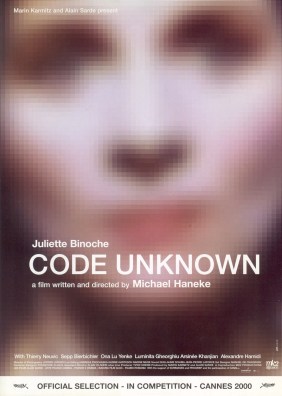
I watched Michael Haneke’s “Code Unknown” on the day far-right wing Marine Le Pen was on the final ballot for the French presidency. Yes, I’m fully aware that’s a weird way to phrase it since she lost resoundingly to her more progressive rival. But Le Pen’s ability to make it as far as she did on a nationalist platform that demonized immigrants feels like the fulfillment of Haneke’s bleak conclusion in this film. It’s as if the tectonic plates he discovered ruptured with her candidacy.

Haneke’s film debuted at the 2000 Cannes Film Festival, making it technically a product of the 1990s mentality. But darned if it doesn’t feel like an emblematic film of the 9/11 era – or, at the very least, Haneke senses that the fragile post-Cold War peace is about to come crashing down. Watching “Code Unknown” in 2017 feels akin to viewing cinematic prophecy, a “F.I.L.M. of the Week” if ever there were one.

The general flow of the film feels familiar to anyone who saw ~serious dramas~ in the early 2000s. It’s “hyperlink cinema,” the mystical plot device that finds ways to connect disparate storylines. Most academics trace its origin to the rise of the Internet, the electronic tool that held the promise of bringing the world closer together. Haneke’s “Code Unknown” shows a Paris teeming with immigration following the break-up of the Soviet bloc, which only adds further complications to an already tense and festering race problem. Most of the characters avoid direct conflict. After all, it was the ’90s. There was still reason to be optimistic!

But Haneke sees through the papered-over peace. This new world order might look like the natural resting place of a post-Soviet planet, but the evaporation of national boundaries and radical coexistence will not come without its consequences. The very format of “Code Unknown” bears out this truth. Rather than showing how the many characters who cross paths are connected, Haneke depicts their lives in jagged, dissonant fragments.

He hops from a Parisian actress ironing clothes alone in her apartment to migrants from Mali struggling to gain acceptance in their new country and then to a Romanian beggar on the street. Nothing connects them except for geography. They lead lives of pain in isolation, unknowing of the plight of the people they cross and uncaring of their struggle. As we’ve now seen, this myopia can be powerfully weaponized as a force to divide ethnic groups against each other.