REVIEW: Post Tenebras Lux

3 06 2012

Cannes Film Festival

There is a fine line between art film and a nutcase who happens to have a camera and a reel of Kodak; Carlos Reygadas walks the wrong side of that line with his movie “Post Tenebras Lux.” It’s everything you could ever hate about impressionistic film all served to you on a silver platter in just one movie. It would have been an almost humorous form of torture had I not been subjected to it myself, although it become a quick punchline and punching bag afterwards.

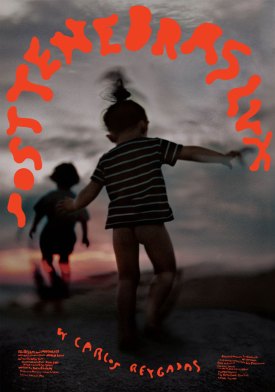
To be fair, Reygadas’ film, a collection of totally unrelated scenes including a bathhouse orgy, a young girl chasing cows in a rainstorm, people chopping down trees in a forest, and a man literally pulling his own head off his body, is practically begging to be lampooned. It’s like a five-year-old missed the door for “Cars 2” and then accidentally stumbled into “The Tree of Life,” suddenly receiving a revelation that they could shoot pretty shots of nature too and tie them together. I now even further appreciate Malick and his Palme D’Or-winning film from 2011 as sometimes it takes someone doing something so horribly wrong to make you appreciate someone who does it right.

At least Malick had purpose with his film. Reygadas is just self-indulgent and an aimless vagabond wandering around with a camera, stringing together vaguely similar shots and scenes with laughable dialogue and an annoyingly grippy kaleidoscope lens. There are no themes to be had here, no story to be found. Just beams of light emanating from a projector, empty, pointless, and void of purpose.


REVIEW: On the Road

2 06 2012

Cannes Film Festival

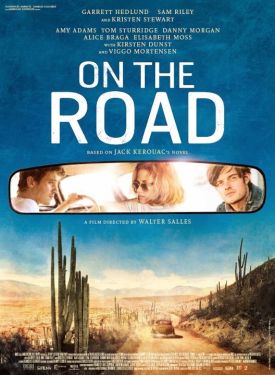
Jack Kerouac and his pals were some of the most interesting people to walk the planet in the 1950s. They did as they wanted, lived in the moment, and thankfully had the memory and the brains to put it all onto paper for their adherents in future generations to admire as a holy text. So why on earth is the film adaptation of his seminal text, “On the Road,” such a bore to sit through?

That’s the question that kept going through my mind as I went sporadically in and out of sleep during the film. (I would not have nodded off back in the States, but the feeling of boredom and tedium definitely would still be in the air.) Granted, I haven’t read the source material, but the general spirit of liveliness just seemed totally absent, replaced by the same ennui that hipsters rebel against. I’m now caught in a conundrum: should I read the book to redeem and perhaps better understand Walter Salles’ film, or is my lack of enthusiasm an indication that reading Kerouac’s prose would just be an exercise in futility?

Read the rest of this entry »


REVIEW: Killing Them Softly

1 06 2012

Cannes Film Festival

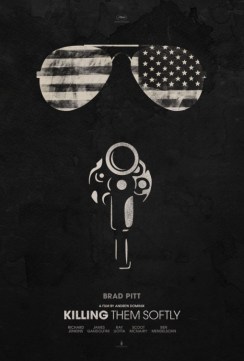
A year after “Drive” took the Croisette by storm with what I saw to be an empty promise of genre revitalization, Andrew Dominik arrives with “Killing Them Softly,” a movie is the real deal for action fans. A whip-smart heist flick, Dominik seems to be channeling Stanley Kubrick with his aestheticized violence, hauntingly ironic music usage, and an emotional detachment. His film politicizes and stylizes the mob and the heist film, delivering a deliriously gory kick in the head.

The more I think about the film, the more I realize how it shouldn’t work. The character development, save James Gandolfini as a sleazy aging and boozing hitman, is minimal. The plot is familiar. The plot unfolds with relative predictability. Come on, it’s a mob movie – if you don’t know that almost everyone is gong to wind up dead, then you have some serious Scorsese to watch before you are allowed to come anywhere near “Killing Them Softly.”

But perhaps Nanni Moretti, president of the Cannes jury this year, holds the key to understanding why the movie transcends so many of its obvious shortcomings. He made an off-the-cuff observation that among the competition directors this year, many “seemed more in love with their style than their character[s].” While this could have applied to any number of directors I saw at Cannes (Wes Anderson, Carlos Reygadas, David Cronenberg), it seems particularly directed at Andrew Dominik. But while Moretti meant his remark to be construed as a negative, the style of “Killing Them Softly” is so abundant that it becomes a character in and of itself, taking the place of traditional “substance.”

Read the rest of this entry »


REVIEW: The Hunt

30 05 2012

Cannes Film Festival

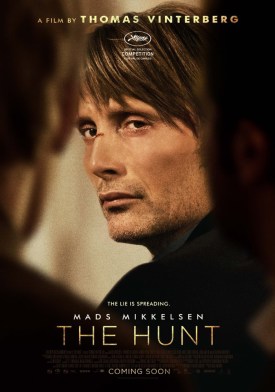
I wasn’t invited to serve on Nanni Moretti’s jury this year, but if I had been, my vote for the Palme D’Or would have gone to Thomas Vinterberg’s “The Hunt” without question or hesitation.  More than any of the twelve competition films I saw, it captivated me from the outset and proceeded to shake me to my core all the way to its jarring ending.  Much like “In a Better World” or “The Class,” this film has the ability to play well in any country and in any language due to the universality of its story.

I quickly forgot I was reading subtitles as I got drawn into the film’s narrative.  Vinterberg’s film, which he also co-wrote with Tobias Lindholm, has echoes of Arthur Miller, one of the biggest compliments I can provide to a piece of writing.  This contemporary “Crucible” follows Mads Mikkelsen as Lucas, a Danish kindergarten teacher, as he must fend off accusations of indecent exposure to a young child and the ensuing social stigmatization.  While Lucas is reserved, Mikkelsen never lets us doubt for a second that his character is an upright man who is merely the victim of a child’s curiosity being spun into something untrue.

And Mikkelsen, rightful and deserving winner of the Best Actor prize at Cannes, keeps our eyes glued to the screen as we watch the harrowing toll of these false charges on his psyche as well as his estranged son.  The story unfolds rather predictably for the first two acts (no thanks to Arthur Miller), but Mikkelsen really goes unhinged in the film’s finale and absolutely kills it.  As the metaphorically hunted of the film’s title, he begins to strike back against those who defiled his reputation based on baseless and circumstantial evidence.

Read the rest of this entry »


REVIEW: Amour

25 05 2012

Cannes Film Festival

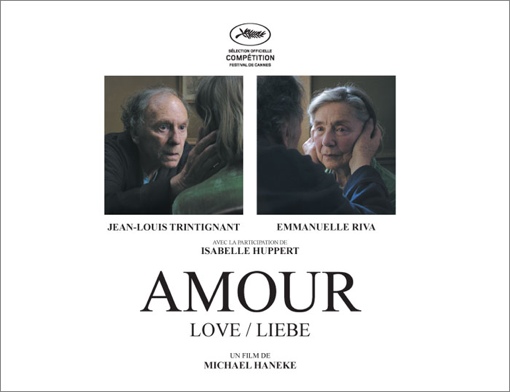
So often, films about illness and death are milked in a rather maudlin fashion for tears, sentimentality, and catharsis. None of those things interest Michael Haneke though. His latest film, “Amour,” is set almost entirely in an octogenarian couple’s apartment where the wife is slowly headed to the grave after a debilitating stroke. He chronicles the slow descent with patience and control through a deliberate and patient lens that doesn’t dare cut out the messiness, monotony, or misery.

It’s the cinematic equivalent of a still-life as this film moves about as slow as molasses and only amplifies the glacial pace with long shots and even longer takes. While such a technique might infuriate a viewer if it were employed on a different subject matter, those willing to stick with the movie to the end should ultimately admire the tightly controlled and delicately constructed film. At times, it can be fairly difficult to watch … but how hunky-dory do you want movies about death to be? How can you even begin to comprehend the ennui of watching someone slowly lose their grip on life when you are treated to watch from a coolly removed distance?

20120525-175209.jpg

What I found to be particularly interesting about the film was how Haneke shoots the film in such a straightforward and unambiguous fashion, an apparent change from the intricate machinery behind his puzzlers “Caché” and “The White Ribbon.” In a way, such a style wouldn’t make sense for “Amour,” but I do think it serves another purpose as well. It makes the audience complacent and allows Haneke to really put an emphatic exclamation point on the end of a cinematic sentence that doesn’t seem to require such an emphatic punctuation.

The performances from French veterans Emmanuelle Riva and Jean-Louis Trintignant as the ailing wife and her husband are impressive in their control and their naturalism, as is Haneke muse Isabelle Huppert as their grief-stricken daughter. But “Amour” is definitely a Haneke showcase above all, a movie that may seem familiar at first but inextricably bears his stamp.


REVIEW: Lawless

21 05 2012

Cannes Film Festival

Every year, the studios with any self-respect release a film or so between August or October meant to fill a very small hole in the market: respectable films that aren’t quite Oscar contenders but have more brains than your average popcorn flick. Occasionally, one of these will break away and compete in awards season (“Moneyball,” to name one from last year), but more often than not, they just gain respect and claims at the bottom of a few year-end underrated lists (“Contagion,” to take another 2011 example). There’s nothing wrong with this middle except for just like in politics, where it is more popular to go to extremes than be a moderate, such products are hard to bundle and sell if an audience does not know exactly what it will be getting.

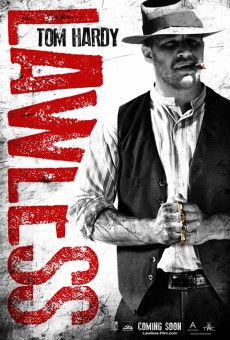
Lawless,” John Hillcoat’s drama set in Prohibition-era Virginia countryside, fills such a groove. It does not quite have the overall package to compete for Oscar gold, but it’s hardly a bad movie by any stretch of the imagination. It has flaws, particularly in the insipid first act weighted down by exposition; however, when the film kicks into high gear, it provides a riveting ride.

While I haven’t been a big fan of Shia LaBeouf since “Even Stevens,” which I can now continue to argue is his most accomplished work to date, “Lawless” gets bolstered by a number of supporting performances that should garner the actors some much overdue recognition. Surprisingly, one of these tour de forces is not given by Jessica Chastain, cinema’s new “it girl.”  She’s fine, don’t get me wrong, but Chastain and Mia Wasikowska seem only relevant to the film for marketing purposes, token females to help reach another quadrant.

Read the rest of this entry »


REVIEW: Rust and Bone

20 05 2012

Cannes Film Festival

Getting down to the core of our humanity (or the bone, if you will) is a difficult and unsavory task, but you may hardly notice just how rough it can be until Jacques Audiard has released you from his grasp when the credits of “Rust and Bone” roll.  His cinematic paean to the resilience of the human spirit takes two characters down to their most starkly naked vulnerability, putting them through an emotional and physical gauntlet that tries them as well as the audience.  The end of the tunnel may not be brightly lit or accompanied by tremendous fanfare, but it reinvigorates and revitalizes in a way that only a truly great movie can.

With two phenomenal actors, Matthias Schoenaerts, on the way up after last year’s Oscar-nominated “Bullhead,” and Marion Cotillard, who continues to prove movie after movie that “La Vie En Rose” was no fluke, “Rust and Bone” aims for painful areas of the psyche.  Failure, loss, disappointment, desperation, and adversity are all sores opened by the movie, and it continues to stick a finger in them when it would be far less painful to just think about them being there.  Yet it is precisely this wrenching of the soul that gives the film power and emphasis.  In a cinematic climate where misfortune has evolved from beyond a niche and is moving towards an entire genre in and of itself, it takes a lot for a movie to distinguish itself from the pack.

And believe me, from now on when I think of films about the mettle it takes to overcome immense tribulations, “Rust and Bone” will shoot to the front of my mind.  And that’s not just because Marion Cotillard is proudly sporting two limbs instead of four for the majority of the film.  Audiard, who also co-wrote the film, finds a natural way to intertwine two disparate tales of suffering into a satisfying and believable romance without hokey stunts or sensationalism.

Her Stephanie is a former whale trainer at the French equivalent of SeaWorld turned Cannes penthouse-dweller after a tragic accident in the water.  His Alain is a well-meaning but deadbeat dad as well as street fighter for cash on the side just to get by.  They meet at the beginning of the film when Alain kicks Stephanie out of the bar after she starts a fight; while it’s a strange connection, apparently it was enough for her to call him when she gets lonely in her insurance claim-purchased apartment.

Sure, the precipitating event may be a little bit of a stretch, but what ensues as they build an incredible rapport to shelter each other from pain makes up for the lack of believability of their inception.  Cotillard and Schoenaerts don’t sport a typical romantic chemistry, but they feel all the more real and human because of it.  Both meet the emotional demands of the script, exposing themselves both spiritually and physically to each other and to the audience.  (Translation from serious movie critic pRose: they are naked a lot, sometimes maybe even a little gratuitously.)  Together with their bold helmer Audiard, they boldly go where few will go and bring us out in a hardly glorious but nevertheless moving affirmation of the ability of humans to be courageous and to change.  B+ /


REVIEW: Moonrise Kingdom

17 05 2012

Cannes Film Festival

Wes Anderson made a name for himself on clean, quirky visual style, and “Moonrise Kingdom” forges a further name for the director on that basis. It’s a Wes Anderson movie for people that love Wes Anderson movies, and for everyone else … yeah, there’s a different movie for you out there somewhere. If his insistence on the rule of thirds, smooth horizontal tracking shots, and manipulation of the mise-en-scene frustrated you in “The Royal Tenenbaums” or “The Darjeeling Limited,” then this movie, which is Anderson stylistically to a T, will only frustrate you more.

I, like many, enjoy the quirkiness of Anderson’s idiosyncratic eye, so watching “Moonrise Kingdom” felt like devouring sugar for an hour and a half. The film almost feels like the director is making a tribute to his own technique as it hits the viewer with a sledgehammer with its flair within the frame. But that sledgehammer is more like a blow-up hammer you get at a carnival, one that whacks you in a fun and enjoyable way (provide you don’t mind the bump on your head). He does extreme close-ups on written notes, takes it to Kubrickian lengths with his dolly shots, and sports costumes and sets that look both of their time and out of this world. I doubt there is anyone that couldn’t tell you what a Wes Anderson movie is after watching his latest feature.

Read the rest of this entry »


REVIEW: Hell and Back Again

5 04 2012

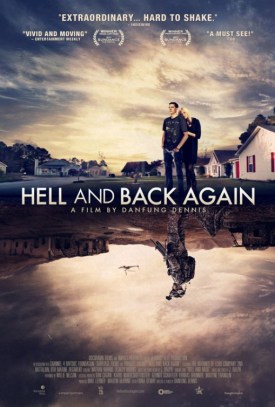
War is hell.  Then the soldier comes home and fights a war of readjustment, making home a separate kind of hell thanks to the transitive property.  “Hell and Back Again” chronicles both battlegrounds for an American soldier, Sergeant Nathan Harris, serving in Afghanistan.  It has some poignant moments, particularly a large funeral for several fallen soldiers, but Danfung Dennis’ documentary overall dwells in the been there, done that territory for the majority of its 90 minute runtime.

And that’s a real shame because our soldiers deserve better than a humdrum movie that does not fully communicate just how much bravery it requires to serve in Afghanistan and just how much perseverance is required to live afterwards.  Harris has it particularly rough, suffering a life-threatening injury from a Taliban bullet in the leg.  He has his wife, Ashley, back at home in North Carolina to help sustain him emotionally through the physical therapy, but everything still takes a humongous and taxing toll.  It’s painful, sure, but dread should be creeping up our spine watching Harris.  The empathy Dennis manages to generate is all too easily shrugged off.

“Hell and Back Again” is a skilled work, though, interlacing Harris’ recovery with battle scenes of the same visceral intensity as “Restrepo.”  At times, they don’t always mesh quite as seamlessly as Dennis intended, but war isn’t neat.  It’s messy; it’s dirty; it’s the ultimate gauntlet.  While it’s nice to observe that personal hell, documentaries should really be putting us in hell alongside him, ultimately emerging thankful for his sacrifice and grateful for our own freedoms.  For whatever reason, Dennis’ film is too removed to really sear or stir.  C+


REVIEW: A Better Life

4 04 2012

If Washington can’t overhaul border security for the safety of our nation, they should at least pass some legislation that will discourage Hollywood from making me sit through another self-righteous movie about illegal immigrants like “A Better Life.”  It’s the same problem I had with “Like Crazy” – how are we supposed to feel sorry for people who have willfully broken the law and then complain when the world isn’t working for them?  There are plenty of channels for legal immigration into the United States, and merely crossing over the border does not entitle anyone to all the benefits of being an American.

Full disclosure, I am from Texas and do have strong views on the issue.  Nonetheless, director Chris Weitz does little to turn the odds in his favor by conveying the story with a total lack of vehemence, urgency, or feeling.  It’s a frigid, understated tale of a harsh world for a man, Carlos Galindo (Demian Bichir) just trying to squeak out a living for his son Luis (Jose Julian) and squeak by the police.

Bichir is fine, but the Oscar nomination was surely more of a political statement than an artistic statement.  He conveys Carlos’ pain in watching his business collapse under the weight of Murphy’s Law as well as the concern for Luis to make something more out of his life than selling drugs.  Yet what could have been a tour de force in an appeal to pathos just feels rather lukewarm.  It’s a fairly interesting watch, but ultimately “A Better Life” could have been a better movie.  B-


REVIEW: We Bought a Zoo

3 04 2012

Almost Famous” sure was a long time ago for Cameron Crowe, who has truly surrendered to hokey cornography with “We Bought a Zoo.”  Gone is the man who rocked our socks off with an autobiographical tale of coming of age and rock and roll, replaced with the spirit of “The Blind Side?”  Crowe deserves better than a straight shot for the tear ducts.  We deserve better, too.

He throws just about every banality in the book at us – the dad (Matt Damon) trying to be a good parent, the kids trying to thwart his every good intention, the ridiculous decision made on blind faith that just so happens to work while teaching them all valuable life lessons … only at the movies!  Especially when that crazy idea is purchasing, renovating, maintaining a zoo.  Oh, and there’s a snarky inspector played by John Michael Higgins who gets far too much screen time and threatens to destroy all their hard work.  Around his second minute on screen, you’ll want Scarlett Johansson to stop playing Kelly Foster the love interest and resume her role as the Black Widow from “Iron Man 2.”

The question here isn’t, will they succeed?  Will Damon’s Ben Mee make the zoo and his family function again?  Watch a trailer, look at a poster, read the genre on IMDb, and you’ll find out the answer to that.  The real question is why Cameron Crowe would sell his soul for “We Bought a Zoo.”  Look at his past movies and it’s clear that the man has a knack for narrative; this just plays on minimal satisfaction to the lowest common denominator at all times.  If he just wanted to make a family movie where the animals don’t talk, that wouldn’t bother me … but it’s clear that he needed to reach a little deeper into his script pile.  C+


REVIEW: Rio

2 04 2012

2011 will likely go down in the comedy record books as a year where raunch ruled the roost.  Yet it is possible that “Rio,” a G-rated animated comedy from BlueSky, packed the most laughs of them all (save perhaps “Bridesmaids“).  Without ever uttering a curse word or resorting to the profane, the animals take the day in a wholly unexpected and delightful way.

While it may not be able to boast the complex emotions or deep storyline of a Pixar film, “Rio” is just like a beach ball, meant for fun and little else.  And I’m totally fine with that.  Its clean, innocent humor charms anyone willing to resume the persona of a child.

The movie boasts some hilarious characters thanks to very clever voice casting.  Neurotic Jesse Eisenberg plays opposite the sassy Anne Hathaway as a macaw returning to the Brazilian wild after years living in a Minnesota bookstore.  It’s a journey done many times before, but when you take it alongside Tracy Morgan as a drooling bulldog, it can still be fun.  Add in a few toe-tapping musical numbers that are not necessarily well incorporated (but still enjoyable nonetheless) and a setting against the backdrop of the Brazilian Carnaval, and you just might want to book your ticket to Rio for 2016.  Or maybe just watch it repeatedly on TV.  A-


REVIEW: The Greatest Movie Ever Sold

31 03 2012

With “Super Size Me,” Morgan Spurlock set out to change the way we consume fast food.  For the most part, it worked.  (A society doesn’t just naturally all decide they want fruit slices instead of fries with that burger, do they?)  With “The Greatest Movie Ever Sold,” Spurlock set out to change the way we consume movies – and that might be an even bigger challenge.

Did it work?

If you want to judge in box office dollars, no.  There was no consumer rights revolution sparked by this movie.  But while it didn’t affect the masses, those who take the time to watch Spurlock’s documentary will find the way they look at the movies to be totally different.  It’s as if studios are happy for us to watch their products through a foggy lens, and “The Greatest Movie Ever Sold” is a wipe that allows us to see them more clearly for what they are: advertisements for all your favorite corporations!

Now that you TiVo through their million-dollar commercials, they have to find some way to reach you!  (After all, you just ignore their sidebar ads on Facebook and phony “top results” on Google.)  Sure enough, most products you see in movies have been paid to appear there.  Tony Stark wasn’t written into “Iron Man” being a Dr. Pepper drinker, but that company sure will pay for Jon Favreau to read between the lines and put a Dr. Pepper can in his hand throughout the movie.

And how does Spurlock make this exposé of new advertising?  Through advertising and product placement.  In other words, prepare yourself for what might be the most meta movie … ever.  It’s self-aware to such extremes that it makes your head hurt.  But I’d rather finish a movie feeling educated and confused than dumber and satisfied.  Please, for heaven’s sake, put down the Big Mac (metaphorically speaking, this would be a movie like “Captain America“) and put some POM Wonderful (continuing the metaphor, this would be “The Greatest Movie Ever Sold”) into your body.  It’s time that you consumed a movie that’s healthy and aims for nothing less than changing your views.  A-


F.I.L.M. of the Week (March 30, 2012)

30 03 2012

Where do you draw the line between fantasy and reality?  Between art and mental illness?  Between personal and public?  This may sound like any old fictional movie at the theater nowadays, but it’s equally (if not more) fascinating when subjectivity is explored in real life.  My pick for “F.I.L.M. of the Week,” Jeff Malmberg’s “Marwencol,” provides no easy answers to these tough dilemmas in his study of a traumatized man with a bizarre compulsion.

Mark Hogancamp, the film’s subject, sees his life turned upside down by a debilitating attack by assailants outside a bar.  After emerging from a coma, he decides to dedicate his life to giving it to others.  And by others, I mean dolls.

Yes, Mark decides to build a 1/6 replica World War II-era town called Marwencol, which he designs and populates himself.  He even acts as God and narrates their lives, giving them drama, conflict, and meaning.  Take out the brain injury at the beginning, and you would be laughing your head off.

But that’s not what happens, and Malmberg makes sure that you take Mark very seriously.  His in-depth character study that really takes the time and care to show just how passionately Mark feels about the town of Marwencol.  For he from whom life was taken, this is life, and Malmberg will have us respect that.

Obviously, word gets out about Marwencol (otherwise we wouldn’t have the movie “Marwencol”), and art collectors flock to get in on the picee of the action.  Then, things start to get interesting.  Is it OK to masquerade someone’s personal therapy as art, opening it up to mockery and criticism?  Who gets to call it art, anyways?  The drama is real, and the stakes are high – Marwencol was Mark’s way of coping with the harsh realities of his existence.

Interested yet?  Mull over these issues, and many more, with popcorn and “Marwencol.”  It would make for an unconventional, but decidedly meaningful, movie night.


REVIEW: J. Edgar

29 03 2012

Is the biopic headed the way of the sports movie?  “J. Edgar” seems to point towards a larger genre decline.  Clint Eastwood’s latest attempt at biography moves slower than molasses or “Invictus,” whichever better communicates the idea that this movie is boring and stuffy.  Everyone knows that he can do better, and with this following “Hereafter,” I have to wonder whether Eastwood should just retire after his next good film (if there is ever another good one).

Really, “J. Edgar” is more worthy to be analyzed as a Dustin Lance Black movie.  The Oscar-winning writer of “Milk” seems to be far more interested in Hoover, the rumored closet homosexual, than Hoover, the revolutionary founding director of the FBI.  There’s so much hinting when it comes to his sexuality and so much omission when it comes to his career that Black’s portrait really amounts to little more than a pencil sketch on café napkin.  If he intended to make Hoover a counterpoint to Harvey Milk, he should have just outright said it.

Eastwood claims “J. Edgar” is not a love story, but the tenor of the movie he intended to direct is directly clashing with Black’s script.  As a result, the film just feels like a half-hearted attempt at everything it sets out to do.  Black writes so many scenes with sexual overtones that so flagrantly obvious, but Eastwood tries to keep it as platonic as he possibly can without changing the lines.  What ultimately makes it onto the screen is just awkward and uncomfortable as everyone seems far too worried about slander or decorum to go for it.

Read the rest of this entry »