 Fantastic Fest
Am I some kind of monster for not connecting with Studio Ghibli films? (Rhetorical question, don’t answer.) Obviously, I cannot deny the skillful animation and the detailed storytelling. But in regards to emotional connection, there seems to be some component I’m missing to access the depth of feeling to which others attest.
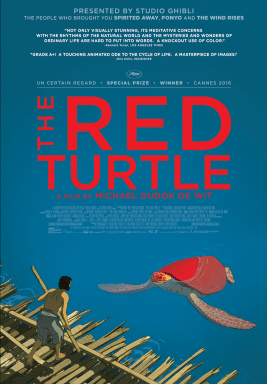
“The Red Turtle,” though not directed by the studio’s godfather, Hiyao Miyazaki, still lacks resonance for me. The nearly wordless 80-minute movie plays out like an even more pared down version of Robert Zemeckis’ “Cast Away.” A stranded protagonist takes out his anger and frustration at his situation on the titular reptile, which does not even appear in the film until about the 30-minute mark.
Director Michael Dudok De Wit crafted a highly representational film that definitely makes the case that animation is not just for kids (duh), although its fable-like simplicity makes a compelling case that the film need not be ghettoized to high-minded arthouse crowds alone. My issue lies not with the elemental aspects of “The Red Turtle;” indeed, these make for the film’s most impactful moments. Instead, it’s the thinness of the premise. De Wit’s story could easily sustain a short film. The power gets diluted as it stretches to fill feature-length. Tedium sets in between periods of appreciation – although for me, deep feeling accompanies neither of these sensations. B- / 
 As firm of a believer as I am in the transformative power of cinema, I do not believe any film contains some kind of magical power that can rid the world of hatred and bigotry. What they can do, however, is gently nudge the needle of individual opinion in the way empathy and humanity. The act of experiencing a narrative arc through the perspective of someone different can open new insights into a world different from our own.
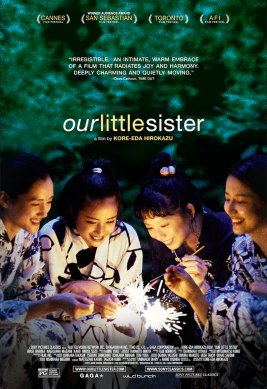 Kore-Eda Hirokazu’s dramas possess a peerless delicacy in their domestic observations. He never seems to approach the material with gloves on, although the gentility takes an quiet yet conspicuous effort. The director’s “
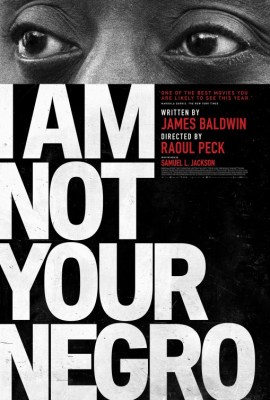 Raoul Peck’s “

 “
“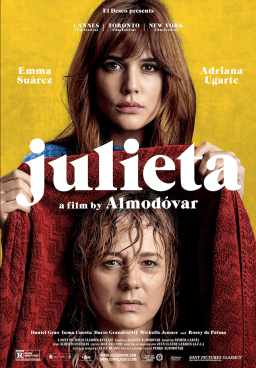 Pedro Almodóvar is a master of the modern melodrama, but his latest film “
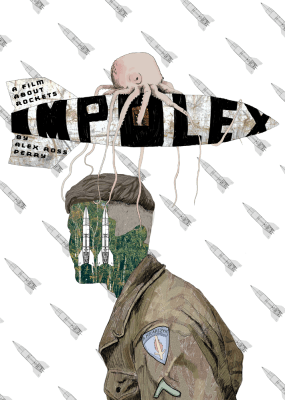 An oft-cited dictum of Karl Marx states, “History repeats itself – first as tragedy, then as farce.” There’s a pervasive sense that living through our current time is like watching the horrors of the 1930s and ’40s refracted through a funhouse mirror, albeit with the “fun” sorely missing. By accident, Alex Ross Perry’s debut feature “Impolex” seems perfectly positioned to capitalize on the moment.
 Sundance Film Festival
 As anyone who has taken an introductory-level film theory class can tell you, the camera is not just an object. It is an organism (most commonly referred to as the eye) responsive to the impulses and instincts of the person who wields it. The majority of current cinema reflects a male gaze, and the emphasis on diversifying talent sadly does not seem to be taking strides –
 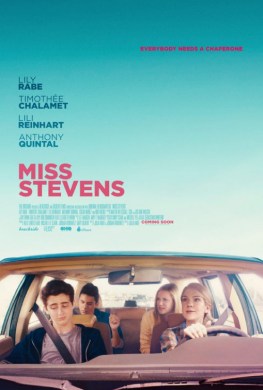 There’s something about young adults staring at each other from across the chasm of their twenties that inspires odd, imbalanced and fascinating relationships. Not enough films investigate these strange connections; Julia Hart’s “

 Marshall and the Movies
Recent Comments