REVIEW: Fences

8 01 2017

The measure of a successful theatrical adaptation is often how far it can distance itself from the conventions of the stage. The underlying expectation is that untethered from the limitations of sets, the suspension of disbelief, the necessity of projection, the primacy of dialogue, and so on, only then will the play will become a film. But that logic does not explain Mike Nichols’ “Who’s Afraid of Virginia Woolf?,” nor does it explain Denzel Washington’s “Fences.”

August Wilson’s play takes place in the family home and yard of Troy Maxson (Denzel Washington), a ’50s-era Pittsburgh patriarch. The concentrated location makes sense logistically for the stage to minimize scenic design costs, but it also fits thematically for a story so immediately concerned with matters of domestic concern. As Troy works through his past shortcomings, his present stagnation and his future worries for his wife Rose (Viola Davis) and children, his blustering and ruminating does not really work anywhere but his house. Opening it up to other locations or breaking up his long, aimless rambling would distill and distort the very essence of “Fences.”

August Wilson is not alive to see how Denzel Washington tended to the script he left behind (though his estate likely saw to his wishes being met), but he would almost certainly be proud to see how the essence of the theatrical experience remained in tact. “Fences” keeps the power in the word and the performance, leaving many important events shaping their current woes and strife unvisualized. We don’t need flashbacks to show us what an expert line reading can tell us, both about the event and the way its ramifications still affect even the smallest of decisions in their lives.

Read the rest of this entry »


REVIEW: A Monster Calls

7 01 2017

A generation raised post-Spielberg’s “E.T.” has come to expect a certain amount of catharsis or salvation from stories in which an unhappy child is visited by a fantastic creature. J.A. Bayona’s “A Monster Calls,” to its credit, resists a lot of the sentimentality and focuses largely on the pain that cannot be diminished or wiped away by some kind of paranormal visitation. If the film makes you cry, Bayona is certainly not there waiting a hug, tissue and reassurance.

Patrick Ness’ screenplay, adapted from his own novel, takes a deceptively familiar premise and finds creative ways to subvert our expectations. The young protagonist, Lewis MacDougall’s Conor, is “too old to be a kid, too young to be a man” yet forced to grapple with the rapidly progressing cancer of his mother (Felicity Jones). At the same time, he receives visitations from a giant talking tree (voice of Liam Neeson) who reads him what appears to be an instructive fairy tale.

But as the story progresses, unfolding before our eyes in creative animation, the true purpose is revealed. It’s a tragedy, not an inspirational fable, and the tree is preparing him for an inevitable loss. Conor’s resistance to the message illustrates the human capacity for deluding ourselves into comforting lies and delusions to shield ourselves from the pain of reality.

His worldview shifts from black and white to gray as well as from sensical to paradoxical over the course of the film, two journeys we commonly associate with the coming-of-age genre. But “A Monster Calls” dwells in the messiness, hurt and loss rather than glossing over it – often times at the cost of being traditionally satisfying or crowd-pleasing. The maturity suggests a film perhaps more aimed at adults looking with retrospection rather than children viewing with a forward glance. B+3stars


REVIEW: Under the Shadow

6 01 2017

under-the-shadowBabak Anvari’s “Under the Shadow” would make for ideal viewing in the setting of a college seminar on horror films. It’s the kind of flick where personal and political anxieties are present, well-established and easily reflected in the monster that terrorizes the film. No academic text performing a close read to perhaps stretch the significance of certain elements is necessary to appreciate the deep connection between the real and the fantastic.

In the film, Narges Rashidi’s Shideh is haunted by the specter of her own feminism in 1988 Tehran. The activism of her student years in the wake of the Iranian Cultural Revolution becomes a liability as a dean prevents her from returning to finish her medical degree after taking a leave to mother her child. As if this setback were not enough, she must also contend with a brewing war between Iran and Iraq as well as a ghost in the household. This spirit threatens to uproot her position as the providing matriarch, exacerbates her feelings of guilt for her attempts to abandon traditional caregiving role.

In its brief 83 minutes, Anvari gives too much time goes to laying the groundwork and setting the stage – not enough to actually consummating the air for horror. Without foreshadowing or a more equitable distribution of scares, the last 20 minutes of “Under the Shadow” feel like an odd addendum rather than the fulfillment of the film’s promise. In this sense, the film’s ripe-for-analysis setup becomes a liability as well as a strength. B / 2halfstars


F.I.L.M. of the Week (January 5, 2017)

5 01 2017

old-joy“Vicky Cristina Barcelona” was one of the first movies to teach me that it’s entirely possible for characters to go on a journey and end up exactly where they started from, learning nothing. It’s an ending that has really stuck with me over the years, and I always admire filmmakers with the guts to acknowledge a fundamental truth about humans. We don’t always learn, adapt or change. We often times remain stubbornly ourselves.

Kelly Reichardt’s 2006 film “Old Joy” is one such film that offers little in the way of optimism about human relationships. Two friends, careerist Mark (Daniel London) and nomadic Kurt (Will Oldham), head into the mountains to escape their lives and reconnect. They go through the motions in seeming expectation that something they see, do or experience will move them – or, at the very least, jolt them out of numbness. No such luck. Things happen, just as they do in everyday life. They are not transformed.

Meanwhile, on talk radio that’s simmering on car radios, we hear Bush-era talk about liberalism in exile and bemoaning the hopelessness of the moment. The action on screen is, of course, connected to the droning, disembodied voices. Everyone in Reichardt’s universe seems paralyzed by the seeming inability of our actions and desires to noticeably alter the reality we must face. So, in other words, no reason to dust this movie off now. Clearly just a relic of its mid-aughts moment. (*chuckle*)


REVIEW: Hidden Figures

4 01 2017

Hidden Figures” features three black female protagonists – or, rather, the film features what feels like a single protagonist with three different facets all fighting different incarnations of the same struggle. During the heat of the space race, this trio of women little known to history played a tremendous role in boosting the fortunes and morale of a nation that still treated them like second-class citizens.

The mathematical calculations of Taraji P. Henson’s Katherine Johnson helped ensure that John Glenn could orbit the earth safely, but she had to contend with institutional racism and sexism that hampered her performance. Octavia Spencer’s Dorothy Vaughn learned how to work NASA’s first IBM computer, primarily because discriminatory hiring practices prevented her from traditional professional advancement. Janelle Monáe’s Mary Jackson became one of the agency’s most brilliant engineers, although in order to do so, she had to fight segregation in the courts to get the education she needed for the job.

While Henson might get the most screen time of the three – she’s the one whose romantic interests that writers Theodore Melfi and Allison Schroeder care to develop – the film really does feel like it possesses a set of co-leads. Their day-to-day struggles might be different, as are the people keeping them from reaching their full potential. Yet together, they provide each other with the strength to tear down the limitations holding them back: first within themselves, then in their workplace, and soon enough the world.

Even as “Hidden Figures” hews closer to the sentimentality of “The Help” than the strategizing of “Selma,” the film gives specificity and definition to each character. Though their hurdles might look the same, Melfi’s direction never allows them to become flattened out or treated as one in the same. The film could have foregone many scenes so obviously built around a vamp up to a Civil Rights-era declaration of humanity, but the cumulative effect of this inspiration and representation is tough to deny. These women were owed respect in their time, not only for their work but also for all they had to do in order to perform that work. It’s wonderful that the film brings their lives into the limelight. B+3stars


REVIEW: Tower

3 01 2017

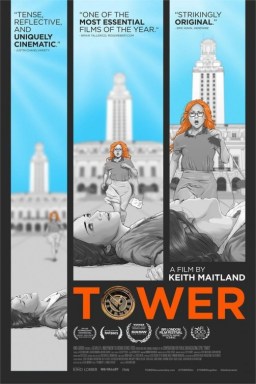
towerIt’s hard to imagine a time when mass shootings were not a regular part of our national diet as Americans. Though I was shielded from the horrors of Columbine, ever since Virginia Tech, the country feels like it’s been on a treadmill of horrors. We even have a routine that’s so predictable that it can be satirized by The Onion.

Keith Maitland’s largely animated documentary “Tower” takes us back to 1966, when a shooter’s bullet did more than cause a momentary pause along with a call for thoughts and prayers. The film takes a look at how a sniper punctured the psyche of a town from his perch atop the bell tower at the University of Texas in Austin. It’s worth noting that the documentary has nothing to do with the shooter, whose name might not even be mentioned. Certainly his motivations are never analyzed, his actions never flimsily justified or excused. This is a film about the innocents he killed, the survivors he scarred, and the campus he changed.

“Tower” makes shootings shocking again by putting us in the shoes of those who experienced the day. Through the technique of rotoscoped animation, Maitland makes archival (and a smidgen of recreated) footage and audio feel vibrant and alive. He clears away the mothballs from history, making it feel both contemporary and immediate. We connect with the panic of experiencing what it feels like when violence feels appropriately senseless and unjust – almost like having to learn about your first mass shooting once more.

I very nearly ended after that last paragraph but stopped myself before publishing. This overview of the film sounded almost unspeakably grim. While Maitland does not shy away from the darkness, his embrace of small acts of courage and monumental acts of resilience reminded me of an all-time favorite quote from Mr. Rogers: “My mother would say to me, ‘Look for the helpers. You will always find people who are helping.’ To this day, especially in times of disaster, I remember my mother’s words, and I am always comforted by realizing that there are still so many helpers — so many caring people in this world.”  B+3stars


REVIEW: A Man Called Ove

2 01 2017

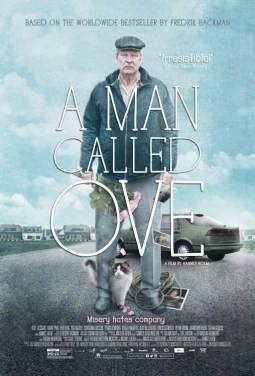
a-man-called-oveIf you are looking for a droll remake of “A Single Man” featuring a geriatric Swede … then you have very specific tastes, first off. You would also be in luck because that’s essentially what Hannes Holm’s “A Man Called Ove” is.

The titular downcast protagonist played by Rolf Lassgård is a downcast widower  who tries repeatedly to kill himself, only to end up finding more reasons to live. With his wife gone, he has few reasons to live except his job, which is of course trying to gently nudge him into retirement. He’s a model worker with an industrious devotion to his profession, and he now bemoans that “soon everyone in this country will be out to lunch.”

But the insular curmudgeon finds human connection with an immigrant from Iran, whose difficulty to adapt to local customs initially gives him a reason to get incensed. Without a workplace in which to enforce standards, he becomes a stickler for rule enforcement in his own neighborhood. Although when it comes to the kindly mother Parvaneh (Bahar Pars), Ove can step back and realize that her pain and isolation outmatches his own. The two slowly bond as he gets a new temporary lease on life.

If the beats sound familiar, that’s probably because they are. There is very little in Holm’s film that feels particularly original, especially not the forced flashbacks that provide a clear biography of the lead character. But if you just want a little bit of prickly cheer, then “A Man Called Ove” might just do the trick. B2halfstars


LISTFUL THINKING: The Most Anticipated Films of 2017

1 01 2017

No more ink need be spilled on the collective dumpster fire that was 2016. There were plenty of good movies to be found, but the anticipation factor felt relatively lacking as the year went on. That is likely to change in 2017 given the amount of projects coming from some of cinema’s most talented artists. We’re at the right time in the cycle of production for a serendipitously large amount of directors, and thank goodness for that.

I usually do a few honorable mentions just given the likelihood of many of these films not theatrically releasing in the current calendar year. So here are a few: “Okja,” Bong Joon-Ho’s follow-up to “Snowpiercer,” has Tilda Swinton and Jake Gyllenhaal in wacky costumes, so I’m in. After “Sicario,” I am very much down for Denis Villeneuve to do anything, including “Blade Runner 2049.” Edgar Wright is such a bonkers and brilliant stylist that “Baby Driver” is sure to get me excited. Sequels to “Star Wars” (especially after Carrie Fisher’s passing), “Planet of the Apes,” “Prometheus” (known as “Alien: Covenant”) and “10 Cloverfield Lane” (still untitled) will pack me in.

But now, on with the top 10! (NOTE: I’m tired on New Year’s Day and will add in more underneath each title on the morning of the 2nd. Sorry, folks, only human.)
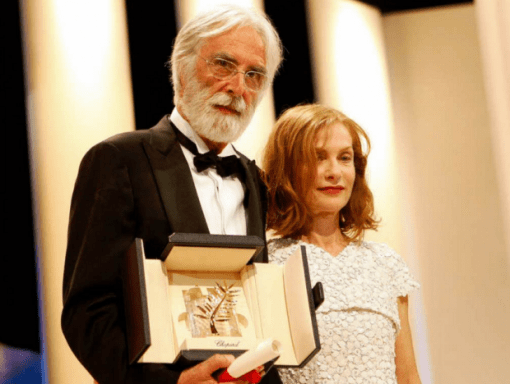
Michael Haneke Happy End

#10
“Happy End” (TBD)
Written and directed by Michael Haneke
Starring Isabelle Huppert, Mathieu Kassovitz and Jean-Louis Trintignant

Michael Haneke’s cinema of cruelty feels like the kind of thing we deserve in 2017 – especially in regards to the migrant crisis in Europe, the backdrop of this film.

Woody Harrelson and Laura Dern in Wilson

#9
“Wilson” (March 24)
Directed by Craig Johnson
Written by Daniel Clowes
Starring Woody Harrelson, Laura Dern and Judy Greer

Somewhat showing my bias here since the director, Craig Johnson, is someone I know – but darn if this movie doesn’t look hilarious and awesome.
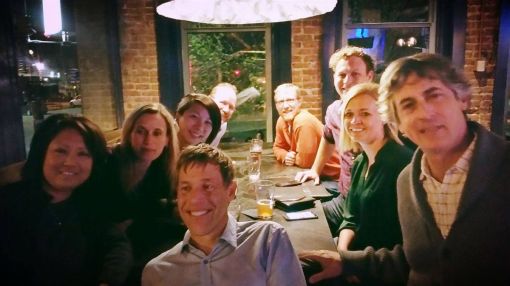
Downsizing

#8
“Downsizing” (December 22)
Directed by Alexander Payne
Written by Alexander Payne and Jim Taylor
Starring Matt Damon, Kristen Wiig and Christoph Waltz

Even though I wasn’t a huge fan of “Nebraska,” I will always be excited for a new Alexander Payne movie. The fact that his latest is a high-concept satire only has me more intrigued.
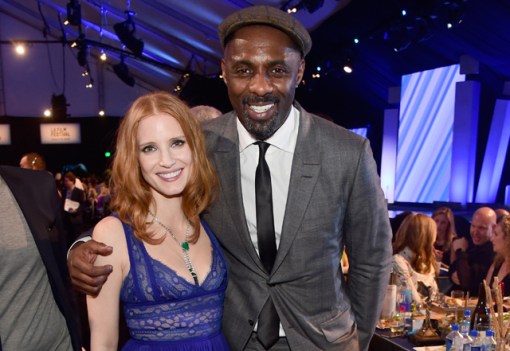
Molly's Game

#7
“Molly’s Game” (TBD)
Written and directed by Aaron Sorkin
Starring Jessica Chastain, Idris Elba and Kevin Costner

Aaron Sorkin’s directorial debut. Incredible cast. Need I say more?
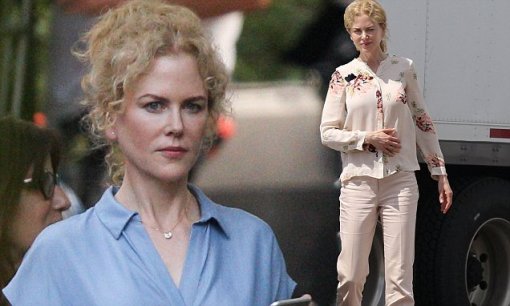
The Killing of a Sacred Deer

#6
“The Killing of a Sacred Deer” (TBD)
Directed by Yorgos Lanthimos
Written by Yorgos Lanthimos and Efthymis Filippou
Starring Nicole Kidman, Colin Farrell and Alicia Silverstone

More English-language fun with the director of “The Lobster” is very much what the doctor ordered. Hopefully this is a surreal movie perfectly timed for our surreal times.
untitled-darren-aronofsky-project

#5
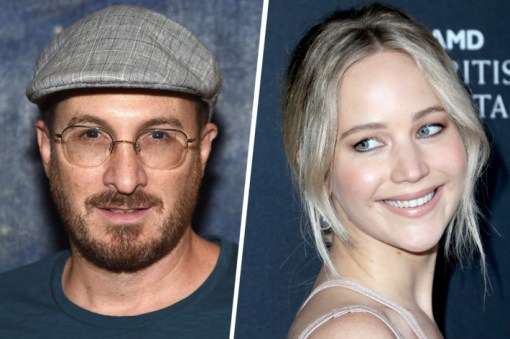
“Mother” (TBD)
Written and directed by Darren Aronofsky
Starring Jennifer Lawrence, Domnhall Gleeson and Javier Bardem

I am glad Darren Aronofsky got “Noah” out of his system so now he can return to thrillers like “Black Swan.” Hopefully Jennifer Lawrence’s supposed romance/showmance with him does not cast a cloud over the film.
Paul Thomas Anderson Daniel Day-Lewis

#4
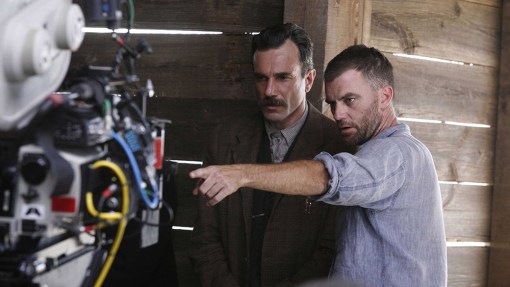
Untitled Paul Thomas Anderson/Daniel Day-Lewis Fashion Project (TBD)
Written and directed by Paul Thomas Anderson
Starring Daniel Day-Lewis

There is literally no other information about this film other than the fact that PTA is writing/directing it, DDL is starring and it somehow involves fashion. That’s all I need.
Tully Jason Reitman

#3
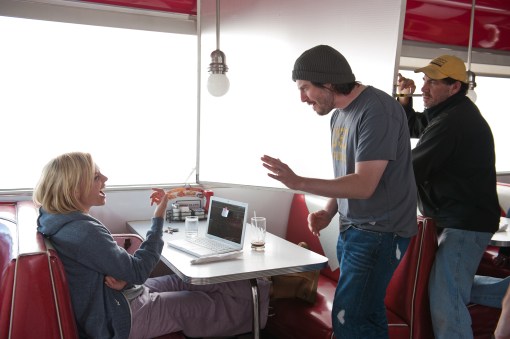
“Tully” (TBD)
Directed by Jason Reitman
Written by Diablo Cody
Starring Charlize Theron, Mackenzie Davis and Mark Duplass

The dream team of Jason Reitman, Diablo Cody and Charlize Theron is reuniting. Prepare for my pieces claiming that “Young Adult” is a forgotten gem of the decade.
kathryn-bigelow-detroit

#2
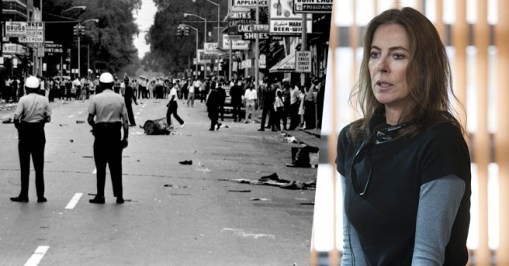
Untitled Katherine Bigelow Detroit Project (TBD)
Directed by Kathryn Bigelow
Written by Mark Boal
Starring John Krasinski, John Boyega and Anthony Mackie

Kathryn Bigelow and Mark Boal have made two great movies about recent history and the American character, so I’m very curious to see what they’ll find when they venture back a half-century to Detroit’s race riots. They’ve assembled an all-star cast to help them, too.
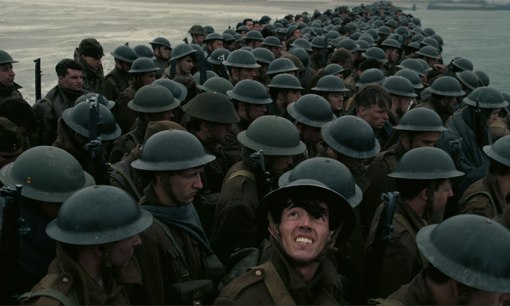
Dunkirk

#1
“Dunkirk” (July 21)
Written and directed by Christopher Nolan
Starring Cillian Murphy, Tom Hardy and Mark Rylance

Chris Ryan at The Ringer said it best: “I Hope ‘Dunkirk’ Is Four Years Long.” Bring it on, Christopher Nolan. I am ready for your war movie. Reach into my chest, pull out my heart, and make it beat at your desired frequency.


In A World… (The Top 10 Films of 2016)

31 12 2016

“In a world…”

Any self-respecting ’90s moviegoer can never forget announcer Don LaFontaine’s literally trademarked invocation. It was an invitation to enter a world apart from our own, be it an entirely invented fantasy realm, a different country or a fresh perspective.

I bring this up in regards to a year end list of 2016 because so many things I could say to describe the events of this year feel so unfathomable that they could only follow “In a world…” Both personally and culturally, the past 12 months have upended plans, expectations and assumptions. It’s not just the result of the 2016 election in America, or the outcome of the Brexit referendum, or whatever the hell happened when Batman battled Superman – and on the positive side, it’s not just the fact that I covered Sundance, tackled SXSW, and interviewed some really talented cinematic artists. It’s everything that led up to that, all the many breaks that went the way they did to get us to this point.

I always do my best to rewatch any movie I put on my year’s best, but this year I found that I had to rewatch more 2016 films not to determine whether they were as good as I had originally thought. Rather, I had to reexamine what I thought they were about at their core. I could go on and on, but for some examples: “Christine” played like a personal psychodrama at Sundance and an elegy for the dignity of television journalism in December. “Jackie” felt like an empowering tale of a former First Lady gaining her agency at the New York Film Festival in October, yet it seemed more like a requiem mass for a fallen dynasty in late November.

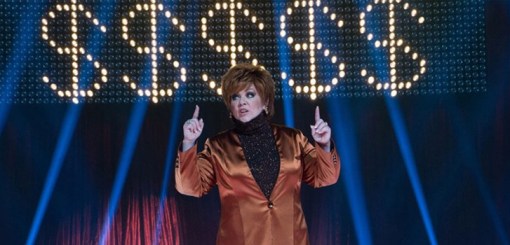
Melissa McCarthy as Michelle Darnell in The Boss

Films whose attitudes I had dismissed – “Deadpool,” “The Boss,” “War Dogs” – seemed validated. Others that seemed to champion the virtues of our era – “Denial,” “The Magnificent Seven,” “Neighbors 2” – felt somewhat hollow, if not completely naive.

I remain uncertain as to which of these films is weaker or stronger for accommodating such a panoply of vantage points. In a world where nothing seems certain, it was a valuable and instructive experience for me to remember that while a film as an object stays the same, our ideas and understandings about are invariably shaped by the worldview from which we approach them. The conditions of its creation are unchangeable. The context of our reception is always subject to forces beyond our control.

So … in a world where seemingly so much is at stake and so little is known, what place do movies have? And what importance does writing about them take? When I started paring down the 200 theatrical releases from 2016 that I viewed this year (fun fact: that’s exactly the same amount as 2015), I was struck by how many of them had created an irresistible world or replicated our present one with a staggering amount of accuracy and honesty. I realized that for so much of the year, the best cinema was not an escape from the world but a means for better understanding it in this crazy year.

Without further ado, here are my selections for the top 10 films of 2016. Rather than lavish them with superlatives, I simply hope to convey what I found of value in those worlds. (If you want all the praise, look to my reviews – the titles hyperlink to them.) Now, on with the show: in a world…

Read the rest of this entry »


F.I.L.M. of the Week (December 29, 2016)

29 12 2016

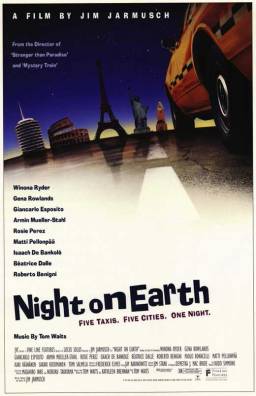
night-on-earthMy apologies to whichever friend or professor enlightened me with the following observation; I have to give credit because it is not my own. There’s a reason why so many heated, important conversations take place in cars. The automotive space is an inescapable one for its passengers, but the tableau where all seats face forward also allows confrontations to occur with an excuse to avoid eye contact.
Before HBO’s notorious “Taxicab Confessions” explored the taxi as a conversational space, there was Jim Jarmusch’s “Night on Earth.” This astutely observed and wryly humane dark comedy is an international omnibus exploring the unexpected connections that can be made across the divide between passenger and operator. The circumstances and the outcomes change with each successive city and set of characters, but the joy of observation remains unchanged throughout my pick for the “F.I.L.M. of the Week.”

The segments of “Night on Earth” could easily have just amounted to a filmed version of a screenwriting challenge. (I recall one film school application I looked at requiring multiple scenes taking place in an elevator.) A shared setting may unite the vignettes, though little else does. Jarmusch begins in Los Angeles where Gena Rowlands’ wealthy passenger Victoria Snelling can never quite understand the aspirations of her driver, Winona Ryder’s Corky, to become a mechanic. He ends in Helsinki, where three ruffians allow themselves to be moved deeply by the plight of their driver. And just before that, a segment in Rome pits Roberto Benigni’s sexually frustrated cabbie against a horrified Catholic priest in a comedy reminiscent of early Woody Allen.

There’s no grand statement or thesis here. If there was, it would certainly be secondary to just taking in “Night on Earth” beat by beat with these characters. Both the journeys and the destinations are fascinating and surprising in equal measure.


REVIEW: Paterson

28 12 2016

patersonHouston Cinema Arts Festival

I suspect like many in the blogosphere, I write not for a living but because it gives me some purpose to my passion. There’s a tendency among those us who keep up such a habit to compartmentalize life into the daily, the mundane, that which pays the bills … and the time for doing what brings true, deep, intrinsic satisfaction. These dual spheres are seemingly always battling for influence, the ideal scenario being one where the time allotted to one’s avocation can supersede that given to their vocation.

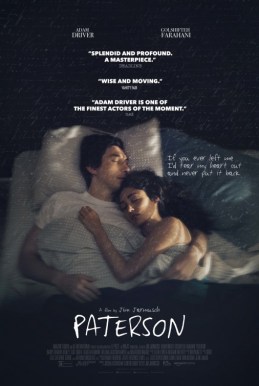
With his latest narrative film “Paterson,” however, writer/director Jim Jarmusch envisions a different way. His subject, Adam Driver’s Paterson, is a bus driver by trade in the carcass of the old industrial town of Paterson, New Jersey. Not for a second do we pity what appears on the surface to be a humdrum existence. It’s the presence of a steady routine – his morning mosey to work, his regular route, his late night dog walks, his quiet evening grabbing drinks at the bar – that allows him the headspace to write great poetry. In the absence of disruption or chaos in his life, Paterson can easily nestle his calling within his career.

This does not mean that Paterson skips merrily to get behind the wheel each day. His face lights up at any occasion to discuss poetry or writing, and such animation is hardly ever visible when he dons a stoic expression to face down another day of his regular routine. Paterson does not so much resign himself to this fate as he makes peace with it, and 2016’s struggling artists in films from “La La Land” to “Don’t Think Twice” as well as “Maggie’s Plan” would be wise to take a page from his playbook. In his own way, he has found contentment and seems quite happy with it.

Foil that with Paterson’s girlfriend, Golshifteh Farahani’s warmly supportive Laura, who appears allergic to anything resembling order or stability in her schedule. “Paterson” follows a little over a week with these characters, and no day is ever the same for her. She’s always following a new whim or passion, never fully gratified by her last pursuit. She can create cute tchotchkes, perhaps, but she moves too fast to notice the vibrant life surrounding her. Thanks to Jarmusch’s understated but steady vantage point into their world, we get to notice the unexpected virtue of stability and the joy that comes from having the perception to notice the variations and deviations that break up the monotony. A-3halfstars


REVIEW: 13th

27 12 2016

13th“We have to understand before we can move on,” states an interview subject early in Ava DuVernay’s documentary “13th.” The movie does just that by establishing a baseline of knowledge among people who watch the film. There’s no title cards before the closing credits trying to funnel viewership into political action. In fact, we are more likely to feel complicit in our silence than empowered with our activism.

I’ve seen “13th” twice now, once before the election and once after. Among the many films that I have rewatched in the wake of Trump’s victory, this is the one that feels to have changed the least. That’s a huge credit to DuVernay’s laser-sharp focus on her thesis that the past 150 years of America’s prison system is a reincarnation of slavery thanks to a loophole in the titular Constitutional amendment. She did not try to predict the future; in fact, both of 2016’s major party candidates make appearances in archival material that their campaigns would rather have buried. Instead, DuVernay casts her glance backward at the structural and institutional conditions that allowed “crime” to become a proxy war against black Americans.

“13th” shows less of the inside baseball of politics than the standard political documentary, although some invisible actors like the FBI and ALEC do get properly chided. DuVernay opts to look at cultural flash points such as D.W. Griffith’s “The Birth of a Nation,” which fueled the popular image of black men as indolent indigents, and George H.W. Bush’s infamous dog-whistling Willie Horton campaign ad. These are important to examine both in their creation and their adoption. Were Americans willing to wholeheartedly dismiss these negative images as propaganda, perhaps we would not be in our current situation. But we didn’t, as recent events have shown, and our country may be forced to refight some of the battles that appear settled or reversed by the Obama administration.

But to talk about “13th” purely in terms of content does a disservice to the great artistry that DuVernay brings to the project. The documentary is far more than just a sleek presentation of introductory poli-sci college seminar material. She’s reliant on talking heads to convey the history of American penal injustice as well as to editorialize, yet she usually does not display the subject’s name or affiliation until they have spoken several times. The effect allows us to build up trust and judge their words before we can write them off based on their qualifications. (She also shoots some wonderfully dynamic interview framing, conveying mood and motion along with information.)

DuVernay repeatedly confronts us with the word “CRIMINAL” in big block letters every time the word is uttered. It’s a call to consider the term not as a person but as a construct, one that has been weaponized specifically against one group of our fellow citizens. True, it is technically race-blind. But we must understand that its conceptualization does not align with its practice in order to correct a systemic imbalance in our country. A-3halfstars


REVIEW: La La Land

24 12 2016

Houston Cinema Arts Festival

Richard Dyer, perhaps the most important modern academic writer on the cinematic musical, divided the genre into three camps. The first two, backstage and the more “escapist” variety, fashion their musical numbers as set apart from the main narrative. These song and dance sequences are very obviously a performative or fantasy space – a separate reality.

But the third, which he dubbed the “utopian” musical, featured a more porous exchange between sequences of the mundane and the melodic. These musical numbers are a heightened version of the reality we see in scenes with regular dialogue and blocking. The choreography and the chants add emphasis to mood and tone rather than simply carry water for plot and character development.

If the extended explanation did not already make it clear, Damien Chazelle’s “La La Land” falls into this utopian musical category. When Ryan Gosling’s Sebastian and Emma Stone’s Mia move together, it’s pure bliss. The camerawork of Linus Sandgren captures them in long, fluid takes demonstrating the beauty of their synchronicity in the same way the staccato editing of Chazelle’s “Whiplash” conveyed the violence of drumming. While both actors can spar like Old Hollywood stars and emote like their contemporaries, their feelings are always better expressed in footwork and tentative croons.

Many classic musicals had to use dancing as a metaphor for sex given the strict censorship codes of the time. No such limitation exists to keep Gosling and Stone apart, but Chazelle’s insistence on adhering to the representational language of these films opens up “La La Land” to speak in a highly formalistic manner. It’s a bold choice to wed the film’s crowd pleasing elements to a borderline avant-garde aesthetic, but the elements harmonize quite nicely.

Read the rest of this entry »


REVIEW: Toni Erdmann

23 12 2016

toni-erdmannFantastic Fest

I caught up with Maren Ade’s “Toni Erdmann” at an odd stop along the festival circuit: Alamo Drafthouse’s Fantastic Fest, a far different crowd from the high-minded cinephiles lining the Croisette at Cannes, filling the gondolas at Telluride or packing New York’s Lincoln Center. Sandwiched between genre fare at the festival was this German comedy of manners that has become the year’s critical darling. And yet, the connection between the film and one about cannibals felt apparent to me.

I consider that a testament to just how remarkable Ade’s work is, at once so assured and so open to a multiplicity of reads. Part of that may be a natural result of a 162 minute runtime – for what its worth, the film never feels it. But “Toni Erdmann” is not simply impressive because Ade keeps a great number of plates spinning; in fact, the simplicity of the father-daughter story has stuck with me as much as anything. Through such tight focus on their dynamic, Ade can then shed light onto some relevant themes and issues adjacent to the narrative.

As the film begins, aging prankster Winfried (Peter Simonischek) seeks a new outlet for his antics following the passing of his beloved dog. Around this time, his distant offspring Ines (Sandra Hüller) washes up in Germany again. Winfried jokes about hiring a “replacement daughter,” an idea at which she scoffs. But her brisk dismissal sparks in him a much grander idea that will first drive a tremendous wedge between them – with the goal of perhaps ultimately draw them closer together.

Ines works as a mid-management level consultant in Bucharest, gluing herself to a cell phone screen and PowerPoint presentation to forcefully make the case for outsourcing jobs to the far reaches of the EU. Just as she needs to be closing the deal with the client, who appears at every inopportune moment but Winfried? Only here, he has donned the guise of Toni Erdmann, an unkempt straight-talker who immediately foils with Ines’ buttoned-up sterility.

The immediate aim is embarrassment, which often takes a raucous and ribald form. Yet the long-term objective is mortification: breaking down Ines so she can rebuild herself in a more compassionate way. Watching Ines squirm is an honest (albeit guilty) delight, especially because Hüller pulls from a vast repertoire to express the character’s discomfort in her face and body language.

Read the rest of this entry »


REVIEW: Sing

21 12 2016

When it comes to making movies for children, simplicity is your friend. In the case of Illumination Entertainment’s “Sing,” however, animators must have just decided to meet the times and deliver a scattered mess of characters in need of Adderall and concision. There’s genuine heart and sweetness in Garth Jenning’s film, but it gets choked out of the equation in favor of more songs, more gags, more scenes, more … everything.

There’s really no need to stuff in another animal, another backstory, another musical number. We already know what’s going on from the get-go because “Sing” is not a particularly complicated film. Koala bear Buster Moon (voice of Matthew McConaughey) is a man after many of our own hearts – inspired by art at a young age, he doggedly and even naively sets course to be a booster and patron in the community. When his theater falls on hard times, he holds auditions for a singing contest to spotlight the unsung stars of the town.

While he struggles to pay the rent and keep the lights on, his contestants engage in battles of their own. Yet among the handful of singers, each given about equal screen time, there are really only two issues – nerves and family expectations. Be it the dedicated domestic engineer Rosita (Reese Witherspoon’s plucky pig Rosita), the shy elephant Meena (Tori Kelly), or the bank robber-cum-closet crooner Johnny (Taron Egerton’s gorilla Johnny), the conflicts all bleed into each other. By their final numbers, there’s no surprise or jubilation because we know these animals as nothing more than familiar character dilemmas. With our attention spread so thin between them, there’s no connection built up, either.

If anything, “Sing” feels like an animated television series retrofitted into a feature-length film. Well, actually … maybe that’s the motivation after all. Even so, that doesn’t change the fact that this is an uninspiring pilot episode. C+2stars