Arguably the most famous close-ups in cinema history take place in Carl Theodor Dreyer’s “The Passion of Joan of Arc,” the 1928 silent classic that elevated the expressively tight framed shot of facial contortions to the position of high art. Dreyer later said of the close-up, “Nothing in the world can be compared to the human face. It is a land one can never tire of exploring.”
It’s a blessing Dreyer did not live to see Tate Taylor’s “The Girl on the Train,” a film that puts the close-up to shame through bludgeoning and excessive use. This specific shot is the movie’s only language to convey the internal agony of its three leading female characters. No need to waste time detailing the multitude of other techniques available at Taylor’s disposal, so let’s just leave it at the fact that the close-up is lazy shorthand for emotional intimacy.
The camera tries to substitute the reservoirs of feeling hidden by the icy women, each with their own secrets to bury and axes to grind. Their blank stares into the distance are meant to convey restraint or secrecy; instead, they convey nothing. One only needs to hold up the work of star Emily Blunt in “The Girl on the Train” alongside her performance in “Sicario” to see the difference. In the latter film, the most minuscule movement in Blunt’s face communicates a complex response to the ever-shifting environment around her character Kate Macer. Here, as the alcoholic voyeur Rachel Watson, Blunt is reduced to gasps and gazes that do little to illuminate her psychology.
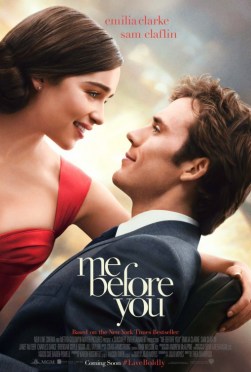 It has been a long time since a movie infuriated me to the extent that “Me Before You” did. Strap in, folks, this review is chock full of opinions and passion. (Also, here be spoilers, but if you’ve followed any of the online discussion surrounding the book/film, you probably know what happens anyways.)
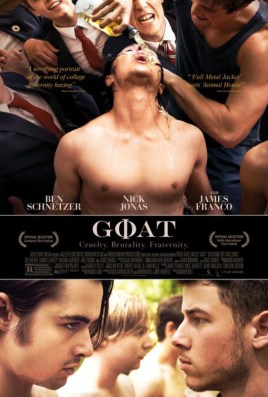 Sundance Film Festival
 “I’m back, you bastards,” declares Kate Winslet’s Tilly Dunnage upon arriving back in her home town at the outset of “
 I knew nothing about Amos Oz’s life or work before seeing “
 Long before there was Columbine, Virginia Tech or Newtown, there was the 1989 massacre at the École Polytechnique in Montreal. Unknown to many (myself included), a shooter opened fire in an engineering school and shot 28 people, killing 14. His rationale recalls that of the 2014 shooter in Santa Barbara: an angry, entitled rage against the feminist ideology that threatens his comfortable dominance.
 Peter Berg has a knack for directing blue collar dialogue in a convincing manner. For films like his 2013 survival drama “
 In Anna Rose Holmer’s “
 Eastern spirituality and meditation are having a moment in American culture as people drift away from institutionalized religions and get in touch with a more therapeutic, deistic system of thought. The attraction of this system was lost, however, on filmmaker Vikram Gandhi. As someone who grew up in eastern faiths, Gandhi sees the yoga and meditation that sets westerners free as something oppressive to liberated from.
 At its best, Alice Winocour’s “
 Dylan Kidd’s “

 Marshall and the Movies
Recent Comments