 The tortured, abrasive genius has gotten a lot of play recently – the 2014 Toronto Film Festival alone saw the premiere of “The Imitation Game,” “The Theory of Everything,” and “Pawn Sacrifice,” all of which played with these tropes to some degree. The final of the three is the last to see release because it is the most conventional of the bunch and thus the most boring.
Picture “A Beautiful Mind” sans any beauty and you’ll arrive at Edward Zwick’s biopic on Bobby Fischer. So, in other words, just “A Mind.” Tobey Maguire stars as Fischer, a chess whiz who also happens to harbor serious mental health issues that convince him the Jewish people are conspiring to bring him down. (Never mind that Fischer himself was Jewish.)
After some obligatory introductory scenes that set up Fischer as a prodigy from his youth, the majority of the film concerns his 1972 match against Soviet heavyweight Boris Spassky (Liev Schrieber). Zwick and screenwriter Steven Knight want you to believe that this is the thinking man’s version of the 1980 Miracle on Ice – “World War III on a chessboard,” as one observer calls it. Yet for something supposedly so important, “Pawn Sacrifice” feels like it has remarkably low stakes and tension.
Part of that comes from investing so much energy in Fischer’s supposed mental deterioration, which Maguire plays like a histrionic marionette. We can see the strings, so nothing can really surprise us about the turns Fischer takes. Any more exposition would have made the film intolerable, but it might have been necessary to contextualize his genius. Without that, the whole film feels played at the intensity of an emotional meltdown in “Spider-Man.”
But a lot of the film’s dullness is due to Zwick’s direction, which is so tasteful that it forgets to entertain or engage. It’s hard to believe “Pawn Sacrifice” comes from the same man who directed great historical films like 1989’s “Glory” and 2006’s “Blood Diamond.” This film just feels remarkably drained of any intensity, something it desperately needed in order to make a convincing case that the man and the event depicted are worthy of our time and attention. C / 
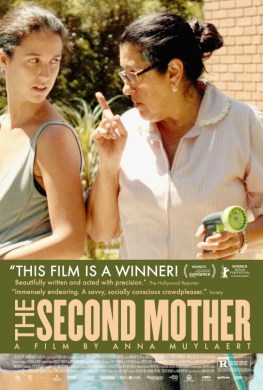 Anna Muylaert got more than a great performance by casting Regina Casé as Val, the old-fashioned house maid to a wealthy Sāo Paolo family, in her drama “
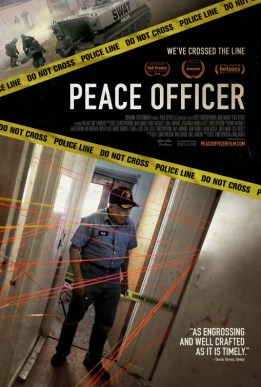 If you noticed your screening of “
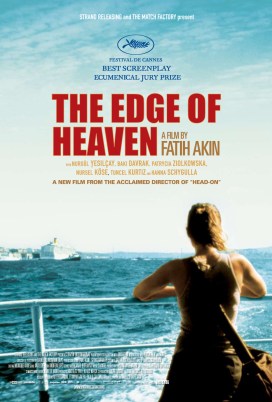 Fatih Akin had a bit of a rough go with the film festival circuit the last time around with his Armenian genocide drama “The Cut,” which received nearly unanimous pans out of Venice. To my surprise, the film managed to secure U.S. distribution (I had all but given up hope of ever seeing it).
 Towards the end of the lengthy expository section of “
 Josh and Benny Safdie often draw comparisons to filmmakers like John Cassavetes for their sluggishly paced realism. In their 2010 film “Daddy Longlegs,” I found this stylistic choice little more than a conceit. Slow, ambling scenes tied together by little more than the whims of life were simply a method of communicating the frequent failures of a single father.
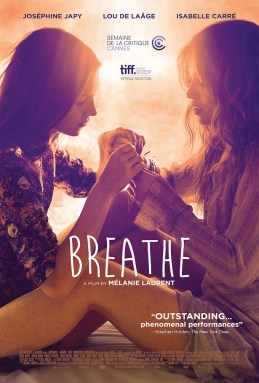 “
“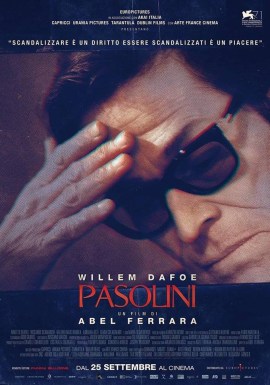 New York Film Festival, 2014
 The small town, blue-collar workers in Scott Cooper’s “
 The Toronto International Film Festival (TIFF) gets underway today, and plenty of films vying for Oscar glory will be seen for the first time. Other holdovers from Sundance, Berlin, Cannes, and Venice will also get a moment in the sun, a reintroduction for North American audiences.
 M. Night Shyamalan might be moviegoers’ favorite punching bag, but for his latest outing as writer/director, he brought something to deflect the blow.
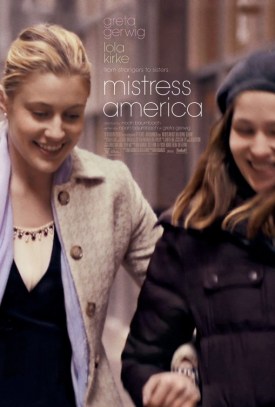 The lively creative partnership between writer/director Noah Baumbach and writer/star Greta Gerwig produced one perfectly pleasant piece of cinema in 2013’s “Frances Ha.” That film appropriated the techniques of the French New Wave greats and applied their general vibe to an (un)happy-go-lucky New York twenty-something.

 Marshall and the Movies
Recent Comments