 So long as writer/director Alex Gibney’s research is solid, then his searing exposé “Going Clear” makes a pretty damning case for the group’s dismantling. Or, at the very least, it ought to lose the aegis of religion under which it hides physical and mental abuse. The Church of Scientology should definitely not qualify for tax exemption since such a privilege seems to be the modus operandi for L. Ron Hubbard to claim his science-fiction texts were a religion in the first place.
Gibney stirs up a lot of emotions as he documents the development of Scientology, its growth in the Hollywood community, and the shocking measures of the leaders (namely chairman David Miscavige) to maintain the group’s fragile stability. The most obvious is anger, a sentiment that the documentarian can elicit with ease. “Going Clear” makes the impact of “Mea Maxima Culpa,” Gibney’s documentary about sexual misconduct within the Catholic Church, seem like an investigative report about robbing a 7/11.
But the gamut of feeling moves far beyond easy outrage into a much wider range. There is pity for John Travolta, who the Church of Scientology may have blackmailed into silence with personal revelations that he disclosed in auditing sessions (at his own expense, no less). There is also disappointment with Travolta, Tom Cruise, and other high-profile members who appear to turn a blind eye to the exploitation since they derive benefit from luxury services the Church provides. There is incredulity to spare as Gibney exposes some dark corners of Scientology’s tax evasion and bullying tactics.
One thing that “Going Clear” is not, however, is an attack on the religion’s core beliefs. (“South Park” already took care of that.) Gibney never suggests the foolishness of the members for buying into what many, myself included, think constitutes a rather far-fetched system of teachings. Furthermore, he never blames them for falling into the “prison of belief,” a phrase used in the film’s subtitle.
When the Scientology defectors give their interviews, they often speak in terms that could apply to any extreme sect or cult in any mainline faith. The problem with Scientology, as articulated by Gibney, has nothing to do with faith but rather with how religious leaders can exploit vulnerable people into permitting or condoning inexcusable acts. A- / 

 A few months ago, upon seeing the trailer for “
 Joel Potrykus aims for a mumblecore “Office Space” with his film “
 In his soon-to-be classic modern horror film “
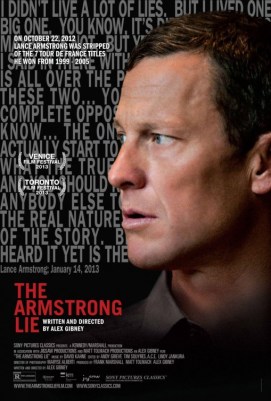 Documentarian Alex Gibney is not only one of the most prolific directors in his field; he is also one of its most incisive. Gibney tends to gravitate towards two extremes in his choice of subjects, macro level exposés of corrupt institutions (Enron, the Catholic Church,
  In the interregnum between the Beatnik era of “
 Directors Carl Deal and Tia Lessin sell their documentary “
 It’s easy for cinephiles like myself to put foreign cinema on a pedestal, praising it as superior to what the American system churns out year after year. Much of that praise, however, comes from sampling bias. Usually, a film has to be pretty good to cross the pond and make waves in the United States. A visit to a movie theater in France will realign romanticism with reality. For every “
 A shy, young office worker in Japan mysteriously stumbles upon a VHS copy of the Coen Brothers’ “Fargo” and begins to interpret it as a factual document pointing her to buried treasure in the snows of North Dakota.
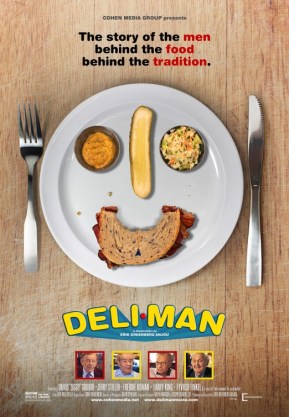 Erik Greenberg Anjou’s documentary “

 Marshall and the Movies
Recent Comments