INTERVIEW: Lake Bell, producer, director, writer, and star of “In A World”

23 08 2013

Lake Bell in IN A WORLD“I like words, I’m very fond of them,” began Lake Bell.

It was easy to tell that her opening statement was no lie because Bell had no shortage of words in the 30 minutes I got to spend in a roundtable discussion with her.  Despite having landed in Houston at 3:00 AM that morning and then getting up to do morning shows at the crack of dawn, she was as sharp and clever as her debut feature film, “In A World.”  Bell proved herself to be quite the jack of all trades on the movie, serving as its writer, director, producer, and star.  And in case you were wondering if she spread herself too thin, here’s an excerpt from my review of the film:

“As a feature debut for Bell (who I only knew from her supporting turns in ‘It’s Complicated‘ and ‘No Strings Attached‘), the film is certainly promising for many great things to come.  She makes no major missteps in her finely-tuned comedy.

And if writing and directing wasn’t enough, Bell goes full Woody Allen and stars in the film too […] ‘In A World,’ despite being just over 90 minutes, manages to squeeze in more than just Carol’s story as well.  Not unlike ‘Hannah and Her Sisters’ (though without all the philosophical and existential postulating), Bell involves us in the lives of Carol’s friends and family along the journey.”

In just the brief amount of time I got to spend talking with Bell, she was able to talk not only about the basics of “In A World” but also about some of the deeper thematic and feminist underpinnings of the film.  If you watch the film and wonder if it means to sound intelligent, I can tell you with confidence that it is.  Lake Bell is a very smart writer with a lot to say about women in cinema and all other professional fields.  She’s reluctant to turn herself into an activist, however, prefacing one of her most profound remarks with “not to get on my soapbox…”

In A WorldBell was willing, though, to call out girls suffering from what she calls the “sexy baby vocal virus,” a second wave of Valley Girl-itis.  The element, now sutured into the fabric of the film, did not come into the script until later drafts.  But according to Bell, “The sexy baby vocal virus was something that I personally had been preaching to my friends about, and then I had a friend that said, ‘I don’t know why you don’t have that in the script.  It should be your protagonist’s plight.’”

To Bell, it’s more than just an annoyance.  After studying voice in school, she knows it is merely an affection.  By putting on this voice, they are also stripping away a sense of feminine empowerment.  “I felt like, as a woman,” she said, “it was evoking this feeling that women are less than, that people don’t believe in themselves.”

The good news, Bell shared, is that the “sexy baby vocal virus” can be beaten.  These women can choose to sound like Lauren Bacall, Faye Dunaway, Anne Bancroft, or Charlotte Rampling, Bell’s vocal role models.  It just requires a lot of self-awareness and determination to stop, not unlike when Bell decided she did not want to say like every other word.

The feminist critique goes far beyond this memorable addition to the plot, however.  Bell’s film takes a look at competition in the voice-over industry and the difficulties women face when trying to enter it.  Granted, movie trailers were dominated by one man for so long, the golden voiced Don LaFontaine.  According to Bell, LaFontaine’s estate owns the phrase in a world, but the royalty payments aren’t the reason why it’s fallen out of use.

“It’s considered archaic now,” she reamrked, “it’s considered outdated.  Which is why in the movie, that it being resurrected, they’ve decided to make it a thing … is kind of a fantasy for me because I want them to bring it back.  But it’s not as trendy to do it now.”

(And if you’re curious, Bell pointed out that there is only one movie trailer with female voice-over: Melissa Disney narrating the “Gone in 60 Seconds” trailer.)

Though it might seem that Bell’s own experiences trying to break into the business would provide the framework for “In A World,” the foundation was laid much earlier for her when she was a young girl at her father’s racetrack.  As she put it,

“I was always around cars, he was always racing, I was always around the track since I was a little girl – another male dominated world that’s super cutthroat.  And lots of egos swinging around, lots of colorful characters, and if anything I used my father’s interactions with people on the sidelines of the racetrack for the voice-over industry when I later wrote this movie.”

Lake Bell“In A World” came about, though, much further down the road after a few hard knocks and some serious discussion:

“From my own experience, even just in organic conversations, I remember just thinking about the words ‘in a world…’ and how fun it was.  And then the conversation went to, ‘gosh, isn’t it strange that women have never done that?’

And then the conversation blossomed into that of something a little more serious, the sort of feminist issue at bay – an omniscient voice, an authoritative voice, is almost never female.  And why is that?  And perhaps it’s just ‘oh, people are just used to the male voice, that’s just how it is.’  Well, I don’t know if that’s quite good enough.

I think it’s strange when you have female-dominated content, addressed to women, and there’s still a male selling it to you.  Especially in the movie trailer.”

Bell admits that at least tampon commercials seem to get it right with a female voice selling you the product.  But she believes that the “fear-based” movie industry is too timid to shake up the system and employ women’s voices in trailers.  She makes a reasonable argument: “If it’s a chick flick, you’re already going for the female audience […] why not have a female authoritative voice to go see the movie?”

Through no fault of Bell’s, “In A World” is being released into a climate where women’s stories are still undervalued by major Hollywood studios.  This summer, two full years after “Bridesmaids” and “The Help” were box office smashes, there was just one movie with a female protagonist: “The Heat.”  Bell said that she loved the Bullock-McCarthy buddy comedy, admitting “[‘In a World’] is nice to be next to ‘The Heat’ where there is a dearth of female-driven movies.”

Asking her about “The Heat” opened up another conversation, perhaps her most profound statement of the day.  Bell pointed out that there’s a vast double standard in the way that our society looks at films based on the gender of their protagonists.  (Yes, this was the aforementioned “soapbox” moment.)

“The word rom-com has become such a negative stamp only because even though I love a great rom-com, when it’s a female-driven movie, it’s often immediately stamped as a rom-com.  While it’s not technically a love story, it’s a comedy that has family drama and family fodder.  And there’s romance and there’s all kinds of industry competitiveness and ego bashing.

Gosh, I hate to get on my soapbox – but if it’s male-dominated and has to do with marriage and relationships and love, it’s never called a romantic comedy.  Like ‘Wedding Crashers’ is LITERALLY about weddings and people getting together.  If it were a female-driven movie, it would be considered a rom-com.  Because it’s a male-dominated movie, it’s a BUDDY comedy!”

Lake Bell as Carol SolomonSo after taking a powerful stand for women on film, what’s next for Bell?

She’s currently at work on her next feature called “What’s The Point?”  When I asked her if she could share anything, she replied, “I can’t really speak to ‘What’s The Point?’ because it’s so embryonic at this point and I think it would be doing it a disservice if I speak too much about it.  But I’ve been working on it for a year intermittently and I continue to do so.”  After my time with Lake Bell, I certainly look forward to seeing her further explore and develop her voice.  She has meaningful things to say; someone needs to give her a louder microphone.


REVIEW: In A World

23 08 2013

In a world where the movies began to buckle under the weight of copious cliches, one movie dared to be different.  It was not a romantic comedy yet still had romance.  It was not a drama but managed to tackle serious issues convincingly.

While I might have made Lake Bell’s “In a World” sound like some kind of panacea, it’s really just a nice, simple movie that does a lot of things very right.  As a feature debut for Bell (who I only knew from her supporting turns in “It’s Complicated” and “No Strings Attached“), the film is certainly promising for many great things to come.  She makes no major missteps in her finely-tuned comedy, but it is rather safe and risk-free.

Bell also wrote the film’s script, which contains a smart and well-observed feminist critique.  In a summer where “The Heat” was the only major studio release with a female protagonist, “In a World” opens up a fascinating dialogue about sexism and male hegemony in the art of voice-overs.  While much of the film is industry-specific, Bell gives us plenty of food for thought about women in any workplace.  She even manages the current impasse for many women between symbolic affirmative action and equal judgment with finesse.

Read the rest of this entry »


REVIEW: No

22 08 2013

No PosterNo” has the look of the VHS tapes that I watched in high school Spanish, a campy educational telenovela called “Destinos.”  Pablo Larrain’s film is definitely informative and enlightening, but it’s meant to be taken far more seriously than any corny classroom staple.  His gripping political procedural finds beauty in its unseemly U-matic aesthetic, giving “No” a documentary-style feel of veracity and allowing us to get all the more invested in the outcome.

And I was already on board with the film’s subject, a display of how the language of public relations and advertising (a potential career path for me) can be used to save the world for democracy.  In the 1988 Chilean plebiscite, voters were offered a simple referendum as to whether they wanted to keep dictator Augusto Pinochet in power.  Each side received 15 minutes to promote their cause.

At a disadvantage since they had to change the established order, the “no” campaign brought on a creative mind from outside the political sphere, René Saavedra (Gael Garcia Bernal).  A successful advertiser that’s every bit as eccentric as the Mark Zuckerberg of “The Social Network,” Saavedra brings the language of his industry to the table and changes the game.  They are no longer selling a vote against the atrocities and crimes of Pinochet; they are selling a vote for happiness and a better life under a new regime.

While it’s now commonplace to see PR trump the issues in American politics (usually not for the better), Larrain takes a rather non-judgmental stance on Saavedra’s revolutionary “no” campaign.  It’s fascinating to watch the events unfold from a distance, although there were times I wished “No” delved more into the psyche of Bernal’s Saavedra.  As a result, it’s not exactly the most rousing political drama – but it’s definitely one to make you think about the way in which modern elections are conducted.  B+3stars


REVIEW: Side Effects

21 08 2013

Steven Soderbergh may have saved the best for last with his supposed final theatrical release, the chillingly cerebral “Side Effects.”  A successful re-teaming with “Contagion” scribe Scott Z. Burns, the film recreates all the unnerving hysteria of the 2011 apocalyptic thriller on a much more micro scale.  Soderbergh, acting as his own editor and cinematographer (under false names), creates a cooly fluorescent-bulb lit environment in which a crazy tale of criminal insanity can realistically unfold.

In this setting, Burns’ cat-and-mouse tale takes on an eerie and haunting dimension. His script is full of unexpected twists and turns, rife with crossed alliances and false appearances, and topped off with plenty of intrigue from the fields of psychiatry and pharmaceuticals.  His “Side Effects” starts off thoroughly convincing us it’s one kind of movie … and then pulls the rug out from underneath us, ultimately leaving us with a surprisingly different end result.

The suspense is amplified by a finely-tuned cast of performers, led by a viciously versatile turn from Rooney Mara.  Her character, the moody Emily Taylor, is a character playing multiple games simultaneously.  She’s mad, moody, depressed, longing, conniving, and manipulative – often all at once.  Mara commands the screen with the same force as she did in her Oscar-nominated role in “The Girl with the Dragon Tattoo,” although it’s a more quietly resolute performance that adds another layer of tension to an already taut film.

Read the rest of this entry »


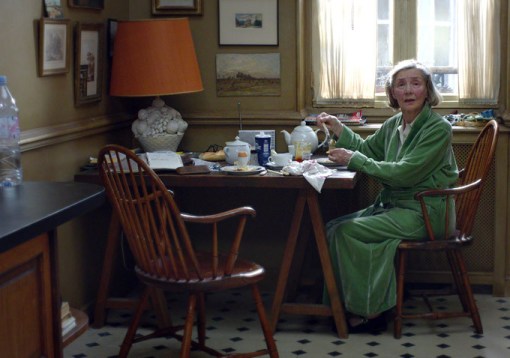
All About “Amour” on Either Side of the “Window”

20 08 2013

The following piece was written for Dr. Mary Dalton‘s Film Theory and Criticism in spring 2013.

SPOILER ALERT: The following post discusses major plot points in both Alfred Hitchcock’s “Rear Window” and Michael Haneke’s “Amour.”

What do an American film from the 1950s about a cooped up reporter and a French film from 2012 about a woman dying slowly from a debilitating stroke have in common?  While “Rear Window” and “Amour” seem to be an extremely unlikely pair, they explore common themes of love in confined spaces.  Both films take place almost entirely within a single apartment, although Alfred Hitchcock’s classic focuses mostly on the action outside the window while Michael Haneke chooses to keep his camera focused on what happens inside the window to the outside world.  Yet in spite of their different emphases, both filmmakers come the conclusion that couples must turn their sights inward in order to fully realize their love for each other.  Through forced identification, Hitchcock and Haneke’s films powerfully convey the dangers that come along with spectatorship.

Rear Window

A line delivered at the beginning of “Rear Window by Thelma Ritter’s Stella, “we’ve become a race of Peeping Toms,” has become a famous and often quoted passage from the film.  Most, however, tend to cut out the sentence that follows it: “What people ought to do is get outside their own house and look in for a change.”  Taking that sentence into account as well, Stella is not only offering merely an implicit critique of the voyeurism of humanity – a flaw largely compounded by Hitchcock’s contemporaries in the cinema – but also bringing up a seldom noticed side effect.  She is taking L.B. Jeffries, known in the film as “Jeff,” to task for being so concerned with the lives of others that he lets his relationship with his girlfriend begin to rot.

Throughout the film, Jeff’s obsession with watching the world out his rear window is seen as an impediment to the love and intimacy between he and his girlfriend, Lisa.  Every time they begin to hold each other and show tenderness, his thoughts about his neighbors’ exploits distract him, often compelling him to pick up his binoculars and look in on them. Hitchcock uses forced identification with Jeff’s outward gaze by the editing style of subjective POV, making the viewer not merely a party to this denial but entirely complicit in it.  Jeff is never seen through the window, just looking out it from the shadows, a clever replication of what the audience does in the act of watching the film in a dark theater.

RearWindow5

By his casting a gaze out the window, he neglects her needs not only intimately but also on a deeper relational level; it is clear that she is seeking marriage, yet Jeff seems clueless or at least ambivalent towards her regular hints. Their love is always broken off by one of them, normally Lisa, before it can escalate.  The film’s final shot, however, hints at some sort of reconciliation between the couple, though nothing is made explicit.  While the neighbors go about their lives, Jeff sits in his wheelchair with his back turned away from the window, soaking in the sunlight rather than lurking in the shadows.  He falls asleep with a smile on his face; meanwhile, Lisa moves from reading a serious book to please him to reading a fashion magazine for her own pleasure.  Her demeanor and posture appear markedly more relaxed and comfortable, hinting at a much-improved relationship with Jeff’s gaze turned inwards towards her.

Amour

“Amour,” on the other hand, offers no such getaways for its characters or the audience watching the film.  Georges and Anne, the octogenarian couple, are trapped with each other in the apartment as she slowly succumbs to complications a series of strokes.  The two spend nearly every moment together; Georges even pays someone to go get their groceries so he can stay and monitor Anne.  Similarly, Haneke never grants the audience a single moment of escape from their lives, confining the viewer into the apartment as an objective, third unacknowledged presence in the room.  His sparse editing that chooses to leave the dull bits of life in the film as well as his predilection for long shots in deep focus provides the audience with a cold reality that they either have to accept watching or must avert their eyes from entirely.

As Anne’s condition worsens, she begins to express her great dismay with her physical state, eventually telling him, “Georges, I don’t want to carry on. You’re making such efforts to make everything easier for me. But I don’t want to go on. For my own sake. Not yours.”  Georges initially writes off her request as ridiculous because he believes she does not want to keep living to spare him pain.  Yet after she suffers a second stroke that takes away her ability to speak coherently, Georges begins to see just how miserable an existence she has come to live.  He observes as nurses give her showers, and the slightest wrong touch brings her excruciating pain.  He tries to feed her, yet she spits the water back in his face.  Her anguish leads him to slowly remove his own opinions from his view and focus all the more closely on her.

With all this attention and gaze directed solely inwards at their relationship, Georges eventually comes to do the selfless thing and put her out of her misery.  He achieves this in a respectful and loving way by putting her at ease by telling her a pleasant childhood story and then by smothering her.  Had he been aloof and turned his attention outside their apartment, he would not have noticed her lifeless life, nor would he have lovingly honored her request.  Similarly, the audience through their forced witnessing of events come to interpret his killing as an action not motivated by selfishness; rather, they see it as fulfilling the action indicated in the title: love.  It just takes the course of the movie for Georges to gain the same level of objectivity that the audience has been given since the beginning of the film.  Only when that is achieved can he realize that true love is complicated and requires tough decisions.

Amour

“Rear Window” and “Amour,” despite their different plots and tones, arrive at the same general truth within the setting of an apartment.  By casting our gaze abroad, we ignore the problems at the heart of our most treasured relationships.  Only when we look inward and give our own lives the attention they deserve can we truly find the love we need to give others.  Ironically, to liberate us from our obsession with spectatorship, Hitchcock and Haneke feel that they must first trap us in it.


REVIEW: Star Trek Into Darkness

19 08 2013

I’ve been wrestling over my angle on reviewing “Star Trek Into Darkness” for quite a while.  I really did like the movie, although not nearly to the extent as J.J. Abrams’ 2009 rebooting of the franchise.  Just because it is not as good does not mean it is not any good, and I certainly do not want to imply that.

It’s still a solid summer movie, full of impressive and fun action as well as a dastardly star-making villainous performance by Benedict Cumberbatch.  Once again written by the dream team of Roberto Orci, Alex Kurtzman, and Damon Lindelof, the story delivers in a big way.  No longer burdened with reintroducing the once-iconic characters to audiences, they can focus on weaving an allegorical tapestry of many moral issues facing the post-9/11 world.

I’m far from disappointed with the latest voyage of the USS Enterprise.  However, it never reached the levels of excitement that led me to declare it my second most anticipated film of 2013 back in January.  “Star Trek Into Darkness” is still a great movie, don’t get me wrong, but it’s definitely a notch below the giddily fun “Star Trek” from four years ago.  While that’s still light years ahead of summer blockbusters “Man of Steel,” J.J. Abrams heads into directing “Star Wars” on a bit of a down note.

He made a decently acceptable action film.  It just won’t be particularly remarkable in retrospect.  When I go back and think about summer 2013 a few years down the road, I suspect I might forget that “Star Trek Into Darkness” was even released (although writing that line in my review might change that).  B+3stars


REVIEW: Stories We Tell

18 08 2013

Last semester, I took a course that had me write a paper using my family as the evidence to explore sociological themes.  A requirement of this essay was to conduct ethnographic research myself – that is, interview four members of my family.  From just those brief sessions, I learned plenty about my own family history.
But perhaps the biggest lesson I took away from that project was that every person had their own way of describing the same person, thing, or event.  Moreover, what was included and excluded from someone’s narrative was a story in and of itself.  While it was not related to the focus of my paper at all, the research got me fascinated about the way that we filter history through the lens of our own experiences.

A few months later, I was sitting in a dark room watching Sarah Polley’s “Stories We Tell,” and a silent prayer was answered.  This documentary is an ethnography project, handbook, and critique all tied up in one immensely satisfying bundle.  It addressed all the lingering questions from my project – and then went a step further by brining to light many more intelligent issues that continue to bounce around in my head.

Have no worry, you don’t need to have completed an academic exercise in ethnography (the study of people) to get something out of “Stories We Tell.”  It’s a film for anyone who has ever told their own story or been told their history by someone else.  Polley’s documentary may be about her own family, but its sharp insights penetrate so deeply into the human condition that her findings apply to just about anyone.

Read the rest of this entry »


REVIEW: The Butler

17 08 2013

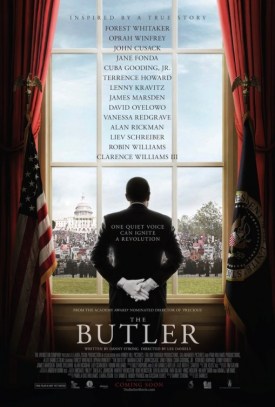
ButlerBased on the trailer for Lee Daniels’ “The Butler,” I had prepared myself for “Forrest Gump: Civil Rights Edition.”  It looked to be in a filmmaking tradition of heavy-handed, cloying, and over the top shenanigans designed to easily trigger emotion.  As it turns out, I didn’t even have to resist because the film was not any of these things.

It was just a plain, bad movie.  “The Butler” is poorly written, unevenly directed, and meagerly acted.  It vastly oversimplifies history, both that of our nation’s struggle for civil rights and also the remarkable life of one man who served many Presidents with honor and dignity.  And in spite of its golden hues and stirring score stressing the importance of every moment, the film just fell flat the entire time.

Screenwriter Danny Strong writes the story of Cecil Gaines, Forest Whitaker’s titular character, into a parade of presidential caricatures – leaving out Gerald Ford and Jimmy Carter since they apparently never grappled with civil rights.  (I’m ok with a narrowed portrait of history, just not a narrowed portrait of the people who made that history.)  Each man is a waxwork figure, a set of immediately recognizable traits tied up in a bow by a crucial civil rights decision, that happens to be served tea by the same man.

And every president is somehow swayed by the mere presence of Cecil, who will make a passing remark to each.  He’s apparently the perpetual Greek chorus of the White House or even the nation’s most influential civil rights adviser.  It’s a little ridiculous to infer causality here, even with a generous suspension of disbelief.  This trick worked in Robert Zemeckis’ “Forrest Gump” because it was done with a wink and a sense of humor.  It fails in “The Butler” because no one can seriously believe Cecil was an actual policy influencer.

Read the rest of this entry »


F.I.L.M. of the Week (August 16, 2013)

16 08 2013

As the summer begins to wrap up, it might be a good time to squeeze in a viewing of Francois Ozon’s steamy “Swimming Pool,” my selection for the “F.I.L.M. of the Week.”  While this scintillating thriller makes the most sense for a seasonal watch, I’m fully convinced it could stand up in any of the other nine months of the year.  It’s a completely engaging film with a plot that will envelop you entirely as it prepares for a killer final act.

The action begins when Charlotte Rampling’s Sarah Morton, a British mystery author beginning to hit a creative wall, settles into her boss’ French country house to get her creative juices flowing.  Just as she begins to find enough quietude in the locale to write a new book, Sarah gets an unexpected house guest: her publisher’s daughter, the young and capricious Julie (Ludivine Sagnier).  The two mix like oil and water as the crotchety Sarah refuses to entertain any of Julie’s whims.

However, as we dive deeper into “Swimming Pool,” we begin to see that Sarah is deriving a sort of perverse inspiration from Julie’s various romantic exploits.  As she begins to observe, the real-life drama begins to spill onto the page … or perhaps it’s the other way around?  Ozon throws the boundary between reality and fiction into complete question towards the film’s finale, one that leaves us reeling for days.

That conclusion would not work, though, were it not for Ozon’s tight and precise direction throughout “Swimming Pool.”  He makes every moment build tension until it bursts by the end.  It also helps that Rampling and Sagnier are quite a devious duo, playing with and off each other in brilliant ways.  Combining all their power makes for one refreshingly original and captivating thriller.


REVIEW: The Spectacular Now

16 08 2013

I really did like the first act of “The Spectacular Now” because it felt honest and real. Miles Teller’s Sutter Keeley felt like someone I would have known in high school, a burgeoning alcoholic with a big unchecked ego. And Shailene Woodley’s Aimee Finicke reminded me quite a bit of myself, someone bookish but a bit insecure and completely unable to picture anyone having romantic feelings about them.

I was so looking forward to the direction that the film was heading … and then Sutter and Aimee share the moment we saw coming a mile away, their first kiss. From there on out, “The Spectacular Now” heads south as the authenticity of the story and the believability of the characters flies out the window. The script, penned by “(500) Days of Summer” scribes Scott Neustadter and Michael H. Weber, descends into a mire of archetypes and cliches.

It’s a little more understandable for Sutter to become a flat character as his personality is so based on living up to a cultural ideal of care-free ignorance. But it’s disappointing to watch Aimee just a flip a switch and become a totally different person. Before the kiss, she was so refreshingly independent and derived her sense of self-worth from within, not from others. Afterwards, Aimee becomes little more than an accessory to Sutter, fawning over him at all times and constantly caressing him.

Read the rest of this entry »


REVIEW: Jobs

15 08 2013

Joshua Michael Stern’s “Jobs” finds itself caught between “Lincoln” and “The Social Network.”  The film teeters uncertainly on the precipice of canonization in the Spielberg/Kushner model and humanization in the Fincher/Sorkin mold.  It ultimately settles on an unhappy median, providing a portrait of Apple founder Steve Jobs that feels like laughable corporate folklore.

Just because the film’s characterization is fickle does not mean that its message is muddled.  Stern is clearly pushing an agenda to persuade his audience that Steve Jobs is the American Einstein, a visionary misunderstood in his early years.  And just like Einstein, we will not fully comprehend his genius until years after his death.  But eventually, we will come to use his name as a synonym for innovation.

Ashton Kutcher does do a half-decent job of resurrecting the essence of Steve Jobs.  The 35-year-old actor takes the icon from his college years, a barefoot braniac that seems to have escaped from a Terrence Malick film, to his introduction of the iPod as a slower sage.  At times, though, it does feel like quite a studied portrayal.  His Jobs is often much robotic imitation, opting for parroting over true personality.

Even with such faults, he’s the only thing that “Jobs” really has going for it.  Stern’s script is an overlong mess where Steve Jobs, even from his days at Reed, speaks not in sentences but in maxims that seem to be adapted from Confucian teachings.  When it delves into emotions and not just events, the drama of “Jobs” becomes quite laughable.  All in all, though, the film just feels superfluous.  Why do I need to sit through a two hour “for your consideration” ad for Steve Jobs to inducted into the pantheon of great minds when practically every computer, cell phone, and music player in my house is an Apple product?  C2stars


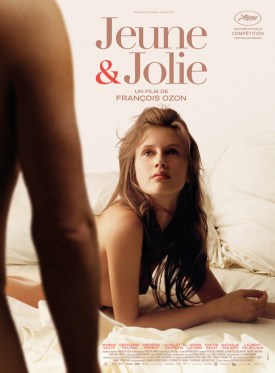
REVIEW: Young & Beautiful

14 08 2013

Jeune & JolieCannes Film Festival – Official Competition
After both years I’ve gone to Cannes, I have suffered painful withdrawals from the world’s best curated art cinema.  I find myself wanting to revisit these fascinating movies I’ve just seen but am forced to wait months on end before they see Stateside release.  (I’m still waiting to get a second helping of “The Hunt,” my favorite film of the 2012 festival.)

Strangely enough, the movie from Cannes 2013 I’ve been most anxious to see again was not my favorite film of the festival, James Gray’s immaculate “The Immigrant.”  I find myself thinking quite often about Francois Ozon’s odd “Young & Beautiful,” flaws and all.  It’s a film I can’t wait to see again because it’s so unconventional and refreshingly different.

From the moment I left the orchestra of the Lumiere Theater on that rainy Thursday afternoon, I have been trying to figure out how Francois Ozon made the peculiar concoction that is “Young & Beautiful” work at all.  I am even more perplexed as to how it managed to entrance and beguile me so fully.  Because, quite frankly, it walks a rather fine line between being provocative and being offensive.

Read the rest of this entry »


REVIEW: We’re The Millers

13 08 2013

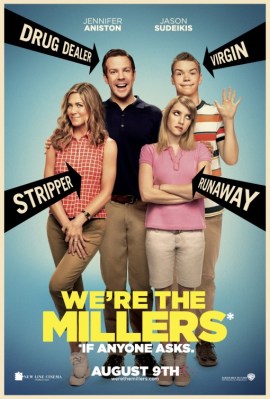
We're the MillersIn “We’re The Millers,” television’s “Breaking Bad” meets film’s “National Lampoon’s Vacation” as mid-level drug dealer David Clark (Jason Sudeikis) enlists a crazy cast to help him smuggle marijuana across the U.S.-Mexico border.  (So in that way, perhaps it’s more like “Maria Full of Grace” meets 2013’s “Identity Thief.”)  This motley crew from near his building includes well-meaning exotic dancer Rose (Jennifer Aniston), tough teenage street rat (Emma Roberts), and an aloof adolescent boy Kenny (Will Poulter) with a passing resemblance to Tintin.

The movie manages to provide a few decent laughs along the journey, though they are largely front-loaded.  “We’re The Millers” starts off with some very clever and witty banter, largely uttered by Sudeikis, who is quickly proving himself to be quite the sultan of snark.  It’s certainly a much better role for him than his bland characters in “Horrible Bosses” and “Hall Pass,” and he could soon be rivaling Paul Rudd for roles.

But the film starts to veer off course in the second half, resorting to more and more ludicrous gags to provide humor.  These ridiculous scenarios often provide their fair share of cringe-worthy moments, enough to make the film feel like it has overstayed its welcome by a solid 30 minutes.  Though I don’t want to say too much, at least “We’re The Millers” doesn’t end by caving to all the road trip, family, or rom-com tropes.

By the time the gag reel rolls, the film essentially arrives at a comedic standstill.  It’s got enough sardonic and standoffish Aniston and sulky Roberts to make anyone roll their eyes.  But it’s also got some good Sudeikis everyman sarcasm and a pretty winning performance from Poulter, playing naive innocence with gusto.  So, in other words, “We’re the Millers” is decidedly average.  C+2stars


REVIEW: Blue Jasmine

12 08 2013

Woody Allen’s latest feature shows our most prolific filmmaker access a side of his writing seldom seen: dark and unsparingly grim tragedy.  I’ve seen all of his 48 films, and perhaps not since 1992’s “Husbands and Wives” has he taken such a bleak and hard-hitting look at the demons we battle and the struggles we face.  His “Blue Jasmine” is a modern “A Streetcar Named Desire” mixed in a cocktail with the Bernie Madoff scandal and washed down with a toxic mixture of alcohol and antidepressants.

It’s no stone-faced drama like “Match Point,” though.  There are still plenty of laughs to be had here, although they definitely don’t resemble the kind of humor you’d find in Allen’s early farces like “Bananas.”  Nor do they even take the shape of the clever wit of “Annie Hall” or even “Midnight in Paris.”  In “Blue Jasmine,” we chuckle as we cringe.  Almost all of our laughs are muffled as they come while we grit our teeth.

That’s because his protagonist, Cate Blanchett’s Jasmine (formerly Jeanette, but that name wasn’t exciting enough), is slowly charting her own way to another complete mental breakdown.  She suffered her first one after her husband’s vast fraudulent financial empire collapses, leaving her penniless to fend for herself in the world.  Lost and not placated by her Xanax, she journeys cross-country to San Francisco to stay with her sister Ginger (Sally Hawkins) in the hopes of getting back on her feet.

But Jasmine quickly finds that she’s woefully underprepared to enter the workforce since she has no degree, dropping out of Boston University with a year left to marry Hal (Alec Baldwin).  Despite offers from Ginger’s circle of friends to help her find secretarial or wage labor, Jasmine remains defiant, unable to accept the reality that she is no longer among the privileged Park Avenue lot.  Her half-hearted effort to come to terms with her new social standing leads to clashes with her eventual employer, Michael Stuhlbarg’s genial dentist Dr. Flicker, and Ginger’s boyfriend, Bobby Cannavale’s unabashedly honest Chili.

Read the rest of this entry »


REVIEW: Smashed

11 08 2013

Finding comedy in alcoholism and recovery, two notoriously heavy subjects that hit close to home for many audiences, is no easy task.  “Smashed” is hardly a gut-buster or a laugh riot, although a little humor does help some of its rougher and rawer moments.  It’s no “Rachel Getting Married” (nor the lesser-known “Sherrybaby“), that’s for sure, but that’s not to say the film doesn’t have its smaller triumphs.

Director James Ponsoldt, newly heralded as an emerging director (and being entrusted to helm an upcoming Hillary Clinton biopic and an adaptation of the musical “Pippin”), steers the film rather uneasily.  As a result, the film has some abrupt and rather jarring tonal swings.  I’m not quite sure if he intended “Smashed” to leave a comedic or a dramatic impression, but it really winds up leaving very little impression at all.  Similarly, Mary Elizabeth Winstead’s performance is good, yet it never goes the full mile like Anne Hathaway or Maggie Gyllenhaal in the aforementioned dramas.

If it sounds like I’m being vague on details, that’s because I remember very few of them.  “Smashed” is a film I didn’t dislike, but it failed to win me over or secure a spot in my memory.  Regardless, it’s an interesting and, at 81 minutes, brief bauble of a film that isn’t entirely a waste of your time.  At the very least, you’ll enjoy seeing a union of some of TV’s best talents: Aaron Paul of “Breaking Bad,” Nick Offerman of “Parks & Recreation,” and Megan Mullally of “Will and Grace.”

Oh, and there’s Octavia Spencer (Oscar-winner for “The Help“) as an AA sponsor.  She never disappoints.  2halfstars