REVIEW: Rampart

2 05 2013

The slogan for “Rampart,” though not on the poster I’ve embedded in this review, is “the most corrupt cop you’ve ever seen on screen.”  To that, I merely laugh.

So I guess they assume we haven’t seen “Training Day.”  Or “Crash.”  Or “The Departed.”  Heck, I’d even say “Pineapple Express” and “Date Night” had more crooked cops than “Rampart.”

Sure, Woody Harrelson’s Dave Brown is working outside the law.  He’s a foul racist who uses excessive force on the regular.  By no means am I saying that I didn’t deplore his actions and conduct.  But for whatever reason, I just didn’t feel hatred welling up inside me for him.

Harrelson brought nothing new to the character that he hasn’t shown us in everything from “The People vs. Larry Flynt” to “The Messenger” to Haymitch in “The Hunger Games.”  He’s great at playing total jerks, and Brown is in a league of his own.  But there’s nothing special about this character, nothing that stands out in his repertoire.

Add that to direction from Oren Moverman that lacks any compelling action or camerawork and you’ve got one heck of a bore.  As much as I wanted to feel repulsion or loathing, all I could feel was apathy.  C2stars


REVIEW: Good Hair

1 05 2013

You could be forgiven for thinking that Chris Rock directed the documentary “Good Hair.”  He produced it, narrates it, and essentially acts in it.  Heck, the movie is even attributed to him on the poster as if he directed it!

Technically, Jeff Stilson directed it.  But Rock’s fingerprints are clearly all over “Good Hair,” and his loud personality makes its way into the deepest recesses of the film.  And I’d say that’s not for the better.

The movie traverses the world in an attempt to find an answer to a rather sweet and seemingly innocuous question posed to Rock by his young daughter: “Daddy, why don’t I have good hair?”  The documentary waxes sociological as it looks at the root causes for why African-American women spend thousands of dollars on their weaves or hours putting the extremely dangerous chemical compound known as “relaxer” in their hair.

“Good Hair” actually does make some pretty fascinating discoveries.  Why is this multi-million dollar industry of hair-care products for black women run nearly exclusively by whites?  Where is all this hair from weaves coming from?  Are weaves putting strains on the African-American community?

While I wanted the film to delve deeper on some of these fascinating questions, it always stops its analysis far too soon.  Rock keeps it cursory, explaining a few shocking details and then making a remark or comment that cheapens the entire section.  With his presence always known, this “infotainment” piece goes heavy on the entertainment value.

It even frames the discussion within the bounds of an absurd hair competition in Atlanta, almost as if it were an ESPN hour-long special.  This might have made for an interesting side show or tangent, but it distracts from the main purpose and discussion of the film. When “Good Hair” concluded, I was left thinking more about the ridiculous hair styles on display than the serious issues raised.

Then again, I’m a twenty-year-old white male.  This information was interesting to me, but what can I really do with it?  If Chris Rock and the filmmakers felt like the way they made the documentary was appealing and engaging to African-Americans, that’s what matters.  They are the ones who need the knowledge disseminated in “Good Hair.”  I just worry the film lacks a significant call to action or arms.  C2stars


REVIEW: Margaret

30 04 2013

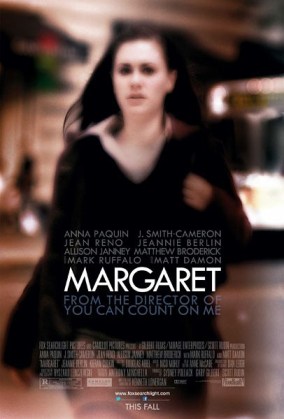
MargaretIt’s hard to talk about authorial intent in “Margaret” when the studio interference on the project was so insane.  Long story short for those who don’t know: the movie was supposed to be released in 2007, but Kenneth Lonergan failed to lock in a cut to Fox Searchlight’s satisfaction.  Ultimately, they quietly dumped a version of “Margaret” into the theaters that was much shorter that Lonergan would have liked.

And indeed, what I saw in the theatrical cut (sorry, folks, did not drop the money to watch the director’s cut) was a little messy.  But for whatever reason, that didn’t bother me.  I was along for the ride with “Margaret” the whole way through, drawn in to the story by its imperfections.

There’s something very fascinating about knowing that a movie’s flaws are not something invented in your head.  And in such a realization, you can start to find the diamond in the rough by peeling away the layers of sloppiness you observe.  “Margaret” in its very journey to the screen is not about the drudgery of life but rather the painful process of art.  There’s a little bit of magic in getting to find your “Margaret” inside of what Fox Searchlight and Lonergan slapped together for us to avoid litigation.

My “Margaret” is a compelling drama of post-9/11 guilt and anger unfolding in New York City, told from the perspective of an ordinary girl, Anna Paquin’s Margaret.  On just any old day walking, she observes the death of innocence at the hands of a vast piece of machinery.  No, I’m not talking about the planes flying into the World Trade Center; I’m talking about a sweet old lady being struck and killed by a bus.

I don’t want to overload the allegory, though, but it’s impossible not to feel the legacy of the tragic day looming over all the proceedings.  On a human scale, it’s an affecting tale of a mother (J. Smith-Cameron’s powerfully acted Joan) and daughter, a teacher (Matt Damon’s earnest Mr. Aaron) and a student, as well as victims, perpetrators, and observers.  And that’s the beauty of watching the imperfect “Margaret” – doing your own internal rack focusing is not just encouraged.  It’s practically required to make sense of the events.  B+3stars


REVIEW: Let Me In

29 04 2013

It’s rare to see a horror movie made with as much artistry as Matt Reeves’ “Let Me In,” and I think it’s all the more haunting because of that.  The film focuses on developing a hostile environment over cheap screams, a move that pays off in spades over the course of the film.

Believe it or not, the blood-sucking adolescent vampire Abby (the omnipresent Chloe Moretz) is hardly the most menacing villain of the film.  That dubious honor would belong to the bullies, who make life a living hell for the shrimpy but sweet 12-year-old Owen (Kodi Smit-McPhee of “The Road“) for no other reason than the fact that he’s an easy target.  And they aren’t just name-callers or lunch money-stealers; they want to inflict potentially life-threatening pain.  Maybe they are a little excessive, but after all, movies are a heightened reality!

The ravenous Abby inspires the unassuming Owen to fight back against his tormentors, and indeed he does.  But she also teaches him a thing or two about friendship and love, which seems to innocuously bloom between the two outcasts.  It’s this rose amongst a bed of thorns that gives “Let Me In” such a peculiar warmth and comfort amongst the bluntly portrayed horrors of Abby’s bloodlust.

All the while, there’s a peculiar undercurrent of Ronald Reagan and all that he has come to represent running throughout the film, an interesting setting change by Reeves.  It’s easy to tell he has a real vision for the movie and tender compassion for its characters.  That makes a difference in a horror movie, where everyone seems written only for the purpose of dying.  B+3stars


REVIEW: Anonymous

28 04 2013

I know I’m always calling for directors to expand their horizons and try different kinds of movies to see if any surprising realizations result.  So I really hope this doesn’t come off as hypocritical, but Roland Emmerich should really just stick to apocalyptic disaster movies like “Independence Day” and “2012.”

I applaud the director for trying a conspiracy theory flick that actually plays like – gasp – drama, something that would appear to be totally out of his wheelhouse.  It’s far bolder a choice than, say, Michael Bay, whose “Pain and Gain” literally just appears to be a micro version of “Transformers” without those pesky anthropomorphic robots.  But now that we’ve found out that Emmerich is not capable of meeting the demands of something this serious, he should just go back to blowing up culturally iconic landmarks with his regular gusto.

Anonymous,” an exploration of the not-so-hotly debated question of Shakespeare’s authorship of his famous plays is pretty much a failure from the get-go.  I couldn’t keep up with any of the characters, which is a problem in a movie with many of them.  The relationships were fuzzy, and on top of that, alliances and allegiances were never clear.  For a movie on a human scale, these are basic necessities that need to be established.

Sometimes I zone out when watching movies but can pick up enough context to still follow the basic plot and direction of the film.  Such was not the case with “Anonymous,” surprising in a cast that included Rhys Ifans, Joely Richardson, David Thewlis, and Oscar-winner Vanessa Redgrave.

I just thought it was a big, fat messy ink blot of a movie.  However, I bear no animosity for Roland Emmerich attempting to do something out of the ordinary.  There are many things “Anonymous” is not, although perhaps the only positive thing on that list is that the movie bears little to no resemblance to “2012.”  C-1halfstars


REVIEW: The Company You Keep

27 04 2013

There are all sorts of cinematic experiences you can have these days when going to the movies.  Sometimes, as was the case with Robert Redford’s “The Company You Keep,” I felt like I was mostly just following the events unfold as opposed to actively watching the film.  Sure, I was taking it in, but it reminds me of the experience of reading SparkNotes or a Wikipedia summary – not exactly engaging or satisfying, in other words.

Redford appears to be angling to win the SAG ensemble award on paper with this cast of Oscar winners, nominees, and Shia LaBeouf.  Though with this A(ARP)vengers of ’70s and ’80s greats assembled, you’d think the drama would not be so turgid and lifeless.  It’s stiff and uninteresting as both a journalistic crusade as well as a fugitive thriller.

The more I thought about it, the more I realized this had all the potential to be “All The President’s Men” meets “The Fugitive.”  Both those movies had tension, though, and Redford can’t even manufacture it synthetically with a Cliff Martinez (“Drive,” “Contagion“) score.  The characters also lacked depth, both in terms of emotional development as well as decent dialogue for them to say.  Everyone speaks in self-righteous platitudes in “The Company You Keep,” making for some rather excruciating confrontations.

With all that’s going on these days, an old home-grown terrorist and a young maverick journalist in the era of print media’s growing obsolescence should be a no-brainer for fascinating conflict and thought-provoking meditations on the world we live in.  But it just goes to show the even with the company Redford keeps – Julie Christie, Sam Elliott, Brendan Gleeson, Terrence Howard, Richard Jenkins, Anna Kendrick, Brit Marling, Stanley Tucci, Nick Nolte, Chris Cooper, and Susan Sarandon – you can’t just throw acclaimed actors and actresses in a pot and expect it to boil.  C+2stars


F.I.L.M. of the Week (April 26, 2013)

26 04 2013

I’ve now (finally) caught up with David Lynch’s “Blue Velvet” and “Mulholland Dr.”  Those films have given me an idea of what the term Lynchian really means.  Yet while both of those movies have their merits, the director made an entirely different movie called “The Straight Story” that’s virtually unrecognizable in his ouvre.

I saw this simple, straightforward film at the age of 7 upon its release in 1999.  Even then, its beauty was not lost on me.  I recently watched it again only to find that my critical instincts from a very young age were completely vindicated, so I figured it would make an excellent pick for the “F.I.L.M. of the Week.”

Though it’s easy enough for a child to understand, this is a film that works for everyone ages 7 to 77.  “The Straight Story” is about family, love, and dedication at its purest.  The late Richard Farnsworth, nearing the end of his life as the movie was shot, pours his heart and soul into the role of Alvin Straight.  He’s a simple country man in deteriorating health unable to drive a car to visit his ailing and estranged brother, Lyle (Harry Dean Stanton).

But that doesn’t stop the iron-willed Alvin.  He decides to buy a tractor and drive it from his home in Iowa all the way up to Lyle in Wisconsin.  At a speed of never more than 6 miles per hour, Alvin and his trailer chug through America’s heartland.  Along the way, he meets fascinating people that give the journey a powerful emotional component.

Lynch has called “The Straight Story” his most experimental film, a strange distinction given some of the bizarre things that have happened in some of his other movies.  However, the film isn’t merely worth remembering due to the fact that the raw, unadulterated compassion is emanating from David Lynch.  It’s one of  the sweetest, most heartfelt films I’ve ever seen from any filmmaker, period.  This is the ultimate family movie, so gather everyone around the television and watch it with the whole crew.


Random Factoid #568

25 04 2013

les-miserables-dvd-blu-ray1Been a while since you’ve seen one of these, hasn’t it?

I discontinued daily random factoids back in 2011 because, well, they were becoming a lot more of a stretch.  Usually they weren’t really factoids, they were just random cultural tidbits with a little bit of Marshall commentary.  I definitely enjoyed doing that, but it became a lot more of a hassle than it should have been.  So I stopped.

But now, I have a real factoid to share with you all, so it felt like a good time to resurrect the series for the first time in two years.

I actually watched a movie with the commentary track on.  For the first time ever.

Aren’t you proud of me?  I sat for 2 1/2 hours and listened to Tom Hooper talk all over “Les Misérables.”  He had some fascinating insights into the film, and I learned a lot from it.  But I didn’t really get to watch the movie, per se.  Is that how they all are, or is Hooper just incredibly long-winded?

By the way, a big ol’ whoppin’ defense of the film’s close-ups is coming your way soon.  Get ready, blogosphere.


REVIEW: See Girl Run

24 04 2013

See Girl RunI am literally one of the biggest and most devoted “Parks and Recreation” fans out there. So when I say that I could not even remotely enjoy a movie starring the show’s unsung hero, Adam Scott, you know that the movie is a dud.

I really did want to like “See Girl Run,” a rom-com by sophomore director Nate Meyer.  I had the privilege of hearing him do a Q&A after the screening of the film at the RiverRun International Film Festival last year, and it did make me appreciate what the film was trying to do a little bit more.  But ultimately, I don’t grade a film based on concept; I evaluate it based on execution.

And in the end, “See Girl Run” fails to do anything interesting.  It’s not formulaic, per se, but I felt like I had seen the concept or story played out before.  I don’t even think the movie is worth the effort for me to go look up the plot summary, so needless to say, it’s a forgettable flick…

I do remember there being no chemistry between leads Robin Tunney and Adam Scott, largely because they share only one scene together!  That’s right, the film’s romantic leads, and they don’t talk to each other until the climax.  I suppose it’s bold, but Meyer builds up so much to this scene, and it can’t help but disappoint.

Scott is a bright presence, I suppose, but watch “Parks and Recreation” if you really want to see him in action.  Tunney, on the other hand, plays a brutal character who can’t decide which man or life she wants.  It works when Reese Witherspoon does this because she brings a charm and levity to the bind.  Tunney is just a lot of angst and whining.  If there was supposed to be a “realist” aspect to this, I found it shallow at best, unconvincing and uninteresting at worst.  C-1halfstars


REVIEW: The Kings of Summer

23 04 2013

The Kings of SummerRiverRun International Film Festival

More and more, I’ve come to appreciate movies that can use montage to great effect.  Scenes have their own power, sure.  We remember those scenes from our own life; they constitute reality.  But that’s not always how we remember our lives.  We see them in glimpses and flashes, which add up to make truth.

Even though it might not connect at every moment, sometimes a well-edited montage can capture the ephemera of life with such raw power that they tap into and connect with something deep within ourselves.  The most obvious example in recent memory is Terrence Malick’s “The Tree of Life,” whose camera floats through life itself and reaches you with evocative imagery (even if its story leaves you unmoved or just plain confounded).  More subtly, films like “Up in the Air” and “The Artist” have caught these moments of fleeting joy in well-cut dance scenes.

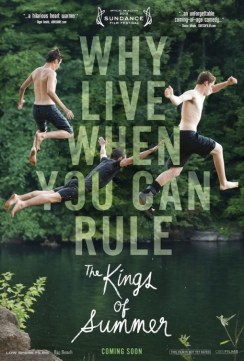
The Kings of Summer,” though it features a compelling narrative that plays like “Superbad” meets “Moonrise Kingdom,” is at its best when it captures these brief snapshots of unfettered adolescence.  Though I’m still in the process of moving into full independence, I can look back on the days of yearning for escape from my parents’ house with the slightest bit of nostalgia.  And while the majority of the film is silliness and shenanigans, every once in a while an image would flash on the screen that really got at something subconscious within me.

Read the rest of this entry »


REVIEW: Before Midnight

22 04 2013

Before MidnightSome movies I just really don’t expect to fully comprehend at the ripe old age of 20.  For example, I don’t really expect to understand the intricacies of love and marriage as portrayed by “This is 40” and “Amour.”

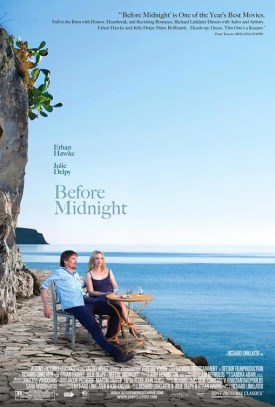
Though both are extremely realistic and vivid, I almost feel like I’m watching a fantasy film because I cannot locate them anywhere within my own personal experiences. The same is true for “Before Midnight,” Richard Linklater’s third entry into what I suppose can be called the “Before” series (comprising of 1995’s “Before Sunset” and 2004’s “Before Sunrise”).  I just kind of have to take the word of others that the film once again captures something true about the place of love in the human condition.  I get a feeling that in twenty years, something about Linklater’s film will resonate more strongly with me.  But for now, I’m left most impacted by the saga’s first entry that explored idealistic notions of love and compatibility.

Though this is the now the third time that they’ve done it, I’m still left reeling by the fact that Linklater, along with co-writers and stars Ethan Hawke and Julie Delpy, can make long, drawn-out conversations about broad topics into compelling cinema.  It’s a bold and daring conceit to expect an audience to sit for nearly two hours and listen to fictional characters broach subjects that they themselves are often too scared to touch.  The concept seems like one bound to the stage, but it works yet again on screen.

Read the rest of this entry »


REVIEW: Houston

21 04 2013

RiverRun International Film Festival

As many of you reading this review may know, I am a proud Houstonian.  I could not be more grateful to grow up in such a great town, full of culture and vitality.  In my lifetime, I have seen it grow to become the third-largest city in the country (and also its most diverse, apparently).  A lot of great things are happening there, in case you haven’t clued into it.  In fact, it’s the setting for a new movie made by … a German.

That’s right, of all cities in America, Bastian Günther chose my hometown of Houston.  Granted, it’s the natural city to set a drama about energy trading in, but it could easily have been another New York or Los Angeles film.  His “Houston” is something decidedly different than one of those travelogues, although I can’t say it’s anything extraordinary.  Had I not had that native pull, I don’t even know if I would have been even remotely interested in the film at all.

Houston

The movie is essentially a tale of corporate espionage, although with none of the excitement a film like “Duplicity” gives it.  Günther is cold, chilly, and removed.  He prefers a darker, subdued character study of Clemens Trunschka (Ulrich Tukur), an unlikable schlub sent to Houston to steal a CEO for his own German energy company.  He winds up getting befriended by an overly gregarious traveler sculpted from the Ryan Bingham mold, Garrett Dillahunt’s Wagner, in a clichéd subplot that adds nothing to the film save a few laughs.

Thankfully, it avoids being as miserably boring as Sofia Coppola’s dreadful (and to de-bracket my objectivity, overrated) “Lost in Translation.”  But how much of that is true for non-Houstonians i cannot say.  I was able to find some middling satisfaction in spotting Houston iconography, which also might have blinded me to some of the imagery being subversive.  But to be honest, I don’t really care to reexamine to find out for certain.  And I don’t want you, the unsuspecting viewer reading this review, to throw away nearly two hours of your life to find out for me.  C+2stars


REVIEW: The Iceman

20 04 2013

RiverRun International Film Festival

The Iceman” is everything you would expect from a period gangster film like  “GoodFellas,” only with none of the rush of excitement and energy you get from Scorsese’s classic.  Director Ariel Vromen’s color-by-numbers genre pic is the epitome of middling, average entertainment.  Its full-fledged adoption of tropes led me to think less about “The Iceman” itself and more about where I might have seen that scene play out before.

Usually gangster movies are propelled by strong characterization, particularly the protagonist.  “The Iceman” settles for lazy caricaturization where everyone just plays out the stereotypes, including Michael Shannon as the titular assassin Richard Kuklinski.  Over three decades in organized crime, he takes over 100 lives … all while his beautiful wife Deborah, played by Winona Ryder, doesn’t age a day!

Shannon is a magnetic performer, particularly playing troubled and unstable characters like John Givings in “Revolutionary Road” or Curtis LaForche in “Take Shelter.”  His work in “The Iceman” can’t hold a candle to these prior tour de forces, largely because Kuklinski is so poorly written that I doubt Jack Nicholson could make it work.

And Kuklinski is the best written character of the bunch, I might add.  It could also be bad casting, but cameo appearances by James Franco as a pornographer and Stephen Dorff as Kuklinski’s brother were truly bizarre and out of place.  Roy Demeo, Ray Liotta’s character, proves the actor is more than willing to become his own worst imitator.  And I can’t even go there with Chris Evans, Captain America himself, as Robert Pronge, the shaggy-haired and cold-blooded ice cream man, or David Schwimmer as moustache-laden hitman Josh Rosenthal.

Without a compelling character at its center, why even bother watching a movie?  Particularly one that is so largely based around relationships?  I’d recommend not watching “The Iceman” and instead popping in “GoodFellas” or “Pulp Fiction” again.  Moreover, the film’s ability to delude itself into believing its own importance made me yearn for another gangster movie, “Analyze This,” where the same types of characters mix and mingle.  Only instead of being played for drama as in “The Iceman,” it’s played for laughs.  C2stars


F.I.L.M. of the Week (April 19, 2013)

19 04 2013

I’m sure when you hear the words avant-garde or experimental cinema, your first instinct is to run as far as possible in the opposite direction.  There’s no shame in that; heck, it was how I felt for a very long time.  But now I’ve realized that sometimes to find the most exciting and challenging ideas that film has to offer, you might have to venture outside of the mainstream.

That impulse was how I stumbled upon “Koyaanisqatsi,” Godfrey Reggio’s masterpiece of picture and sound that is my pick for the “F.I.L.M. of the Week.”  Over 30 years after its initial release, the film still manages to be jolting and provocative.  It asks tough questions about modern life and our relationship to nature, suggesting that perhaps we are living out the translation of the title: life out of balance.

It engages the audience in this conversation, however, without saying a single word.  No title cards either until the ending credits.  So it’s even more silent than a Chaplin film like “Modern Times” or 2011’s “The Artist.”  Don’t be daunted though!  It’s not hard to pull meaning from this film.

The images are tremendously powerful, speaking volumes in the absence of dialogue.  Yes, that means you can’t text and watch “Koyaanisqatsi.”  But with all that extra attention that has to be paid, just think of all you can observe.  I highly recommend just sitting back and letting the film wash over you like a perfume.  Look at the beauty and simplicity of the natural world … and then contrast it with the hectic industrial and urban world.  Watch how they are different, and yet somehow similar.  See how “balance” was constructed in 1983 … and marvel at how we still grapple with the same issues.


REVIEW: Laurence Anyways

18 04 2013

Laurence AnywaysRiverRun International Film Festival

Writing reviews that hinge on an “I like it, but…” are always fun, so here goes my latest.  (And if you want a classic example of this type of review, see my take on Spielberg’s “Lincoln.”)

Though I haven’t seen any of Xavier Dolan’s previous two films, “I Killed My Mother” and “Heartbeats,” I immensely respect this young wunderkind’s talent.  He is a master of cinematic art at 24, and I cannot wait to see how he pushes the form in the future.  Heck, for all we know, he could be the future of film.

But now is not the future, nor is his third film “Laurence Anyways.”  It shows promises of greatness and hints at a bold, brash masterpiece coming down the pipes.  Dolan, however, falls into plenty of typical early-feature shortcomings with this film – namely, unevenness.

I can imagine it would be a bit intimidating trying to tell Dolan to control his ambitions – after all, he only directed, wrote, and edited this film.  (Oh, and he designed the costumes.)  But he toggles between two totally different styles in “Laurence Anyways,” a pared-down reality and a wildly imaginative impressionism.  The two stand in pretty stark contrast to each other, especially when one abruptly transitions to the other.  I am not saying they can’t coexist peacefully, but the way Dolan does it here just feels sloppy and choppy.

The story he tells, that of Laurence (Melvil Poupaud) seeking to become the woman he feels that he is meant to be inside, is certainly interesting and provocative.  Tackling transvestism and transgender issues has been something seldom tackled by filmmakers save perhaps Pedro Almodóvar, and he explores its complications with sensitivity and without a hint of exploitation or disrespect.  At the heart of “Laurence Anyways” is a human story, not an exclusively LGBTQ story, as Laurence struggles with his attractions and repulsions to Fred (Suzanne Clément).  This emphasis on the personal does harm the film a little, however, when it tries to wax political at the close.

I was definitely intimidated by the nearly three hour runtime of “Laurence Anyways” going in, and it wound up being less of an issue than I expected.  I was always caught up in the action of the film; heck, by the end, I felt like I had spent a lifetime with Laurence and Fred.  Their saga spans over a decade, and the film needed to be that long to capture all the micro-level complexities Dolan wanted to portray.

Yet a part of me thinks that for a story of such sprawling breadth, perhaps film was not the correct medium.  The past five years have been an incredible artistic Renaissance for cable television.  Shows like “Mad Men” and “Breaking Bad” are moving beyond episodic plots and into exploring traditionally filmic narratives with aesthetic integrity.  Many still consider television to be a bastard art compared to film, but there really should be no shame in giving a story the room to breathe in a series or mini-series format.

So while there’s plenty to admire in “Laurence Anyways,” I saw plenty of room for improvement as well.  It’s one of those movies where I just cross my fingers and hope it’s a harbinger of better things to come further down the road, not indicative of an upper limit.  B- / 2stars