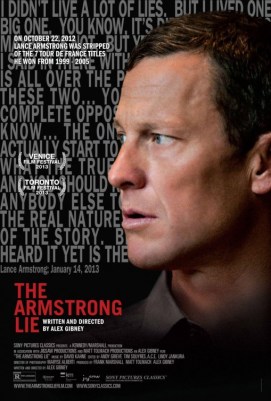
 Alex Gibney has made his career as a documentarian by holding powerful institutions accountable for their misdeeds, be they the Church of Scientology, the U.S. Military, the Catholic Church, or Enron. On the less frequent occasion when he covers individual subjects, the films have never become personal portraiture. “Casino Jack,” “Client 9,” and “The Armstrong Lie” were not about their subjects; they were about power and the corrosive effects it can have on capable men.
The same dynamic does not necessarily apply to Gibney’s latest effort, “Steve Jobs: The Man in the Machine.” The film feels more like a project the director explored out of curiosity rather than his usual genuine righteous anger. Without such indignation, the documentary plays a little bit like one of the actual smartest guys in the room picking on an icon as a pure intellectual exercise. His aim appears not to be uncovering some unsavory truth about human vice; instead, Gibney just brings a god among men back to mere mortal status just to show he can.
To be fair, maybe some of that needed to happen. The somewhat excessive mourning that sprung from Jobs’ early passing in 2011 does raise some questions about how our society conflates the man with his machines. Gibney does his best work when he can isolate Jobs from the gadgets we now treat as appendages. His curated archival footage shows Jobs as a testier, feistier figure than the avuncular wizard who waltzed on stage once a year in the first decade of the 2000s to radically transform our communicative capabilities. In one deposition to which Gibney frequently cuts, Jobs can barely sit still, constantly adjusting his position and scarcely concealing his disdain.
When he attempts to make a larger statement about our technology-addled world, though, Gibney’s reach exceeds his grasp. It would be better not to invoke Sherry Turkle’s “Alone Together” than to have such a cursory conversation about it – that’s a topic for an entirely different film. These deep, intellectual ideas just feel out of place in a film mostly devoted (especially in its back half) to rattling off a litany of underreported transgressions.
Did you know that Apple sheltered its profits from taxation in Ireland? Or that their factory conditions in China are beyond deplorable? That Apple participated in some sketchy hiring collusion? That Jobs ended charity programs at the company? Yes, prepare to have any pedestal on which you put Steve Jobs severely undercut. But why one of America’s greatest documentarians took the time to do this research – rather than a dedicated YouTube user – escapes me. B / 
 So long as writer/director Alex Gibney’s research is solid, then his searing exposé “
 Documentarian Alex Gibney is not only one of the most prolific directors in his field; he is also one of its most incisive. Gibney tends to gravitate towards two extremes in his choice of subjects, macro level exposés of corrupt institutions (Enron, the Catholic Church,
  In the interregnum between the Beatnik era of “
 Oscar-winner Alex Gibney isn’t called the hardest working man in documentaries without reason. It’s not uncommon for him to churn out more than one feature-length film in a given year, and unlike Woody Allen, they all manage to be exceptionally good. His first of two 2013 docs, “We Steal Secrets: The Story of WikiLeaks,” more than hits the sweet spot.
 Several centuries ago, William Shakespeare wrote “all the world’s a stage.” The statement remains accurate, but perhaps the best modern revision of his quote would be “all the world’s a market” or “all the world is a product.” Alex Gibney, the ever-ready documentarian of our times, continues his pattern of presenting a particularly disturbing episode and then explaining the cultural factors that caused it.


 Marshall and the Movies
Recent Comments