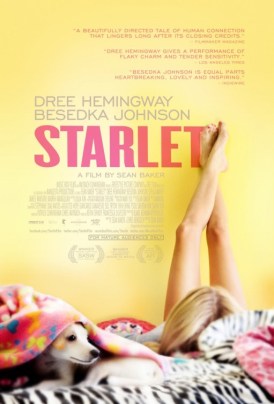
 Sean Baker might be our most essential contemporary humanist filmmaker. He locates the beating heart of his films not in the extraordinary but in the ordinary, the everyday, the mundane. His works start in one place and end in someplace altogether different and unexpected, leaving us all the better for having walked two hours in his characters’ shoes.
His 2012 feature “Starlet” is no different. While my first impression upon encountering the film back in 2013 was that the film was sweet but a little slight, a second watch recently convinced me otherwise. This is more than just a May-December platonic friendship between two women in Los Angeles. It’s a moving journey of how people can clear away the calcified numbness in their hearts.
The central character of this selection in my “F.I.L.M. of the Week” column is Dree Hemingway’s 21-year-old Jane, an actress down on luck and short on cash. She gets a welcome snap out of her boredom when she unexpectedly stumbles upon a wad of cash hidden inside a thermos purchased from an elderly woman, Besedka Johnson’s Sadie, at a yard sale. Conflicted, Jane takes some money for herself – but also makes attempts to befriend Sadie to assuage her guilt.
The two initially take to each other like oil and water, but each has a cloistered part of their identity that leaves them with a void in their day-to-day existences. Gradually, and heartwarmingly, they begin to fill that space. We see more of Jane’s alternative world, as she’s the protagonist, and Baker finds a visual schema that represents the two discordant spheres she inhabits. Her home life is filled with hand-held camerawork and fast-paced editing, while her visits with Sadie are comprised of more stable shots and longer takes. I won’t spoil what exactly makes Jane’s personal struggles so turbulent and simply let the film reveal it. Baker drops a detail that would define any other character so casually about halfway through the film; it’s a refreshing change of pace for this type of figure who traditionally never amounts to anything other than the work she does.
 “
“ My brother is eight years younger than I am, and they happen to be situated just so that we’re of different generations. I’m a millennial, he’s “Generation Z” (a name I suspect they might outgrow and replace). One of the distinctive features of my generation, scholars claim, is that we are so-called digital natives. We came of age as the Internet did, and this has made us scrappy and able to navigate it nimbly as it evolved.
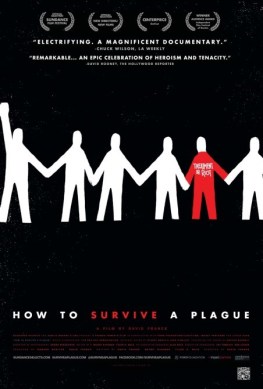 I first saw the documentary “How to Survive a Plague” in 2013, a time when its history of the LGBT community’s fight against bigotry for recognition and support in the face of a health epidemic felt like just that: history. The Supreme Court had yet to issue either of its landmark rulings, but the White House had come out in support of marriage equality. Prejudice still clearly existed, to be clear. Yet we seemed past a tipping point.
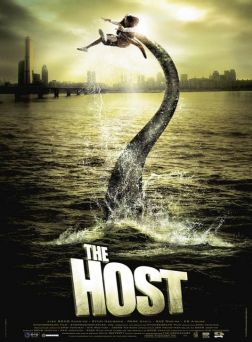
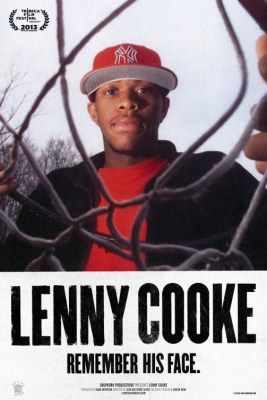 There’s nothing like the NBA Finals to make you appreciate the incredible talent in takes to make it to the top of your game. LeBron James is back in the championship, as he seemingly always is. Back in 2009, King James’ high school years got the documentary treatment in “
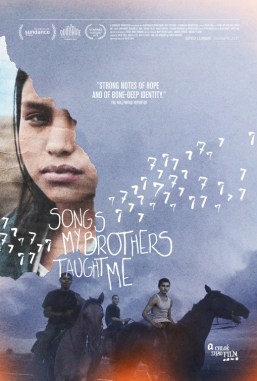 No book I’ve read in the past few years has changed the way I think (and thus, the way I write) quite like Chuck Klosterman’s “But What If We’re Wrong?” The text is worth reading for a number of reasons, but what’s really stuck with me are his notes on canonical thinking. This weekly column is, by definition, an attempt to set aside movies and put them on some kind of elevated pedestal above the riff-raff of the multiplex. And in time, very few of these will be remembered.
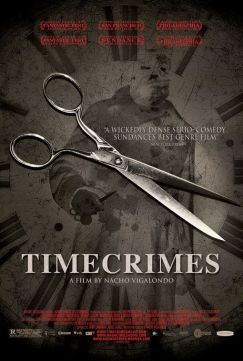
 Recently, I waxed existential on Nacho Vigalondo’s “
 I watched Michael Haneke’s “Code Unknown” on the day far-right wing Marine Le Pen was on the final ballot for the French presidency. Yes, I’m fully aware that’s a weird way to phrase it since she lost resoundingly to her more progressive rival. But Le Pen’s ability to make it as far as she did on a nationalist platform that demonized immigrants feels like the fulfillment of Haneke’s bleak conclusion in this film. It’s as if the tectonic plates he discovered ruptured with her candidacy.
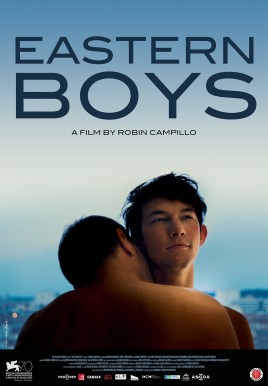 It’s gonna be May, which means one thing for this cinephile: the Cannes Film Festival! Unfortunately, I’m not going, but the official selection titles give me plenty to watch from the comfort of my own home. Cannes confers international auteur status on plenty of up-and-coming directors who were previously flying well off my radar.
 We’ve all seen our fair share of time travel movies ranging from the fantastic (“
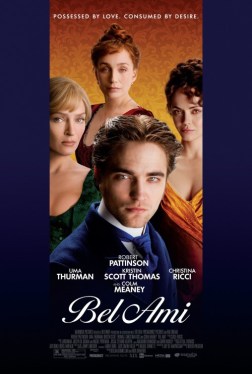 At some point while working on a profile of Robert Pattinson, I realized I couldn’t write honestly or insightfully about the actor if I only considered his post-“Twilight” work, which I generally considered to. I’m not sure at what point I decided I needed to watch everything in his filmography, but one film I did not particularly anticipate sitting through was “Bel Ami.” Costume dramas, especially ones set in 19th-century Europe, tend to function as something akin to the bane of my existence.
 Seduction gets the on-screen treatment quite a bit, though I can say I’ve rarely seen it so expertly dissembled as it was in Catherine Breillat’s “Fat Girl,” my pick for the “F.I.L.M. of the Week.” This twisted tale of adolescent experimentation, which delightedly revels in its own bawdiness, spends a solid 20 minutes of its tight 83 minute runtime devoted to a single scene in which college-aged beach rat Fernando (Libero De Rienzo) attempts to get in the pants of teenaged Elena (Roxane Mesquida). He’s using just about every trick in the book to end up at intercourse, but Elena clutches the prize of her virginity with a firm grip. It’s not something Fernando would need to pry from her cold, dead hands, so, slowly, he chips away at her resistance.

 Marshall and the Movies
Recent Comments