F.I.L.M. of the Week (June 23, 2016)

23 06 2016

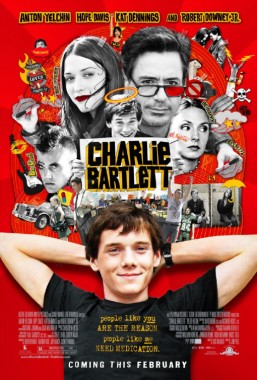
Charlie BartlettFor no apparent reason save their rapid appearance on Netflix, I’ve been devouring large quantities of turn of the millennium teen movies. While many have charmed and entertained me, most tend to fall in line and preach the same kind of message. Popularity is a sham, inner beauty is what matters, yada yada…

Then, after the tragic accident that claimed the life of Anton Yelchin, I took a detour to the mid-2000s for “Charlie Bartlett.” It was one of the actor’s first of far too few star turns, and despite my professed fandom for Yelchin, it remained a blind spot for me. That all changed within hours of learning he was no longer with us.

And wow, what a refreshing break this was – heck, is – from most high school movies. “Charlie Bartlett” tackles a key aspect of today’s youth culture that has been elided or entirely omitted from movies to date: overprescription. Though I thankfully never needed drugs to help with my mood or focus, I know plenty of people who struggled to find the right balance of medication. I also know a fair share who used those same pills for less than noble purposes. This important corrective to a whitewashed narrative makes for an ideal “F.I.L.M. of the Week.”

Yelchin’s titular character possesses a lethal combination of access to such stimulants and the brazen gall to resell them to students at his new high school. Thanks to his wealthy and largely absent mother, Charlie essentially has a family pharmacist to prescribe anything he wants. Armed with an outsized self-confidence, he settles into his role as the benevolent campus drug dealer with ease after getting largely rejected upon first foray into his latest private school.

Charlie could easily have devolved into a snarky, sniveling jerk or just become insufferable to watch as he goes more Walter White on us. But that’s not the case at all; in fact, quite the opposite occurs. Yelchin makes Charlie more humane with each passing scene as he becomes increasingly aware of the deeper psychological needs of the student body. He is always present in a scene – listening, responding and playing off the other actors. Yelchin clearly did not just memorize lines to be shot in close-up. He was there to make the other actors, and the film itself by extension, the best they could be. Here, he succeeded wildly.


F.I.L.M. of the Week (June 16, 2016)

16 06 2016

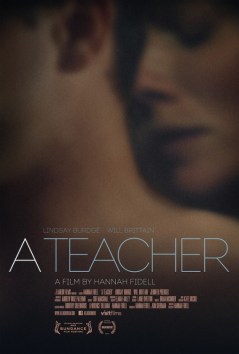
A TeacherMany people, it seems, saw the title of Hannah Fidell’s “A Teacher” and focused almost exclusively on … well, the teacher. Perhaps as they should. It’s certainly easy to get drawn into the confused, muddled mind of high school professor Diana Watts (Lindsay Burdge) given that she is having an affair with one of her students.

We’ve seen variations of the illicit sexual relationship before and quite often from the perspective of someone like Diana, a person struggling with the push and pull between inescapable guilt and undeniable passion. What we have not seen (at least not that I can recall) is something like the perspective of her pupil, Will Brittain’s Eric Tull.

Besides the obvious difference in their ages, a more subtle rift divides Diana and Eric: socioeconomic class. When they rendez-vous, she pulls up in a rundown, decades-old sedan. He cruises in with a Texas-sized truck. She goes home to a tiny apartment, which she shares with another friend. He can either go back to his palatial home or a sprawling ranch in the countryside.

Their relationship feels like it satisfies more than just a lustful teenager’s libido. Their tryst becomes rather symbolic of the kind of power wealthy students can wield over their instructors, who take home fairly measly salaries. Eric’s opulent background combined with a libidinous braggadocio (which recalls far too many people I knew in school) creates the ultimate one-sided exchange. He continues the affair less because he wants to and more because he can. It becomes proof of his superiority that he can turn a typical idle schoolyard fantasy into reality.

The reason for Diana embarking on such a foolhardy escapade seems unknown even to her, though that doesn’t stop her – and us – from trying to find out. No such quest was necessary for Eric. Every second Brittain spent on screen rang authentic to the swaggering Texas teen, and for that reason, “A Teacher” is my pick for the “F.I.L.M. of the Week.”


F.I.L.M. of the Week (June 9, 2016)

9 06 2016

Young OnesThe recent hiring trend for studio tentpoles has been to pluck indie directors from obscurity, combining their strong imaginative knack with their weak negotiating power and strong incentive to roll over and obey for the career boost. Some of these moves make a lot of sense (Duncan Jones, Gareth Edwards) while others still feel strange, like transitioning Colin Trevorrow from “Safety Not Guaranteed” to “Jurassic World” or Marc Webb from “(500) Days of Summer” to the “Spider-Man” reboot.

I find it rather shocking that Jake Paltrow is hitting the press tour this week touting a new documentary about Brian De Palma (co-directed with the venerable Noah Baumbach) and not talking about some massive franchise flick. His prior film, 2014’s sci-fi/western “Young Ones,” plays like the perfect audition tape for a hit factory. The way he conjures an entire desert world on a small budget recalls some of Tatooine from George Lucas’ original “Star Wars.”

But this economy of scale and maximizing of impact alone is not the reason for choosing “Young Ones” as my “F.I.L.M. of the Week.” (As is customary at the beginning of the month, I’ll remind you that “F.I.L.M.” is a contrived acronym for First-Class, Independent Little-Known Movie.) Neither is it because the film features odd flourishes of De Palma-esque style, if you know to look for it – particularly during exciting or charged moments.

No, it’s because Paltrow takes the time to craft an intriguing human story in an environment where the dystopian agrarian society might overwhelm character. “Young Ones” puts interpersonal conflict first and foremost, pitting parents against children, families against outsiders, and even siblings against each other. Protection and survival guide most actions from Michael Shannon’s patriarch Ernest Holm and his son, Kodi Smit McPhee’s Jerome.

The real attention-grabber, however, is Nicholas Hoult as Flem Lever, who makes a deceitful journey from boy to man at the Holm family expense. He assumes the role of a patrician in a manner befitting “The Godfather,” although the frequent slow pushes Paltrow has director of photography Giles Nuttgens executes does recall Daniel Plainview in “There Will Be Blood.” Flem seizes power far more frequently than he earns it, which puts him at odds with the more earnest Jerome.

But rather than devolve into shouting matches or stylized fighting, “Young Ones” simply lets their struggles play out naturally. Paltrow relies on the cut and the implication to convey what an action set piece would otherwise show. As blockbusters get noisier and more frenetic, executives ought to give this film (and filmmaker) another look if they want to appeal to a pendulum potentially swinging back the other way.


F.I.L.M. of the Week (May 26, 2016)

26 05 2016

White MaterialMore movies than you’d like to know are reviewed in a daze, particularly out of festivals. Seeing and listening to Cannes coverage from the past week reminds me of this sad fact. Just think – if you were a filmmaker with your reputation on the line, would you want sleep-deprived critic to write about your movie? Worse yet, in a festival environment, it’s practically impossible to go back and revisit a film once the credits roll.
I watched “White Material” from my room with a deadline, albeit one set by the Houston Public Library for lending me the DVD. (It was two days overdue and starting to accrue fines – oops.) Claire Denis’ film struck me immediately with its defiant protagonist, Isabelle Huppert’s Maria Vial, a French woman maintaining a coffee plantation in a crumbling African nation. She’s the very embodiment of the country’s lingering colonial presence on that continent in all her stubbornness and impracticality.

The events of the film pay testament to her whacked-out priorities; Maria runs around town taking care of petty items while radio bulletins in the background narrate a tale of rapid national decay and impending military takeover. In fact, she seems far more concerned with the power struggle for her own land than the one for the country around it. Maria’s husband (Christophe Lambert’s André) seeks to take advantage of the crisis to take the plantation out from underneath her. This might as well be the end of the world for her, but as for the looming political crisis, she cannot understand why native workers refuse to come labor for her. The myopia is nothing short of stunning.

I quickly latched onto the main themes of “White Material” and fell into a rhythm with it. Then, the lateness of the hour caught up with me, and I began to drift in and out of sleep. Sorry. It happens. With about 30 minutes left, I began zoning out for small patches of the film. I could still sense the major plot developments and could see big changes reflected in the characters, though things did not quite add up.

Thankfully, before hitting the hay for good, I decided to check the film’s Wikipedia page to fill in the gaps of my knowledge. And WOW, had I missed some big stuff. Once I realized that, I quickly plopped the disc back in the player and rewatched the last act of “White Material.” What I saw completely transformed my view of “White Material” now that I realized the film was simmering towards a brutal boil at the close.

This gruesome climax depicted extremely violent acts in silent, oblique and reserved fashion. Denis takes acts we have all seen countless times and finds a way to render them shocking and impactful once again. Taking this into account, I can declare that “White Material” easily makes the cut for a “F.I.L.M. of the Week;” I sure am glad I gave that ending a second go with my full mental capacity.


F.I.L.M. of the Week (May 19, 2016)

19 05 2016

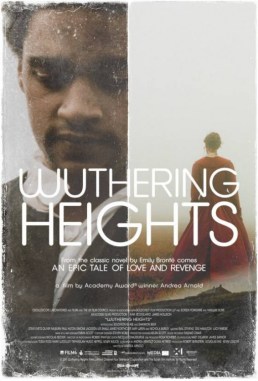
Wuthering HeightsI’m not sure I could give you a plot summary of Emily Bronte’s novel “Wuthering Heights” based on the 2012 film adaptation by Andrea Arnold. High school English students looking for the newest movie version so they can avoid reading this classic tome of British literature will find themselves sorely disappointed. Film lovers, however, ought to rejoice.

As far as cinematic adaptations of novels go, this might set some kind of record for fewest lines spoken. And “Wuthering Heights,” at over 400 pages, makes for no small feat to pull off in this style. But the absence of words is never felt.  The impressionistic visual cutaway replaces the long dialogue exchange or the superimposed voiceover, effectively substituting prose with the poetry of Arnold and her cinematographer Robbie Ryan. This novel (pun fully intended) approach to filming a classic work like a textual look book and not an instruction manual earns my respect and my plaudits for as “F.I.L.M. of the Week.”

Since Arnold and co-writer Olivia Hetreed eschew a faithful transposing of words to screen, perhaps a review of their movie ought to do the same. Far more important than plot in any given moment is feeling. Be it the ever unconsummated passion between the taken-in black orphan Heathcliff and well-to-do Cathy or the unbridled jealousy of Heathcliff emanating from the men of the house, the film is all in the visuals. A jarring handheld shift or a quick change of camera focus speaks far more powerfully than words.

Maybe most impressively, the social constraints that most period films just tiptoe around receive forceful stylization. With tight close-ups in the limitations of the 4:3 aspect ratio, the wide vistas or the set/costume department exhibition take a firm backseat to the given emotion of any moment. All the 1800s flourishes feel like the final addition – not the springboard – into “Wuthering Heights.” An old story like this has rarely ever felt so modern.


F.I.L.M. of the Week (May 12, 2016)

12 05 2016

Neighboring SoundsFrom the opening archival photos in “Neighboring Sounds,” writer/directorKleber Mendonça Filho positions the story in a long history of extreme wealth inequality. We see the construction of palatial estates for the wealthy, which were of course built on the backs of workers who made practically nothing.

The fault lines of class in America are felt, but not always seen. Such is not the case in the Brazil of this film, where wealth inequality in a coastal city is starkly defined by staggering differences in property. The wealthy and the poor are not stratified in different spheres on influence; instead, they live in close proximity. Even quite literally bordering on each other.

This setting might seem the perfect one for a battle of the haves and the have nots. But in the hands of Mendonca, the story of “Neighboring Sounds” focuses less on clashes and more on coexistence. After all, it’s the default setting for their society. This approach leads to fascinating observations, enough to earn its status as my pick for “F.I.L.M. of the Week.”

From a rich realtor contending with CD player thievery that weirds out his latest fling to a strung-out homemaker who just wants the dog on the other side of the fence to shut up, everybody in Recife really wants the same things. Safety and privacy are the two concerns at the top of mind, yet both are indicative of a larger issue. Everyone wants some elbow room, the hottest commodity in town. And, perhaps not by accident, virtually all of it remains in the control of a wealthy, landed aristocrat festering away on a platation outside the city.

Little happens in “Neighboring Sounds,” save the introduction of a new private security firm into the neighborhood. Created to fill a perceived need for existential protection, they uncover many of the sleeping giants lurking inside the community that awaken to cause friction. All the while, Mendonca remains remarkably attuned to the minutiae that define modern urban life. His film has the same intersecting lives feel as Alejandro G. Iñárritu’s 2000 Mexico-set film “Amores Perros,” but without that director’s suffocating and forced projection of cosmic fate onto the proceedings. It’s natural how these tales intertwine and overlap, forming a discordant but honest city symphony.


F.I.L.M. of the Week (May 5, 2016)

5 05 2016

the teBeyond the HillsMay has arrived, which means the lineup for the Cannes Film Festival is officially out. Each year, the official selection provides an extra impetus for me to catch up with the work of world filmmakers whose previous features might have eluded me. Admittedly, I am still working my way through the lineup from the years I attended the festival. Whoops.

In a festival environment, small factors often influence viewing choices. I chose not to see Cristian Mungiu’s “Beyond the Hills” because of its two-and-a-half-hour runtime, among other reasons. Unless I have a compelling reasons to see a movie of such sprawl, I find it hard to justify seeing one long movie when I might be able to see two shorter ones.

But wow – now I sure do wish I could have seen this stunning, gripping drama with the Cannes crowds instead of just watching it alone on Netflix. “Beyond the Hills” provides a breathtaking look at the deleterious effects of entrenched religious institutions on damaged individuals. Though Mungiu unfurls his story with a methodical pace, enough jaw-droppers occur that I despair not having the opportunity to experience them with others. I mourn that lost opportunity, but I praise the work now as my “F.I.L.M. of the Week.”

As children, Voichita (Cosmina Stratan) and Alina (Cristina Flutur) shared a great bond while stuck in an orphanage. They went their separate ways after growing up, with Voichita finding her calling as an Orthodox nun and Alina being called towards a life of vice in Germany. After hearing of her old friend’s troubles, Voichita brings Alina to the convent in a last-ditch effort to help. The gesture seems like common Christian decency, an application of the teachings of Jesus put in action.

Her outreach does not sit well with the priest (Valeriu Andriuta) who presides over the women, however. Alina represents not merely a basket case but a threat to their established order, one that can disrupt the continuity and community. “Beyond the Hills” primarily details the violent, perhaps even counterproductive, ends to which the monastery will go to preserve order – even at the cost of an individual. And meanwhile, Voichita remains caught in the crossfire, stuck between her pledged duties to an organization desperate to exercise power and her felt responsibilities to an old friend desperate for connection.

The tensions between an inward and outward looking faith are ones that I, as a person faith myself, grapple with constantly. So, fittingly, I found my allegiances torn and swapped throughout “Beyond the Hills.” Mungiu’s aesthetic matches the ever-changing tide; he employs more dynamic compositions than just a static camera observing the action from a fixed vantage point, a trademark of his work at the forefront of Romania’s New Wave. The film feels volatile and exciting even as it remains sparse and restrained. That’s no easy feat.


F.I.L.M. of the Week (April 28, 2016)

28 04 2016

Down TerraceThe British cinema scene is full of people doing lots of interesting work, but it still gets reduced quite frequently to familiar genres: the black comedy, the kitchen sink melodrama, the suburban crime saga. In his debut feature, “Down Terrace,” Ben Wheatley has the gall to meld all three into one audacious genre-mashing movie. The result is something spry and altogether wonderful, so much so that it is my selection for the “F.I.L.M. of the Week.” (In case you’re just joining this six year old column, that’s a contrived acronym for “First-Class, Independent Little-Known Movie.”)

The film begins on the five year anniversary of the U.K. following the U.S. into Iraq, as a muffled radio announcer lets us know. This seemingly insignificant detail grabs attention for its inclusion, precisely because it must somehow become significant. My take, for what it’s worth, is that the announcement indicates a fissure in The Special Relationship that presages a breakdown in a different kind of special relationship – that of a family, and specifically between the father Bill and his son Karl.

The two are played by a real-life father and son (Robert and Robin Hill), a fact that feels obvious after watching. But it is not necessary knowledge to buy their familial ties, nor does it serve as a kind of gimmick for “Down Terrace” to exploit. From the opening shot in which the pair leaves a police station, their difference of approach becomes starkly apparent. Bill remains committed to getting the family business running like it was, while Karl looks elsewhere. His girlfriend, Valda, shows up claiming to carry his child. Karl embraces the idea of keeping the child; Bill immediately suggests abortion and implies she might be trying to con Karl into fathering another man’s baby.

The main narrative engine of “Down Terrace” comes from smoking out a rat in the organization that may have put Karl and Bill in prison, yet the film’s real power derives from the ever-shifting family dynamics. Not only does the age-old father and son drama play out; the annoyances and angers of the matriarch, Maggie (Julia Deakin), get their time in the spotlight. Her worries and anxieties feel especially well realized, not simply brushed off the margins. Wheatley, who co-wrote the script with Robin Hill, makes her an equal participant in the family’s dirty dealings, not just a passive observer.

Maggie and Bill foil quite plainly with Valda and Karl, providing an excellent illustration in how generational differences can make one reluctant or welcome to change. The friction between them slowly builds until it reaches a shocking ending that you simply must see for yourself. I just hope you don’t see it coming.


F.I.L.M. of the Week (April 7, 2016)

7 04 2016

IdiocracyA new subgenre of criticism seems to have spouted up in the past few months eager to find things in culture and society to blame for the rise of Donald Trump. To be fair, I too have given him consideration on my site, but it has taken on the tenor of looking at things that might explain his popularity rather than directly cause it. A look back at the cinema of the ’00s shows various prescient takes on the underlying issues in America that have recently bubbled to the surface: xenophobia, nationalism, authoritarianism, and anti-intellectualism.
Few distill these into a frightening, humorous essence as well as Mike Judge’s “Idiocracy,” however. This comedy played as ridiculous when it was released in 2006; its studio, 20th Century Fox, regarded it as such and unceremoniously dumped it in theaters with no fanfare. But in the decade since, it becomes less and less like an imagined portrait of America and more like a plausible future. Such eerie insight, roughly as it might be presented, makes it a fitting selection for the “F.I.L.M. of the Week.”

To say too much about how “Idiocracy” hits the nail on the head would only ruin its considerable pleasures for those yet to experience the film. Judge remarkably shied away from the easy targets of the time, choosing to satirize some less obvious culprits in the dumbing down of the country. He digs into demographic trends in population and education level to find the fault lines in society. He examines the cumulative effect of the “infotainment” dominating the news media. He takes corporate influence over the government to its logical extreme.

For Luke Wilson’s Corporal “Average Joe” Bauers, a man chosen for cryogenic freezing then unceremoniously forgotten for 500 years, this strange world of 2505 seems completely foreign. Yet even from a vantage point just 10 years ahead of when Joe gets frozen, this dysfunctional America hardly seems implausible. There are almost too many ideas packed into the running time of “Idiocracy,” so many that each issue gets a slightly cursory examination. If only Judge had the budget or the time of, say, a miniseries to really unpack his social critique. Sequel, anyone?


F.I.L.M. of the Week (March 31, 2016)

31 03 2016

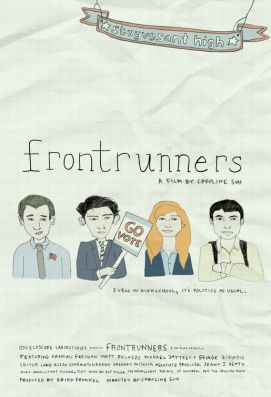
FrontrunnersPersonal attacks. Passive-aggressive jabs. Sexist insinuations. Classist assumptions. What a campaign, am I right?

Oh, did you think I was talking about the 2016 Presidential race? No, sorry, I was referring to Caroline Suh’s wonderful documentary “Frontrunners,” a document of a high school student union presidential election. This is hardly an ordinary educational institution, though; the film takes place at New York City’s Stuyvesant High, an elite specialized high school with a formidable alumni roster. The outcome of this race helps determines the future leaders of America. (Go Facebook stalk the subjects and see what they’re up to these days. Seriously.)

What elevates this account of a campaign turned venal to “F.I.L.M. of the Week” status is the seriousness with which Suh presents the proceedings. Fictional films like Alexander Payne’s “Election” use high school student government as a stage upon which to satirize the dysfunction at the federal level. “Frontrunners” views these events as important and worthy of consideration in their own right. One approach is not automatically better than the other, but it is nice to see adolescent civics dignified with such an earnest presentation.

Aside from the occasional input from the organization’s faculty advisor, “Frontrunners” is a film about the students told by the students. The profile of each of candidate essentially consists of what they reveal during in-the-moment interviews and how they act in public. All are making strategic calculations based on their understanding of the student body, both in terms of the platform on which they run and how they present their candidacy. Turns out, the Stuyvesant students are hard to pin down and predict. While it might not hold a candle to the unpredictability in 2016 thanks to the Donald, “Frontrunners” contains plenty of surprising developments and shocking moments to make the election a nail-biter up to the announcement of the winner.


F.I.L.M. of the Week (March 24, 2016)

24 03 2016

A Royal AffairI’ve been pressed (in person) by two loyal readers who want to know the rationale behind my aversion to period pieces, in particular the so-called “costume drama.” I do try to elucidate when I hold an entire genre or subgenre in contempt – see my pans of “The Young Victoria” and “The Invisible Woman” as well as my praises for “Mr. Turner” and “Far from the Madding Crowd” for examples.

It essentially boils down to this: save your threads for the museums and the palaces. If you have something to say about the past that has some relevance to contemporary society, then tell your story as extravagantly as you like. Nikolaj Arcel’s “A Royal Affair,” which depicts the painful struggle to enlighten Denmark, is such a film with real heft for modern times. As such, I am happy to name this lavish costume drama my “F.I.L.M. of the Week.”

Prior to Alicia Vikander winning the Oscar, and being in every other movie you see, she starred here as British royal Caroline Matilda, who gets unceremoniously married off to Danish king Christian VII (Mikkel Følsgaard). Once she produces an heir to secure the political bond between the two nations, Caroline mentally checks out in their marriage having fulfilled her duties. It’s not like she gets anything in return from the mentally unstable – and actually, quite disturbed – Christian.

Enter Mads Mikkelsen’s Johann Friedrich Struensee, originally brought in as a personal physician to Christian but ultimately a man of much greater influence. A disciple of Rousseau, his reason and rationality begins to inspire Christian to pass progressive reforms in his own country. Struensee also finds a captive audience for his learned views in Caroline, who is also in need of romantic and sexual fulfillment. The resulting fracas that plays out in “A Royal Affair” feels entirely relevant as, sadly enough, governments still reject common sense legislation and subjugate (or at least fail to prioritize) the needs of women. So, indeed, I found a reason to care about these people in lush wardrobes. Our struggles are still theirs.


F.I.L.M. of the Week (February 18, 2016)

18 02 2016

The Overnighters“They’re sending people that have lots of problems, and they’re bringing those problems with us,” Donald Trump notoriously said about Mexican immigrants. “They’re bringing drugs. They’re bringing crime. They’re rapists. And some, I assume, are good people.” The rhetoric surrounding migrants and outsiders has reached a fever pitch of incivility and inhumanity (not to mention incorrectness) in America. The current war is being waged on two fronts – against Mexicans and other Hispanics in the south and against Syrian refugees in the east.

Jesse Moss’ gripping documentary “The Overnighters” exposes the hateful animus behind such vitriolic missives that are alarmingly becoming normalized in American culture. His document of the North Dakota oil boom and bust shows what we don’t talk about when we talk about migrants by showing how a small community reacts to an influx of out-of-state visitors. Moss captures the conversations about the urban poor stripped of racial coding and immigrants without religious intolerance.

The result is one of the most important works I have ever selected for “F.I.L.M. of the Week.” I truly cannot urge enough people to watch “The Overnighters.” (Hint: As of publication, it is currently available to stream on Netflix.)

The film is equal parts inspiring and disheartening. In an election season where people of faith will turn a blind eye to religious intolerance if a candidate professes loyalty to the Bible over the Constitution, Lutheran pastor Jay Rienke’s efforts to live out the core Christian message of loving thy neighbor take on an outsized level of importance. A great deal of down-and-out workers drive up to his state in search of paying work, only to find that such jobs have become unattainable. Rather than let them suffer, Reinke opens the doors of his church in Williston, North Dakota, to help house and support these men.

But, of course, many in his community choose not to see his charity as providing any help. Motivated by fear, they impugn his aid as promoting indigence and vagrancy. The people of the town prove extremely hesitant to provide any sort of hand to these defeated jobseekers, hoping that maybe these migrant workers will just leave so that Williston can maintain some semblance of “home” to them. Change that is not wholly positive for them is just not a change they are interested in making.

Reinke calls the migrant workers “a gift” while also acknowledging “a burden that comes along with it.” The back half of the film just becomes devastating to watch as that burden begins to subsume him. Rather than substantively debate what the community’s role should be in helping the helpless, the townspeople deploy small points and broad labels to divert attention away from addressing the real issues. (Sound familiar?) The betrayal of Williston and the fall from grace make for a literary-like American tragedy unfolding in real life. And anyone who watches “The Overnighters” ought to work their hardest to make sure that Moss’ film does not become an allegory for our nation as a whole in 2016.


F.I.L.M. of the Week (February 11, 2016)

11 02 2016

I’ve made watching writer/director Richard Curtis’ “Love Actually” into somewhat of a December pastime, returning each year to remind myself that love is all around us, we are all perfect to someone and many more lessons. I should probably do the same with his latest film “About Time,” a love story that with less breadth but far more depth.

I don’t quite know or understand how the film got so overlooked when Universal released it in November 2013. (I was in London at the time, where the film was released earlier to a more solid commercial reception.) But this is Curtis at his most profound, offering not just a solid romantic yarn but a legitimately valuable guide on how to maximize happiness through life. Maybe in making it my “F.I.L.M. of the Week,” I can will myself into heeding his advice more.

The film begins with a somewhat trite, if not completely hackneyed, premise: time travel. That tired plot device feels fresh when appropriated here by Curtis, who is far more interested in humanity than any of the mechanics. The men of the Lake family possess, somehow, the ability to travel back in time to places they have already been. Bill Nighy’s patriarch passes this information along to son Tim (Domhnall Gleeson) on his 21st birthday and allows him to decide how best to deploy the gift.

Tim, who at the time has relatively few graces with the opposite sex, chooses to focus on love. Ultimately, it leads him to pin down the perfect woman for him, Rachel McAdams’ Mary. While his courtship of her is sweet and entertaining, the traditional romantic arc only forms a portion of “About Time.” Curtis goes far beyond the traditional stopping point of the first kiss, the wedding or the birth of a child, examining the manifold pains and pleasures of everyday adult life. “Happily ever after” rarely feels as earned or sincere as it does here.

The film confronts some of the core tenets of how we find contentment and satisfaction in life by offering a look at how someone with boundless time might approach them. By walking in Tim’s shoes for two hours, we get the chance to view time travel not as a means of correcting the past or preventing a future. Rather, we can see how this fanciful premise might allow us to enrich and enjoy the present.


F.I.L.M. of the Week (February 4, 2016)

4 02 2016

Medicine for MelancholyMost romances focus on the passion, the heat, the sparks and the sweet nothings. Barry Jenkins’ “Medicine for Melancholy” is not a typical romance. In an effort to seek out diverse voices in filmmaking, I stumbled into this 2009 film. Jenkins is only just now finishing up his follow-up feature, “Moonlight,” set up for production and distribution by A24. How it took 7 years for someone to give him a second chance in the director’s chair is unfathomable to me. (Well, actually, I have some idea why…)

My pick for the “F.I.L.M. of the Week” (First-Class, Independent Little-Seen Movie) is far more concerned with the silence between its would-be lovers. After a one-night stand, Micah (Wyatt Cenac) and Jo (Tracey Higgins) are simply not at the comfort level to carry out long conversations. They feel a connection, though neither is quite sure what it means or how to consummate that potential beyond physical intimacy. Picture a more awkward, grounded “Before” series.

But Higgins has more on his mind that doing a good Linklater knock-off. His film has flashes of Godard in technique and strategically uses color in a clever way that recalls “Pleasantville.” He also engages deeply with the political, not just the personal. The ambling about in “Medicine for Melancholy” takes place in San Francisco – and not the flashy ideal put forth in “Full House” or the one that gets destroyed in just about every action movie. Jenkins stares its gentrification issues plain in the face, even veering a bit into didacticism to get his point across. The conditions of inequality in the city are as much an issue for Micah and Jo as anything in their personalities.

As Todd Haynes said last year when promoting “Carol,” “Love stories need to have these obstacles between the lovers, or there’s no conflict or yearning.” Jenkins’ delicate handling of both the micro and macro level problems makes “Medicine for Melancholy” a truly magnificent love story indeed. The balance between the beauty of the pair’s flame and the ugliness of society makes the film memorable and impactful.


F.I.L.M. of the Week (January 14, 2016)

14 01 2016

This Is Martin BonnerRealism in cinema has a habit of rubbing people the wrong way, given that many directors who practice the style tend to pummel their audience with an abundance of brutally mundane details. But this is not a necessity, as Chad Hartigan shows in “This Is Martin Bonner.” His tender, affectionate touch throughout demonstrates how filmmakers can evoke the rhythms of the everyday without recourse to deliberate inducement of boredom.

In many ways, my pick for the “F.I.L.M. of the Week” is as straightforward as its title. “This Is Martin Bonner” follows its Paul Eenhoorn’s titular character with the precision of a “to be” verb. Hartigan allows us to observe Martin’s life as he undergoes some changes that force him to reacclimate some. He moves to Nevada to work for a religiously affiliated non-profit organization that helps released convicts rediscover their place in society.

One man that he helps, Richmond Arquette’s Travis Holloway, seems to spark Martin’s engagement more than usual. Both seek balance in a world that demands labels and extremes, though neither immediately recognizes the similarities or the ways in which they can help each other. They simply go about their lives, trying to establish some kind of human connection to restore a little normalcy.

Though we only get about 80 minutes with Martin and Travis, the time feels wholly satisfying. Hartigan balances hefty conversations about family and faith with the quiet, tiny moments that speak volumes about a person. The mini-journeys of the two characters come across as quite real indeed – and not because they meet some standard of verisimilitude. Rather, a genuine sincerity shines through every frame of “This Is Martin Bonner.” Hartigan lays on the humanity while never turning the film’s heart into a fragile object. It is, in essence, a perfect example of how to achieve natural stories without resorting to pure naturalism itself.