 I abide by many mantras, but one I use often in assessing and criticizing movies is, “Never judge a director by their debut film.” In the case of Andrey Zvyagintsev, however, such would actually be acceptable. His first feature, 2004’s “The Return,” shows a remarkable command of suspense and tone that results in a gripping experience.
To be clear, “The Return” is not my pick for the “F.I.L.M. of the Week” simply because I am grading Zvyagintsev on a curve. Regardless of whether this were a director’s first or fifteenth film, I still would have been bowled over by its power. But anyone who saw this on the festival circuit a decade ago should have easily been able to foresee Zvyagintsev’s Oscar nomination for “Leviathan” last year.
Unlike his film recognized by the Academy, however, “The Return” focuses smaller scale rather than on the state of the entire Russian nation. Zvyagintsev primarily follows three characters over the course of the film: baby-faced Ivan, his older teen brother Andrei, and their estranged father Otets. After a twelve year absence, the patriarch mysteriously returns home to command his old family, and he does so with an iron fist.
Tensions already run high between Ivan and Andrei, as shown by an opening scene where the eldest sibling allows a bully to heap masses of humiliation on his petrified brother. Otets’ arrival simply lights the long fuse to the powder keg of familial tensions. But Zvyagintsev refuses to let us see the full length, thus keeping us in stomach-clenched agony watching their male bonding trip slowly go south. Animosity over his absence provides many a heated debate, as does Otets’ favoritism of Andrei and patronization towards Ivan.
The default reaction of the kids, in response to the feuding with their father, is to shut down entirely and offer nothing but a mopey, downcast frown. Zvyagintsev never tries to psychoanalyze them in “The Return.” He simply lets us see how each instance of frustration incrementally sets the wheels of chaos in motion. From our distance, we can only watch in anger, helpless to stop what we know is coming. Yet anyone paying attention will be hard-pressed to turn their eyes away…
 Caitlyn Jenner’s very public transition has brought a big spotlight to transgender issues and rights, although some of the discourse (from all sides) seems to reduce her to a mere cultural object. When such rhetoric arises, it becomes easy to lose sight of the humanity that all people possess irrespective of how they choose to identify their gender or sexuality. In this void, cinema can step in to help bridge the empathy gap.
 In a matter of days, Todd Haynes will unveil his latest film under the bright lights of the Cannes Film Festival’s red carpet. Just a quarter of a century ago, however, Haynes operated on the fringes of cinematic culture but emerged onto the indie stage with a bang thanks to “Poison.” This early Sundance winner sparked what critics often call the New Queer Cinema with its fearless embrace of gay themes and stories.
 Sadly, I missed Jia Zhangke’s “A Touch of Sin” when it screened at the 2013 Cannes Film Festival. I caught up with the film recently from the comfort of my living room thanks to Netflix, though to just an audience of one. What I would not give to go back and be able to experience this film with a crowd full of strangers – particularly the press screening at Cannes, which draws a diverse crowd from nations all over the globe.
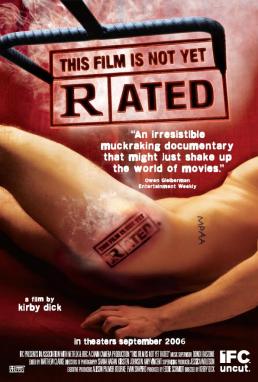
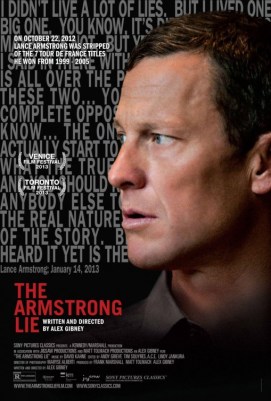 Documentarian Alex Gibney is not only one of the most prolific directors in his field; he is also one of its most incisive. Gibney tends to gravitate towards two extremes in his choice of subjects, macro level exposés of corrupt institutions (Enron, the Catholic Church,
  François Ozon made a big splash in 2003 with his film “
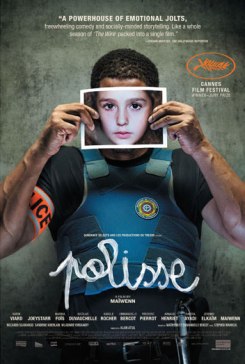 In most stories about a workplace, colleagues become friends only with the greatest reluctance. (Think “
 Many harrowing stories of child soldiers in Africa have found expression in art, exposing many Westerners to the ravages of the continent’s civil wars. Few strike such a powerful and resonant emotional chord as Kim Nguyen’s “War Witch,” though. This was one of the Academy’s five nominees for Best Foreign Language Film in 2012, and it is also my pick for the “F.I.L.M. of the Week” for the way it elevates discourse on its subject matter beyond victimization for the characters and easy pity for the audience.
 I would count myself a big fan of actress Reese Witherspoon (see my personal anecdotes on my middle school crush in Random Factoids

 Marshall and the Movies
Recent Comments