 I wound up seeing 10 films (plus an archival screening of “The Wild Bunch”) at RiverRun, far more than I should have seen given how busy I was that week. Was it all worth it?
Depends on what movie I was walking out of when you asked me the question. There were some great films that I was glad to see, but there were also some rather miserable films. Here’s a sampling of them both.
–
Stray Dog
 Debra Granik’s documentary “Stray Dog” follows biker and Vietnam veteran Ron “Stray Dog” Hall as he goes about his business in America’s heartland. Granik throws us right into the action, providing no context or commentary to set the stage. Her presence is never acknowledged and seldom felt throughout, making for a documentary essentially without a documentarian.
As a result, the film feels like a rather free-form portrait of salt of the earth americans like Stray Dog and his young Mexican wife Alicia. Granik’s subject is just … there. There is no need to provide standard documentary conventions like talking heads to provide information, though there ought to be something to approximate its effect. Without anything to signal any importance in the proceedings, the film starts to feel like an interminable home video.
“Stray Dog,” all observation and no insight, might have been more aptly titled “Stray Narrative.”
–
Still the Water
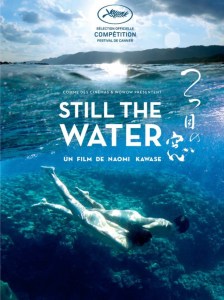 In one of the first images in Richard Linklater’s “Boyhood,” a young Mason plays with the corpse of a bird in his backyard. An audience of decent intelligence watching the film picks up on this symbol and intuits that it prompts the character to meditate on life and death. No discussion, no line is necessary.
Naomi Kawase’s “Still the Water,” however, makes a two-hour film about what follows the discovery of a human corpse on a beach in Japan. Its effect is largely measured through two teenage characters who begin to see the interconnectedness between life’s beginning and end. Kyoko deals with the illness of her mother, while her boyfriend Kaito comes to grips with the separation of his parents.
The film mostly mills about as the unsteady couple trades empty philosophical musings amidst a beautifully shot landscape. (Water as a metaphor? Groundbreaking.) Kawase’s direction is tender and sincere, to be sure, but it all goes to the service of a fairly banal story.
–
Welcome to Leith
 A documentary like Michael Beach Nichols and Christopher K. Walker’s “Welcome to Leith” is the stuff of nightmares. In a small North Dakota town, described by someone as “B-roll for ‘The Walking Dead,'” an aging neo-Nazi buys up parcels of property to attract his followers and gain civic influence. And it’s not just any white supremacist, either; Craig Cobb was kicked out of countries as far-reaching as Estonia and is monitored by the Southern Poverty Law Center for leading hate groups.
Nichols and Walker document from both sides battling for the soul of the soil, resulting in a fascinating perspective on the events. They begin with the conception of town’s denizens – all two dozen or so of them – as decent, humble, and rational people. The residents of Leith basically consider the mayorship a “family business,” for heaven’s sake!
Watching Cobb and his cronies exact a toll from them makes for a tough watch. Whether justified or not by the threats and vitriol lobbed their way, Leith’s citizens abandon the moral high ground to wrestle in the mud with those terrorizing their town. After being pushed to the edge, they decide that the only way to fight insanity is with insanity – a choice likely influenced by the influx of attention on their municipality.
Gripping and downright terrifying, “Welcome to Leith” follows a volatile situation to the brink of explosion … and its impact cannot simply be shaken off by dismissing it as a movie. This is reality, and even the most upright idealists cannot emerge from it unscathed and unbruised.
–
Yosemite
 James Franco’s short story collection “Palo Alto Stories” has proven a very fertile source material for up-and-coming feature filmmakers. Actually, that sentence should read, “Anything with James Franco’s name on it these days can find some financial backing and a few film festivals willing to exhibit the final product.”
Granted, the majority of indie projects Franco takes on possess sufficient quality, including Gia Coppola’s “Palo Alto.” Gabrielle Demeestere’s take on Franco lore, “Yosemite,” is far less impressive. This interlocking triptych of short stories offers a far less effective portrait of a fractured, disaffected suburbia than Coppola’s take on the material.
Much of Demeestere’s work on the film is solid, such as the precise sound design and attention to period detail. She also draws three solid performances from the pre-pubescent boys leading the segments of “Yosemite.” Where the film falters is in her patient, casual pacing. Such a languid tone without sufficient payoff feels like quite a drag, especially because the normalcy observed along the way offers little accompanying profundity. And do not even get me started on the painfully obvious mountain lion motif…
 RiverRun International Film Festival
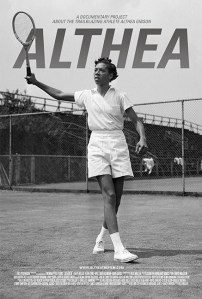 There is no catch-all definition for what a documentary has to be. But, generally speaking, the subject (if human) usually gets the chance to define his or herself in their own words if alive in the era of video recording. “Althea” does not fit this general conception of documentary.
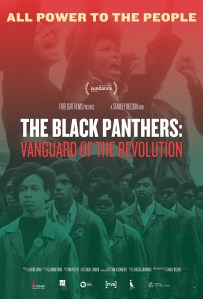 At least when I saw Stanley Nelson’s “The Black Panthers: Vanguard of the Revolution,” the film proudly blared the support of PBS in the opening credits. What followed over the next two hours perfectly matched the widely recognized criteria of that brand of documentary.
 In 2012 and 2013, much of the nation’s attention turned to Florida where George Zimmerman faced trial for shooting unarmed black teenager Trayvon Martin. Many used the case as an opportunity to shed a light on the state’s dubious “stand your ground” laws, although the connection of the statue to Zimmerman was erroneous as his legal team plead self-defense.
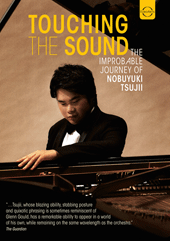 The more I have watched and studied film, the less I am able to tolerate cloying and hokey films that go for easy emotional appeal. Yet even before I started taking the medium seriously, I suspect I still would have balked at “Touching the Sound: The Improbable Journey of Nobuyuki Tsujii.” Peter Rosen’s documentary is good-natured and sweet but ultimately lacks any kind of substance or importance that suggests the watch is worth the time.
 The documentary “Sex(Ed)” could have been a fascinating sociological study about the ways in which sexual education films create and reinforce gender differences. Director Brenda Goodman does a great job providing a historical background on the evolution of these films but stops short from suggesting how they might have led to the situation in which we find ourselves now – a society where we tell women not to get raped but don’t tell men not to commit rape.
 I do have sympathy for all those who suffered tremendous losses in the face of Hurricane Sandy, trust me. But watching “This Time Next Year,” you would think the subjects of


 Marshall and the Movies
Recent Comments