I can’t believe I overlooked informing the OG readers of Marshall and the Movies that, well, most of my self-published writing is now occurring elsewhere!
After a year of writing a daily streaming recommendations newsletter, The Distancer, during the pandemic, I discovered I quite liked the newsletter format. So I’ve decided to re-launch Marshall and the Movies over on Substack with a twice-weekly cadence.
I’m going to pilfer a little bit from my own announcement post and give you a rundown of what you can expect if you sign up:
Everyone will get an email every Monday. This newsletter will be much more utility-focused with an emphasis on streaming lists. This is the “news you can use” piece of Marshall and the Movies.
The first Monday of every month will be the best movies added to popular streaming services like Netflix, Hulu, Amazon Prime, and Disney Plus. The last Monday of every month will be the movies you have to catch before they depart streaming sites. This will not change!
You’ll also get a window into what I’m watching and writing. For anyone who’s asked how they can keep up with my freelance pieces across the web – and doesn’t want to be on Twitter – the newsletter will help fill that distribution void in your life.
Paid subscribers will get an additional email every Thursday – as one of many perks. These will be the dealer’s choice, so to speak. You might get a deep dive into a favorite movie, an emerging trend, or an obscure sidebar on streaming. Maybe it will be a piece based on a pitch that I couldn’t get picked up for another outlet. Consider it a mystery box that will land in your inbox at the end of each week and provide enlightenment as well as a bit of surprise.
For fans of The Distancer, this paid component of Marshall and the Movies on Substack will be a new feature. This work involves a significant amount of my time and labor, and I humbly ask that if you derive a benefit from this product/service, you treat it as worthy of compensation.
Subscriptions will be $5/month or $50/year (a 17% discount for people who commit early!). Consider that, for roughly the cost of renting a movie online right now, you are investing in getting more value from the services for which you already pay – and often let go underutilized. Subscriptions will allow me to continue devoting the time and doing the work I love to do of connecting this virtual community to new ideas, content, and resources.
For the first month, all posts will be free so you can get a sense of whether or not you’ll find the Thursday posts worthwhile. Starting in September, the Thursday newsletters will go to subscribers only.
So come join the fun over on Substack – you can sign up for free emails or become a paying subscriber today! New logo, new platform, same goal of celebrating cinema through the written word. I haven’t abandoned this original WordPress site entirely; I do hope to pen reviews like the good old days simply to get the reps in. But, for the time being, most my efforts will be in growing the Substack.
In a normal year, Park City really begins to clear out after about day 5. It gets prohibitively expensive to stick around for diminishing returns, and the only people still around (to the best of my understanding) are usually locals and press members with extensive institutional support. With a virtual festival, however, there are many more reasons to be a Sundance dead-ender.
Sundance previously incentivized attendance in the back half of the festival by providing a much cheaper second weekend pass, where many films played encore screenings based on previous response and demand. If you didn’t mind missing all the big-name celebrities who flew in for the red carpet, it was the perfect way to mainline the best of the fest. 2021 had some equivalent in day 7 being entirely movies that won awards, and the festival offered a special deal to watch just this day.
But before I could get to the big winners, I had to clear two titles getting a lot of online buzz that did not pick up any additional laurels.
“Prisoners of the Ghostland”
First up was Sion Sono’s “Prisoners of the Ghostland” (C / ), a Nicolas Cage-starring balls-to-the-wall action flick. I’ll be honest: I just never quite got on this film’s wavelength. It managed to be both too simple and too complex at the same time. There are no shortage of ideas and inventiveness on display, and Sono’s verve is undeniable. But this maelstrom of sound and fury essentially becomes “LOUD NOISES: The Movie” without a focus or framework to anchor it.
In many ways, my feelings about “Prisoners of the Ghostland” mirror that of “Mad Max: Fury Road,” another movie I think gets far too much credit for doing something simple in all-capital letters. The story is even somewhat similar as Cage’s ironically named criminal Hero must go on a rescue mission for a governor’s daughter (Sofia Boutella) in an ominous, foreboding universe. The strange peoples and communities with which he interacts add color to the film, but this is a man on a singular mission kind of movie. No amount of anachronistic Jim Croce needle-drops or spirited line readings made that any more exciting for me.
A few years ago, I played a trivia game that asked us to match Nicolas Cage memes or GIFs to the movie from which they originated. I ultimately suspect that being able to recognize “Prisoners of the Ghostland” in such a situation will be the primary value of my having watched the film.
“We Are All Going to the World’s Fair”
The title that seemed to slowly build the most buzz among a discerning set of critics at Sundance was Jane Schoenbrun’s “We Are All Going to the World’s Fair” (B / ), an Internet-focused film I suspect will outlive many of its peers that are laser-focused on topicality. In the film’s opening credits, Schoenbrun surveys the dying embers of commercialism and industry in a small town, which sets up the vibrancy of the Internet as an enticing foil to this bleak physical landscape. This does not explain the decision of lonely teenager Casey (Anna Cobb) to participate in the World’s Fair challenge, an online horror role-playing game, but it does at least contextualize it.
Schoenbrun invites us into the mystery, terror and perverse appeal of these scary spaces online with a distinct eye towards how people consume this content. A man watching a video on his phone while crouched on a toilet is all too real, as is the extended buffering icon before a new video plays. I’m not sure I found the slow-building tension between Casey and a protective, borderline paternalistic stranger (Michael J. Rogers) quite as convincing or compelling as just the way “We Are All Going to the World’s Fair” replicates that hypnotic algorithmic suck of the video-based web. This “very online” element of the film feels transgressive and innovative where the relationship anchors it to a more traditional narrative structure I’m not sure it needs. Of all the films in the NEXT section I screened, this is the one that felt like it was moving to goalposts for the medium.
“Jockey”
On the final official day of Sundance, I managed to squeeze in three award winners. The first, Clint Bentley’s “Jockey” (C+ / ), took home the fest’s only acting prize for star Clifton Collins, Jr. Sony Pictures Classics has already acquired the film, and they look likely to run a familiar playbook for awards glory. CCJ is an industry stalwart and beloved supporting player in titles spanning from “Traffic” to “Waves,” and he’s finally getting a well-publicized moment in the sun as a leading man.
It’s too bad that the film to provide him this narrative is itself quite conventional. Collins Jr. stars as titular aging rider Jackson Silva, a jockey hesitant to step away from the sport even as his body begins to give out on him. Bentley makes it easy to see why he finds the track such a hallowed site. Adolpho Veloso’s luminous cinematography channels that magic hour beauty in every outdoor scene, and the hum of Bryce and Aaron Dessner’s score gives the proceedings an ethereal quality. It’s a shame that little else in the film, chiefly the script, can conjure up that same wonder. “Jockey” wants what Chloé Zhao’s “The Rider” so effortlessly conjures about wounded masculinity in the American heartland.
Bentley and co-writer Greg Kwedar hit just about every predictable beat in the “last hurrah” sports narrative that you can imagine as a new horse in the stable, similarly discounted like Jackson, puts a new spring in his step. He’s also enlivened by the arrival of a young man, Moisés Arias’ Gabriel, who claims to be his son. So “Jockey” dutifully plays through the deadbeat dad and estranged son tropes as well. The film is not without its moments of grace as sequences of bonding between Jackson and Gabriel, with peppy trainer Ruth (Molly Parker) never far away, provide bursts of undeniable humanity. Yet this joviality, while nice, is entirely trite and at odds with the film’s desire to provide a stark look at the grittier side of horse racing that’s hidden underneath the sport’s pageantry.
“Summer of Soul”
Another award-winner found a more natural fit between form and content: Ahmir “Questlove” Thompson’s “Summer of Soul (…Or, When the Revolution Could Not Be Televised)” (B / ), equal parts the party movie and protest movie of the festival. This documentary brought down the house on opening night – judging from my virtual peanut gallery of Twitter and Letterboxd – and quickly sold out its on-demand reprise two days later. I had my fingers crossed it would win an award so I’d have the chance to see it at the festival before it got locked away from a release later in the year; the voting bodies delivered by giving it both the Jury Prize and Audience Prize in the U.S. Documentary Competition.
Fans of R&B and soul are in for a real treat with “Summer of Soul,” which brings to light a gobsmacking amount of never-before-seen concert footage from 1969’s Harlem Cultural Festival. It’s a murderer’s row of generation-defining talents making an appearance: Stevie Wonder, The Fifth Dimension, Mahalia Jackson, B.B. King, Gladys Knight & The Pips, Sly & The Family Stone, Nina Simone. If all Questlove did was string together the performances like D.A. Pennebaker’s “Monterey Pop,” this would be an incredible documentary in its own right.
But he goes a step further, contextualizing what gives the performances such power and might beyond the raw skill of the performers. 1969 was “the summer we became free,” says one talking head early in the film. The festival known as “Black Woodstock” played a central role in owning Black identity as a point of pride, and the music blaring from the Harlem stages is inseparable from the cultural moment. The 300,000 attendees of the event cared little for the moon landing or the supernova blast of hippie energy occurring upstate. They found liberation and validation in this exuberant celebration of their contributions to New York City’s vitality and America’s culture.
“Summer of Soul” seems certain to change the fact that the Harlem Cultural Festival remains widely underappreciated as a major musical event. As the stage lights start to dim in the documentary, Questlove begins to interrogate just why this might be. Disconnection or distance from Black contributions to history can have the effect of making it seem like those moments were not real, one interviewee suggests. Maybe a more skilled documentarian could thread that thematic needle because the existential pivot does not quite work. To Questlove’s credit, I doubt this hypothetical documentarian would be able to hold court as pace-setter and party-starter quite like he does throughout “Summer of Love.”
“Flee”
But the work that most seamlessly matched story with storytelling style was Jonas Poher Rasmussen’s “Flee” (B+ / ), an animated documentary that recounts the harrowing journey of gay refugee Amin from Afghanistan to Denmark. Ramussen interviews his friend as he lays prone atop a tapestry blanket with a camera dangling above his head. When he cuts to a wider shot of the setup, with Rasmussen sitting in a chair off to the side, it becomes clear that the arrangement resembles that of a therapist and patient. Simply recounting the traumatizing stories of his life that he’s suppressed has tremendous value for Amin as he prepares to enter into a marriage in which he wants to have no secrets.
But “Flee” serves a purpose beyond just rehabilitating its subject. Rasmussen’s animation viscerally pulls us into Amin’s memories, recreating them as he recalls them. The thinly sketched lines that define Amin’s early years recall the formlessness of youth as our minds can begin to process and store relevant information about the world around us. The film renders Amin’s scariest moments as haunting abstractions stripped of their vitality and detail, but it also recreates moments of joy and connection as reveries of cinematic fantasy. And all throughout, newsreel footage intrudes to ground his recollections in the painful objective reality of a country in turmoil around him.
“Flee” is a reminder of what cinema can do best: bringing us into heightened experiences by distorting them through the lens of artistry and vision. The film’s animation allows us to enter a liminal space between memory and history as we connect to a person in his pains and pleasure alike. From his hurried flight into Moscow to his escape to Sweden with the help of human traffickers, we’re in for the ride because we’re in Amin’s headspace.
I guess the real place to start this dispatch is back on Day 3 when I screened Robin Wright’s “Land”(C- / ). Thanks to a local publicist, I got connected with a screener outside the official festival platform. My thoughts were embargoed, however, until the premiere so I didn’t spoil the party. It’s a good thing they zipped my lips because a spoiler I most certainly would have been.
To call something as unvarnished as “Land” a vanity project seems unfair. This does not feel like the kind of thing an actor makes to feed their ego. Yet, at the same time, the film would definitely have benefitted from someone to tell Wright “no” more frequently. As Edee, a woman going off the grid to sit in solitude with her feelings, she plays a solo adventurer in the tradition of Cheryl Strayed in “Wild” or Christopher McCandless in “Into the Wild.” The film plays out as the camera observes Edee primarily just doing tasks and being alone. There’s little reflection and certainly no commentary.
“Land”
Wright is a strong actress, but there is no one who could make this much mundanity interesting without voice-over or some kind of subjective filmmaking choices to bring us into the character’s interiority – or strategically keep us out of it. We do eventually learn what drove her into a remote portion of Wyoming … but only at the very end in a line delivered so hastily it could have come from Tommy Wiseau’s “The Room.” This 11th-hour revelation does nothing to retroactively remedy a movie that is so focused on blandly portraying what she does without spending enough time telling us who she is. Even knowing the root of her decision cannot make up for having to sit through nearly 90 minutes of a white woman thinking she can subsist without any help only to need a bailout by saintly BIPOC characters. (Truly, the Caucasity!)
Then again, maybe this wasn’t the best choice to watch for my sixth movie of that day. Festival viewing slots have consequences…
“Land” comes out February 12 and played in the festival’s “Premiere” section. It most certainly would not be at home with the Competition titles and really stretches believability qualifying for the sidebar it received. I can understand the festival relies on high-wattage stars to help attract media attention that rising stars and no-names cannot – especially in a year like 2021 so thin on big actors and directors. But even so, this is just not up to standards even grading on the generous curve of actors behind the camera making self-indulgent works by and for themselves.
“Cusp”
In the back half of the festival, I’ve turned my attention more to the documentary sections of Sundance. Last year’s fest yielded a particularly extraordinary crop of non-fiction films, three of which (“Boys State,” “Dick Johnson Is Dead,” and “Time”) ended up on my top 10 list. Admittedly, I’m unsure if we’ll see a repeat of that statistic in 2021. If any documentary I’ve seen were to contend for year’s best status, however, it would be Parker Hill and Isabel Bethencourt’s “Cusp”(B+ / ).
Much of the “discussion” (if such a thing really existed in an entirely virtual festival) about “Cusp” centered around an aspect of the film hinted at by a disclaimer in the blurb: discussions of sexual violence. The three Texan teenage protagonists of Hill and Bethencourt’s film – Brittney, Aaloni and Autumn – do make reference to incidents of rape, molestation and other abuse that they have witnessed, heard or even experienced. What makes the film so startling is that it’s not as if the documentarians have prompted them to reflect on these moments. The girls just offer these matter-of-fact statements up as if they are as commonplace and unchangeable a part of their adolescence as anything else. It’s a meaningful illustration of how rape culture replicates itself not situationally but contextually, creating environments in which acts of aggression and entitlement are treated as normal.
But there’s so much more to “Cusp” than just a single element in a film that’s such a rich trove of insights into the nature of contemporary small-town adolescence. Hill and Bethencourt do not present this nameless Texas town for commentary, just observation and perhaps recognition. More remarkable than any one thing they capture is just the overall sense of time in the documentary. Does this take place over a few weeks? A few months? A few years? I honestly couldn’t tell and wouldn’t have it any other way. This languid yet listless pacing brings back the steady beat of monotony that defines teenage life outside of structured school activity. Time does not seem to move forward at all in “Cusp.” It just cycles.
The doc settles into a rhythm with the subjects and yields fruit as Hill and Bethencourt patiently build trust with them. They can make an impactful moment out of the girls chowing on McDonald’s on a curb outside the restaurant, yelling at a sibling or simply going through another unspectacular day. “I’m only 16, I have forever to go!” offers one of the girls as the film comes to a close. It’s the tragic irony of the film encapsulated in a single line, an awareness of how much lies ahead but an inability to escape the pull of a perpetual present tense.
“Try Harder!”
The students at San Francisco’s Lowell High School are (allegedly) contemporaries of the girls in “Cusp,” though it feels like the high-achieving subjects from the institution featured in Debbie Lum’s documentary “Try Harder!” (B / ) are living on a different planet entirely. One of my favorite things about film festivals is the ability for unintended, fortuitous collisions between two works that emerge only by watching in adjacency to each other. Imagine the whiplash going to “Cusp” from “Try Harder!” – it was quite something! (The activism of the students in “Homeroom” also makes for quite the contrast with the solipsism in “Try Harder!”)
Lum’s subjects are highly self-aware. They know that they are all big fish in a small pond, and their obsession with achievement may even have backfired. Their end-all, be-all college Stanford is loath to admit Lowell students because they have a reputation for being “AP Machines.” The term is so commonplace that Lum can even have a montage of students reciting it, seemingly unprompted in other interviews. Nonetheless, the fixation on Ivys and their ilk has led the school to offer a bracing psychology lesson to the kids: you are not too good for a state institution.
For anyone who counts themselves as much a survivor of the college search process as a winner, “Try Harder!” really ought to come with a trigger warning. It’s a bracing look at how social and scholastic pressures alike to turn a decision into a competition, both with one’s self and one’s entire age cohort. Lum vividly recreates that fierce, raw teenaged myopia in conjuring the college acceptance as the most important validator of worth possible. Crucially, she also shows how the jockeying for admission makes unconscious racial and ethnic biases quite overt – even among a progressive student body in a majority Asian-American school.
Much of the documentary plays out in a fairly standard mix of timeline reconstruction with filmed events interspersed with talking head reflections from a handful of students Lum chooses to follow. When I saw the PBS/ITVS logo at the start of the film, I braced myself for something as studied and disciplined as the teens on screen. But “Try Harder!” has a few tricks up its sleeve as it sprints towards decision letters. Lum takes her subjects seriously but not entirely at face value. She hangs on the errant remark pondering the pointless of this exercise in proving one’s value, and they add up to a damning portrait of how the college admissions industry has robbed too many people of experiencing high school as its own life stage with purpose and meaning. When all these students care about is getting into college, they just see Lowell as something to get through.
“The Sparks Brothers”
The documentary fare was largely quite standard, although that might just be a reflection of the harsh realities of the festival schedule. After a punishing six films on Day 3, my friend and I were looking to both maximize our time and maximize our pleasure. With their generally shorted running times and lower risk propositions, we gravitated more towards the non-fiction titles available on demand. (I also watched some of these as I worked on Day 5, sorry!) Yet that does not mean there weren’t some real winners, such as Edgar Wright’s “The Sparks Brothers” (B+ / ).
We’ve all seen more than a fair share of musician bio-docs that exist largely as fan service. These films essentially count the subject’s existing base of support as the ceiling for liking the documentary. Wright, on the other hand, views the cult fandom of Sparks as the floor for his doc. (It’s a bit easier when part of the film’s mission is to increase the visibility of an undervalued group.) “The Sparks Brothers” is fan service insofar as it extends a hand to invite the uninitiated in and make them fans as well. It feels like Wright is bringing us into the world’s worst-kept “best-kept secret,” and I gladly took him by the hand into the musical stylings of the pop duo.
This is the best version of the “Wikipedia page”-style music documentary as Wright infuses it with the same kinetic, devil-may-care attitude on display in his narrative works. There’s everything from stop-motion animation and rapid-fire “explainer” videos to enliven a standard interplay of archival footage and talking heads. At 135 minutes, “The Sparks Brothers” take us through every turn imaginable with this chameleonic group that always seemed to arrive either too early or too late to any given musical moment. It’s to Wright’s great credit that he keeps us grounded through all the assorted ups and downs Sparks experienced over their unique career.
I don’t think there’s too much material here; Wright always keeps the doc engaging even as it begins to feel overwhelming. If anything, the film feels incomplete given that it ends in the middle of a distinct cycle in their work. One day in the future, we’ll see Leos Carax’s movie musical “Annette,” featuring Sparks’ music – a realization of the group’s longstanding cinematic ambitions that span from their French New Wave-inspired UCLA days to their unmade project with Tim Burton. “The Sparks Brothers” feels like more than a special feature for the eventual Criterion Collection release. It’s a distinct work in and of itself, and one that intersects intriguingly with Wright’s artistic taste and mission in his narrative films.
“Rebel Hearts”
There’s some element of reflecting the artistic sensibilities of a documentary subject in Pedro Kos’ “Rebel Hearts,”(B / ) a fascinating history lesson about a group of progressive Angeleno nuns squaring off against the institutional church. As a recovering sociology major, I was in the bag for this doc pretty early once a nun name-dropped a text we read in my freshman seminar – Erving Goffman’s “Asylums.” That canonical text introduced the idea of “total institutions” where, through the process of mortification, groups of people are compelled into submission by the stripping away of their individuality. These radical women recognize the Catholic Church in Goffman’s descriptions and let that inform as well as guide their rebellion against the authoritarian bent of the hierarchy.
This wave of activism does not occur in a vacuum; Kos points out that the nuns of the ’60s were often women scared by the conformity of post-war domesticity. These independently-minded women fled from the confines of marriage and found purpose in the convent. In many ways, they were ahead of the cultural sea change in mid-century America with various movements for social justice and liberation. But they also got caught in the undertow as they fulfilled the Church’s own pledge for modernization while also testing the limitations of that commitment.
Impressively, Kos resists aligning “Rebel Hearts” behind a single protagonist in favor of a collective voice befitting the nuns’ egalitarian ideals. If there’s any main figure, it’s Sister Corita, the nun who ruffles feathers with her distinctly modern take on traditional religious art. Kos frequently incorporates some animation resembling her style to add some flair to the historical footage and interviews, and it serves to beautifully illustrate her idea of how an inspirational throughline can connect art across periods. This documentary does nothing particularly noteworthy, but Kos tells a story that deserves to be better known with efficient, educational aplomb. He does right by his inspiring subjects who choose a protest rooted in joy for those they support, not humiliating those they oppose.
“The Most Beautiful Boy in the World”
I can’t say I was as taken with the story of Björn Andrésen as recounted in Kristian Petri and Kristina Lindström’s documentary “The Most Beautiful Boy in the World” (C / ). At its core, the filmmakers never quite decide if they’re just telling one man’s story or making a statement about beauty and objectification as amplified by the big screen at large. The film constantly, aggravatingly toggles between the micro and macro scale implications of Andrésen’s experience as a boy stripped of his individuality to become an ideal.
Petri and Lindström lay it on thick as they wind back the clock 50 years to Andrésen’s discovery by Italian director Luchino Visconti, who was looking to cast a cherubic twink for his adaptation of Thomas Mann’s “Death in Venice.” They score these flashbacks with intense strings as if we need some kind of sonic cue to understand the uncomfortable predation occurring before our eyes. Years of exposés around the horrible exploitation of children within the film and entertainment industry have already trained us to expect the worst, and that’s not even what happens here – though that’s not to dismiss or discount the very real way people lose sight of his humanity because they’re blinded by his beauty.
The film does get somewhat more intriguing when Petri and Lindström document Andrésen returning to some of the sites of his trauma, presumptively with his permission to excavate the painful history buried both in the places and in himself. It’s here where the film nails the interplay between past and present, showing how the long legacy of his brief yet brightly-burning stardom cast a long shadow over the tragedy that defined most of his adult life. But “The Most Beautiful Boy in the World” never convincingly ties Andrésen’s woes to the system they allege caused him to lose touch with normalcy, and any broader relevance they aim for in the exploration of his life fall flat.
“Users”
The only real dud of the documentary bunch that I watched was Natalia Amada’s “Users” (C / ). This meditation on contemporary technology aims for profundity only to turn up obvious or previously chewed-over insights. She aims for a cyber-age “Koyaanisqatsi” but ends up with something like a ponderous narration of posts from a Facebook parenting group poetically intoned over nice drone footage.
“Users” feels like a lamentation by one who fears the battle for the heart and soul of humanity, particularly the impressionable children, may have already been lost. The enduring image I’ll remember from the film is that of a woman in a pool, failing to beat back a mechanically-induced tide. Like the film at large, it’s both metaphorically resonant and maddeningly prescriptive. The documentary is at least well-paced out (not to mention mercifully short at 81 minutes), but Amada can never figure out if she’s most interested in using that time to ask us what we think or tell us what she knows. Her film suffers for having no thesis or even a thematic guiding light.
“Together Together”
Somewhere between all these non-fiction titles, I did manage to make time for that other thing Sundance does notoriously well: modest, twee indie comedies. The best of the bunch this year was easily Nikole Beckwith’s “Together Together” (B+ / ), a pleasant film that adheres to rom-com conventions so it can eschew them in favor of friendship. This unconventional surrogacy story is the kind of thing that feels easy to dismiss, yet Beckwith’s film finesses a finely calibrated cringe with a spirit that proves sneakily moving. At its best, this recalls the best work of Lynn Shelton, the undisputed master of tender movies about unusual relationships between people that don’t fit into a neat box.
The easiest way to describe “Together Together” is “Baby Mama” with a gender-swapped biological parent. Ed Helms’ Matt, a more wounded iteration of his Andy Bernard character, decides to stop delaying his desire to be a father until he hits milestones that traditionally precede parenthood. To fulfill this desire, he contracts the services of Patti Harrison’s Anna, a much younger woman whose draw towards surrogacy has deeper roots than just money. The two are both loners in their own unique way, a shared trait that draws the pair closer while also repelling each other in equal measure.
The chapter headings by trimester and overall irreverent but sweet tone of “Together Together” give us a sense of exactly what we’re getting. It’s all building toward the birth of Matt’s child, and there’s nothing in the gentle approach to indicate that something tragic will happen. There’s just an admirable simplicity of spirit that comes from Beckwith’s choice to savor the meaning found in little moments rather than having them culminate into something grand. The sum of the parts here might actually be greater than the whole. Her observations are modest yet meaningful, tickling the funny-bone (especially when supporting player Julio Torres gets to let loose) while also massaging the heart.
Matt and Anna are not growing into a part like “mother” or “father” – and especially not “girlfriend” and “boyfriend.” They’re growing into themselves, a journey that deserves the cinematic treatment just as much as more easily assigned roles.
“Marvelous and the Black Hole”
The more stereotypical version of this type of movie got its moment in the sun with Kate Tsang’s “Marvelous and the Black Hole” (C / ). Stop me if you’ve heard this one before: a shy child who does not fit in with her family or peers finds friendship with a kooky loner who could also benefit a little more human connection, and together they change each other’s lives. This is “baby’s first Sundance movie,” though certainly not without its charms.
Tsang’s iteration pairs precocious delinquent Sammy (Miya Cech) with a salty aging magician Margot (Rhea Perlman), stage name “Marvelous.” She’s a storyteller and performer primarily for young kids because she just loves to see them smile, an expression Marvelous cannot quite elicit from her latest captive audience. Their relationship begins out of convenience as Sammy needs a “businessperson” to study for a class, although it quickly and expectedly turns into friendship and mentorship. Like any film aiming for inspiration, the student and teacher inspire one another and help each other tackle big emotional issues.
Tsang certainly has a visual eye and a knack for appealing eccentricity, yet her risk-averse filmmaking does her free-spirited characters a disservice. She coddles the audience in familiarity rather than challenge them to see the world in a different way. In fairness, no one has quite cracked the conundrum of magic on screen. How is one to convey the wonder of the seemingly impossible when CGI has made the unimaginable appear for decades?
“First Date”
Not to end on too sour a note, but what even was “First Date” (D+ / )? Who am I to question the programmers, but I struggle to see how this unfunny, unfocused action-comedy merited inclusion in the Sundance lineup. Darren Knapp and Manuel Crosby’s first film can never escape the morass of its tonal jumble, a mix of teen comedy and shoot-’em-up action.
“First Date” was at least bearable when doing some version of quiet character work between the film’s young romantic leads, Mike (Tyson Brown) and Kelsey (Shelby Duclos). The problem is, this movie is capital-L “Loud.” All he wants to do is take the girl he likes on a date but needs the all-important car to pick her up. His need to acquire said vehicle, the locus of anxiety and action in the film, sets in motion a bizarre chain of contacts and confrontations with an eccentric group of increasingly violent characters.
Knapp and Crosby occasionally get at something novel in these strange scenes. There are times when we just deal with people who are odd, and those encounters don’t serve any kind of productive purpose. They’re just baffling. If they could just let this shaggy, discursive story bounce around town, maybe it’d be something intriguing. But as is, their need to force-fit “First Date” into various genre constructs shatters the promise of an amorphous concept.
For all its promise and reputation for delivering a fresh burst of new, undiscovered cinematic energy at the beginning of each year, there is a certain pattern and predictability to Sundance. It’s possible that I have just caught wise after attending the festival in person twice, sure. But even as the festival positions its offerings in defiance of the mainstream’s generic templatization, there exists a class of movies for which you can sense how the gears are turning the second you see the Sundance laurels slapped on a production still.
“CODA”
That’s certainly the case for Siân Heder’s “CODA” (B / ), the opening night film that set the festival ablaze … at least on Twitter and Letterboxd. From the festival-provided blurb, I thought this story about a Child of Deaf Adults (CODA) either had the makings of a major breakout or a total flop. I took a risk on “One for the Road” fearing the latter, and that proved to be my folly. Luckily, Sundance has preserved some semblance of shuffling around a festival schedule to make room for a word-of-mouth sensation through on-demand screenings two days following a premiere slot. (Though I learned the hard way when shut out of other opening night sensations “Flee” and “Sumer of Soul” that this viewing method is not a “get out of bad scheduling choices jail free” card.)
As I checked Twitter following a squeezed-in viewing of “CODA” before a packed day of previously selected festival titles, I saw the news that Heder’s film sold to Apple for a record $25 million price tag. My viewing buddy and I were not surprised in the slightest, though we do hope the platform can attract more viewers before they release the film. This is an old-fashioned festival crowdpleaser in the best possible way.
“CODA” hits all the beats in the coming-of-age story with familiarity, sure, but also aplomb. Ruby Rossi, played by Emilia Jones in a soulful breakout performance, embodies that classic teenage tension of being pulled in opposite directions by her family and her independence. Her scenario is a particularly unique one, though, as the only hearing family member in a tight-knit group of Massachusetts fishers. As pressures for regulation and interference increase, her father Frank (Troy Kotsur) strikes out on his own to create a co-op that grants a dignity to the scrappy dockworkers. Without even feeling the need to ask, Frank presumes he can count on Ruby to serve in her capacity as an ASL interpreter to grease the wheels.
But Ruby, of course, maintains and develops ambitions of her own. She develops a perverse interest in choir, a form of art and expression that her family cannot understand. It’s here that Ruby begins to develop a voice of her own with a little help from a paint-by-numbers quirky but inspirational teacher Mr. Villalobos (Eugenio Derbez). It’s here, too, that Ruby begins to share prolonged encounters with a musically-inclined crush of hers, guitar-strumming Miles (Ferdia Walsh-Peelo of “Sing Street“). These two worlds unfold on parallel tracks until they have no choice but to collide as demands from both Ruby’s familial and scholastic responsibilities escalate in tandem.
It’s up to Ruby to recognize that the choice she’s offered is a false one, and maturation for her must mean finding a way to bridge the divide between her obligations and her passions. More than most movies, “CODA” really does convey the heavy nature of Ruby’s role within her family to emotional effect. But Heder does so without flattening or patronizing the deaf characters for whom she must help. This is a model for how to treat disability on screen, allowing for the fullness of their humanity to shine through from humor all the way to sexuality. The film soars when it makes clear the truth we can sense underneath it all along: Ruby’s beautiful voice emerges not in spite of her deaf family but because of them.
As director Kelly Reichardt once told me, “Clichés can be used, but it’s good to know what you’re doing.” Heder does, and the film is a winner for it.
“Passing”
Another classic Sundance subgenre is the actor-turned-director, often times to slightly fumbling effect right out of the gate. That’s part of the story for Rebecca Hall’s “Passing” (C / ), the actress’ adaptation of a Nella Larsen novella that serves as her directorial debut. The text is rich for adaptation, especially now, as it traverses the blast radius from an unexpected reunion between two lighter-skinned Black women, Tessa Thompson’s Irene and Ruth Negga’s Clare, in 1929. The former makes herself up to look white enough for a day, while the latter has gone all-in on remaking her image as a white woman … racist husband and all.
The film defies the traditional damnation with faint praise for a thespian stepping behind the camera: “well, they know how to direct good performances!” The acting in “Passing” is not bad, however. It’s just that Hall does not seem to trust her performers enough to sell the story. She relies on Emahoy Tsegué-Maryam Guèbrou’s twinkling piano solo “The Homeless Wanderer” (familiar to fans of Garrett Bradley’s “Time” from last year) to do a good deal of the emotional lifting in the film rather than resting the camera on Thompson and Negga.
What actors choose to reveal, or conceal, to the camera makes for the heart of classical dramas Hall so studiously replicates, and yet she leaves us locked out entirely. (The film’s final image, a bird’s-eye shot pulling ever upwards until the characters appear trapped in a snowglobe, makes for a perfect encapsulation of this issue.) Hall’s collaboration with cinematographer Eduard Grau produces gorgeous photography, particularly when it comes to capture a range of hues and shades in Black skin. But it, like the rest of the film, manages to be both too overwrought and too subtle at the same time. “Passing” misses the mark on melodrama as the images fail to provide a connective tissue to the rich subtext underlining the sparse dialogue. With no ability to access that which cannot be said, we’re left with little but a meticulous look-book of studio-era B&W compositions.
“Knocking”
Away from the glare of these self-invented Sundance subgenres, there was actually genre fare playing. For what might be the only toe I get to dip into the festival’s Midnight lineup, I watched Frida Kempff’s “Knocking” (B- / ). This wins the “Truth in Advertising” award, an honor I have just made up. Fresh from trauma and subsequent institutionalization, Molly (Cecilia Milocco) moves into a new apartment and hears a knocking noise that just won’t quit. Kempff locks us into Molly’s subjectivity, so we’re along for the paranoid journey as her worst fears about the source of the disruption slowly come to pass. Of course, given her record, Molly’s cries for help frequently fall on deaf ears as the systems designed to protect her refuse to believe her.
“Knocking” immediately announces itself a claustrophobic gaslighting thriller, and Kempff delivers on that promise. You get what you’re promised, nothing less but not necessarily much more. This is a promising debut that already shows a mastery of the formal elements in the genre. The crisp, precise sound design is the chief contributor to sense of overwhelming dread. But the real MVP might just be the DIY camera rigs that brings us into Molly’s head from unusual and discomfiting angles. It’s a good reminder that a scrappiness of an upstart indie can yield some of the most intriguing results, though I’m more curious to see what Kempff can do when she levels up to a larger scale and budget.
“Prime Time”
I’ll take a thriller with promise for the future over one that never starts at all, which was the case for Jakub Piatek’s “Prime Time” (C- / ). It’s a bold move to make a hostage movie with so little tension. This might be the first movie set in a heightened situation where I felt like time was slowing down rather than speeding up.
An angry young man Sebastian (Bartosz Bielenia, star of recent Oscar nominee “Corpus Christi”) storms a Polish TV station on the night of Y2K with a gun but without a plan. The whole affair unfolds rather predictably, and not only because I’ve seen Jodie Foster’s “Money Monster.” Granted, that film was a whole convoluted affair, and Piatek is after something more pared back with “Prime Time.” Fine, but it cannot be this simple, either.
The film wastes the shiftiness of its lead performance amidst lackadaisical pacing and obvious insights. He’s less like a bank robber or heist mastermind and more of a screen-obsessed nihilistic narcissist in the model of Christine Chubbuck or Lou Bloom. The attention is the goal, and he’ll hijack anything to get what he feels he’s deserved. If Piatek’s big twist is really that the TV station itself wants to make themselves the story of Sebastian’s stick-up, he must think we are stupid – or haven’t lived through the last decade of news media.
“Street Gang: How We Got to Sesame Street”
“Documentary” is not really a genre, per se, but there are certain styles within the non-fiction form that jump out as instantly recognizable. All the hallmarks of basic cable historical documentaries are evident in Marilyn Agrelo’s “Street Gang: How We Got to Sesame Street” (B / ), a behind-the-scenes look at the creation of Children Television Workshop’s cultural phenomenon. The doc moves at a brisk clip through the origins of “Sesame Street” in the nothingness of ’60s television programming, urban blight and social upheaval. A group of people changed the medium forever by wondering what would happen if a TV program could love children rather than just sell to them.
With vivid behind-the-scenes footage and a wealth of authoritative talking heads, Agrelo conveys that something we now take for granted as a cultural institution was by no means a guaranteed success. In fact, it was quite radical and experimental. (Funded in part by the U.S. Department of Education, no less!) The doc is at its best when getting into the weeds of production to show how the sauce got made and refined by the “Sesame Street” team, and Agrelo does an excellent job of toggling between the creative process and the finished product.
As a child who grew up on “Sesame Street,” including VHS tapes of the classic older years, I am very much the target audience for a film like “Street Gang.” This is basically a doc providing fan service, and I don’t resent Agrelo for providing that while the doc also enlightens and educates. But there’s a breeziness to the film that leads it into deeply uncritical and borderline hagiographic territory. Agrelo takes the commercial bonanza that followed the release of “Sesame Street” as self-evident proof that it worked, but are we sure it actually does? Where’s the proof? (Furthermore, why exactly do a bunch of well-meaning white people want so desperately to save “inner city” kids? How were they consulting with those communities?)
Maybe this could be addressed in a sequel to “Street Gang” given that Agrelo’s focus is almost exclusively on the early years of the program. “Sesame Street” is not some kind of cultural artifact preserved in amber; it’s evolving to meet contemporary challenges for kids from incarceration to autism. There has to be some way to honor the show’s history without entirely discounting its present.
“R#J”
I don’t mean to just rag on Sundance for giving us the predictable; they also program a collection of boundary-pushing oddities in the NEXT section. (This is where I saw “A Ghost Story” in 2017, and I will never forget feeling an entire audience’s stomachs twisting in parallel as we all waited for Rooney Mara to finish eating that pie.) The only thing conventional about Carey Williams’ “R#J”(C+ / ) is its Shakespearean source material. If you think Baz Luhrmann did a number on “Romeo + Juliet,” you ain’t seen nothing yet. Williams stages this story of star-crossed lovers across contemporary smartphone screens, utilizing vernacular for Instagram DMs and Spotify playlists while maintaining verse for IRL interactions.
“R#J” is bursting with visual information to an overpowering extent. To Williams’ credit, his digital compositions are packed with detail and meaning. More than just using phones as the stage for his contemporization, the medium becomes the message. We’re bombarded with distracting notifications and feel our attention split across different platforms, each one assigning a different identity.
Tech is the selling point for “R#J” but also its limitation. Williams gets so beholden to his bold concept that storytelling becomes secondary. (At 90 minutes, who can really do a five-act Shakespeare play justice, anyways?) Apart from Romeo and Juliet themselves, every supporting character is flattened into little more than a digital representation or a plot device for the romantic leads. There’s some fascinating exegesis of the Bard in the film’s startling conclusion, yet the book report becomes subsumed by the video art project. “R#J” makes for a bold calling card for Williams, and I think I can already see the film’s future: for high school classrooms when the “cool” English teacher is too hungover to teach Shakespeare and decides it’s movie day.
People often refer to movies as an escape from life, but those who spend a good amount of their time steeped in them know that’s not quite the truth. We can never flee from the toughest conundrums of existence because they are baked into the medium itself, a living memorial to a time that has past. In cinema, death is both commemorated and cheated as the vivid recreation of what the camera once captured enters the terrain of immortality.
Of course death is present at Sundance 2021, occurring this year in virtual form because more than 400,000 Americans are no longer with us thanks to COVID-19. The people might be absent from Park City, but they can be virtually “present” at the festival thanks to Sundance’s online offerings. Accessibility is nice, of course, as is the perseverance of bold artists willing to release their work under less-than-ideal circumstances to help avoid a festival film logjam in 2021 and beyond. Yet the recreated and the reimagined don’t quite seem to capture that Sundance environment in the same way. Even more so than at virtual TIFF and NYFF, the attempts to bring replicate the festival’s giddy rush of marathon viewing and socialization just seem to remind me of what’s missing. Of what’s dead – or, at the very least, what’s not alive.
(OK, maybe it’s just the bizarre “virtual party” that the programmers keep hyping up after every Q&A. It’s not like Eccles lobby or the bus stops were anyone’s idea of a salon, but as my friend and co-passholder astutely observed … this is seriously serving some Club Penguin vibes.)
Of course, I have no one to blame but myself for selecting a death and doomsday-laden lineup in my first two days of festgoing. (This year’s Sundance, for passholders like myself, operates on three hour “premiere” windows in which you can select one film to watch. All films become available “on demand” for 24 hours on the second day following the premiere.) It’s not like these things were concealed in the all-important festival blurb. But the very viewing context – not in Utah, my first trip to some place I would not call “home” in over a year, a recent terminal diagnosis for my family’s beloved dog – just made it all the more prevalent.
That’s not to say these films are all gloom and doom, fire and brimstone, darkness and depression. The best film I’ve seen thus far, Jerrod Carmichael’s “On the Count of Three,”(B+ / ) finds uproarious humor and boundless energy in its morbid logline of two old friends forming a suicide pact. Carmichael also stars as Val, a droll working drone who buckles as personal and professional pressures mount. As the prospect of going out while listening to a chipper colleague singing Travis Tritt proves untenable, he enlists the collaboration of his institutionalized childhood pal Kevin (Christopher Abbott).
“On the Count of Three”
The pair pulls up behind a strip club – one of the few places with privacy at 10:30 AM, as Val wryly observes – with the intention of trading bullets into the other. At the last second, Kevin flinches and insists their last day be something more than an end to their lives. If you could say anything, go anywhere, settle any scores … what would you do? What follows is not so much a celebration of life so much as a probing of life’s possibilities when the guardrails of consequences are likely removed.
Carmichael leans into all the paradoxical promise of the premise. “On the Count of Three” flirts with absurd juxtapositions, such as gingerly dropping a tire iron to the ground after using it to wound a foe while a singing bass warbles from the wall. This pitch-black buddy comedy proves the ride of a lifetime – into death, no less – for Val and Kevin. Carmichael, best-known for his work in standup and sitcoms, makes an interesting decision by casting himself as more of the dramatic core of the film as well as straight man in their routine.
That leaves Abbott, one of the most intriguing and under-heralded talents emerging in the last decade of indie cinema, to play the comic man. He excels with that and just about everything else in the film, bringing a live-wire energy to imbue his character with hilarity and sincerity. Whether screaming out his angst to Papa Roach or delivering a rambling monologue about the racial undertones of his friendship with Val, Kevin’s pain pops off the screen. Abbott pulls off the tricky balancing act of making the inconsistencies of his character feel like they all emanate from a consistent well of pain rather than just haphazard scripting. It’s merely the latest excellently executed turn by an actor who should be getting just as much praise and attention as a fellow male co-star from the TV show that gave Abbott his big break, “Girls” (Adam Driver).
Not unlike Abbott’s performance, the film itself feels fragile. Not like a vase, like a powder keg. A single wrong move could tip it over and combust the whole enterprise. “On the Count of Three” flirts with danger, and I’m not entirely sure Carmichael avoids it entirely. Without spoiling the film’s conclusion, it’s always tricky territory when suicide becomes less of a psychological state of mind and more of a functional plot device. As a comic, Carmichael does not fear taking a slightly irreverent tack to discuss hot-button issues. This film might not capture the minds of the thinkpiece-industrial complex upon release. But while watching, it sure does an excellent job of replicating the experience of the characters (from a safe distance): two dogs chasing a car, unsure of what they’ll do when they catch it.
“One for the Road”
The imminence of death as impetus for a narrative journey is just as central to Nattawut Poonpiriya’s “One for the Road,”(B- / ) a Thai drama that plays like “The Bucket List” – at least to start. (More on that in a bit.) Ailing Aood (Ice Natara) summons his estranged pal Boss (Tor Thanapob) from New York to help him drive around Thailand fulfilling his final wish of “returning” things to people. By this point in the progression of his leukemia, he’s done an impressive inventory of sorting through his contacts, saying what he needs to say and then deleting their contacts. Aood is now moving onto the final stage of gaining closure: his exes, the people who filled his heart only to break it.
The film’s credits bear the name of producer Wong Kar-Wai, and there are some fleeting glimpses of his aesthetic that break through in the film’s first half. Of course, the student is not yet the master. “One for the Road” is at its best when floating between memory and present tense in its editing. This lyrical drift scored by a soundtrack of bops from an old radio program captured by Aood on cassette tapes and neatly labeled for each person on the trip. Once the first tape ejects and the name becomes visible, I just knew that a lightbulb went on for some American producer who wants to produce a more sentimental needle-dropper of an English-language remake.
Where Poonpiriya stumbles is in the back half, which off-roads into a more conventional flashback structure. It’s here where “One for the Road” reveals the origins of the rift between Aood and Boss: surprise, surprise, it’s a woman (Violette Wautier’s Prim). The film runs two hours and 15 minutes, and it could stand to be about 30 minutes shorter – all of which could come from the Prim section. We quickly get a sense of how this long passage reshapes the nature of Aood’s story, showing how his attempt to close wounds might really be pouring salt in them. Trimming the fat still would not mean the movie has any particularly novel ideas about life, death and romance. But at least “One for the Road” would not run out of gas.
“How It Ends”
Death looms large over lo-fi apocalypse comedy “How It Ends”(C- / ), a film that uses an impending asteroid strike as the impetus for a shaggy, ambling reconciliation of a woman with a metaphysical incarnation of her younger self. Zoe Lister-Jones both co-directs (along with Daryl Wein) and stars as Liza, a single and slightly self-loathing Angeleno looking to live out her final day in peace. That’s complicated by her bouncing teenage alter ego, played by a springy Cailee Spaeny. The two – well, really just one, but it’s visualized as a duo – trade reflections as they saunter together down vacant city streets on their way to an end of the world party. In classic Sundance fashion, ~it’s not the destination, it’s the journey~ as present Liza must confront the unmet emotional needs of her younger self.
That’s at least the story throughline, but “How It Ends” stems more from pandemic-related creative boredom than any kind of narrative necessity. This movie’s real attraction is the parade of cameos from other locked down Los Angeles comedians, each contributing a sketch-like beat to the film’s 82 minutes. Wein and Lister-Jones shot and conceived this during 2020 and shot it with COVID-19 protocols in place. Boy, does it show. The film felt dated as I watched it: other than the two Lizas, there’s not a shot where any other actor gets within 6 feet of each other, much less touches. If the goal was to resume some semblance of normalcy amidst a stifling shutdown across the industry, the film backfires tremendously. All I could think about was how far this film was from resembling anything like the reality we once knew.
“How It Ends” really only finds success in the brief moments where a scene’s new celebrity appears. Usually, it’s enough to generate a brief chuckle or a “pfft” reaction. There’s promise for a second with some familiarity. But then it fades quickly as everyone just looks uncomfortable as they try to execute an unfunny bit. The actors may be six feet apart, but I felt even further from the film itself.
“Homeroom”
Death is more backdrop than subject in “Homeroom”(B- / ), director Peter Nicks’ documentary chronicle of the 2019-2020 school year at Oakland High School. (It’s apparently the third in a trilogy of non-fiction looks at the city’s institutions for Nicks, who previously made “The Waiting Room” about the healthcare system and “The Force” about their police department.) Unless you’ve been living under a rock for the last year – and if so, got room? – you’ll know that this time frame will of course encompass both the impacts of COVID-19 and the uprising for racial justice in America. It’s unavoidable, and Nicks could not have known when he started that he’d be documenting a micro-scale environment that would have no choice but to directly experience macro-level shocks to the body politic.
When the film has to confront these seismic events head on, it’s an entirely predictable (if still astutely observed) affair. We know the impacts that COVID-19 had on graduating classes both practically and psychically; remember in a more innocent period of the pandemic when there were network TV specials to give them approximations of major high school milestones like prom and commencement? Similarly, anyone who’s paid a lick of attention to movements for social justice will know that youth leaders – particularly those of color – have been at the forefront of demanding and agitating for change. “Homeroom” tells us nothing new here, though it will be a great document for posterity.
The real value in Nicks’ project comes from the more siloed first half, in which we can see that the students’ zeal for community representation and social justice did not just appear out of thin air. Even prior to George Floyd and Breonna Taylor, Oakland High students were well aware of how abnormally, irrationally policed their school was – and took steps to try and remedy the situation. Not unlike last year’s “Boys State” showed in its own little hermetic vacuum, today’s teenagers are politicized at a much earlier age than previous generations. Be it school shooters, racial justice or climate change, their threats stare them in the face.
They act accordingly, too, treating the political as deeply personal. When a community board does not go along with the students’ proposal to remove police from Oakland High, student representative Derilson Garbo (the closest thing “Homeroom” has to a protagonist) responds with a scathing rebuke of the people of color who were not on their side. It’s a fascinating moment, one far more revelatory and prognosticatory than the well-worn observation that Gen Z is highly engaged with the world at large and the world on their phone screens.
“Luzzu”
Not all death is literal, though, as Alex Camilleri’s Maltese maritime moral drama “Luzzu” (B+ / ) demonstrates. Sometimes it’s just the loss of our connection to a time, past or future, that can knock us off-course. Or maybe it’s the death of illusions or naïveté that force us to become new people altogether. Both happen to fisherman Jesmark (Jesmark Scicluna), a humble skipper still using the same sea vessel utilized by multiple generations of his ancestors. A leak discovered during the film’s opening scene prompts acts of literal and metaphorical consequence as he refinishes and fortifies the family luzzu.
But simply returning back to normal might not be an option given what else is swirling in Jesmark’s life. He and his girlfriend Denise (Michela Farrugia) have welcomed a son, Aiden, and must deal with mounting medical bills to treat his slow development. Denise pushes him to work on a trawler or one of the big commercial shippers growing in presence along the coast, but Jesmark objects based on their environmental impact and how these behemoths stifle the little guy like him. In the face of his obstinance, she suggests having her mother pay for the treatments – or that Jesmark move inland and work for her uncle’s furniture company.
With his girlfriend’s exasperation lighting his short fuse, Jesmark’s idealism reaches its end as he begins to contemplate bending the rules in previously unimaginable ways. He’s willing to try selling some prohibited fish and even sell his services and savvy to some shady sea operators. Once he crosses this moral rubicon, Jesmark’s eyes open to the many ways his competition has cheated him out of an honest living. The myth of self-reliance that he’s bought into for so long, as it turns out, is for suckers.
Unlike “One for the Road,” “Luzzu” shows the influence of its famed producer – Ramin Bahrani – in a much more positive way. (In fairness, Camilleri has worked extensively for Bahrani over the years and has greater creative exposure to him.) Camilleri crafts a compelling moral drama rooted in a richly observed community where the interplay between personal biography and cultural history is evident. The film finds remarkable tension in the way Jesmark must make compromises with his own values, a battle that rages almost entirely underneath his stoic workman’s face. He’s so steeped in the painful, unavoidable economic reality of his life, and Camilleri’s neorealist-influenced aesthetic follows suit.
That is – until the end, when Jesmark gets the chance to retell and reframe his own story to his son. Baby Aiden is too young to understand the world around him, but according to the doctor, there’s still developmental value in him just ingesting the words. Something happens to us when we have to force our lives into a storytelling framework. In these narratives, we cannot escape death or dissatisfaction that plague us in reality. But, like Jesmark, we can cheat them and rob those forces of their power by telling a different story altogether. In “Luzzu,” this takes on a somber, somewhat defeated tenor – but that need not stop others from taking a more triumphalist tack.
I began 2020 with grand plans of jetting off to the Venice Film Festival in September and instead learned to love the virtual film festival. I traded New York’s repertory theaters for pop-up drive-in cinemas, AMC A-List for a parade of streaming premieres. In a year that I will mostly remember for revisiting comfort films as WFH background noise as well as catching up with some long-postponed classics, I still managed to see over 185 new releases in 2020. Here are my ten favorites, a crop notable for being half non-fiction films and finding unique ways to grapple with all manner of issues transpiring off-screen.
(P.S. – I tried something a little different for 2020 and originally published my top 10 in zine format, alongside some writing I did earlier in the year about each film. The reflections here are new and exclusive to this list. For more information about how to read the zine, drop me a line somehow and I’ll arrange a view for you.)
Around this time (ok, usually earlier), I start fielding requests for my favorite movies of the year as well as what’s going to be a big awards movie. As I find my tastes diverging a bit from what industry voters recognize at the end of the year, I thought it might be prudent to provide just this list for the sake of utility. I could not help but superimpose my own preferences on the list, of course. But for those strict utilitarians who want to say they’ve seen all the nominees on Oscar nominations morning or awards night, this is a practical guide to the season for you.
italicized = Marshall hasn’t seen as of 12/30 bold = Marshall recommends * = hasn’t screened, no one knows how it is
Hello again! As is becoming tradition on July 28 over the past few years, I blow the dust off this old site and post a little something again. It’s hard to believe Marshall and the Movies started 11 years ago … and only TODAY did I find a typo in an early paragraph in my first post. How did no one tell me? How did I not catch it?
After a few years now, primarily since moving to New York, I’ve moved away from the daily writing model that used to prevail on this site during the heydays of 2009-2011 and, to a lesser extent, 2015-2017. But I’m actually back to doing that again thanks to the pandemic! It’s just not on this site, however. (For now!)
Just because I know there are still quite a few people who get email alerts when I post, I figure I’ll give another shout to my new email newsletter on Substack, The Distancer. Head over there for daily movie recommendations, along with other helpful (and sometimes fun) links, designed to keep you educated and empathetic through the era of social distancing … delivered straight to your inbox! It’s a fun time, and I’d love to have you following the next step of the wild, winding Marshall and the Movies journey.
All my love to everyone who’s been a part of this for over a decade now! Thanks for your readership, your support and more.
176 movies later, and it’s pencils down on the year in film.
Like always, I wait until the very last minute to file a top 10 list. I either want to spend time rewatching films to make sure I think they can withstand scrutiny in the future or cramming in a final few. But with the notable exception of a late-surging final entrant and some jostling for position among the top five titles, my favorite films of the year have been remarkably stable.
I’ll have slightly more profound ruminating around my best of the decade list that will drop shortly than I do here. Normally I opine on some grander theme or mood, perhaps a through-line I find or something else that makes this more than just a random scattering of movies with numbers attached. Turns out, even after celebrating 10 years at doing this in 2019, I may only have enough juice in me for a single year-end thematic list.
Anyways, that’s enough with my chitter-chatter … because, after all, you really just came to know the movies and rankings! Though I alluded to how easy this year’s list was to assemble, I do want to give a shout-out to a few other films that meant a lot in 2019:
“Clemency,” an extraordinary look at America’s prison system and the moral choices it forces from all who interact with it – as seen through the eyes of a black woman
“Knives Out,” the kind of joyous original entertainment for smart moviegoers that I spend all year carping for more of, delivered with a killer topical twinge
“The Irishman,” a film with such multitudes about life, art and death that a single watch feels like only skimming the surface
“Transit,” a groundbreaking merger of period piece and current political drama that makes bold aesthetic choices seem simple
“High Life,” which taught me more about how to watch a movie than anything I’ve seen outside of a film studies classroom
Hello friends! A number of you might be getting this because you subscribed to email alerts from Marshall and the Movies way back when. Or maybe you’ve arrived from a social media platform. Either way, it’s very reasonable for you to think, “I know Marshall is writing a lot but don’t know where to find it since it’s not on Marshall and the Movies anymore!”
Well, this post is for YOU!
I’ve collected all my writing from this past year – and even included some writing I did about 2019 films from last year out of film festivals, just to give you a more robust reading list. I’m really proud of the work I did and felt myself grow as a writer, interviewer and thinker. I hope, as always, you can derive some kind of benefit from what I’ve written as well. Be it your next movie night or (if I may be so presumptuous) a new lens on a film or cinema at large, I’m always writing with you in mind. These pieces mean little if not shared with other people!
There will be more from me on this site in the coming days – a best of the decade and best of 2019, at the very least. Thanks for sticking with me in this 10th year of writing, and I know that 2020 and the decade to come hold some very exciting things!
“Smells Like ’10s Spirit” Column
“Smells Like ’10s Spirit” takes a look at the decade in movies through the lens of success stories only made possible by unique trends that emerged. This series explores ten films – one from each year of the 2010s – and a single social, economic or cultural factor that can explain why it made an impact or lingers in the collective memory. Each piece examines a single film that tells the larger story of the tectonic forces reshaping the entertainment landscape as we know it.
*Some of these were originally published out of festivals in 2018, but since I’m rounding up everything for this year, I figured I might as well throw them in! (Things that I wrote in 2019 about 2020 films will be in the “Festival Coverage” section below.)
I always told myself that Marshall and the Movies would never become just a repository for links to pieces I’ve written elsewhere, and yet, here we are again…
I saw 35 films from the TIFF 2019 selection between screeners, pre-screenings and on-the-ground festival coverage. (I saw 23 films there in 5 days, for those curious!) I’m grateful as always to have a chance to share my thoughts on some of the most exciting new films debuting and getting an opportunity to help shape the early conversations around them. Thanks to the many editors who gave me the opportunity to contribute!
Since everyone is going to ask, my favorites were “A Beautiful Day in the Neighborhood,” “Knives Out” and “Waves.” Among the highest profile titles, I also really enjoyed “Jojo Rabbit,” “A Hidden Life,” “Just Mercy,” “Bad Education,” “Synchronic” and “Sound of Metal.” Some foreign-directed gems to look out for are “The Other Lamb,” “The County,” “Wet Season” and “The Audition.”
“I have no idea where this inspired idea will take me,” a 16-year-old Marshall wrote on his first day of blogging, “but I know that the first thing that I write will somehow come full circle.” This is not the end, to be clear. In fact, hopefully, this is far from the end. But nothing like a big milestone to inspire a lot of introspection, self-congratulation and gratitude, right?
Writing this blog changed my life. Maybe even saved it, if we want to get dramatic. The person who started writing this blog is forever a part of me, but in a ways, the 26-year-old Marshall who’s banging out this post feels like an entirely different person. So, if you’ll excuse the potential pretentiousness, I want to write in a kind of third-person omniscient narrator voice about this person who now seems so foreign to me but is also so dear.
“I have trouble getting things started,” he typed at 11:47:50 P.M. on Monday, July 27, 2009. “I don’t know where or when this will end, but it starts now.” He couldn’t know that he’d log over 1,500 movie reviews and 2,500 posts on the site. He couldn’t know that it would be a crucial selling point (perhaps) in interviews for scholastic and professional opportunities. He couldn’t know that the act of sharing his passion with others rather than keeping it to himself out of shame and fear would radically change how others saw him – and open up new opportunities for authentic, meaningful connection.
He couldn’t know that someday, he’d still be writing about movies, just exceedingly less and less on this site he started. (The “American Hustle” banner art ought to give away the last time the layout was seriously examined.) He couldn’t know that the passion project he worked on after finishing homework, during lunch breaks at work and (every so often) in class would open up an avenue for professionalization and monetization.
He couldn’t know that a childhood hero like Roger Ebert would compliment him. That he’d be interviewing some of the filmmakers behind some of his favorite films. (That he’d even want to talk to the guy who played Edward Cullen in the “Twilight” movies – remember, this was 2009!) That he’d be accredited to attend some of the world’s greatest film festivals. That his word would carry enough weight that a studio would put it in trailer and marketing collateral.
He knew he’d love combining his passions of film and writing, but he couldn’t know just how much that love would ripple out and affect everything else in his life. He just had the idea to start something, a Julie Powell-inspired burst of inspiration that his thoughts mattered and were worth sharing. 26-year-old Marshall thanks 16-year-old Marshall for this every day. It wasn’t always easy, but we made it somewhere neither of us thought was possible.
To everyone who humored me, especially in the early days when this seemed like more of a self-indulgent waste of time than anything else (and who’s to stay it still isn’t, honestly?), I owe you beyond anything you could ever imagine. To feel like my words and ideas had some merit meant so much to that teenager who felt small and alone. This also applies to anyone I’ve ever connected with online through movies as well and maybe hasn’t even met me in real life or has no idea about the person behind the words!
I don’t know what’s next. I don’t know how much longer this will go. That’s not any indication that I’m hesitating, by the way, just an admission that perhaps I’m not quite so different as the 16-year-old who banged out that first post over his MacBook a decade ago. But 26-year-old me has so much more than that – confidence, experience; community, self-reliance; support, trust.
If you’re reading this, you’ve played a part in making that possible. This accomplishment belongs to you, too. I hope you know the impact you have on people, including me, and that you continue to use that impact to make the world around you a brighter place. Be it through supporting others or believing in yourself, your affirmations have power. If there’s one thing I’ve learned from writing about movies for 10 years, it’s that there is a world of people out there who are full of passion. Many of these people I’ve come to know share this spark for film, but I’ve also come to realize that being your most authentic self can help inspire others to be theirs as well. I promise you that there’s someone out there who shares your very particular brand of zeal for something. Let others know, and you’ll find your people.
That’s all I’ve got for now, as most of you really just come here for me talking about the movies! But on this milestone occasion, I hope you’ll spare me waxing a little sentimental and personal. (And I know this site is getting a little rusty from lack of use. I promise I’ll start making it back here more … some day!)
My goodness, have I really been doing these for 10 years now? I know I play the gobsmacked card at just about every one of these milestones, but when you take a step back and think about how time moves both quickly and imperceptibly, it has the power to bowl you over.
It’s so interesting to look back at my various top 10 lists and see how my top choices reflect how I’ve changed since writing this blog. There was my anxiety about being a loner in high school (“Up in the Air,” “Black Swan“), the awakening of a political consciousness as I watched cinema respond to the Great Recession in real time (“Win Win,” “The Queen of Versailles“), a freakout about identity after a semester abroad revealed a new side of myself (“American Hustle“) and the desire for deep connection and feeling in a dark world (“Manchester by the Sea,” “Call Me by Your Name“). Oh, and there was also a period where I fully believe I chose inarguable masterpieces (“The Immigrant” in 2014, “Inside Out” in 2015).
Who knows how I’ll feel looking back at this crop of choices down the line? I can’t worry about it now or think like that, though. As I can now see, learning more about these movies has also led to me learning more about myself. One unifying theme I picked out of the 2018 list is that six are roughly 90 minutes or less, and none are over two hours long. I watched 173 new releases in 2018 and spent over 875 hours watching movies during the year (thanks, Letterboxd, for that frightening statistic). Making that time count and not wasting it apparently counts for a lot with me these days!
A final note for longtime readers of Marshall and the Movies – namely, friends and family – I’m sure you’ve noticed that I am posting less and less on the blog these days. My work has primarily shifted to doing freelance writing on other websites so I can make a little bit of money off my words. I don’t regret this pivot, but I do wish that I’d done a better job about communicating that change to people who mostly come here (and to the Facebook page) looking for those takes. So, in 2019, I resolve to be better about sharing my work to my first real audience.
Thank you all, as always, for your time and support. No matter how your 2018 went, I hope your 2019 is filled with joy and splendor, be it cinematic or real.
So, without further ado, my 10 favorite films of 2018…
I’ve now pretty much filed everything from my time at the 2018 Toronto International Film Festival! I was grateful to have the opportunity to attend again this year, now with a full badge, and write about some excellent films. I might have more to say about some of these titles later on Marshall and the Movies, but for now, here’s a collection of links to my published pieces from the festival. Many thanks to the editors who commissioned all this work and made the trip possible.
Now, after penning 24,000 words in two weeks, it’s time for me to catch up on some sleep…
At some point during the seemingly interminable carousel of trailers prior to “Avengers: Infinity War,” a thought occurred to me: I should probably do a quick Google to see if there’s any information I need to know before the movie starts. I’d done the legwork of seeing the previous installments (“Thor: The Dark World” excepted because everyone tells me I didn’t miss much), but they linger in my system like a flat, lukewarm draft beer in a plastic cup. As Marvel click-chasing as the Internet is these days, there was plenty of service journalism on page one to fill me in.
The more I read, the more I saw information about infinity stones. What they were, who had them, what happened the last time we saw one. I’m not such a passive viewer that I had no concept of these whatsoever, but, to be honest, I had stopped giving them much thought a few years back. Infinity stones were like excess information from a high school history lecture – you have some vague sense that these tidbits might show up on the final but not enough to scare you into paying full attention.
Imagine showing up for the final and having it be only those bits of knowledge you considered superfluous. That’s “Avengers: Infinity War.”
The analogy actually doesn’t fully compute because it puts far too much responsibility on me, the audience member, for keeping up. Over the past five years, after correctly sensing the audience could sense Marvel’s formula, head honcho Kevin Feige implemented a new strategy to avoid brand complacency. He brought in accomplished directors with a real sense of style and personality – no offense to Favreau, Johnston and others who can clearly helm a solid studio action flick. A handful of rising talents got the chance to play with a massive toolbox to make largely personal films on nine-figure budgets. Better yet, they essentially got to treat these infinity stones like MacGuffins, items whose actual substance matters little since they serve to move the plot and provide a goal for the hero.
Think about these films from late phase two and early phase three, as the canonically-minded Marvel fans would say. James Gunn’s “Guardians of the Galaxy” films aren’t memorable because of their quest for Power Stone; they’ve endured because of the joyous rush of a stilted man-child who gets to live out his Han Solo fantasies to the tunes of his banging ’80s mix-tape. Ryan Coogler’s “Black Panther” has far more interesting things to say about black identity, heritage and responsibility than it does about the Marvel Cinematic Universe. Taika Waititi was still playing into the future of the studio’s master plan, yet he got to toss out much of what had been done with the God of Thunder in “Thor: Ragnarok” and cast him like the offbeat protagonists of his Kiwi comedies to find humor and heart where there had previously been little.
“Avengers: Infinity War” is a feature length “Well, actually…” from Marvel. The Russo Brothers are here to deliver the bad news that those infinity stones were actually the only thing that mattered the whole time. Silly you for thinking the studio cared about things like artistry and personality!


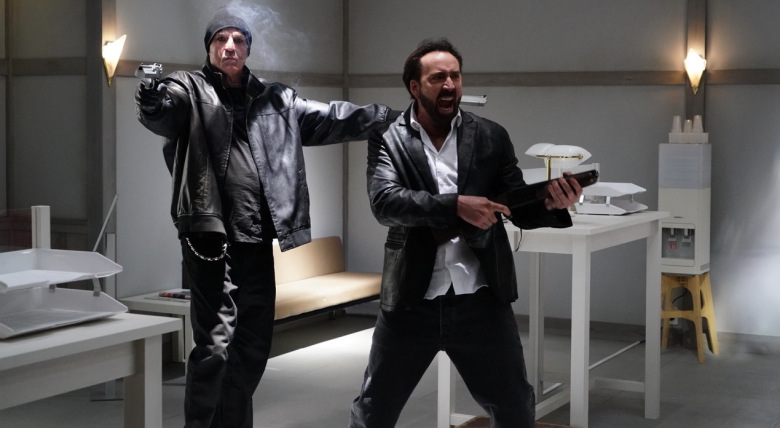
 ), a Nicolas Cage-starring balls-to-the-wall action flick. I’ll be honest: I just never quite got on this film’s wavelength. It managed to be both too simple and too complex at the same time. There are no shortage of ideas and inventiveness on display, and Sono’s verve is undeniable. But this maelstrom of sound and fury essentially becomes “
 ), an Internet-focused film I suspect will outlive many of its peers that are laser-focused on topicality. In the film’s opening credits, Schoenbrun surveys the dying embers of commercialism and industry in a small town, which sets up the vibrancy of the Internet as an enticing foil to this bleak physical landscape. This does not explain the decision of lonely teenager Casey (Anna Cobb) to participate in the World’s Fair challenge, an online horror role-playing game, but it does at least contextualize it.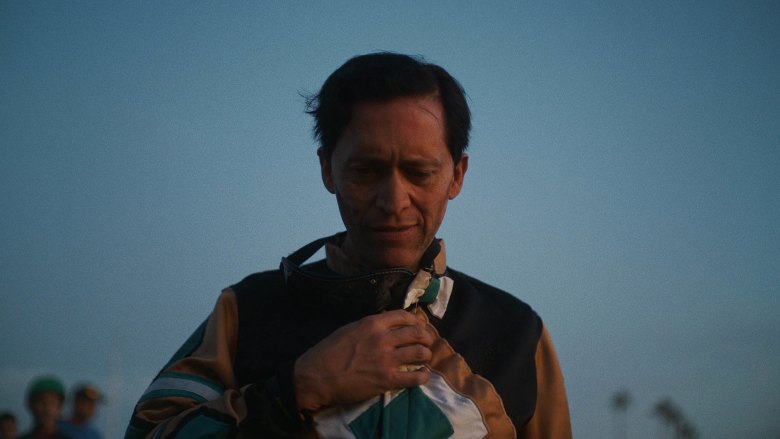


 ), an animated documentary that recounts the harrowing journey of gay refugee Amin from Afghanistan to Denmark. Ramussen interviews his friend as he lays prone atop a tapestry blanket with a camera dangling above his head. When he cuts to a wider shot of the setup, with Rasmussen sitting in a chair off to the side, it becomes clear that the arrangement resembles that of a therapist and patient. Simply recounting the traumatizing stories of his life that he’s suppressed has tremendous value for Amin as he prepares to enter into a marriage in which he wants to have no secrets.
 ). Thanks to a local publicist, I got connected with a screener outside the official festival platform. My thoughts were embargoed, however, until the premiere so I didn’t spoil the party. It’s a good thing they zipped my lips because a spoiler I most certainly would have been.

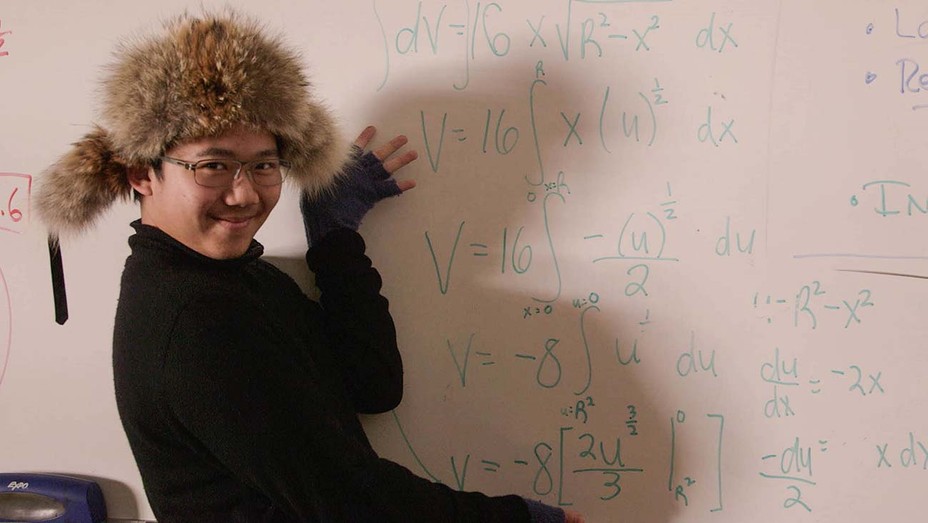
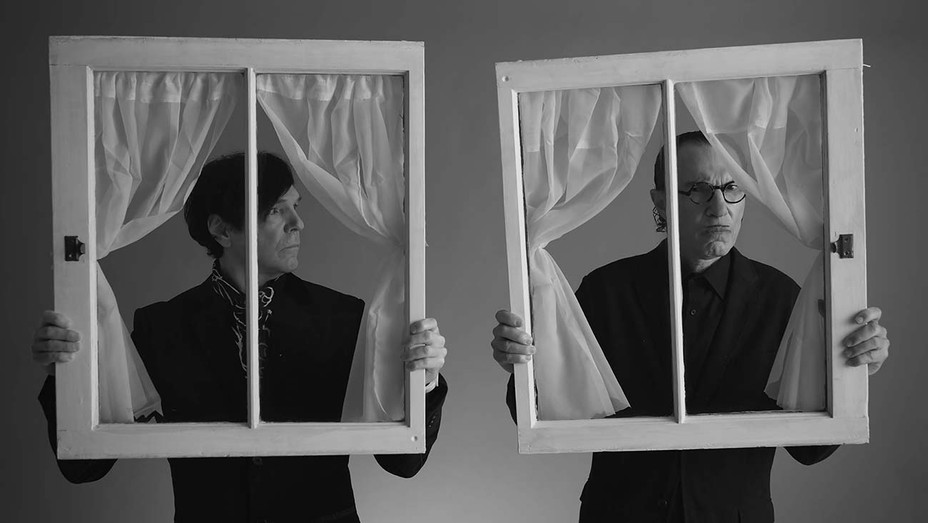
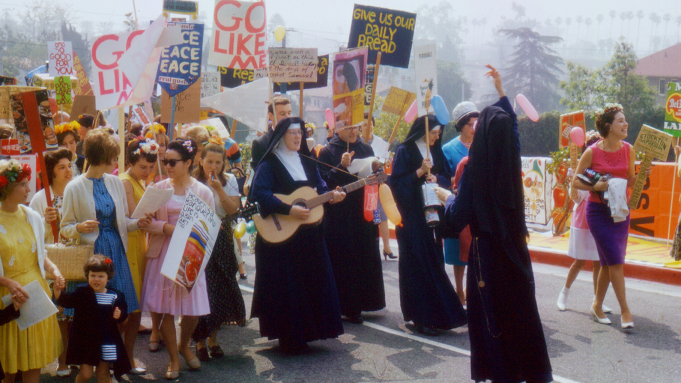
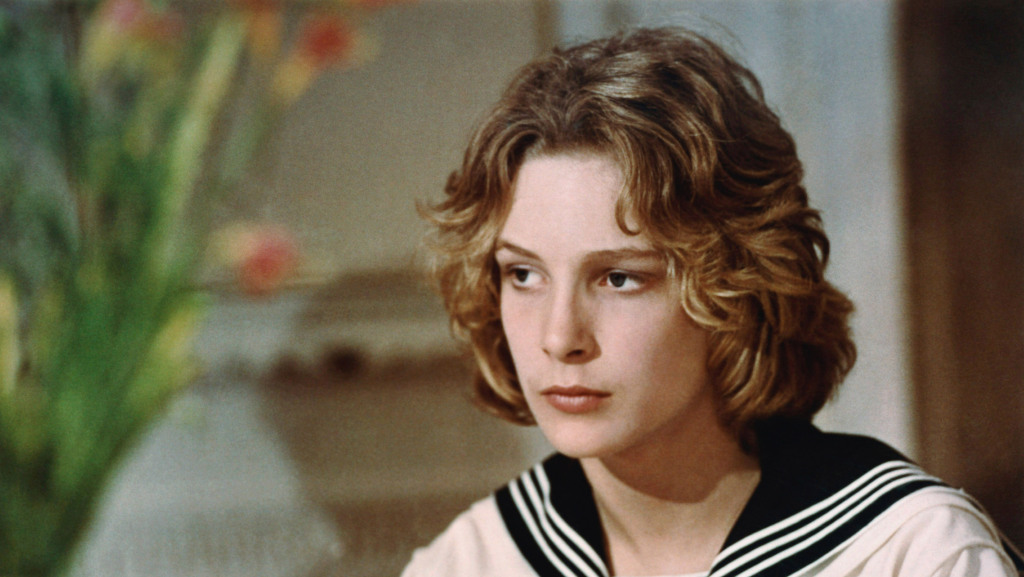
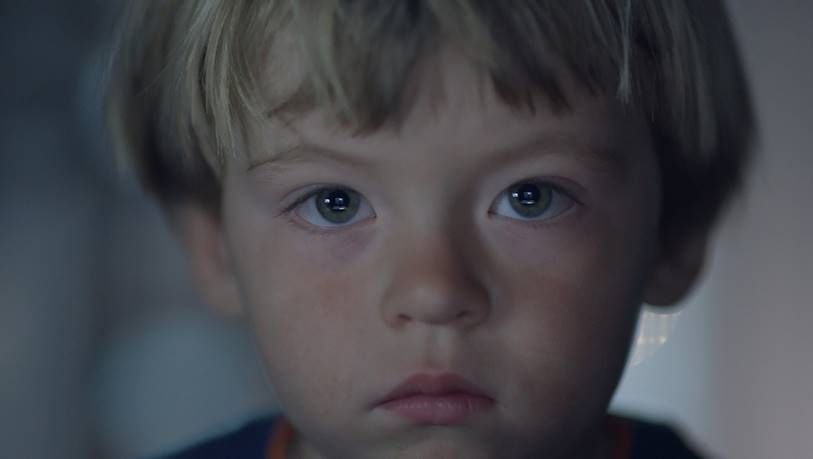


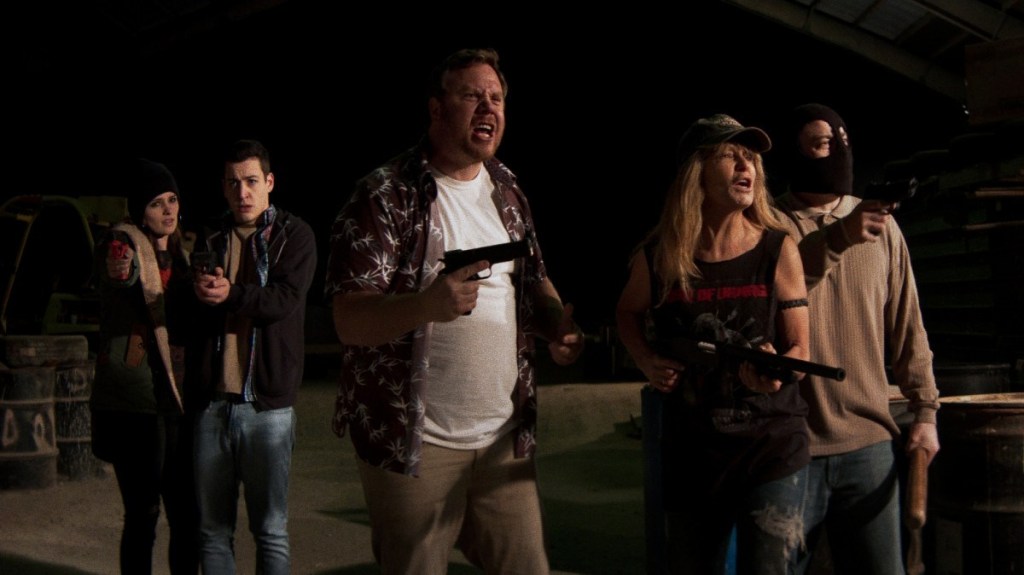
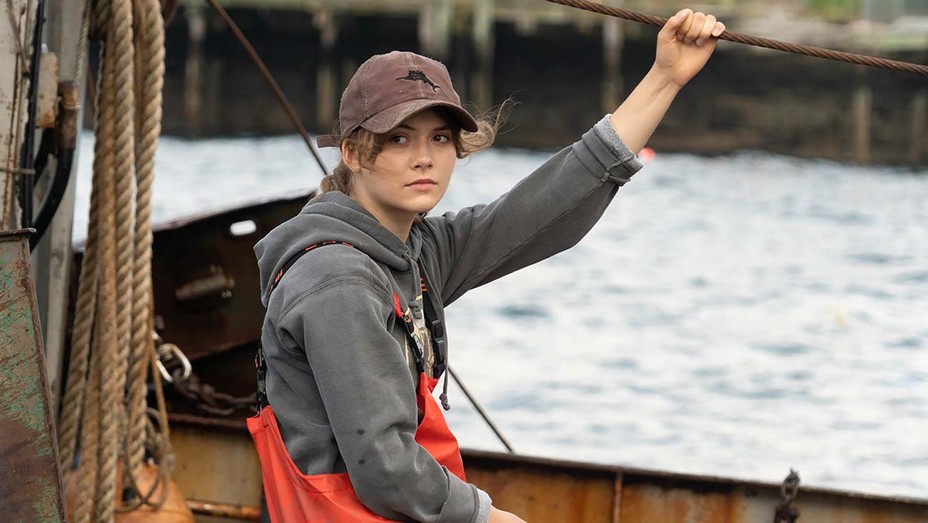


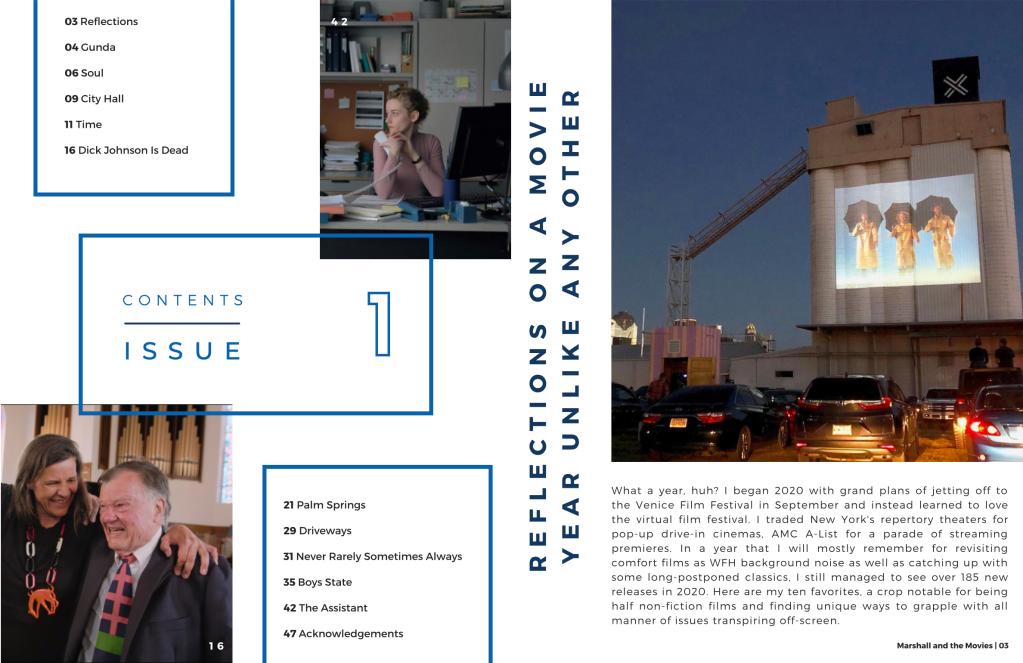
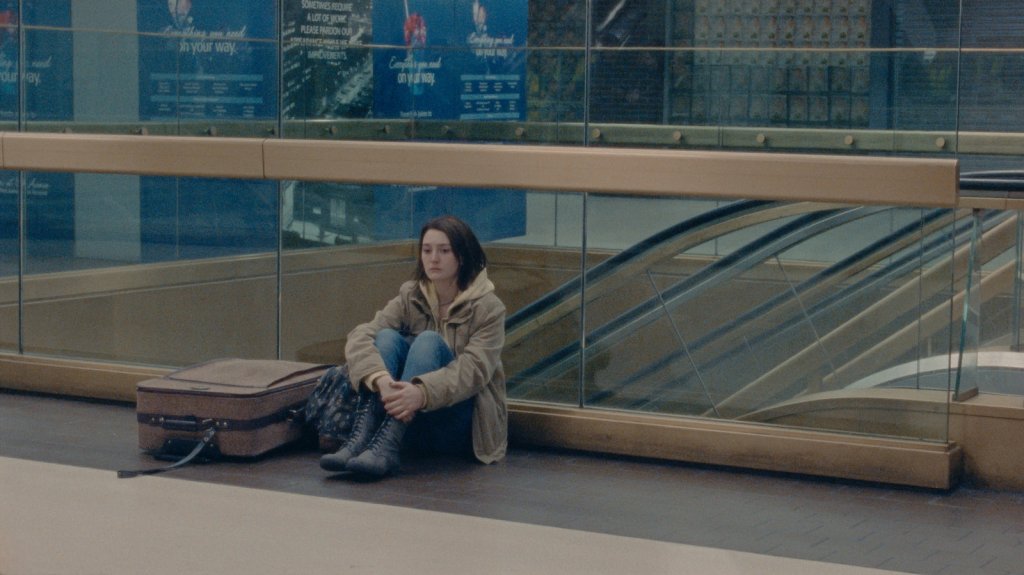


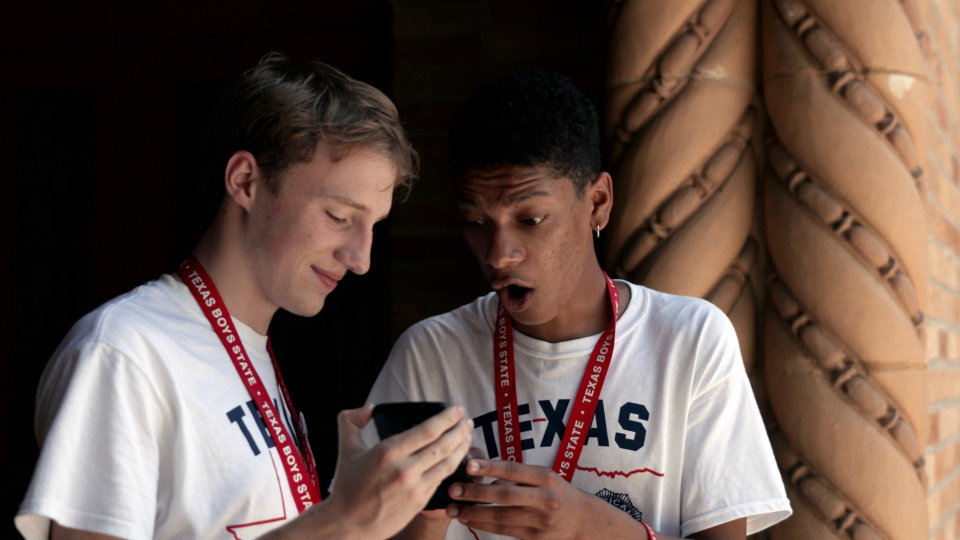

 Hello friends! A number of you might be getting this because you subscribed to email alerts from Marshall and the Movies way back when. Or maybe you’ve arrived from a social media platform. Either way, it’s very reasonable for you to think, “I know Marshall is writing a lot but don’t know where to find it since it’s not on Marshall and the Movies anymore!”
 I always told myself that Marshall and the Movies would never become just a repository for links to pieces I’ve written elsewhere, and yet, here we are again…
 “I have no idea where this inspired idea will take me,” a 16-year-old Marshall wrote on
  He couldn’t know that a childhood hero like Roger Ebert would compliment him. That he’d be interviewing some of the filmmakers behind some of his favorite films. (That he’d even want to talk to the guy who played Edward Cullen in the “Twilight” movies – remember, this was 2009!) That he’d be accredited to attend some of the world’s greatest film festivals. That his word would carry enough weight that a studio would put it in trailer and marketing collateral.
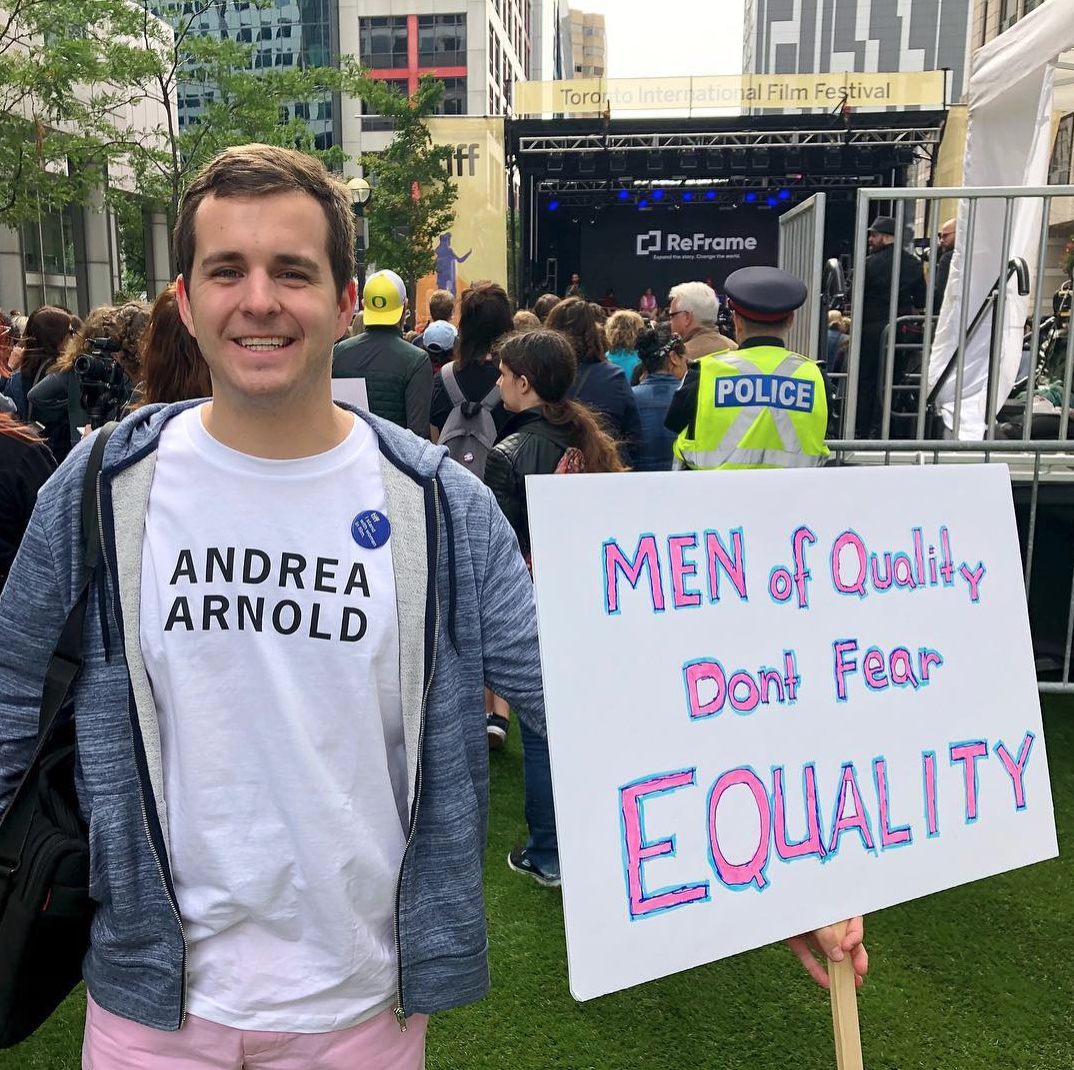 I’ve now pretty much filed everything from my time at the 2018 Toronto International Film Festival! I was grateful to have the opportunity to attend again this year, now with a full badge, and write about some excellent films. I might have more to say about some of these titles later on Marshall and the Movies, but for now, here’s a collection of links to my published pieces from the festival. Many thanks to the editors who commissioned all this work and made the trip possible.

 Marshall and the Movies
Recent Comments