REVIEW: Louder Than Bombs

8 05 2016

Louder than Bombs

It feels quite fitting that Joachim Trier’s “Louder Than Bombs” features voiceover narration comes from all different characters. The writer/director frequently harbors novelistic ambitions in his work, and this feels like a stab at the ambitious multi-tongued narrations of Faulkner. Yet in trying to swing for the fences, Trier really just demonstrates how thin a grasp he has on the differences between literature and cinema.

Granted, this device is partly excused by the fact that the story has no real protagonist. Because “Louder Than Bombs” is a story about loss, it’s somewhat fitting that the center of the film is a departed character. The narrative is one of absence, not about presence. Such a choice comes with a cost, however. Trier’s film feels largely empty. Where one would normally find a heart, there is little more than stale air.

As the family of acclaimed war photographer Isabelle Reed (Isabelle Huppert) picks up the shards left by her sudden departure, Trier seems to consciously avoid the clichés of similar movies. The widowed father (Gabriel Byrne) resists becoming emotionally absent; the eldest son (Jesse Eisenberg) remains cooly distant; the younger son (Devin Druid) feigns normalcy. Yet avoiding banality does not guarantee quality. It is not enough to merely remove the bad if it is not replaced with something else good. And Trier has little of substance to offer.

“Louder Than Bombs” plays like the kind of film made by someone who has seen movies and read books about grief but has never really experienced it – or at the very least, has never really come to terms with it. Be it in the performances, the tone or the content, every moment feels motivated by the art being imposed onto the events rather than the emotion that ought to flow from them. People grieve singularly, to be sure, and it is not for anyone to say how it should or should not be done. But Trier’s choice to stand so far outside the messy, complicated reality of mourning and rebuilding provides scant insight into the very thing he seeks to depict. C+ / 2stars


REVIEW: The Program

7 05 2016

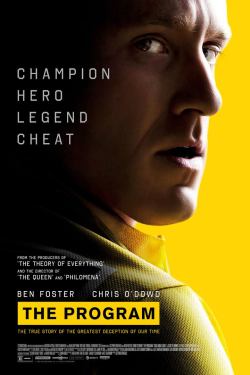
The ProgramThere are many stories surrounding cycling icon Lance Armstrong worthy of cinematic treatment. There’s the athlete himself, whose hubris and competitive nature led him to dupe, receive and betray. There’s the many authorities who turned a blind eye, including the media – save the one journalist, David Walsh, with the courage to take on Armstrong’s cabal. And of course, there’s America as a whole, who cheered on his triumphant narrative and marveled aghast when it was exposed as a sham.

Undoubtedly, the saga of Lance Armstrong’s historic rise and meteoric fall from grace has the proportions of Greek tragedy, should someone choose to apply such a framework. Yet none of these seem of interest to John Hodge, writer of”The Program.” His take on the events is one largely void of perspective, oscillating freely between Armstrong and Walsh without ever mooring the film in either one of their tales. The result is an experience that far underwhelms the proportions of the history it covers.

Perhaps the most impressive feat of Stephen Frears’ film is how easily it renders something so ordinary out of this extraordinary scandal. It appears that the main focus of the film is Armstrong (Ben Foster) and his insatiable need to win, a trait which powers him to the top of the sport while also sowing the seeds of his eventual demise. His teammates, as represented primarily through Jesse Plemons’ Floyd Landis, reaped the benefits of Armstrong’s victory thanks to the increased media attention his story gave the sport. This rising tide lifting their ships, however, came on the condition that they both stay out of the spotlight and remain complicit in the doping ring.

Armstrong might have made a better background character, to be honest. We know his face, his voice and his character from the aforementioned turn of the millennium media blitz. It’s pretty clear that Foster aims for a less imitative and more representational portrait of the man, akin to Michael Fassbender’s take on Steve Jobs. But as much as we thought we knew Jobs, his persona mostly amounts to tidbits from product launches. Lance Armstrong was everywhere for a solid decade, and Foster’s inability to overcome the hurdle of recognition hampers the rest of his performance.

“The Program” could have even been a wicked two-hander with Chris O’Dowd’s Walsh, working a “Frost/Nixon” style dynamic. A long-time skeptic who covered Armstrong even before his testicular cancer struck, Walsh might have developed into an interesting foil. But alas, Hodge mostly reduces him to a peripheral figure who is important only because of the role he plays in the events – not because the script treats him as such. He fares better than the average incredulous American media consumers, though, who get totally left out of “The Program.”

It’s ok, fellow common folk, we have the far better film about Lance Armstrong: Alex Gibney’s incisive documentary “The Armstrong Lie.” C2stars


REVIEW: Jane Got a Gun

6 05 2016

Jane Got A GunReally, truly and sincerely – I cannot think of a recent movie that I watched with more dispassion or disinterest than “Jane Got a Gun.”

The film, whose three-year journey to the audiences involved a revolving door of exiting talent along with the dramatic bankruptcy of its distributor, endured more than most. Yet in spite of (or, more likely, because of) this off-screen fracas, nothing remotely cinematic emerged. It feels like watching the motions of a western with no actual genre feeling. The wheels of time move, so the machinations of plot are there, but nothing really seems to happen. It’s mobile paralysis, if you will.

I generally tend to abide by Roger Ebert’s dogma when critiquing movies that suggests (as paraphrased by Wesley Morris) judging a movie against the best version of itself. All I can say is that the world is a worse place for not having the version of “Jane Got a Gun” directed by Lynne Ramsay, the wunderkind who summoned one of Tilda Swinton’s greatest performances in “We Need To Talk About Kevin.” Far more intriguing than watching any scene in the film directed by Gavin O’Connor (director of insipid MMA drama “Warrior”) was imagining how Ramsay might have approached the same situation.

I wondered how she might have gotten a more multifacted portrayal of the titular protagonist out of Portman. (Fun fact: this would have been the first feature-length film for Natalie Portman under a female director. So, yeah, go look up #HireTheseWomen.) I pondered how her impressionistic style could have livened up what otherwise feels like direct-to-DVD western fare. Surely whatever kind of uncommercial art film Ramsay was concocting could have made more money than this hastily assembled version of “Jane Got a Gun.” C-1halfstars


F.I.L.M. of the Week (May 5, 2016)

5 05 2016

the teBeyond the HillsMay has arrived, which means the lineup for the Cannes Film Festival is officially out. Each year, the official selection provides an extra impetus for me to catch up with the work of world filmmakers whose previous features might have eluded me. Admittedly, I am still working my way through the lineup from the years I attended the festival. Whoops.

In a festival environment, small factors often influence viewing choices. I chose not to see Cristian Mungiu’s “Beyond the Hills” because of its two-and-a-half-hour runtime, among other reasons. Unless I have a compelling reasons to see a movie of such sprawl, I find it hard to justify seeing one long movie when I might be able to see two shorter ones.

But wow – now I sure do wish I could have seen this stunning, gripping drama with the Cannes crowds instead of just watching it alone on Netflix. “Beyond the Hills” provides a breathtaking look at the deleterious effects of entrenched religious institutions on damaged individuals. Though Mungiu unfurls his story with a methodical pace, enough jaw-droppers occur that I despair not having the opportunity to experience them with others. I mourn that lost opportunity, but I praise the work now as my “F.I.L.M. of the Week.”

As children, Voichita (Cosmina Stratan) and Alina (Cristina Flutur) shared a great bond while stuck in an orphanage. They went their separate ways after growing up, with Voichita finding her calling as an Orthodox nun and Alina being called towards a life of vice in Germany. After hearing of her old friend’s troubles, Voichita brings Alina to the convent in a last-ditch effort to help. The gesture seems like common Christian decency, an application of the teachings of Jesus put in action.

Her outreach does not sit well with the priest (Valeriu Andriuta) who presides over the women, however. Alina represents not merely a basket case but a threat to their established order, one that can disrupt the continuity and community. “Beyond the Hills” primarily details the violent, perhaps even counterproductive, ends to which the monastery will go to preserve order – even at the cost of an individual. And meanwhile, Voichita remains caught in the crossfire, stuck between her pledged duties to an organization desperate to exercise power and her felt responsibilities to an old friend desperate for connection.

The tensions between an inward and outward looking faith are ones that I, as a person faith myself, grapple with constantly. So, fittingly, I found my allegiances torn and swapped throughout “Beyond the Hills.” Mungiu’s aesthetic matches the ever-changing tide; he employs more dynamic compositions than just a static camera observing the action from a fixed vantage point, a trademark of his work at the forefront of Romania’s New Wave. The film feels volatile and exciting even as it remains sparse and restrained. That’s no easy feat.


REVIEW: Captain America: Civil War

4 05 2016

Presidential election years lend themselves to multiplex seat philosophy, perhaps another subtle confirmation of the fact that even escapism is neither complete nor absolute. Especially in years without an incumbent in the running, the culture of the present tense takes on the status of relic with stunning immediacy. As we see the contours of how future generations will remember the era, it gets easier to place a movie within its particular historical framework.

So what is the status of the superhero movie towards the end of the Age of Obama? Look no further than “Captain America: Civil War,” a film far more intriguing for its wide-ranging implications than anything on screen. (Ok, maybe those Spider-Man scenes got me interested in the character again.) It serves the same big budget movie of the moment role that 2008’s “The Dark Knight” played for the Bush era, both smashing the box office and setting the conversation.

Nearly four years ago, The New York Times’ critics A.O. Scott and Manohla Darghis described Marvel’s 2012 “The Avengers” as a tale about the triumph of community organizing in their piece “Movies in the Age of Obama.” Now, “Captain America: Civil War” feels like the response to four years of gridlock and bitter internal divides. Along with “Batman v Superman,” the big trend among 2016 tentpole features appears to be fighting the enemies within our gates as opposed to outside our borders.

At least this rupture among the Avengers crew was a plot development they adequately presaged in their recent plot build-up. (Yes, that was shade at DC. No, I am not being paid by Marvel to write good things.) After many a global escapade causing mass mayhem and destruction, the superheroes finally face accountability from an international governmental body. Roughly half the group believes submitting to authority is a worthy idea, while the others wish to retain autonomy even it means being called vigilantes by the public as a whole.

Read the rest of this entry »


REVIEW: Labyrinth of Lies

3 05 2016

Labyrinth of LiesDid you like “Spotlight” for its investigative drama but want less of that detailed procedural stuff? Well, you’re in luck, because “Labyrinth of Lies” exists to fill your Diet “Spotlight” needs – and it gets bonus points for including one of the all-time prestige drama trump cards, the Holocaust!

It is easy to sense that director Giulio Ricciarelli desperately wants to make a movie that unravels the many layers of how Germany and its people moved past the Holocaust. Unfortunately, his script (co-written with Elisabeth Bartel) takes a rather shallow dive into the post-war climate and really only proffers two ideas as to how: shame or willful ignorance. Granted, both are valid explanations. But we have come to accept those as common sense. Dredge up this history, and audiences expect a little something more.

The story follows the quest of young, idealistic and naive German prosecutor Johann Radmann (Alexander Fehling), who seeks to explore how certain Nazis evaded punishment after receiving a hot tip from a journalist. He buries himself in extensive party documents to find some shocking truths about the death camps. Too bad the film itself does not follow the cue of its protagonist; “Labyrinth of Lies” far too often mistakes the trees for the forest. C+2stars


REVIEW: Captain America: The Winter Soldier

2 05 2016

At its core, “Captain America: The Winter Soldier” is very much a political thriller. The film concluded production around the time of the Edward Snowden leaks, so any correlation between the two would have been primarily atmospheric in the editing bay. But the nods of screenwriters Christopher Markus and Stephen McFeely to the kind of political unrest and institutional mistrust of the 1970s feels totally applicable to the Marvel Cinematic Universe’s SHIELD and Hydra, themselves proxies for the present day surveillance state.

The good news for audiences is that this kind of smart throwback is attached to a Marvel movie. The bad news, though, is that the movie still has to be a “Marvel movie.”

Every time the film starts developing its ideas or delving into the ramifications, it has to start hitting the predictable comic book movie beats. The need to have a big action set piece every 25-30 minutes ultimately becomes oppressive and counterproductive to the film’s intelligent ambitions. Though the sequel bears the subtitle “Civil War,” the name seems as applicable to that film’s content as it does to the form of “The Winter Soldier.”

Directors Anthony and Joe Russo struggle against the Marvel formula to interesting and more thoroughly entertaining effects. They fail to break the mold, however. The real auteur of the Marvel Cinematic Universe is Kevin Feige, the company’s president. What is commercial will likely continue to prevail over what is artistic or iconoclastic. Looking at the numbers, sadly, can anyone blame him? B-2stars


REVIEW: In the Heart of the Sea

1 05 2016

“Do the stories only exist to make us respect the seas?” This utterance from Herman Melville (Ben Whishaw) kicks off “In the Heart of the Sea,” a two-hour riff on the inspiration of Moby Dick by Ron Howard.  The film shot in the fall of 2013, began test screening in the summer of 2014 for a planned release in spring of 2015 – only to be pushed back for a late winter 2015 opening. In those two years to tinker with the raw materials, apparently no one thought it was worth saving the project from playing like a book report run through an Instagram filter.

These kind of high intensity, high prestige dramas are normally prime territory for Ron Howard, whom I affectionately dubbed the king of the “Sunday afternoon on TNT movie” upon the release of “Rush” in 2013. He has dabbled in bringing other decades and centuries to life before, each time bringing a sense of specificity and thematic relevance. “In the Heart of the Sea,” on the other hand, feels synthetic through and through. The effect of shooting on a backlot or in front of a green-screen seeps into every frame of the film, constantly highlighting the artifice underlining this human survival drama.

As if that were not enough, the film suffers from many other predictable flaws that have become a common refrain. The nearly 30 minutes of exposition – a full quarter of the film – bog down “In the Heart of the Sea” from the get-go. When it finally does leave the port, screenwriter Charles Leavitt never commits to making the journey primarily a visual effects spectacle about the hunt for the whale or a survival drama. The two coexist unsteadily in the finished film.

Chris Hemsworth, too, proves ill-equipped to correct the course with his performance. His stardom essentially stems from the hammer with which Marvel equips him and the magazine headlines that followed. As of yet, Hemsworth has yet to really pass muster as a serious leading man. Hopefully audiences will soon see acting chops the size of his biceps. C / 2stars


REVIEW: Sing Street

30 04 2016

As a grade schooler attempting art, you must first ape someone else’s style and form to find your own voice. Just look at the early writings I published as a 16 or 17-year-old here on this site; the reviews read like cookie-cutter English class essays crossed with the humanistic approach of Roger Ebert. While those might make me cringe a little, the same concept playing out in John Carney’s “Sing Street” just made me smile.

The latest film from the writer/director of “Begin Again” once again follows the frustrations and joys of musicians’ creative process. Admittedly, the characters in “Sing Street” make for less obnoxious subjects since they are so young and somewhat innocent. Young cherub-cheeked Conor (first-time performer Ferdia Walsh-Peelo) forms a band as a survival mechanism at the Jesuit high school which he is forced to attend, shielding him from bullies both among his peers and in the administration. With little musical knowledge other than what he picks up secondhand from his burnout older brother Brendan (Jack Reynor), the premise is ridiculous – and Carney treats it as such, packing the opening scenes full of humor.

The film ultimately evolves into something a little more “happy-sad,” as the band’s muse Raphina (Lucy Boynton) would say – just like adolescence itself. “Sing Street” shows the joys of experimentation, identity play and self-discovery through the rich aural and visual diversity of the 1980s music scene. What were sonic seedlings in Richard Linklater’s 1980-set “Everybody Wants Some” become a full garden in which the characters of “Sing Street” can frolic.

The original songs, inspired by seemingly every musical movement of maturity by 1985, pile on the charm. It’s too bad the script hits rather familiar coming-of-age and frustrated teenager notes. Even so, I left the theater singing the tunes and checking to see if the “Sing Street” album was available on Spotify. I’ll be jamming to these long after I forget the plot details. B2halfstars


REVIEW: Born To Be Blue

29 04 2016

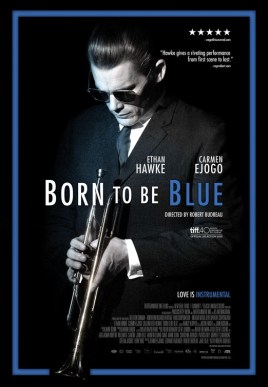
Born to Be BlueAny tweak on the “great man” biopic is welcome, though the pendulum need not swing as far in the other direction as Robert Budreau’s “Born To Be Blue,” a portrait of Chet Baker so mundane that one could mistake him for being an entirely fictional invention. His story of career struggles, addiction battles and relationship strife feel rather commonplace and pedestrian. I entered the film knowing nothing about Chet Baker’s renowned skills and left with scarcely more knowledge about his fame or his work.

Ethan Hawke, who plays Chet Baker, inhabits the body of the talented musician and heroin junkie with aplomb. He’s ever so slightly more on edge than his usual laid-back persona, and he makes his motions a little lankier and oversized. The performance consists of a soulful component, too, not just a grab bag of mannerisms. But with precious little to service, Hawke’s work goes largely to waste.

Writer/director Budreau never settles on what “Born To Be Blue” should be. Films can resist categorization, yet without purposeful maneuvering, ambiguity reads as indecision. The most powerful component of the film might be Baker’s heroin habit; Budreau, however, resists the tropes of drugs being either a fatal flaw or the talent enabler.

Thus, he leaves somewhat of a redemption storyline as Baker relearns the trumpet after losing his front teeth after getting beat up by – shocker! – his dealers. There’s also a good deal of attention paid to Baker’s relationship with Carmen Ejogo’s Jane Azuka, his life partner whose career as an actress frequently takes a backseat to his. He also needs her to be his everything, while she gets precious little in return. Sure, it might be unfair to impose modern social norms on a story set fifty years ago … but Jane literally objectifies herself during sex to make him feel more comfortable. “Play me like a trumpet,” she says. If only “Born To Be Blue” gave more information about its subject, that line would ring as something more than a demeaning, diminutive remark. B-3stars


F.I.L.M. of the Week (April 28, 2016)

28 04 2016

Down TerraceThe British cinema scene is full of people doing lots of interesting work, but it still gets reduced quite frequently to familiar genres: the black comedy, the kitchen sink melodrama, the suburban crime saga. In his debut feature, “Down Terrace,” Ben Wheatley has the gall to meld all three into one audacious genre-mashing movie. The result is something spry and altogether wonderful, so much so that it is my selection for the “F.I.L.M. of the Week.” (In case you’re just joining this six year old column, that’s a contrived acronym for “First-Class, Independent Little-Known Movie.”)

The film begins on the five year anniversary of the U.K. following the U.S. into Iraq, as a muffled radio announcer lets us know. This seemingly insignificant detail grabs attention for its inclusion, precisely because it must somehow become significant. My take, for what it’s worth, is that the announcement indicates a fissure in The Special Relationship that presages a breakdown in a different kind of special relationship – that of a family, and specifically between the father Bill and his son Karl.

The two are played by a real-life father and son (Robert and Robin Hill), a fact that feels obvious after watching. But it is not necessary knowledge to buy their familial ties, nor does it serve as a kind of gimmick for “Down Terrace” to exploit. From the opening shot in which the pair leaves a police station, their difference of approach becomes starkly apparent. Bill remains committed to getting the family business running like it was, while Karl looks elsewhere. His girlfriend, Valda, shows up claiming to carry his child. Karl embraces the idea of keeping the child; Bill immediately suggests abortion and implies she might be trying to con Karl into fathering another man’s baby.

The main narrative engine of “Down Terrace” comes from smoking out a rat in the organization that may have put Karl and Bill in prison, yet the film’s real power derives from the ever-shifting family dynamics. Not only does the age-old father and son drama play out; the annoyances and angers of the matriarch, Maggie (Julia Deakin), get their time in the spotlight. Her worries and anxieties feel especially well realized, not simply brushed off the margins. Wheatley, who co-wrote the script with Robin Hill, makes her an equal participant in the family’s dirty dealings, not just a passive observer.

Maggie and Bill foil quite plainly with Valda and Karl, providing an excellent illustration in how generational differences can make one reluctant or welcome to change. The friction between them slowly builds until it reaches a shocking ending that you simply must see for yourself. I just hope you don’t see it coming.


REVIEW: Viva

27 04 2016

VivaSundance Film Festival

Recent scientific research, reissued after some unfortunate plagiarism tainted the initial study, suggests that people have the ability to durably change their views on a given topic like transgender issues. The stipulation, when extrapolating from specific to broad, is that the issue must be new enough to the person that they do not have extremely calcified position – and they must also have a conversation with someone in the out group under the current status quo.

So apparently science backs up Paddy Breathnach’s “Viva,” which essentially makes the same case in more emotional and narrative terms. Aimless Cuban teenager Jesus (Héctor Medina) finds meaning and identity by, ironically, assuming that of another person. On stage in drag as Viva, Jesus finds something that gives him some sense of purpose and happiness.

None of this comes to the delight of his ailing father Angel (Jorge Perugorría), long a distant memory for Jesus who reappears out of the blue. Being from an older generation, Angel unsurprisingly holds very rigid ideas about gender roles and grants little fluidity. Yet in their forced time together, much of it painful and unpleasant, Jesus begins to soften his father’s heart.

That knowledge and empathy are key components of understanding and ultimately acceptance is not a new idea. But “Viva” demonstrates how what we believe to be true can still move us powerfully. Stirring and sweet, Breathnach’s film offers uplift and hope that feels genuinely earned. B+3stars


REVIEW: Keanu

26 04 2016

SXSW Film Festival

The hype surrounding the film festival environment leads even seasoned veterans like myself into making questionable life decisions. On my second day at SXSW, I hustled to the Austin Convention Center at 8:30 A.M. to get a prime seat for a talk with comedy qweens Abbi Jacobson and Ilana Glazer. That very same evening, after a full day of interviews and screenings, I decided it would be a great idea to go see the work-in-progress screening of “Keanu,” starring the comedy team Key & Peele. Who cares that the show was at 12:30 A.M. and, because of the daylight savings time change, would not let out until 3:30 A.M.? Minor details.

Was I in the best state to watch a film? Gosh no. But if “Keanu” could keep me (mostly) awake and (mostly) entertained, then it ought to pack a real wallop for anyone viewing under normal conditions.

The film seems reverse engineered from all the things people love to share on my Facebook news feed: cat memes, irreverent ’90s action film-style violence and the sketch comedy of Key & Peele. “Keanu” could not tee up its stars for more success, plunging their thinking man’s wit into the absurd world of the Los Angeles criminal underground once their pet cat gets kidnapped. Yep, you read that correctly. (To be fair, the cat did escape from a drug lord.)

After pushing buttons and boundaries with their provocative Comedy Central show, Key & Peele’s first foray onto the silver screen resembles 2010’s “Date Night” more than anything else. Remember that movie? With Steve Carell and Tina Fey, who were still involved in their hit NBC sitcoms? You might not because it was sub-par material, but you might have some faint recollection because those two stars brought their A-game and elevated the script to decent effect.

“Keanu” does the same for Keegan-Michael Key and Jordan Peele. The script (co-written by Peele with Alex Rubens) has its fair share of great comedic set pieces and hilarious one-liners. It stops short, however, of the depth of satire Key & Peele normally utilize to probe questions of race, gender and class. That slight disappointment mostly comes afterward, though. In the moment, it is mostly just amusing and ridiculous to watch a cat meme come to life as a full-length feature. B2halfstars


REVIEW: Marguerite

25 04 2016

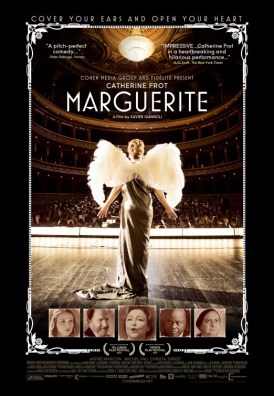
MargueriteThe story of Xavier Giannoli’s “Marguerite” feels like the raw material of a modern Greek myth. A spoiled, sheltered French socialite Marguerite Dumont (Catherine Frot) decides she wants to become an opera singer despite her relative lack of training (which she acknowledges) and complete absence of talent (a fact to which she remains oblivious). Rather than breaking the hard truth to her, the world around her indulges the fantasy by perpetuating the notion that she can become a star. The off-handed remark about her greatness becomes a full-blown ruse involving elaborate trickery.

That the upper classes have the upper hand in defining what art is in our society (and certainly in the film’s 1920s setting) is undeniable. “Marguerite” shows how willingly complicit participants in this arrangement can turn culture into farce.

But what about Marguerite herself? Is she an odious harbinger of decaying aesthetic values? A power-drunk modern Medici? A naive princess trapped in the bubble of her own wealth and privilege?

Giannoli never really takes a stance, and the film is all the worse for it. “Marguerite” does not provide multiple explanations for its protagonist so much as it avoids giving any kind of explanation altogether. Apathy and ambivalence, more than ambiguity, drive the proceedings. This becomes increasingly excruciating as Giannoli whistles a happy tune and looks in the other direction as Marguerite refines her baboon-like shriek on staccato notes. Sure, the presentation is very French in its sensuousness, but the lavish nature of “Marguerite” hardly impresses when all investment in the story and characters has evaporated by the second hour. C2stars


REVIEW: Francofonia

24 04 2016

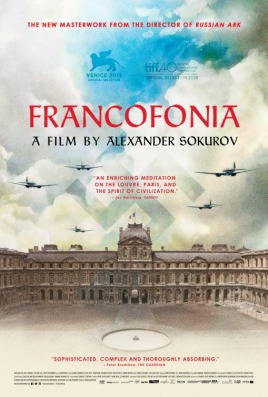
FrancofoniaAs the names usually saved for the closing credits roll at the outset of Alexander Sokurov’s “Francofonia,” the director’s voice makes a rather unusual comment: “I don’t think it was successful” – referring to the film itself. The remark is not so much an invitation of judgment as it serves a demand to bring a critical eye to the work. Despite the director’s reservations (though is it really in spite of them?), the film holds up quite well under scrutiny.

Sokurov is perhaps most renowned for 2002’s “Russian Ark,” a kaleidoscopic tribute to St. Petersburg’s Hermitage Museum captured in a single 100-minute shot. While that level of choreography and discipline are undeniably impressive, the aesthetic rigor served like a straightjacket for the film. “Francofonia” finds joyous expression of its themes in a more freeform approach. Sokurov dabbles in documentary, video essay, re-enactment and potentially even some fictionalized elements to tell a story about how the Louvre survived the scourge of Nazi atrocity in World War II.

Unlike many a period piece, Sokurov keeps this episode of history relevant in more ways than one. He relates the Louvre to the very dialectic at the core of France’s being, that of egocentric vs. idealistic thinking. These two French mindsets find personification in two specters haunting the halls, a young gamine chanting the national motto and none other than Napoleon himself, who brings up the often ignored truth about museums’ collections standing as a testament to imperialist pillaging.

Read the rest of this entry »