 “Slumdog Millionaire” meets “All The President’s Men” in Stephen Daldry’s “Trash,” a tale of three Brazilian dumpster-dwelling children who uncover a plot of serious political intrigue from an inadvertently disposed wallet. The film provides a gritty look at their reality, though that comes more from the photography or the set design than anything in the story. Daldry uneasily balances the improbable conspiracy with the poverty expose, cobbling together a bland movie that satisfies neither aspect of its premise.
The bright spots are few and far between, though I suppose we all ought to be glad that Martin Sheen and Rooney Mara’s characters do not fulfill the “great white savior” tropes that plague movies of this sort. He serves as a priest, and she works for an NGO, but neither can protect or save the teenagers from the corruption and brutality of local law enforcement. Any small victories they achieve come from their street-smarts and intuitions.
But given the improbable journey set in motion by their discovery, “Trash” ought to feel more thrilling, entertaining – or at least illuminating about Brazilian society. Given the upcoming Olympics in Rio de Janeiro, the subject might once again prove of interest to audiences worldwide. Hopefully they choose to watch something authentic like “City of God,” not “Trash,” which feels obviously made by an outsider. C / 
 Anyone familiar with the work of French writer/director Francois Ozon knows to expect a certain level of twisted characters and crazy plots in any of his films. The latest, “
 Television comedy is in somewhat of a renaissance these days with premium cable and streaming giants funding some of the most radical, niche series ever seen. Too bad directors Don Argott and Sheena M. Joyce didn’t quite get the memo as their film “
 The kind of auteurism favored by most today places a high priority on repeated patterns and frameworks within a director’s body of work. I, however, tend to prefer filmmakers who can produce a consistency of mood, tone and experience without ever allowing themselves to be easily pinned down. There is perhaps no better example of this than Joel and Ethan Coen, the writing, directing and editing duo who can bounce across genres and budget sizes without skipping a beat.
 “
“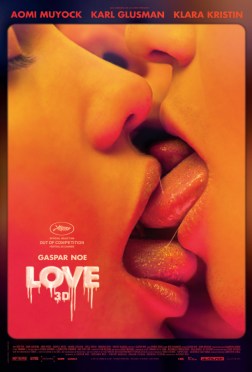 With an all-encompassing title like “
 Most romances focus on the passion, the heat, the sparks and the sweet nothings. Barry Jenkins’ “Medicine for Melancholy” is not a typical romance. In an effort to seek out diverse voices in filmmaking, I stumbled into this 2009 film. Jenkins is only just now finishing up his follow-up feature, “Moonlight,” set up for production and distribution by A24. How it took 7 years for someone to give him a second chance in the director’s chair is unfathomable to me. (Well, actually, I have some idea why…)
 Wondering what a film from Iceland has to offer someone in America? Quite a bit, actually. Though the world of sheep farming might be something most of us only think about in December when it comes time to hear the Christmas story, Grímur Hákonarson stages a wonderfully contemplative drama in this space with his film “
 “
“
 Mental illness on screen, particularly as it pertains to women, always makes for an interesting subject to study. For men, from “A Beautiful Mind” to “Silver Linings Playbook,” the affliction often becomes like a hurdle on their road to victory. For women, it’s the problematized slippery slope that opens the floodgates to a wide variety of social ills.
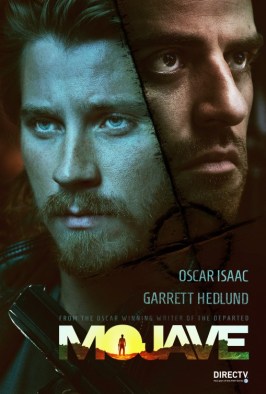 You know how Al Pacino is one of the greatest actors of his generation, yet is still in such films so obviously beneath him as “

 Marshall and the Movies
Recent Comments