 Expressive close-up shots are a crucial building block of cinema, and they are especially foundational element for films that hope to elicit identification and empathy with the characters on screen. Perhaps nowhere is that more clear than “James White,” the feature directing and writing debut of Josh Mond.
Mond trains director of photography Mátyás Erdély to stay tightly fixated on the face of Christopher Abbott’s titular character as he goes through the ringer of grief. This young man, barely capable of taking care of himself, must see his widowed mother (Cynthia Nixon) through the deterioration of her health in the wake of terminal cancer. Think Michael Haneke’s “Amour” by way of Ingmar Bergman’s “Persona.”
The film is largely inspired by the filmmaker’s own experience of losing his mother, and the emotional authenticity becomes palpable both in Abbott’s performance and the audiovisual schema Mond devises. Erdély’s roving, personal camera – a veritable ballet as it follows James’ erratic, explosive motion – works wonderfully in tandem with a spellbinding score by Scott Mescudi. (Yes, that’s Kid Cudi.)
Abbott pulls off a rare combination: volatility and vulnerability. James flirts with disaster and near complete collapse in practically every scene, which proves difficult and stomach-churning to watch unfold. But in spite of his poor decision making, he still manages to inspire intense feelings of identification and support. We root not for the circumstances, terrible as they are, to change. We root for him to rise to the occasion, to summon the strength of character Abbott shows us in a small glance or a gentle word.
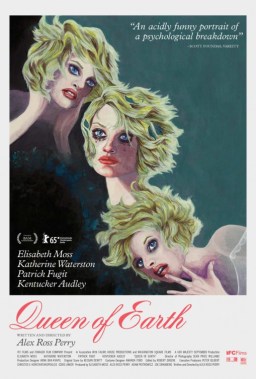 Alex Ross Perry’s latest film, “
 David Thorpe is not a professional (or at least an established) documentarian, so his debut feature “
 I must admit, I was skeptical of delving into some of the deeper cuts in director Ben Wheatley’s filmography after nodding off on two separate occasions during his cult favorite work “Kill List.” (It’s more me than the movie – I was tired both times and got further exhausted by working to understand the thick accents.) But after seeing his 2013 film “Sightseers,” I must say, I feel far more confident that I will like what I see going further back.
 2015 has been a banner year for films taking on the corruption within institutional religion, both as narratives (“
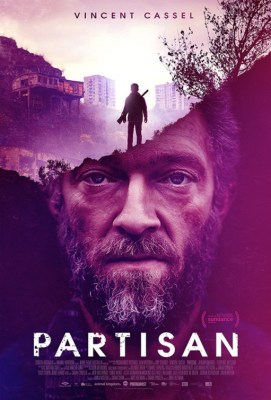 The experience of watching a film, at its core, comes down to sound and image. The best – or at least the most memorable – ones tend to find some way of making them work in harmony.
 The potential criminalization of thought. The stoking of Americans’ fear of immigrants. The incessant blabbering that the media is infecting the world with its supposed invective.
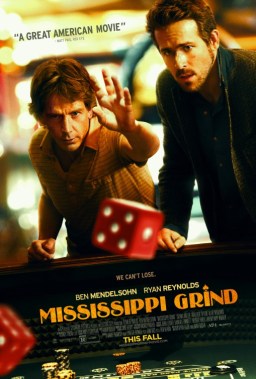 Early on in Anna Boden and Ryan Fleck’s “
 Angelina Jolie Pitt’s third film, “
 The allure of period pieces, especially romances, is typically lost on me. So it’s always nice when something like “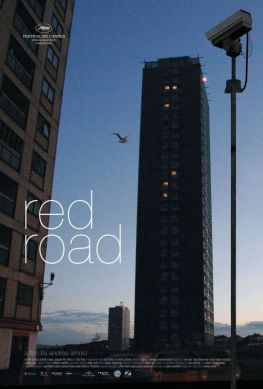
 There is nothing explicitly wrong, so to speak, with being a throwback to a type of movie that does not get made much anymore. Such is the case with “

 Marshall and the Movies
Recent Comments