Fantastic Fest
If Ben Wheatley’s achievement in High-Rise were likened to anything, it might have to be juggling fire. Not merely content to cautiously play with fire, he lights a few torches and tosses them back and forth into the air. Having perfect form seems almost beside the point as execution gets subjugated by the power of sheer ambition. The mere ability to keep so many dangerous objects in orbit without self-immolating inspires wonder.
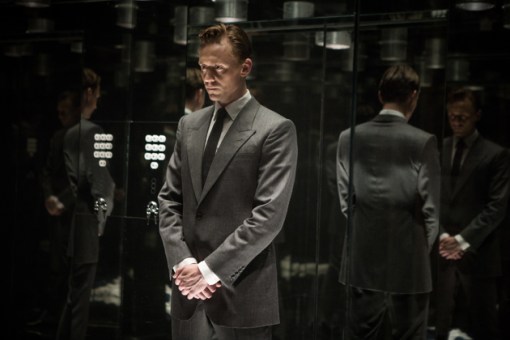
Wheatley’s cinematic iteration of J.G. Ballard’s novel, adapted for the screen by his wife Amy Jump, is the kind of filmmaking so outlandish and ballsy that it might even be illegal in some parts. The film lingered in development hell for four decades but arrives at the perfect time both socially and artistically. For a story that deals heavily with class conflict and economic inequality, High-Rise has only become more topical with each passing year. Furthermore, all its idiosyncrasies make Wheatley’s gonzo style a perfect match of director with material.
The film uses its titular structure, a Brutalist skyscraper containing all the necessary supplies for a self-sustaining community, as a microcosm of our stratified social strata. But where many stories obliquely commenting on the de facto arrangements that organize our world opt for obvious allegory, Wheatley finds a more satisfying film by exploring the realm of the metaphorical. Not everything in High-Rise corresponds directly to a recognizable counterpart in the real world, which allows Wheatley the ability to operate at higher levels of ambiguity.

Over the course of nearly two hours, the film takes its audience on a thrill ride akin to the Tower of Terror at Disneyland as it goes back and forth between the Caligula-esque exploits of the top floors’ wealthy residents and the grunge of the working class who dwell towards the bottom. The closest thing the film has to an entry point is Tom Hiddleston’s Robert Laing, a doctor who seems to fall somewhere between the two divisions.
Laing is more often witness to the proceedings than an active participant in the war that breaks out, yet in a way, that makes him all the more ideal to experience the escalating absurdity through. Calling him a blank slate does a disservice to Hiddleston’s captivating performance, though he does serve that function ins some part.
When someone roasts a dog or bludgeons their enemy with a BAFTA trophy – both of which happen in High-Rise – there is something rather refreshing about not being told precisely how to feel. Many events that take place come with no obvious response, and Wheatley allows us the chance to react as we feel appropriate. But be it laughter, fear, shock or disgust, our mouths are wide open in awe regardless. And since the ideas come flying fast and furious, with a new thought arriving before the last one has a chance to settle in, there is simply no choice but to see High-Rise again. B+ / 
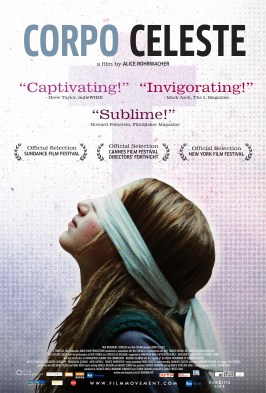 There’s an odd feeling when you watch a filmmaker’s work in reverse, starting with their most well-known project and regressing back to their origins. Perhaps you can see the roots of their latest film in their beginnings, or maybe you can even see the leaps and bounds they make as a filmmaker. If the work is not perfect, you also cannot help but wonder, “Would I have recognized this director as a talent to watch?”

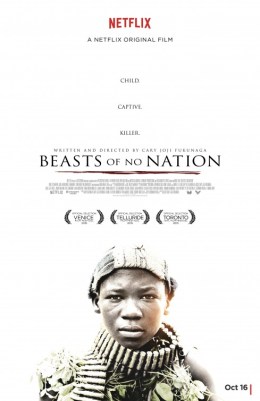 Almost as if anticipating that the majority of people who saw his film would be through Netflix, Cary Joji Fukunaga opens “
 Generally, when I read any piece of criticism that refers to a movie as some kind of “metaphor for capitalism,” I cringe inside. It usually feels like an easy fallback, a way to sound smart when they just purely enjoyed something. But in the case of Sebastián Silva’s “The Maid,” it actually applies.
 Mia Hansen-Løve’s 2012 film “
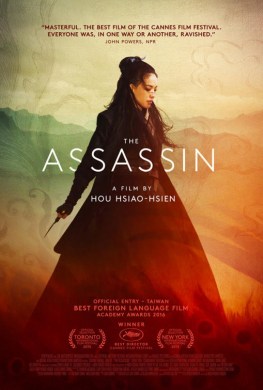 New York Film Festival
 “
“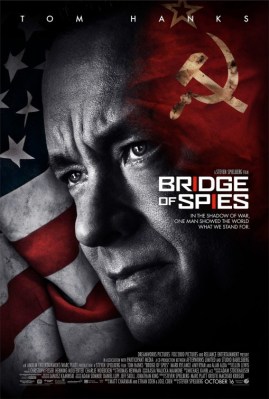 I’m young enough that I cannot remember a time when director Steven Spielberg’s name was not synonymous with cinematic excellence at the highest echelon. I am also of the age that I have never been able to experience the kind of film that earned him such a reputation in any manner other than through the lens of retrospection.
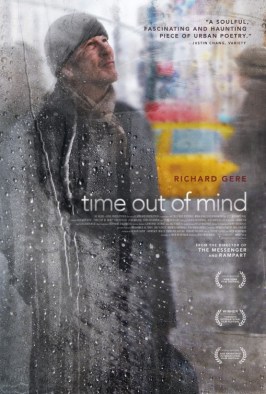 The urban poor are so often exoticized or romanticized on screen (see “The Soloist,” “
 Had 18-year-old Malala Yousafzai stayed on the same life course as an average girl in the Swot Valley of Pakistan, she would already be a mother of two. But thank goodness that the now-Nobel Laureate embraced her destiny as someone extraordinary. Thanks to a new documentary by Davis Guggenheim, “
 Though the first two words in the title of writer/director Leslye Hedland’s “

 Marshall and the Movies

Recent Comments