To get one thing straight, I adore the James Cameron “Terminator” films. I have written a full essay on Sarah Connor’s femininity for class (if you’re interested in reading it, leave your email in the comments) and will gladly stop on whatever cable channel happens to exhibit the morphing metal men on any given weekend afternoon.
Yet as different directors, writers, and creative teams have dragged out the franchise, the movies lose what makes them special. Sure, the time travel proves fascinating, but the human characters grappling with fate, agency, and responsibility set the series apart. Fixating on the minutiae of revisionist timelines does little to capture the appeal of the original two films; this proves the primary sin of McG’s “Terminator Salvation.”
John Brancato and Michael Ferris’ script toys around with two pivotal characters in the mythology of the series: resistance leader John Connor (Christian Bale) and his father from the future, Kyle Reese (Anton Yelchin). John must continue to wage the war against the sentient Skynet system that aims to destroy humanity, although he must also ensure that Reese survives until the point when he goes back in time to inseminate Sarah Connor. The mysterious arrival of cyborg Marcus (Sam Worthington) in the presence of Reese throws a wrinkle in everything and essentially constitutes the entire conflict of “Terminator Salvation.”
If you think this sounds like a movie made for only the most hardcore fanboys, you are correct. Seemingly, the only aim of “Terminator Salvation” is to add even more wrinkles and potential plot holes to the scrambled clock of the series’ narrative. If Cameron’s films were mind-involving blockbusters, McG’s movie is just a head-scratcher that cannot even fall back on visuals or performances to save it. Bale and Worthington, the films dueling leads, each turn in work about as dull as McG’s color palette of muted gray. They grow the franchise longer, sure, but not deeper or better. C /
Usually, we consider a film a success when its form matches its content. In the case of Andrew Niccol’s “Good Kill,” though, the opposite is true. The movie, which tackles the escalation of drone warfare in the Middle East, takes on the form of a droning screed itself.
It should have felt particularly damning that Niccol chose to make a film set in the present day, since his features – which include “Gattaca,” “The Truman Show,” and “In Time” – tend to take place in dystopian futures. But rather than expanding the discourse around the U.S. military’s increasing reliance on unmanned aircraft to do its dirty work, he chooses to preach to the choir with surface-level platitudes. The target audience for “Good Kill” probably knows the basic philosophical and existential arguments around drones, and Niccol does nothing to explore our complicity in their perpetuating existence.
He sets the film in 2010, the apotheosis of drone strikes in the Middle East, and follows the slow evolution of Ethan Hawke’s jaded Air Force pilot Thomas Egan against the increasingly unethical tasks assigned to him by the CIA. Of course, he would not arrive at those conclusions without a spring chicken of a female pilot, Zoë Kravitz’s Vera, who does little other than spout off the film’s core message. Vera is not a character so much as she is a personified Washington Post column.
If writer/director Rick Famuyiwa’s movie “Dope” were one of your friends at a party, he would be the friend that thinks himself invincible when letting any mind-altering substance enter his bloodstream. This is the guy that thinks every jumbled fragment that leaves his mouth is divinely inspired and merits inclusion in some kind of philosophical toe. He is the guy that makes dangerous decisions, assuming they are perfectly reasonable, and somehow convinces you to go along with them.
“Dope” tries to subvert racial stereotypes by having a drug dealer who knows what the phrase “a slippery slope” means (yet does not recognize it as a fallacy) and a main character, Shameik Moore’s dorky Malcolm, who prefers the artistry of ’90s hip-hop as opposed to the commercialism of present-day rappers. The film attempts to be a coming-of-age story, a romance, a drama that grapples with race, a comic drug caper like “Pineapple Express,” and ultimately a heist film.
In other words, Famuyiwa attempts a lot and completes a little; what he does complete does not feel entirely convincing.
I can let a film that does mediocre humor slide – and with tired gags involving a floozy, coked-out heiress, “Dope” has quite a bit to spare. Not every con film needs to reach the heights of “American Hustle,” either. But blowing what could have served as a vital discussion about racial identity at a time when America really needs to talk about thee issues just left a really bitter taste in my mouth.
Pixar has long reigned as the champion of both intelligent, creative storytelling and emotionally potent filmmaking. Something about their computer-rendered world always seems to strike a chord with the one we have experienced, mostly because the purest of hearts beat within the lines of their ingeniously designed characters.
“Inside Out” may well be the most vivid realization of the animation powerhouse’s strengths. Writer/director Pete Docter’s film marks their most innovative vision since 2001’s “Monsters, Inc.” and their most heartstring tugging piece since 2009’s “Up.” Every second of the film captures the complexity of the human experience, inspiring laughter, smiles, and tears. Often times, I responded with all three reactions simultaneously.
In what may inspire the next generation of psychologists, Docter (along with fellow Pixar brain trust members Ronaldo Del Carmen and Josh Cooley – as well as Meg LaFauve) takes on the ambitious task of visualizing the mind. And not like the opening credit sequence to “Fight Club” or anything, either. They map out the logic, rationale, and functionality of just about every cognitive process in the brain, both conscious and subconscious.
Remarkably, the thought of “Inside Out” as some kind of cinematic adaptation of a neuroscience textbook never occurs for a second. As it enlightens us, the film also entertains. The premise starts off extremely straightforward: five personified emotions vie for control in the mind of a young girl, 11-year-old Riley. These distinct characters take on additional vitality and vibrance through expert voice casting that draws on the established strengths of the performers.
Amy Poehler channels Leslie Knope into Joy. Lewis Black brings his trademark tirades (minus the profanity) to Anger. Bill Hader lends his motormouth to the ever-adapting whims of Fear. Mindy Kaling adapts her defensive, often put out television alter ego into Disgust. And Phyllis Smith selects the sad sack elements from her good-natured but sometimes mopey Phyllis from “The Office” and transfers them into Sadness.
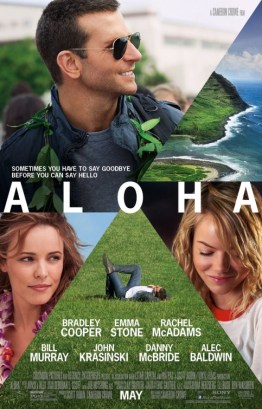
Responding to the reactions to a film in a review is something I generally frown upon; however, I am willing to make an exception in the case of “Aloha.” Before Sony could release any trailers or marketing materials, studio head Amy Pascal’s scathing comments about Cameron Crowe’s film hit the Internet and sealed its fate. The film said the “goodbye” aloha before it could say the “hello” aloha. And then, once the critics finally got ahold of the final product, the nail was in the coffin.
So when I finally got around to seeing “Aloha,” I came with unavoidably low expectations. I did not seek to answer the question of whether it was good or bad; I just needed to know how bad. Watching a film in that mindset makes for an entirely different experience, akin to being a child in a doctor’s office waiting for a shot with eyes clenched shut. You know the pain will come soon but are clueless as to when.
I kept waiting for “Aloha” to come apart at the seams. Maybe the relationship between paramilitary contractor Brian Gilcrest (Bradley Cooper) and his spunky Air Force escort Allison Ng (Emma Stone, unconvincingly playing part-Asian) would just become a little too far-fetched. Or perhaps Brian would wreck the marriage of his ex-flame Tracy (Rachel McAdams), leaving the life she built with her kids and husband Woody (John Krasinski) in shambles and destroying all sympathy for the characters. Any number of plot points, from the relations with native Hawaiian tribes to an odd space mission, could easily have gone south.
Yet, against the odds, “Aloha” manages to survive its shortcomings and remain a mostly enjoyable time at the movies. Sure, the script could have benefitted from some retooled dialogue, a few reordered or rewritten scenes for the sake of clarity, and a narrower narrative scope. As is, though, Crowe has the basis for a charming – but not disarming – romance with a superfluous side helping of story critiquing the military-industrial complex.
If you watched “Les Misérables” and thought, “This was great, but I really wish Jean-Luc Godard directed it,” then I have quite the movie to recommend. You simply have to watch Lars von Trier’s “Dancer in the Dark,” which he made back in 2000 (before the remarks about sympathizing with Hitler). This kitchen sink realist drama/musical has to be one of the most heartbreaking, gut-wrenching films I have ever seen.
As you might have pondered reading that last sentence, realist drama and the movie musical are two territories that seldom overlap. Hard-hitting, issues-based filmmaking concerns itself primarily with getting us to focus on the real, observable world. Musicals, on the other hand, mostly offer us a pleasant diversion away from thinking about those problems. von Trier finds the harmony between these two elements and combines them to devastating effect in my pick for the “F.I.L.M. of the Week.”
Over the course of “Dancer in the Dark,” Björk’s Czech immigrant Selma Ježková slowly loses her eyesight and thus her ability to provide for her son. The degenerative disease also takes away her one passionate activity outside of work: acting in community musical theater. With that gone, she begins playing out musical numbers in her head – which we get to see acted out as vivid productions – to escape the depressing fate before her.
Essentially, Selma’s life recalls Fantine from “Les Misérables,” played out in slow motion and for an entire feature. So, needless to say, “Dancer in the Dark” is not for those looking for a joyous, uplifting experience. But those looking for an intellectually stimulating as well as emotionally engaging watch simply must watch this little marvel of a film. Those who endure will be stunned by how anything can simultaneously be Brechtian and maudlin as well as beautiful and tragic.
Imagine you are a young child again, and you have just woken up from the worst dream of your life. Terrified, you run into your parents’ bedroom, climb onto their mattress, and recount every detail of the terrible vision. Then, imagine them laughing at you.
You have just envisioned the experience that is Rodney Ascher’s documentary “The Nightmare.”
The director interviews eight subjects suffering from sleep paralysis, a condition where a person becomes unable to escape their night terrors and loses control of their muscular functions. From the descriptions of the afflicted, which Ascher recreates for the audience, the experience sounds absolutely harrowing. Sleep paralysis is nothing short of the supernatural in our natural world.
Yet Ascher seems to not only doubt them but sneer at them. He might have kept a poker face for the interviews themselves, sure. But in the editing room, Ascher stands over them with an ironic remove and presents them for mockery. “The Nightmare” disrespects its subjects by discrediting them, mostly by making their stories all run together as if some kind of elaborate scam.
His last documentary feature, “Room 237,” could get away with gently mocking its subjects because Ascher participated in the joke. In his mockery of cinephilia by interviewing some rather ardent Kubrick devotees, Ascher himself created the ultimate document of cinephilia. “The Nightmare,” however, just reduces sleep paralysis victims into the pitiable loons from one of Ascher’s short docs, “The S From Hell.”
Ascher would do well to study the proper first response to sexual assault survivors – “I believe you” – and apply it to his next documentary. Filmmakers should help alleviate the burden of the helpless who suffer injury. They should not add insult to it. C /
While I was a repeat listener of the “Pitch Perfect” soundtrack, I most certainly had no desire to return to the film itself. In my (admittedly harsh) review of the first film, I dubbed it “a comedy that inspires more groans than laughs and thinks it has a whole lot more insightful things to say about growing up than it actually does.”
So color me surprised to count myself a fan of “Pitch Perfect 2,” the rare Hollywood sequel that actually learns the correct lessons from the success of the original. The music is tighter and catchier than before; the message, more potent and impactful. The characters, too, are more relatable and hilarious the second time around.
Writer Kay Cannon, returning to script the series’ follow-up, cuts down the “aca-nnoying” pun humor to much more reasonable levels and finds great hilarity in just having the Barden Bellas interact with each other. At times, she does this to the point of fault, as the many subplots of “Pitch Perfect 2” often overpower the main narrative of the group trying to regain their former glory after an ignominious display at the Kennedy Center.
That preoccupation with the personal hardly does harm to the movie, though, as these scenes are the highlight of the film. Watching Anna Kendrick’s Beca attempting the tricky balance of professional exploration at a music company with her duties to the Bellas rings so true, and it also gives the actress a chance to showcase her vibrant range of emotions beyond the scowl she was limited to in the first “Pitch Perfect.” Rebel Wilson’s Fat Amy is another undeniable highlight, given a hysterical romantic arc with Adam DeVine’s Bumper; the two play off each other with remarkable comic intuition.
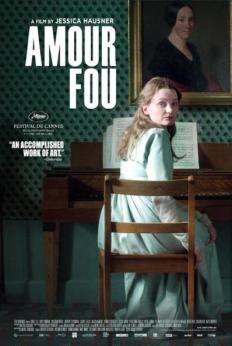
It might seem like I cry “Woody Allen” every time a movie treads into nihilistic black comedy or pure defeatism, but Jessica Hausner’s “Amour Fou” really does fit the bill! Some of the dialogue seems like it could be copied and pasted directly from “Magic in the Moonlight.” (Well, technically it should be the other way around since “Amour Fou” premiered first.)
In early 1800s Berlin, depressed poet Heinrich von Kleist (Christian Friedel) seeks a partner in suicide to escape the meaninglessness of existence. For his prime target, Heinrich sets his sights on Henriette Vogel (Birte Schnöink), who initially rebuffs his offer but then rethinks it after coming down with an unexplained medical condition. For those expecting a thorough rumination on life and death, look elsewhere.
Hausner seems far more interested in examining the repressive elements of the Prussian society, cleverly reflected in the constrictive set design, than in examining human emotion. As a result, “Amour Fou” begins to feels repressive itself instead of enlightening or enriching. I’m an avowed opponent of period films in general, and if I were to watch one, I’d much rather take a forced happy ending than this morose mess that lacks the potency to make me legitimately depressed. C+ /
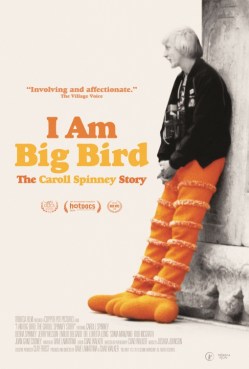
I grew up on a steady diet of “Sesame Street” and “The Muppets,” which essentially makes me the target audience for Dave LaMattina and Chad N. Walker’s documentary “I Am Big Bird.” They profile Caroll Spinney, the man underneath the Big Bird suit and behind the Oscar the Grouch puppet. We get to see the intricate and peculiar mechanics that bring these characters to life, an undeniably thrilling sight for anyone who ever found themselves under the spell of Spinney’s magic.
LaMattina and Walker start by tracing Spinney’s humble beginnings in casual childhood puppetry and his discovery by Jim Henson, the famed master of the craft. The biography gets a little bit more interesting as he arrives to “Sesame Street” and finds he does not quite fit in with the other cast members. Out of that frustration comes his two iconic characters, and Big Bird ironically becomes the show’s biggest star.
(For those worried that Spinney became doomed to wander solitarily his whole life, the production eventually introduces him to the love of his life, Debra.)
“I Am Big Bird” does a great job of showing how Spinney’s life informs his work as well as just how influential that work has become. Sometimes the events seem organized in a bit of a slipshod fashion, however. LaMatinna and Walker are prone to going off on bizarre tangents, including a particularly pointless one about a murder that took place on Spinney’s property which did not involve him at all. The documentary is at its best when it illuminates the tender soul of the man who gives life to Big Bird, the character who in turn gives purpose to him.
Don’t believe me on the last part? Look at him on set – Spinney never takes off the orange leg pants. B /
“We want to be thrilled,” declares Bryce Dallas Howard’s Claire to a set of interested investors at the beginning of “Jurassic World.” One can easily imagine the very green director Colin Trevorrow, with only the indie charmer “Safety Not Guaranteed” under his belt, making the same kind of pitch to the corporate powers that be at Universal.
In a manner that recalls “22 Jump Street,” many lines at the opening of the film give a winking nod to the entire enterprise of jumpstarting a dormant franchise for a new audience. In the 22 years the original “Jurassic Park” film hit the multiplex, a new style of action filmmaking has obliterated the level of craft in the genre. These blockbusters – think Michael Bay and “Transformers” – operate under the philosophy of bigger, louder, harder, faster, stronger.
These films have become predictable, boring, and numbing. We still marvel at the screen, sure, but we have come to expect the unexpected and see the extraordinary as ordinary. “Jurassic World” invites that childlike sense of awe to rear its head once again after hibernating. And in true Spielberg fashion, we receive the invitation quite literally through the perspective of a child.
The first time Trevorrow gives his audience a peek at the new Jurassic Park, now rebranded as Jurassic World, it comes as the young Gray (Ty Simpkins) pushes his way through the crowd to get to the front of a tramcar. He sees the giant entry gates, and the score by Michael Giacchino swells to the tune John Williams made iconic years ago. In the succession of shots that follows, we see the many amazing dinosaur attractions (along with a plethora of corporate sponsors) and know his wide-eyed wonder is not misplaced.
The visual effects from “Jurassic Park” were impressive at the time, yet they now look a little creaky and dated. I cannot imagine what technological advances could improve the look of the dinosaurs in “Jurassic World,” which exhibit a breathtaking photorealism, though the CGI wizards will undeniably make me eat those words.
Caitlyn Jenner’s very public transition has brought a big spotlight to transgender issues and rights, although some of the discourse (from all sides) seems to reduce her to a mere cultural object. When such rhetoric arises, it becomes easy to lose sight of the humanity that all people possess irrespective of how they choose to identify their gender or sexuality. In this void, cinema can step in to help bridge the empathy gap.
Trans issues are not exclusively the domain of 65-year-old reality stars, as Céline Sciamma’s “Tomboy” happily points out. The film follows a ten year old child, gendered female at birth and given the name Laure (Zoé Héran), who chooses to identify and present himself as Mikael. When his family moves to a new town in France one summer, he sees it as the perfect opportunity to establish and assume the identity he feels inside (unbeknownst to his parents).
Sciamma’s tender, gentle portrait of Mikael’s explorations into the thorny territory of self-actualization makes for a more than worthy “F.I.L.M. of the Week.” This is a film for the books. As it quietly observes the anguish and anxiety surrounding whether or not Mikael’s projection of his true self will be rejected by his peers, “Tomboy” invites personal reflection as well. Mikael looks at himself often in the mirror, and Sciamma holds up that same mirror to the audience.
The film, perhaps more cogently than any fictional film I have seen, illuminates how gender is socially constructed and vigorously performed. Masculinity, in particular, requires a Brando-esque commitment to character as early as childhood. Otherwise, the strongest performers pass extreme judgment on those who cannot enact a convincing enough front.
“Tomboy” is incredibly specific to Mikael’s struggles, to be clear. Can he take off his shirt at a soccer game without being discovered? Can he wear a bathing suit without raising questions about what lies between his legs? How should he respond to a girl with a bit of a crush on him? How can he urinate without exposing female genitalia? For all those who believe their gender lines up with their assigned sexuality, the film makes us aware of the enormous privilege of normalcy in everyday activity.
But Sciamma’s genius lies in making Mikael’s experience evoke every child’s grappling with their private feelings and public persona. We all hope others will define us by our positive characteristics but fear they will latch on to aspects that make us feel insecure. Watching “Tomboy,” I was reminded of my own youth, where I faced taunting for my short, stocky build as well as my lack of skill and interest in athletic competition. While these struggles are in no way comparable to the enormous violence and hatred directed towards transgender people all over the world, finding a shared experience is a good first step towards building rapport and understanding.
Andrew Bujalski’s comedy “Results,” which revolves around a number of characters in the fitness business, recalls far too many of my own workouts. That is to say, it starts strong with a big burst of energy that fizzles out fairly quickly and then plods along at a moderate pace.
Bujalski primarily follows three characters: rich schlub Danny (Kevin Corrigan), who wants to gain the ability to take a punch, hires hardcore trainer Kat (Cobie Smulders) from a gym owned by the toned Aussie Trevor (Guy Pearce). Their relationships are in constant flux, moving well beyond provider-client and boss-employee over the course of “Results.” Individual scenes are well-written and directed, but they fail to unify because Bujalski never decides on a protagonist.
Bujalski is far more successful at finding hilarity in mundanity than he was in 2013’s “Computer Chess,” and he certainly demonstrates an incisive understanding of how ulterior professional and romantic motivations cloud judgment and communication. Even as it sags somewhat in the back half, “Results” still entertains with these moments of insight into its characters and how their appearances reflect but also belie their personalities. B /
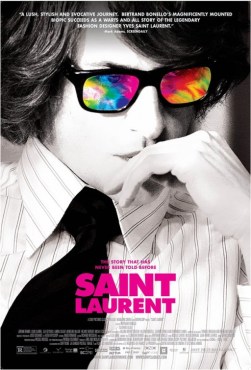
Bertrand Bonello goes to war with the biopic genre in “Saint Laurent,” his portrait of iconoclastic French fashion icon Yves Saint Laurent. Anyone hoping for a highlight reel or a filmed version of his Wikipedia page need not apply here. In fact, prior to the final segment of the film, where an older incarnation of the designer appears and reflects back on his past, I would be hard pressed to name a single accomplishment of Saint Laurent.
In a sprawling yet highly constricted two and a half hour odyssey, Bonello (with the help of screenwriter Thomas Bidegain, a frequent collaborator with Jacques Audiard) presents scenes from Saint Laurent’s creative zenith of 1967-1976. Nothing shown meets conventional standards for worthiness of inclusion when portraying a “great man,” however. What plays out on screen in “Saint Laurent” often feels like the scenes that might immediately precede the big, important dramatic centerpieces of a flashier biopic.
The problem, though, is that these scenes sometimes feel selected with all the curated purpose of an iPod shuffle. Bonello directs many a great episode within “Saint Laurent,” but if these moments were tiles, they would not add up to a mosaic. In some sense, this is likely his aim by bucking the established conventions for treating real people in cinema. Can any life be reduced to some kind of contrived narrative?
The big problem of the film is that it never seems to be about anything. Bonello tightens the focus of time, but not necessarily the subject matters he sets out to cover. Is the film about his artistry? His business savvy? His success coinciding with some of the biggest French political crises of the modern era? His sexual libertinism with swinging lothario Jacques de Bascher (Louis Garrel)? Gaspard Ulliel embodies Saint Laurent with confidence, but Bonello far too often has his star just “be” instead of “do.”
Nonetheless, “Saint Laurent” amount to something radical and worthwhile by painting a titanic figure with evocative, rather than demonstrative, strokes. Bonello poses quite a challenge with his film, one that he might not solve here. Yet his call to redefine our ways of seeing public figures as human beings could inspire greatness in a keen filmmaker that can more cogently articulate a thesis or takeaway. B- /
For my thousandth published review on Marshall and the Movies, I thought it would be appropriate to review an all-time favorite rather than just another disposable, forgettable current release. I ultimately settled on what could very well be my #1, Woody Allen’s “Annie Hall.” I wrote this piece as an application for the Telluride Film Festival’s student symposium last year; the prompt was, “If you were being sent into the distant future, and you could take just one film with you, what would you take, and why?”
If I were sent into the distant future with only one film, there is no question in my mind that I would bring a copy of Woody Allen’s “Annie Hall.” I cannot think of another film that better encapsulates all the potential of cinema. If film had ceased to exist in this hypothetical future society, “Annie Hall” could single-handedly regenerate the art form and produce a remarkable diversity of movies in the process.
As the late Roger Ebert stated, “Every great film should seem new every time you see it,” and “Annie Hall” can be watched through any number of lenses producing wildly different viewing experiences. Allen brilliantly builds in many layers to his film, allowing it to speak to anyone who approaches it.
“Annie Hall” is not so esoteric as to preclude it from functioning as entertainment; someone would have to be quite a stoic not to enjoy the misadventures in love of Allen’s Alvy Singer and Diane Keaton’s Annie Hall. Watching Annie swerve dangerously through traffic or Alvy sneeze away cocaine is undeniably enjoyable when seeing it for the first or fiftieth time.
Yet “Annie Hall” is most certainly not limited to this dimension of pure diversion. Allen, like many before him, recognizes that the possibilities for film to exist as art are manifold. Rather than confine his film to one narrow definition of what he believes cinema to be, Allen experiments with how they can interact in a brilliant pastiche that serves as a valentine to all the pioneers before him and a template for all those after him. “Annie Hall” explores many different styles of filmmaking, employing each when appropriate to convey his message and somehow maintaining cohesiveness.
What Allen pieces together in “Annie Hall” is not merely the story of Alvy and Annie but also the story of how cinema can satisfy the creative impulse. To him, film can function as a second draft of history, a way of commenting on the clarity that can be achieved through art but proves unattainable in life itself. Throughout “Annie Hall,” characters literally revisit their past in their present states, both as passive observers and active participants. By employing this technique, Allen explicitly demonstrates the retrospective qualities of film, exposing it as a tool for grappling with our own histories.
He further reveals the abstract qualities of film by visualizing that which is often relegated to the realm of the conceptual. “Annie Hall” subversively undermines the notion that film can only present the visible surface of photographic reality. Rather than telling us that Annie is having an out-of-body experience during sex, Allen shows us by literally having Annie’s “spirit” leave her physical body and observe from outside the act.
Moreover, he transforms the cinematic image of Alvy to represent the Hasidic Jew that he believes Annie’s family sees when they look at him and turns Annie herself into the animated Wicked Queen for whom Alvy subconsciously perceives himself to be falling.
Perhaps most strikingly, Allen presents subtitles that contradict the words uttered by Alvy and Annie, instead expressing their hidden innermost emotions. Film, in the hands of an astute observer like Woody Allen, becomes an incredibly powerful tool to comprehend the complexities of human communication and interaction.
However, for all the technical and intellectual proficiency present in “Annie Hall,” its greatest strength might very well be the simplicity of its story. It wields some of cinema’s greatest artistic weapons dexterously, but the film is also a beautiful tale about two fully realized characters navigating the treacherous straits of life and love. Humans have always told narratives to make sense of the world, and film is just the latest means to express that need. “Annie Hall” is a brilliant manual for grappling with reality, making its case so effectively through creative exploration of film’s capabilities as a medium.

 Usually, we consider a film a success when its form matches its content. In the case of Andrew Niccol’s “
 If writer/director Rick Famuyiwa’s movie “
 Responding to the reactions to a film in a review is something I generally frown upon; however, I am willing to make an exception in the case of “
 Imagine you are a young child again, and you have just woken up from the worst dream of your life. Terrified, you run into your parents’ bedroom, climb onto their mattress, and recount every detail of the terrible vision. Then, imagine them laughing at you.
 It might seem like I cry “Woody Allen” every time a movie treads into nihilistic black comedy or pure defeatism, but Jessica Hausner’s “
 I grew up on a steady diet of “Sesame Street” and “The Muppets,” which essentially makes me the target audience for Dave LaMattina and Chad N. Walker’s documentary “
 Caitlyn Jenner’s very public transition has brought a big spotlight to transgender issues and rights, although some of the discourse (from all sides) seems to reduce her to a mere cultural object. When such rhetoric arises, it becomes easy to lose sight of the humanity that all people possess irrespective of how they choose to identify their gender or sexuality. In this void, cinema can step in to help bridge the empathy gap.
 Andrew Bujalski’s comedy “Results,” which revolves around a number of characters in the fitness business, recalls far too many of my own workouts. That is to say, it starts strong with a big burst of energy that fizzles out fairly quickly and then plods along at a moderate pace.
 Bertrand Bonello goes to war with the biopic genre in “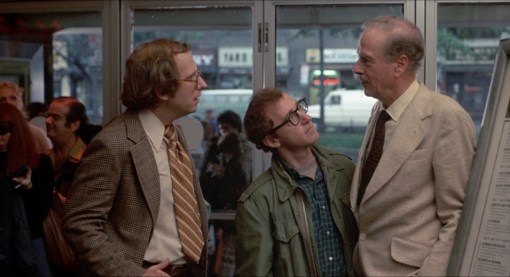


 Marshall and the Movies
Recent Comments