F.I.L.M. of the Week (February 26, 2015)

26 02 2015

As it turns out, Kevin Spacey has been training to play the role of his life, Frank Underwood, for decades now.  Back in 1995, he starred in “Swimming with Sharks,” a biting satirization of Hollywood’s corporate culture.  But, rest assured, there are no résumé requirements necessary to enjoy the film since it so perfectly captures the experience of working for a hellacious boss.  Writer/director George Huang manages the balance of the specific and the generalizable so well that his debut feature earns my nod for the “F.I.L.M. of the Week.”

This film saw release long before Meryl Streep’s Miranda Priestly cast an icy spell over the hot summer moviegoing scene in “The Devil Wears Prada,” and it even predates Spacey’s later turn as a sadistic slavedriver executive in “Horrible Bosses.”  Yet even in spite of the proliferation of the archetype, “Swimming with Sharks” still entertains and enlightens with its valid criticisms of the Hollywood system.

The subject of the film is not Spacey’s bag of hot air masquerading around in a fancy suit, Buddy Ackerman, though.  The events of “Swimming with Sharks” are seen and felt through his latest poor assistant, aptly named Guy (Frank Whaley), who has to endure constant harassment and humiliation until he amasses enough experience to move up in the business.  Buddy boasts all the pedantry and pettiness of Jeremy Piven’s Ari Gold from “Entourage,” although he appears relatively lacking in creativity and productivity to earn the rights to be such a jerk.

What inevitably follows comes with a strange mixture of pity, rage, schadenfreude, and even a little bit of surprising empathy.  Even within the confines of a fairly familiar story, Huang makes his everyman worth rooting for by stacking the odds heavily against him – as well as pitting him against a particularly devilish superior.  Spacey knows how to be scarily threatening with his words, and he also knows how to be scarily vulnerable with his emotions when the time comes.


REVIEW: The Search for General Tso

25 02 2015

General TsoWith a title like “The Search for General Tso,” one would expect something like a Food Network special.  But the documentary actually turns out to be less like that network and more like something found on the History Channel (although the last time I looked at the latter channel, I saw very little that qualified as historical).

By looking at the evolution of Chinese food and how entrepreneurial restauranteurs adapted it to fit the tastes of the host culture, “The Search for General Tso” finds a microcosm of the immigrant experience in America.  Changes in cuisine are highly tied to political events from Congressional exclusion acts to Nixon’s visit to the East that “opened” China.  Oh, and delectable items like the fortune cookie and General Tso’s chicken? Both 100% American inventions.

Director Ian Chaney’s film is really a tale about cultural appropriation and its omnipresence, which has really undermined the way the world understands the concept of “authenticity.”  Searching for General Tso marks not so much an objective for the documentary as it symbolically represents the social construction of ethnic culture.  In a slender 71 minute package, it whips up a satisfying meal – although such a short runtime can’t help but leave some lingering desire for an additional course.  B2halfstars


REVIEW: Girlhood

24 02 2015

GirlhoodWriter/director Céline Sciamma’s third feature bears the title “Bande de Filles” in its native French tongue, which translates roughly to band (or group) of girls.  Yet the English release of the film gives it this name: “Girlhood.”  The title seems not only ill-fitting but also begging for immediate foiling against Richard Linklater’s “Boyhood.”
Such a comparison is facile and does a disservice to Sciamma’s wonderfully observed film.  She does not aim to provide a wide-ranging snapshot of female youth.  “Girlhood” is less about one girl, be she specific or a stand-in for all women, and more about gendered group dynamics filtered through the experience of the protagonist, Marieme (Karidja Touré).  Sciamma’s work does resemble many other great films, however.

“Girlhood” recalls Tina Fey’s insightful script for “Mean Girls,” which also focuses on a troublemaking quartet of girls.  Both depict the ways in which either one person can set the tone for an entire group – or a paralysis of groupthink can conduct the unit.  Perhaps the most memorable scene in “Girlhood,” save a lip-sync rendition of “Diamonds” by Rhianna, occurs when the clique encounters a former member who was exiled when she became pregnant.  Group identity is everything for these adolescent girls, until it is nothing.

“Girlhood” recalls Catherine Hardwicke’s hard-hitting “Thirteen,” an intense drama that follows two taboo-shattering teen girls down a rabbit hole of drug abuse and promiscuity.  Admittedly, this connection is more superficial.  Sciamma shows her main characters committing some questionable acts, but they do not necessarily define them as people.

Read the rest of this entry »


REVIEW: Serena

23 02 2015

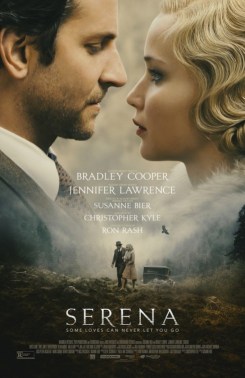
SerenaDespite all the negative press churned out by the rumor mill as it sat for years in the editing bay, “Serena” is far from a disaster.  Susanne Bier’s saga of competition and coveting in 1920s North Carolina certainly contains a fair share of riveting moments.  Overall, though, it seems to lack focus.

For instance, is the protagonist of the story George Pemberton, Bradley Cooper’s timber baron intent on protecting his land from government encroachment?  Or is it Serena Pemberton, Jennifer Lawrence’s arrestingly beautiful and tempestuously emotional business and life partner?  The answer is unclear because the movie lacks decisiveness.

The same goes for which of the two storylines in “Serena” – George and Serena’s tumultuous marriage, or their contentious capitalistic ventures – serves as the predominant one.  The film would have undoubtedly benefitted from the demotion of one to the status of a subplot.

With some of these fairly basic issues left unsettled, “Serena” quickly becomes mostly notable as a showcase for its stars.  Had Bier and her editors somehow turned the film around in a few months after shooting in spring 2012, the performances would likely have received no end of acclaim.  But now, three years have passed, in which time Cooper and Lawrence have collected a whopping five Oscar nominations.  Their George and Serena now feel rather penciled-in when measured against Pat Solitano and Tiffany Maxwell.

The 105 minutes necessary to watch “Serena” might be put to better use by rewatching “Silver Linings Playbook,” “American Hustle,” or “American Sniper.”  Those films feature the stars giving more fully fleshed-out performances (with better accents) while also featuring more confident direction.  The fine details available for discovery by digging deeper into those characters far outweighs what can be skimmed from the surface of this middle-of-the-road flick.  C+2stars


REVIEW: Guy and Madeline on a Park Bench

22 02 2015

Guy and MadelineDamien Chazelle might have struck gold on “Whiplash,” but before that, he had to get “Guy and Madeline on a Park Bench” out of his system.  The former, now Oscar-winning film feels like the story the writer/director was born to tell.  His actual debut, however, seems like that final student film he had to submit to get a diploma.  (Chazelle is a Harvard graduate, by the way.)

Even as it catapults well over the bar of the average thesis film, “Guy and Madeline on a Park Bench” still feels mired in its trappings.  Chazelle feels beholden to a stubborn insistence on his own artiness, as if to announce his own arrival onto the scene.  And, apparently, he seems willing to sacrifice the narrative clarity of his modern romance on its behalf.

He demonstrates a clear understanding of both cinema verite American independent film as well as MGM-style filmed musicals, even making the bold move to combine them into a single feature.  When he wants, Chazelle proves capable of making a few fun modernizations to the movie musical tropes.  But more often than not, “Guy and Madeline on a Park Bench” appears uncommitted to its stylistic approach.  Chazelle, understandably, comes across as somewhat apprehensive of going full throttle.  C+2stars


REVIEW: John Wick

21 02 2015

John WickDirector Chad Stahelski and writer Derek Kolstad made it abundantly clear to star Keanu Reeves what kind of action movie “John Wick” should be.  This was not a philosophical puzzle like “The Matrix” or a thrilling cat-and-mouse adventure like “Speed.”  It was just fun, stupid entertainment that was fully aware of its own ridiculousness.
These unabashedly silly popcorn flicks can serve as fun antidotes to movies dripping in self-seriousness or an inflated sense of importance.  And, on paper, the seemingly washed-up Reeves makes for the perfect casting choice.  His presence also lends the film a meta narrative to accompany its actual one.  Reeves’ John Wick reawakens from retirement to unleash a can of whoop-ass on some people who did him wrong, just as it appears the actor himself wants to prove some value past his supposed expiration date.

While Reeves enables “John Wick” to reach its goal of being a campy, kitschy action film, he never does anything to help the movie differentiate itself.  If someone is in the mood for what the kind of adrenaline rush it hopes to offer, nothing stands out about this particular film.  Many other movies do it better (just in 2014, “Lucy” easily outdid it – and is rare for actually caring about women).

The only real highlight of “John Wick” is watching a B-list “The Expendables” form among the supporting cast.  Stahelski must have hired one great casting director if they could get all these notable character actors in one film.  Most just have one random scene, but when Willem Dafoe, John Leguizamo, Ian McShane, and Michael Nyqvist (from the Swedish “Dragon Tattoo” and “Mission: Impossible – Ghost Protocol“) all show up, it is only natural to wonder who will pop up from behind the next door.  C+2stars


REVIEW: Wild Tales

20 02 2015

Wild TalesOver the past few years, the phenomenon of binge-watching television shows has essentially revolutionized the way media and narratives are consumed.  When they can sit still for longer than the duration of a ten-second snapchat, people now want a rapid succession of rising action and escalating climaxes.

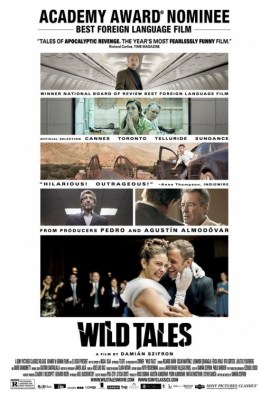
Argentinian director Damián Szifron is certainly not the first person to create an anthology film, nor is he unique in housing multiple narrative threads under the same canopy.  Nonetheless, his “Wild Tales” feels special in the way it adapts this form to meet the demands of an audience with access to troves of great television (not to mention short films).  This thematically curated collection of six large scale mini-movies permits a rhythm of continual engagement and repeated payoff.

These dividends feel substantially greater than the average movie.  The effect could have something to do with the quantity of storytelling present in “Wild Tales,” yet Szifron also brings some serious quality to the table as well.  His characters and scenarios range from a jilted wife at her wedding reception to a raging motorist and even a plane full of people who all crossed the wrong man, but they all somehow circle back to matters of animalistic revenge and cosmic karma.

Fittingly, Szifron supplies a wickedly biting sense of irony to every tale.  While the guiding approach to each story might be similar, the manifestations are only similar in their dark, demented humor.  Those familiar with the social and political context of Argentina might get a little more out of the film, though “Wild Tales” communicates on such primal channels of human impulse that its appeal is not tied to one nation.  Anyone who has ever felt victimized or wronged by some unexplainable force should find something relatable in Szifron’s compilation … and then relish hovering over the proceedings, observing the pain of others from a god-like distance.  A-3halfstars


F.I.L.M. of the Week (February 19, 2015)

19 02 2015

The Imposter

“For as long as I could remember, I wanted to be someone else.”  So begins Frederic Bourdain, the narrator of Bart Layton’s documentary, “The Imposter.”  The line may seem commonplace, but it sets the stage for a rich exploration of identity – inherited, assumed, and forged.

Here is a case where the truth is not only stranger than fiction, as the old adage goes. “The Imposter” is also more interesting and compelling than many scripted narrative films these days, thus making it a more than deserving choice for my “F.I.L.M. of the Week.”  Bourdain uses one real story to illuminate the human proclivity for deception on a much grander scale, showing the way we bury secrets through buying into our own lies.

In 1990s Texas, 13-year-old Nicholas Barclay disappears.  Three years later, he mysteriously reappears in Spain.  It’s rare to find a missing child alive years after disappearance … and even more uncommon to find that child in another country.  If the documentary sounds like a first cousin of the Clint Eastwood-Angelina Jolie film “Changeling,” the similarities end past the logline.

As the title implies, “The Imposter” is about someone pretending to be Nicholas Barclay – in this case, Frederic Bourdain.  A bum looking for any path to a better life, he falls short of a criminal mastermind, though he certainly knows how to exploit loopholes and alleyways in a lazy bureaucracy.  Somehow, he manages to circumvent each and every safeguard that should have exposed his act.

Since the film’s title makes direct reference to his deception, the through-line of suspense is the anticipation of the moment when his house of cards tumbles.  Yet just when the jig seems up for Bourdain, “The Imposter” takes one heck of a surprising turn.  Perhaps there is not only one talented artist of concealment in the film.  I’ll stop talking now, lest I spoil this gripping, entertaining, and enlightening film.


REVIEW: Hits

18 02 2015

HitsHits” begins with a title card that recalls the one preceding 2013’s “American Hustle.”  This one says, “Based on a true story … that hasn’t happened yet.”  In other words, it marks writer/director David Cross’ way of saying that he wants to kvetch endlessly about the present day under the guise of satirization.

Maybe I’m still a little bit defensive about that horrendous TIME Magazine cover calling millennials “The Me Me Me Generation,” as if the generations before us have a spotless record and never posed any worry for their parents.  Nonetheless, I cannot help but get annoyed by vast generalizations about the youth these days as disgusting, device-addicted narcissists.  It is certainly true of many people, and I will not deny it; the world just needs some positive images of us.

That virality is one of the chief virtues of our society is certainly no secret, nor is the triumph of fame over hard-earned success.  Cross, though, seems to act as if he is delivering a message sent from heaven to enlighten us idiots.  “Hits” aims to pick only the lowest hanging fruit and juice it for cheap laughs.  (At least he picks up on an equally ludicrous breed, the self-righteous Gen X social media activist.)

Beyond the handicap of simply recapitulating the obvious, Cross’ first foray into feature filmmaking just cannot sustain its 90 minute runtime.  The characters that populate his ridiculous universe scarcely possess the depth for a comedy sketch; expecting them to remain entertaining and engaging for an entire movie is preposterous.  They might work well for a web series, however, if Cross could add some depth of thought to an only slightly revamped stereotype of the vapid fame-seeker.   C2stars


REVIEW: Timbuktu

17 02 2015

TimbuktuAbderrahmane Sissako’s “Timbuktu” shows the consequences of radical Jihadist rule in a small north African village to gripping effect.  No one goes untouched by their moralistic scourge as the fundamentalists clamp down on basic liberties and freedoms.  The violent authorities tolerate no view or action milder than their deeply entrenched extremist stances, and anyone who crosses them must pay at the hands of a barbaric punishment they mete out.

Sissako’s canvas is vast and wide to show how pernicious and pervasive the power of the group truly becomes.  Yet, at the same time, he also layers in various personal strands that allow “Timbuktu” to hit home on a gut level.  The film only runs 100 minutes, an economy which is usually a virtue.  Here, however, the length works against it as the timeframe only permits real intimacy with one family of cow farmers on the outskirts of the town.

Everyone else seems real enough, but they lack the screen time to really forge a meaningful connection with the audience.  The poignancy and the tragedy of “Timbuktu” would easily earn another 30 or 40 minutes.  Sissako’s unflinching look at dignity lost in the face of an inhumane regime confidently commands attention and respect.  It gets that – and then some.  B2halfstars


REVIEW: Still Alice

16 02 2015

Richard Glatzer and Wash Westmoreland adapted “Still Alice” from a novel by Lisa Genova.  But had I not known that going in, I would have assumed the film was based on a play.

The directors shoot the film with a gentle, soft, and unobtrusive light.  The lines flow nicely.  The scenes feel distinct and compartmentalized.  Heck, the film even ends by literally ripping out the final page from “Angels in America,” one of the American dramatic classics!

What ultimately separates “Still Alice” from the stage, however, is the masterfully detailed performance of Julianne Moore.  She stars as Alice Howland, a 50-year-old linguistics professor stricken with early onset Alzheimer’s disease, and the camera-eye of the cinema is necessary to observe her slow deterioration.  Since seeing the decay of her brain is impossible, her illness has to manifest itself in the tiniest twitches of Moore’s face.

Like fellow 2014 release “The Theory of Everything,” which followed a physical rather than a mental degeneration, “Still Alice” derives its very narrative motion from discerning which faculty will disappear next.  In other words, the filmmakers invite gaping and marveling at the technically proficient acting on display behind the figurative glass cage of the screen.  The film plays almost as suspenseful in its measured anticipation of a firm break from reality by Alice, and credit Moore for turning in a performance so gentle and full of integrity that her character’s normalcy inspires unease.

Read the rest of this entry »


REVIEW: The Last Five Years

15 02 2015

The Last Five YearsTransferring a great musical from stage to screen is a loftier task than many viewers realize, and many a great show is rendered mediocre by the transition.  The challenge always remains the same: finding something cinematic in the piece and making sure that it never simply becomes “filmed theater.”
This was a particularly daunting leap for Richard LaGravenese when adapting Jason Robert Brown’s musical “The Last Five Years” for the big screen.  The show is quite literally a two-hander, allowing speech and song only from a man and a woman inside a romantic couple.  The theater provides a natural habitat for this kind of story since the intimacy and the immediacy of the medium corresponds with the sharp focus on the duo at the center of the show.

Further complicating matters, “The Last Five Years” is like “Les Misérables” in its nearly completely sung-through script.  Trying to embed an unnatural form of human communication into a completely natural situation can prove tricky indeed.  So a tip of the hat is due to LaGravenese for somehow managing to make most of the musical numbers feel believable enough not to raise major questions while watching.

The film’s writer and director does not deserve all the credit for that, however.  So much of “The Last Five Years” seems authentic and emotionally resonant because of the work done by Anna Kendrick.  She stars in the film as Cathy, an actress trying to get by doing what she loves while her boyfriend Jamie (Jeremy Jordan) soars to the top of the bestseller charts with his debut novel.  Technically, the songs are divided equally between the two of them, but make no mistake about it: this film belongs entirely to Kendrick.

Read the rest of this entry »


REVIEW: Last Days in Vietnam

14 02 2015

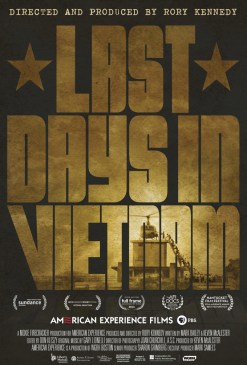
Last Days in VietnamUsually at the end of a high school AP U.S. History class, a teacher rushes to cram in everything after World War II as if a conflict like the Vietnam War were merely a footnote to the American story.  (Just for the record, I loved my junior year history teacher and blame the date of the AP exam, not him.)  If that period had some more time allotted for coverage, Rory Kennedy’s documentary “Last Days in Vietnam” would probably be a staple in those classes.
Her film chronicles the closing chapter of American presence in the region, beginning broadly and then focusing with laser-like precision on the final evacuations of Saigon.  She gathers quite an authoritative bunch of interviewees to talk about their experience, and each can recount what happened with a truly impressive amount of detail.  Watching “Last Days in Vietnam” thus feels like reading a well-written tome of historical literature.

The richness does overwhelm the story as a piece of cinema, though.  For nearly 100 minutes, the film stays mostly compelling yet sags a little bit under the weight of all the minutiae towards the end of the film.  Of course, a film called “Last Days in Vietnam” is going to spend most of its runtime focused on the closing ticks of the clock.  But Kennedy might have tightened up and prioritized all these narrative threads, lest we check the time ticking away on her own film itself. B2halfstars


REVIEW: Fifty Shades of Grey

13 02 2015

Fifty Shades of Grey” boasts a killer soundtrack of catchy pop tunes from some top artists – Beyoncé, Ellie Goulding, Sia – to spruce up what might otherwise be boring, forgettable montages.  But while I watched the dominant sadomasochist Christian Grey (Jamie Dornan) attempt to lure the innocent, virginal Anastasia Steele (Dakota Johnson) into a contract as his submissive, another song kept playing in my head.

Here’s an excerpt from that song, “Never Learn Not To Love” by The Beach Boys.

“Cease to resist, come on say you love me
Give up your world, come on and be with me
I’m your kind, I’m your kind, and I see

Submission is a gift given to another
Love and understanding is for one another
I’m your kind, I’m your kind, and I see”

The surfing rock group makes those lyrics sound pleasant, even romantic.  But they become rather frightening when considering who they essentially plagiarized the song from: Charles Manson.

There’s something decidedly demented (or, dare I say, “Haunted” like the Beyoncé track from the film) about Grey’s psychology.  He pulls heavily from pimp logic, the same rationale Manson used to lure and maintain his followers.  Grey obsesses over making Anastasia sign a contract that allows him free license, within mutually agreeable bounds, to exploit her endlessly for the purposes of whetting his niche sexual appetites.  He gets pleasure, while she gets an odd mixture of fear and love.  (Seems like a rather uneven balance of power, but I’m single – so what do I know?)

Getting her John Hancock serves as the conflict and obstacle that keeps the thin plot of “Fifty Shades of Grey” going, although there is a compelling case that the one-upmanship of the successive sex scenes is what really keeps the interest in an otherwise standard-issue “romance.”  Those just watching for skin should not even bother tuning in until the 45 minute mark, when the conventional courtship tale switches gears into the kind of soft-core porn film that plays around midnight on HBO.

Read the rest of this entry »


F.I.L.M. of the Week (February 12, 2015)

12 02 2015

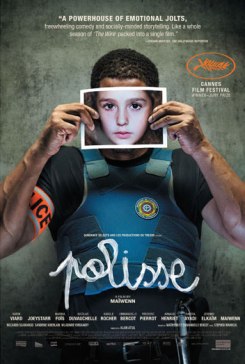
PolisseIn most stories about a workplace, colleagues become friends only with the greatest reluctance.  (Think “The Office.”)  The French film “Polisse,” however, shows co-workers in the Child Protection Unit who are so cordial that they could pass for a family.  When they eat lunch together, their conversations ring with an uncommon knowledge of and comfort with each other.

Writer/director Maïwenn makes these bonds and relationships formed in the line of duty the real subject of her story instead of the horrendous crimes against minors they have to investigate.  Sure, the film shows plenty of heartbreaking tales from the French underclass, and the woe of the children harmed feels distinctly real since Maïwenn based the script off of actual cases. “Polisse” is my pick for the “F.I.L.M. of the Week,” though, not because of the pity and disgust their cases generate but rather because of the familiarity it creates with its expansive ensemble of characters.

The children and their abusers are usually the subject when it comes to narratives like these, so Maïwenn provides a refreshing change of page by focusing on the effects of an oft-overlooked party.  There is no sense that the events of “Polisse” are anything particularly extraordinary, yet even so, they take a tremendous toll on the police unit.  No one seems capable of simply leaving their work in the office itself, and dealing with some of the worst in humanity tends to bring out the worst in them in their personal lives.

Maybe a certain kind of person is just naturally drawn to this line of work, but Maïwenn definitely suggests that their private dysfunction corresponds to their vocational hazards.  For proof, look no further than the photographer who joins the unit to document their job.  She begins as an outsider, clearly separate from the rest of the group as she timidly observes their collegial mingling.  Yet after a few harrowing experiences, she becomes one of them.  This seemingly natural proclivity for solidarity, even in the apparent absence of human kindness, provides a reassuring glimmer of hope in “Polisse” that shines brightly through the bleakness.