REVIEW: Le Week-End

13 06 2017

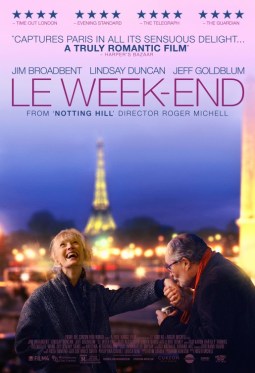
Who says going to the City of Light is always a romantic, picturesque getaway? In Roger Michell’s “Le Week-End,” a British couple celebrating their 30th wedding anniversary finds the city a staging ground for their most practical and petty matters. For Meg and Nick (Lindsay Duncan and Jim Broadbent), this grand city does not necessarily demand grappling with grand problems.

Newell finds the sweet spot between the gentle compassion of Nancy Meyers and the plainspoken working-class mentality of Mike Leigh. Not to mention, his depiction of the city also occupies a halfway ground between the American romanticizing of Paris and the French highlighting of its underbelly. The film provides a window into the dissatisfaction a couple may face when the kids are gone and they have to truly face each other. As you stare down the end, whose hand do you want to hold?

“Le Week-End” might feel a touch more slight were the graying crowd not so underrepresented on screen. Were they as well represented in movies as they are in Washington, then surely I’d be echoing then-Variety critic Justin Chang in his savage takedown of a particularly bad prolonged adolescence indie when he called it “the latest American independent feature to suggest there are few things more intriguing than a young white guy trying to find himself.” But for what it is now, the film works just fine. B-


REVIEW: The New Year

12 06 2017

I’ve quoted this line before elsewhere, but Alexander Payne had a very wise remark about debut features. “They say that often a filmmaker’s first film can be his or her best. Why? Because he or she has been waiting 30, 35 years to tell that story. So a lifetime of whatever it is, frustration or observation, that all comes out.”

In some cases from “Citizen Kane” to “Krisha,” that statement holds some validity. But I tend to also abide by another maxim: never judge a director by their first film. It’s not always the best indicator of their full potential. Often times, they are still learning the tools of cinema and refining their voice. Many a great director has kicked off their career with a less than auspicious debut.

Such is the case with Brett Haley’s “The New Year.” This is a film that, had I seen upon its opening in 2010, would not have led me to believe he was capable of directing something as profound and sincere as his sophomore effort, 2015’s “I’ll See You In My Dreams.” I watched “The New Year” prior to interviewing him when that film made its rounds on the festival circuit since I needed something to talk to him about. I wound up dancing around the fact that I’d even seen it in the first place.

Haley explores mid-20s ennui and boredom through the experiences of Sunny (Trieste Kelly Dunn), a bowling alley employee back in her hometown to care for her ailing father. Her travails have their moments of sincerity, but “The New Year” feels like a largely insular experience. It’s as if Haley filmed his friends having conversations. The intimacy is there, sure, but he leaves the audience on the outside rather than inviting them into it. The good news, courtesy of writing this review in 2017, is that the film is by no means the upper limits of Haley’s abilities. C+


REVIEW: It Comes at Night

11 06 2017

In his stunning debut feature, “Krisha,” writer/director Trey Edward Shults wowed right out of the gate by showcasing an impressive mastery of emotional ranges in the service of depicting the turbulent mental state of the eponymous character. His follow-up, “It Comes at Night,” takes a more restrained approach. Shults sticks mostly to the tense dread of the taut thriller with the occasional hallucinatory jolt of horror.

It’s hard to deny the impressive grasp of film technique Shults wields. Yet it’s also easy to wish he had a greater narrative, world or characters in which to invest the techniques.

“It Comes at Night” operates from a more contemporary update of Jean-Paul Sartre’s famous maxim: the apocalypse is other people. In an abandoned wooden shack, well-armed patriarch Paul (Joel Edgerton) defends his wife Sarah (Carmen Ejogo) and teen son Travis (Kelvin Harrison Jr.) from a never identified force that seems to turn humans into zombies. All that separates them from the outside world is a single, padlocked blood red door. That’s not the point, nor does that seem to be the “it” to which the title refers.

More than anything, “it” seems to be the fear of others – specifically, the young couple Will and Kim (Christopher Abbott and Riley Keough) with a small child who stumble upon their house by chance. They seek food and shelter, which Paul reluctantly and provisionally agrees to provide. Suspicion under these circumstances is natural, of course, but the host family – Paul especially – treats their every move with skepticism.

Perhaps these attitudes would make more sense if the characters were better defined –  not necessarily with flashbacks, but at least with hints of the past traumas that formed them – or the world were more fully fleshed out. What, for example, would lead Paul to shoot a man by the side of the road at will without stopping to gather any information from him? Shults opts for omnipresent ambiguity, which leaves us no foothold but the film’s ideology.

That worldview is a brutally nihilistic one, a reduction of all conflict in life to us vs. them. It’s total warfare in “It Comes at Night,” where personal survival means the enemy must face annihilation. I am open to considering viewpoints different from my own, yet the degree to which Shults condones these choices – and, dare I even say, exonerates them in the chilling final shot – left me feeling quite uneasy. Shults’ vague sketches of everything within the film make his cynicism feel unearned. This might be the best Steve Bannon production he didn’t finance. C+


REVIEW: My Cousin Rachel

10 06 2017

Roger Michell’s “My Cousin Rachel” opens with voice-over from Sam Claflin’s Philip spelling out the questions the audience should ask by the end of the film. It only gets less subtle from there.

Michell’s film is not a suspense film or a thriller film, although it looks like a well-studied imitation of one. Plenty of frames taken individually look like they could end up on One Perfect Shot. Once there’s any movement in them, however, we realize Michell’s ham-handed direction more closely resembles a Super Bowl commercial set in Victorian England. It hits the marks but lacks the soul.

The film’s drama plays out over the estate of a dead man as both his surrogate son Philip and his widow Rachel (Rachel Weisz) vie for his riches. The will gives everything to Philip, yet after meeting Rachel for the first time, the heir has some second thoughts about taking it all for himself. His relationship with her begins with fear and suspicion, becomes tinged with some guilt … and then somehow turns into full-on attraction for her?! It’s as if a switch goes off in Philip’s junk that suddenly lights a spark for the woman he might have called “mom” under more fortuitous circumstances.

Beyond the film’s inexcusable refusal to consider the Freudian implications, there’s not the slightest connection between Weisz and Claflin that would make this plot point believable. Beyond the infatuation coming out of nowhere, their performances have little in common besides them sharing the same scenes. Claflin plays Philip as an impetuous 25-year-old with no understanding of his own psychology, while Weisz phones in remoteness.

Equally as implausible is the con thriller playing out within “My Cousin Rachel.” No spoiler tags are necessary to say what’s obvious from looking at this plot from a mile away: Rachel is clearly trying to play mind games to get what she views as hers. Even without a lifetime’s worth of similar stories from the genre, it’s hard to believe Philip lacks any self-awareness that he could be the mark in a robbery scheme. When it finally hits him – too late, of course – he simply states, “I’ve been a fool,” and hangs his head in silence. The auditorium in which I saw the film supplied the dead air with chortles, groans and eye rolls aplenty. C-


REVIEW: 20th Century Women

5 06 2017

20th-century-womenI’m a bit of a sucker for generation theory, which lumps together similarly aged cohorts and attempts to impose a coherent narrative on their lifespan. So it’s only natural that I’d fall head over heels for Mike Mills’ “20th Century Women,” a film that treats centuries, decades and generations like immutable facts. In his recreated 1979 Santa Barbara milieu, the accident of birth is destiny for every character.

This goes doubly so for the young protagonist of the film, Lucas Jade Zumman’s Jamie, born at the tail end of the Baby Boom and the cusp of Generation X. Unlike his mother’s Greatest Generation, which held together through the Depression and triumphed in World War II, Jamie’s coming-of-age sees the radical promise of the ’60s being subverted into the reactionary, turbulent ’70s. We are more than just our generation, writer/director Mills suggests, but the formative years of our lives explain so much more of us than we are willing to admit.

That’s why Jamie’s mother, Annette Bening’s steely Dorothea Fields, seeks out proper influences for him since she’s a single mother. Luckily, her boarding house welcomes an assortment of characters from punk photographer Abbie (Greta Gerwig) to wayfaring carpenter William (Billy Crudup). Dorothea’s permissiveness also grants plenty of leeway to the sexually forthright teen Julie (Elle Fanning) to come spend many a platonic night in Jamie’s bed as well. Together, their makeshift family helps prepare Jamie for a world that’s challenging for beta males – or at least male feminists – like himself.

Read the rest of this entry »


REVIEW: The Lovers

4 06 2017

Azazel Jacobs often structures the narrative arc of his film “The Lovers” as a series of couplets. Husband and wife Michael (Tracy Letts) and Mary (Debra Winger) are each seeing other people, but our first glimpse of their affairs isn’t exactly of romantic enchantment. Still, we can sense the affection through non-verbal communication: the gestures, the body language, the glances.

Once Jacobs cuts to a domestic scene, we see why they find such a thrill in partners who can express themselves more surreptitiously. For Michael and Mary, words have become purely transactional. They are merely vessels for information that they need to maintain their measly, unhappy existence.

What we’re not picking up from them, we gather from Mandy Hoffman’s score. Her vibrant symphony of strings dramatically emphasizes each mundane moment, providing an ironic contrast to Jacobs’ pitch-perfect minimalism. It’s up to the music to span the chasm between our expectations for the romantic comedy and the reality of the miserabilist marital drama.

For a time, that distance closes as Michael and Mary rekindle their flame in the midst of escalating pressures from their romantic partners to disband their official union. Just as neither admits they see someone, neither is willing to engage in overtly romantic gestures. Instead, their coded spousal jargon becomes irresistibly tantric to each other. Consider “The Lovers” an art-house spin on Nancy Meyers’ “It’s Complicated.”

Jacobs never lets us get too intimate with Michael and Mary; for example, a series of flirtatious texts they exchange are completely hidden from our view. Standard cinematic technique would normally dictate us seeing some glimpse of the screen. But it’s only fitting that we should not be privy to the kind of nuanced, internalized communication that can only be built after decades of matrimony. When the tiniest break occurs that might provide clue to their thoughts, such as the tiniest pulling back of Mary’s head by Winger, Jacobs is there to catch and convey it. This granularity, when juxtaposed with the grandiosity of the genre he insists on maintaining, makes for a uniquely delectable take on marital ennui. A-


REVIEW: Bleed for This

3 06 2017

Let’s be honest about what “Bleed for This” is: an excuse for Miles Teller to have a Men’s Fitness spread. It’s a move every bit as calculated as Disney cashing in on some intellectual property. The film is not art but a vessel for professional growth, the means to an end rather than an end unto itself.

“Bleed for This” gives Miles Teller an excuse to bulk up and slim down in the name of acting, a classic and predictable agent or manager’s maneuver. It gives him the excuse to post a #gymselfie with his new six-pack without seeming like too big of a tool. It grants him the leeway to expand his repertoire from charming, accessible boy next door to libidinous sex symbol. Then he can prance around in a thong in the film, completing the star circle and reminding us that this whole endeavor has little to do with Vinny Pazienza, the boxer whom he plays. It’s all about Teller and his journey.

The film itself tells such a familiar tale – promising athlete, devastating accident, impossible recovery, triumph of the human spirit – that it’s all too easy for Teller to run over Pazienza’s narrative with his own. His toned body may be different, but this is the same cocksure Miles Teller we’ve seen in everything from “The Spectacular Now” to “War Dogs.” Writer/director Ben Younger, who arrived on the scene in 2000 with the oblique satirical “Boiler Room” about hypermasculine Wall Street traders, could easily have reined in his leading man. Instead, he’s helpless to stop the Hollywood publicity machine his movie became. C-


REVIEW: Staying Vertical

2 06 2017

About the only thing that’s straightforward in Alain Guiraudie’s “Staying Vertical” are shots of gentials. (How’s that for an opening line?) His camera regards them with the remove of an alien coming to study the human body as pure form with a dash of the blasé “so what?” French attitude towards prudish sexual modesty. For both men and women, the space between their legs is just another space, a mass of skin and nerves deserving of the same regard as the head.

But unlike the face, which supposedly signals a character’s psychology, this expanse for men and women is more in line with the overall ambiguity of Guiraudie’s cinema. It’s hard to sum up what exactly “Staying Vertical” is about, and that’s not meant as a jab. Guiraudie dwells in the hazy space of sexual desire and reverie as Léo (Damien Bonnard) beds a French shepherd, impregnates her and ends up taking care of the child after the mother walks out with her previous two children. All the while, he’s desperately trying to finish a screenplay while unable to clear from his mind a striking younger rural boy he spotted on the side of a country road.

When I acted in high school, my drama director had us answer six questions when playing a characters, two of which were, “What do I want?” and “What do I do to get what I want?” Guiraudie seems not to bother with such lines of inquiry, disrupting the causal links between wants and actions. Our desire operates in a different, not always intelligible way, and Guiraudie captures it with a lustful, thirsty gaze that challenges and frustrates traditional notions of character motivations. B+


F.I.L.M. of the Week (June 1, 2017)

1 06 2017

There’s nothing like the NBA Finals to make you appreciate the incredible talent in takes to make it to the top of your game. LeBron James is back in the championship, as he seemingly always is. Back in 2009, King James’ high school years got the documentary treatment in “More Than a Game,” which is little more than hero worship that treats his pre-NBA time as mere prologue to a Hall of Fame career. (Before there was ESPN’s “30 for 30” series, we had to settle for highlight reels disguised as art like that.)

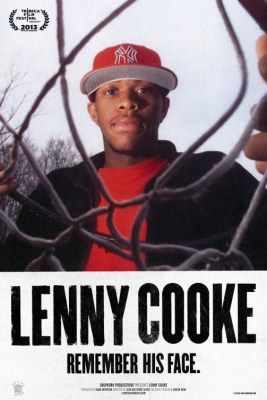
But James is the exception, not the rule. Many great basketball players thrive in high school and display tremendous potential for advancement with their talent. They don’t all make it. Josh and Benny Safdie’s “Lenny Cooke” tells such a story, the darker underbelly of basketball superstardom. For every LeBron James, there are ten Lenny Cookes he must step over on his way to the top.

The Safdie brothers inherit a good deal of footage from producer Adam Shopkorn, whose camera followed Cooke in his high school years in the early 2000s. This was the boom of high school imports into the NBA thanks to players like Tracy McGrady and Kobe Bryant. In 2001, Kwame Brown was the first player to go #1 in the NBA Draft without having played a minute of college basketball. It seemed like the beginning of a new era, but little did Lenny Cooke know it was the apex of a trend that was about to come crashing down.

The Safdies find the tragedy inherent in the old footage, which is what elevates their documentary to “F.I.L.M. of the Week” territory. With scarcely any talking heads, they locate the intersection of hubristic decisions made presuming a straight shot to stardom and the unfortunate coincidence of timing. Were Cooke but a year older, he could likely have ridden Kwame Brown’s to a draft selection in 2001. Yet he came after Brown struggled for playing time, and high school phenomenons no longer received the same benefit of the doubt they once did. There’s no way Cooke could have known this, though footage shows countless instances of coaches and other authority figures exercise caution in presuming that millions of dollars inevitably await every upstart player.

What really pushes the film over the top is the final act, an abrupt cut into Cooke’s life in the 2010s after a short montage of his unspectacular career in B-leagues across the world. He’s gotten large in his post-basketball years (some of which is due to his new profession as a cook) and carries around the bitterness and regret of someone twice his age. The camera tracks him to an NBA game where he sees former competitors like Joachim Noah and Carmelo Anthony, and his jealousy only gets amplified by the lack of attention they pay him. Especially when Cooke goes on a profanity-laced tirade, it’s hard not to think of “Raging Bull.”


REVIEW: Wonder Woman

31 05 2017

“You expect the battle to be fair. It will never be fair!” exhorts Robin Wright’s Amazonian mentor to her trainee, Gal Gadot’s warrior princess in “Wonder Woman.” It’s tempting from an early point to view the film through a purely ideological standpoint, and cues like this almost seem to encourage it.

While writing this review, butt-hurt “men’s rights activists” (yes, those concerns are so imaginary they deserve to be put in quotations) are still complaining on Twitter about woman-only screenings of this film. The urge to lacerate prejudice through cultural consumption as if we were casting a ballot to vote is an alluring, but ultimately empty, one. Praising the disjointed “Ghostbusters” like a dutiful gesture of feminist solidarity really solved all our issues in 2016, right?!

The underlying hope of these actions is to foster a world where “Wonder Woman” will no longer be the most expensive film ever directed by a woman or the only major superhero film with a female protagonist; instead, it will be just one of many. So let’s start acting like it today by treating the film as what it can become, not merely what it means in the deeply politicized 2017 environment into which it is released. As the great critic Pauline Kael remarked, critics too often praise “movies that are ‘worthwhile,’ that make a ‘contribution’ —’serious’ messagy movies. This often involves […] the praise in good movies of what was worst in them.”

So if you’ll pardon my existential opening, I’ll spare you another analysis about how progressive (or not) the gender dynamics are, whether or not director Patty Jenkins’ gender might “influence” the way certain scenes play out and if certain on-screen moments carry feminist undertones from off-screen drama. It was hard to squint past these things and just see the movie because, as a film writer, firebrands like this can so often be reduced to multiple start-points to an ideological thinkpiece. But there is some there there, so to speak, in “Wonder Woman.”

Read the rest of this entry »


REVIEW: War Machine

30 05 2017

Admittedly, I am not that interested in how David Michod’s “War Machine” plays into cinema’s canon of films about the Middle Eastern conflicts of our century. I am, however, very interested in how it plays into Brad Pitt’s filmography over the last decade or so.

Pitt was once (and still is, to an extent) a major tabloid sex symbol with a charisma so potent that it could ensnare a co-star. His macho swagger could level city blocks in Hollywood. But now, he’s been playing a different type … over and over and over again. As General Glen McMahon, a lightly fictionalized version of infamously terminated General Stanley McChrystal, Pitt adds another chapter to what can most charitably be described as a moment of clarity. Some, less generously, might also call it a mid-life crisis.

McMahon follows in the footsteps of Billy Beane from “Moneyball,” Jackie Cogan from “Killing Them Softly,” and Ben Rickert from “The Big Short” – among other characters – as Pitt’s new favorite archetype. These ponderous veterans of their respective trades are straight shooters with a radical approach to their field greeted with skepticism by those still trapped by conventional wisdom. Gradually, they increase their risky maneuvers for personal vindication, only to meet fierce pushback from the established vanguard. And usually some kind of character flaw, usually pride, serves a major Achilles’ heel along the journey.

McMahon’s quest involves getting a broader sign-off on his counterintelligence strategy in Afghanistan, a cause for which he’s even willing to enlist a civilian PR director (Topher Grace’s Matt Little) in order to ruffle some feathers in the Obama administration. Michod mostly operates in a satirical mode to display his hubristic “hearts and minds” campaign, though “War Machine” has plenty of genuine moments of real introspection about America’s conflicted role in enduring conflict.

Perhaps to give the proceedings some groundings in actual war, the third act takes a huge detour into actual armed combat with characters we haven’t received enough information on to feel invested in. We do, however, have plenty to intellectualize the United States’ peacekeeping and democracy-spreading operations through McMahon. This comes from both the movie itself and everything Brad Pitt brings to the role with an earned stoicism and world-weariness – but a penchant for innovating and retooling moribund strategies. B


REVIEWS: The Square (not the Palme D’Or winner)

29 05 2017

Remember when Harvey Weinstein manufactured a PR stunt for “The Butler” by juicing a scandal over the name of the film, eventually making a big hubbub and changing it to “Lee Daniels’ The Butler?” (Nope? Good for you. I still refuse to call it that.) Hopefully Magnolia Pictures will spare us the drama when it comes to getting the word out about Ruben Östlund’s “The Square,” which won the Palme D’Or at the 2017 Cannes Film Festival. Just in this decade, there have already been two films by the same name!

Nash Edgerton (brother of Joel, who co-wrote the film) goes full Aussie neo-noir in his debut feature “The Square” (B / ). It’s got many of the hallmarks of the genre: unfaithful spouses, torrid affairs, money issues, crooked businessmen, staged crimes, doomed escape. It’s almost as if the characters should know they’re in a noir movie, that’s how closely it fits the genre script.

Edgerton has clearly done his homework here and knows how to do right by the rules of noir. But those rules are meant to be bent, even broken, a little bit in the modern era. Otherwise, why not just go watch a classic noir on TCM? “The Square” can be exciting at times, yet anyone who knows the genre patterns will be able to predict what’s coming from a mile away.

Still, it’s a promising start for a director – and it’s a little shocking that it took him a decade to get another feature off the ground. (Per IMDb, he’s currently filming “Gringo,” a star-studded production for Amazon Studios.)

Jehane Noujaim’s documentary “The Square” (B+), on the other hand, feels like something vital and fresh at every turn. Her camera captures the democratic uprising of the Arab Spring in Egypt as protestors demand the downfall of the autocratic Mubarak regime. It begins with the demonstrations and continues as their optimism and idealism gradually weans when the realities of governance begin to set in.

Don’t come to “The Square” expecting a “Frontline” style special breaking down the progress of the protests or providing an extensive primer on Mubarak’s reign. Noujaim’s film has all the vitality of a primary source document, one that’s focused entirely on the sensations of the actual revolution. It’s a present-tense documentary, one full of raw emotion and intense fervor.

The film is a bit messy, though perhaps a more tidy edit would betray the sensation of “The Square” in the first place. Form matches content quite nicely. While a more conventional streamlining might have made the documentary a better film, those moments of pure, unfiltered emotion break through nonetheless. This is more than just a movie. It’s history, filmed.


REVIEW: Wind River

28 05 2017

Sundance Film Festival

“You should move to a small town, somewhere the rule of law still exists,” stated Benicio del Toro’s Alejandro in the final lines of Taylor Sheridan’s “Sicario” script. “You will not survive here. You are not a wolf, and this is a land of wolves now.” As if picking up exactly where he left off, “Wind River” continues following the journey of a law-abiding law enforcement official into the heart of darkness.

It’s almost a little too eerie how many parallels exist between Emily Blunt’s Kate Macer in “Sicario” and Elizabeth Olsen’s Jane Banner in “Wind River.” Both are female FBI agents sent to perform their duties in a place outside their jurisdiction where previously all-encompassing authority means nothing. For Jane, that’s an Indian reservation in the remote regions of Wyoming. In order to survive, both agents must rely on a more experienced, world-weary male who can serve as her shaman to a more questionable legal territory.

Jane’s guide is Jeremy Renner’s Cory Lambert, who unlike Alejandro in “Sicario,” does not belong to the group with whom he liaises. He is a white man who has gained the trust of the Native American communities by taking the time to understand how they live, a marked contrast from Jane’s treatment of a murder case on their land like it’s just another Las Vegas or Ft. Lauderdale homicide. The film’s most poignant scenes show how Cory can code switch and compartmentalize the many facets of his life. Going from a hunter to a father to “Cap,” as he’s known, takes a toll on his psyche – even if his stoic expressions never reveal such turmoil.

Otherwise, “Wind River” plays like a “Sicario” spinoff with far fewer surprises. The tone, attitude and general plot progression are familiar now and remain mostly unchanged. While the United States’ relationship with the Native American reservations is one that definitely deserves more attention, it lacks the searing topicality of a story set on the Mexican border. Without that heft, Sheridan’s signature terse one-liners like “Luck is in the city” come across as more risible than bone-chilling. B-


Deux Par Ozon (Ricky, Potiche)

27 05 2017

Ever since his “Young & Beautiful” beguiled me at Cannes in 2013, I’ve been a fan of Francois Ozon’s peculiar blend of French cinema. His blend of camp and noir traditions provides for unconventionally satisfying watches in “Swimming Pool” and “In the House” – and, for something totally different, he made a stunningly classical film recently with “Frantz.” That’s not to say I find him perfect, though.

Potiche” (B-) casts icon of French cinema Catherine Deneuve in a role fitting of her status. As Suzanne Pujol, matriarch of a business-owning family, she often keeps her dysfunctional family functioning while receiving little credit. She’s the titular trophy wife (the literal English translation of “potiche”) in a late ’70s era when such was a high honor to which a woman aspired.

But out of necessity, she must step in to manage her husband Robert’s umbrella factory while he falls ill – and during a classic French workers’ strike, no less. Her feminine wiles turn out to be just what the doctor ordered for the factory, so much so that her temporary custodianship begins calcifying into a more permanent management. Her newfound purpose divides her families and galvanizes French society, then still in shock over a woman exerting such authority in the business world so openly and unabashedly.

“Potiche” is a mostly enjoyable romp, although it eventually begins to drag as Ozon hits the same notes on his satirical social commentary again and again. We get the point pretty early on about female empowerment in a patriarchal society, and it’s not exactly a novel idea. Still, the fun of Deneuve letting loose in classic Ozon style makes the film worth a watch.

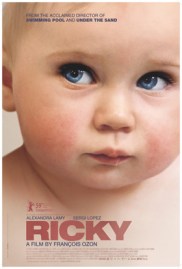
Now, I have seen Ozon make a movie about a teenage girl who chooses to be a prostitute, a widower who changes gender identity, and two tales about an obfuscated boundary between fiction and reality. These have been exciting takes indeed, though neither promise the sheer spectacle of “Ricky” (D / ). The film quite literally features a baby that sprouts wings (that resemble the kinds you’d see on a Butterball turkey at the supermarket).

It’s told with no urgency, no energy and no vitality – an especially shocking thing to say regarding Ozon, whose films are usually zany expressions of his twisted desires. Every moment rings false and every scene feels phoned in. To call it melodrama implies that there might be a moment resembling dramatic tension. There isn’t.

In fact, the cherubic titular character isn’t even the focus, he’s just the means for the mother to realize herself – but Ozon doesn’t develop her enough for us to give a damn. It’s just a bizarre spectacle and a head-scratcher of the worst variety.


REVIEW: Paris Can Wait

26 05 2017

Eleanor Coppola’s “Paris Can Wait” amounts to little more than a middle-aged French retread of “Leap Year” – rack your brains and see if you can remember that 2010 Amy Adams romance. The setup is simple: a charming American woman needs a ride to meet up with her romantic partner, so she must enlist the help of a native of a charming European man to whisk her across the rural backroads of his native country. Along the way, however, she begins to doubt her allegiances as the extended car trip softens her stance towards the courier.

“Paris Can Wait” offers many gorgeous views of scenic French vistas, but if that’s what Coppola wanted to shoot, then perhaps her energies are better spent filming a promotional spot for the country’s tourism bureau. With all due respect, I’ve seen half-hour TV specials with more meat on their bones than this film. The only bit of content worth serious deliberation is when Anne (Diane Lane) and Jacques (Arnaud Viard) discuss what separates the Americans from the French.

Otherwise, “Paris Can Wait” is a lavish nothingburger of a travelogue that is every bit as self-indulgent as an Adam Sandler comedy set in Hawaii or Africa. The cast and crew get to enjoy the majesty of France’s countryside – the culture, the food, the sheer joy of getting caught up in a moment of inexpressible beauty. We’re left to experience it from afar through the eyes of Anne and her digital camera, which she uses to take Instagram-style foodie pictures that she is too sheepish to share. I couldn’t even get a vicarious thrill from observing. C