REVIEW: Miele

6 12 2014

MieleCannes Film Festival – Un Certain Regard, 2013

The story of “Miele” begins where life would normally end.  Jasmine Trinca’s Irene (street name Miele, Italian for honey) spends her days helping the terminally ill in Rome end their misery with a strong dose of chemicals.  But all that comes to a screeching halt when she encounters a man, Grimaldi (Carlo Cecchi), who simply wants to stop living because of an existential pain, not a physical one.

What ensues is a very interesting friendship as Irene devotes herself not to illegally taking a life but to saving one.  The relationship between Irene and Grimaldi is always intriguing, and watching their interactions makes “Miele” worth a watch.  Trinca and Cecchi provide deeply humane performances as well, further augmenting the livelihood of the film in the face of mortality.

The plot does sag at times, and I would be lying if I said I didn’t come close to drifting off to sleep in my comfortable plush seat at Cannes.  (Those things always got me!)  But overall, I was glad I stumbled into this movie during some free time I had the festival.

It’s a promising feature debut for actress Valeria Golino, familiar to some as Susanna from “Rain Man.”  She certainly didn’t choose easy subject matter to begin her career behind the camera, and Golino handled it with respect and poise.  B2halfstars


F.I.L.M. of the Week (December 5, 2014)

5 12 2014

“The Man in the Moon” is a film that boasts many milestones.  Sadly, it is the last film of director Robert Mulligan, an accomplished (if not heavily rewarded) filmmaker whose credits include “To Kill a Mockingbird.”  On a lighter note, however, it is the debut film of Reese Witherspoon.

Her first performance comes not as some thankless supporting role but rather fortuitously as the lead in a very rare female coming-of-age story.  As Dani, a fiery 14-year-old experiencing a romantic awakening in 1950s rural Louisiana, Witherspoon gets some meaty material to chew on.  She spits sharp-tongued sass and wears her passionate emotions on her sleeve, foreshadowing two decades worth of memorable characters.

But “The Man in the Moon” is my pick for the “F.I.L.M. of the Week” not simply for the novelty of seeing a pint-sized Elle Woods.  The movie actually holds up quite well as a whole, providing a rather stirring emotional journey.  (Don’t believe me?  Lena Dunham and Jimmy Fallon both count themselves as fans, even raving at length about it.)  Obvious, unabashed melodrama rarely works this well.

Mulligan supplies the film with plenty of corny underscoring and heightened sentimentality, which complements some of the plot developments that feel ripped out of a soap opera.  Yet these elements hardly stifle the satisfaction of watching “The Man in the Moon.”  It captures an innocence and purity of spirit that can supersede the banalities.

As Dani pursues her first love, her older farmhand neighbor Court (Jason London), something always rings beautifully true.  The film understands both the joy of discovering shared affection as well as the pain of uncovering competing attractions, bundling them all together into one touching package.  I just wish I was around in 1991 to see this when it came out, if only so I could have called that Reese Witherspoon was headed for stardom.  Perhaps the only bigger slam dunk for success from a teenage acting debut was Natalie Portman in “The Professional.”


REVIEW: Through a Lens Darkly

4 12 2014

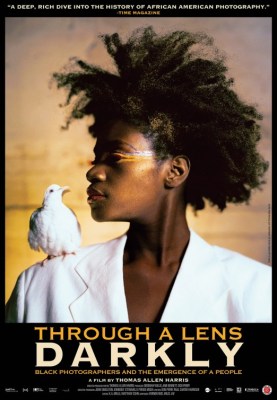
Through a Lens DarklyPhotography may have a verisimilitude afforded to few other art forms, but that does not mean they always present reality.  Pictures can distort and lie just as well as a more malleable medium.  In fact, it can even do so in a more pernicious manner since it can masquerade as the truth more easily.  As famed abolitionist Frederick Douglass once stated, “Negroes can never have a impartial portrait at the hands of white artists.”
Thomas Allen Harris’ impactful and important documentary “Through a Lens Darkly” chronicles a crucial cultural history of black photography.  Just as images have the power to liberate, they also have the ability to subjugate.  The latter was the case for the first century of photography and even beyond as white photographers used their control over imagery to perpetuate a steady stream of sordid stereotypes.

Harris details not just the photography itself but also the impact it had on a people.  A legacy of being the object of cultural representations rather than its subject took its toll, and only recently has a generation arisen to reverse and triumph over that reprehensible history.  “Through a Lens Darkly” is at its best, though, when Harris casts his gaze backwards in time; the artists simply do not receive the time necessary to develop as personalities.

Harris also tries to merge his own story into the narrative to personalize and humanize the facts, yet it just winds up being clutter. The history speaks for itself and does not require a side dish to make it feel like a full meal.  His “Through a Lens Darkly” is the kind of film every high school history class wishes their teacher would show because it is fascinatingly informative and, unfortunately, still extremely relevant.  B2halfstars


REVIEW: A Long Way Down

3 12 2014

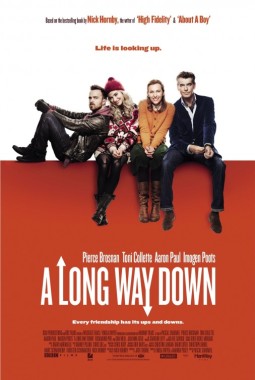
A Long Way DownThe chief problem with the film adaptation of Nick Hornby’s novel “A Long Way Down” is that the screenplay does not come from Hornby himself.  He is one of few writesrs capable of making telling a grounded, compassionate story out of a scenario involving an accidental New Year’s Eve convening of four suicidal individuals on a London rooftop.

The gathering is eclectic, to say the least.  Among the bunch is a disgraced news anchor Martin (Pierce Brosnan), down-and-out American ex-patriot rocker-cum-pizza boy JJ (Aaron Paul), rebellious wild child Jess (Imogen Poots), and Maureen (Toni Collette), a single mother whose life consist solely of caring for her disabled child.  Nothing would ever bring them together but death, and nothing could keep them together but life. Contradictions and reversals underlie almost all of their story, all of which Hornby navigates gracefully.

Moreover, each character got a chance to narrate their own take on events and plumb the depths of their deep despair on the page.  That wealth of information is lost in the changeover to cinema, and nothing really replaces its intimate gaze into their troubles.  Jack Thorne’s adaptation is not terrible, but it clearly lacks the spark and panache of the source material.  He just captures the general essence of each character, only skimming the surface in the roughly 90 minutes available in “A Long Way Down.”

Director Pascal Chaumeil delivers a film that is definitely fun and entertaining in parts, yet it pales in comparisons to the dizzying highs and devastating lows of reading the novel.  He knows not to attempt the tricky tonal high-wire act of Hornby’s prose, though Chaumeil might have been better off emphasizing either the drama or the comedy of the story rather than taking his nondescript, wishy-washy approach.  His “A Long Way Down” feels short on personality, a real shame given how much Hornby’s book had to spare.  B-2stars


REVIEW: The Good Lie

2 12 2014

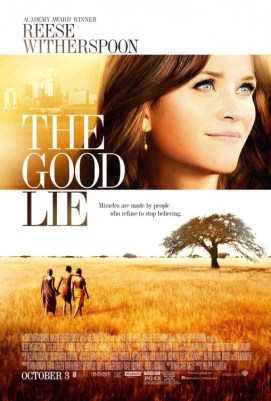
The Good LieThe poster for “The Good Lie” features the film’s subjects, three Lost Boys of the Sudan, collectively assuming the same amount of space as Reese Witherspoon’s glistening face.  This ratio, shockingly, does not apply to screen time.  Despite needing the Oscar-winner’s clout to sell the film, Witherspoon and the rest of the American characters (including Corey Stoll from “House of Cards”) are firmly peripheral figures.

The only thing “The Good Lie” shares with “The Blind Side,” another tale of black triumph over a devastating history, is an executive producer.  The film’s story, as crafted by screenwriter Margaret Nagle, casts the white American characters less as enablers of black progress and more as an impediment to it.  Witherspoon’s Carrie, an employment counselor, and host Pamela (Sarah Baker) do not lack in good intentions; they are just not particularly well-equipped to meet the complex needs of the Sudanese refugees.

Director Phillipe Falardeau does not shy away from depicting what exactly the Lost Boys Mamere, Jeremiah, and Paul have fled.  “The Good Lie” spends a good thirty minutes driving home the horrors of the Sudanese war, showing everything from the slaughter of a village to the grueling walk on which a pack of surviving children have to embark to find safety.  Falaradeau never reduces their harrowing journey to saccharine tragedy, largely because the barbarism speaks for itself.  The sight of a dead child and turgid bodies floating down a river requires no supplementary cue to inspire shock and sadness.

While they may not face imminent threats to their survival after their rescue, the refugees still face hardships at the hands of an unfeeling system.  An inane regulation prohibits their sister Abital from living with the Lost Boys, and they are not made aware of this until airport authorities enforce their painful separation.  And as if the bureaucracy they must encounter to correct it was not unfeeling enough, the Lost Boys encounter employer after employer with no respect for the incredible pain they have suffered.

“The Good Lie” is the rare film that grants displaced people agency in the overcoming of their circumstances.  The Lost Boys can claim responsibility for their own success, owing little to self-serving whites with a savior complex.  When they tell Carrie at one point that her fighting on their behalf is unnecessary because it is not her war, a statement that resonates powerfully on behalf of marginalized communities.  Unfortunately, the narrative sputters out too much in the third act to allow the movie to have the same effect.  B-2stars


REVIEW: The Theory of Everything

1 12 2014

‘Tis the season when phenomenal performances occur in decently passable films, and “The Theory of Everything” has arrived to fit that bill.   The movie is little more than a stage for a stunning physical transformation by Eddie Redmayne and a formidable emotional turn by Felicity Jones.  Their work shines particularly brightly because the film does not present anything else nearly as remarkable as them.  And actually, this hardly proves bothersome.

Director James Marsh and writer Anthony McCarten certainly provide admirable mood and story, respectively, to bring Jane and Stephen Hawking’s life and love to the screen.  They manage to pull off “The Theory of Everything” as a two-hander, giving both characters roughly proportionate screen time and development.  Normally, this kind of tale makes the woman subordinate to the man, reducing her to little more than a support system for her partner.  (Ahem, “The King’s Speech.”)

Granted, this was not too daunting of a task given that the source material is a book by Jane not solely about his illness and ingenuity but about their life together.  McCarten wisely keeps her story a central component of the film.  She is more than just the opposite that attracts him once, marries him, and then sits quietly on the sidelines as he acquires his own goals.  Jane is a person with flaws and ambitions in her own right, and by allowing her struggles equal credence, “The Theory of Everything” gives her both agency and weight in the overarching narrative.

As Stephen pursues his equation to encompass relativity and quantum mechanics, Jane is putting in the labor to achieve her own theory of everything.  She wants to serve as a wife and mother as well as attain her Ph.D. in Spanish medieval poetry.  She seeks not only to give love but also to receive it, and the latter becomes a source of compelling tension when Steven’s condition deteriorates to critical levels.  Jones shines in these later scenes, illustrating Jane’s good-hearted attempts to maintain a cheery caretaker’s facade.  Behind it all, though, Jane clearly yearns for the kinds of affection which her husband can no longer supply.

Read the rest of this entry »


REVIEW: Hide Your Smiling Faces

30 11 2014

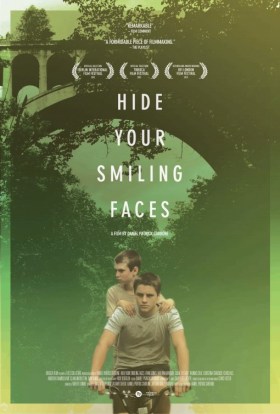
Hide Your Smiling FacesRiverRun International Film Festival

The coming-of-age film is quite common nowadays, in a way that almost transcends genre.  They came as comedies like “American Pie” or “Moonrise Kingdom,” dramas like “An Education” or “Mud,” and even action films like “Super 8.”

Those films, however, all seem to arrive at a point further forwards on the supposedly straight line towards maturity.  In the cinema, coming of age usually means something is gained.  Yet rarely do filmmakers ever discuss what is lost: innocence.

Enter Daniel Patrick Carbone’s “Hide Your Smiling Faces,” which occupies a very unique position in relation to its peers.  This debut feature neither yearns nostalgically for the simplicity or childhood nor exuberantly trumpets the virtues of growing up.  Carbone simply presents these events and their effects on the film’s young protagonists with a compelling sense of presence.

The focus of “Hide Your Smiling Faces” is not on the past or the future but rather the unspectacular now.  And from such a vantage point, Carbone can engross us all the more in the proceedings.  His film is so rooted in the present tense that it becomes effortless to sync the experience of watching “Hide Your Smiling Faces” with the discoveries of Tommy and Eric (Ryan Jones and Nathan Varnson, respectively).

And remarkably, Carbone even manages to achieve all of this with a chillingly distant and removed camera.  In spite of the film’s presumptively low budget, the look of “Hide Your Smiling Faces” closely resembles the aesthetic of well-financed “The Place Beyond the Pines.”  He and cinematographer Nicholas Bentgen capture the surprisingly striking beauty of the New Jersey forests (call it the anti-“Jersey Shore”), both in its spacious expanses and its secretive enclaves.

But more importantly, they capture adolescence in all its frustrations and confusions.  As Tommy and Eric attempt to make sense of several tragic events in their community, we observe them internalizing the anguish and ask profound questions about existence and mortality.  They have frank discussions about these events seemingly unrelated to them yet are shaping the very people they will turn out to be.

The 80 minutes we spend with them feel utterly complete, even though “Hide Your Smiling Faces” really only grants us the beginning of their journey towards an expanded mind.  In celebrating the importance of this initial phase without showing the ultimate destination, we come to appreciate the harrowing passage all the more.  B+3stars


REVIEW: The Homesman

29 11 2014

The HomesmanHistorically speaking, the Western has not been the most hospitable type of movie to the female gender. This philosophical statement from the genre’s patron saint, John Wayne, pretty much says it all: “I stick to simple themes. Love. Hate. No nuances. I stay away from psychoanalyst’s couch scenes. Couches are good for one thing.”

Writer/director Tommy Lee Jones’ “The Homesman” provides an interesting rejoinder to that legacy of rugged masculinity through its protagonist, Hilary Swank’s Mary Bee Cuddy.  She is a gritty, hard-working single farmer in the Nebraska Territory who still maintains a sense of empathy and caring.  So, in other words, she balances traits that are socially gendered for both sexes.

She also initiates her own destiny rather than waiting around for someone else to save her, boldly proposing marriage to other landowners in order to consolidate property.  Unsurprisingly, in the 19th century just as today, men greet such a woman with suspicion.  And their favorite word to describe Cuddy?  Bossy, the very word for girls that outspoken feminist Sheryl Sandberg wants to ban.

Cuddy’s resolve certainly stands out not only for the film’s phylum but also within the movie itself, as women are otherwise made victims of rape or cruelly objectified by men.  This message is undeniably worthwhile, yet little else about “The Homesman” is.   The film is a meandering mess that no amount of advocacy can fully redeem.

Read the rest of this entry »


F.I.L.M. of the Week (November 28, 2014)

28 11 2014

The CruiseBefore he was fictionalizing the pursuits of uncommonly dedicated American men, Bennett Miller was chronicling a real one.  His 1998 directorial debut “The Cruise” was actually a documentary, not a narrative film.  But rest assured, the path Miller charts is still every bit as fascinating as his more recent work.
The non-fiction tale is an interesting experiment in subjectivity, as Miller lets the narration flow purely from his only character, Timothy “Speed” Levitch.  “The Cruise” is essentially a 75-minute long spiel of Levitch talking, both in his vocation as a guide on a New York City tour bus and in his personal life.  This uninterrupted biography is my “F.I.L.M. of the Week” because of the curiosity such a tightly focused spotlight invites.

Levitch’s knowledge of New York’s history is impeccable, perhaps a bit pedantic at times.  (Fun fact I learned from watching: George Washington took the oath of office to become our first President on Wall Street.  So no wonder our government is so beholden to business interests!)  He is distinct, however, in his remarkable delivery of the wealth of information he possesses.  Levitch does not simply regurgitate facts; he is a poet laureate of the mean streets and a true mythologizer of his city.

But Miller steps down from the double-decker bus and shows who Levitch is behind the bombast.  As it turns out, he has a whole host of resentments that he does not shy away from calling out.  Levitch calls out the family members who did not believe in him and the people who refused to read his screenplay, just to name a few.

“The Cruise” does not force reconciliation of these two sides of Levitch.  Is it possible that a man is both the good-natured jokester who protests workplace uniforms because it will ruin his chance to pick up chicks as well as a bitter misanthrope?  Once again, Miller does not provide the solution to his puzzling protagonist, just all the pieces for personal interpretation.


REVIEW: Wild

26 11 2014

WildTelluride Film Festival

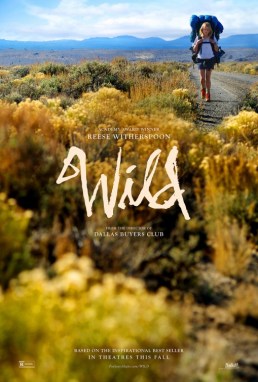
On the page, Cheryl Strayed’s memoir “Wild” is nothing particularly noteworthy.  While she tells her story of hiking the Pacific Crest Trail with raw honesty, the book is often little more than a hybrid of “Eat Pray Love” and “Into the Wild” that insists on its own importance.  The grueling odyssey is enlightening into the evolution of her psyche, though it usually achieves such an effect by excessive elucidation.

On the big screen, however, “Wild” is an altogether different beast.  In fact, it is better.  The book fell into the hands of a caring filmmaking team that sees the cinema in Strayed’s tale.  The collaboration of star Reese Witherspoon, screenwriter Nick Hornby, and editor/director Jean-Marc Vallée yields a wholly gratifying film experience because each uses their own set of talents to draw out the soul of the book.

Hornby is among the rare breed of writers who can balance the role of humorist and humanist.  Whether in his own novels or adapting someone else’s words for the screen, as he did in 2009 with “An Education,” Hornby’s stories percolate with snappy wit and superb characterization.  Here, almost all of that skill goes into the development of Cheryl, whose 1,100 mile solo hike virtually makes for a one-woman show.

The dearth of conversational opportunities hardly proves daunting for Hornby, who ensures the film flows effortlessly and entertainingly.  There is the obvious and occasional recourse to flashback to break up the monotony of her trek, sure, yet these glimpses from the past do not drive the narrative.  In fact, these scenes are among the least effective in “Wild” because they are never quite clear as to why Cheryl decides to take off on this foolish quest in the first place.  The past provides the background for the character, just not necessarily the journey.

Read the rest of this entry »


REVIEW: Inherent Vice

25 11 2014

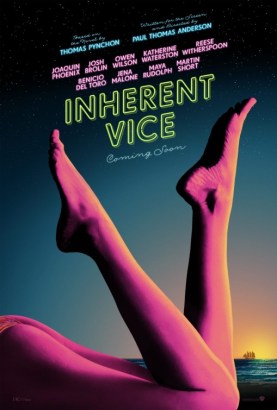
Inherent ViceNew York Film Festival

Thomas Pynchon’s novel “Inherent Vice” ends with his chief character, Doc Sportello,  attempting to discern shapes within a haze that has formed outside his car window.  Not to worry, this is not a spoiler since screenwriter and director Paul Thomas Anderson chooses to end his cinematic adaptation on an entirely different note altogether.  But the passage is such an apropos summation of “Inherent Vice,” both in terms of its content and the ensuing experience, that it certainly deserves a place in the discussion.

While this is a not entirely unusual noir-tinged mystery surrounding corruption and vice, the story is hardly straightforward or easily discernible.  Characters drop in and out of the narrative at will, making it rather difficult to decipher who the key players really are.  Take no motivation and no appearance at face value, because it is likely to change in the blink of an eye.

Anderson cycles through events at such a dizzying speed that trying to connect the dots of “Inherent Vice” in real-time will only result in missing the next key piece of information.  (I found myself drawn to read Pynchon’s novel after seeing the movie to get a firmer grip on the plot.)  Might I suggest just to kick back, allow the film to wash over you, and let Joaquin Phoenix’s Doc Sportello be your spirit guide through the fog of Los Angeles in 1970.

In a fictional beach community outside the city proper, steadily stoned private eye Doc tries to make sense of a strange case in a transitional time period.  The city is still reeling from Manson mayhem, and hippies are no longer cute animals at the zoo but entities whose every move is subject to suspicion.  People are beginning to anticipate Nixonite and Reaganite malaise, though it remains unformed and intangible.  Ultimately, his understanding is about as good as ours – which is to say, it scarcely exists.  What begins as a routine investigation of Doc’s ex-flame and her rich new lover quickly spirals into something far more sprawling.

Read the rest of this entry »


REVIEW: Citizenfour

24 11 2014

Citizenfour“I love my country but fear my government” is the kind of trite maxim that mostly belongs on bumper stickers, yet it ought to express the reaction of any sane American to watching Laura Poitras’ exceptional documentary “Citizenfour.”  In her able balancing of both the conveyance of dense, important information with the telling of a personal, human narrative, she exemplifies all the best that cinema can offer as a platform for journalism.
“Citizenfour” does not merely provide an ex post facto documentation of the events; its production is deeply embedded in the unfolding of the events themselves.  Poitras and Glenn Greenwald, her print media colleague, were the first points of contact for the mysterious Citizenfour.  This mysterious whistleblower reached out to them in early 2013 through sporadic, encrypted communication.  He only hinted at a trove of explosive information in his possession, telling them little other than that the information would be worth their time.

When they traveled to Hong Kong to rendezvous with their informant, the duo had no idea that these documents would reveal massive illegal NSA domestic surveillance programs that were kept off the books.  After some careful maneuvering, they meet the source – Edward Snowden (who actually prefers to go by “Ed”).  His identity comes as no surprise, though his words and what they reveal about his personality and motivations provides a gripping, enlightening watch.

While Poitras is intimately involved with the events she portrays, her “Citizenfour” manages to keep a healthy distance away from the proceedings.  Even with her relative neutrality, the film both engrosses and enrages.  As she unspools the story behind the story, Poitras also manages to provide the most in-depth portrait of Snowden.  Clad in plained-colored T-shirts, he speaks of a convincing candor and conscience as he relays sophisticated technical knowledge into intelligible terms.

Read the rest of this entry »


REVIEW: Force Majeure

23 11 2014

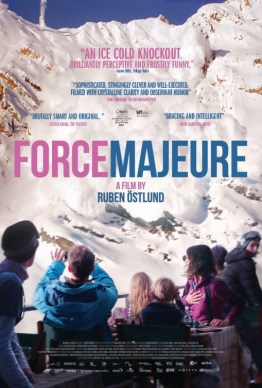
Force MajeureAfter beginning with some dreary exposition, Ruben Östlund’s “Force Majeure” really gets going when a manufactured avalanche spirals out of control onto the porch of a French ski resort’s restaurant.  Among the dining patrons are the maritally dissatisfied Tomas and Ebba, along with their two children.  When the torrent of snow comes barreling towards them, a “fight or flight” response activates in Tomas, who quickly grabs his phone and gloves before darting for cover.

Given the rockiness of their marriage before the vacation, which was ironically planned to bring the family closer together, the incident puts even more stress on Tomas and Ebba’s relationship.  “Force Majeure” milks this microcosmic moment for all the drama it can … and then the film continues on for another hour.  Östlund beats the same tired drum over and over, never really finding the profound statement about marriage that he seeks.  At one point, he even shifts for nearly ten minutes to two peripheral characters to have them talk through the event in question, only to come to no greater understanding.

Strangely, the film’s most intriguing aspects have little to do with Tomas and Ebba.  Undercurrents of technology as an inhibitor of intimacy, the liberating potential of defying monogamy, and the omnipresence of a voyeuristic help staff held far more promise than the main storyline of “Force Majeure.”  The austere fighting between the couples just runs in circles around the real issues when they really just needed to take the gloves off and duke it out, “Revolutionary Road” style.  C+2stars


REVIEW: Parkland

22 11 2014

The JFK assassination drama “Parkland” comes courtesy of Tom Hanks, who was dubbed America’s “history maker” by Time.  Sounds like a legitimate enough credential to qualify the film, since, after all, Hanks is one of the people behind widely acclaimed HBO series like “Band of Brothers” and “The Pacific.”

But “Parkland” falls short of the prestige of such premium cable programming, instead feeling more in the vein of another History Channel special attempting to cash in on mourn the passing of our slain leader.  Everything about Peter Landesman’s film seems of low production value, a quality that shows when accompanied by such acclaimed actors as Billy Bob Thornton, Jacki Weaver, and Paul Giamatti.

The movie follows a wide variety of supporting characters who found their lives changed by the shocking events in Dallas on November 22, 1963.  “Parkland” includes everything from Abraham Zapruder (Giamatti) filming his notorious home movie at the scene, to the medics trying to save Kennedy’s life (Zac Efron, Marcia Gay Harden), and even Lee Harvey Oswald’s wacky mother (Weaver) in this broad catchall of perspectives left out of most history books.  Most get ignored for a reason: they are secondary narratives

Perhaps if each story received feature-length treatment, they would provide some sense of satisfaction.  But “Parkland” can only dip a toe into a single narrative with its prevailing approach breadth over depth, and it gives a distinct impression of shallowness.  Landesman’s film can really only excite and enlighten in the rare expertly realized moment: the second when the hospital crew realizes the gravity of their task, the efforts to fit Kennedy’s casket on board Air Force One, the first glimpse of the Zapruder film.  C2stars


F.I.L.M. of the Week (November 21, 2014)

21 11 2014

Academy Award winner Charlize Theron is Sylvia, a Portland restaurant worker who feels distinctly spiritually absent.  She still has a cutting problem that she manages to keep inconspicuous from the world, and she frequently engages in sex with men in an attempt to feel something.  Theron gives one of those “physically naked signifying emotionally naked” kind of performances, which proves hauntingly effective.

Academy Award winner Kim Basinger is Gina, a wife and mother in New Mexico who can only find happiness in the embrace of her Hispanic lover, Nick.  Their affair crosses not just ethnic but also social class boundaries, two status markers that erect rigid divisions in their small community.

Now an Academy Award winner, Jennifer Lawrence is Mariana, a self-sufficient teen thrown into the responsibilities of surrogate motherhood far too early.  (The character now makes for an interesting antecedent to “Winter’s Bone” as well as “The Hunger Games.”)  She is at a transitional moment in her life, unsure of how to feel about her inattentive mother and budding romantic prospect.  Lawrence marvelously conveys both her tenacity and her insecurity.

“The Burning Plain” is a movie where – gasp! – all these women’s stories connect, as characters often tended to be linked somehow in the first decade of the 2000s.  This is my selection for the “F.I.L.M. of the Week,” though, because writer/director Guillermo Arriaga ties these disparate storylines into one complete package.  (Arriaga had plenty of practice writing the first three “hyperlink cinema” screenplays for director Alejandro González Iñárritu.)  His film is a plaintive meditation on the paralyzing effects of guilt that lands with somber impact thanks to a carefully crafted script and three quietly moving female performances.