REVIEW: World War Z

22 07 2013

I will say, I do admire the inverted structure of Marc Forster’s “World War Z” (if you choose to give him ownership in spite of the film’s troubled production, which reportedly saw he and star/producer Brad Pitt at the point of not speaking). It’s bold to decrescendo over the course of a movie, bringing out the big guns in what could be considered exposition and then end with a muted but suspenseful climax.

But while it’s definitely not ordinary, “World War Z” most certainly is not extraordinary.  The film is an uninspired hybrid of “Contagion” and “I Am Legend,” capturing neither the intelligence of the former nor the intensity of the latter. It skimps out on characterization, expecting us to root for its main character because … well, he’s Brad Pitt. Relying on iconography can help with identification, but it’s never an excuse to provide scant details or motivations for a character. Pitt’s Gerry Lane is quite possibly the most bland protagonist of a movie with such a whopping budget. He’s just a through-line for the film’s events, boasting no inner life or personal complexity.

While Gerry travels from Philadelphia to Korea to Israel to the UK, the movie never really feels as global a film as the name “World War Z” would imply. Nor does it ever really feel like much of a conflict because the zombies are mostly kept at bay the entire movie. By the end, it all winds up feeling like a self-congratulatory “Thanks, Brad Pitt for saving the world!” show.

Granted, if I was writing the checks for an extravaganza such as “World War Z,” I would want to give myself a pat on the back too. But such a proclivity makes the film a remarkably inconsequential affair for everyone else. We are denied the vicarious thrill of adventure and salvation, just as we are unable to grasp the fear and trepidation of the other billions affected by the scarcely seen zombies.  B-2stars


REVIEW: The Heat

21 07 2013

I won’t deny that I laughed a hefty amount in “The Heat.”  It’s definitely a far cry from Sandra Bullock and Melissa McCarthy’s respective greatest comedic hits, “Miss Congeniality” and “Bridesmaids.”  But it’s still a rollickingly funny romp, effectively harnessing the slightly awkward uptightness of Bullock and the bizarre outrageousness of McCarthy into a laugh machine.

It’s not the most efficient machine, however.  “The Heat” never takes a moment to slow down the pace of the humor, operating at full capacity for nearly two hours.  As a result, there are quite a few jokes that fall flat.  But over the course of a fairly bloated runtime, director Paul Feig and writer Kate Dippold more than make up for these missed opportunities.

The film’s Achilles heel is Dippold’s script, which just isn’t as good as the film’s humor.  It’s more of a through line than a story, connecting the dots between the jokes.  “The Heat” is predictable and formulaic, more or less writing Gracie Hart and wacky bridesmaid Megan into a standard police investigation film.

Sadly, two years after Paul Feig’s own “Bridesmaids” lit the world on fire and promised a more prominent future for female-headlined film, “The Heat” is the only studio film of summer 2013 to feature a female leading character.  And sadly, Dippold blows the chance to make the ultimate feminist statement with some cursory scenes addressing gender struggles in the typically masculine work of law enforcement.  The fact that two women were in a buddy cop flick and no one seemed to bat an eyelid is a pretty telling statement in and of itself.  B-2stars


REVIEW: Only God Forgives

20 07 2013

Only God ForgivesCannes Film Festival – Official Competition
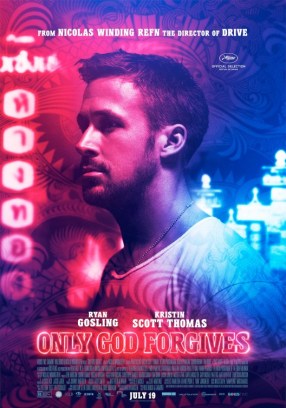
Nicolas Winding Refn’s “Drive” was mediocre genre revisionism.  His latest film, “Only God Forgives,” is an attempt at surrealist action that borders on the experimental.  On principle, I’d like to say I preferred the latter since it was at least ambitious.

However, after a second watch from the comforts of my own bed (the first, a late-night screening in Cannes, put me to sleep for large chunks), I really cannot bring myself to endorse “Only God Forgives.”  It aims for David Lynch or Alexander Jodorowsky, the great surrealist filmmaker to whom the film is dedicated, but falls far short of the mark.  Teasing at a dreamlike experience is not enough – the film must deliver, and it cannot execute on its promise.

Refn’s film lacks any internal logic, bizarrely floating through non-related scenes of a sadistic Thai police officer and Ryan Gosling’s stoically mute Julian.  All great actors run the risk of turning themselves into a cliché (see: Johnny Depp), and I’m sorry to report that we may have reached a tipping point with Gosling.  He’s so frustratingly not a presence in the film that it does not play as tough anymore; it’s just plain obnoxious.

Thankfully, the film does deploy Kristin Scott Thomas to talk enough for the both of them.  As a psychotic mother, perhaps a physical embodiment of Oedipal desire, she’s a firecracker who adds a jolt of energy every time she comes on screen.  Sadly, that’s only a few scenes.

Read the rest of this entry »


REVIEW: Man of Steel

20 07 2013

Look, it’s a bird!  No, it’s a plane!  Worse, it’s Zack Snyder’s “Man of Steel,” a bomb of heroic proportions torpedoing its way towards a multiplex near you to steal 2 1/2 hours of your life and $10 of your money.  How this could have been touched by moviemaking Midas himself, Christopher Nolan, truly escapes me.

I personally saw nothing horrendously wrong with Bryan Singer’s “Superman Returns,” though I haven’t seen it since 2006 (a fact that may ultimately speak loudest to its quality).  However, I can point out a number of gaping flaws in “Man of Steel.”  It’s one thing to leave a movie nonplussed but another entirely to be angry.  If you hadn’t already guessed, I was the latter upon leaving this film.

Most issues seemed to spring from the lackluster story.  The film takes on the practically futile task of humanizing Superman/Clark Kent/Kal-El, an invincible being.  He’s always had an identification problem because, well, how many of us can relate to someone who is essentially perfect?  (I’ll speak for myself and say that I certainly cannot.)  While the drama of Clark’s grappling with his power is relatively compelling, it’s told only in brief flashbacks.

And these scenes with his adoptive parents, played by Kevin Costner and Diane Lane, really only serve to play into the overarching Messianic allegory of the entire film.  I’m certainly not opposed to such grand implications, but they need to be done well (such as they were in Tom Hooper’s “Les Misérables“).  “Man of Steel” feels completely disingenuous, exploiting spirituality for its own gain.  If it were any more obvious about its overloaded metaphor, Henry Cavill’s Superman would be wearing the letter t across his chest.

Read the rest of this entry »


F.I.L.M. of the Week (July 19, 2013)

19 07 2013

Exporting RaymondIt’s all too easy to throw around the word universal; you can look and see I’m guilty of it myself.  While a nice idea, it is a little naive to assume that there can truly be an experience that unites the entire world.  It’s an especially tempting descriptor for comedies, which often play to broadly shared feelings to illicit the desired response.
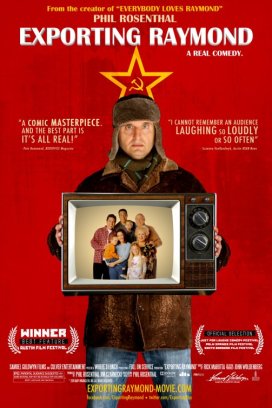
But in my pick for the “F.I.L.M. of the Week,” Phil Rosenthal’s documentary “Exporting Raymond,” we get a hilarious crash-course in how great a cultural divide can be.  Rosenthal, the creator of the hit CBS sitcom “Everybody Loves Raymond,” takes us along for the ride as he advises Russian television personnel as they struggle to adapt his show for their market.  To his surprise, more has to be changed than just the language.

As creative staff and executives prepare “Voroniny” to hit the Russian small screen, Rosenthal finds himself explaining things about Ray Barone and his family that he took for granted as just being understood.  The entire way in which Americans enact concepts of family, gender, and power are foreign to the Russians.  Rosenthal finds himself in the precarious position of trying to maintain the integrity of “Everybody Loves Raymond” without setting it up for failure in the Russian marketplace.

For those like myself who found Ray’s antics quite relatable, “Exporting Raymond” is a gentle and well-meaning reminder that our response to his character is largely conditioned by the culture in which we watch him.  Rosenthal shows us how hard intercultural communication can be, but he ultimately demonstrates how valuable the additional understanding we gain really is.


REVIEW: Fruitvale Station

19 07 2013

Fruitvale StationCannes Film Festival – Un Certain Regard
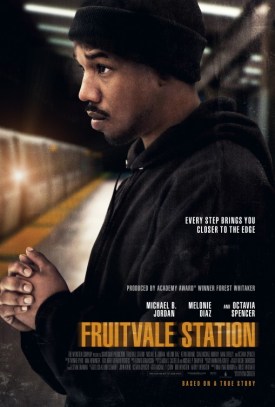
Fruitvale Station” makes no attempts to hide its bleak ending; before anything else, writer/director Ryan Coogler shows us the real-life death of the protagonist, Oscar Grant, as caught by a grainy cell phone camera.  Then we rewind the clock a day, and Michael B. Jordan assumes the role of Grant, a man with nobility and flaws just like any of us.

For an hour, Coogler walks us through the last day in his life.  It’s a poignant and well observed slice-of-life punctuated by Jordan’s great moments of humanity.  Yet without the knowledge that we’re witnessing a series of last moments in Grant’s life, the drama is essentially inconsequential.

Essentially dependent on dramatic irony for propulsion, the majority of “Fruitvale Station” feels like an average movie able to get away with not aiming for much.  But then, the inevitable conclusion arrives, and we’re faced with an incident of horrifying police brutality that claims Grant’s life (it’s hardly a spoiler, so get over it).  The emotionally charged moment is gripping and tense, enough to feel twice as long as the rest of the film.

Read the rest of this entry »


REVIEW: Despicable Me 2

18 07 2013

No one is mistaking Chris Meledandri’s Illumination Entertainment for Pixar.  Heck, on its best day, I don’t even think it stacks up with DreamWorks Animation.  But that’s not to say that “Despicable Me 2” doesn’t have a place in the market.

It’s a film content to be just simple and sophomoric, corny and childish – but who can blame them for making a kids movie that’s tailored towards children?  It’s got goofy laughs aplenty for the munchkins, and it’s not shudder-inducing for everyone else.  While “Despicable Me 2” doesn’t hit straight at the heart like a “Toy Story” movie, it’s lovable enough to bring out the soft side in everyone.

Though it hardly qualifies as TV-14 humor, “Despicable Me 2” boasts a completely successful bottling of Essence d’Kristen Wiig into an animated character.  Her Anti-Villain League agent Lucy has all the lovable awkwardness of Wiig complete with all her zany body contortions.  She makes up the deficit left by Steve Carell’s Gru and the adorable Agnes, who simply doesn’t have the same unbridled innocent charm as the original “Despicable Me.”

Yet while Agnes decreases, the Minions increase.  Those little yellow corn-nuggets of energy are back in full force, no longer relegated to side-show status like they were in the first film.  They are even better realized in “Despicable Me 2,” achieving a kind of humor not unlike that of silent comedians (albeit in a very watered down fashion).

Illumination certainly did a good job of looking at what worked in the 2010 film and made it even bigger and better for their sequel.  In other words, they’ve come to the market in 2013 with a product even better suited for the moviegoers that made “Despicable Me” such a hit 3 years ago.  That may be good for investors, but it’s not all that great for the fans.  “Despicable Me 2,” not unlike its predecessor, is a rather disposable movie that charms during the experience but dissipates the second you leave the theater.  Though it is funny, it is also rather forgettable.  B-2stars


REVIEW: What Maisie Knew

22 06 2013

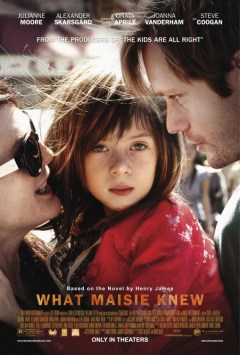
Dramatizations of divorce from “Kramer vs. Kramer” to “Mrs. Doubtfire” to “A Separation” have been echoing the same message for years: though the process may be messy and sticky for the parents, the ultimate losers are the children.  “What Maisie Knew,” the latest entry into this canon, tries to offer something similar.  Largely shot from the eye level of its titular tyke, the film conveys successfully just how ugly and catty dissolving a marriage really gets.

Yet at the heart of “What Maisie Knew,” there’s a cruel irony that kept nagging at me as the film dragged on.  The movie scolds parents who forget about the children in the process of sorting out their issues, but “What Maisie Knew” does not practice what it preaches.  Like Julianne Moore’s hopelessly selfish mother Susanna and Steve Coogan’s ill-equipped workaholic father Beale, the filmmakers ultimately lose Maisie’s story and centrality.

By the second half of the film, Maisie is no longer the protagonist; she’s merely a means to an end.  Taking center stage is Alexander Skarsgard’s Lincoln, Susanna’s boyfriend who quickly gets thrust into the role of husband and stepfather, and Joanna Vanderham’s Margo, a former babysitter at the root of the divorce itself.  These two adults are interesting enough, to be sure, but I didn’t want to watch their story.

I came to watch Maisie and see how divorce affects poor, innocent children.  Newcomer Onata Aprile does a wonderful job eliciting sympathy and bringing emotion to her role.  It’s no Quvenzhané Wallis in “Beasts of the Southern Wild,” but it’s still impressive.  Wallis was given the ability to carry her film, though, and the risk paid off in spades.  “What Maisie Knew” doubts its lead, and it’s a mediocre film at best because of its shaky confidence and erratic focus.  C+ / 2stars


F.I.L.M. of the Week (June 21, 2013)

21 06 2013

As I’ve said, I don’t like Sofia Coppola movies.  And I think I liked “The Virgin Suicides” not because of her but in spite of her.  Perhaps because the films feels nothing like the rest of her work it’s my pick for the “F.I.L.M. of the Week.”

I’m certainly glad I held out on watching the film until I completed Jeffrey Eugenides’ novel, the source text for the film.  “The Virgin Suicides” is a richly observed tale of five sisters who each take their own lives over the course of a single year.  But it’s not from their point of view; it’s told from the perspective of their neighbors, observing their lives from a cool distance.  Specifically, it’s from the point of view of some young boys in the neighborhood who do not just watch – they peer, gaze, and spy.

Suicide becomes an excellent metaphor for the breakdown of community in modern America, a disease that grows when we place each other under a microscope.  It’s what happens when we treat the people in our lives as objects of fascination, not people.  Coppola bottles up this frustration with the suburban social dynamic and regurgitates it on screen with Eugenides’ vision totally intact.

She ultimately cannot compete with all the layers and detail of a novel, but film has never been a medium easily able to indulge in tangents and side stories.  Coppola aims to get at the feeling and mood of “The Virgin Suicides,” and she succeeds at communicating that eerie melancholy.  While we get to know the tragedy of the Lisbon sisters, we never really know anybody.  To paraphrase F. Scott Fitzgerald, we are both within and without of the story.

It turns out Sofia Coppola is actually a great narrative filmmaker, provided that narrative originally belonged to someone else.  Though “The Bling Ring” is adapted from a magazine article, so we will see if the streak continues.  But even if it doesn’t, “The Virgin Suicides” captures the improbable lightning of a novel in a succinct and memorable bottle of a film.


REVIEW: Somewhere

20 06 2013

SomewhereI’m not a fan of Sofia Coppola’s films – including “Lost in Translation,” which plenty seem to admire without caring for the rest of her work.  I find them vapid, vacuous, insipid … I could go through the whole thesaurus, but I think you get the point by now.  Whether it’s modern Tokyo or 18th century Versailles, the worlds she chooses to portray are often skin-deep and superficial.

Yet in “Somewhere,” those things aren’t nearly as brutal.  Coppola points her camera at the world of fame and excess in the Hollywood celebrity culture, which is by nature skin-deep and superficial.  The film finds a better link for Coppola between story and style, making her particular touch a little more purposeful.

That doesn’t make the film any less vapid, vacuous, and insipid, however; it just feels a little less aimless.  Coppola is as self-indulgent as ever in “Somewhere.”  A part of me wonders if she accidentally labeled her rough cut as the final cut.  There are extended sequences of Stephen Dorff’s Johnny Marco just riding around in his car.  We get to watch his daughter, Elle Fanning’s Cleo, do her whole ice skating routine.  Oh, and some terrible strippers get to perform their whole routine, totally uncut.

The film’s story, if you can even call it that, revolves around Johnny’s empty lifestyle as he fails at being a father, husband, and a functioning member of society.  In other words, “Somewhere” is totally pointless.  But that’s precisely Sofia Coppola’s point.  And despite the fact that I was often times tormented and agonized by Johnny’s lack of purpose or direction, I could at least take comfort in knowing that the woman behind the camera had one.  C+2stars


REVIEW: Nowhere Boy

19 06 2013

Layout 1Everyone loves the Beatles, right?  Well, just because you love the Beatles does not mean you will automatically love director Sam Taylor-Johnson’s “Nowhere Boy,” a chronicle of John Lennon’s formative years.

Maybe my view was tainted because I’m not a Lennon or Beatles obsessive.  I know the basics, your “Imagine” from his solo career and chart-toppers like “Hey Jude” and “All You Need Is Love.”  But I really haven’t invested much time in learning their history or going beyond the Beatles songs that everyone knows before they are aware that they know it.

So perhaps a Beatles neophyte fan such as myself missed some of the Easter Egg-style references.  I caught a few of the blatant ones, but I still felt like I was missing something watching the movie.

I will tell you what I did not miss in “Nowhere Boy.”  I definitely caught the lackluster performance of Aaron Johnson as Lennon, who has a way of sucking the life out of every movie he’s in, be it “Savages” or “Anna Karenina.”  I absolutely noticed the lack of compelling drama, be it between his aunt who raised him (a nonetheless good Kristin Scott Thomas) and his biological mother (Anne-Marie Duff).  I did, however, also hear some good music that kept my ears happy while the same could not be said for my eyes and my mind.  C2stars


REVIEW: Iron Man 3

18 06 2013

History will look back at the summer of 2013 and remember most of all the precipitous decline of the “Hangover” series.  However, there’s another franchise that has brought me disappointment this summer as well.

In the summer of 2008, I was over the moon for Jon Favreau’s “Iron Man,” so much so that I rushed out on opening night for the disappointing “Iron Man 2.”  By the time Tony Stark suited up for “The Avengers,” I really could have cared less.

Perhaps it’s most telling that the way I saw Shane Black’s “Iron Man 3” was on a Thursday afternoon when a combination of rain and wind knocked out my Wi-Fi.  Otherwise, I would have been content to sit in bed and watch a movie on Netflix.  But the big event film of the summer, the $175 million dollar opener that was second-best ever, to me was just another movie.

It was really just a box to check.  Since I’d invested 4 hours in Tony Stark’s story already (6 if you count “The Avengers”), I figured I probably ought to finish it.  And seeing a film out of misplaced obligation instead of real desire isn’t necessarily the most fulfilling feeling.

“Iron Man 3,” all in all, was entertaining.  It could have been a lot worse, and it was an improvement from its predecessor.  But it’s such a stark decline from the first installment that being more bad than good can hardly be considered a victory.

The visuals are good, although that ending sequence seemed to be more or less lifted from the lackluster summer 2010 bust “The A-Team” and Steven Spielberg’s “The Adventures of Tintin.”  The story manages to move along at a decent clip without ever boring too much, yet it lacks the effortless engagement encouraged by the original film.

The biggest difference, though, is Robert Downey Jr., who moved from being the series’ X-factor to its hidden liability.  His Tony Stark began as an endearingly sardonic character whose spiny personality could be accepted as just the inability to look at life seriously.  Over the course of the series, the scribes have tried to harden Stark to hide the fact that Downey Jr. had grown smugly complacent to the point of disdaining the other characters.  The darker, somber tone hasn’t worked because, well, Jon Favreau and Shane Black are not Christopher Nolan.

I’ve also felt that Downey Jr. has disdained the audience as well, as if every icy quip is played with the subtext of “I’m making millions of dollars for being the jerk you can’t be.”  While “Iron Man 3” seems to say goodbye to Tony Stark (or at least Robert Downey Jr. playing him), it’s not a good riddance.  But I’m certainly not choked up or even upset.  Not at this level of mediocrity.  B-2stars


REVIEW: The Hangover Part III

17 06 2013

Two summers ago, I expressed my frustration with the inertia of the “Hangover” franchise in my review for the carbon-copy sequel.  I wrote, “‘The Hangover Part II‘ is like breathing in airplane air.  Recycled, stale, but better than not having air to breathe at all.  In essence, it gives you exactly what you expected – and nothing more.”  Had I known yet another follow-up was in the pipelines, I would have begged the question, “Is it too much to ask for something different?”

In which case, I would never have been so unhappy to have a movie give me exactly what I asked of it.  “The Hangover Part III” is definitely not the same as its predecessors.  But lest we forget, change is not always good.  In this case, it’s just kind of depressing to see how fast and hard a comedic sensation can fall.  The series’ legacy will now likely be one of a studio that took a truly original concept, hackneyed it to the point of annoyance, and then besmirched its name entirely.

In fact, it’s hard to call “The Hangover Part III” much a comedy at all.  Sure, there’s the occasional clever quip, but the writers’ new plot structure forays the series into a new genre entirely.  It’s essentially a chase film, an action-thriller that squeezes out a laugh every once in a while.

The so-called “comedy” of this installment is lazy and, quite frankly, offensive.  The nuance of the original “Hangover” is long gone, replaced here by cheap gags that are above the most immature of middle schoolers.  All “The Hangover Part III” has to offer is homophobic humor, offering up gays as objects to be ridiculed.

Read the rest of this entry »


REVIEW: Frances Ha

16 06 2013

Frances HaFrances Ha” may be a comedy, but it’s a movie that gives me nightmares.  Along with the equally uproarious “Girls,” writer/star Greta Gerwig gives me little reason to be optimistic for the future.  Heck, after watching this movie, I wondered why I’d ever want to graduate college.  (Don’t worry, mom and dad, I’ll still be done in four years!)

This recent explosion in cultural narratives coming from frustrated twentysomethings has given me a new greatest fear that far exceeds needles and heights.  It’s the idea that my destiny is to end up overeducated and underemployed.  Especially now that everyone has pegged down us millenials as “entitled” and “narcissistic,” it’s like the walls are closing in on me/us.

Gerwig’s Frances, a 27-year-old still getting adjusted to the pressures and demands of adulthood, is a particularly aimless meanderer.  She knows that she needs to make major  changes in order to get her life together, but she lacks a lot of the drive or capacity to follow through on any of them.  As a result, she makes the best of the mess and lives to make the best of her situation with little regard for its future implications.

On her best days, Frances is a joyful opportunist.  Meanwhile, on her worst days, she’s a sloth that borders on being completely unsympathetic.  Perhaps why I had trouble embracing Frances is that she does hit rather close to home.  Unlike the characters on “Girls,” who often find themselves thwarted by unfortunate circumstances or society as a whole, “Frances Ha” is a grimly humorous reminder that many of our issues are thanks to our own doing.
Read the rest of this entry »


REVIEW: The Great Gatsby

15 06 2013

Cannes Film Festival – Out of Competition (Opening Film)

I found F. Scott Fitzgerald’s great American novel “The Great Gatsby” completely captivating and relevant in 11th grade English.  However, I acknowledge that plenty of people may have had the Jazz Age classic spoiled by poor instruction or a general classroom environment.

For all those people who think classic literature has to be boring and stuffy, let me introduce you to Baz Luhrmann, the world’s coolest English teacher.  He takes antiquated texts like Shakespeare’s “Romeo & Juliet” and reinterprets them for a modern audience, breathing new life into them in the process.  Though some scoff at the idea of combining Fitzgerald and Fergie or jazz and Jay-Z,  it’s that kind of madness that makes Luhrmann’s adaptation of “The Great Gatsby” such a delightfully fresh take on an old favorite.

It’s Luhrmann on all cylinders firing, which is the source of the film’s vibrant strengths.  On the other hand, it’s also the root of the film’s biggest flaws.  Though “The Great Gatsby” is brilliantly refashioned in the image of “Moulin Rouge,” it’s sometimes a little too pumped up for its own good.  Putting Fitzgerald on steroids comes with some loss of subtlety, particularly in the form of his recurring motifs: the green light and Dr. T.J. Ecklenburg’s eyes.  Rather than letting them sneak up on you, Luhrmann hits you over the head with them like a sledgehammer as if to say, “PAY ATTENTION! THESE ARE REALLY IMPORTANT!”

Read the rest of this entry »