REVIEW: Everything Must Go

23 08 2011

I’m not quite sure who thought of casting Will Ferrell as the beleaguered everyman in the recessionary fable “Everything Must Go,” but the choice actually ends up working in unexpectedly pleasant ways.  It’s the perfect kind of art imitating life, one where the movie reflects the mindset of the actor and provides insight into their mindset.  It doesn’t distract from the story or the performance but makes for an interesting conversation point after the film stops rolling.  It gives us a glimpse of humanity itself as we can feel the juncture of character and actor in a non-invasive way, and with a movie like this celebrating the inherent decency of people in trying times, you couldn’t ask for much more.

Ferrell is definitely coming to one of those junctures in his career where things haven’t been going well, and they could soon balloon out of control if he doesn’t start making better movies.  The quality has gone down, and the audiences have been coming less and less.  Similarly, many Americans are finding themselves at a life juncture where things have gone from bad to worse thanks to the economy, and things could continue to go downhill.  Ferrell finds this connection with the audience and forms an easy rapport with them, despite playing a somewhat unlikable slob reeling from the world’s worst day.

If you think a double feature of “Semi-Pro” and “Land of the Lost” is agonizing, try losing your job and getting kicked out of the house by your wife in a matter of hours.  Now that’s pain.  Ferrell’s Nicholas Halsey is forced to face a new life, one where all of his possessions can be enumerated on the front lawn.  At first, he laments the hard times by kicking back in a La-Z Boy with can after can of PBR.
Read the rest of this entry »


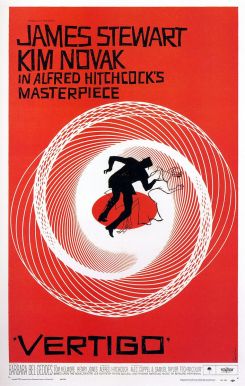
HITCHCOCKED: “Vertigo” (1958)

22 08 2011

I’m fully prepared to take a lot of heat for what I’m about to say.  In fact, as I ponder making this statement in my head, I myself wonder if I’m a humongous hypocrite.  What I’m about to suggest could spark some serious outrage, perhaps on the level of suggesting “Citizen Kane” isn’t all that great (which I have gone on the record as saying is false).

I’d like to see “Vertigo,” with the same script, comparable actors, and the same Hitchcock penchant for filmmaking, be remade in the present day.

There, I said it.  It’s out there, I can’t take it back.  But while watching “Vertigo,” I was struck by the powerful and affecting portrait of a mentally disturbed policeman played by James Stewart.  I found Kim Novak’s work as the woman who claims to be possessed by the spirit of a dead woman to be frightening.  I felt Hitchcock’s masterful storytelling with the camera to be totally present.  I was totally engaged by the smart writing, which harkens to a mystery of almost mythical proportions.

Yet the visuals just felt so … outdated.  Yes, this is obvious given that the movie is over half a century old.  Obviously, it was about as good as it got back then.  But this is 2011, and when the camera is stuck in the past while the story remains timeless, it can’t help but be distracting.  In fact, it goes beyond that – it detracts.  The movie’s style now alienates us from the movie, pulling us out to remind us, “Oh, this is a movie, and this is how they could visually represent the fear of heights back then.”

So to maintain that pervasive sense of acrophobia, why not remake “Vertigo” with modern technology that would make this classic story work so much better for the audiences of today?  Isn’t that why we should be remaking movies?  Not just to be lazy or to sloppily “update” it to market to younger crowds, a remake of “Vertigo” that preserved the timeless integrity of the acting and storytelling would be perfect.  Because, perhaps with the exception of historic visual achievements, the look of a movie is something that should hold power no matter if it’s being shown in 1958 or 2011.  I’m convinced that it would have rocked me to my core had my eyes been borrowed from that era.


REVIEW: One Day

20 08 2011

Romance movies aren’t always my thing, being a guy and a Woody Allen fan. “One Day,” however, is a pleasant surprise.  It takes a novel concept – from an acclaimed, best-selling novel – and makes a will-they-or-won’t-they friends or lovers story fun and engaging.  While it’s a step down for director Lone Scherfig, whose film debut “An Education” was nothing short of masterful, it’s not a terribly precipitous decline.

In addition, it’s the kind of movie that played perfectly well in the early weekend afternoon matinee setting in which I saw it.  “One Day” is like a very long stroll with two very interesting and complex characters.  Anne Hathway’s Emma is a strong-willed, slightly prudish peace activist totally lacking in self-confidence.  Jim Sturgess’ Dexter is a laid-back, entitled mess of a man who never seems to be lacking in excuses to doff his clothing.  After a few bottles on the evening of their graduation, they spend a night together and begin a friendship that continues throughout the years.

The movie is then driven by their change over the next twenty years as we see them on July 15 from 1988 all the way to the present.  This nifty device prevents the movie (and I guess, prevented the novel as well) from slipping into predictable melodrama as their metamorphosing and evolving is what keeps us interested.  One year, Dexter is a drug-addicted hack television host and Emma is in a happy relationship; soon after, he’s cleaned up and in love while she’s found herself in a dead end.

Read the rest of this entry »


F.I.L.M. of the Week (August 19, 2011)

19 08 2011

Anne Hathaway can do so much better than the romantic rut she’s leading herself into. The actress seems to have an incredibly fiery, passionate base of detractors, something that I really don’t understand. Clearly they haven’t seen “Rachel Getting Married,” Jonathan Demme’s 2008 film that is my pick for the “F.I.L.M. of the Week.”

Hathaway, in a stunning performance that deserved the Oscar nomination it received, plays not the title character but rather her sister, Kym, who is on furloughs for the weekend from rehab. She’s unlikable with a prickly exterior, something portrayed with gusto by the normally charming actress. Yet underneath her thick-skin lies a vulnerable and hurting person, still reeling from tragedy earlier in her life. Caught at a crossroads between moving on and accepting responsibility, she stands uncertainly and without confidence to face a world colored by the consequences of her actions.

Hathaway brings such a vibrant and visible contrast of these two sides of Kym to the screen, fully realizing her from her flaws to her fears to her love to her guilt. It’s one of those miraculous performances by an actress that carries such tremendous emotional nuance that it continues to reward those who dare to take the gut-wrenching roller-coaster ride with the movie again.

What makes “Rachel Getting Married” even better is that every aspect of the film is on par with Hathaway’s towering performance.  Jonathan Demme’s direction is impeccable, capturing the intensity of every moment with a fly-on-the-wall sensibility.  The tension and the mood is right in every moment, although I will give my one caveat in this glowing review: fast forward through the wedding reception dancing.  It’s a bloated sequence that offers a lot of excess with a few cutaway shots to Kym.  Surely it couldn’t have been that way in the brilliant script by Jenny Lumet, director Sydney’s daughter, which paints a portrait of a family torn asunder by a disaster yet forced to put aside the past and come together for a wedding.

The bride, Rachel, is burdened on what should be the happiest weekend of her life by her sister Kym’s re-entry into society, something that comes with many bumps.  With the skilled Rosemarie DeWitt behind the wheel, Rachel weathers these events with increasing emotional fervor until she reaches a breaking point.  It’s a tour de force to rival Hathaway’s work, snubbed of a deserving Oscar nomination – and maybe even a win.  She’s pitch perfect throughout as she tries to maintain her happiness and sanity in the presence of the self-proclaimed “God of Death.”

The sisters are also estranged from their mother Abby, played by Debra Winger, whose performance epitomizes art imitating life as the actress herself has been practically estranged from serious cinema for over a decade.  Her emotional distance echoes her reaction to the divisive family tragedy as she has tried to totally move on and forget the whole thing.  Winger’s quiet character is very mysterious and, like Hathaway’s Kym, holds much to be discovered in her work the second time around.  While Abby may not be easily embraceable, neither is the movie.  But the difference between the two is that “Rachel Getting Married” as a whole is truly endearing, a powerful portrait of the power of love and family through countless issues.


REVIEW: Gnomeo & Juliet

16 08 2011

As far as kid’s movies go, “Gnomeo & Juliet” is about as stomachable of a non-Pixar flick as they come.  It takes perhaps the most famous love story, Shakespeare’s “Romeo and Juliet,” and makes all the characters lawn ornaments.  It’s an interesting idea, not necessarily an inspired one, but a fun one nonetheless.

The movie doesn’t fully deliver in humor or enjoyment, but it does its best to liven up 80 minutes of your day by presenting an interesting variation on a classic tale.  If you’ve ever gone through some form of high school English, you will no doubt appreciate the subtle (or not so subtle) Shakespearean puns that pop up throughout.  Or maybe you’ll just enjoy figuring out the voice cast, which is quite the line-up.  The titular star-crossed lovers are voiced by Emily Blunt and James McAvoy, both of whom seem to be enjoying themselves rather than just phoning it in.

I could do a cheap cop-out here for search engine optimization and space filling and list the impressive cast, but I’ll just let you have the fun figuring it out for yourself.  (Or you can just go look on IMDb, I’ll make it easy by linking here.)  I will say, though, that I just loved Michael Caine and Maggie Smith as the parents.  Alfred and McGonagall never get old.

For me, the highlight was the slightly random – but still awesome – Elton John music.  I don’t know that it was necessary, but it just makes you smile.  And any kiddie caper that can give you that expression instead of an enraged frown is pretty much a winner by me.  C+ / 


REVIEW: Machete

15 08 2011

I live in Texas, and in case you haven’t looked at a globe in your life, it’s the state situated along the border of Mexico.  With America being so great and all (cue up the NSFW national anthem), people have been pouring over that border for safety and prosperity.  Many do this legally; many don’t.  Those that favor the latter option tend to cause big problems in my great state.

I’ve spoken with the second highest ranking man in the Texas Rangers about this problem; it’s serious.  It endangers not only our economy but brings much of the conflict that is ravaging Mexico into our country.  I’ve met Governor – and now Presidential candidate – Rick Perry and heard him articulate his plan on how to secure our borders; if his plan doesn’t have you convinced that something needs to be done, I don’t know what will.

Meanwhile, Robert Rodriguez’s “Machete” is totally and blissfully on the other side of that debate.  (He wouldn’t have made “Shorts” if he couldn’t be.)  Playing with the exploitation film style that he and pal Quentin Tarantino are so fascinated by, his film farcically and irreverently takes on border control and immigration like a live-action, full-length “South Park” episode.  It’s hardline message is hardly something I agree with, as it – whether seriously or not – promotes an almost Marxist revolutionary uprising of a Mexican proletariat.  But if you can get past that, it’s wickedly gory fun.

The movie stars Danny Trejo as Machete, a stone-cold former Federale turned illegal immigrant who kills and maims with the weapon in his name.  After being framed for the attempted murder of a state senator (Robert DeNiro in yet another career-staining role), he joins the underworld of illegal immigrants led by She (Michelle Rodriguez) to rebel against the Americans who view them as parasitic maggots, all while romancing and converting an Immigration officer (Jessica Alba) to their side.  Because they didn’t cross the border, THE BORDER CROSSED THEM!

So put your politics aside, your maturity at bay, and your squeamishness to rest for “Machete,” a rip-roaring Mexploitation film that brings a great deal of violently cartoonish laughter your way.  It shamelessly is what it is – that is to say, it’s ridiculous.  From the message to such profound quotables like “Machete don’t text,” Robert Rodriguez was having a whole lot of fun … and we get to share in quite a bit of it.  I don’t know if this is necessarily worth him polluting the world with yet another “Spy Kids” movie, though.  B / 


REVIEW: Little Fockers

14 08 2011

I don’t have much to say in regards to “Little Fockers.”  It’s a tacked-on sequel that has all the same characters as its two predecessors but little of its humor.  The movie will inevitably be dwarfed in comparison to the two titans of the series, but you get a few more laughs out of the Byrne-Focker “circle of trust” and some people at Universal made a lot of money.  It’s a bittersweet win-win, right?

In case you hadn’t noticed that Robert DeNiro has fallen far and sold out since his legendary pairing with director Martin Scorsese, “Little Fockers” gives the two-time Oscar winner the chance do a tongue in cheek mockery of himself.  35 years ago, he was the younger version of the Godfather.  Now, he’s searching for – the worst pun of the series – the Godfocker!  At least DeNiro can let it roll off his back and joke about it as the series that once could have anyone rollicking in laughter – even on TBS reruns – resorts to straight-to-DVD territory.

Unlike “Meet the Parents” (and “Meet the Fockers” to a lesser extent), which tackled relevant and relatable social topics in a funny but truthful way, “Little Fockers” goes for potty humor and adolescent immaturity to hide the changing landscape of the series.  With a new director, a new writer, and a total lack of effort, these aren’t the same Fockers.  But as Hollywood has yet to learn, you can’t hide a lack of enthusiasm from all corners on a movie set.  Even when you throw in a beauty like Jessica Alba or enhance the role of funnyman Owen Wilson, people notice when they aren’t laughing in a comedy movie.

So if you’re willing to dumb yourself down a little or happen to be in the mood for guilty, stupid laughs, “Little Fockers” may lightly graze your funnybone.  But the heyday of this series is long in the past, as are the glory days of Robert DeNiro.  Wait, I think I see his self-respect in the rearview mirror as well!  C+ / 


REVIEW: The Devil’s Double

13 08 2011

Major props have to go to Dominic Cooper in “The Devil’s Double” for taking the performance to 11.  In dual roles as Uday Hussein, the psychotically incorrigible son of Saddam, and his level-headed body double Latif Yahia, Cooper proves himself to be significantly more than just a pretty face for those who know him as little more than the cocky sidekick in “An Education” and the guy who can barely muster the effort to put on a shirt but is still lucky enough to land Amanda Seyfried in “Mamma Mia.”  He plays Uday with a balls-to-the-wall lack of restraint, a risky move that can be communicated as a sort of foolish ridiculousness to the audience in the hands of an unskilled actor.

But against all odds (and my own personal expectations), it doesn’t come off that way at all.  Cooper’s performance as Uday as a man of excess simply emulates the excess surrounding him in the form of gilded palaces, Rolex-laden closets, and harem garden pools.  Anywhere else, this demented sexually devious, trigger-happy scion would be wildly out of place.  Yet against this backdrop, Cooper soars and scares with his rabid intensity, neither chewing scenery or fading idly into it.

As Latif, the mild-mannered lookalike forced into servitude for Uday, Cooper offers a simple performance that doesn’t dazzle but feels more spectacular thanks to its juxtaposition in the same movie with the crazed madman.  It’s a showcase of range for Cooper; concerns that we won’t be able to distinguish the two practically indistinguishable characters from each other evaporates almost instantly as Cooper establishes a firm foundation for both characters and then layers a colossus on top of it.

Read the rest of this entry »


F.I.LM. of the Week (August 12, 2011)

12 08 2011

Long before Jesse Eisenberg got slapped by Laura Linney, worked at an amusement park with the annoying “Twilight” chickfought zombies, escorted grey-haired Michael Douglas around a college campuscreated social networks, or robbed a bank with a bomb strapped to his chest, he made one heck of a performance in a little movie called “Roger Dodger,” my pick for the “F.I.L.M. of the Week.”  His cinematic debut at the age of 19 still stands as one of his most impressive works, full of the same richness, depth, and neuroticism that has made the Oscar-nominated actor one of the brightest shining faces of a new Hollywood order.  Alongside seasoned pros like Campbell Scott and Isabella Rossellini, Eisenberg propels the movie to some impressively high heights.

Long before Ryan Gosling turned bar pick-ups into an art in “Crazy Stupid Love,” Campbell Scott’s Roger Swanson saw everything in the world through the lens of sex.  In a brilliant take on evolution in the opening scene, he composedly explains how it is the final utility to left to man – and how in the future, once it’s gone, men will be totally obsolete and unnecessary.  Soon after, he’s dumped by his stalwart mistress and boss Joyce (Rossellini) and left in the doldrums to wallow in fear of his irrelevance.

But a surprise comes in the form of his 16-year-old nephew Nick, played by the tense and naive Eisenberg, who has heard that his uncle is quite the libido-driven lothario and wants a sort of real-world sex-ed class.  Roger begins by exposing Nick to all the sex around him that he’s totally oblivious too and then dumps him in situations for seduction with some beautiful older women.  Despite being with a living, breathing manual for these kinds of moments, Nick can never execute, scaring Roger into thinking that the night will have to end with a prostitute.

It’s a fascinating evening as Nick is forced to confront his sexual limits amidst Roger’s mid-life crisis which is forcing him to confront the implications and consequences of his own sexual behavior.  Scott and Eisenberg animate these fascinating self-examinations with a humorous yet probing seriousness.  They are undoubtedly helped by writer/director Dylan Kidd, whose script is intelligent and asks some challenging questions to both the characters on screen and the audience watching them.  A fan can only hope that Eisenberg keeps getting golden material like this to highlight his exceptional showmanship.


REVIEW: Another Earth

12 08 2011

Don’t let the Sundance laurel fool you – “Another Earth” is just as disposable as your average mainstream sci-fi flick nowadays.  Mike Cahill’s directorial debut, also written by he and the film’s star Brit Marling, is a disaster from its opening minutes and limps along for another hour and a half barely breathing.  To say that it wears out its welcome is quite the understatement because by the time it ends, you’ll feel like you accidentally walked into the multiplex’s sensory deprivation chamber.

Another cliched saying applicable here would be “don’t judge a movie by its trailer” since it must be for another movie, not “Another Earth.”  If you were drawn in by the intriguing premise of parallel worlds and science-fiction interplanetary travel, you are in for otherworldly disappointment.  The best thing the movie had to offer is little more than a subplot, a plot gimmick occasionally brought up in conversation but never fulfilling its enormous potential.  When the film finally cashes in on this underworked aspect in its dying breath, it feels like something we were expecting in the first reel.

The movie’s main plot, on the other hand, abandons originality and settles for a contrived tale of a woman (Marling) coping with grief.  After killing John Burroughs’ (William Mapother) wife and child in a drunken driving accident, she feels the need for catharsis by bringing herself closer to the pain that still haunts her.  Sound familiar?

I made a list of 10 movies in the past 5 years that have done it better.  But even more than that, it’s a carbon copy of last year’s “Rabbit Hole” that lost all its heart, emotion, and power in the transfer.  Nicole Kidman and company make their grief truly moving, while Brit Marling’s painfully reserved, borderline masochistic behavior combined with William Mapother’s endless moping makes for a brutal watch.  The only thing they succeed in doing is making you wish you could be transported to another earth – one where you didn’t waste your time watching this movie.  D / 


REVIEW: Final Destination 5

11 08 2011

In a sense, “Final Destination 5” is one of the most effectual movies of the summer because it delivers exactly what it promises.  The movie is a sadist’s paradise, delivering ludicrously bloody and disgusting deaths in rapid succession.  It’s flagrant disregard for respecting humanity is raging like Charlie Sheen on cocaine, and if you know that and want that going in, chances are you will be very satisfied.  (Another word of advice – if you have even the slightest desire to see this movie, pay to see it with a crowd.)

For those people, the movie’s death sequences coupled with some crafty use of 3D for extra gross-out effect makes for some wicked fun.  Forget the horror, there’s nothing scary about this movie unless you are really that stupid and can’t pick up on the foreshadowing that’s made about subtle as a shotgun.  What I said about the last installment of the series rings even truer now than it did two years ago: “It’s not easy to make death laughable, but [the “Final Destination” series] does it with ease.”

But what everyone really wants to see is a YouTube-style montage of nauseating deaths; technology keeps pushing us more and more towards an instant gratification society, and we really don’t want to trifle with anything unnecessary.  Turns out in “Final Destination 5,” death comes often but never quickly enough for our desire.  We have to watch D-list actors try to act and play characters, which is just painful.  I hope this movie serves as their audition to never act again.  We have to sit through someone trying to weave together the deaths with a plot, a thankless and pointless job if ever there were one.  We also have to watch whoever directed this movie work step-by-step through a “My First Horror Movie” kit.  If only it wasn’t so graphic, this would be a great way to introduce first graders to conventions of storytelling because it’s so basic and watered-down.

Thankfully, what we really want from the movie comes before the end credits in the form of a 3D rendition of all the nasty deaths in the series so far.  But in the hour and a half before that, bring your barf bag if you’re easily nauseated and check your standards and dignity at the door so you can enjoy people dying by Acupuncture and lasik eye surgery with as few inhibitions as possible.  Perhaps by the time we get to “Final Destination 10,” the people involved in the series will find a way to make life’s other inevitability, taxes, equally as entertaining.  C / 


REVIEW: 30 Minutes or Less

10 08 2011

Comparison sucks, especially when you invite yourself to be judged against a fantastically entertaining comedic marvel like “Zombieland.”  While Ruben Fleischer’s directorial debut was a fun, creative comedy, his second go-round,”30 Minutes or Less,” is exactly the opposite.  It feels like something Adam Sandler didn’t have time to squeeze in his schedule between “The Waterboy” and “Big Daddy.”

It’s full of stupid, expected gags that produce some mild laughs, but we’re long past the point of diminishing returns with these worn-out premises.  Not to mention it’s disappointing to watch two emerging comedic stars and one very funny serious actor fail to breathe any sort of energy into this limp vehicle for cheap humor.  The movie is hardly bad by anyone’s standards, and summer 2011 has seen a lot worse in this genre (cough, “The Change-Up“).  But as I often add on middling movies, there have been a lot better (case in point, “Bridesmaids“), and if you just HAVE to watch something funny, this may provide a little more than the minimum satisfaction level you need to make your time and money worthwhile.

The movie serves up double the buddy comedy as moronic pals Dwayne and Travis (Danny McBride and Nick Swardson) strap a homemade bomb to unsuspecting pizza boy Nick (Jesse Eisenberg) in order to make him rob a bank so they can pay a crazed assassin (Michael Peña) to put the hit on Dwayne’s dad.  Reeling, Nick hits up his friend Chet (Aziz Ansari) – while he is teaching middle schoolers no less – to help him commit a multitude of criminal acts.  As their day spirals out of control and into the realm of the farcical, the wild ride of both pair of companions manages to garner a few decent (albeit cheap) laughs.

Read the rest of this entry »


REVIEW: The Help

9 08 2011

Cynics would say a movie like “The Help” is just a slightly high-brow appeal to white paternalism and guilt, an ex post facto vindication of prevalent attitudes thanks to some mettlesome few (an appeal that “To Kill A Mockingbird” may or may not have ridden to classic status).  But I challenge the cynics to sit through the movie and not be moved.  Because whether it’s set in the past, present, or future, a movie about courage that is well-written, pristinely directed, and impressively acted can be nothing but moving and inspiring.

The movie is being released in a time frame in the cinematic calendar year usually reserved for light chick lit, and while “The Help” will definitely appeal to women, it’s hardly flippant or breezy.  The movie tackles prejudice, both beyond and within the realm of race, and other issues that still affect women to this day.  Director Tate Taylor, a childhood friend of author Kathryn Stockett, gives them the treatment they deserve while also retaining that page-turner bliss that comes only from reading a great novel, a rarity in adaptations nowadays.  He captures not just a moment in time but larger, universal truths about human reactions to injustice, be they from the side of they oppressed or the oppressors.

Had he not appreciated how each self-contained storyline affected the work as a whole, “The Help” would be a bloated, convoluted haul of a film.  Taylor flows seamlessly between the stories of Aibileen (Viola Davis) and her nearly surrogate mothering of young Mae Mobley while her real parents neglect her, Minnie (Octavia Spencer) and her new job cleaning and practically nannying the air-headed but goodhearted Celia Foote (Jessica Chastain), Skeeter (Emma Stone) and her rebellious challenging of social and cultural norms for young white women, and Hilly (Bryce Dallas Howard), the scared white woman pushing “separate but equal” nearly a decade after it was ruled unconstitutional.  With some help from a fabulous ensemble of dedicated actresses, all the stories feel complete by the end, and none shines excessively brighter than the others.

Read the rest of this entry »


REVIEW: Rise of the Planet of the Apes

8 08 2011

Summer always brings some nice surprises, and better to get it in August than not at all!  If you had told me at the beginning of the summer that “Rise of the Planet of the Apes” would be second to only “Harry Potter” in terms of quality blockbusters, I would have scoffed and laughed.  But now, I couldn’t be happier to say that a beautiful marriage of intelligence and entertainment has occurred in Rupert Wyatt’s film, and combined with the groundbreaking motion-capture that wows and dazzles, the whole experience knocks you unexpectedly off your feet.

This “Apes” starts from the beginning, wisely stepping away from Tim Burton’s remake and distancing itself from the original series so as to make a name for itself, and provides the summer’s first (and perhaps only) satisfying origins story.  It shows us Dr. Will Rodman (James Franco), desperate for a cure for Alzheimer’s that might cure his ailing father (John Lithgow).  After a tragic accident shuts down his funding and research, Rodman throws ethics out the window and takes home the infant Caesar (performed by Andy Serkis), an ape who had been passed the experimental drug through his mother.

Caesar becomes quite the specimen of evolution and progress, learning at a frighteningly quick pace and never showing signs of slowing.  With all signs pointing towards a medicinal triumph over nature, Rodman administers the drug to his father and a cure looks locked down.  Yet with Caesar’s growing mental capabilities come what humans have long feared – an added emotional capacity that could lead our greatest creation to turn on us.

Read the rest of this entry »


REVIEW: The Change-Up

6 08 2011

It’s a stretch to call “The Change-Up” a comedy.  The movie feels like a two-hour gag reel of failed jokes axed from an offensive stand-up comedian’s routine.  It puts you on edge, too, because you are always scared that it’s going to go one step too far and really offend someone like Michael Richards or Tracy Morgan.

Sophomoric and immature humor can be funny at times, but when anything relies solely on it, the act gets old really quickly.  The movie tastelessly hurls pot-shots at mentally challenged people, Down syndrome patients, Japanese people, and Catholics, just to name a few, trying to get a laugh at their expense.  This kind of shock jock technique treads a thin line between making a statement or commentary and exploiting stereotypes for personal gain; “The Change-Up” is so far on the wrong side of that line it really isn’t funny.

Not only that, the movie as a whole just doesn’t produce the laughs that it should.  The writers of “The Hangover,” who penned the stale reimagining of “Freaky Friday” that can barely be called a script, took the wrong lesson from their smash success.  We didn’t respond so overwhelmingly positively to “The Hangover” because of its raunchiness and vulgarity; that’s standard order in Hollywood R-rated comedies nowadays.  We responded because it was outrageously original and a fun ride because we never knew what to expect.

“The Change-Up” represents that lazy and misplaced mentality that  doubling the crudeness and gutting the inventiveness down to next to nothing will still produce a good comedy.  As evinced by all the jokes that fall terribly flat and the ability to see the wheels of the movie turning the whole time, it doesn’t produce anything except a rollickingly predictable and forgettable time at a movie that should have you rolling on the floor.  And alas, there are probably more body changing movies out there than decent laughs in this movie.

Read the rest of this entry »