
I feel a little corny using a movie I watched in a class at school as the “F.I.L.M. of the Week,” but to be fair, the class is Economics, which has many practical applications to life. So on that note, “I.O.U.S.A.” is nothing like those History Channel specials you watched in your middle school history classes to provide a good nap. In the Halloween season, this could be the scariest movie you will see because it provides a look into your future. And the future doesn’t look bright.
I’m in no mood to spout off notes for you, and trust me, I took notes on the movie for my class. I could easily just copy and paste from there, but that would do neither of us any good. This documentary goes into great depth on one of the most pressing issues our great nation faces – no, it’s not healthcare. I’m talking about our national debt.
Do you know what it is? What contributes to it? How much it is? Take a wild guess.
Did it come anywhere near to $13.6 trillion? That’s the current stat, and it will only grow the later you read this post. If that number alone doesn’t frighten you, does knowing that you owe $44,000 as an American citizen do the trick? “I.O.U.S.A.” takes you beyond the number you can observe on the National Debt Clock and explains in simple and understandable terms what is going on with our debt. I don’t want to get into a political debate here, but whether you are a Republican, Democrat, or a Tea Party supporter, you can’t deny that this is a HUGE problem. Featuring interviews and excerpts from prominent politicians and businessmen like Warren Buffet, the movie is wholly convincing to anyone no matter where they fall on the political spectrum.
Simply put, our government is overcommitting itself. Thanks to the fiscal irresponsibility of the Baby Boomers, they put us into a terrible position in regards to our debt. And now they are hitting retirement age, vastly increasing expenditures of Social Security and Medicare. With healthcare on top of all that, our country simply cannot weather a debt that could grow to $70 trillion in a matter of decades. If this movie doesn’t scare the pants off you for predicting a vast change in your quality of life in the very near future, I don’t know what will. Thank goodness President Obama is making this a priority for the next two years; this is something all Americans can agree needs to be addressed and fixed.

 It’s a great sign of a movie’s longevity when it can be compared to something as modern as Facebook seven decades after its release, but “Citizen Kane” did more for movies than offer up thematic depth. The movie was a watershed event in the development of the craft of cinema for decades to come. It’s easy to look at the movie and notice nothing, but I had heard that the movie was a true revolution, so I looked deeper. Since I can count the number of movies I have seen from before 1941 on one hand, I went to my good friend the Internet to find out the changes.
  Tom Hardy wasn’t first on the table for discussion after anyone saw “Inception,” simply because there was just so much to talk about. Yet once all the disagreement over the ending and what Christopher Nolan intended to be real was over, everyone could pretty much settle on one thing – that British guy Eames was a great scene stealer. He did, after all, deliver one of the movie’s few laughs with “You mustn’t be afraid to dream a little bigger, darling.”
 While my struggles to choose this “F.I.L.M. of the Week” were documented in today’s factoid, I finally found a perfectly acceptable movie to feature here: Shane Black’s noir sendup “Kiss Kiss Bang Bang.” Starring a pre-anointed Hollywood savior Robert Downey Jr. and a post-Batman Val Kilmer, the movie is a hilarious and thrilling story of murder, intrigue, betrayal, and cinema. (And, as Downey’s character reminds us, ultimately a tale of friendship.)

 This week’s “F.I.L.M.” is Steve McQueen’s “Hunger,” a short volume of harrowing power. The movie follows the Irish hunger strikers in 1981 who essentially martyred themselves after Britain refuses to recognize their rights while in prison. The focus is specifically on Bobby Sands (Michael Fassbender), the leader of these strikers who ultimately died protesting for what he believed in.
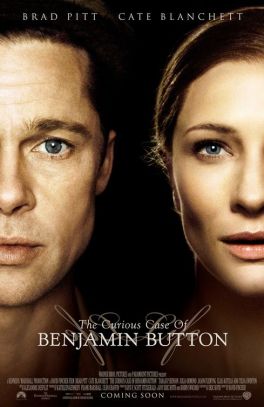 As part of a deal with Paramount and Warner Bros. to make “Zodiac,” David Fincher took on the $150 million production of “The Curious Case of Benjamin Button.” The result was his first nomination for Best Director and the most Oscar-nominated movie of the decade.
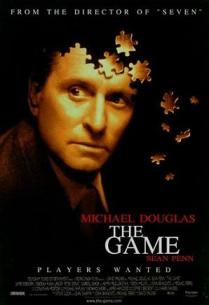 Fincher followed up the resounding success of “Se7en” with 1997’s “The Game,” a cerebral thriller that was received notably less well both financially and critically.

 Marshall and the Movies
Recent Comments