REVIEW: Concussion

21 12 2015

Peter Landesman’s “Concussion” is barely good enough to avoid a pun about the film causing its own kind of head trauma. It is not successful enough, however, to avoid one about the film’s facts and message hitting with unnecessarily blunt force.

Even though the message of this sports-related film rings depressing (rather than the usual uplift), “Concussion” can not avoid the temptations of the genre’s heavy-handed filmmaking. Like many a tale of this ilk, the film features an unlikely protagonist who must persevere against intense obstacles and opposition. Here, that person is not a player but a doctor, Will Smith’s Bennet Omalu. This Nigerian immigrant, perhaps more educated than an average bucket full of American citizens, lets his intellectual curiosity lead him to the discovery of a particular brain condition endemic to one group of men: ex-football players.

When Omalu breaks it down in the parlance that comes most naturally to him – science – the issue proves quite captivating. Framing the game of football as a series of shocks that the human body was not built to absorb makes his case strong. But when “Concussion” frames his struggle as one against a shadowy, monolithically evil NFL, the film falls completely flat. The silencing by commissioner Roger Goodell and the rest of the league probably happened, if I had to conjecture based on Goodell’s rather reckless actions over the past few seasons. Yet even as someone staunchly opposed to the league’s head honcho, the film comes off like a half-baked, crackpot conspiracy theory.

When a two-dimensional character goes up against a one-dimensional enemy, no one wins. Not the film. Not the issue. And certainly not the audience. C+2stars


REVIEW: Star Wars: The Force Awakens

20 12 2015

J.J. Abrams is perhaps the chief nostalgist of our time, and he often executes this fascination with such panache that we might as well call him a classicist. The reverence he pays to the films that inspired his own work serves to elevate those movies to a higher cultural plateau. And, as if anyone had not noticed the influence of “Star Wars” on a generation of moviegoers, they have definitive proof in the second relaunch of the franchise, “Star Wars: The Force Awakens.”

Abrams, working with original trilogy writer Lawrence Kasdan, finds that sweet spot between paying homage to the old and forging ahead with the new. The film’s action is primarily driven by two new heroes – the orphan girl Rey (Daisy Ridley) soon to discover extraordinary powers and ex-Stormtrooper Finn (John Boyega) who gains a conscience after witnessing the slaughter of innocence. They go up against a new sinister antagonist in Kylo Ren (Adam Driver), who works in tandem with the eerily fascist politician General Hux (Domhnall Gleeson).

Yet for all these new characters, there are also the old ones there in supporting roles – Han Solo, Luke and Leia Skywalker, Chewbacca, C3PO and R2D2 are all back. John Williams’ score livens up the film. The Millennium Falcon is back. Heck, Abrams even maintains the distinctive wipes and editing transitions from the original Lucas films. Anyone who feared drastic change in the series with the passing of the reins ought to be more than reassured by “The Force Awakens.”

The coexistence of the old and the new provides every bit as much tension as the plot, which I will continue to avoid discussing in any depth lest I reveal a spoiler. (I kept my head in the sand as much as possible regarding “Star Wars” news in order to experience the film with as fresh of eyes as possible, and it paid off.) Yet even with Rey and Finn as the primary engines of action in “The Force Awakens,” the film feels practically like a mirror image of the original 1977 “Star Wars.” This was no doubt intentional, I assume, but the amount of bowing Abrams performs before the mythology of the franchise keeps his film from standing as tall as it could.

Certainly future installments in the new “Star Wars” will go deeper and bolder, making an even greater case for the series’ relevance and importance. For now, though, this served its purpose to reawaken the vanguard of longtime fans and excite a new generation. I must say, I am on board for what comes next. B+3stars


REVIEW: Sisters

16 12 2015

The pure bliss of simply seeing Tina Fey and Amy Poehler reunited on screen for something other than an awards ceremony makes “Sisters” worth the price of admission. These two comediennes feed off each other in a way that no other pair can match, and there is never a dull moment since their live wire energy can always produce sparks.

Whether the material they work with is as good as they are, however, is another matter. “Sisters” piles on the raunch and the craziness, which is slightly out of their usual wheelhouse of safe for network TV antics. Paula Pell’s script is a hard R, and those laughs come somewhat at the expense of genuine characters.

The duo’s last big screen outing, 2008’s “Baby Mama,” found that sweet spot of believable exaggeration for both women, stretching responsibility and irresponsibility to rational extremes. “Sisters” casts Poehler as the good egg of the siblings, the youngest child who strove to overachieve out of genuine compassion for others, and it’s almost like getting to watch her play Leslie Knope again.

Fey, on the other hand, throws everyone for a loop by playing the callous, selfish older sister. It proves surprising, even jarring, to watch scenes where she is not the smartest person in the room. Heck, sometimes it even seems like it throws her for a loop. Tossing out insults and profanities – rather than receiving such barbs from the “30 Rock” cast – is something she gradually grows into over the course of “Sisters.”

Read the rest of this entry »


REVIEW: Macbeth

13 12 2015

MacbethRoger Ebert once famously quipped, “No good movie is too long and no bad movie is short enough.” This maxim seems to apply doubly so to Justin Kurzel’s take on the Scottish Play, William Shakespeare’s “Macbeth.”
Scripters Jacob Koskoff, Michael Lesslie and Todd Louiso take five acts from the Bard and condense them to under two hours on screen. Though no film need overstay its welcome, these screenwriters seem a little too eager to abridge the rich source material. Part of the experience of “Macbeth” is being able to observe the gradual changes in Macbeth and Lady Macbeth as the quest for power corrodes their souls. With fewer opportunities to see that conflict play out, it follows that their journeys feel a little less complete.

Having less Shakespearean verse tossed around plays to the strengths of Kurzel, a director whose films thrive on mood and ambiance. In both “Macbeth” and his debut, 2012’s “The Snowtown Murders,” collaborations with director of photography Adam Arkapaw have set brooding, haunting tones from expertly calibrated shots. Here, they focus on the landscape of the Scottish Highlands and how effortlessly it dwarves the characters who pass through it. At the very least, this helps differentiate his take on “Macbeth” from anything one could see on the stage, shrinking actors to mere cogs in the cosmos.

Unfortunately, he never quite finds a cinematic language that makes Shakespeare’s soliloquies feel as natural as the countryside vistas. Try as he might, Kurzel still remains at a bit of a loss as to how to present long stretches of uninterrupted dialogue, a convention audiences have decided to accept when framed inside a proscenium arch. The challenge has escaped many filmmakers, so he’s in good company. Fortunately, Kurzel has two incredible actors in Michael Fassbender and Marion Cotillard to deliver the dialogue and distract from any staginess.

Read the rest of this entry »


REVIEW: Hitchcock/Truffaut

12 12 2015

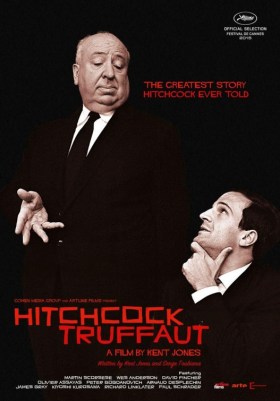
Hitchcock:TruffautThough Kent Jones’ documentary “Hitchcock/Truffaut” may bear the name of two deceased titans of the cinema, but make no mistake about it: this film is focused on those still living and producing vital work.

Of course, the consummate critic and historian Jones does present the the subject in more than sufficient detail. French New Wave founding father Francois Truffaut idolized the British filmmaker Alfred Hitchcock, whose work was popular yet not necessarily given much clout as art. Truffaut set out to prove it was just that in a series of conversations with the Master of Suspense, which he later transcribed into “Hitchcock/Truffaut.” The book became a seminal text in the field of film studies and, as Martin Scorsese personally attests in the documentary, inspired the next generation of filmmakers.

In recounting the making of the book and the influence which it exerted, Jones himself crafts a documentary likely to be studied as often as “Visions of Light.” (That reference means everything to anyone who has taken an Intro to Film class and nothing to everyone else, by the way.) “Hitchcock/Truffaut” provides an excellent primer on auteurist theory while also delving into Freudian, historical and economically determinist readings of Hitchcock’s work. If any of this sounds complex, it all feels effortless to understand when explained by today’s masters David Fincher or Wes Anderson.

The most exciting moments of the documentary come from hearing these contemporary filmmakers delving into the theoretical questions raised in Hitchcock and Truffaut’s conversation. Plenty of times, these directors have to answer questions about the influence of cinema’s giants, but it is usually only in conjunction with how it manifests in their latest film. Here, people like Richard Linklater and James Gray, two directors who rarely make films that resemble Hitchcock’s suspenseful thrillers, can talk about the surprising ways in which his work and his methods affected the way they understand their own work.

This kind of in-depth discussion gives “Hitchcock/Truffaut” a profundity far beyond the sound bites we normally get from filmmakers on a press tour. At times, Jones seems to lose sight of the original conversation in favor of letting Scorsese geek out over “Psycho,” but these joyful nuggets prove his point that Hitchcock and Truffaut’s dialogue is one still worth studying. This celebrated past has clearly exerted its influence in the present, and now, thanks somewhat in part to this documentary, it will continue doing so in the future. A-3halfstars


REVIEW: Chi-Raq

11 12 2015

Chi-RaqSubtlety has never been a strength of Spike Lee’s, and his latest film “Chi-Raq” is all the better for him not even attempting. From its opening scene, where big red letters and a booming voice declare “THIS IS AN EMERGENCY,” we know exactly how he feels about his chosen subject – the epidemic of gun violence in urban Chicago. Removing any guesswork just makes the political commentary come through all the more clearly.

Lee reworks the Greek comedy of “Lysistrata” into the modern day. Now, the women are not on a sex strike to end a war; they are withholding their carnal secrets to stop the carnage on their streets. Admirably, he tries to keep the sounds of verse in tact from Aristophanes’ plays, though they often times strain or falter altogether. Many times, a line will pierce with its accuracy. But at others, the exaggeration and hyperbole becomes unintentionally comical.

Though Lysistrata (Teyonah Parris) and the movement she leads are undeniably the primary focus of “Chi-Raq,” Lee also has other balls in play. Chiefly, he follows a grieving mother, Jennifer Hudson’s Irene, who seeks justice after her young daughter was shot down in the streets by an unknown gunman. These segments have nothing outlandish or overblown about them. Hudson brings genuine, moving pathos to her character’s struggle (perhaps informed by what happened in her own life).

The inclusion of both stories might serve as a testament to the urgency Lee feels in getting people angry about this issue. Heck, the film shot over the summer and includes reference to the Emanuel AME shooting in Charleston and the Cecil the Lion kerfuffle – meaning he got it out of the editing bay in just months. Viewers would likely find one character more interesting and identifiable, meaning Lee could maximize his reach with a single film. Yet as a result, “Chi-Raq” feels wildly uneven … and that’s not even mentioning the musical numbers that constantly disrupt any narrative momentum.

Nonetheless, it’s encouraging to see Lee legitimately up in arms about something once again. His recent work, disciplined thought it might have been, has felt somewhat passionless. In “Chi-Raq,” he’s mad as hell and very much alive in letting us know. He provides, with rather blunt didacticism, solutions to Chicago’s bloodshed from both without and from within. And he even seems hopeful that a change is going to come, which might be the most shocking turn of the entire movie. B2halfstars


INTERVIEW: Josh Mond, writer/director of “James White”

9 12 2015

Back at it again! I had the really awesome chance to interview Josh Mond, the writer/director of “James White,” and the big conversation is over at Movie Mezzanine. But not all our talk made the final published interview, so for those that are curious, I’ve included two more questions here that Mond answered.

But what neither this post nor the full interview includes are the periods before and after our “official” conversation, so to speak. Right when I got on the phone with Mond, he said had just finished watching the Kurt Cobain documentary Soaked in Bleach before our phone call. (Apparently, someone around his office had told him, “I don’t know why you just watched that before doing an interview,” just prior.) We talked about documentaries for a little while before I got the official questioning underway, and then returned to it afterwards.

Unlike many interview subjects, rushing out after the final question to get to their next stop on the media tour, Mond stayed on the line for a full ten minutes to keep chatting about movies. Like any other cinephile, he is rapidly trying to work through the best films from 2015 during the year-end rush. Mond’s favorite to date is “Inside Out,” though he is still filling some gaps in his viewing. (We also discussed “Amy” and “Cartel Land” among others  – I put in a good word for “Mistress America.”)

But anyways, on to an excerpt from our conversation. This came from the tail end when he got reflective on the process of releasing the film.

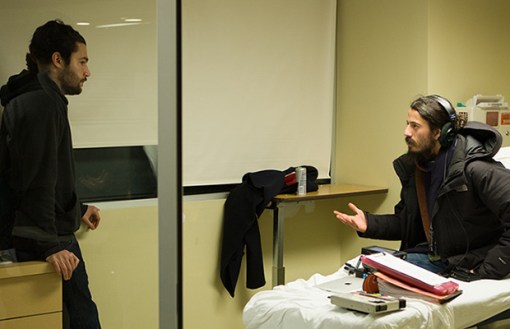
Josh Mond directing James White

MOVIE MEZZANINE

You’re now at the tail end taking James White around the world. Has there been anything surprising to you about the journey of putting this personal story out there for audiences to interact with?

JOSH MOND

No matter the difference in cultures and how people have been responding around the world – in America after Sundance it was super vocal and great, other countries intellectualized – there’s always been one person at the very least who shares their story with me about what they’re going through or what they’ve been through [at the Q&A or after].

It’s continuing a dialogue, and the fact that it’s connecting so much that people feel okay doing that is … you know, I made this movie to connect. It’s a very hard thing to talk about, and it’s been awesome in that way to have a real connection with human beings all around the world.

MOVIE MEZZANINE

Is it going to be weird to move onto another project and have James White on the backburner?

JOSH MOND

It’s going to be extremely weird, but what’s really cool I learned – well, I’m still learning – a lot about what it is that I like. What makes me feel connected in what I want to say or be involved in.

I’m very lucky, though, because the day after one of the last things I had to do for James it was announced that Antonio’s new film [Christine] and then this other film we mentored and executive produced [Nicolas Pesce’s The Eyes of My Mother] both got into Sundance. It’s cool, though, like there’s more of us, we’re a family, and we’ve got other projects going on – I have other things to put my energy and the things I’ve learned into.

But the short answer is yes, it’s a little weird.

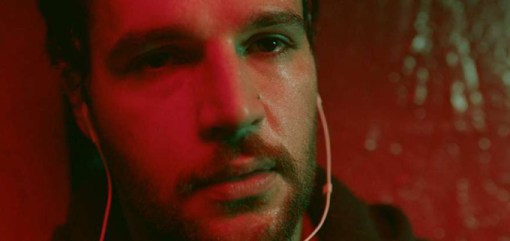
Christopher Abbott as James White


REVIEW: Son of Saul

8 12 2015

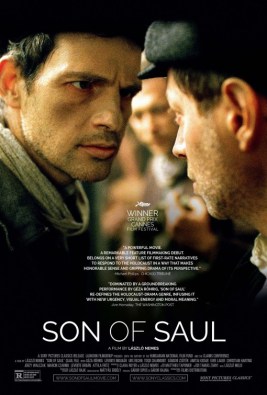
Son of SaulThis review originally appeared on Movie Mezzanine, for whom I covered Fantastic Fest in Austin, TX.

László Nemes’ “Son of Saul” boasts one of the most rigorously committed aesthetics in recent memory. Without subduing the roving camera of DoP Mátyás Erdély to the limitations of first-person photography, Nemes finds a radical method of plunging the viewer into the subjective experiences of the protagonist: Géza Röhrig’s Holocaust prisoner Saul Auslander.

Two shots prevail throughout the proceedings. The first is a rushing handheld shot taken over Saul’s shoulder while he is in motion, usually with an extremely limiting shallow depth of field. The other is a close-up of his stoic face, stark in how little it emotes. Imagine the kinetic immediacy of Emmanuel Lubezki combined with the claustrophobic intimacy of Dreyer’s “The Passion of Joan of Arc.”

It’s the kind of choice that can only be made by an established auteur who has earned complete autonomy, or a brash newcomer yet to learn the so-called rules. Nemes is the latter, which only adds to the wonder “Son of Saul” inspires.

His technique hardly constitutes some kind of self-imposed artistic chastity belt, however. Nemes uses his form to illuminate the complexities of his content (co-written with Clara Royer), allowing for a more nuanced understanding of these unimaginable atrocities. Saul, a member of the Sonderkommando group that was forced to become cogs in the Nazi machinery of mass murder, never falls into a clear cut category. He is neither entirely hero or villain, victim or perpetrator. Saul is just a human trying to survive inhuman conditions in any way possible, and the camerawork suggests his method of coping is to block out the world beyond his nose.

Read the rest of this entry »


REVIEW: James White

7 12 2015

James WhiteExpressive close-up shots are a crucial building block of cinema, and they are especially foundational element for films that hope to elicit identification and empathy with the characters on screen. Perhaps nowhere is that more clear than “James White,” the feature directing and writing debut of Josh Mond.
Mond trains director of photography Mátyás Erdély to stay tightly fixated on the face of Christopher Abbott’s titular character as he goes through the ringer of grief. This young man, barely capable of taking care of himself, must see his widowed mother (Cynthia Nixon) through the deterioration of her health in the wake of terminal cancer. Think Michael Haneke’s “Amour” by way of Ingmar Bergman’s “Persona.”

The film is largely inspired by the filmmaker’s own experience of losing his mother, and the emotional authenticity becomes palpable both in Abbott’s performance and the audiovisual schema Mond devises. Erdély’s roving, personal camera – a veritable ballet as it follows James’ erratic, explosive motion – works wonderfully in tandem with a spellbinding score by Scott Mescudi. (Yes, that’s Kid Cudi.)

Abbott pulls off a rare combination: volatility and vulnerability. James flirts with disaster and near complete collapse in practically every scene, which proves difficult and stomach-churning to watch unfold. But in spite of his poor decision making, he still manages to inspire intense feelings of identification and support. We root not for the circumstances, terrible as they are, to change. We root for him to rise to the occasion, to summon the strength of character Abbott shows us in a small glance or a gentle word.

Read the rest of this entry »


REVIEW: Queen of Earth

6 12 2015

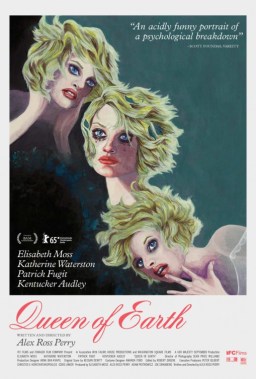
Queen of EarthAlex Ross Perry’s latest film, “Queen of Earth,” recalls the work of filmmakers like Ingmar Bergman and John Cassavettes in its visual style. Yet in its dialogue and story, the film feels a bit like Chekov’s stab at a psychological thriller.

In fact, I got a bit of déjà vu to Woody Allen’s “September,” a chamber drama set in a rustic retreat. The setting is similar in “Queen of Earth” – a lake house, populated by a smug set of unabashedly spoiled thirty-somethings. The majority of the film’s ninety minutes are devoted to the verbal shanking that occurs between two frenemies, Katherine Waterston’s Virginia and Elisabeth Moss’ Catherine. The latter of the two takes it a little rougher and begins to suffer a bit of a crack up.

Thankfully, Moss and Waterston are talented enough thespians to make these fights interesting. Perry, who penned indelible one-liners for his previous features “The Color Wheel” and “Listen Up Philip,” paints in almost humorously broad strokes here. His general, vague dialogue makes their conflict feel rather lacking in depth. Furthermore, it feels at odds with his aesthetic tools of choice, which heavily rely on close-ups of their faces to carry the drama.

While this might be a step forward for Perry as an artist, it seems to have come at the cost of his memorable, believable characters. Hopefully he can find a way to better marry the two sensibilities moving forward. B- / 2stars


REVIEW: Do I Sound Gay?

5 12 2015

Do I Sound GayDavid Thorpe is not a professional (or at least an established) documentarian, so his debut feature “Do I Sound Gay?” has a few more rough edges than most films put out by a distributor like IFC. But given his background as a journalist, he gets to more answers than most.

In just 77 minutes, Thorpe’s film begins with a personal exploration of insecurities surrounding the sound of his own voice and opens a treasure trove of other issues. He starts from the beginning with how vocal cadences and intonations become an early target for bullying, forcing many children into a painful closet. While at this life stage, he also questions why so many speech therapy patients turn out to be gay (oh, societally constructed norms, at it again).

He then moves beyond just the what and moves into the why. Where does this voice – traditionally nasal, high-pitched with elongated vowels – come from? Why has it become such a key identifier for homosexuals? Why do so many, including those within the gay community, find it so repellant? How does it perpetuate stereotypes? Many answers are surprising, uncovering pockets of homophobia and even misogyny that deserve address and redress.

Thorpe does slightly fumble the ending, trying to make the jump from talking about the voice of a person to LGBT Americans finding their voice in culture. Sure, it’s a bit corny – though it hardly detracts from the fascinating points, both practical and philosophical, that Thorpe raises throughout “Do I Sound Gay?” B+3stars


REVIEW: Youth

4 12 2015

From its opening shot, a twirl around a retro band covering Florence and the Machine’s “You’ve Got The Love,” Paolo Sorrentino’s “Youth” announces itself as an odd bird. To quote a project from star Harvey Keitel’s youth (which itself quotes Kris Kristofferson), the film is a walking contradiction. Many films set up dualities, even taking on a paradoxical quality, but this is really something else.

Despite its title, “Youth” is a film starring mostly senior citizens looking back on that stage of life through a foggy retrospective lens. Michael Caine’s Fred Ballinger, a retired composer, twiddles his thumbs in a Swiss mountain resort with Harvey Keitel’s Mick Boyle, a screenwriter still trying to plan his magnum opus with a team of industry neophytes at his beck and call. They pine for their younger years and opine on the frustrations of their more advanced ones, mostly just spinning their wheels.

Sorrentino matches their conversations with the style of his screenplay, a lax, discursive saunter that unfolds almost in vignettes. Separating these dialogue-heavy sequences are highly stylized montages of various guests and workers around the resort, each presented in a grotesque kind of tableau. (Except the lounge singer, for whom Sorrentino jarringly cuts from a performance to her chowing down on a chicken wing.) Be they the whorish fame-obsessed fans lusting after celebrities, a morbidly obese soccer player or a Miss Universe, all bystanders gets warped by his bizarre camera.

The people who get the most thorough cinematic treatment, oddly enough, are not the film’s two grey gentlemen. While they mosey around, much younger people in their field of vision find it quite easy to articulate themselves. Rachel Weisz, as Fred’s daughter and assistant Lena, hesitates little in expressing her disappointment with him. Paul Dano’s Jimmy Tree, a zen Method-style actor, loves walking others through his views in neat dichotomies. And, of course, Jane Fonda shows up for a cameo-length appearance as Mick’s starlet and muse Brenda Morel, an actress who certainly does not mince words in her big tirade.

Read the rest of this entry »


F.I.L.M. of the Week (December 3, 2015)

3 12 2015

SightseersI must admit, I was skeptical of delving into some of the deeper cuts in director Ben Wheatley’s filmography after nodding off on two separate occasions during his cult favorite work “Kill List.” (It’s more me than the movie – I was tired both times and got further exhausted by working to understand the thick accents.) But after seeing his 2013 film “Sightseers,” I must say, I feel far more confident that I will like what I see going further back.

Funny enough, I actually saw Wheatley in person while he was promoting the film’s world premiere in Cannes back in 2012. Someone asked a question along the lines of, “What do you do while the movie plays?” Wheatley caustically responded that you could find him in a bar drinking away his nerves. Though why he would doubt that “Sightseers” could play like anything other than gangbuster escapes me. This bonkers road trip comedy is a creative, exciting blast from start to finish; as such, it’s my pick for the “F.I.L.M. of the Week.”

Alice Lowe and Steve Oram star as Carol and Chris, two lovebirds who embark on a road trip across Britain – hauling a caravan behind them, of course. Carol goes against the instructions of her well-meaning mother, who still infantilizes her at the age of 34. She’s reeling from the loss of someone special, too, and remains somewhat unstable. Though she has only dated Chris a few months, Carol seems to think he is that special someone.

That is until, of course, she realizes that he is capable of committing some intensely violent deeds while feeling very little remorse. But that does not seem to bother her. She’s along for the ride, no matter what strange turn or bizarre twist their journey takes next.

There are moments along the way when it feels like “Sightseers” will start to fall in line with some other similar movie. Yet the longer it goes on, the less it resembles something like “Bonnie and Clyde” or “Thelma and Louise.” Wheatley, working with a script by his two lead actors, manages to make a film that is wholeheartedly unique. It vibrates at such an odd comedic wavelength, mostly black but also silly and solemn in places.

Perhaps most fascinatingly, Wheatley makes sure that murder never becomes something commonplace. He presents each killing in a completely different manner, shocking us all the new and making us really think about what we are digesting. This is quite a sight to see, indeed, and I look forward to being entertained and challenged all the more by what Wheatley has to offer after “High-Rise.”


REVIEW: Prophet’s Prey

2 12 2015

Prophet's Prey2015 has been a banner year for films taking on the corruption within institutional religion, both as narratives (“Spotlight“) and documentaries (“Going Clear“). Having caught up with Amy Berg’s “Prophet’s Prey,” a non-fiction account of Warren Jeffs’ perversion of the Mormon faith into the abusive FLDS, the film just does not quite measure up to the two aforementioned towering works.
The film does a thorough job tracing the history of the group, starting with Joseph Smith receiving the Golden Plates and leading his followers westwards to Utah. Eventually, the FLDS breaks off from the mainline Mormon church that forms in protest of their rejection of polygamy. Their “purer” practice of religion, of course, only leads to crazy people like Warren Jeffs exploiting the innocence and faithfulness of the followers so he can indulge his abusive fantasies.

Berg recounts the unraveling of the group after Jeffs gets caught after years on the FBI’s most wanted list with a matter-of-fact precision. In fact, it’s almost so dog-on-bone with the journalistic approach that it barely leaves room for a release of anger or disgust. Both “Spotlight” and “Going Clear” proved that providing information and provoking outrage are not mutually exclusive attributes, while “Prophet’s Prey” seems to regard them as such. Still, anyone fascinated by how these groups function by discipline and punish will find plenty to keep them engaged. B2halfstars


REVIEW: Partisan

1 12 2015

PartisanThe experience of watching a film, at its core, comes down to sound and image. The best – or at least the most memorable – ones tend to find some way of making them work in harmony.

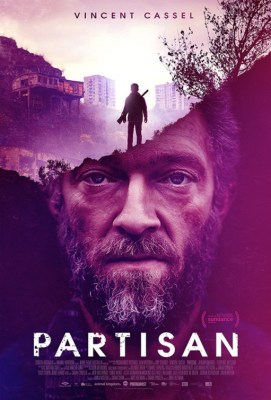
Pardon the extremely vague, theoretical introduction, but Ariel Kleinman’s mesmerizing “Partisan” has such a striking visual and aural power that it inspires reflection on the elemental levels of cinema. The way he orchestrates the camera of Germain McMicking and pairs it with the humming melodies of composer Daniel Lopatin produces a hypnotic trance that somehow does not distract from the intellectual issues he raises.

“Partisan” contains echoes of “The Master” as it quietly examines how one man can inculcate an insular community with his radical ideology. Vincent Cassel’s authoritative Gregori does not have his sights set on the heavenly, though – he teaches young children how to carry out terroristic deeds against those who presume their innocence. It’s never entirely clear what ultimate aim Gregori hopes to achieve, but it never really matters. Kleinman simply wants to show the mechanisms of his control and their horrifying results.

The film mostly assumes the perspective of Alexander, a prized assassin among the commune who begins to question and doubt the rectitude of his deeds. As he grows more skeptical, the camerawork changes from eerily stable and fluid in depicting the charge to violence toward a shakier, scarier schema. Plot and ideological grandstanding are minimal, which comes as a nice change of pace. The world needs to think about terrorism at this fundamental, simplistic level. Perhaps, without the baggage of nationality or religion, “Partisan” can inspire such thought. B+3stars