Paul Weitz’s “Grandma” gets underway once teenaged Sage (Julia Garner) shows up to humbly solicit funds for an abortion from Lily Tomlin’s Elle Reid, her estranged grandmother. While Sage might be necessary to kickstart the story, there is no doubt the titular character really drives the engine of this compact road trip. The journey is for Sage, but it is about Elle.
Weitz wrote the role of Elle for Tomlin, and the part fits like a glove. Among the many traits of this multifaceted character, Tomlin gets to play up two qualities present in her most memorable performances: intelligence and idiosyncrasy. Elle is a poet who peaked professionally in the ’60s and never quite found her footing again, scrapping together income to stay afloat from teaching and lecturing.
Now, widowed and still grieving the loss of her beloved partner Violet, the kooky Elle is even more stuck in the past than ever before. She cuts up her credit cards for fun and tosses around the phrase “pod person” as if “Invasion of the Body Snatchers” were as recognizable a cultural touchstone as “X-Men.” Sage needs the most immediate help to procure her procedure, to be sure, but Elle also requires an attitude adjustment of her own.
As she drives her vintage car around town to solicit funds – and giving Sage a boot camp in Second Wave feminism in the process – Elle has to confront the pains of her past and decide the face of her future. Decades-old layers of resentment frequently lead to some acerbic interactions, especially with her own daughter Judy (Marcia Gay Harden). But the brilliance of Tomlin’s performance is that she never loses track of Elle’s raw emotion or her beating heart; she and Weitz nail the balance between sardonic and sincere. The voyage with Elle proves all too short (only 79 minutes?!), though each moment along the way feels poignant and completely fulfilling. B+ /
Alex Gibney has made his career as a documentarian by holding powerful institutions accountable for their misdeeds, be they the Church of Scientology, the U.S. Military, the Catholic Church, or Enron. On the less frequent occasion when he covers individual subjects, the films have never become personal portraiture. “Casino Jack,” “Client 9,” and “The Armstrong Lie” were not about their subjects; they were about power and the corrosive effects it can have on capable men.
The same dynamic does not necessarily apply to Gibney’s latest effort, “Steve Jobs: The Man in the Machine.” The film feels more like a project the director explored out of curiosity rather than his usual genuine righteous anger. Without such indignation, the documentary plays a little bit like one of the actual smartest guys in the room picking on an icon as a pure intellectual exercise. His aim appears not to be uncovering some unsavory truth about human vice; instead, Gibney just brings a god among men back to mere mortal status just to show he can.
To be fair, maybe some of that needed to happen. The somewhat excessive mourning that sprung from Jobs’ early passing in 2011 does raise some questions about how our society conflates the man with his machines. Gibney does his best work when he can isolate Jobs from the gadgets we now treat as appendages. His curated archival footage shows Jobs as a testier, feistier figure than the avuncular wizard who waltzed on stage once a year in the first decade of the 2000s to radically transform our communicative capabilities. In one deposition to which Gibney frequently cuts, Jobs can barely sit still, constantly adjusting his position and scarcely concealing his disdain.
When he attempts to make a larger statement about our technology-addled world, though, Gibney’s reach exceeds his grasp. It would be better not to invoke Sherry Turkle’s “Alone Together” than to have such a cursory conversation about it – that’s a topic for an entirely different film. These deep, intellectual ideas just feel out of place in a film mostly devoted (especially in its back half) to rattling off a litany of underreported transgressions.
Did you know that Apple sheltered its profits from taxation in Ireland? Or that their factory conditions in China are beyond deplorable? That Apple participated in some sketchy hiring collusion? That Jobs ended charity programs at the company? Yes, prepare to have any pedestal on which you put Steve Jobs severely undercut. But why one of America’s greatest documentarians took the time to do this research – rather than a dedicated YouTube user – escapes me. B /
Sacha Jenkins’ documentary “Fresh Dressed” fills in some gaps in my knowledge of the style industry that sprung up concurrently with the rise of hip-hop. But beyond that, it serves little effective purpose.
Sure, he interviews plenty of distinguished scholars who add some valuable two cents, such as how the black tradition of dressing to impress originated on the slavery plantation. Later, these talking heads come back to speculate that the beginning of the end for a golden age of black style was precipitated because black businessmen could not catch up with their counterparts who got a head start.
But most of “Fresh Dressed” is a time capsule, preferring to show us the era in all its decadence rather than really unpack it beyond the two big pillars of meaning: self-esteem and class consciousness. Jenkins lands some huge names for interviews, including Sean “Puffy” Combs, Pharrell Williams, Kanye West, and A$AP Rocky, all of whom parrot these major themes excellently. At the end of the throwback, though, the documentary feels more like a storefront window display than a curated museum exhibit. C+ /
Jill Soloway appears in just about any feature being published these days about the changing face of television for women behind the camera and trans representation in front of it. Even before “Transparent” landed at Amazon, she was making waves as a writer and producer on shows like “Six Feet Under,” “Grey’s Anatomy,” and “United States of Tara.” And somewhere in her schedule, she found time to make a narrative film.
Had I been paying attention to her feature debut, “Afternoon Delight,” I would surely have run instead of walked to “Transparent.” This character-driven dramedy lives up to the latter word in its title … and would suffice at any time of day, for that matter. Soloway serves as writer as well as director, and her voice shines through in the movie, my pick for the “F.I.L.M. of the Week.”
“Afternoon Delight” might mark the first film to fully realize the wealth of talent possessed by Kathryn Hahn, an actress dangerously close to becoming the next Judy Greer. She’s almost too good at making her presence felt without overpowering the lead, be it dramatically in “Revolutionary Road” or comedically in a movie like “We’re the Millers” or television’s “Parks and Recreation.” But Soloway grants her lead status here, and she runs away with the film.
Hahn’s character Rachel, a stereotypical L.A. Jewish carpool mom, needs something to get her out of a rut. A lethal cocktail of sexual frustration and the white female savior complex leads her to “rescue” a stripper, Juno Temple’s McKenna. If Rachel wanted something to shake up her relationships with her husband and friends, she certainly gets that and more with her new “nanny.” McKenna becomes an object of pity for Rachel, yet her presence also draws out the green monster of jealousy.
The cumulative effect manages to spark some major changes, not all of which are good. But if you need any indication of just how gifted a storyteller Soloway is, watch how much more you feel for Rachel as her behavior goes from erratic to desperate to practically indefensible. Her characters, be they small or silver screen, never lose their solid steeping in humanity. I can only hope “Afternoon Delight” is not the full extent of Soloway’s venture into feature filmmaking. The world of indie cinema needs her gifts too much.
Amir Bar-Lev’s “Happy Valley,” a documentary account of the fall and rebirth of the Penn State football program, initially unfolds as a pretty straightforward chronicle of events. We get a definitive look at how Jerry Sandusky managed to use his charitable organization as a front to sexually abuse young, underprivileged children as well as how the university’s athletic program turned a blind eye to his exploits.
Establishing this baseline of information takes about 30 minutes, which is fine. It plays like a really good ESPN “30 for 30” program. But once it moves past the firing of head coach Joe Paterno and resignation of university president Graham Spanier, “Happy Valley” starts to get significantly more interesting. By spending the majority of the film exploring the aftermath, Bar-Lev shows an interest in more than just recounting events. He wants to interrogate them.
The film explores the lingering question of how to handle the legacy of Paterno, the winningest coach in college football – and also a man who aided and abetted a criminal act. Not unlike what has happened in the wake of all the allegations against Bill Cosby, people must confront the dissonance between the memory of a man who provided them years of happiness and the reality of a person who committed a deplorable act. How do we reconcile that? How do we weigh legal guilt against a greater moral guilt?
These are tough issues to resolve, and Bar-Lev shows people on both sides of the aisle. He interviews a student who rants angrily from his dorm room about how no action Paterno took should ever scrub his coaching record. Yet he also shows a man who stands in front of a statue erected in Paterno’s honor, refusing to let those who want to take a picture with it leave without fully understanding the weight of his actions.
Ultimately, these two sides of the coin point to a larger dichotomy Bar-Lev explores: individual vs. social culpability. How much are we, the fans of the sport, willing to excuse in the name of victory? Again, this is not easy to answer. But it is necessary. B+ /
As writer/director Joe Swanberg wanders the corridors of marital discontent in his latest film, “Digging for Fire,” I could not help but wonder if this is what Stanley Kubrick’s “Eyes Wide Shut” would look like when refracted through the lens of low-budget indie cinema. Over the course of a weekend spent apart, previously unknown rifts and fault lines appear between Tim (Jake Johnson, also a co-writer on the film) and Lee (Rosemarie DeWitt) while they amble and converse freely.
Each’s journey appears cross-cut with the other’s, and the spouses might as well be occupying entirely different films. Tim hangs out to drink beers and smoke pot with his buddies – one of whom arrives with a young woman on each arm – but proves unable to put his mind at ease about some suspicious bones he spotted in the yard. Lee, meanwhile, drifts between scenes and choose mostly to let the words of others trigger her thought process. He is aggressively verbose in expressing his own frustrations; she reacts to hearing those from others.
At moments, “Digging for Fire” shows real insight into the listlessness of marriage and parenting. Johnson feels especially at home since he gets to speak (presumptively) dialogue he helped write. When Tim expresses his frustrations and anxieties, they clearly come from someplace personal and resonate accordingly. For all those looking to use art to deal with their own life, try to model this to avoid self-indulgence.
Swanberg, though, sometimes gets carried away by his posse of ever-ready actor pals. Since his movies shoot so quickly and efficiently, it makes sense that these stars want a chance to flex their muscles in between the paycheck gigs. In this case, the ensemble of comedians and dramatists alike can detract attention from what might have played more effectively as a tighter two-hander. Between the screen time allotted to Orlando Bloom, Brie Larson, Sam Rockwell, Mike Birbiglia, and Anna Kendrick, “Digging for Fire” can sometimes feel like a party at the Swanbergs for which he provided a loose plot and great camerawork. B /
“Meru” feels like something I might stumble across while channel surfing through the outdoor networks. It would grab my interest for a few seconds based on the strength of an image but then lose me within the minute on the nature of its specialized interest story.
Jimmy Chin and Elizabeth Chai Vasarhelyi comes across as a rather niche film, one unwilling to pander to the uninitiated such as myself. And in a way, I admire that even as I feel indifferent about the film. I appreciate some films that alienate viewers of lesser cinematic literacy, so it is only healthy for filmmaking that some films can exclude me. For mountain-climbers and adventure seekers, my rather nonplussed reaction might signal that you will love “Meru.”
If you ever get bored watching “Meru” (and that was fairly frequently for me), just take a step back and think about how these three climbers actually filmed this incredible journey! On top of survival, they have to think about getting the action in focus, framing it nicely, and getting a good angle. The peak of Meru requires an essentially straight vertical climb, so the fact that they can capture great images is nothing short of astounding.
The same could not be said, however, for the talking head backstories that fill in the lives of climbers Chin, Conrad Anker, and Renan Ozturk. Every time “Meru” turns its attention away from the mountain itself, the movie becomes less interesting. Rather than enhancing the drama of the climb, it distracts from it. C+ /
In Craig Zobel’s last film, 2012’s “Compliance,” the director showed the collapse of civilization and social order in a situation where tremendous external stress agents forced people into making unthinkable choices. He returns to ponder similar questions of the base impulses guiding our actions in “Z for Zachariah,” albeit in an entirely different setting: a post-apocalyptic world.
Margot Robbie’s country girl Ann Burden thinks she may the last survivor of an unspecified nuclear disaster, somewhat because of her farm’s odd location in a valley but also due to an act of providence from God. The serene, bucolic landscape soon welcomes a visitor in the form of Chiwetel Ejiofor’s Loomis, a civil engineer who stumbles upon Ann’s place. The two work together, albeit uneasily, to restore the harvest and even potentially regain electricity.
These scenes play out at a patient pace, at once stage-like in their delicacy but cinematic in their intimacy. Zobel and editor Jane Rizzo find a way to stretch Nissar Modi’s script, which probably runs a roughly normal length (if not a little bit shorter), into something that feels practically like a miniseries. The adult cousin of “The Last Man on Earth,” if you will. At times, “Z for Zachariah” droops under the weight of its measured tone, but Zobel does impressively calibrate the picture to enervate without aggravating.
The film does get a shot of energy when Chris Pine’s Caleb emerges. With his messy hair and scruffy beard, this marks the most unkempt character the normally Prince Charming-esque actor has played in a straight drama. A bit of a love triangle emerges, sure, but not in a stereotypical kind of way. (Since Caleb is a fellow believer, he has the clear upper hand.) The desolately populated space around them reverts the dynamic between Caleb and Loomis to resemble that between Cain and Abel sparring for dominance. These biblical undertones, as well as one of the most mature and nuanced portrayals of faith in recent memory, lend “Z for Zachariah” a thematic heft that helps it earn much of its restrained pacing. B /
Jason Banker’s “Felt” portrays the ongoing trauma of a sexual assault survivor as she struggles to reintegrate with society. The bizarre character of her behavior, including her habit of donning a full-body felt costume complete with a large dildo, alienates even her closest of friends. But, against the odds, a saint of a man decides to give her a chance romantically.
The film stars Amy Everson as a fictionalized version of herself, which makes the film admittedly a little tougher to criticize. I know many friends who have survived the traumatizing ordeal of sexual assault, and everyone has to deal with it in their own way. As the support system for them, it is our duty to stand by them through thick and thin.
But for people who might not be as sensitive to intricacies of sexual assault, “Felt” might send a different message. The film does not spend enough time abhorring rape to have earn a character like Amy, the only known survivor in the film – and is portrayed as absolutely psychotic. Are Banker and Everson trying to tell people to support rape survivors or steer clear of them altogether? Their intention might be the former, but the content of the film seems to argue the latter.
“Felt” does make a clearer indictment of rape culture, demonstrating the false myths men perpetuate about women going to duplicitous ends in their quest to get attention. In order to arrive at those, however, Banker and Everson force us to endure some painfully stilted improvised dialogue. The whole film just feels lacking in focus and precision, which is a shame since the artists likely had a lot to say.
Anyone looking to really provide support for sexual assault survivors might be better off watching Kirby Dick’s excellent documentaries “The Invisible War” and “The Hunting Ground.” C /
At this point, I am unsure how much good it does me to review “Avengers: Age of Ultron” as I would a movie. I feel like it would be more useful to write up the experience of the film as a writer for Consumer Reports would describe a car – with matter-of-fact bullet-points and statistics. What is the point of trying to capture the artistry of a film in the intricacies of prose when that film is little more than a top-of-the-line product?
The latest item off the “Avengers” conveyer belt amounts to little more than an 150 minute billboard for the Marvel Cinematic Universe. Perhaps the one notable difference between “Age of Ultron” and its predecessor is that the events tend to sow discord that cleaves a wedge between the heroes as opposed to uniting them. (I can only assume that was a decision that arose organically from the material and not as some kind of tie-in to the impending “Civil War.”)
Maestro Joss Whedon ensures that the film matches all the tech specs any fan looks for in a comic book movie. It has action sequences the way cars have cupholders. To top it all off, he assembles a climax that feels like it could (and maybe should) just exist as its own movie and is probably fetishized in the same way automotive aficionados value a powerful engine. Maybe some of this would be exciting if it were not so painfully predictable. Rather than inspiring me to marvel at the screen, it just made me feel numb.
I will not attempt to argue that “The Wrecking Crew” is some kind of groundbreaking piece of documentary art. Frankly put, it does not begin to approach those things. But it probably made my jaw drop in awe-struck amazement more than any movie I can think of recently, and for that alone, the film qualifies to receive the title of my “F.I.L.M. of the Week.”
The documentary premiered at South by Southwest back in 2008, yet for some reason, it was only released this past March by Magnolia Pictures. While I normally apply the criterion that the films in this column be at least a year past their theatrical release date, I am more than willing to make an exception for “The Wrecking Crew.” This movie, like its subjects, is receiving its admiration at an unfair delay from when it was deserved.
Director Denny Tedesco does not hide the purpose of the film. It is made to get proper recognition for his father Tommy’s band of studio musicians known as The Wrecking Crew, who are directly responsible for the soundtrack of your life. That’s not hyperbole, either. If I had actually acted on all the times I wanted to pause the movie, open iTunes, and play the song they discuss creating, watching the film would have easily taken me three hours to finish.
Their incredible talent and dexterity across so many genres of music is nothing short of astounding. The Wrecking Crew did jazz, soul, R&B, rock, country, and entertainment underscoring with equal aplomb. Crooners, rockers, surfers, cowboys, and singer/songwriters alike benefitted from their remarkable creativity and reliability. And, often times, these groups faced additional obstacles on the road since their actual members were unable to perform at the level of the Wrecking Crew!
Tedesco cobbles together quite the sonic history of the 1960s and ’70s from archival footage, filmed interviews, and a spirited reunion roundtable of the group. It provides an illuminating look into how so many of our favorite tunes came to be, which is sufficiently thrilling in its own right. (Imagine the “Gimme Shelter” anecdote from “20 Feet From Stardom” times twenty.) Now, those enraptured by their unheralded virtuosity need to make sure others see “The Wrecking Crew” so the group can finally garner the widespread acclaim they deserve!
So I had grand plans to write either my Criterion Top 10 list or a piece about Marion Cotillard today, both of which tied into the Criterion Collection release of “Two Days, One Night” on Tuesday. (Side note: Amazon.com, you need to get me this disc now, I don’t know why you can’t just put it in my darn mailbox.)
But then, something out of this world happened. The video essay I posted yesterday popped up on IndieWire, a site that I check multiple times a day. Needless to say, the excitement kept my mind sidetracked for a while.
Click the picture to be taken to the post itself.
It wasn’t just a link, either. I hate to toot my own horn, but they gave me a truly flattering write-up as well.
“It’s hard to think that a pair of filmmakers who have won two Palme d’Or prizes at the Cannes Film Festival could be underrated, but the extent ofJean-Pierre and Luc Dardenne’s talents still feel insufficiently realized. Their latest work, ‘Two Days, One Night‘ — which is now available through the Criterion Collection— showcases an area of their acumen seldom discussed when praising their work: shot composition.” Marshall Shaffer’s 7-and-a-half-minute video essay begins with that big thesis.
What follows is extremely well edited video that deftly delivers on its premise, showcasing Shaffer’s astute eye for dissecting the latest work by the Dardenne brothers, known for movies like “L’enfant,” “The Son,” and “The Kid with a Bike.”
Watch below for Shaffer’s perspicacious analysis, including what he deems to be “the masterpiece of camera work and character blocking” in the Dardennes’ film.
So you could say I have been floating on cloud nine today. Sorry if you were craving some juicy content or analysis today. Sometimes it’s nice to just take a step back and appreciate that all the hard work pays off in some way.
But the reward is not in the recognition. It’s in the work itself. I love producing these video essays, and this certainly gives me some motivation to keep churning them out. But the thrill I got from seeing my name on IndieWire does not measure up to the immense satisfaction of exporting the final cut of the video essay itself, knowing that I have truly wrestled with a film’s meaning and produced something enlightening for the benefit of the discourse around cinema.
In honor of today’s Criterion Collection release of “Two Days, One Night,” I have prepared a video essay examining the superb use of composition in the film. Full text of my narration can be found below – enjoy! I hope this video is somewhat enlightening.
* As a reminder, the film is available (as of publication) to stream for free with a Netflix subscription.
It’s hard to think that a pair of filmmakers who have won two Palme d’Or prizes at the Cannes Film Festival could be underrated, but the extent of Jean-Pierre and Luc Dardenne’s talents still feel insufficiently realized. Their latest work, Two Days, One Night – now available through the Criterion Collection – showcases an area of their acumen seldom discussed when praising their work: shot composition.
In today’s cinephile culture, composition is often reduced to mere eye candy and celebrated mostly whenever the merits of a shot loudly blare their meticulous construction, such as in the films of Stanley Kubrick, David Fincher, or Wes Anderson. To be clear, these filmmakers are all great craftsmen who create truly indelible imagery. But the Dardennes do something with composition in Two Days, One Night of particular note – they employ it to serve as a direct compliment to the tensions present in their narrative.
Perhaps part of the reason this stylistic triumph seems relatively unheralded is that the Dardennes, early adopters of the shaky cam verité style, often used cinematography to enter the subjective headspace of a character. In Two Days, One Night, the directors’ camera offers a direct commentary from their position outside the story.
That story, boiled down to its essence, is one of binary choices and the journey that an individual must make to move from one side to the other. The main choice in Two Days, One Night is the decision that 16 workers must make between a thousand euro bonus or saving the job of Sandra, played by Marion Cotillard. The head of the company allows Sandra one weekend to try and convince her co-workers to change their minds before a revote that Monday.
At the script level, this means a lot of conversations between two people, which typically restricts the visual choices available at a filmmakers’ disposal. Most films shoot these in some variation of a shot-reverse shot technique, varying close-ups, and the occasional master shot containing both characters.
The Dardennes, however, shoot almost exclusively in that master shot that can capture two figures from a long range. It is here in these shots, along with some spare editing in post-production, where the directors echo the choice in the narrative. In their visuals, the Dardennes introduce a visual motif of separation and union to compliment the tough referendum Sandra must pose to her colleagues.
This motif does not appear in every conversation, which is probably for the best as the Dardennes’ subtle aesthetic decision could have become bludgeoning and thus defeating the purpose of their attempt to keep the visuals interesting. But it appears enough to put aside any doubts that this was some kind of accident or repeated mistake.
So let’s take a look at this in action.
Sandra goes to visit as many colleagues as she can to plead the case for why they should vote for her job. Whenever she encounters someone hostile to her request, there is usually something in the frame that puts them in a separate space from Sandra.
At her first stop, it’s a piece of wood…
Then, a stack of grocery crates…
A locker…
Later on, it’s different stones on the wall of a row of buildings. This conversation plays out with the camera roving a little more than usual, beginning on a close up of Sandra, then pivoting to get the same shot of her co-worker, and then moving back to capture them in this two shot. The two might as well not even be in the same shot – and were it not for the fluidity of the take, I might suspect the sides of the frame were stitched together in post-production.
Later on, when they stop to talk again, she appears against the backdrop of the street while he remains seen against the stone wall. Call this coincidence all you want, although to have the same pattern pop up twice in the same scene seems to indicate the Dardennes know exactly what they’re doing.
But most often in Two Days, One Night, the visual separation comes from a doorway. Sandra goes to visit these workers at their homes, and they often prove unwilling to extricate themselves from that place. They remain comfortably situated in their space of private domesticity and thus allows to remain steeped in the concerns of their own self-interest.
For the people who do make the difficult decision of self-sacrifice for Sandra’s well-being, the visuals play out with a closely correlated complication.
Take, for instance, the case with her colleague Anne. She decides to come outside and address Sandra directly, which is more than most co-workers were willing to do. Still, the answer is no, and the corner of the house separates them in the frame.
Later on, Sandra returns to the house, and Anne comes outside to inform her that she’s trying to make it work financially to sacrifice the bonus. Still, her husband yanks her back inside and yells at Sandra for daring to come and ask this of them. But now that she has crossed the precipice, it presages this scene.
…where she shows up at Sandra’s house to proudly profess that she will vote to forgo her bonus.
Earlier in the film, she manages a much easier vote switch with Timur, who she catches while coaching soccer practice. The two talk from opposite sides of a fence, but the Dardennes scarcely let that barrier drift into the shot as they float fluidly between mid-shots of the person talking. While a separation may have existed between them in the past, the camera suggests the relevancy of that division is next to nothing.
The Dardennes save what might be the masterpiece of camerawork and character blocking in Two Days, One Night for the very last off-site conversation, one between Sandra and Alphonse at a Laundromat. As he explains his tough choice not to vote for her, she stands in front of the blue-painted wall while he is positioned in front of a red door.
Then, as Alphonse moves around, he has a change of heart and declares his intent to vote for Sandra as he now stands in front of that same blue backdrop with her.
But later, after having a realization that a vote for Sandra might adversely affect his long-term employment prospects, Alphonse decides to change his vote back. And now, a machine and some bubbles on the wall mark a line that puts them on opposite sides once more.
Fascinatingly, the Dardennes do not only make visual choices that draw separations between Sandra and her co-workers. In the film’s most tragic moment, where Sandra has to excuse herself from a family lunch to break down crying, the camera catches her facing away from the lens. We, the audience, are separated from Sandra’s emotions when access to them might make us feel all the more for her.
Yet, through these conversations that dynamically illustrate the power of humanity at both its most selfish and selfless, we cheer on Sandra as she makes the journey towards larger choice that has a far greater bearing on her life – the journey from the stasis of the opening shot, where she finds herself unable to summon the energy to fight for her job…
…to the motion of the final shot, towards whatever uncertain future lies ahead.
When I was in middle school, Will Smith was the man. Any conversation about movies seemed to inevitably drift towards his spotless record (most of us were too young to remember 1999’s “Wild Wild West”) at the box office and in quality. His named practically guaranteed a fun ride.
Fast forward to today, where Smith is no longer the summer staple or inherently bankable star he once was. Since 2008, he has only three non-cameo film roles: “Men in Black III” (admittedly, not terrible), “After Earth” (which I dutifully avoided like the plague), and now, “Focus.” For someone who so seldom works these days, it seems unfathomable that this was the best Will Smith could do for a rare starring vehicle.
Writer/director duo Glenn Ficarra and John Requa’s conman film has so little taste and flavor that it really needed Smith to bring his A-game. But never has he appeared so off his game. As Nicky, an aging pro in the field, Smith seems tired. Not weary or exasperated like Paul Newman in similarly themed “The Sting.” Just plain exhausted and out of gas. His flair and charisma are completely missing in action.
The movie does not even boast any particularly exciting heist scenes or elaborately planned schemes that could help overcome this deficit. All it really offers to offset Will Smith’s lusterless performance is Margot Robbie, who gets the chance to show that she has more to offer than the sex appeal and histrionics she was reduced to in “The Wolf of Wall Street.” The movie is too boring to really make a definitive statement as to whether she is the real deal, but as Jess, she did make the difference between me turning off the film and seeing it through to a rather humdrum conclusion. C /
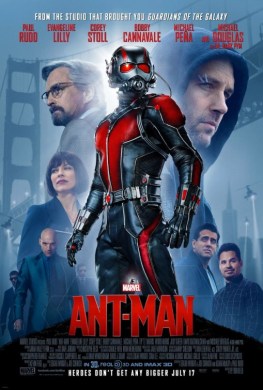
“Ant-Man,” the final piece in Marvel’s so-called “Phase Two” of their Cinematic Universe, invites us all to do what I have done for the past five years: not to take any of this too seriously. With the constantly winking and self-effacing charm of Paul Rudd (and co-writer Adam McKay), the best Marvel movie in years is ironically the one that spits in the face of what the studio signifies.
This is the first film from the comic book behemoth since the original “Iron Man” back in 2008 that feels entirely sufficient as a film in its own right, not just a placeholder for the next super-sized sequel. Granted, some of that might be a response to its iffy economic viability at the green-lighting stage of the process (and some concerns over authorship following the departure of writer/director Edgar Wright and his screenwriting partner Joe Cornish). Nonetheless, “Ant-Man” earns a second installment by virtue of its tongue-in-cheek spirit and fun sense of scale.
Rather than set up some cataclysmic battle of the fates where the powers of good do battle with a terrifying evil that beams a big blue light up into the sky, “Ant-Man” builds up to a fight between two men for one important thing. This climax engages rather than numbs (as “Avengers” final acts tend to do) because it takes place on the human level where the rest of the film registers. It also helps that the final clash is essentially the only major one in the movie, going against Marvel’s general tendency to throw in a major action set piece every 30 minutes or so to placate the thrill-seekers in the audience.
And every time it seems like “Ant-Man” is turning into a conveyer belt of Marvel tropes, Paul Rudd’s humor kicks in to disrupt the moment and make a joke at the studio’s expense. He plays on admittedly shorter leash than someone like Judd Apatow or David Wain gives him, but his sardonic wit proves a welcome reprieve of Marvel’s faux gravitas that proves suffocating in their more commercial products.
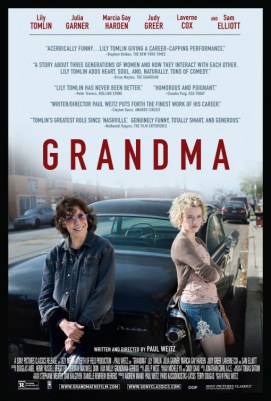 Paul Weitz’s “Grandma” gets underway once teenaged Sage (Julia Garner) shows up to humbly solicit funds for an abortion from Lily Tomlin’s Elle Reid, her estranged grandmother. While Sage might be necessary to kickstart the story, there is no doubt the titular character really drives the engine of this compact road trip. The journey is for Sage, but it is about Elle.
 Alex Gibney has made his career as a documentarian by holding powerful institutions accountable for their misdeeds, be they the
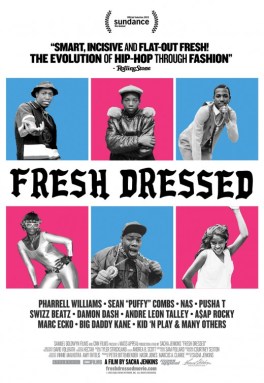 Sacha Jenkins’ documentary “
 Jill Soloway appears in just about any feature being published these days about the changing face of television for women behind the camera and trans representation in front of it. Even before “Transparent” landed at Amazon, she was making waves as a writer and producer on shows like “Six Feet Under,” “Grey’s Anatomy,” and “United States of Tara.” And somewhere in her schedule, she found time to make a narrative film.
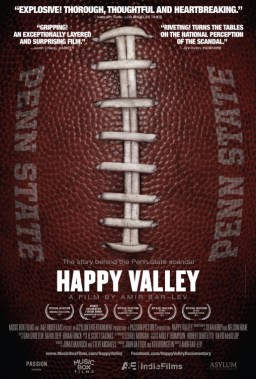 Amir Bar-Lev’s “
 As writer/director Joe Swanberg wanders the corridors of marital discontent in his latest film, “
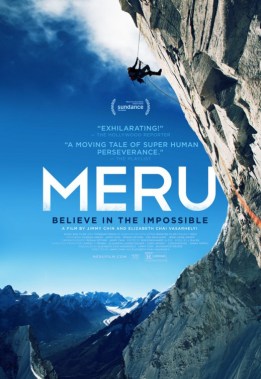 “
“ In Craig Zobel’s last film, 2012’s “
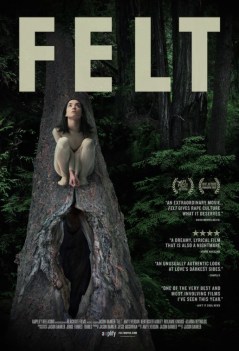 Jason Banker’s “
 I will not attempt to argue that “The Wrecking Crew” is some kind of groundbreaking piece of documentary art. Frankly put, it does not begin to approach those things. But it probably made my jaw drop in awe-struck amazement more than any movie I can think of recently, and for that alone, the film qualifies to receive the title of my “F.I.L.M. of the Week.”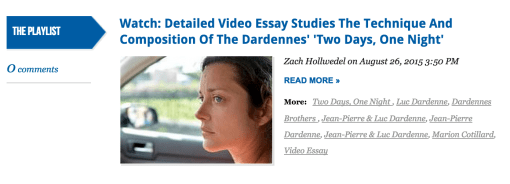
 “
“

 Marshall and the Movies
Recent Comments