 I abide by many mantras, but one I use often in assessing and criticizing movies is, “Never judge a director by their debut film.” In the case of Andrey Zvyagintsev, however, such would actually be acceptable. His first feature, 2004’s “The Return,” shows a remarkable command of suspense and tone that results in a gripping experience.
To be clear, “The Return” is not my pick for the “F.I.L.M. of the Week” simply because I am grading Zvyagintsev on a curve. Regardless of whether this were a director’s first or fifteenth film, I still would have been bowled over by its power. But anyone who saw this on the festival circuit a decade ago should have easily been able to foresee Zvyagintsev’s Oscar nomination for “Leviathan” last year.
Unlike his film recognized by the Academy, however, “The Return” focuses smaller scale rather than on the state of the entire Russian nation. Zvyagintsev primarily follows three characters over the course of the film: baby-faced Ivan, his older teen brother Andrei, and their estranged father Otets. After a twelve year absence, the patriarch mysteriously returns home to command his old family, and he does so with an iron fist.
Tensions already run high between Ivan and Andrei, as shown by an opening scene where the eldest sibling allows a bully to heap masses of humiliation on his petrified brother. Otets’ arrival simply lights the long fuse to the powder keg of familial tensions. But Zvyagintsev refuses to let us see the full length, thus keeping us in stomach-clenched agony watching their male bonding trip slowly go south. Animosity over his absence provides many a heated debate, as does Otets’ favoritism of Andrei and patronization towards Ivan.
The default reaction of the kids, in response to the feuding with their father, is to shut down entirely and offer nothing but a mopey, downcast frown. Zvyagintsev never tries to psychoanalyze them in “The Return.” He simply lets us see how each instance of frustration incrementally sets the wheels of chaos in motion. From our distance, we can only watch in anger, helpless to stop what we know is coming. Yet anyone paying attention will be hard-pressed to turn their eyes away…



 Usually, we consider a film a success when its form matches its content. In the case of Andrew Niccol’s “
 If writer/director Rick Famuyiwa’s movie “
 Responding to the reactions to a film in a review is something I generally frown upon; however, I am willing to make an exception in the case of “
 Imagine you are a young child again, and you have just woken up from the worst dream of your life. Terrified, you run into your parents’ bedroom, climb onto their mattress, and recount every detail of the terrible vision. Then, imagine them laughing at you.
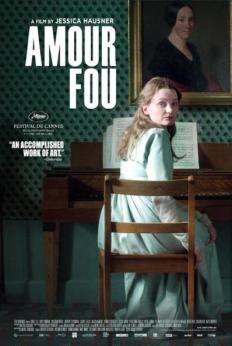 It might seem like I cry “Woody Allen” every time a movie treads into nihilistic black comedy or pure defeatism, but Jessica Hausner’s “
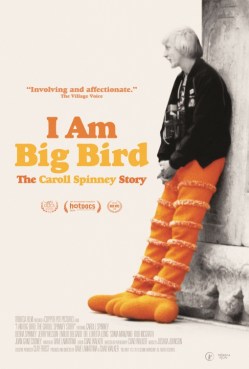 I grew up on a steady diet of “Sesame Street” and “The Muppets,” which essentially makes me the target audience for Dave LaMattina and Chad N. Walker’s documentary “
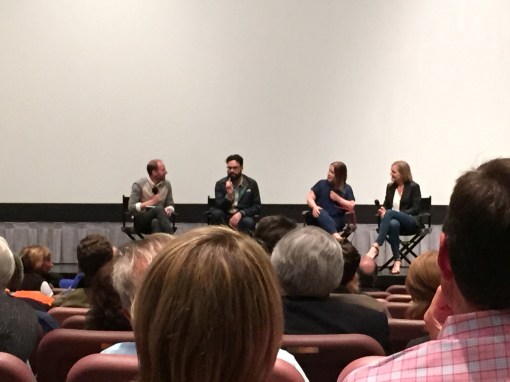
 Caitlyn Jenner’s very public transition has brought a big spotlight to transgender issues and rights, although some of the discourse (from all sides) seems to reduce her to a mere cultural object. When such rhetoric arises, it becomes easy to lose sight of the humanity that all people possess irrespective of how they choose to identify their gender or sexuality. In this void, cinema can step in to help bridge the empathy gap.

 Marshall and the Movies
Recent Comments