 For their 2015 program, the RiverRun International Film Festival has used their spotlight section to shine a light on black filmmakers who defied the odds and carved a spot for themselves in the film industry from 1971-1991. Let us not delude ourselves, however, into thinking that the challenges disappeared 24 years ago. They still remain.
This gap between the makeup of audiences and the diversity behind the camera still exists, and it manifests in the RiverRun lineup itself – particularly with narrative films. (There are quite a few directed by females, though, so at least there is some progress!) But among documentaries featured in this year’s program, the black experience in America receives a very thorough examination through four distinct films. Regrettably, I missed a fifth, “Fresh Dressed.”
Here are just a few of the riveting, compelling, informative, and enlightening documentaries playing RiverRun in 2015.
–
Althea
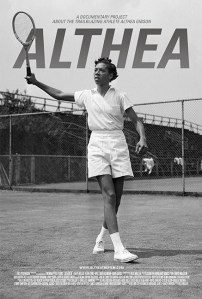 There is no catch-all definition for what a documentary has to be. But, generally speaking, the subject (if human) usually gets the chance to define his or herself in their own words if alive in the era of video recording. “Althea” does not fit this general conception of documentary.
Rex Miller’s film mostly features interviews with contemporaries of tennis star Althea Gibson, known for being the first black player to win Wimbledon, but hardly any footage of her actually talking. Perhaps little footage exists, yet it still feels odd that others are practically the sole artists of Althea’s portrait. Other people bring their own set of biases to the table, and these must be considered and filtered through for accuracy.
Then again, maybe such an iconoclastic approach is what Althea would have wanted for a documentary about herself. In the brief runtime of “Althea,” Miller and his interviewees effectively establish Althea as a woman who bristled with middle-class norms and was not keen on taking a page from the respectability playbook. This approach is fairly interesting, though I remain a little unconvinced of its effectiveness.
–
The Black Panthers: Vanguard of the Revolution
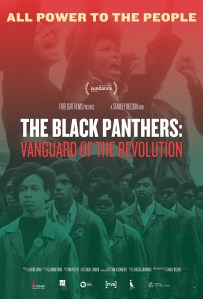 At least when I saw Stanley Nelson’s “The Black Panthers: Vanguard of the Revolution,” the film proudly blared the support of PBS in the opening credits. What followed over the next two hours perfectly matched the widely recognized criteria of that brand of documentary.
Nelson’s well-researched tome on the rise and fall of the Black Panther Party in America feels like an entire book’s worth of information packed neatly into an easy to watch film. He manages to capture the eccentric personalities involved, both in terms of those making the party appealing from within and those seeking to smear it from outside. Nelson also expertly contextualizes the movement within the larger picture of the 1960s and the Civil Rights battles.
If there is any criticism to level at “The Black Panthers,” it is that the product stays safe. Nelson never veers outside the prescribed PBS formula, and, as a result, his film seems guaranteed a spot in every university library. But watching the film, I yearned for a bold choice or some real spontaneity. Nelson never makes a misstep in the documentary, although that precision comes at the cost of excitement and edginess.
–
Tales of the Grim Sleeper

“Tales of the Grim Sleeper” is probably the best Werner Herzog documentary that Herzog didn’t make. In fact, had director Nick Broomfield spoken with a hint more German in his accent, I probably would never have questioned who was directing the film.
Broomfield goes on a journey with his camera and microphone (and the audience, by extension) to assess the damage done by a sociopathic serial killer in South Central known as “The Grim Sleeper.” The official record only counts ten victims, but many believe he exterminated close to 200 women and hid their bodies in a landfill. Since most of the women he killed were drug addicts or prostitutes, the police were largely complicit since he achieved their unstated aims.
From a boots-on-the-ground perspective, Broomfield gains a pretty comprehensive picture of the depravity exhibited by Lonnie Franklin, the man arrested in 2010 for the Grim Sleeper’s crimes. In order to gain this perspective, he gets in the car with an intelligent prostitute to snowball his way into an accurate sample of those affected.
Every bit as scary, though, is the system of indifference and ignorance built in South Central Los Angeles that allows someone to get away with such heinous crimes for so long. Broomfield is masterful in connecting the micro of the Grim Sleeper with the macro of the black experience in America and dealing with institutions which often hold them in little regard. He draws these lines mostly through expository narration that tells what is hard to show. By the end of his “Tales of the Grim Sleeper,” Broomfield leaves us outraged, disgusted, and more knowledgeable.
–
3 1/2 Minutes
 In 2012 and 2013, much of the nation’s attention turned to Florida where George Zimmerman faced trial for shooting unarmed black teenager Trayvon Martin. Many used the case as an opportunity to shed a light on the state’s dubious “stand your ground” laws, although the connection of the statue to Zimmerman was erroneous as his legal team plead self-defense.
Soon after, though, the state of Florida saw another case that actually did involve the controversial law. Michael Dunn gunned down Jordan Davis, an unarmed black 17-year-old, over loud rap music blaring in a gas station parking lot. Dunn’s defense argued that, under “stand your ground,” his perceived threat of violence from asking Jordan to turn down the music justified his use of deadly force. Had a jury sided with this rationale, it would have even further reduced the duty to retreat and essentially declared open season on any target of conscious or implicit biases.
I think of myself as someone pretty tuned into the news, but I can honestly say I had never heard of the Jordan Davis/Michael Dunn case before watching “3 1/2 Minutes,” Marc Silver’s documentary that follows every turn from the bullets discharged to the verdict handed down. Even in just 90 minutes, I felt more emotionally engaged with and personally invested in the trial than any other. Much of this comes from the stark juxtaposition between the harrowing heartbreak of Jordan’s parents, poignantly captured by Silver, and the callous insensitivity of Dunn’s common sense racism. (At one point, Dunn absurdly compares himself to a victim-blamed rape survivor.)
Whether intentionally or not, Silver provides a pretty accurate portrayal of our era of “racism without racists.” Dunn’s lawyer makes sure that race is not allowed to factor into the trial, but it seems fairly evident that he relied on coded racial appeals like the “thug” stereotype. One commentator makes the excellent point that such an epithet is our time’s equivalent of the N-word, and with the media churning out these stock characterizations, it becomes the default lens for many people secluded in single-race enclaves.
Hopefully, films like Silver’s become more widely seen in order to fill the hole currently occupied by these unfortunate images. “3 1/2 Minutes” will replace fear and suspicion with compassion and love.
 RiverRun International Film Festival
 In Matt Shankman’s “
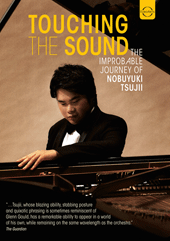 The more I have watched and studied film, the less I am able to tolerate cloying and hokey films that go for easy emotional appeal. Yet even before I started taking the medium seriously, I suspect I still would have balked at “Touching the Sound: The Improbable Journey of Nobuyuki Tsujii.” Peter Rosen’s documentary is good-natured and sweet but ultimately lacks any kind of substance or importance that suggests the watch is worth the time.
 The documentary “Sex(Ed)” could have been a fascinating sociological study about the ways in which sexual education films create and reinforce gender differences. Director Brenda Goodman does a great job providing a historical background on the evolution of these films but stops short from suggesting how they might have led to the situation in which we find ourselves now – a society where we tell women not to get raped but don’t tell men not to commit rape.
 I do have sympathy for all those who suffered tremendous losses in the face of Hurricane Sandy, trust me. But watching “This Time Next Year,” you would think the subjects of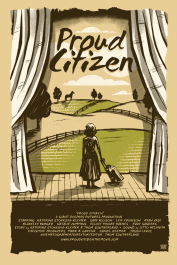
 I can’t help but feel awful criticizing a documentary like “
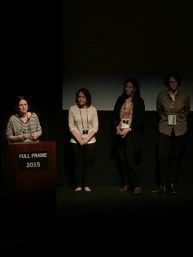
 Admittedly, I have been spoiled in my festival experiences, spending the majority of my time at ones that essentially get pick of the litter in their selections (Cannes, Telluride, NYFF). Never – before attending Full Frame, that is – had I attended a regional festival with a tightly, intentionally selected slate of films. And, logistically speaking, it was certainly the easiest and most manageable to navigate with most screenings taking place around the same time and mostly within the same walkable space.
 I doubt that Erin Espelie’s avant-garde documentary “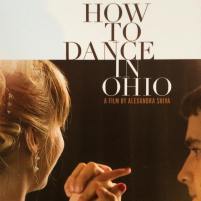
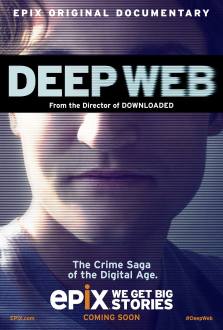 I had pretty much ideal screening conditions for “
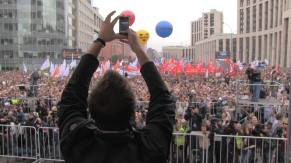 Anything about Putin’s Russia seems like a fascinating topic these days, with the autocrat seemingly unstoppable in his invasion of Ukraine. “
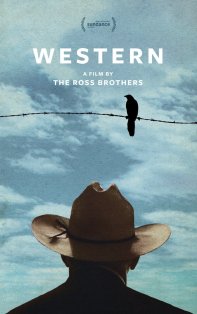 Among the documentaries I saw at Full Frame, none felt more like a narrative film than “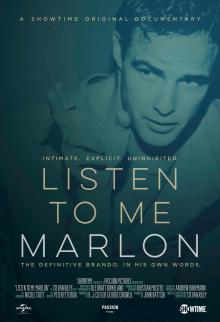
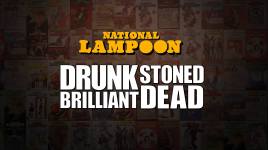 With a title like “Drunk Stoned Brilliant Dead,” director Douglas Tirola seems to imply four stages or traits will receive equal billing in his history of the National Lampoon brand. But, from what I observed, “brilliant” trumped the others. Tirola proves far more interested in hagiography than biography. He heaps praise on the humorists, then briefly mentions that they relied heavily on drugs and alcohol to do their work.

 Full Frame Documentary Film Festival
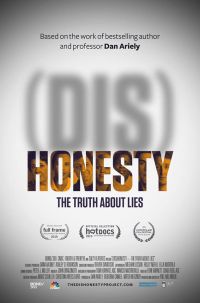 Like reading a Malcolm Gladwell book, but don’t like all the time it takes to get through one? Then check out Yael Melamede’s “(Dis)Honesty – The Truth About Lies,” a documentary about social scientist and behavioral economist Dan Ariely’s work. At Duke University, he researches the way that humans make irrational and dishonest choices, even when it is ultimately to their own detriment.
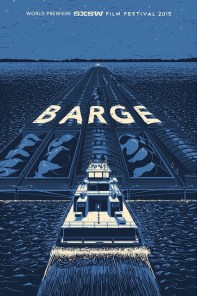 Ben Powell’s “Barge” details life on a shipping barge going down the Mississippi River. It eschews narrative principles, such as focusing on a single protagonist and following their development. Instead, it paints a vividly detailed portrait of what it takes to run such a massive vessel – the work it demands, the rivalries it instills, the animosity it inspires, and the loneliness it breeds.
 Sharon Shattuck’s intensely personal documentary “From This Day Forward” follows the unique ordeal that her family faced when her father decided to manifest her true identity as a woman. Sharon’s father, Trish, nonchalantly uttered, “When you get married, I hope you’ll let me wear a dress to walk you down the aisle,” thus beginning a long journey pondering the complexities of identity.
 Full Frame Documentary Film Festival
 Full Frame Documentary Film Festival
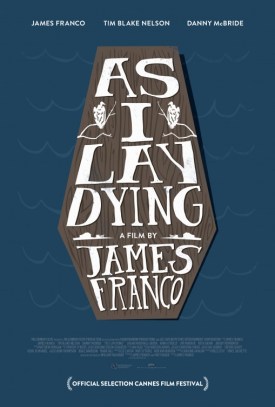 With each passing year, it has become harder and harder not to have an opinion about the multi-hyphenate artist James Franco. Is he a Renaissance man for our time, a master of many artistic trade? Or is he merely an Andy Warhol, signing off on other people’s work to make it more commercially viable? Or perhaps, is he just insane?

 Marshall and the Movies
Recent Comments