REVIEW: Life (2017)

8 07 2017

I fell in and out of sleep during Daniel Espinosa’s “Life,” a fact I feel comfortable sharing because it did not seem to have any bearing on my comprehension of the film. As it turns out, I could zone out for 10-15 minutes at a time and jump right back in feeling like I had not missed out on anything.

This is probably attributable to two factors: 1) I’ve seen “Alien,” the seminal space horror film from which “Life” cribs heavily, and 2) a line of expository dialogue recaps any major development, including big action sequences. As loud and technically complex as these set pieces are, I found myself drifting off during them with stunning ease.

“Life” (not to be confused with the James Dean quasi-biopic from 2015) takes a familiar premise – discovering life in space – and fails to take it anywhere new. “Calvin,” as their amoeba-like alien foe is named by a young schoolgirl back on earth, proves a dangerous foe for the astronauts on board the International Space Station. There’s no particular joy in watching him outsmart the crew because he adapts to surmount their weaknesses at light-speed. Not even a sardonic Ryan Reynolds or a laconic Jake Gyllenhaal can bring some – wait for it – LIFE to the screen. C


REVIEW: The Founder

7 07 2017

There’s an emerging type of film perniciously stinking up theaters every winter. Let’s call it “Weinstein-core.” (But don’t, just indulge it for the sake of the review.)

This type of movie was developed at Miramax but perfected at The Weinstein Company. It’s a film with the prestige of high-caliber awards contenders but the cynical, commercial calculations of a Marvel project. It’s provocative and edgy, but only to a point; go too far, and they might be off-putting for an audience. These are made not solely for the sake of telling a story but with the consideration of and desire for an ancillary prize baked into creation.

Sometimes these are actually decent, and it clouds our ability to see “Weinstein-core” films for what they are. “The Founder” is perhaps the best viewpoint into their mechanics, in part because it’s a smattering of good and bad moments. But chiefly, it’s a paradigmatic case because the motives are so transparent.

“Increase supply, demand will follow,” repeats Michael Keaton’s Ray Kroc at the start of the film. It’s his elevator pitch straight out of an economic textbook, yet the real purpose is to signal something to the audience: this an important movie about important things. It’s the story of the founding of McDonald’s, but it’s really about bigger concepts that we should put in quotes. It’s about “business.” It’s about “negotiation.”

Kroc is the perfect subject for a “Weinstein-core” film because, like this sub-genre, he’s never short on platitudes to disguise and sell a completely self-promotional idea. The smooth talk ingratiates him with the McDonald brothers as they seek to expand their finely tuned and mechanized burger restaurant. Eventually, however, the duo’s obsession with quality control butts heads with Kroc’s vision for aggressive economic expansion through real estate acquisition.

“The Founder” manages to squeeze some interesting drama out of that tension in the first half, but it really sags in a second half that consists almost entirely as a series of contentious phone conversations. These are written with little imagination and shot with even less. It’s a reminder of how much David Fincher and Aaron Sorkin could make this kind of material sing in “The Social Network,” a film that exists in the province of artists. “The Founder” is pure commercial product, a cinematic Big Mac – a standardized and unsatisfying meal, even if it might quell your stomach’s hungry grumblings for a short time. C+


F.I.L.M. of the Week (July 6, 2017)

6 07 2017

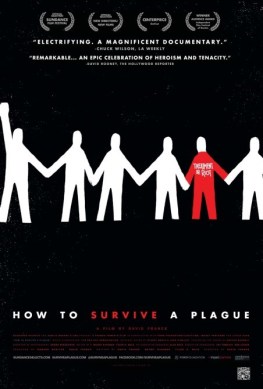
I first saw the documentary “How to Survive a Plague” in 2013, a time when its history of the LGBT community’s fight against bigotry for recognition and support in the face of a health epidemic felt like just that: history. The Supreme Court had yet to issue either of its landmark rulings, but the White House had come out in support of marriage equality. Prejudice still clearly existed, to be clear. Yet we seemed past a tipping point.

Fast forward to 2017. The White House didn’t issue a statement even acknowledging the existence of Pride Month. Amidst cries for justice from our most vulnerable citizens, we see a similar strategy from the government: avoidance, deprioritization and even outright lies. Suddenly, the members of ACT UP in the 1980s look like a great model for resistance. They organized and rallied around a clear call for action. They put pressure on organizations to make concrete steps in combatting the AIDS crisis. They carefully selected targets to mobilize public opinion in their favor.

For a viewer watching in the Trump administration, “How to Survive a Plague” meets the criteria of “F.I.L.M. of the Week” (First-Class, Independent Little-Known Movie – your occasional acronym refresher) on the basis of its existence as a resistance toolkit. But David France’s documentary is so much more than just its practical applications. It strikes the delicate balance between recounting events via talking heads and letting them unfold authentically, just as it nimbly shifts between group dynamics and individual stories. The film bears its late ’80s-early ’90s lo-fi digital aesthetic on its sleeve, yet it feels searing, pressing and urgent. For someone like me who became aware of the AIDS epidemic around the time it was no longer a public death sentence, this rendering is vital both in remembering the past and preventing it from repeating in the future.


REVIEW: Spider-Man: Homecoming

5 07 2017

The “Spider-Man” series, in both its prior cinematic incarnations this millennium, have dealt with the consequences of giving extraordinary power to ordinary men. The web-slinger’s modern persona is the product of an individualistic Bush-era America where heroes were lone actors grappling with authority and treading near the line of vigilantism. He’s a symbol of the power of the one, overcoming self-made obstacles, vanquishing doubts and conquering evil menace.

But by the time that the lifeless 2014 iteration of the character, “The Amazing Spider-Man 2,” arrived in theaters, actor Andrew Garfield even acknowledged the hollowness of this interpretation. “The danger of these superhero films is that they maybe propagate a lie that what’s going to change the world is one man, or one woman, just being the beacon of light,” he told The Daily Beast. “That’s not the way that it’s ever happened and it’s not going to be the way that it ever happens — I think it’s going to take every single person doing their small, massive bit to create a world, to create a society and a culture, that if we can imagine it we can do it.”

While Tom Holland’s Peter Parker in “Spider-Man: Homecoming” is far from the cooperative hero of “The Avengers,” he’s a step in the correct, more honest direction. Holland actually looks like the high school-aged kid that Spider-Man is; Garfield, by contrast, was 31 when his Peter Parker accepted a high school diploma. And from that starting point, director Jon Watts and a stable of six writers craft a superhero narrative around a lesson that resonates for adolescences both radioactive and regular. (We need not discuss the ending point, yet another reminder of the endemic inability for comic book adaptations to wrap up in anything other than a mind-numbing CGI pyrotechnics demo.)

Read the rest of this entry »


REVIEW: Collide

4 07 2017

What do you do when you’re making a vehicular-centered action thriller but you don’t have the stunt budget of a “Bourne” film or the pyrotechnic capabilities of the “Fast & Furious” franchise? Hopefully not what Eran Creevy does in his film “Collide,” which is to do a low-key version of those series and not to compensate by adding onto another element.

The easiest thing to do would have been further developing Nicholas Hoult’s Casey, an American living in Germany and participating in its seedy underbelly – until he falls in love with Felicity Jones’ Juliette. They enjoy a brief courtship and fall in love quickly only for her to develop a medical condition requiring dialysis and a hefty sum of cash. In order to cover the cost of her care, Casey delves back into the Cologne black market. One simple task, however, gets him caught in the crosshairs between two kingpins.

The vast majority of “Collide” details Casey’s escape, evasion of capture and ultimate showdown with his pursuers. That makes sense: look at the poster, watch the trailer, read the logline – this is a car chase and explosions movie. But I so desperately wanted them to mean more. Creevy fails to connect them back to the human core of Casey’s mission, which makes the scenes feel like soulless metal clanging and gears shifting.

He had incredibly capable actors in Hoult and Jones to hold the emotional center, too! Jones rarely gets to be more than an accessory in “Collide,” but there are moments when Creevy rests the camera on Hoult’s shifting eyes and restless face that speak volumes for his character. The film needed about twice the length of exposition on Casey and Juliette’s relationship to make the film work. That would be just 15 minutes added onto a movie that only runs an hour and 30 minutes, and it would have made all the difference. C


REVIEW: The House

3 07 2017

A government official yanks away a college scholarship promised to a local girl, deeming it “an indulgence we can no longer afford,” in the same breath as he rewards wealthy townspeople with luxurious new facilities. Is this a scene in Andrew J. Cohen’s comedy “The House,” or just another day on Capitol Hill? Show audiences in 50 years, and they will likely be unable to discern any difference.

As a series of gags loosely tied together by a hair-brained concept – Will Ferrell and Amy Poehler’s would-be empty nesters opening an underground casino to pay their daughter’s college tuition, the film leaves a lot to be desired. Like most studio comedies, “The House” throws together big comedic stars, a winning logline and a few stabs at thematically and socially relevant humor. The latter works when satirizing police surveillance in the smartphone era and stumbles when attempting a few jokes about date rape.

Ferrell and Poehler tend to take movie roles written for them, or at least well-tailored to their strengths. Nothing about “The House” indicates the screenwriters penned the film with them in mind. Ferrell’s outsized physicality and Poehler’s acerbic verbal wit go sorely underutilized.

Yet, on the other hand, they’re great avatars for the kind of well-off urban angst “The House” so deftly sends up. These are people who, for the most part, have achieved prosperity but still feel let down. “We tried to play by the rules,” laments Poehler’s Kate Johansen, “and it got us nowhere.” This disappointment and dissatisfaction leads them towards criminal enterprise, fight clubs for soccer moms and insurance fraud. It’s worth considering why this premise does not collapse immediately.

Oh, and “The House” takes place in this imaginary, fairy tale world where public officials face consequences for stealing money from the public! Must be nice. B-


REVIEW: The Beguiled

2 07 2017

I’m accustomed to having strong reactions to Sofia Coppola’s films, both positively (“The Virgin Suicides,” “The Bling Ring“) and negatively (“Lost in Translation,” “Somewhere“). So perhaps the most shocking part of her latest work, “The Beguiled,” was how ambivalent I felt towards it. Most moments landed, others didn’t … but nothing really had much magnitude.

I can attribute some of this to my subject position as the viewer; “The Beguiled” is not a movie for me as a male. And that’s ok! There are no shortage of movies that indulge my viewpoint and gaze. (Like, basically all of them.)

After finding and rescuing Colin Farrell’s “blue belly” Corporal McBurney in the Virginia woods, a group of Confederacy-supporting women residing in a schoolhouse must toe the delicate line between rehabilitation and accommodation. Is he their prisoner? Guest? Somewhere in between? Everyone from the matron Miss Martha (Nicole Kidman) to the more withdrawn instructor Edwina (Kirsten Dunst) and even the eldest student, the precociously flirtatious Alicia (Elle Fanning), must draw the line for herself.

Coppola opts for a studied minimalism in “The Beguiled,” emphasizing the natural surroundings of the estate rather than any lavish decoration or dress. Most of the film focuses on the very thin veneer of southern gentility covering over the women’s pent-up sexual desires. The presence of a man, even the enemy, is enough to stir up some strange sensations not normally experienced in a single-sex environment.

At times, Coppola does let the libidinous activities overpower the psychodrama; it’s as if her characters slowly become little more than their sensual stirrings. And approaching the story with little first-hand experience of Southern culture, the coastal-based Coppola does tend to exoticize their particular strain of desire. But I’m happy to watch her explore these women’s impulses. They deserve treatment as subjects of erotic fantasy, not merely its objects. B


REVIEW: Nerve

1 07 2017

Henry Joost and Ariel Schulman’s “Nerve” instantly makes us aware that, for today’s high schoolers, life is not lived alongside a screen so much as it is lived inside one. Devices are not an embellishment to reality but rather a replacement for it altogether.

The story, adapted from Jeanne Ryan’s YA novel, fashions a new kind of social media frenzy for young people called – well – Nerve. In this game, participants can enter either as watchers observing the dares or as players performing them. Cash incentives encourage increasingly bananas stunts, which both groups are forbidden to report to law enforcement.

The player/watcher divide becomes an all too convenient dichotomy for passive/active, but the Nerve game is a bit more complicated than high school cliques. It’s more like bystanders and perpetrators as shown by the misadventures of Emma Roberts’ Vee, who uses the game as an escape for a debilitating family life after the death of her brother. She’s a person of good intentions egged on by a crowd of people whose motivations are not as pure.

Not unlike Joost and Schulman’s cultural landmark debut “Catfish,” the film starts off with promising, incisive commentary about what social media does to people … only to devolve into bizarre theatrics that veer wildly off-message. “Nerve” makes excellent points about how easy it is to manipulate us with personal information that we willingly provide, and that deserves more of a horror/thriller ending than just another banal action set piece. B- /


REVIEW: Mother (2010)

28 06 2017

I’ll give director Bong Joon Ho credit for avoiding a lot of maternal tropes in his mysterious thriller “Mother,” specifically any bludgeoning Oedipal allusions. In the film, an unnamed widow (who we first meet as she dances alone, oddly and blithely, in a field of wheat) cares deeply for her stunted son Do-joon. So deeply, in fact, that she takes it upon herself to play detective and investigator when he is arrested for murder.

Their sleepy South Korean town is not accustomed to any sort of crime, so a body turning up in public view threatens to turn over a lot of stones to which authorities had cast a blind eye. One such item is the unlicensed acupuncture practice run by the mother. Yet for all the risks the situation poses, she is more than willing to exploit the turmoil so she can find a way to exonerate her son … or destroy the evidence.

“Mother” works a lot better in its first act, an exciting chain of events with more of Bong’s dark humor. (A moment of replicating the crime scene with a doll, only to have the head fall off in front of a crowd, had me in stitches.) After the mother doubles down and dedicates herself to deliver a personal version of justice, it gets a little too grim and somber. As a director, he makes more interesting when he embraces the quirks rather than suppressing them. Solid genre effort though this might be, it’s missing a little bit of spark as it comes to a close. B /


REVIEW: Okja

27 06 2017

Director Bong Joon Ho took oblique shots at social malaise through allegory in his films “The Host” and “Snowpiercer,” but he goes in for a more direct kill shot with his latest, “Okja.” The film is a blistering sendup of multinational corporations’ hunt for profit and the ridiculous measures they take to appear responsible while pursuing policies that cause harm.

The story is a bit disjointed, but that seems to be by design. After a brief prologue introduces the Mirando Corporation’s bio-engineered “superpig” program to the world, Bong cuts to ten years later where a well-adjusted creature, Okja, lives happily with her owner Mija (An Seo Hyun). The idea, perfectly engineered by company public relations, is to lease out these new creatures to farmers across the world who can raise them humanely. Then, the bells and whistles of sleekly-produced, insidious infomercials featuring Jake Gyllenhaal’s reality TV star  Johnny Wilcox – essentially Steve Irwin on smack – will convince the public that the meet made from these animals is safe for consumption. And delicious, to boot!

The farm-to-slaughterhouse pipeline gets disrupted when an animal rights group intervenes to save Okja. They call themselves the Animal Liberation Front (ALF) and establish their non-militancy before their ideals, a hilarious sendup of politically correct protest culture. These young idealists involve Okja and Mija in their plan to inflict economic damage on the Mirando Corporation and its CEO Lucy Mirando, played by Tilda Swinton as a woman who talks like she’s forcing every word with the energy of someone trying not to drown.

Read the rest of this entry »


REVIEW: Cars 3

26 06 2017

LPixar, like any purveyor of family entertainment, tells stories laden with themes. They do a better job than most at letting those life lessons arise naturally from an ingeniously derived plot rather than letting the morals dictate the proceedings. For whatever reason, the “Cars” franchise has been an outlet for some of the animation studio’s most blatant sermonizing, and “Cars 3” is no different.

As champion racer Lightning McQueen (voice of Owen Wilson) faces obsolescence in his sport thanks to an influx of “Moneyball“-esque stats and data, he has to take his game back to the basics. At the new racing facility, his trainer Cruz (voice of Cristela Alonzo) tries pulling some Mr. Miyagi style mind tricks on him as she eases him into their high-tech treadmills and simulators. Yet for all Cruz’s fancy techniques, Lightning shows how little she knows when taking her outside to race. There’s something to say for real-life experience as opposed to simulations of it.

But lest we think that Lightning is the pinnacle of senior sagacity, the duo eventually links up with some pals of his mentor, Doc Hudson. (Paul Newman’s character from the first film keeps appearing in so many flashbacks that you’d think he died in 2016, not 2008.) These vintage autos help Lightning realize that joy and promise lie beyond our youthful days, though they also help raise his game with some of their classic, road-tested techniques. The limitations of older generations gave them different, not less, skills, and we’d all be wiser to heed their lessons.

It’s not a radical message, and Pixar did better conveying intergenerational understanding with “Up.” Still, it’s harmless to see repeated and beneficial to remember. B


REVIEW: The Little Hours

25 06 2017

Sundance Film Festival

Raunchy comedies set in a distant past always run the risk of relying too heavily on anachronistic humor. (Cough, “A Million Ways to Die in the West.”) The humor that arises from performers in period garb rattling off profanities or talking in the present-day vernacular is the definition of low-hanging fruit.

Jeff Baena’s “The Little Hours” tends to lean on this dissonance to generate comedy. Aubrey Plaza dropping F-bombs in a nun’s habit is inherently pretty darn funny. Whether it leans too heavily on the ahistorical humor is up to the individual viewer – I found it a little overloaded – but thankfully it’s not the only trick Baena has up his sleeve.

The film’s story, adapted from the Medieval novella “The Decameron,” finds laughs from sending up the era’s sexual repression and religious rigor. Three naughty nuns (Plaza, Alison Brie and scene-stealer Kate Micucci) toil away in their convent under the watchful eye of John C. Reilly’s Father Tommasso, lamenting their inability to act on certain desires. Luckily, Dave Franco’s chesty handyman Massetto arrives to light their flames.

This feudal Rudolph Valentino escapes one manor, where as servant he beds the master’s wife, and gets smuggled into the nunnery pretending to be a deaf mute. Thinking him unable to hear them, the sisters let loose with some of their wildest sexual fantasies – some of which they consummate to his delight and horror. “The Little Hours” is certainly a one-of-a-kind sex comedy, worth seeing for its brazenness alone and worth staying for Fred Armisen’s Bishop Bartolomeo, who arrives at the end to scold them all with a poker-faced gall. B


REVIEW: The Hero

24 06 2017

“I know we were hoping to get good news from this biopsy,” begins the doctor of Sam Elliott’s Lee Hayden. “Unfortunately, I don’t have good news.” The scene happens so early in Brett Haley’s “The Hero” that I held out hope this kind of dialogue was not indicative of the rest of the movie and the doctor just had terrible bedside manner.

I was wrong.

“The Hero” is a stale rehash of cliches surrounding estranged fathers, aging Hollywood actors and ailing elderly people coming to terms with illness. Most of the film entails Lee avoiding the disclosure of his pancreatic cancer diagnosis so he can continue chugging away on film sets and toking his marijuana to feel the slightest hint of contentment. He’s moving slightly closer to a younger romantic interest (Laura Prepon’s Charlotte Dylan) and rapidly farther from his daughter (Krysten Ritter’s Lucy).

The one interesting bit of the movie comes when Lee sees his stock rise after a viral lifetime achievement award acceptance speech that’s sincere, thoughtful … and also the result of a Molly trip. It puts the wind back behind his sails for a brief moment, landing him an audition for one of the hottest parts in town. As he prepares, the part inspires at outpouring of feeling and emotion that he hasn’t tapped into in years since he started phoning it in.

What a shocker, life can lead to inspired art, and art can lead to an inspired life! While Elliott chewing on something more than an archetype with his distinctive drawl is a pleasure, it’s a shame that he gets such banal material to work with for his moment in the spotlight. (Haley did such a great job crafting a unique and charming story for the AARP crowd in “I’ll See You In My Dreams,” but he does not recreate that magic here.) Elliott has more to give than welling up with tears by the ocean and spouting bland platitudes of regret. Hopefully someone else lets him. C


REVIEW: The World’s End

23 06 2017

Edgar Wright might be known for his visual comedy and genre pastiche, but he’s also not afraid to throw in a little social commentary with his trademarks. Like many contemporary directors, he’s concerned with the effect of cell phones and technology on society. Part of the joke in Wright’s “Shaun of the Dead” was how little separated the undead zombies from the barely living humans on a treadmill of electronic stimulation.

His 2013 feature “The World’s End” takes that comparison to newly absurd heights. In this reunion comedy-cum-apocalyptic action flick, cell phones are the tool that’s turning residents of a sleepy British town into robotic versions of themselves. (Hit them hard enough in the head, and they’ll spew blue liquid!)

Wright’s clever twist on the genre is to focus on replacement over annihilation. As an exposition-heavy section of dialogue tells us, “They want to make us more like them.” Social change happens not as an invasion or hostile takeover, although the horror films that speak to our anxieties about it usually portray it as such. Rather, the decline of civility takes place as a gradual erosion until our humanity is barely recognizable.

Wright (and co-writer Simon Pegg) are smart to set this observation against the backdrop of the pub tour of five estranged friends brought back together by Pegg’s lonely alcoholic. As he yearns for the mythical past of his glory days, he finds the present-day changes to the people of the town make his nostalgia impossible. Yet the social commentary, which is not anything particularly monumental, comes at the expense of Wright’s usual cheeky fun. It’s nice to get a reminder that friends and happiness are two things worth fighting for – these characters just aren’t always the best merchants for that moral. B


F.I.L.M. of the Week (June 22, 2017)

22 06 2017

I’d been a little iffy on Edgar Wright as a brand-name director for years … that is, until I saw his latest film, “Baby Driver,” which was so good that it inspired me to go back and revisit his entire filmography. I’d given “Shaun of the Dead” and “The World’s End” second chances before but never returned to “Hot Fuzz,” his 2007 crime caper. Wow, was I missing out.

A second watch revealed “Hot Fuzz” to be an obvious “F.I.L.M. of the Week.” It’s smart, stylish and subversive – all the things that mark Wright’s best cinema. He can successfully play with genre like few other working directors, and this re-teaming of Wright with comedic muses Simon Pegg and Nick Frost exhibits his most seamless blend.

The adventure starts as a fish-out-of-water comedy when the impressively efficient London Metro Police officer Nicholas Angel (Pegg) gets transferred to the sleepy country town Sandford. He’s used to his presence being necessary to enforce the law in the big city. Here, Angel finds that the police have made themselves largely ornamental. There’s a strong amount of social trust in the community, and the existing police officers take a hands-off approach to handling any misbehaviors and misdemeanors they observe. Not Angel, though, who takes thwarting underage pub drinking as seriously as foiling a terrorist plot.

But lurking under the blissful bucolic facade is a cabal that threatens the townspeople by exploiting their trust and naïveté. They’re certainly lucky to have Angel around for this, although he’s hamstrung by the provincial local police chief (Jim Broadbent) and his aloof son Danny Butterman (Frost) … who just so happens to be Angel’s partner. Danny’s chief preparation for the job, aside from his lineage, is watching lots of ’90s action movies. As it turns out, that proves most helpful for combating the menace facing Sandford.

Wright pulls off the tricky task of paying homage to a series of influential films (“Bad Boys,” “Point Break”) while humorously sending them up and one-upping their antics. His comedy goes far beyond the lazy “Scary Movie” spoof; Wright works in how people interact with film and how it tints their view of the world to hilarious ends. Furthermore, he’s not just cribbing an incident or a feel from the genre and calling it a take on them. He’s mimicking their aesthetic with loud, smashing cuts and big pyrotechnics. Just appropriately adjusted for the real world.