The archetypal model for the comedy sequel can be summed up in one line from “The Hangover Part II,” perhaps one of the most disparaged to date: “It happened again.” Comedies, for whatever reason, seem to recycle their material with a particularly accelerated velocity.
“22 Jump Street” essentially takes the model of the sequels to “The Hangover” but makes it not just tolerable but also enjoyable by injecting a level of self-awareness akin to only “This is The End.” The framework of Michael Bacall’s script, co-written with Oren Uziel and Rodney Rothman (with story by Jonah Hill), merely inverts “21 Jump Street” and swaps out college for high school.
This time, Channing Tatum’s Jenko gets to ride atop the social order of Metro City State, immediately accepted by the jocks and gaining an inroad for the all-important fraternity bid. Jonah Hill’s Schmidt, on the other hand, gets caught up in tricky collegiate sexual politics and experiences the isolation that often comes with being transplanted into a sprawling campus. And more or less, the events play out just like they did in high school.
In some ways, the similarity is frustrating, but it also rings true to life itself. I’m approaching my senior year in college, and I’ve learned that the same narratives that I thought people had outgrown in high school have tended to repeat themselves. We all rush so quickly to the next stage of our lives that the reflection necessary to gain maturity seems lost sometimes.
That’s probably not what the filmmakers of “22 Jump Street” had in mind, especially given all their winks and nods to the very nature of the events taking place in a movie – in particular a sequel. This meta humor is quite clever, and the tongue-in-cheek sensibility pervading the film makes the shameless repetition worth another spin.
Yet while this newfangled irony gives the film some justification for existing, it ultimately does not power the movie. That job is still carried out by the strengths of the 2012 reboot: the spot-on portrayals of social orders, the nuanced dialogue, and the relationship between the leads. Rather than going bigger or broader like “The Hangover” series, “22 Jump Street” dives deeper into its own world and pulls out rich observations.
Liam Neeson’s career has taken one of the stranger trajectories in recent memory. Beginning as a prestige dramatic actor whose stunning performance in “Schindler’s List” earned him an Oscar nomination, he was one of few with the gravitas to be the voice of God in the “Narnia” series. Though he had a brief stint as a Jedi in the maligned 1999 “Star Wars” prequel, few would have thought of Neeson as an action star.
That was, until 2009’s game-changing hit “Taken,” the film that still sends chills down the spine of any student about travel abroad. Playing the ultimate protective papa bear, Neeson channels Jack Bauer by way of Dick Cheney with such tenacity that it led to reprising various shades of the role in “Clash of the Titans.” And “The A-Team.” And “Unknown.” (Heck, it’s already at the parodic stage as shown by “A Million Ways to Die in the West.”) Neeson can now go on “Saturday Night Live” and threaten Vladimir Putin, presumptively as … himself.
“Non-Stop” may well be the zenith of the Neeson craze, signaling the point at which pop culture accepts him as a Chuck Norris or Steven Seagal-type figure. His larger-than-life presence on the screen now apparently means we can and should accept a heightened state of suspension of disbelief. Neeson might as well wear a cape because he’s a superhero in our real world that doesn’t involve aliens, time travel, or any other Marvel gimmick you can think of.
Documentaries can sometimes get a bad rep as boring, no doubt due to the success of films based on Al Gore lectures and other intricate political exposés. But many people tend to forget that much of what they watch on television is in the same vein of non-fiction storytelling. I’m not talking the fabricated “realities” of the Kardashians; I’m referring to programming on channels like Discovery and History that set out to inform while they entertain.
“Tim’s Vermeer” is a film of such pedigree, balancing intelligent contemplation and showmanship with poise. This strength is no doubt derived from the talents of Penn and Teller, clever magicians whose act has always been a similar high-wire act. They take what is essentially a feature-length episode of “MythBusters” and use it as an opportunity to begin a discussion the interrelation, as opposed to the stratification, of art and science.
Their subject, Tim Jenison, is a brilliant inventor looking for a new project. Rather than looking to the sciences, he turns to the mystery of the Dutch painter Johannes Vermeer. This masterful Baroque artist has long puzzled scholars with the uncanny verisimilitude of his works, and Tim seeks an explanation using technology. He looks to the camera obscura (a tool important in the birth of cinema), which employs a mirror at a 45º angle, as a potential mechanism through which Vermeer could have essentially copied an image onto the canvas.
So was Vermeer a machine? A photographer with a paintbrush, predating the birth of that medium by a century? There’s only one way to find out: Tim sets out to use the camera obscura to create his own rendition of one of Vermeer’s famous paintings. The task enters the realm of the obsessive as Tim has to recreate the room as well as all its furnishings from scratch … and then he has to sit there for days on end to paint it.
You can see the results for yourself by watching “Tim’s Vermeer,” which runs all of 80 minutes but packs the heft of documentaries that run an hour longer. Penn and Teller don’t force some grandiose conclusion on Tim’s tale, but his quest will ask you to rethink the nature of the artist altogether by the end. A- /
In 2010, Gareth Edwards unleashed the ultra-low budget flick “Monsters” on the world. It was a striking debut, and it also wound up serving as an audition tape for the job of reenergizing the “Godzilla” franchise. Indeed, if there was anyone to scoop up from the world of independent cinema for large-scale filmmaking, Edwards seemed like a natural due to the way he emphasized human relationships over flashy computer graphics.
Sadly, what ultimately hits the screen in “Godzilla” is something far more in the mold of Marvel than Edwards’ own “Monsters.” The plot structure resembles the paradigm perpetuated by films like “The Avengers;” I’d like to call this formula “30-40-50.” The first 30 minutes of the film introduce us briefly to the characters and cap off with an inciting event that sets up a climactic clash with an opposing villainous force. The next 40 minutes vamp up to this giant conclusion, showing the various heroes and their preparations. And it all caps off with 50 minutes of destructions, explosions, collapsing buildings … you know the drill.
The scariest part of “Godzilla” is not the monster; it’s realizing how quickly the art of screenwriting has transmuted into an engineered science. It favors empty computer graphics over real suspense and rewarding characterization. Edwards’ penchant for thrilling action goes woefully underutilized as he settles to provide a standard entry in the genre “Monsters” so ably defies. He gets to be somewhat ironic on occasion but never subtle.
Actors can often rescue movies that sag under the weight of a bloated effects budget, but no such salvation is available for “Godzilla.” Here, Bryan Cranston is forced to play a Walter White-lite variety and acclaimed actresses such as Elizabeth Olsen, Sally Hawkins, and Juliette Binoche are relegated to serve perfunctory roles on the sidelines. But don’t worry, Aaron Taylor-Johnson fruitlessly channels Mark Wahlberg trying to save the day, an archetype he’s ill-equipped to play.
But hey, who needs actors when you can watch a giant lizard destroy the Golden Gate Bridge and the rest of San Francisco? Not like we got to see it terrorized in “Rise of the Planet of the Apes.” Or the “Star Trek” movies. (Heck, even the animated “Monsters vs. Aliens” got in on the action.) Sure, it’s probably more extensive here in “Godzilla,” but it all just feels so familiar and generic. No better way to sit through the threat of near-apocalyptic extinction than comfortably numb, right? C+ /
It would have been all too easy to write off “Edge of Tomorrow” with a few jokes about familiarity. Given the nature of its plot, which involves Tom Cruise’s character doomed to relive the same day until he can defeat an invading alien force, I would not have been surprised if I felt a frustration tantamount to his character. That is to say, I expected to feel like I was caught reliving a hackneyed story until I reached the point of insanity.
But to my surprise, director Doug Liman finds a way to make “Edge of Tomorrow” feel fresh and exciting even though it isn’t reinventing the blockbuster wheel. It takes the film a little while to find its footing after a sped-through expository opening sequence and a fairly standard beginning of the time travel process. Once Emily Blunt enters the picture as a gritty soldier who once suffered a similar “Groundhog Day”-esque affliction, though, things start to get a little more intriguing.
That’s mainly due to the smart script by Christopher McQuarrie, the Oscar-winning writer of “The Usual Suspects,” with the help of Jez and John-Henry Butterworth, who penned Liman’s underrated “Fair Game.” While their screenplay might not be nearly as cerebral as Duncan Jones’ superb 2011 time travel thriller “Source Code,” it certainly shows the signs of real effort to be clever. They avoid falling into obvious traps of the sub-genre and find some nice moments for Cruise and Blunt to play on the path less traveled.
Credit is due to Liman as well for finding creative ways to present and re-present events that have to be repeated. It’s often beat into filmmakers to show something rather than tell it. Liman finds a two-handed approach to work just fine, however, and “Edge of Tomorrow” feels invigoratingly as a result since each section feels a little different from the one before it.
This does contribute to making the film slightly uneven, but even so, it’s one of the better big-budget blockbusters I’ve seen in a while. If there was one I had to sit through again and again, there could be worse than this. Like Cruise’s character in the film, I could probably find new ways to improve it each time though. B /
In 2012 and 2013, whatever time I had that wasn’t devoted to studying for finals in late April and early May was devoted to cramming in some important movie watching. Around mid-April, the lineup for the Cannes Film Festival is announced, and both years promised new films for prominent directors whose filmographies I had largely (and shamefully) neglected.
This year, I sadly did not get the chance to go back to Cannes, instead relegated to the sidelines to live vicariously through The Hollywood Reporter and IndieWire’s reporting. (I’m not asking you to feel bad for me; I’m lucky enough to have gone in the first place!) That did not stop me, however, from keeping up my habit of catching up on some filmmakers walking the Croisette with new works.
It led me to discover the raw power and magic of the Dardenne brothers, Jean-Pierre and Luc, albeit from the comfort of their own couch. I certainly forward to seeing their latest film, “Two Days, One Night,” after being blown away by their prior film “The Kid with a Bike.” Thought it was the runner-up at 2011 Cannes to “The Tree of Life,” it’s still first-class enough to be called my “F.I.L.M. of the Week.”
The raw naturalism of the Dardennes really snuck up on me while watching “The Kid with a Bike,” and by the end, my heart beat in tune with the pulse of the film. Their filmmaking technique seems to be in the vein of alienation, stripping the frame of aesthetic beauty so we can focus on the political realities within it. The Dardennes focus their narrative on the more marginalized of Belgium whose stories are not usually told; here, that’s Cyril, the titular child who has been brought up through the foster care system.
As Cyril rebels against authority, following his own impulsive whims and defiantly straining the patience of those who care for him, the film recalls a harder-edged “The 400 Blows.” Yet it slowly evolves before our eyes into something powerfully emotional and deeply felt on a guttural level. The Dardennes’ periodic and well-timed use of Beethoven’s Piano Concerto No. 5 (also employed in the epilogue of “The King’s Speech“) certainly helps amplify some key moments, though it alone is not responsible for the powerful impact of the film.
Though Cyril is initially thorny and tough to sympathize with, the Dardennes’ plot brilliantly unfolds with a double whammy of both exposing his vulnerability and putting him into more dangerous situations. As we begin to see how little love he receives from a deadbeat biological father and how little regard he is held in by an uncaring society, we rush in to fill the void of affection.
We become inspired to adopt a position similar to Cecil de France’s Samantha, the adoptive foster mother of Cyril. She’s not perfectly caring and patient, to be sure, because Cyril doesn’t always make it easy. On the other hand, she does try to instill in him the sense of self-worth that no one else gave him. “The Kid with a Bike” doesn’t issue an explicit call for us to help the poor in spirit, but it almost doesn’t need to do so. The film’s stirring conclusion ought to move anyone with a heart to show more compassion for everyone.
Quite often nowadays, I carry a small notepad with me when I go to see movies. Unfortunately, I often find myself writing my review mentally as I watch the film, and I hate letting the perfect phrase slip out of my mind to never be recovered again. I usually jot down enough phrases to fill a small page and can usually tease out the basic structure of my review.
With “The Fault in Our Stars,” however, I found that I had only written one small observation. It was not some particularly insightful comment but merely a note of a particularly well-employed song by M83 (click to listen, but I won’t spoil the name for those yet to see the film) with the word “YES” written in all caps next to it. I could say the same word, more or less, for the whole movie.
Those who found themselves moved by John Green’s poignant novel about a romance between two teenagers that want to be identified by something other than their cancer diagnoses will be pleased by this adaptation. The script, nimbly adapted by the writers behind “(500) Days of Summer,” keeps the feel of the story and characters carefully in tact while also streamlining them to better suit the medium of film. In some ways, the movie is actually an improved narrative as it excises any moment that doesn’t directly advance the relationship between the two main characters.
The miscarriage of justice in the case of the West Memphis Three, a group of Satanist wrongfully convicted of murdering young children in rural Arkansas, has received plenty of attention from non-fiction filmmakers. Joe Berlinger and Bruce Sinofsky have created the “Paradise Lost” trilogy about their case; the final film netted them an Oscar nomination. And if that wasn’t enough, Academy Award nominee Amy Berg made her own documentary on the subject, “West of Memphis,” to great acclaim.
Now I love a good documentary, and judging from the occasional surprise mainstream crossover hit like “Blackfish,” most audiences aren’t opposed to them either. Yet there’s only a limited audience that those films can reach, sadly, due to some inherent bias people seem to possess against non-fiction filmmaking. If you take a look at the list of highest-grossing documentaries, no one is reaching wide audiences unless they are Michael Moore, a pop star, or a cute animal.
I don’t doubt the good intentions behind the filmmaking team of “Devil’s Knot,” a narrativized account of the events in the case. If you tell the story as a legal thriller with Oscar winners like Colin Firth and Reese Witherspoon, it has the potential to reach an entirely different crowd of people that would never stop to watch a true-life procedural.
It’s a real shame, then, that Atom Egoyan’s film fails to connect on just about every level. His feckless direction leaves “Devil’s Knot” not a tonal mess but downright confusing. Reducing a subject that has received nearly seven hours of coverage from the “Paradise Lost” films alone into a two hour feature is a lofty task, and Egoyan never figures out an effective method of intelligibly conveying the facts and events. (Not to mention, there are still enough questions lingering in the case to fill another film.)
Just so we’re clear: I have no problems with auteurism. For those of you who just saw a French word and panicked, I’m referring to a school of film criticism that looks for recurring patterns throughout the work of an artist (usually the director). It can often be a very interesting lens through which to analyze a set of films, and auteurism has the ability to shine a light on filmmakers outside of the general circles of critical acclaim.
Like anything in life, the theory has a dark underbelly, and to me, “The Grand Budapest Hotel” represents the perils of auteurism run rampant. The film is Wes Anderson’s “Django Unchained,” in the sense that it represents a moment of stasis in the progression of a great director. Anderson is now more than a director; essentially, he’s a brand, expected by customers to deliver a certain consistency of product.
Put into the position of becoming a cinematic McDonald’s, Anderson takes the easy way out by providing an assembly-line reproduction of what he has already created to great admiration. “The Grand Budapest Hotel” feels like a less vibrant remake of a film he’s already made – or, perhaps more accurately, it feels like all of them at once. Despite being set in a semi-fictionalized interwar Central Europe, the world Anderson portrays seems reassembled from pieces of “Moonrise Kingdom,” “The Darjeeling Limited,” and even “Fantastic Mr. Fox.”
Even more than Anderson’s last feature-length cinematic outing in 2012, “The Grand Budapest Hotel” takes his telltale stylistic flourishes and puts them to an exponential degree. Every other take in the film had to be a tracking shot, so it seemed. The cameos and other miscellaneous odd appearances by acclaimed thespians is now less of an amusing diversion and more of a distracting parade. The off-beat characters feel less like quirky people and more like paper dolls traipsing around in the elegant house Anderson created for their frolicking delight.
According to Seth MacFarlane, there are a million ways to die in the west. Too bad not a one of them could have come to put me out of my misery while watching his dreadful new film. It doesn’t just miss the mark of Western comedic great “Blazing Saddles;” MacFarlane pretty much misfires on laughs altogether.
“A Million Ways to Die in the West” amounts to little more a bloated reel of MacFarlane kvetching about everything in his life. At first, it just seems like a long-winded way of setting up the perilousness of the primitive civilization he intends to mock. Yet after about 10 minutes, it becomes clear that MacFarlane is never going to shut up. The experience becomes akin to being locked in a room with your annoying friend that can only speak in the form of complaints – for nearly two hours.
MacFarlane’s relentless pessimism is so pervasive that it overpowers the rest of the cast. Only Neil Patrick Harris, cleverly employed here as a cocky cuckold with a finely-kept mustache, manages to entertain in the slightest with any wit. Charlize Theron, as MacFarlane’s pseudo-love interest, coasts through the film on autopilot and never really sparks. Amanda Seyfried and Liam Neeson are mentally checked out as well, but they’re playing such familiar roles that it really doesn’t seem quite as egregious.
What’s old must become new again in order to keep movie studios’ back catalogues fresh so they can earn money; thus, we end up with “Maleficent,” a reimagining of their “Sleeping Beauty” tale. It’s a film that uses the same formula as “Oz the Great and Powerful” and then splashes it with flourishes from Tim Burton’s 2010 revisionist “Alice in Wonderland.” It trots out the familiar mythology – only now in sleek CGI! – and then puts a few twists on it to justify the remake.
Analyzed in tandem with the Mouse House’s 2013 megahit “Frozen,” the film yields interesting insights into the psyche of Disney. This marks their second straight tentpole that does not give the audience the expected male-female romantic ending, leaving them to ponder the many different forms love can take. One can only wonder where these progressive messages will ultimately end.
But that’s about all the intellectual discussion I can pull out of “Maleficent.” It’s a sloppily written film filled with feckless characters whose discernible motivations are few and far between. The movie needlessly complicates the simple 1959 classic story, making it a slow plod. And, from a perspective likely only depressing to me, it reduces great actors like Imelda Staunton and Lesley Manville to playing cartoonish fairies in a failed comic relief subplot.
What should be the star in absence of these elements, the visual effects, are even quite confused. Scenes designed to showcase the work of artists who work in the medium of pixels are cluttered with details that don’t cohere for a unified look. At times, the film resembles the Pandora of James Cameron’s “Avatar;” at others, Burton’s “Alice.” The opening scenes resemble an illustrated children’s storybook … and then, there are 3 mo-cap fairies. The whole collective vibe recalls a 2002 video game like “Kingdom Hearts.”
“Fed Up” certainly trumpets its connection to the Al Gore lecture doc “An Inconvenient Truth,” which got plenty of people alarmed about the subject of climate change and (perhaps more importantly for marketing) won an Oscar. Stephanie Soechtig’s documentary, narrated by Katie Couric, does indeed offer many frightening reasons to get concerned about the obesity epidemic that has been plaguing America for the past 30 years.
Yet the impact is dulled by the film’s voracious desire to bite off more than it can chew. It covers far too many subjects in its 98 minute runtime than it can handle, each feeling slightly less persuasive than the one before it. The journey to her call to action is so exhausting that, ironically, it made me want to reach for some horribly fattening sweet treat from the freezer..
Soechtig wisely begins by breaking down the science of nutrition and obesity, shedding some helpful light on what is actually making our country fat. A calorie is not just a calorie, and exercising to burn them off can only put a dent in the problem. Many issues stem from the overconsumption of sugar, which is often hidden in processed foods by using confusing polysyllabic names as fronts.
The film then wades into the murkier grounds of politics and business, and the wheels begin to fall off. At times, “Fed Up” resembles Charles Ferguson’s stellar documentary “Inside Job” with its fervent attacks on the dangerous intertwining of the two institutions. Yet it lacks the zeal to really chide politics and business as usual. Read the rest of this entry »
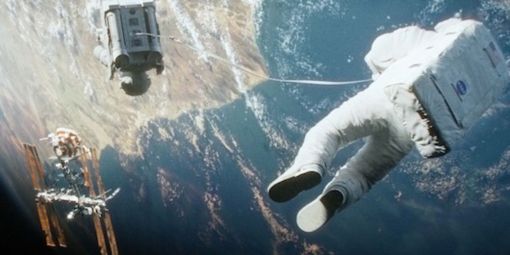
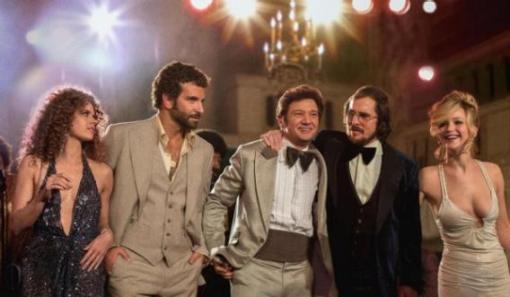
12:00 A.M. S0 7 Oscars for “Gravity,” 3 for “12 Years a Slave” and “Dallas Buyers Club,” 2 for “Frozen” and “The Great Gatsby” … and none for “American Hustle.” The Oscars, so great and so cruel.
12:00 A.M. Steve McQueen jumping up and down, how joyous!
11:59 P.M. Seeing Paul Dano on stage makes me angry.
11:59 P.M. Two years in a row of a split Best Picture/Best Director. Wow.
11:58 P.M. Two years too late for “Shame,” but still glad for Steve McQueen.
11:57 P.M. Brad Pitt, now an Oscar winner.
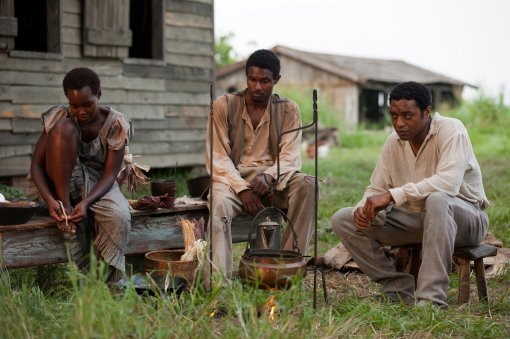
11:57 P.M. BEST PICTURE: “12 YEARS A SLAVE”
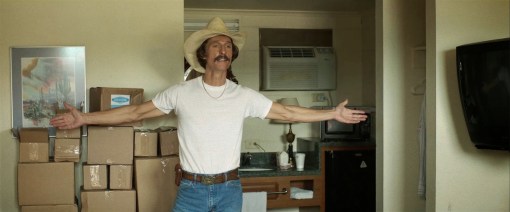
11:54 P.M. YES ALRIGHT ALRIGHT ALRIGHT!
11:52 P.M. I think Woody Allen got more applause than God, yikes.
11:51 P.M. I see Matthew McConaughey’s mom, the real star of “Bernie!”
11:50 P.M. BEST ACTOR: MATTHEW MCCONAUGHEY, “DALLAS BUYERS CLUB”
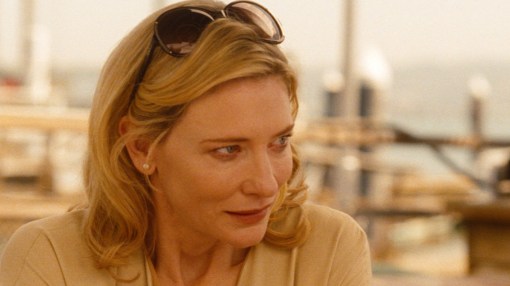
11:47 P.M. Oh, Cate. So classy. And a beautiful dish on “Gravity.” Muted applause on the mention of Woody Allen, eek. Thank you so much for calling out Hollywood for not making movies about women and applauding intelligent audiences!
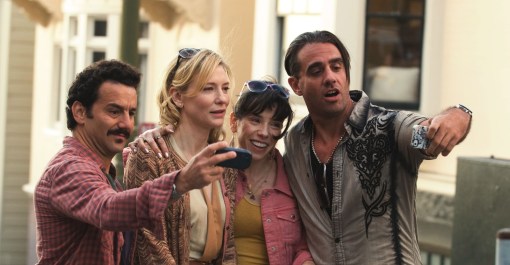
11:44 P.M. BEST ACTRESS: CATE BLANCHETT, “BLUE JASMINE“
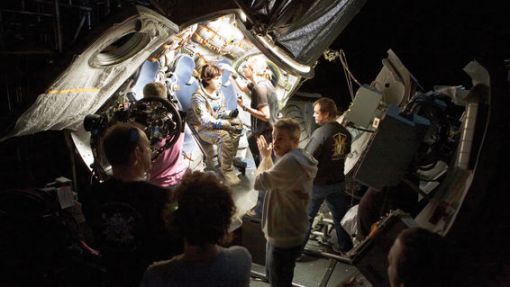
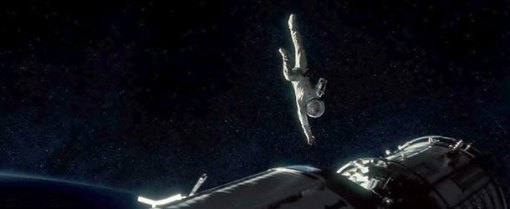
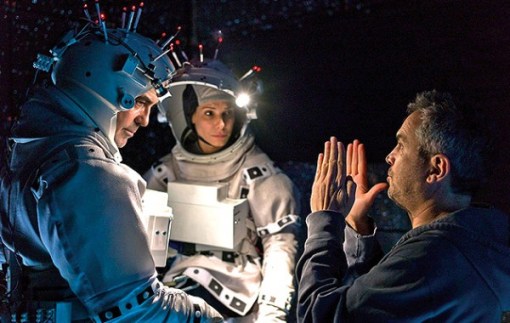
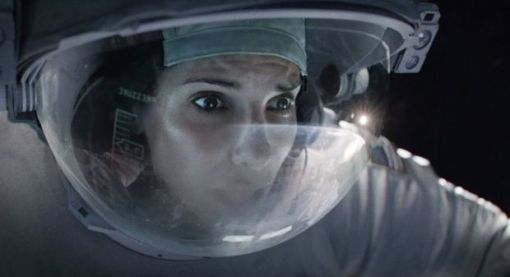
11:34 P.M.BEST DIRECTOR: ALFONSO CUARON, “GRAVITY“
11:29 P.M. So “American Hustle” has now gone from once-frontrunner to completely blanked … it’s not going to win anything left. GRR! This reminds me of back in 2009 when “Up in the Air” lost Best Adapted Screenplay.
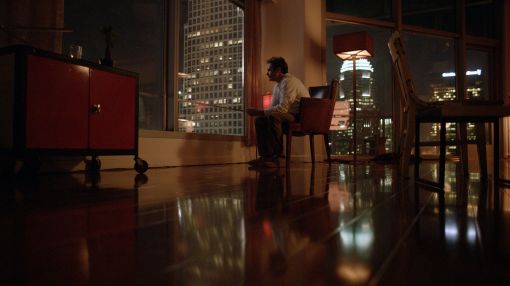
11:28 P.M. Nice, short speech – poor Spike Jonze, he should be less humble!
11:27 P.M. BEST ORIGINAL SCREENPLAY: “HER”
11:24 P.M. BEST ADAPTED SCREENPLAY: “12 YEARS A SLAVE”
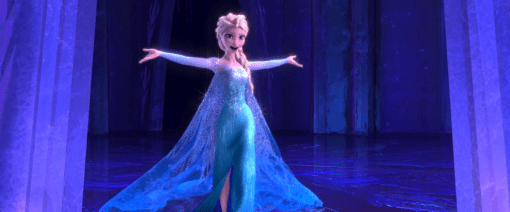
11:18 P.M. What an awesome speech to their daughters. Here’s to EGOT for Bobby Lopez!
11:16 P.M. BEST ORIGINAL SONG: “LET IT GO,” FROZEN
10:29 P.M. Two years too late for “The Tree of Life,” but about time Lubezki gets his Oscar! (P.S. – Great shout-out by Bill Murray to the late Harold Ramis.)
9:18 P.M. I spent the entire first half of the montage trying to figure out what the song in the montage was … it was the theme song from “Revolutionary Road.” Ears, why didst thou fail me?
8:56 P.M. Ellen to Jonah Hill: “No, I don’t want to see it.” Dig this running gag.
8:53 P.M. Time for a commercial break! This is like watching “The Wolf of Wall Street” – overwhelming.
8:52 P.M. Ok, Meryl Streep dancing … joyous.
8:51 P.M. That hat … Pharrell … stop.
8:47 P.M. Jim Carrey, you scare me.
8:46 P.M. Ellen’s picture reminds me of her 2007 shenanigans…
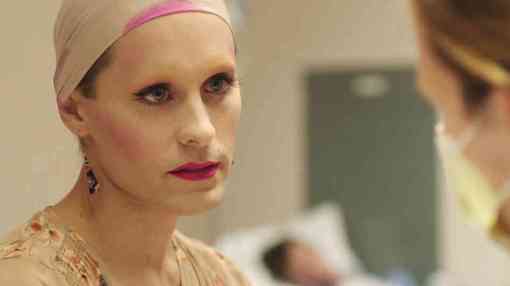
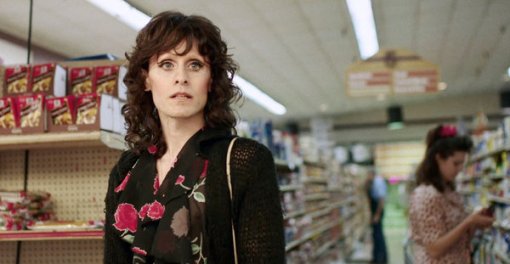
8:45 P.M. Nice of Leto to go shake Jonah Hill’s hand. And love the shout-out to Ellen. But best of all is his heartfelt tribute to his mother! A beautiful speech that gets political but not too touchy.
8:42 P.M. BEST SUPPORTING ACTOR: JARED LETO, “DALLAS BUYERS CLUB”
8:40 P.M. “Possibilty #1: ’12 Years a Slave’ wins Best Picture. Possbility #2: you’re all racists.” – Ellen
8:37 P.M. “If you [J-Law] wins, I think we should bring you the Oscar!”- Ellen
8:36 P.M. So jealous of Nicholas Hoult right now…
8:35 P.M. “One of the nominees is ‘Her,’ and by ‘her,’ I mean Meryl Streep.” – Ellen
8:33 P.M. “Movies offer us an escape.” Gulp. THEY OFFER SO MUCH MORE!
8:32 P.M. Aww, June Squibb! Come on, Ellen, that’s kind of mean…
8:30 P.M. Ellen in pantsuit, called it.
8:23 P.M. So close!
8:11 P.M. The fashion winners, because obviously:
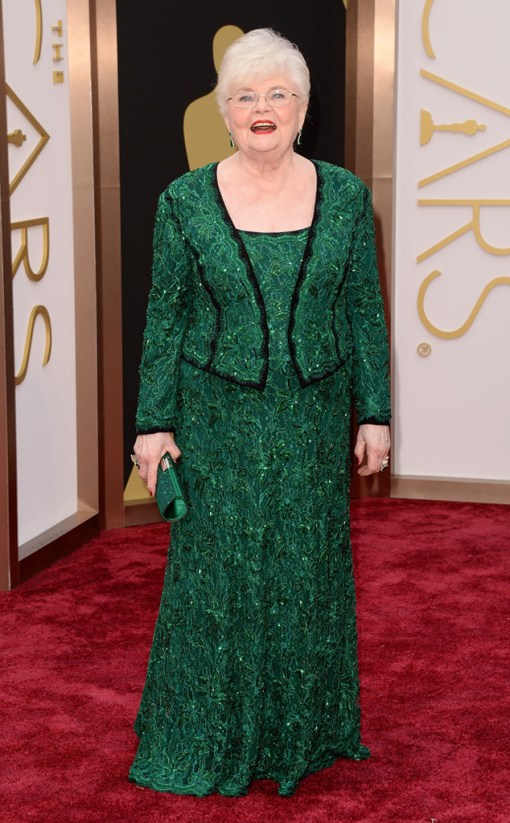
June Squibb is just too awesome!
8:03 P.M. And once again, I have mistaken the ending of E!’s program for the start of the ceremony. Classic!
8:00 P.M. BEST PICTURE AND BEST DIRECTOR WHAT IT CAN’T BE TIME TO PREDICT THOSE NO NO NO
Best Director
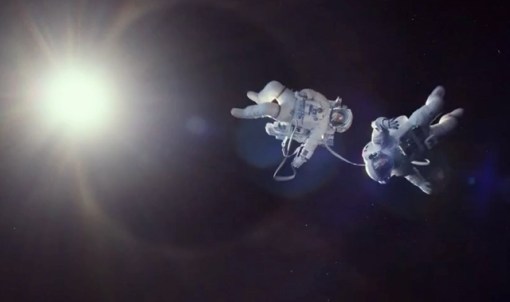
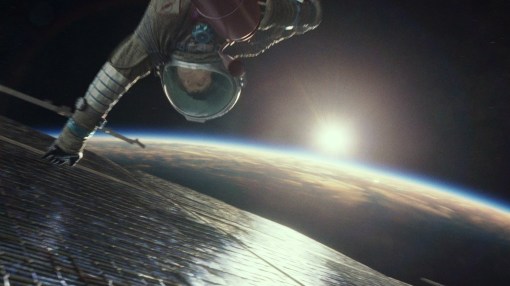
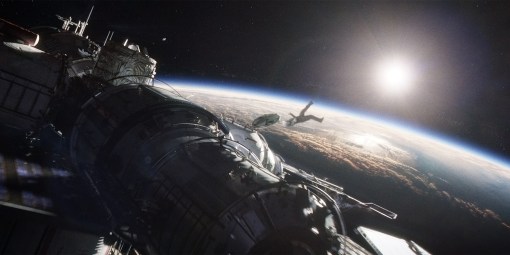
Will win: Alfonso Cuarón, “Gravity”
Could win: Steve McQueen, “12 Years a Slave”
Should win: David O. Russell, “American Hustle”
Should be nominated: Sarah Polley, “Stories We Tell”
The passion project 4 years in the making gives Cuarón an easy win.
Best Picture
Will win: “Gravity”
Could win: “12 Years a Slave”
Should win: “American Hustle”
Should be nominated: “Spring Breakers”
I go “Gravity” because it’s going to win everything else, it’s never wise to split Best Picure/Director, and I think people might be over-manufacturing the whole need for “12 Years a Slave” to win. I keep reading that people will not watch it. So I give the edge to “Gravity.”
And in case you missed the thread running through this post, “Spring Breakers” should be making a huge appearance in these awards if justice had been served this year.
7:54 P.M. Supporting categories – one easy, one that’s so tight I’m still agonizing about it.
Best Supporting Actor
Will win: Jared Leto, “Dallas Buyers Club”
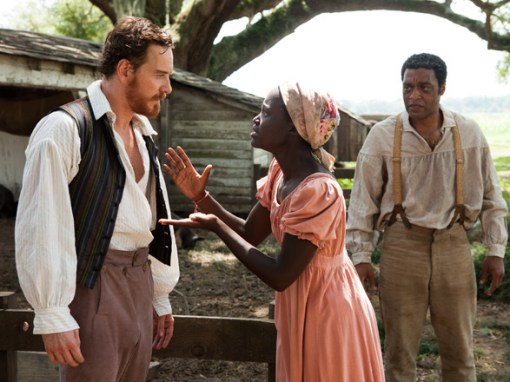
Could win: Michael Fassbender, “12 Years a Slave”
Should win: Bradley Cooper, “American Hustle”
Should be nominated: James Franco, “Spring Breakers”
Leto wins this one easily. Too bad for Fassbender and Cooper.
Best Supporting Actress
Will win: Lupita Nyong’o, “12 Years a Slave”
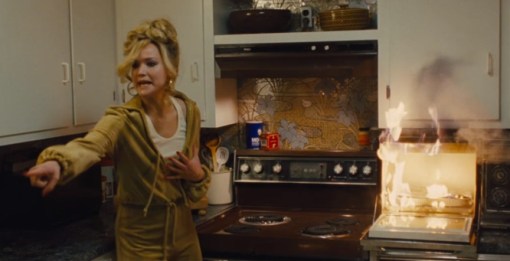
Could win: Jennifer Lawrence, “American Hustle”
Should win: Jennifer Lawrence, “American Hustle”
Should be nominated: Emma Watson, “The Bling Ring”
I give Nyong’o the edge since J-Law won last year, and “12 Years a Slave” is more of a threat to win Best Picture. But I honestly don’t know!
7:46 P.M. Leading actor categories! The time is coming, I can barely type straight!
Best Actress
Will win: Cate Blanchett, “Blue Jasmine”
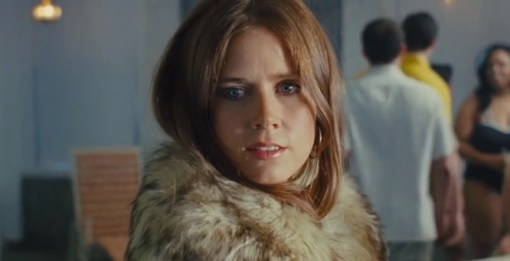
Could win: Amy Adams, “American Hustle”
Should win: Cate Blanchett, “Blue Jasmine”
Should be nominated: Berenice Bejo, “The Past”
No-brainer. Maybe Adams surprises, but I don’t think it’s going to happen. Amy Adams will win on her next nomination, I bet.
Best Actor
Will win: Matthew McConaughey, “Dallas Buyers Club”
Could win: Leonardo DiCaprio, “The Wolf of Wall Street”
Should win: Bruce Dern, “Nebraska”
Should be nominated: Robert Redford, “All Is Lost”
McConaughey walks away with this one … alright, alright, alright.
7:40 P.M. Can’t believe I’m already at the screenplays!!! Ahhh we’re getting close!
Best Original Screenplay
Will win: “American Hustle”
Could win: “Her”
Should win: “American Hustle”
Should be nominated: “Inside Llewyn Davis”
I’m hoping that David O. Russell gets his first Oscar win in this category, though Spike Jonze could get his first here too. The love for “American Hustle” ran deeper than “Her,” so that broke the tie.
The only no-brainer for “12 Years a Slave” of the night.
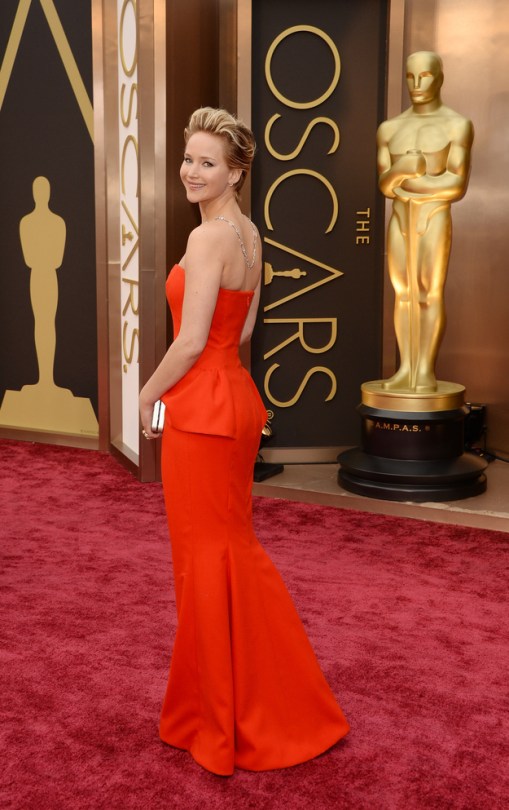
7:30 P.M. J.Law just tripped on the red carpet!!! She’s my idol.
7:25 P.M. Cate Blanchett’s a little out on a limb with that dress, but she still looks stunning. Anyways, got to crank out more predictions!
Best Film Editing
Will win: “Captain Phillips”
Could win: “Gravity”
Should win: “American Hustle”
Should be nominated: “Spring Breakers”
I think the more traditionally edited “Captain Phillips” prevails here over the minimally edited “Gravity.” But it could easily sweep the techs.
7:21 P.M. Ok, finishing out the tech categories … I actually hadn’t even made up my mind before writing this, so here we go!
Best Production Design
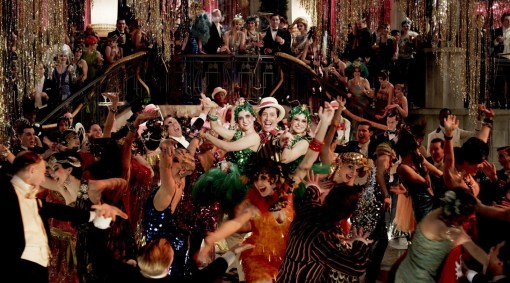
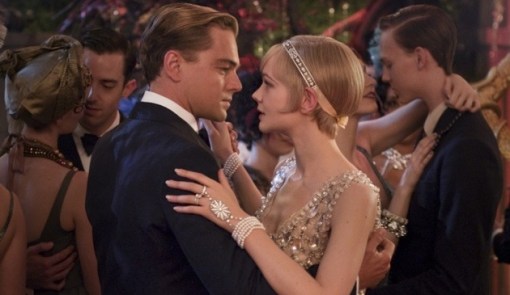
Will win: “The Great Gatsby”
Could win: “Gravity”
Should win: “Her”
Should be nominated: “Inside Llewyn Davis”
I assume the opulence of “The Great Gatsby” wins out here, but I think “Gravity” or “Her” could surprise.
Best Costume Design
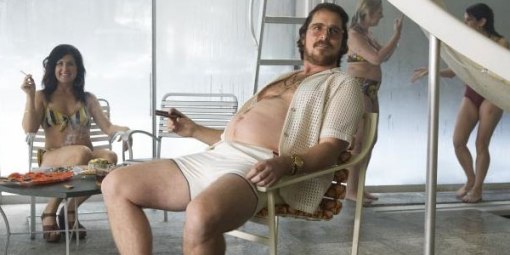
Will win: “American Hustle”
Could win: “The Great Gatsby”
Should win: “American Hustle”
Should be nominated: “Her”
This is a bit of a guess. I love what the threads of “American Hustle” said about the characters, though the more traditionally elaborate work on “The Great Gatsby” or “The Invisible Woman” could easily win.
7:08 P.M. If only someone foreign had arrived for me to usher in my prediction for Best Foreign Film…
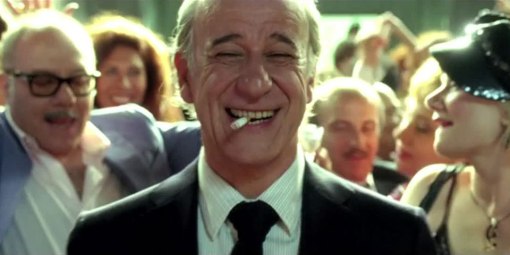
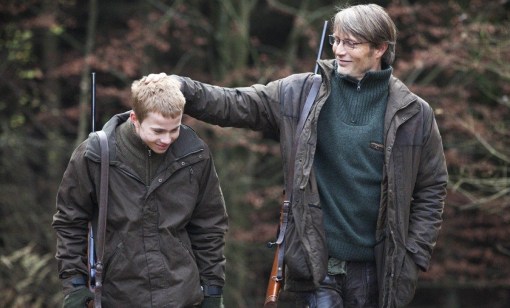
As much as I’d love to see “The Hunt” happen, 21 months after I first saw it in Cannes, I think the Oscars are going to succumb to the opulence of “The Great Beauty.” Funny, last year at Cannes it had no buzz upon its premiere…
7:06 P.M. Jared Leto and June Squibb, officially dating – you heard it first on E!
7:05 P.M. June Squibb, so adorable!
7:04 P.M. Now that Naomi Watts has arrived, it seems like a good time to predict Best Hair and Makeup. (Bit of a non-sequitur, but who cares?)
Best Hair and Makeup
Will win: “Dallas Buyers Club”
Could win: “Bad Grandpa”
Should win: “Dallas Buyers Club”
Should be nominated: “American Hustle”
I think voters will be too embarrassed to vote for one of the other two nominees. “Dallas Buyers Club” seemed to have enough love across the board to score here. Surprisingly, its makeup budget was $250.
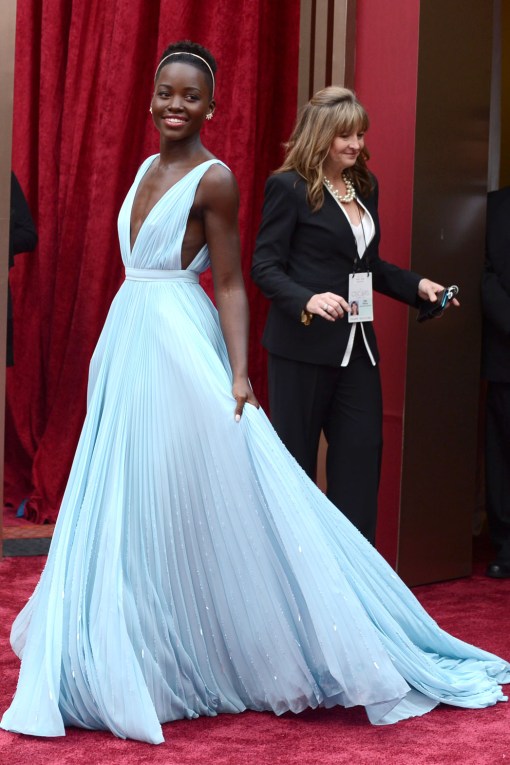
7:00 P.M. Ok, let’s get the “Gravity” awards – I mean, the technical awards – predicted. P.S. Lupita Nyong’o, you are adorable.
Best Cinematography
Will win: “Gravity”
Could win: “Inside Llewyn Davis”
Should win: “Gravity”
Should be nominated: “12 Years a Slave”
Emmanuel Lubezki will finally get his due, redeeming his snub for “The Tree of Life.” Maybe next year for Roger Deakins…
Similar to the above category, crowd-pleaser over intellectualism. Still so bitter that “Stories We Tell” isn’t here.
6:40 P.M. Jason Sudeikis and Olivia Wilde, still one of the more puzzling Hollywood couples.
6:34 P.M. In keeping with the theme of sound, here are my predictions for the sound categories.
Best Sound Mixing/Editing
Will win: “Gravity”
Could win: “Lone Survivor”
Should win: “Gravity”
Should be nominated: “Spring Breakers”
I know these categories are separate, but “Gravity” is easily going to win them both. (For those curious about the difference, sound mixing is the adjustment of sound levels and sound editing is the creation of sound. At least I think…)
6:26 P.M. More music predictions as I hear Pharrell’s “Happy” in the Fiat commercial.
Best Original Score
Will win: “Gravity”
Could win: “Philomena”
Should win: “Gravity”
Should be nominated: “Spring Breakers”
The sonic experience of “Gravity” will probably go for 3-for-3. Maybe Alexander Desplat finally gets his moment in the sun (much needed since “The Curious Case of Benjamin Button“) but the time doesn’t feel right.
6:20 P.M. So I just mistook Portia Di Rossi for Helen Mirren … yikes. So how about another prediction?!
Best Original Song
Will win: “Let It Go,” Frozen
Could win: “Happy,” Despicable Me 2
Should win: “The Moon Song,” Her
Should be nominated: “Young and Beautiful,” The Great Gatsby
Mega-hit “Frozen” ought to run away with this category, which has two chart-toppers gunning for Oscar gold. Though I’d love to see Karen O surprise and earn Spike Jonze his first Oscar. (Maybe if the newest version was in the film, it would have had a better chance.)
6:14 P.M. Viola Davis, so classy. You rock.
5:53 P.M. Come on, celebs, show up already!
5:41 P.M. I’m going to go ahead and log my first set of predictions. Might as well get the ball rolling.
Best Short Film (Live Action/Animated/Documentary)
Will win: “Helium,” “Get a Horse,” “The Lady in Number 6”
I made an effort to go see the shorts this year, but I was thwarted by bad weather. These are the general consensus across the Internet.
5:38 P.M. Watching Dave Karger dumb down his Oscar picks for the E! crowd is amusing.
5:30 P.M. Time to start the Oscars LIVE BLOG! The red carpet has begun on E! (I’m a little later than normal this year, my apologies for anyone who was really hoping for extremely early coverage.)
It’s hard to believe every year (though perhaps not as hard this year given the prolonged season), but it’s time to close the book on 2013 in film. The Oscars will have their say, and then history will either smile or frown on their decision. No matter the outcome, tonight ought to be an exciting exclamation point on a fantastic year in film. But remember, their favorite movie does not do anything to change YOUR favorite and whatever it may mean to you.
So in that spirit, I give out my superlatives, both the good, the bad, and everything in between!
There’s no sugar-coating or sanitization of the conflict in Afghanistan to be found in Peter Berg’s “Lone Survivor.” His adaptation of Marcus Luttrell’s memoir of pulls no punches in its visceral portrayal of the unlikely triumph of one man over relentless enemies and harsh earth.
Despite the film’s ultimate resolution being implied in the title, the action is always gripping and engrossing. Berg’s riveting handheld camerawork ensures that we’re buckled in to feel every moment leading up to the climax. Every fall down a cliff, every bullet entry wound piercing flesh, and every last dying breath lands deeply in the gut with tremendous force. When coupled with masterfully precise sound mixing and editing, “Lone Survivor” has the impact of a film like “127 Hours.”
It’s not all about the action, however. Perhaps the biggest testament the effectiveness of Berg’s multifaceted approach to “Lone Survivor” is that the film’s most nail-biting scene comes not in combat but in a moral debate. As Luttrell (Mark Wahlberg) and his SEAL recon team (Taylor Kitsch, Emile Hirsch, Ben Foster) weight the respective merits of killing three of their prisoners to save their own hide or letting them go and risking their own lives, a quintessential problem for America in contemporary geopolitics becomes an immediately necessary quandary to mull over.
 Documentaries can sometimes get a bad rep as boring, no doubt due to the success of films based on Al Gore lectures and other intricate political exposés. But many people tend to forget that much of what they watch on television is in the same vein of non-fiction storytelling. I’m not talking the fabricated “realities” of the Kardashians; I’m referring to programming on channels like Discovery and History that set out to inform while they entertain.
 In 2010, Gareth Edwards unleashed the ultra-low budget flick “

 In 2012 and 2013, whatever time I had that wasn’t devoted to studying for finals in late April and early May was devoted to cramming in some important movie watching. Around mid-April, the lineup for the Cannes Film Festival is announced, and both years promised new films for prominent directors whose filmographies I had largely (and shamefully) neglected.
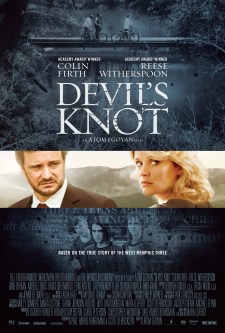 The miscarriage of justice in the case of the West Memphis Three, a group of Satanist wrongfully convicted of murdering young children in rural Arkansas, has received plenty of attention from non-fiction filmmakers. Joe Berlinger and Bruce Sinofsky have created the “Paradise Lost” trilogy about their case; the final film netted them an Oscar nomination. And if that wasn’t enough, Academy Award nominee Amy Berg made her own documentary on the subject, “West of Memphis,” to great acclaim.
 “
“





















 Marshall and the Movies

Recent Comments