REVIEW: This Means War

28 11 2012

Guilty pleasures.  We all have them, even people like me who put on the serious critic face and laud the potential contributions to cinema in Paul Thomas Anderson’s “The Master.”  Mine happen to be romantic comedies, which don’t disgust me as much as most reviewers (or men, for that matter).  As long as I buy the chemistry and the formula isn’t totally cloying or transparent, I’ll generally find some enjoyment.

Maybe the auditorium of my tiny seat-back on the plane ride home from France made me a particular captive viewer, but I was totally enthralled by “This Means War.”  I found myself laughing at inappropriately loud levels and thus the victim of a number of sharply cutting glances from my mom.  For whatever reason, I was just totally operating on this movie’s wavelength.

Sure, it’s brutally corny at times.  (What rom-com isn’t these days?)  Some of the melding of action with the inherently chick flick core of the film doesn’t always function as smoothly as it should.  The relationships aren’t always totally believable, probably a victim of how they are written on the page.  However, in spite of all this, I had a good time and was willing to put a lot of my issues to rest.

The fun probably came from just how much I enjoy these three actors.  I will probably always view any Reese Witherspoon film through a rosy lens because of my well-documented crush on her since around, oh, 2001.  As Lauren, she finds herself in a familiar predicament for Reese Witherspoon characters – choosing between two men vying for her heart (“Water for Elephants,” “How Do You Know,” and “Sweet Home Alabama” have all hinged on a similar dilemma.)

The competition is all the fun as her suitors are best friends from their work in the CIA.  Chris Pine’s FDR is the more suave, rom-com jerk that the audience and the girl eventually come around to like.  But Tom Hardy’s Tuck is a quieter, more sensitive guy and proves to be an interesting antidote to the typical kind of guy that screws her over.  Hardy struggles a bit with the romantic side of Tuck, and it’s clear that he’s best off in manly man movies like “Bronson” and “Lawless.”  In the latter movie, Jessica Chastain is the one who has to court him, and that seems more logical.

Oh, and as Lauren struggles to decide as she dates both men, we are treated to a running commentary of Chelsea Handler as her sister Trish.  She brings an incredibly beautiful sardonic and deprecating wit to “This Means War” that most genre flicks lack these days, voicing the frustrations we often have as viewers.  Leave it to Handler, one of the funniest women in the world right now, to turn the typical groans into side-splitting laughs.  B+


Oscar Moment: Final 2012 Pre-Season Predictions, Part 1

27 11 2012

Best Picture

  1. Les Miserables
  2. Lincoln
  3. Argo
  4. Silver Linings Playbook
  5. Zero Dark Thirty
  6. The Master
  7. Beasts of the Southern Wild
  8. Life of Pi
  9. Moonrise Kingdom
  10. Amour

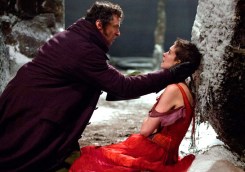
To quote “Les Miserables” itself, the time is now, the day is here.  Tom Hooper’s film has finally been revealed to critics and awards voters – and all reports indicate they are eating it up.  Shrewdly opening on Christmas Day, it will be an audience favorite undoubtedly as it opens wallets and tear ducts across the nation (and world).

It has its own merits, but this is the kind of movie that the Oscars eat up and nominate for EVERYTHING.  If we must call it so, let’s call it what it is: Oscar bait.  The nomination count should easily extend into double digits; the question before us now appears just how many nods it will rack up.

Tying the record of 14 is feasible, and even scoring 15 or 16 doesn’t seem entirely unreasonable at the moment.  With the exception of Best Original Score, pretty much every technical category is in play for “Les Miserables.”  And with weak years in the Supporting fields, it could easily score multiple nods in one or both.

But take a look at the record.  Both movies with 14 nominations won Best Picture.  5 out of the 9 films nominated for 13 Oscars won Best Picture, and 9 of the 15 films nominated for 12 Oscars won Best Picture.  I don’t think there’s any denying it though – “Les Miserables” will be the most nominated film of 2012.  And that will make it very tough to beat.
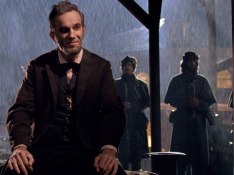
Of the other likely nominees, only “Lincoln” really stands a chance of getting 10 or more (perhaps “The Master” if it comes back roaring).  Everything seems to be going right for it at the moment.  The box office is great, the reviews are great, the press is great, and the timing could not be more perfect.  Spielberg struck a gold mine here.

This isn’t “Munich” and it isn’t “War Horse” where the Academy just defaulted to rewarding a Spielberg film with a Best Picture nomination out of an almost Pavlovian habit.  It’s got the support and the public conversation going for it in way not unlike “Schindler’s List” or “Saving Private Ryan.”  We can talk all we want about how timely “Argo” was, but it did not nearly enter the drinking water in a way that this film is.

More importantly, it is currently setting up an important dialectic should it be the main opponent for “Les Miserables:” the head and the heart.  “Les Miserables” is a movie of passion, one that makes you feel and weep.  Though I’d argue that it’s also quite brainy, “Lincoln” is the smarter movie in the more traditional, Oscar sense.  It boasts a thoughtful, well-wrought script by Tony Kushner and a rather controlled direction by Spielberg.

When this battle waged in 2010, Tom Hooper and “The King’s Speech” emerged victorious over David Fincher and “The Social Network.”  Since that was only two years ago, voters surely remember.  Will they fall face-first into another weepy, sentimental film from the same guy – or think twice and reward a living master.  These are the questions that keep me tossing and turning at night!

The past weekend also brought us “Zero Dark Thirty,” whose ambition and scope seem to make it a likely nominee at this point given the weak year and its impressive pedigree.  Reteaming director Kathryn Bigelow and writer Mark Boal, both winners for “The Hurt Locker,” seems to be a recipe for success and recognition.  But its length and apparently rigid procedural aspects should hold the passionate voters at bay and make a Best Picture nomination the win for the film.

We’re arriving at a point where the race is becoming more or less set in terms of nominees.  We know “Argo” and “Silver Linings Playbook” are almost assuredly going to make the cut.  However, unless they regain some steam from the precursor season, they probably won’t pose much of a serious threat for the win.
A lot of pundits have clumped “Life of Pi” with the two aforementioned movies.  While I don’t doubt the preponderance of critical and industry support for Ang Lee’s ambitious 3D film, the film seems to lack true and vocal champions.  Maybe the box office will continue to improve and the audience will override the lack of passion I’m sensing from the people who really matter in the Oscar season.  I’m placing it at the bottom of my list of predicted nominees for now, holding out for some reinforcement from the establishment.

And while a lot of people give the Academy flak for being too commercial and predictable, there are still plenty among their ranks who want film to be artistic and innovative.  These people got “The Tree of Life” a Best Picture nomination in 2011, and I suspect they’ll turn out in force for “The Master” this year.

Unless it just gets absolutely shafted the entire season, I’ll continue to predict Paul Thomas Anderson’s ambitious film until the nominations are revealed.  (They could go for “Amour,” as many are predicting, but I don’t buy it.  Too austere and too foreign.)
That gritty, spunky Sundance/festivals quotient (“Winter’s Bone,” “Precious“) is due to be filled again after taking a one-year hiatus.  I think the critics will bring “Beasts of the Southern Wild” back into consciousness and contention in a big way, doing their bit of good in 2012.  It has to cope with ineligibility for guild awards, but Benh Zeitlin’s film has the power to get in – it just has to be remembered.  (“Moonrise Kingdom” could also score a nomination, perhaps at the expense of “Beasts,” if it regains some heat in the early days of the season.)

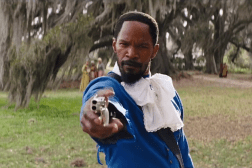
For all those wondering where “Django Unchained” falls on my list, I refer you to this tweet by Kris Tapley: “Two weeks ago Django was three hours and 12 minutes long. They’ve experimented with it since, re-ordering scenes, etc. Down to the wire.” Yeah, it’s bound to disappoint.

Best Director

  1. Tom Hooper, “Les Miserables”
  2. Steven Spielberg, “Lincoln”
  3. Ben Affleck, “Argo”
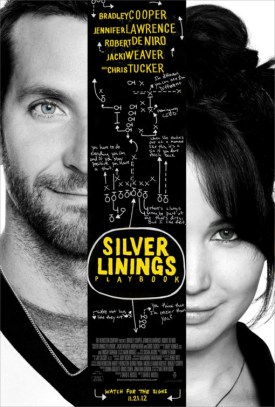
  4. David O. Russell, “Silver Linings Playbook”
  5. Paul Thomas Anderson, “The Master”

Picture and Director nearly always go together, so it seems illogical for me to predict anyone other than Tom Hooper out front.  If Spielberg, Affleck, or (fingers crossed) Anderson start generating serious heat, I’ll reconsider.  But I’ve learned better than to opt for a split.

But I’ve learned better than to opt for a split. The Academy also doesn’t seem bothered by picking novices over experienced directors well-regarded throughout the industry.  They like what they like, and whoever delivers them the best movie is going to win Best Director.  Truffaut would be smiling if he were still with us because his auteur theory is etched in stone in AMPAS mentality.

2012 is going to be a year where voters are asked to deliberate if someone deserves to go down in history with a third victory.  We know they love Spielberg since he already has two trophies, and 5% of the Academy thought “War Horse” was the best movie of 2011 since it was nominated for Best Picture.

But does he deserve to join the ranks of William Wyler and Frank Capra as the third director to win three Oscars? His films are totally in their wheelhouse, so it could happen.  His next movie is “Robopocalypse,” so Academy voters may feel they are running out of chances to crown him King of Hollywood once again.  The “Lincoln” PR has been absurd in feting Spielberg, from the cover of Time to an address at Gettysburg.  He’s definitely formidable to win again.
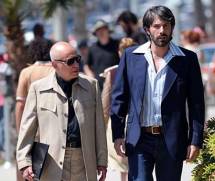
I still wouldn’t count out Ben Affleck to win, especially if “Argo” holds on and starts winning big.  But if it’s “Les Miserables” and not Hooper, I think the Academy votes Spielberg over Affleck.

I doubted David O. Russell’s ability to muscle into the Best Director category in 2010.  Won’t be making that mistake in 2012.  Clearly his abrasiveness has not phased Oscar voters, and if “Silver Linings Playbook” is a big hit with them, he’s a shoo-in nominee.  Think “Juno” scoring a nod for Jason Reitman.

And I hold that the contingent that got Terrence Malick a nomination last year will give Paul Thomas Anderson a second Best Director nomination.  Because believe it or not, there are some people in the Academy who care about supporting the advancement of film.  It’s not as sizable as the contingent that cried at “The King’s Speech,” but it’s big enough to make this happen.



SAVE YOURSELF from “The Road”

27 11 2012

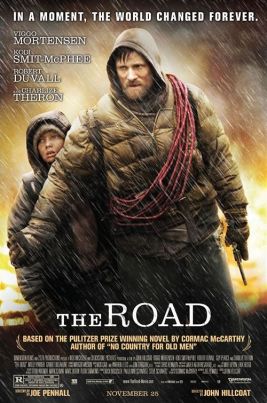
The RoadI’m in a semi-minority when I say that John Hillcoat’s film “The Road” is a dreadful movie.  However, I know I’m in a vast minority when I say that Cormac McCarthy’s novel “The Road,” the book Hillcoat’s film is based on, is just as bad – if not worse.  Yes, I’m taking issue with the novel that won the Pulitzer Prize and Entertainment Weekly‘s distinction of the best book of the past 25 years.
To all the haters who are sure to be drawn out of hiding by this pan, I assure you that I’m not some uneducated Philistine who is quibbling with McCarthy’s unconventional prosaic style.  Sure, it makes it a difficult read, but I actually quite enjoy it.  The experience is tough but refreshing, particularly in McCarthy’s “No Country for Old Men.”

But “The Road” is just tedious and boring.  Yes, I know that’s the point!  But beyond a certain point, I get it.  I understand how the man, played with vigor in the film by Viggo Mortensen, and the boy, portrayed by then newcomer Kodi Smit-McPhee in a rather impressive debut, feel on the road.  I don’t need to spend hours of my time reading them do the same things and having minor variations of the same conversation, day after day.  It makes for a great short story or short film, but stretched to novel and feature film lengths, monotony ensues.

Perhaps Hillcoat was fated to displease me with “The Road” since many of my issues with the text and story seem to be rather systemic, foundational quibbles.  Yet the upstart Australian director had made a capable, taut thriller in “The Proposition” before he tackled McCarthy’s work.  (“Lawless” had its issues as well, but I still admired the work on display.)

Joe Penhall’s script tries to add some sensationalism to make the story more tolerable (and commercially viable, I can imagine), but the attempts fail miserably.  Making The Man’s wife a larger character in the narrative adds nothing to the story, even when she’s played by the talented Charlize Theron.  Adding further dimensions of terror to their foes on the road don’t make the movie any more thrilling.  Instead, we are left with a film that ambles slowly and uninterestingly towards bleak nothingness and can’t succeed at the one thing that should have been a no-brainer for it: a deep character study of the Man and his Son.

http://www.youtube.com/watch?v=hbLgszfXTAY


REVIEW: Project X

26 11 2012

2012 will likely go down in the history books as the year when filmmakers really experimented with just how far they could stretch the found footage format.  With “Project X,” director Nima Nourizadeh and producer Todd Phillips decided to give it a go with the party film genre, essentially giving the reckless destruction of “The Hangover” a slight “Risky Business” twist.  And making sure everyone with a red Solo cup is decidedly below the legal drinking age.

To a small extent, the experiment worked.  I still think all these films should adhere to the “Paranormal Activity” and “Cloverfield” model of restricting the point-of-view to the first person, only allowing us to view the events through that single camera lens.  It just feels like a bit of a cop-out when the film cuts to other cameras.  If you are going to exploit this hip new format, adhere to some simple rules.

Even at a mercifully short 88 minutes, the film feels too long.  Some of the hijinks of the party are entertaining, but the shots of scantily clad hotties get old quickly.  It also doesn’t help that the characters that actually have real development are largely unsympathetic to the point where you kind of want them to get in trouble.  (Well, I’ll give “Project X” that I did feel for Thomas, the lanky, dorky good-hearted protagonist – but mainly because I found quite a bit of myself in him.)

You start rooting for more destruction of property rather than cringe at the thought if this scenario playing out in your high school days.  It’s like how you secretly were rooting for the Joker in “The Dark Knight” because you wanted to see what kind of trouble he would cause next.  But such unfettered desires, which the filmmakers accurately predicted, lead the party’s shenanigans to quickly move from the improbable to the implausible to downright absurd.  (That hasn’t stopped several teens from dying and getting arrested in an attempt to imitate them though … yikes).  Their focus is to just get crazier and crazier, and they achieve it.  However, it comes at the expense of laughter, which is scarce in “Project X.”  C


REVIEW: Anna Karenina

25 11 2012

Joe Wright’s “Anna Karenina” is a cinematic version of Tolstoy’s treasure meant for people who love “Anna Karenina.”  In other words, if you haven’t read it or spent time with other film adaptations, this film will be as lost on you as it was on me.  It’s a stylized take on the classic that leaves those watching the film trying to decipher the plot in the dust.  (Recommendation: read a plot summary beforehand.)

Wright is trying to do a master class on “Anna Karenina” by doing something unconventional with the staging: that is, to literally set it on a stage.  The setting works well as a clever metaphor for Russian high society and breathes some new life into the dusty tale.  And kudos to Wright for trying to break out of his doldrums of conventionality that have led to a string of mediocre films that have fallen ever so short of success.

However, the extended metaphor is quickly revealed to be incredibly quixotic; that is, idealistic but not practical.  If you’ve ever seen a copy of Tolstoy’s book in print, you would certainly notice it’s a hefty volume that is sure to have quite a sprawling narrative.  The story of “Anna Karenina” takes us to all sorts of locales, many of which simply don’t work inside of a theatre or stage setting.

So rather than try to make it work, Wright hits us over the head with it in the first act … and then essentially discards it when no longer expedient.  With a little more thought, it could have yielded all sorts of revelations about the story.  But as it appears on screen in his final version, the metaphor is unfulfilled.

Read the rest of this entry »


REVIEW: Flight

24 11 2012

Denzel Washington has wowed audiences by playing both sides of the hero-villain spectrum.  Just look at the two performances that earned him Oscars.  1989’s “Glory” saw him as an almost angelic soldier fighting in the first all-black company in the United States Army, while 2001’s “Training Day” had him as a cop so devious and corrupt you wanted to jump through the screen and put a bullet through his head.

In “Flight,” Washington plays in the shades of grey of Whip Whitaker, an alcoholic pilot who becomes a hero after steering his malfunctioning plane to safety with his unconventional wisdom.  The catch is that Whitaker was high on cocaine and drunk as a skunk when he did so.  Of course, the public blindly adores him in a way reminiscent of Sully, the pilot who landed his vessel in the Hudson River and had a memoir in Barnes & Noble faster than you could say “American Airlines.”  But Whitaker has plenty of baggage that he can’t come to grips with and can’t compress into one of the overhead bins.  (Sorry, the puns with “Flight” are just endless.)

Because it’s a Denzel Washington performance, it’s fascinating to watch.  He owns the screen with a commanding presence rivaled by few in cinema these days.  But because Washington has such well-known and well-defined extremes, it’s fairly easy to tell what he thinks of Whitaker.

While he may have the moments of tough, firm leadership that Coach Herman Boone exhibits, Whitaker is clearly more in the model of a Frank Lucas or an Alonzo Harris.  It’s impressive that Washington can convey meaning through the mere iconography of his stature; however, in a movie like “Flight” that depends on our shifting judgements of the protagonist, that strength becomes a liability.

Read the rest of this entry »


F.I.L.M. of the Week (November 23, 2012)

23 11 2012

It really is a shame that Mel Gibson had to go off the deep end right before the release of “The Beaver.”  The movie is a deeply powerful examination of family and interpersonal dynamics in the wake of an increasingly isolating digital world.  However, if you’ve watched E! any time over the last few years, you’ve no doubt become aware that Gibson isn’t exactly in his right mind all the time.  Thus, they were successfully able to sell Jodie Foster’s excellent film to the public as “that crazy Mel Gibson movie where he talks with a beaver puppet” as if it were autobiographical.

“The Beaver” isn’t the story of Mel Gibson; it’s the story of all of us who ever disappear into our screens at the expense of human connection.  For that reason, it’s my pick for the “F.I.L.M. of the Week.”  It cracked my top 10 last year, and the more I think on the film, the more pleased I am that I went out on a limb for it.  I think in a few years, when all the tabloids quit running their sensational stories on Gibson, there will be a massive critical reevaluation of “The Beaver.”  And I will be proud to have been a supporter since I first saw the film at an early morning showtime in May 2011.

The titular beaver puppet is actually not a product of the insanity of Walter Black, Gibson’s character.  Well, at least not in the sense that TMZ tries to paint him as insane.  Walter’s been asleep at the wheel for years, failing as a parent and husband.  After a severe bout with depression, he discovers the beaver puppet and begins living vicariously through it.  The beaver becomes a psychological distancing mechanism, allowing Walter to separate himself from the guilt of past deeds that weighs down on him like a rock.

What director Jodie Foster and writer Kyle Killen explore in “The Beaver” with such dexterity is how each of the other characters have their own beavers, so to speak.  Each erect false facades designed to convey a persona that does not match the person underneath.  Walter’s son, Anton Yelchin’s Porter, is trying to project that he is the polar opposite of his dad.  Yet in his evasion, he becomes even further disengaged from his family and increasingly abrasive – the very traits that precipitated his beaver crisis.

There’s also Jennifer Lawrence’s Norah, Porter’s high school classmate who is by all means considered to be the paradigmatic girl of their class.  Yet she’s struggling with dark issues of grief behind closed doors, and she is even willing to pay Porter to write a big speech for her to hide it from others.  While their unconventional romance is a subplot to the larger arc of the 90 minutes of “The Beaver,” it makes a big impact because Yelchin and Lawrence act from such a dark recess of their souls.  They manage what many actors twice their age cannot, a connection on both an intellectual and an emotional level.

So get over Mel Gibson, sit down with an open mind, and watch “The Beaver.”  If you are willing to really think, you’ll find some very interesting questions being raised.  What are the beavers in our life that keep us from loving others?  Jodie Foster shows you those of Walter, Porter, and Norah to devastating effect; it’s up to you to figure out your own.


REVIEW: Skyfall

22 11 2012

2012 marks the 50th anniversary of James Bond’s first appearance on screen, and while Sam Mendes’ “Skyfall” doesn’t explicitly make you aware of that fact until the ending credits roll, the landmark loomed large over the entire film for me.  Perhaps I’m an extreme case as my consciousness of the anniversary was no doubt raised tremendously by all the celebrations of the franchise on the beach at the Cannes Film Festival.  But it’s practically impossible not to notice the filmmakers’ awareness of the superspy’s legacy and how the very nature of the character is being precipitously torn in two drastically different directions.

Funny enough, the two previous iterations of James Bond with Daniel Craig inside the carefully tailored suit reflect the two competing forces for the future of 007.  2006’s smooth “Casino Royale” saw a return to an old-fashioned, suave Bond that harkened back to the glory days of Sean Connery.  You know, when a Bond film could bring in nearly $600 million (adjusted for ticket inflation).  And then, 2008’s “Quantum of Solace” took Her Majesty’s finest in a dirtier, muddier, grittier direction that resembled a Jason Bourne movie.

The makers of “Skyfall” were faced a choice: classic or contemporary, timely or timeless.  The decision was sure to be scrutinized by critics and semi-notable bloggers like myself who realized the importance of the film in the James Bond canon.  Thankfully, Mendes and writer John Logan (who seems to be the one garnering the most credit for the final product) realized that the concepts are not mutually exclusive and found the most intellectually rewarding experience came from examining the interplay between these binary oppositions.  The result is a remarkably contemplative movie of how the nature of James Bond has been determined by the time in which he serves whilst some essence of British class always remains.

Read the rest of this entry »


REVIEW: Silver Linings Playbook

21 11 2012

Over six months later, it appears that I can finally reveal to you the mystery movie that Harvey Weinstein unveiled for me at a screening for international buyers and distributors in Cannes: a rough cut of “Silver Linings Playbook.”  Although had you told me it was a final cut, I would have believed it.  The film felt totally complete and in no need of further tweaking.  In fact, I almost ran my review of that version when the film premiered at the Toronto Film Festival, hoping people assumed I was there and saw the theatrical cut.

Now that I’ve seen the movie for a second time, I’m definitely glad I did not run a review on the rough cut.  The film improved by leaps and bounds over the four months in which David O. Russell and company worked out the kinks in the film, and most of the things I would have griped about in my review of the rough cut disappeared.

On the surface, everything is relatively the same: the story still plays out in the same way, the rhythm of the film kept in tact, among other things.  But I noticed a much more complex visual scheme, one that made “Silver Linings Playbook” feel like a David O. Russell film, not your run-of-the-mill romantic comedy.  Rather than the standard back-and-forth, he’s-talking-now-she’s-talking editing, Russell opts to go deeper and use the camera to probe his characters psychologically.  Rather than merely capturing the plot like the rough cut, Russell ultimately found ways to suggest levels of depth extending far below a single shot.

Russell is able to make the performances shine by keying off the wacky family dynamics that made “The Fighter” such a hoot (and also harkening back to the zaniness “Flirting with Disaster” –  for fans of Russell’s early work).  You wonder how these relationships can possibly function in any way other than what Jim Morrison called “mutual wierdness,” or love.  He draws us in with characters who wear their flaws on their sleeves yet keeps us engaged by continuing to show how they motivate the character at their core.

Read the rest of this entry »


REVIEW: The Sessions

20 11 2012

I went into “The Sessions” assuming it was tailor-made for Oscars, but I walked out assuming it was tailor-made to annoy me.  It’s as if writer/director Ben Lewin found the perfect characters for awards season glory – disabled poet/virgin, sex surrogate with a heart of gold, and a “hip” priest – and failed to explore them any further beyond an archetype.

I’m not quite sure who deserves the blame for the film’s total inability to connect, Lewin’s overly simplistic scripting and characterization or the actors for failing to fill in the gaps.  All things considered, these characters should be a slam dunk for Oscar nominees John Hawkes and William H. Macy and especially for Oscar winner Helen Hunt.  They play such sympathetic characters: Hawkes’ Mark O’Brien is a tender poet who merely wants to experience the ecstasy of sex that our culture trumpets so loudly, and Hunt’s Cheryl is a teacher of sexual form who finds herself looking to her clients to make her feel the appreciation she lacks at home.

“The Sessions” could have explored how the two found fulfillment in what they lacked, Mark from sex and Cheryl from intimacy.  However, Lewin keeps the movie operating on a mere surface level, aiming for “American Pie” style gags about sexual naïveté.  Mark O’Brien is really not all that different from Jason Biggs’ Jim Levenstein if you compared the two.  And I guess continuing the analogy, William H. Macy’s Catholic priest serves a very similar function as Jim’s dad, played by Eugene Levy, in terms of providing some inappropriate advice given their symbolic positions.

Especially given the physical commitment on display from the two leads, what with Hawkes only able to contort his head and Hunt taking off all the clothes and exposing the entirety of her body, the sitcom-esque nature of their characters are brought to light, exposed, and shamed.  If the actors are going to such drastic lengths to animate Mark and Cheryl, why could I not care the slightest bit for either of them?  Going for broke on “The Sessions,” which was already broke to begin with, didn’t pay off for the audience.  C+


REVIEW: 28 Hotel Rooms

8 11 2012

There are times when “28 Hotel Rooms” feels like all too familiar of a movie.  The fragmented narrative, giving us a glance into the lives of a man and a woman (Chris Messina and Marin Ireland) when they rendez-vous at a hotel for a tryst, recalls 2011’s “One Day.”  The audience is left to fill in what happens between scenes A and B, sometimes rewarding but often just frustrating.

And most of Messina and Ireland’s conversations might have been ripped out of a Woody Allen movie from the 1980s where a man and a woman are madly and passionately in love … but are married to someone else.  The body and heart are willing, but their soul lacks the determination to do anything.  Again, at times, it provides a unique look into contemporary stasis in the face of decisive moments.  But at others, it just feels like lazy writing.

So what makes “28 Hotel Rooms” worth a watch?  Well, there’s the acting.  Marin Ireland, an emerging star, does a fine job, but she’s dwarfed by her co-star. I’ve been a big fan of Chris Messina for several years now because he has always delivered in supporting roles such as a distraught adoptive father in “Away We Go,” a supportive husband in “Julie & Julia,” and a charming love interest in “Celeste and Jesse Forever.”

Over the past summer, I finally called on Hollywood to bump him up to lead status, particularly after totally stealing the otherwise forgettable “Ruby Sparks.”  His audition tape just came in the form of “28 Hotel Rooms.”

Read the rest of this entry »


REVIEW: Chasing Ice

7 11 2012

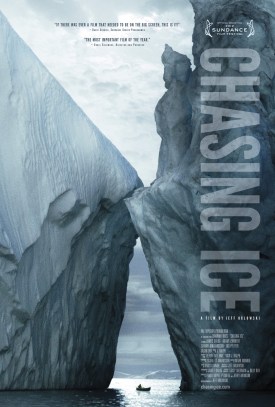
I’d like to formally put forward “Chasing Ice” for your consideration, Oscar voters, in the category of Best Visual Effects. Those glaciers falling into the ocean rival the work of the team who gave us “Inception.”  I mean, they look so natural!

Oh … wait, they are natural.  It’s easy to get caught up in spectacle when watching a film, but Jeff Orlowski’s documentary on climate change is not using any effects shots.  Just reality.  And that makes for one jaw-dropping and jarring watch.

His chronicle of photographer James Balog, a photographer whose pictures attempt to capture the effects humans have on nature, might not be a great biography of a man, nor a particularly interesting procedural of how cumbersome those photos are to take.  However, it’s a horrifying portrait of global warming filled with haunting and incontrovertible evidence of melting glaciers.

For those who did not quite buy into man-made climate change from Al Gore’s didactic lecturing in “An Inconvenient Truth,” Orlowski lets the images do all the persuading.  Aside from a few montages of climate change deniers, we are never really indoctrinated or forcefully told what to believe.  But darned if you don’t walk away a believer in the danger of climate change.

Balog’s pictures show the scary effects of our heating globe in the visible form of receding and disappearing glaciers.  They will jolt you into action.  I dare you to think twice about not recycling something after seeing “Chasing Ice.”  And I dare anyone who sees this movie to not feel the need to take action – so I would love there to be a high-profile guest list for a screening in our nation’s capitol.  B+


Classics Corner: Mr. Smith Goes to Washington

6 11 2012

I wish I could have voted for Jefferson Smith today.

It’s rare that a movie rings as true today as when it was released and far less common for them to be even more relevant in the modern era, but “Mr. Smith Goes to Washington” does the unthinkable.  Granted, that’s less of a compliment to Frank Capra’s superb morality tale and more of a disgrace on a country more divided than it has been since the Civil War.  Though perhaps the problem is that a post-Watergate world refuses to see a Capra-esque worldview as anything other than naive fantasy.

If that’s true, then bury this country.  I rarely engage in idealism, but these classics of a bygone era inspire those sensibilities to come flowing out of me.  The times then might have been more innocent, and the world now might be far more hostile.  But there are still Jefferson Smiths among us.  There might even be one in us.

And obviously, there’s no one better than Jimmy Stewart to play the best of us, Jefferson Smith.  As a non-politician transported to Washington as a thinly-veiled ploy, he’s a symbol of the purity of the common man.  Yet set against the backdrop of a systemic culture of corruption, his high hopes are quickly squelched.  He’s a big proponent of building a camp for boys in his unidentified home state; however, when it collides with the entrenched interest of the other Senators planning to build a dam on that land, Smith finds himself in hot water.

We all like to think we would do what Jefferson Smith does.  He stands up for what he believes in even when it’s unpopular.  He fights for what he believes in even when it collides with the wills of more powerful men than he.  He is not swayed by fickle public opinion or the press.

Yet most politicians today switch their positions as soon as a poll suggest their voting bloc opposes their position.  They might not be the best of us or even the best for us – just the best choice we have.  On this election day, my hope is that the vision Capra had for an America where the average American’s purity can inspire real change in a sick society can become less of a hope and more of a reality.  Regardless of what party you support, we should all aspire to have a candidate who fights for his convictions with all his might like Mr. Smith.  And if you can’t vote for Mr. Smith, then be one.


REVIEW: Argo

1 11 2012

Every year, one movie speaks to a sense of now.  Whether intentionally (“Up in the Air“) or unintentionally (“The Artist“), their messages resonate with current concerns and taps powerfully into the zeitgeist.

I highly doubt that any movie in 2012 comes along and captures that spirit better than “Argo,” and if it does … then I’ll have to upload a picture of myself with a foot in my mouth to my Facebook page.  Some of the similarities to the current times could not have been foreseen, and no one wanted to foresee the tragic loss of four Americans to an attack on an overseas embassy.

Regardless, it happened, and it makes sure the immaculately constructed and taut opening that depicts the siege of the embassy in Tehran is viewed through an entirely different lens.  We think not only of the people trying to escape a volatile 1979 Iran but also of Ambassador Steven and his slain colleagues.  The painful coexistence of the now with the then is deeply unsettling, and it sets the tone for a movie that entertainingly and thrillingly historicizes the contemporary.

Read the rest of this entry »


F.I.L.M. of the Week (October 19, 2012)

19 10 2012

Illegal immigration is quite a hot topic, and growing up in Texas, it’s one that is discussed with flared tempers and higher stakes.  With all this talk of self-deportation and failed reforms, it’s easy to treat people like statistics and forget that what happens in our halls of legislation affects people’s lives.

“Which Way Home” reminds us of the perilous implications of our immigration policy and its failures, putting a human face on the issue.  Documentarian Rebecca Camisa cleverly avoids politics, never inter-cutting her stories of Central American children attempting to cross into the United States with shots of lawmakers in dark rooms far away.  We only get to see what directly affects the voyage of these journeymen, such as the Border Patrol and the other Mexican agencies designed to curb illegal border crossing and deport those who have made it into their country from Guatemala and Honduras.

From this perspective, we are trapped with the migrants, confined to their point of view, left to wander with them.  Camisa literally gets her cameras on top of the freight trains that transport so many immigrants to America and gently prods into the souls of the children (yes, some are even as young as 9).  She gets a peek into what motivates and scares them, what makes home so awful as to abandon it and what makes the United States so great as to flock to it.

It’s these revealing, in-the-moment revelations that give “Which Way Home” such a quiet power.  And while there are the occasional moments of sensationalism like a dead body floating in the river (that’s the opening shot), the movie draws its strength from the words and faces of the immigrants themselves.  Who needs second-rate dramatizations of the passage like “Sin Nombre” when Camisa provides a much more jarring glimpse with real life?