Fincher followed up disappointment with “The Game” by directing “Fight Club” in 1999, which would prove to be an iconic movie and cultural phenomenon. While it didn’t do much business in theaters, it became a cult hit on video. In today’s installment of Fincherfest, I’ll attempt to peg what has made it such a smashing success with fans for over a decade.
There are a multitude of ways to interpret “Fight Club,” and for precisely that reason, it is a great movie. It can mean so many things to so many people; everyone gets something different out of it. Heck, you can even see it through a Fascist light! I’ve only seen it once, so there is a certain level of depth of the movie that I haven’t reached.
However, I don’t intend to bore anyone by reciting the plot or saying that the acting, directing, and writing is great. That’s been common knowledge for over a decade now, and me saying that doesn’t really add anything to the movie. The proof is in the celluloid (and now DVD and whatever other formats are out there).
I watched the movie a year ago after some residual curiosity from “Benjamin Button” compelled me to check out David Fincher’s violent side. But before that, I had heard nothing but amazing things from the legions of male fans my age. Sure enough, I wasn’t disappointed. Although it still ranks behind “Button” for me, this is my favorite of Fincher’s early explorations to the darker side of human nature.
Here’s what I think has made it such an endearing classic for the younger generation: we have been so diligently trained to suppress all our impulsive emotions that eventually we want to explode. Sometimes, our lives are so sheltered and so desensitized that sometimes we have the deep desire to feel some kind of emotion, even if it must be pain. To quote Lady Antebellum, “I’d rather hurt than feel nothing at all.”
“Fight Club” indulges that side of all teenage boys and budding men by going back to our primordial cavemen instincts. We have to fight for what we want. Kill or be killed. The movie finds a sort of catharsis in violence, using it to express all the frustration men feel at the oppression of their natural tendencies. So in a messed-up kind of way, the movie has served as a wake-up call to boys and men everywhere to reclaim their masculinity and reassert themselves.
There’s a perfect quote from Fincher himself that sums up the movie from my interpretation:
“We’re designed to be hunters and we’re in a society of shopping. There’s nothing to kill anymore, there’s nothing to fight, nothing to overcome, nothing to explore. In that societal emasculation this everyman [the narrator] is created.”
Fincher followed up the resounding success of “Se7en” with 1997’s “The Game,” a cerebral thriller that was received notably less well both financially and critically.
I made the slight complaint with “Se7en” that I had seen a similar premise done a little bit better. With “The Game,” I have a similar grievance. The movie was, in essence, the same as the 2008 paranoid thriller “Eagle Eye” with much lower stakes and much less intrigue. Both involve people getting played by some system bigger than they can comprehend, and both follow the struggles of the people trying to escape the oppression of this omniscient system.
Michael Douglas headlines as banking mogul Nicholas Van Orton, a man who has chosen money over relationships. He is estranged from his younger brother Conrad (Sean Penn) and let his relationship with his most recent wife fall by the wayside. The problems can all be traced back to his father’s suicide while he was a young boy, and the effects of the life-shattering decision continue to affect him decades later.
But things all change after a mysterious birthday gift turns into an all-encompassing game designed to challenge his priorities. Reality begins to blur in this game, although not as intensely as it does in a movie like “Inception.” Van Orton feels mildly disoriented and wonders whether every suspect thing in his life is happening because of the game. Eventually, his anxieties lead him to demand answers from the organization that set up this game.
By no means am I saying that “The Game” isn’t good. The premise keeps us interested the whole time, although the ending is wholly unsatisfying because it wraps up way too neatly. Fincher’s attempt to recreate a very tense atmosphere of terror just isn’t quite as effective as it is in “Se7en,” and the paranoia is totally missing. This thriller lacks any sort of thrill, making it little more than just a series of events with the hope of a bigger twist waiting at the end.
A real review of David Fincher’s work should begin with “Se7en,” the first movie he takes full credit for. It was a financial success in 1995 and has since become an adored movie by fans on video. The movie currently sits at #26 on IMDb’s Top 250 movies as voted by users, and in today’s installment of Fincherfest, I will attempt to explain what has made it so endearing over the past 15 years.
I’m a big fan of “Seven,” but I hate to say that I don’t think it’s quite as good as some people think it is. According to Lisa Schwarzbaum, overrated is a big critical no-no word; however, since this is more a look in retrospect than a review, I don’t feel quite as bad using it.
Fincher does an excellent job directing a very cerebral world of horror, and as his first real directorial effort, it’s quite impressive. Yet overall, I wasn’t quite as affected by it as I felt I should have been. When it comes to serial killer movies, I much prefer “The Silence of the Lambs” and “No Country for Old Men.”
Yet I acknowledge that “Seven” has a very different kind of horror. We aren’t meant to be freaked out by the murderer John Doe (Kevin Spacey). We never see him committing any crimes, nor does he ever give us any indication that he might flip and kill another person. He’s just like anyone you could round up off the streets, and that makes him all the more frightening. John Doe is like Heath Ledger’s The Joker without a makeup and without any sense of humor. The tacit implication is that all of us have the capability to be John Doe, something quite scary to suggest and not the kind of message you want to walk away from a movie having learned. We never see the results of the killings, inspiring the audience to imagine the murder for themselves. Anyone who can do so has the inherent ability to be Doe.
Such a killer is the last person Detective Somerset (Morgan Freeman, pre-God) wants to deal with in his waning hours on the job. He and his replacement, Detective Mills (Brad Pitt), are drawn into the world of John Doe, who commits murders related to the Seven Deadly Sins. Catching him requires intellect, and they delve into the classic work of Dante, Thomas Aquinas, and others to figure out his modus operandi. The dialectic struggle between Somerset about to apathetically walk off the job and Mills eagerly awaiting his future is a fascinating backdrop to the rest of the brutal themes of the movie.
Apparently back in the ’90s, New Line Cinema advertised “Se7en” as a movie that you shouldn’t watch in the dark because that atmosphere would scare anyone to death. I did just that, and I found the darkness to be nothing more than a fitting complement to the universe Fincher crafts. It’s always muggy and rainy in the unidentified city where the murders take place, and the world view the movie espouses is bleaker than the weather. According to Somerset, the world is worth fighting for, but it’s hardly a fine place.
The more you think about it, the more you realize Fincher’s challenge to our assumptions of what is good and what is evil. The villain is defined … or is it? Such an idea is a little unsettling to audiences, but that hasn’t kept it from being very well received. Perhaps its forte isn’t in being a serial killer movie; the strength is in the social critique of the godlessness of society.
Kicking off Fincherfest here at “Marshall and the Movies” is the director’s first feature film, “Alien 3.” Released six years after James Cameron’s “Aliens” and thirteen after Ridley Scott’s “Alien,” it certainly had high expectations. After being mired in development hell, Fox managed to get the ball rolling and brought in Fincher fairly late in the game. The result was the beginning of the decay of the franchise.
I debated whether or not to include “Alien 3” in my purveying of David Fincher’s collective work. After all, he did disown the movie publicly thanks to Fox’s ceaseless creative interference. Fincher had nothing to do with the editing of the movie, which in itself took a year. According to IMDb, he was denied permission to shoot a scene with Sigourney Weaver in prison by the movie’s producers, so he stole her and shot it anyways. Even as of 2004, Fincher still wasn’t willing to make peace with the experience when Fox asked him to do a commentary for the DVD release of the movie.
After watching the movie, I get a sense of why he doesn’t want to be associated with it. “Alien 3” is a mixture of the action-adventure feel of “Aliens” with the horror atmosphere of “Alien.” The result is a jumbled mash-pot of little character, simply gliding on the success of its predecessors. It brings nothing new to the table, and watching this rip-off only makes you wonder why you aren’t watching one of the vastly superior installments that preceded it.
Sigourney Weaver’s ultra-feminist heroine Ripley just can’t catch a break here as she has to fight off the nefarious aliens for the third time (I hope she dreams well in cryo). Instead of having the crew of the Nostromo or the Marines, she has a crew of celibate space monks led by Charles S. Dutton who feel violated by the presence of woman in their ranks. Nevertheless, once an alien is found on board, they unite to trap it in the steaming hot pool of lead on board their ship.
The movie suffers from intense familiarity and oversimplification, even though the latter made Scott’s take on the franchise a classic. “Alien 3” was rewritten many times; one draft reported to be far superior to the one that was produced didn’t even have Ripley in it. But since she did make it, we can safely conclude that the movie was made simply to make more money off the franchise – and that’s all the more reason to avoid it.
We are TWO WEEKS away from the release of “The Social Network,” and I am about to FREAK OUT!!! After hearing ecstatic review after ecstatic review, my anticipation just continues to build! It’s now the background of my phone and computer.
As you may recall, I announced at the beginning of the month to spend a week dedicated to examining Fincher’s seven previous films leading up to “The Social Network.” That will start either Thursday the 23rd or Friday the 24th, depending on how the “F.I.L.M. of the Week” column plays out.
But I want to make this more than just about me. I alone cannot provide a full and complete survey of Fincher’s work, so I must call upon other bloggers to share their thoughts on Fincher and his movies. If anyone has reviewed any of David Fincher’s films or written anything about him, I am inviting you to submit it to be published as a link alongside my reviews. Please send any and all submissions to mls4615@yahoo.com or leave a link in the comments here.
Just as a review, those movies are:
Ali3n (1992)
Se7en (1995)
The Game (1997)
Fight Club (1999)
Panic Room (2002)
Zodiac (2007)
The Curious Case of Benjamin Button (2008)
Hopefully by the time I start receiving submissions, I’ll have a banner ready to send to everyone who wants to submit so they can post it to their blog as well. I’ll probably also submit this to be plugged on the LAMB as well.
And while we are on the topic of David Fincher, I might as well announce the results of the poll I attached to my Oscar Moment on “The Social Network.” I presumed it to be the frontrunner, which it may very well be, and asked if it will win Best Picture.
The results were interesting. The first 5 people to vote all said “no.” However, the last two said “yes.” Winning is hard to call in September, but this is where I’d put my money if I were a betting man.
So submit, submit, submit! Once the post runs, I won’t add any new links.
Are we just a month and a half away from the release of 2010’s Best Picture? Ask some Oscar pundits today and they might say just that. No one has seen “The Social Network,” which hits theaters October 1, in its entirety, but people have sky-high expectations based on the brilliant marketing campaign.
The buzz started with the release of some tantalizing teaser trailers and an intriguingly mysterious poster. When we saw the full trailer playing before “Inception,” it was a wowing experience (that would still pale in comparison to the two and a half hours afterwards). The trailer’s opening minute is very unique as it has nothing to do with the movie at all. Rather, we watch people interacting on Facebook, a reminder of how much it has enhanced our connections to our friends. Then we pixelate to Mark Zuckerberg, and the history begins.
From just the trailer alone, “The Social Network” looked like a movie for our time, more clearly zeitgeist-tapping than any movie in recent memory. It takes a dramatic look the founding of Facebook, one of the defining inventions of our time, but also seems to tackle the subject of how the social networking site has affected the way humans communicate with each other.
How much of a judgement call, though, can we make on the movie based on the trailer?
When I thought about the Oscar contenders with the best trailers over the past few years, a few names stuck out in my mind. “Brothers.” No nominations. “Revolutionary Road.” One major nomination, no Best Picture nomination. “The Curious Case of Benjamin Button.” 13 nominations including Best Picture. It’s a mixed bag of results. Trailers can be a sign of great things to come or merely disguise the lackluster by showing everything good to offer in two minutes. So I don’t think we can call it a sure bet just because of the trailer.
And is being the presumed frontrunner the best thing for “The Social Network?” I analyzed some movies in the same position last year in my Oscar Moment on “Invictus,” and here’s what I found:
The only real conclusion that can be drawn from those results is that having sky-high expectations can often yield unfavorable results. If people expect something amazing, it is all the easier to underwhelm.
There’s a more in-depth look at the fates of these movies on that posting, but there has been a definite tendency for these movies to underperform in awards season. This isn’t your traditional awards candidate – at least it isn’t being sold like one.
Sony is selling the movie mainly on the subject. I bet the average American knows “The Social Network” as “The Facebook movie,” which is certainly good for drawing in an audience. I think the premise alone draws in $80 million in revenue, but the fact that it’s going to be really good will increase its total take to somewhere in the range of $120-150 million. I’m hardly a box office analyst, I know, yet I feel pretty confident making this financial prediction. Judging from the amount of trailer parodies hitting the web, it’s definitely reaching the younger crowd, the most volatile demographic for movies like this.
When it comes to awards, though, money isn’t everything. “The Social Network” has a lot working in its corner, namely director David Fincher and screenwriter Aaron Sorkin. Fincher is a well-respected figure, earning his first Oscar nomination in 2008 for “The Curious Case of Benjamin Button.” Before that, he directed cult favorites like “Seven” and “Fight Club.” I didn’t think that his prior resumé qualified him for a project like this, but Fincher has proven himself at being versatile in the past.
While Sorkin doesn’t have an Academy Award nomination to his name, he has earned a great deal of acclaim for his work in writing for movies, television, and the stage. His style is greatly admired, and he is one of very few writers whose name could sell a product. Sorkin adapted “The Social Network” from last year’s book “The Accidental Billionaires,” but Facebook founder Mark Zuckerberg has written off the movie as pure fiction. The fact that he has so vehemently denied the movie being factual only increase the intrigue around the movie. Could there be some parts so true he doesn’t want us to know?
Those are the big names of “The Social Network,” and I think most of the praise will fall on the two of them. Will there be any love for the actors? Could Jesse Eisenberg, at 27, gain any heat in the Best Actor race? If the movie winds up being the talk of the town, he could easily find himself in heavy consideration. If he were to win, Eisenberg would be the youngest Best Actor winner ever.
Best Supporting Actor could get interesting, too. I don’t think people can take Justin Timberlake seriously enough for a nomination, although anything can happen if the movie is huge. The first Academy Award nominated boy band member … wouldn’t that be something.
The more likely candidate, it seems, is Andrew Garfield. Seen him recently? He was just cast as the new Spider-Man. The trailer sure makes his performance seem like the kind the Academy loves, lots of screaming and shouting to be found. Garfield also stars in awards hopeful “Never Let Me Go,” so he could receive a nomination in “The Social Network” as a reward for a great year of work from such a new actor on the scene. Plus, how cool would it be to have an Oscar winner playing a superhero?
The first time the world gets a glimpse of the movie is at the New York Film Festival. Until then, we wait. And watch the trailer again … and again … and again …
BEST BETS FOR NOMINATIONS: Best Picture, Best Director, Best Actor, Best Supporting Actor (Garfield), Best Adapted Screenplay, Best Film Editing
OTHER POSSIBLE NOMINATIONS: Best Supporting Actor (Timberlake), Best Original Score
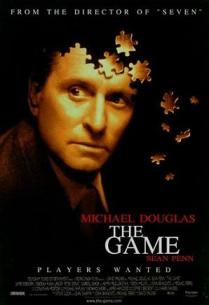 Fincher followed up the resounding success of “Se7en” with 1997’s “The Game,” a cerebral thriller that was received notably less well both financially and critically.
 We are TWO WEEKS away from the release of “The Social Network,” and I am about to FREAK OUT!!! After hearing ecstatic review after ecstatic review, my anticipation just continues to build! It’s now the background of my phone and computer.
 Hopefully by the time I start receiving submissions, I’ll have a banner ready to send to everyone who wants to submit so they can post it to their blog as well. I’ll probably also submit this to be plugged on the LAMB as well.
 And is being the presumed frontrunner the best thing for “The Social Network?” I analyzed some movies in the same position last year in my
 Best Supporting Actor could get interesting, too. I don’t think people can take Justin Timberlake seriously enough for a nomination, although anything can happen if the movie is huge. The first Academy Award nominated boy band member … wouldn’t that be something.

 Marshall and the Movies
Recent Comments