Fantastic Fest
Sometimes great films do more than change our thoughts. They change our way of thinking. Denis Villeneuve’s “Arrival” is one such film, reorienting our relationship with time and communication to jarring, enlightening effect. The only other recent comparison possible is a Christopher Nolan film: “Memento” or “Interstellar.”
The film attempts an ambitious coup that should be experienced, not described. But it spoils little to say that the ingenious storytelling from Eric Heisserer, adapting a short story by Ted Chiang, disorients a viewer to a point where entire sections of the film can come under reconsideration. By way of Amy Adams’ Dr. Louise Banks, a linguist tasked with figuring out how mysterious aliens express themselves, “Arrival” engages the brain while also raising questions about how that same organ processes information.
Much of the film unfolds rather plainly – Louise and a team of military personnel, including Jeremy Renner’s Ian Donnelly, insert themselves into the belly of a “heptapod” that has landed in a Montana meadow. (Many others also situate themselves across the planet.) Through a series of experiments, Louise attempts to crack an extra-terrestrial Rosetta Stone of sorts. Picture the climax of “Close Encounters of the Third Kind” stretched to feature-length, and that is somewhat akin to “Arrival.”
Louise has few luxuries as she carries out her work. Time, of course, is of the essence. Many of her collaborators consider linguistics a pseudo-science, dismissing the seriousness of her mission. And with each successive trip into the heptapod, the world moves closer to the brink as media blowhards push a campaign to save the species.
With stakes this high, the average moviegoer might anticipate a massive shootout or intergalactic battle as “Arrival” heats up. Nothing of the sort happens. Villeneuve never relies on spectacle to sell the film; instead, he patiently lays the groundwork for a finale that reveals the firing of synapses in our brains as something worth celebrating and considering. This science-fiction tale has an optimism rooted in humanism, and that is something to celebrate. B+ / 
 Long before there was Columbine, Virginia Tech or Newtown, there was the 1989 massacre at the École Polytechnique in Montreal. Unknown to many (myself included), a shooter opened fire in an engineering school and shot 28 people, killing 14. His rationale recalls that of the 2014 shooter in Santa Barbara: an angry, entitled rage against the feminist ideology that threatens his comfortable dominance.
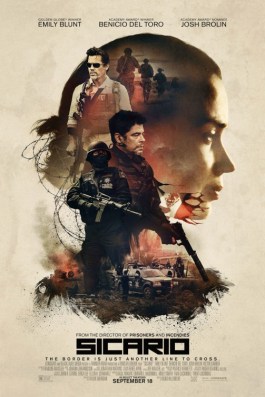 In Denis Villeneuve’s “
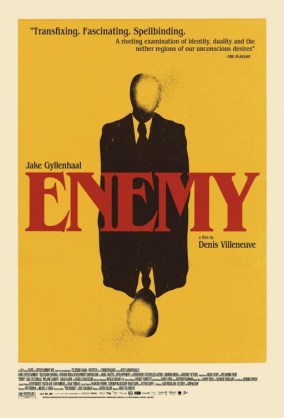 In a discussion about the film “
 It’s hard for me to figure out which foreign films to see in any given year; that’s why I’m so glad for the Academy Awards to come along and give me a list of five must-sees. From their five yearly nominees, I’ve discovered “


 Marshall and the Movies
Recent Comments