REVIEW: Rise of the Planet of the Apes

8 08 2011

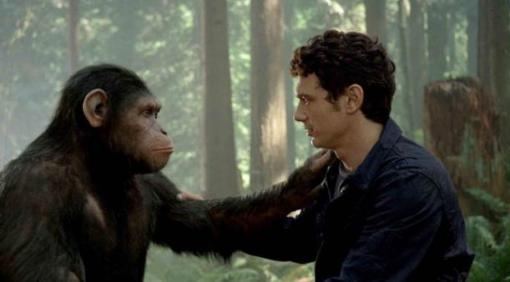
Summer always brings some nice surprises, and better to get it in August than not at all!  If you had told me at the beginning of the summer that “Rise of the Planet of the Apes” would be second to only “Harry Potter” in terms of quality blockbusters, I would have scoffed and laughed.  But now, I couldn’t be happier to say that a beautiful marriage of intelligence and entertainment has occurred in Rupert Wyatt’s film, and combined with the groundbreaking motion-capture that wows and dazzles, the whole experience knocks you unexpectedly off your feet.

This “Apes” starts from the beginning, wisely stepping away from Tim Burton’s remake and distancing itself from the original series so as to make a name for itself, and provides the summer’s first (and perhaps only) satisfying origins story.  It shows us Dr. Will Rodman (James Franco), desperate for a cure for Alzheimer’s that might cure his ailing father (John Lithgow).  After a tragic accident shuts down his funding and research, Rodman throws ethics out the window and takes home the infant Caesar (performed by Andy Serkis), an ape who had been passed the experimental drug through his mother.

Caesar becomes quite the specimen of evolution and progress, learning at a frighteningly quick pace and never showing signs of slowing.  With all signs pointing towards a medicinal triumph over nature, Rodman administers the drug to his father and a cure looks locked down.  Yet with Caesar’s growing mental capabilities come what humans have long feared – an added emotional capacity that could lead our greatest creation to turn on us.

Read the rest of this entry »


Weekend Update – August 7, 2011

7 08 2011

“I felt kind of trapped in that material. I felt, This is not my boat. I’m just a passenger, but I’m going down and there’s no way out.”

– James Franco on hosting the 2011 Oscars

“Here’s my guess: Critics will be out to kill [‘Rise of the Planet of the Apes’] and blame me for it just because they are out to kill me. Last year people were pretty nice. This is the year when people are going to have fun going after me. I don’t feel the same way about ‘Rise of the Planet of the Apes’ as I do about ‘127 Hours’ or ‘Milk.’ It was a ­different kind of acting.”

– James Franco on the media in Playboy, July 2011

Credentials

This week, I went to a promotional screening for “Rise of the Planet of the Apes.”  I decided to show up an hour and a half early because I knew the line would be ridiculously long.  However, I didn’t anticipate that the theater would already be full by the time I got there!

Reeling, desperate, dying to see the movie, I resorted to a card I had yet to play.  I went up to the rep and said, “You may not believe me but I’m a member of the press.”  I wasn’t lying.  And no, I’m not a member of the press just because I write a blog.

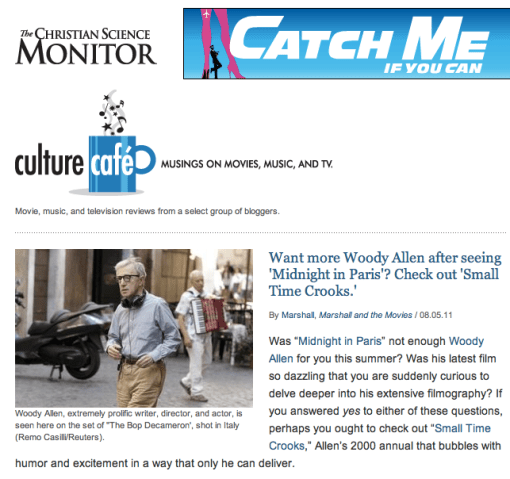
I guess it’s time for me to make a big announcement, one that I should have made several months ago.  My work now appears on The Christian Science Monitor‘s webpage.  That’s right, selected posts from “Marshall and the Movies” now appear on a section of the Monitor‘s site called the “Culture Café,” which pools a handful of bloggers for their opinions on the culture at large.  Since May, 8 posts from my blog have appeared on their webpage, ranging from reviews of new releases to Classics Corner posts and even, most recently, a “F.I.L.M.”

Don’t believe me?  Check it out for yourself by clicking on the link below!  I’ll do a better job from now on including links to the posts they syndicate on “Weekend Update,” but know that you can always read it here first!

In case you missed it…

Not much went on at “Marshall and the Movies” this week.  Running frantically behind, I resorted to publishing a lot of reviews I’d been holding back for a long time, “The Girl Who Kicked The Hornet’s Nest” and “Burlesque.”  I did, however, strategically publish my review of “Howl” as James Franco had a big movie opening this week.

Yesterday, I reviewed “The Change-Up.”  What a disaster that was.  In case you don’t want to read the whole review, let me sum it up for you in one fragment: AVOID AT ALL COSTS.

The F.I.L.M. of the Week was Charles Ferguson’s “No End in Sight,” a documentary about the American occupation of Iraq.  It’s still a fascinating watch even though the end is in sight … hindsight, as a matter of fact.

And because I didn’t get a chance to point it out in last week’s post, the July edition of “Classics Corner” took a look at Mel Brooks’ timeless comedy “Blazing Saddles.”  Thank goodness people like it enough to put clips on YouTube so I can embed them here.

Recommended Reading

And here’s what I read this week.  You should read it too, unless you are illiterate.  Then find someone to read it for you.

Other cool things I read this week from non-blogger types:

James Franco and the Rise of the New Celebrity

You’re always hearing something about James Franco.  Whether it’s him pursuing yet another degree, opening yet another movie, publishing a book, announcing a directorial venture, or appearing on a soap opera, the man seems to keep reinventing his own celebrity as he goes.  But at the same time, we can’t help but ask, “Who is James Franco?”  A Renaissance Man or a jack-of-all-trades spreading himself too thin?  An entertainer or an artist?  And I think that’s the question he wants us to be mulling over constantly.

The one thing that is certain about James Franco, however, is that he is brutally and blatantly honest.  The man will say what’s on his mind and act his feelings; he won’t take pull any punches or hide behind any veneers.  Case in point: the Oscars this year.  You may or may not have read the quote at the top of the post, but he hated the material and was very vocal about it.  In that same interview with Playboy, he said that he told the producer of the telecast that “I just don’t think this stuff’s going to be good.”

So how did he react?  With boredom and a complete lack of enthusiasm while Anne Hathaway tried to exude enough enthusiasm for both hosts.  But for those of us who know James Franco beyond the obvious filmography, this isn’t really a surprise or something we haven’t seen before.  Have you seen 2008’s “Camille,” a little indie he starred in alongside Sienna Miller?  If you haven’t, don’t because it’s awful.

Here’s the thing about “Camille” – Franco knows it’s terrible and acts accordingly: bored and brutalized, much like how those of us stupid enough to watch the movie feel.  Or if you saw “Eat Pray Love,” you’ll see a similar display.  The guy caught in the thankless A-hole ex-boyfriend role isn’t an exciting place to be, and Franco doesn’t act thrilled at all.  But honestly, should he be?  If you see “Rise of the Planet of the Apes,” you’ll see a similar side of Franco: bored and acting like he’s above the material the whole time.

My question to you, the reader, is this: is James Franco justified in showing his feelings toward the movie on screen?  Is he allowed to say “Yes, this is a paycheck movie, but that still doesn’t mean I have to like it” through an inferred glance?  Or does he need to swallow his pride and just act?  Because in the end, do we pay to see James Franco or the person that James Franco is acting as?  Do we need to be able to separate the actor from the character?  Or can we accept a post-modern blurring of the two?

Now allow me to shift gears while you mull over the tremendous amount of questions posed in the last paragraph.  Back in March, when the Charlie Sheen phenomenon was raging out of control, the brilliant author Bret Easton Ellis (“American Psycho”) wrote a fascinating editorial for Newsweek cleverly titled “Charlie Sheen IS Winning.”  In it, he broke down how Sheen epitomizes the modern (or post-Empire, as he calls it) celebrity.  While acknowledging that there may be some mental or substance issues present with Sheen, he lays out a convincing case for Sheen as the smartest celebrity in Hollywood because he understands what the public wants.  Try arguing with this:

“To Empire gatekeepers, Sheen seems dangerous and in need of help because he’s destroying (and confirming) illusions about the nature of celebrity … What Sheen has exemplified and has clarified is the moment in the culture when not caring what the public thinks about you or your personal life is what matters most—and what makes the public love you even more (if not exactly CBS or the creator of the show that has made you so wealthy)…

… Do we really want manners? Civility? Empire courtesy? Hell, no. We want reality, no matter how crazy. And this is what drives the Empire to distraction: Sheen doesn’t care what you think of him anymore, and he scoffs at the idea of PR.”

So, is James Franco the bellwether of a new kind of celebrity entering the mainstream consciousness without having a drug-fueled implosion?  Or is he something else entirely?  Weigh in!


REVIEW: Howl

2 08 2011

If you yearn for an alternative to the tired narrative structure of Hollywood films but want it without all the puzzling avant-garde vibes of a Terence Malick movie, perhaps “Howl” is a good pick for you.  It’s experimental but stays largely within comfortable confines, shifting between various storylines tied together by Allen Ginsberg’s poem in a fairly standard non-linear format.  The movie is overall not as provocative or engaging as it should be, but it does make give some interesting background on the discontent of the Beat Generation while also giving a portrait of a very interesting thinker.

Ginsberg is full of a cryptic intelligence and a paradoxically reserved openness thanks to a brilliant portrayal by the new millenium’s Renaissance man James Franco.  Behind the cigarette smoke and tucked away behind the Ray-Ban lenses is a fully understood man, even if Franco doesn’t want to grant us full access to his mind.  Call it the anti-“127 Hours” because rather than letting it all out in a furious display of emotion, he gets to do a slow reveal characterized by a careful restraint.

That doesn’t keep us from appreciating his portrait of Ginsberg.  Much like he convinced us we were watching Aron Ralston and not James Franco, he gets lost in Allen Ginsberg, fully absorbing his strange vocal cadences while reading “Howl” and picking up his easy-going, laid-back mannerisms that also exhibit the pain he has experienced in the interview portion of the movie.  It’s amazing what Franco can do when he sets his mind on acting because when he isn’t fully engaged in the movie, his boredom pulsates beyond the screen.

“Howl” is more than just the James Franco show, though, and it does more in 80 minutes than many movies do in two hours.  The ambitious film, directed by Rob Epstein and Jeffrey Friedman (two documentarians instrumental to making Gus Van Sant’s “Milk” work), tackles not only Allen Ginsberg but his effect on literature and American culture by also showing the obscenity trial surrounding the controversial poem that is totally separate from Franco’s Ginsberg.  This section asks us to challenge where obscenity overlaps with art, a question that still plagues us today.  What the two produce in their first narrative film is hardly a groundbreaking or game-changing film, but the experiment is hardly a failed one.  If you want an introduction to Ginsberg’s enigmatic poem that will provide you some valuable insight into what exactly he meant – and what his work meant for society as a whole.  B / 


Know Your Nominees: “Inception”

4 02 2011

The Oscars are a great cultural conversation for all to participate in, but it’s all too easy to only have surface knowledge of the nominees.  It’s all too easy to know “Black Swan” as the ballet movie, “The Fighter” as the boxing movie, and “The Social Network” as the Facebook movie.  But don’t you want to know more and stun your friends with your knowledge of the movies in the weeks leading up to the awards and ultimately during the broadcast itself?

That’s what my KNOW YOUR NOMINEES series hopes to do.  Every three days, I’ll feature ten interesting facts about the ten Best Picture nominees of 2010 that would be fascinating to pepper into any conversation.  My hope is that you will come away with an enhanced appreciation of the movies but also enjoy learning strange and interesting things about them.

So, as we proceed in alphabetical order, our next stop on the tour is “Inception.”

So what was the inception of “Inception?”  According to director/screenwriter Christopher Nolan, the movie began as a heist film mainly as a way to provide entertainment and exposition for the complicated dream structure.  But concerned with the cold emotional detachment to the characters in a heist film, he began to add the hero’s story to get the audience to connect with the movie.

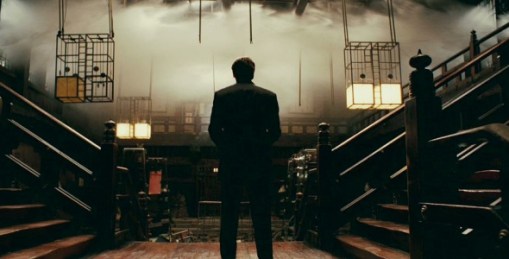
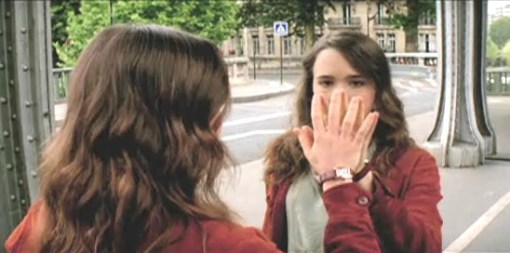
What’s real and what isn’t was a big talking point about “Inception,” but it may interest you to know what was shot on location (real) and what was shot on a soundstage or studio lot (not real).  The snow fortress was a built set, as was Saito’s castle. With a few other exceptions, most scenes were shot on location in Tokyo, Paris, Mombasa, Los Angeles, and a small town in Nolan’s home country, England.

How about that spectacular anti-gravity fight scene in the hotel hallway.  According to Christopher Nolan, Joseph Gordon-Levitt did all his own stunts for the scene, only using a double out of necessity for one scene.  The scene was done by creating a spinning set, not through CG.

Another fantastically well-executed scene of mind-blowing visual proportions was the scene at the Parisian café where the city implodes.  How did they shoot that?  According to cinematographer Wally Pfister, they used a camera that captures 1,500 frames per second (in contrast to the average camera which captures 24) to create the slow-motion effect.  In post-production, the visuals team added effects to make the objects look like they were floating.  (Everything was shot out of air cannons for the explosion effect.)

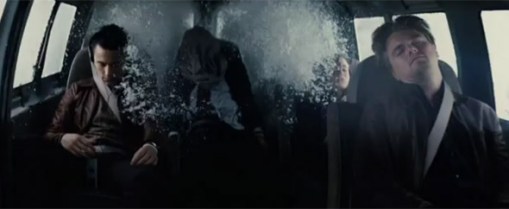
Throughout the second half of the movie, we saw plenty of the van falling off the bridge.  But what you might not know about this scene is that it took months to film and entire days were dedicated to the shot.  But it gets better: the van was shot out of an air cannon and when the van hit the water, the actors actually had to stay underwater for four to five minutes holding their breath and taking air from a tank.  How’s that for dedication?

The ensemble cast turned out perfectly, but it wasn’t always what it was.  Before shooting, Evan Rachel Wood was slated to play Ariadne but dropped out and the role went to Ellen Page.  Another big casting shift was the exit of James Franco, who was originally cast to play Arthur, due to scheduling issues; the role ultimately went to Joseph Gordon-Levitt.

Fans of Marion Cotillard got a chuckle when they heard “Non, je ne regrette rien,” the closing song of the film “La Vie En Rose” which won her an Oscar for Best Actress.  The title means “No, I regret nothing” when translated literally into English.  Was it a clever nod to her previous role?  Actually, no.  Nolan and composer Hans Zimmer chose the song before Cotillard became attached to the project because of its booming rhythmic qualities, not because of its association with the actress.

Many people have seen “Inception” as a metaphor for filmmaking, and Nolan has said that these musings aren’t entirely off-base.  But the craft he was most interested in exploring was architecture.  In an interview with WiReD, he stated, “I’m very interested in the similarities or analogies between the way in which we experience a three–dimensional space that an architect has created and the way in which an audience experiences a cinematic narrative that constructs a three–dimensional -reality from a two-dimensional medium—assembled shot by shot. I think there’s a narrative component to architecture that’s kind of fascinating.”

NEWS FLASH: The kids at the end of the movie are not the same as the ones before! Adjust your explanations of “Inception” as necessary.

Don’t worry, no top theories here.  Only some insight on where the idea came from – not exactly inception.  Nolan gave a top as a gift to his wife and then rediscovered it, incorporating it into “Inception.”  The one used in the movie was symbolically designed by the prop department to represent Cobb’s universe.

Check back on February 7 as the KNOW YOUR NOMINEES series continues with “The Kids Are All Right.”


10 for ’10: Performances

30 12 2010

Catch up with the idea behind this series here.

It’s impossible to celebrate a year in film without mentioning the performances that riveted us.  Without further ado or fanfare, here are the 10 actors who reminded me of the power of their craft with their work in 2010.

Women
Amy Adams as Charlene Fleming in “The Fighter

My original review:
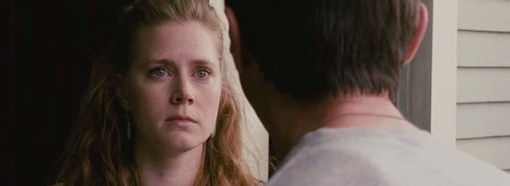
Adams, usually the delightfully effervescent charmer, plays gritty and unapologetic in “The Fighter” and pulls it off to Oscar-worthy standards.  She’s able to pull off just about any sort of character she takes, and the tenacious Charlene is different than anything we’ve ever seen her do before.  It’s exciting to see an actress nowadays who isn’t content with finding one adjective to act and then carve themselves a niche, and Adams is quickly proving herself one of the most versatile actresses of our day.

Reflection:
Amy Adams has wowed me in a variety of different roles, from her unassuming nun in “Doubt” to the ditzy princess in “Enchanted.”  Yet as Charlene, I think she may have hit the most beautiful note in her career so far with her heartfelt conversation with Bale’s Dickie on her front porch.  As she reflects on her life and her good intentions, it’s such a wonderful moment filled with every ounce of sincerity that she has to give.

Barbara Hershey as Erica Sayers in Black Swan

My original review:
The best of the supporting bunch [in “Black Swan”] is by far and away Hershey as the pushy and demanding stage mom.  Such roles often become stock characters; however, Hershey takes the role in frightening and invigorating new directions.

Reflection:
There wasn’t a more frightening performance this year than Hershey as Natalie Portman’s mother.  There’s a whole lot of subtext that Hershey has to act, perhaps a whole hidden backstory as director Darren Aronofsky alluded to, and that’s usually a daunting task for actors to pull off.  Hershey shows no dust from her long hiatus from acting, keeping us scared and entranced at the same time.
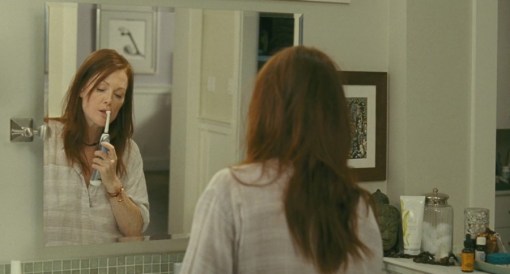
Julianne Moore as Jules in “The Kids Are All Right

My original review:
It’s Julianne Moore who absolutely brings down the house [in “The Kids Are All Right”].  As the more flighty, free-spirited Jules, she wins our hearts from the get-go, even if her antics only illicit groans from her other half.  The character is very complex as she begins reeling from Paul’s introduction, exploring sides of herself she didn’t know even existed.  It’s glorious to watch Moore dig deeper and deeper into her character as the movie goes on.  She’s responsible for some of the movie’s funniest moments but also for its most effective emotional scene.  Academy, take note.

Reflection:
Throughout the awards season, many pundits have thrown out that Annette Bening’s role in “The Kids Are All Right” is the character the audience is meant to sympathize with and thus makes her the better candidate for Best Actress.  Without dragging politics into it, I found Julianne Moore’s Jules the more sympathetic character and, by the end, the only one I actually cared about.  Moore has delivered so many fantastic performances, but what makes this one stand head and shoulders over the rest is her total emotional engagement in the role.  We feel her torment, her frustration, and her confusion so profoundly because of how engrossed she is in the character.  And what she puts in, we get out of the performance.
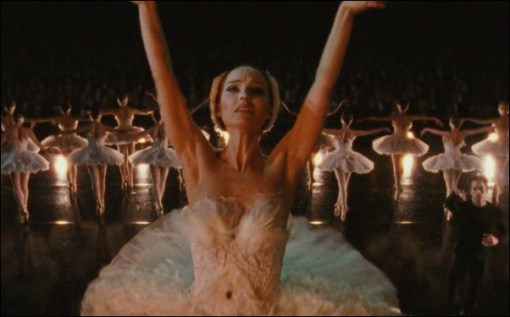
Natalie Portman as Nina Sayers in “Black Swan

My original review:
The star of the show is Portman, and “Black Swan” is made all the more fascinating by how Nina’s development mirrors her performance.  Much like Nina must lose herself in the role of the Swan Princess, Portman absolutely disappears into her character.  It’s a shocking and startling transformation due to Portman’s dedication to learning the craft of ballet and her impeccable acting.  The movie stands as a testament to the fact that she is one of the best emerging actresses of her generation, and her flawless showing here deserves to be minted in history alongside the greatest of all time.  Portman gives a once-in-a-lifetime performance, and to miss it would be to deny yourself the chance to see as close to perfection as is cinematically possible.

Reflection:
Perfect.  It was perfect.

Hailee Steinfeld as Mattie Ross in “True Grit”

Reflection:
I have yet to review “True Grit,” but when I do, expect the highest of praise for newcomer Hailee Steinfeld.  There are very few actors that can spit out period dialogue at lightning speed with confidence, and there are probably even fewer that can do the same with the dialogue of the Coen Brothers.  I don’t think I’ve ever seen anyone do both so well, a feat that would impress me from an Academy Award-winning actress but floors me when I consider that this is a debut performer.  At such a young age, she has a complete and total mastery of her character’s deepest desires and feelings, and such a strong presence out in front of “True Grit” makes it a movie and a performance I won’t soon forget.

Men
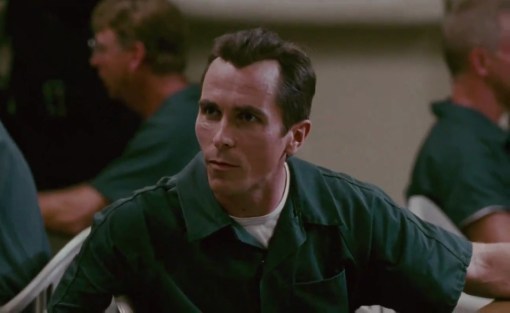
Christian Bale as Dickie Ecklund in The Fighter

My original review:
The knockout punch of “The Fighter” is the performance of Christian Bale, a totally authentic portrayal of a drug addict, former boxer, jealous trainer – and all simultaneously.  He doesn’t act or perform as the real life Dickie Ecklund so much as he becomes him and inhabits him.  Every twitch, every word is meticulously planned by Bale, who slimmed down from his Batman physique to play the gaunt Dickie.

Reflection:
“The Fighter” is Micky Ward’s story, but it’s Dickie Ecklund’s movie.  Bale, completely lost in the character, brings together all of his strengths to deliver what could be the quintessential performance of his career.  It shows his physical commitment, his uncompromising authenticity, and a strangely pervasive sense of heart that’s often a little rough around the edges.

Jesse Eisenberg as Mark Zuckerberg in The Social Network

My original review:
Eisenberg nails all the eccentricities of the fast-talking technological wiz, and the nuances in his portrayal of Mark Zuckerberg will captivate for endless viewings.

Reflection:
Who is Mark Zuckerberg?  After “The Social Network” was released, millions of people were left trying to answer the question.  Is he the savior of the Internet and the symbol of a new era, or is he the force that will inadvertently bring it down and destroy all the comforts of our former lives?  What makes this screen version of Zuckerberg so captivating is that Jesse Eisenberg doesn’t attempt to answer this question.  Eisenberg gets to the core of what he thinks is motivating Zuckerberg, going so deep that no bias or opinion can color his interpretation.  Then, he lays it all out on the screen and leaves it up to the viewer to decide who Mark Zuckerberg is.  With the magazine TIME naming the entrepreneur their person of the year, Eisenberg may have made Mark Zuckerberg the folk hero of the digital age.

Colin Firth as King George VI in “The King’s Speech

My original review:
It’s Firth’s show in the flashy role of King George, a character that must be inhabited, not just performed.  Firth nails it, getting inside every thought and stammer of the king.  He doesn’t just brush the surface as many actors playing historical figures do; he makes George vulnerable and sentimental.  Firth’s poignant performance reminds us that what we should be looking for in movies like this is heart.

Reflections:
The royal family of England always feels so distant on film, living a life filmmakers believe is so different that ours that they have to put them in an ivory tower.  Yet Colin Firth, armed with a fantastically written human being by the name of King George VI, tears their mythological status down brick by brick until his royal figure is so down to earth that he feels like an old friend.  The movie wouldn’t have been half as inspiring had Firth not brought such an enormously relatable pathos to the role.

James Franco as Aron Ralston in “127 Hours

My original review:
There’s never a dull or wasted moment to be found in the movie thanks to Franco’s sublime and enlightened performance.  While shooting on location, Boyle consistently had him act in character for 20 minutes straight and then relied on the editor to find 30 seconds to make it into the final cut.  This total immersion into Ralston’s desperation makes Franco all the more raw and moving.

Reflection:
The blasting score, fancy editing, and flashy cinematography of “127 Hours” can only go so far to make a static movie work.  It requires a dynamic actor, both heartbreaking and heartwarming, that we can stick with until the bitter end.  James Franco does just that and more as he makes pain and hope so tangible and so authentic that the movie never feels anything less than real.  If anyone ever had a doubt that we need actors more than ever, Franco’s flawless work is all that’s needed to silence any critic.

Andrew Garfield as Eduardo Saverin in “The Social Network

My original review:
Andrew Garfield as the upright Saverin is a force to be reckoned with, a true presence throughout the movie with his very likable charm.  For just that reason, he makes it wrenching to watch the inevitable turn when Saverin gets cheated.

Reflection:
While Zuckerberg’s prickly exterior prevents us from ever liking him too much, Andrew Garfield endows Eduardo Saverin with a sharp mind, firm beliefs, and a strong moral compass, making us fall head over heels for his character.  He’s an irresistible force on the screen, the good angel resting on Zuckerberg’s right shoulder whispering in his ear to follow common wisdom.  The movie’s emotional climax wouldn’t work if we weren’t rooting for Saverin the entire time, and when he explodes with anger, you’ll want to jump in the frame and punch the jerks who wronged him.




Random Factoid #489

29 11 2010

Every movie blog I read has been offering thoughts, thoughts, and more thoughts on the AMPAS’ announcement of the hosts for the 83rd Academy Awards.  But in case my blog is the closest you get to movie news, let me fill you in on a little secret: James Franco and Anne Hathaway were tapped to host.

In my opinion, this is something to celebrate.  Both are dramatic actors with incredibly potent comedic talent (as evidenced by their “Saturday Night Live” appearances), and they have an exuberant youthful charm that makes them incredible winning figures.  I think they will light up the Oscar stage, and if anyone has any doubts, see Anne Hathaway’s song-and-dance number with Hugh Jackman from two years ago.

It’s a curious choice indeed with the hosts having performances in play for big awards, but I think if we leave the politics out of it (which many Oscar analysts won’t), it will be an inspired show.  The pairing of Steve Martin and Alec Baldwin worked last year, and the 2010 variation on the buddy host scheme is meant to appeal to a younger crowd.  This generation (hem, my generation) has not traditionally shown an interest in the show, and Franco and Hathaway will certainly be a draw.

All I can say is: I’m still waiting for someone to top Whoopi Goldberg’s “African Queen” moment from 1999, which is one of the main reason why I’m obsessed with the Oscars.  (Read more about it in Random Factoid #221.)


REVIEW: 127 Hours

25 11 2010

If you think “127 Hours” is a melancholy movie because it involves self-mutilation to escape death, prepare to be proved wrong.  It is NOT a movie about the loss of an arm; it IS a movie about the gaining of perspective and an increased thankfulness for the importance of living.

Director Danny Boyle takes the true story of climber Aron Ralston, forced to cut off his arm when it was trapped under a boulder, and pulls out all the stops to make it an absolutely majestic cinematic tribute to the human spirit.  Together with James Franco at the top of his game, “127 Hours” has the power to turn hyperbolic praise into understatement.

The five days Ralston spends with his arm pinned underneath a boulder is reduced to about 90 minutes of claustrophobic discomfort for the audience as we anxiously await the inevitable.  But nonetheless, it’s still an enormously affecting watch, and it sure does know how to get your heart racing.  There’s never a dull or wasted moment to be found in the movie thanks to Franco’s sublime and enlightened performance.  While shooting on location, Boyle consistently had him act in character for 20 minutes straight and then relied on the editor to find 30 seconds to make it into the final cut.  This total immersion into Ralston’s desperation makes Franco all the more raw and moving.

Read the rest of this entry »


Oscar Moment: November Predictions!

1 11 2010

Folks, it’s time for a new set of predictions.  A lot has changed in the last two months since I issued a set of predictions.  Just a month away from the start of the horse race, I thought now would be a good time to step back and reevaluate.

(NOTE: I’m restructuring the change in position system from 2009.  The symbols stay the same, but listed in parentheses to the right is the previous position.)

Best Picture

  1. The Social Network 
  2. The King’s Speech  (NR)
  3. 127 Hours  (10)
  4. True Grit  (NR)
  5. Toy Story 3  (3)
  6. Inception 
  7. The Fighter  (2)
  8. The Kids Are All Right 
  9. Black Swan  (5)
  10. How Do You Know  (NR)

Dropping off: Another Year, Never Let Me Go, Blue Valentine

I‘m still feeling confident forecasting a win for “The Social Network.”  It has audiences and critics behind it; with enough precursor love, it could be an unstoppable force.  “True Grit” and “The Fighter” remain strong possibilities even unseen, although I’m sensing less excitement for the latter.  “Toy Story 3” hasn’t dropped; two contenders have just risen above it.  Given a push, it could still make a run for the money.  And “How Do You Know” is still unseen, but I’m getting good vibes.  Probably stupid to put it on my list instead of “Another Year,” but I’m going gutsy.

Right now, my biggest comment is that the race feels really stagnant.  It’s too early for the race to boil down to “The Social Network” vs. “The King’s Speech.”  The enthusiasm has kind of died for any movie, although that could easily change with this week’s release of “127 Hours.”  It’s just kind of been a dead zone for Best Picture buzz recently … which is a huge bummer.

Best Director

  1. David Fincher, “The Social Network” 
  2. Tom Hooper, “The King’s Speech”  (NR)
  3. Christopher Nolan, “Inception”
  4. Darren Aronofsky, “Black Swan”  (5)
  5. Danny Boyle, “127 Hours”  (NR)

Dropping off: Mike Leigh, David O. Russell

Same story between “Network” and “Speech” with the two battling out for the top spot.  I’m hesitant to say that two of the past three winners in this category could be nominated again this year, so I’ll pick Danny Boyle seeing as his movie is the safer bet at the moment.

I feel like this category will recognize visionaries this year.  This is only a hunch, of course, but I feel like directors such as Nolan are Aronofsky will get their just reward for creating pieces of art that don’t mold to any sort of convention.  Nolan has first priority of the two seeing as he was snubbed in 2008 and his movie will fare better with the Academy.  “Black Swan” is a risky movie and one that doesn’t align very well with Academy tastes.  An Aronofsky nomination means true progress.

Best Actor

  1. James Franco, “127 Hours”  (3)
  2. Colin Firth, “The King’s Speech”  (NR)
  3. Jesse Eisenberg, “The Social Network”  (2)
  4. Mark Wahlberg, “The Fighter”  (1)
  5. Ryan Gosling, “Blue Valentine” 

Dropping off: Robert Duvall

I’m sensing the “127 Hours” reward will come in Best Actor for James Franco.  At 32, he’d be among the youngest winners ever, and his status as an elite dramatic actor would be forever cemented.  I see him as being the critics’ circle darling, putting him in prime position from the beginning of the season.  However, there will be stiff competition from Colin Firth, who has the subjective “deserving” card in his hand after losing last year for his performance in “A Single Man.”

Eisenberg drops a slot because the choice youth performance is going to be from Franco, and Wahlberg plummets thanks to the buzz being squarely in the ring of Bale and Leo, his supporting cast.  Nonetheless, I think the preparation he put into this role will pay off with a nomination.  I think Ryan Gosling will be nominated for “Blue Valentine” over, say Robert Duvall for “Get Low” or Jeff Bridges for “True Grit,” because the NC-17 rated domestic drama may be too intense for Best Picture, but the actors will love it and reward it here.

Best Actress

  1. Natalie Portman, “Black Swan”  (2)
  2. Annette Bening, “The Kids Are All Right”  (1)
  3. Nicole Kidman, “Rabbit Hole”  (NR)
  4. Lesley Manville, “Another Year”  (NR)
  5. Michelle Williams, “Blue Valentine”  (4)

Dropping off: Jennifer Lawrence, Julianne Moore

Focus needs to get their act together and figure out how to campaign Bening and Moore.  Amidst the controversy, I think Portman has emerged all the stronger, and she is now my pick to win in the seemingly two-way battle for supremacy.

Nicole Kidman moves onto the list after her performance in “Rabbit Hole” garnered significant buzz, and Manville as well because I think “Another Year” has to have at least one acting nomination.  And for the exact same reason I predicted Ryan Gosling to get a Best Actor nomination, I predict Michelle Williams to get a Best Actress nomination for “Blue Valentine” to reward the movie’s true grit.  However, the tragic romance could go the way of “Revolutionary Road” and leave the leads out in the cold.

Best Supporting Actor

  1. Christian Bale, “The Fighter” 
  2. Geoffrey Rush, “The King’s Speech”  (NR)
  3. Andrew Garfield, “The Social Network” 
  4. Aaron Eckhart, “Rabbit Hole”  (NR)
  5. Sam Rockwell, “Conviction”  (2)

Dropping off: Vincent Cassel, Mark Ruffalo

Could there be anything more boring than the supporting categories this year?  Yawn.

Sight unseen, I still think Bale is the man to beat in this category.  Got any better suggestions?  Rush has won before, yet he will still prove to be a big threat given he lights the movie on fire.  Garfield is young and unknown, but he is incredible in the role.  He could move up to the top if there turns out to be a tidal wave of support for “The Social Network.”

I get a good feeling about Aaron Eckhart for “Rabbit Hole.”  He’s a great actor, and he works alongside Kidman who is a very good bet for a Best Actress nomination. There’s always that movie with a ton of acting nominations, and I get a feeling it could be “Rabbit Hole.”  As for Sam Rockwell, I still feel a nomination is a good possibility, but a win seems pretty tough with the general lack of enthusiasm for “Conviction.”

Best Supporting Actress

  1. Melissa Leo, “The Fighter”  (2)
  2. Miranda Richardson, “Made in Dagenham”  (NR)
  3. Hailee Steinfeld, “True Grit”  (4)
  4. Dianne Wiest, “Rabbit Hole”  (NR)
  5. Helena Bonham Carter, “The King’s Speech”  (NR)

Dropping off: Keira Knightley, Barbara Hershey, Marion Cotillard

Another win for “The Fighter” sight unseen, this time for 2008 Best Actress nominee Melissa Leo.  You got any better ideas?  This category is still wide open with a month left until the critics’ groups for the field for us, and that’s no fun.

Miranda Richardson’s spunky turn in “Made in Dagenham” seems to be getting a lot of buzz, thus it’s in at this point.  “True Grit” hasn’t been seen, but Hailee Steinfeld sure looks impressive from the trailer, so she’s in.  Dianne Weist got the critics talking about her work in “Rabbit Hole,” and she’s won twice before, so she’s in.  Helena Bonham Carter is in a strong Best Picture contender, so she’s in.  See how flimsy my logic is?  No one has a clue what to expect in this race.

I lied when I said there would be screenplays in this set of predictions.  For the wins, I’d say “The King’s Speech” and “The Social Network” for original and adapted, respectively.

So, how do you feel?  What Oscar nominations do YOU foresee?


Oscar Moment: “127 Hours”

23 09 2010

Two years ago, Danny Boyle was atop the world, winning Best Director for “Slumdog Millionaire,” a movie that won eight Oscars, the second-biggest haul for any movie of the decade.  And now, he may be poised to stand there again.  His follow-up feature, “127 Hours,” is generating a whole lot of positive awards buzz.

But is it too soon?  Two years is hardly any time to be back in the awards hunt.  And usually, winners come back pretty under the radar.  Boyle is back with all pistons firing.

Is it possible for a director to be back in the hunt for their follow-up movie to the one that won them Best Director?  It has happened once in the past twenty years.  Guess who did?  James Cameron, although the nominations came 12 years apart for “Titanic” and “Avatar.”

The list of Best Director winners over the past two decades is hardly shabby (look for yourself if you don’t believe me), so we can reasonably assume that back-to-back nominations is something hard to come by.  Danny Boyle is very well-respected and certainly very loved, but he doesn’t seem like quite enough of an Academy favorite to make him a sure bet to defy the odds.  Before “Slumdog,” his movies were mostly cult favorites with niche audiences.

Then again, “127 Hours” isn’t your conventional movie.  Its success will be mainly because of Boyle’s directorial skills as the movie requires a firm hand behind the camera.  The movie tells the story of Aron Ralston (James Franco), a camper who winds up stuck in a canyon for over five days, ultimately leading to … well, you know.  It gets rough, and Boyle said he wants the movie to be a challenge to moviegoers.  The premise doesn’t seem very translatable to the big screen, and making it work is surely a directorial triumph.

The movie is also highly dependent on Franco’s performance, since he’s the only person we will get to watch for most of the movie.  Early reviews from Telluride and Toronto say he pulls it off marvelously, and a Best Actor nomination seems all but inevitable.  Franco nearly got one in 2008 for “Milk,” but he’s been doing quality work for quite some time now that a nomination seems like it’s a long time coming.

The movie also has hopes in technical categories as Boyle’s vibrant style often leads to flashy displays of editing, cinematography, and sound.  Not to mention that the score is being done by AR Rahman, the Oscar-winning composer of “Slumdog Millionaire.”   I’d sure love to hear some “Jai Ho” cranking from those canyons.

Writing might be a little bit more of a stretch as the movie may be thin on dialogue, but with Boyle penning the script with the Oscar-winning writer of “Slumdog Millionaire,” Simon Beaufouy, it could happen.

As for Best Picture, I’d say that “127 Hours” has a very good chance.  I hate to say it’s sure because some people have called it “too hard to watch.”  But others have called it “life reaffirming,” and it’s people like that who will drive the film down the path to glory.

BEST BETS FOR NOMINATIONS: Best Picture, Best Director, Best Actor, Best Cinematography, Best Film Editing

OTHER POSSIBLE NOMINATIONS: Best Adapted Screenplay, Best Sound Mixing, Best Sound Editing, Best Original Score


REVIEW: Eat Pray Love

12 08 2010

The big tagline advertised for “Eat Pray Love” is “let yourself go.”  Indeed, as millions of readers across America have discovered, Elizabeth Gilbert (played here by Julia Roberts, who looks every bit as good as she did 20 years ago in “Pretty Woman”) did just that after she couldn’t find fulfillment in her everyday life.  Her publisher allows her to spend a year traveling to Italy, India, and Bali as she attempts to discover how to forgive her past while finding happiness for the future.

Ryan Murphy’s film adaptation of Gilbert’s memoir, however, doesn’t do itself the favor of following the author’s lead.  Rather than letting itself go, it keeps all its emotions bundled up inside.  There are some definite moments of profound revelation that are wonderful to watch, but the movie comes off as feeling rather cold.

We get to smile on occasion; there is a laugh every once in a while, but we sit through the majority of 130 minutes with a stoic stone-faced look.  Even as Gilbert eats delicious food and falls in love, the movie still keeps a melancholy and vaguely plaintive tone, which really puts a damper on how much we are able to enjoy ourselves.  That’s not to say the movie is off-putting because Gilbert spent a great deal of her year in solemn reflection.  Murphy just doesn’t indulge us often to share in her moments of bliss.

People who have read the book tell me that Elizabeth Gilbert has a wonderful sense of humor and a compellingly entertaining voice.  It’s a near impossible cinematic feat to lift both of those off the page and onto the screen, and the script, written by Murphy and Jennifer Salt, doesn’t seem to do her writing talents justice.

Read the rest of this entry »


“Baby Mama” and “Pineapple Express”: Still Laughin’

3 08 2009

Identify the movie quote: “What we do in this life echoes in eternity.”

Did you immediately think of Russell Crowe as the hulking Maximus in “Gladiator?”  If you did, you’re only half right.  At around 11:45 P.M. last night, I discovered with a little help from Starz that it is hardly the most memorable utterance of the quote.  In “Pineapple Express,” as Danny McBride’s scene-stealing dealer Red mercilessly beats James Franco’s Saul with common household items, he quotes “Gladiator” completely out of context (at 0:44 in the YouTube video, if you like to take my links).  And the best part about it: I had seen “Pineapple Express” about 10 times and never noticed that line.

Earlier that day, I found myself entranced on Cinemax by “Baby Mama,” another uproarious comedy from 2008.  Just like later that evening, I was surprised by a line I hadn’t caught the first few times.  Infertile career-woman Kate and her white-trash surrogate mother Angie (played by “SNL” alums Tina Fey and Amy Poehler, respectively) are in counseling at the surrogate agency, and the much more advanced in years Chaffee Bicknell (played by Sigourney Weaver) announces that she is expecting.  Angie retorts, “Expecting what?  A social security check?”

Thanks to channels like Starz and Cinemax, I can flip through the channels and find these movies on about every 3 hours.  So to any of you with these very nice stations, or anyone looking for a good comedy, here’s why I recommend these two:

  1. I’m still laughing. One of my tests for a really good comedy is if I still laugh after multiple viewings.  I howled when I saw “Pineapple Express” for the first time, and it still delivers countless belly laughs.  And while I giggled more than cracked up the first time I saw “Baby Mama,” countless subsequent viewings have really made me appreciate the sophisticated humor.  A common thread between the two movies is that they pack so much humor into a fairly small running time that I still haven’t caught it all.
  2. I can quote most of the movie. My favorite kind of comedy is one that relies on the spoken word to be funny; in other words, it needs to be infinitely quotable.  “Baby Mama” features clever and witty one-liners like “I don’t want to be dramatic, but I would literally rather be shot in the face than eat this stupid food.”  On the other hand, “Pineapple Express” offers a little bit more ridiculous lines, such as, “If you’re a man and act heroic, you’ll come back as a dragon … or Jude Law.”  But its absurdity makes it no less quotable.  I can rattle off lines from both of these movies for days.
  3. They both get the comic man-straight man routine. If you read my review of “Funny People,” I gave it quite harsh criticism for not executing the comic man-straight man routine.   The straight man is supposed to be funny, mainly in their reactions to the the zany comic man.  In “Pineapple Express,” Saul often suggests ridiculous ideas, and Dale Denton’s (Seth Rogen) best reaction is when he states, “You know, when you say things like that, I’m really flabbergasted” (to which Saul replies, “Really?  Thanks, man”).  And in “Baby Mama,” Kate constantly has to put up with Angie’s lack inability to act her age.  The most hilarious example is when Angie cannot open the protective child lock on the toilet and pees in the sink; Angie claims that she didn’t know that was against the rules, and Kate shoots back, “Isn’t peeing in the sink against everyone’s rules?!?”
  4. They have a cast of hilarious supporting characters. The most hilarious scenes in “Pineapple Express” come whenever Danny McBride’s Red is on screen, who says such profound things as “I’m not going to wake up murdered tomorrow!”  But the movie also features hilarious antics from a dysfunctional team of hitmen, Mathison and Budlofsky, who constantly accuse each other of going soft.  “Baby Mama” also has great turns from its supporting cast, including Steve Martin as the quirky CEO of Kate’s company who rewards her with 5 minutes of uninterrupted eye contact, Greg Kinnear (“As Good As It Gets”)  as Kate’s love interest who operates a smoothie store, Maura Tierney (TV’s “ER”) as Kate’s sister who has kids of her own, and Holland Taylor as Kate’s mother who is frustrated by Angelina and Madonna showing off their adopted babies.
  5. The overarching messages are good ones. Many people are probably wondering, “How can a movie about a bunch of potheads have a good message?”  To those people, I say that “Pineapple Express” to me portrays marijuana in a negative light, showing all the trouble that smoking it can bring.  It shares with “Baby Mama” the theme of friendship and how one can form between the most unlikely of people in the most unlikely of circumstances.  I find it refreshing to see the “opposites attract” concept (which has become so trite in romantic comedies) featured in movies that promote it as a positive aspect in friendships among the same gender.

So, if you’re in a mood to laugh, flip your TV over to Starz for “Pineapple Express” and Cinemax for “Baby Mama” (although it will switch to HBO soon) or get in the car and go to your nearest Blockbuster.  Either will provide nonstop fun and entertainment – even if you’ve seen them before.