 “You will not scare men with your intelligence,” warns an elder to the young Gertrude Bell at the outset of Werner Herzog’s “Queen of the Desert.” It’s the kind of “nevertheless, she persisted” moment that would spur on a great feminist tale. Instead, the line represents the tease for a story that never materializes.
This story of an accomplished archaeologist who provided valuable research on tribes in the Ottoman Empire as their empire collapses is all too eager to define her life in relation to the men whose path she crosses. There’s T.E. Lawrence (Robert Pattinson) of “Lawrence of Arabia” fame, a more professional acquaintance, but she sets off on her quest primarily in grief-stricken anguish at the loss of Henry Cadogan (James Franco). While in the Middle East, she spends as much time on screen rebuffing offers from Charles Doughty-Wylie (Damian Lewis) as she interacts with the native tribes.
This becomes an issue later on when Herzog tries to land the film with an anti-imperialist message as Winston Churchill arrives from the British Empire to help break up the Ottoman Empire. Gradually, Bell does grow into a bit of an anti-imperialist as she increases her understanding of the region’s tribes. But in her embittered farewell, knowing that her advice will likely be discarded, Bell expresses a kind of fondness for the people she loves that also reeks of a white savior complex.
The only thing to recommend in the film is Pattinson’s turn as Lawrence; he does the self-effacing British elite routine with aplomb. Otherwise, “Queen of the Desert” sits on a hollow throne. C / 

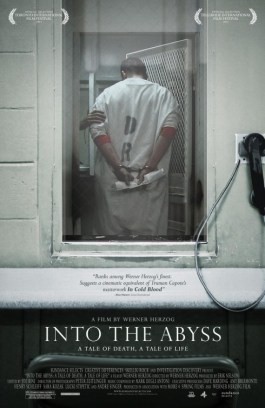 When people think of documentaries, they often remember the most boring or the most didactic ones. For many, non-fiction film is about telling you exactly what happened or, in the minds of the documentarian, exactly what needs to happen. Werner Herzog’s “
 Film critic Roger Ebert inspired many people and touched countless lives, ranging from saving Martin Scorsese from self-implosion to many much smaller-scale interactions. One such example is
  Recently in a film class, a discussion arose about disturbing film scenes. The conversation kept coming back to the rape scene in David Fincher’s “

 Marshall and the Movies
Recent Comments