F.I.L.M. of the Week (January 1, 2015)

1 01 2015

Mike Leigh’s films are certainly not everyone’s cup of tea; I, myself, often find his movies rather impenetrable.  His scripts, with their precise and emphatic characterization, often feel like the most episodic instances of linear plots imaginable.  Leigh takes his sweet time in getting to his final destination, which can be maddening for those not on board.  The leisurely pace can often provide quite the opposite of leisure, as a matter of fact.

All these things are true of his 1999 film “Topsy-Turvy,” a historical biopic of British opera masters Gilbert and Sullivan set at the development of their great production, “The Mikado.”  The movie boasts all the hallmarks of a period piece – namely, extravagant attire and luscious set design – but little of the stuffiness or self-importance that usually accompanies them.  This is my pick for the “F.I.L.M. of the Week” for the way it eschews that style of opulence-focused filmmaking in favor of its talented ensemble.  Leigh cares far more about what feelings lie underneath their wardrobe instead of the fabrics that adorn it.

Sorry to keep limiting the audience, but the film will carry far more meaning for those who have spent any time working on a theatrical production.  The stage draws a particular kind of personality and ego towards it, and “Topsy-Turvy” packs its cast full of these personages.  These are not just “Waiting for Guffman”-like archetypes, though. All the players feature a depth of character that makes them all the more recognizable as people, not just as figures.  Common sense would not dictate the logic behind granting so much screen time to those who execute Gilbert and Sullivan’s work, yet it somehow works.

The two titans of the operetta hardly go underdeveloped, however.  “Topsy-Turvy” offers plenty of insight into the working relationship of two talented artistic creators, showing how their professional collaboration turns sour after over a decade.  Sullivan (Allan Corduner) seeks to craft a breakthrough opus while Gilbert (Jim Broadbent) seems hardly phased by their relative creative stasis so long as it continues to pay the bills.  They almost dissolve their partnership over simple disagreement, not because of some extraordinary circumstance that usually tears musicians apart in cinematic renderings.

Ultimately, they pull it together and create something fresh and exciting with “The Mikado,” and Mike Leigh arguably achieves the same feat with “Topsy-Turvy.”  The film is funny as well as insightful, in sneaky ways that are not entirely apparent until it concludes.



F.I.L.M. of the Week (December 26, 2014)

26 12 2014

Los Angeles Plays Itself

Back in 2011, I saw “The Tree of Life” at home in Houston.  Towards the end of the film, Sean Penn’s Jack wanders out in front of a well-known building (which true Houstonians will still refer to as the Transco Tower).  Then, inexplicably, Terrence Malick cut to a shot of the Dallas skyline.  My entire theater erupted in boos.

When representations of a place fail to match their reality, we as both moviegoers and citizens feel angered by the disconnect.  The list of movies set in Houston are relatively small, but the same could not be said for Los Angeles, however.  Often called “the most photographed city in the world,” the city that hosts the home of the film industry has naturally served as both character and subject for a whole host of movies.

Thom Andersen’s documentary “Los Angeles Plays Itself,” made a decade ago but only just now hitting home video due to clashes over the rights to clips, follows the interplay between the concept of Hollywood and the actuality of Los Angeles.  Though the cinematic mythologizers may attempt to spin it as an atypical locale, plenty of its residents lead lives as ordinary as any other American.

While the narrator speaks in the first person plural as if all viewers are Angelenos, it ought not scare away anyone else.  It probably holds more meaning for those who have experience cruising the streets in the City of Angels (and thus understand the frustration of getting stuck in its inevitable traffic jams), but “Los Angeles Plays Itself” is a movie for anyone who loves the movies.  This is my selection for the “F.I.L.M. of the Week” because it makes an excellent case that the history of Los Angeles on-screen is the history of 20th century America and is thus worth attention.

Had I written down all the fascinating titles highlighted, my ever-growing list of movies I need to see would probably double.  Andersen covers everything in his comprehensive overview of films set in the city.  There are classics by Billy Wilder to Roman Polanski, B-movie genre trifles, and even gay porn flicks.  His saga of the rivalry between Hollywood and L.A. (as the cinema would have the world abbreviate it) reflects so much about American culture as a whole, yet it never loses its locally-minded specificity.

“Los Angeles Plays Itself” has all the depth of thought of field-leading scholarship.  (Andersen, I have since found out, is a professor at CalArts.)  But rather than packing his research into a dense textbook or monograph, he smartly fashions it in the form of a video essay, which has since popularized by editors like Nelson Carvajal and Kevin B. Lee.  The film’s intermission, on the other hand, suggests that maybe you ought to split up your absorption like reading a book rather than binging it all at once.  At nearly three hours, the documentary is a dense watch brimming with valuable information.

Even so, I felt like I could easily have watched another three hours.  The wry narrative voice of Encke King assumes an authoritative tone, although he occasionally interrupts his matter-of-fact delivery with a bluntly stated opinion that inspires a good chuckle.  And after a film like Paul Thomas Anderson’s “Inherent Vice,” I feel certain that there is enough material for a postscript about the past decade…


F.I.L.M. of the Week (December 19, 2014)

19 12 2014

ElenaI have no idea how he does it, but Russian writer/director Andrey Zvyagintsev has a remarkable talent for making his films feel like modern-day parables.  His work on “Elena,” my pick for the “F.I.L.M. of the Week,” achieves this tenor of storytelling through one heck of a balancing act.

The film is pared down to an almost elemental struggle without ever being dumbed down.  His visual style takes a heavy cue from naturalism, portraying much of the dreary minutiae that occupies most of our lives, yet “Elena” still feels compelling nonetheless.  Zvyagintsev provides satisfying drama that never dips into the realm of sensationalism.

“Elena” chronicles a brief period in the life of its titular character, a former nurse who has married up to wealthy Moscow businessman Vladimir.  If Russia has something equivalent to Social Security, they are at about that age.  So, naturally, the subject of settling his estate is a rather pressing concern.

Elena is hardly a gold digger, although she does have an interest in ensuring a significant stake.  Her grown son cannot provide for his own family, so he constantly leans on his mother for financial support.  Vladimir has grown tired of their inability to become self-sufficient, and he firmly withholds tuition funds for Elena’s grandson that would keep him out of the military.  To counter, Elena is also quick to remind him that she is a better investment than his thankless, prodigal daughter Katerina.

What ensues in “Elena” is a fascinating look at the lengths to which people will go in order to secure their future.  Every choice and each word are up for debate as to their correctness.  Zvyagintsev also astutely builds in the confounding factor of class relations to the film, adding an extra layer of complexity into a film that already boasts an intricate simplicity.  While very little may happen in regards to events, “Elena” feels like a more full viewing experience than most films these days.


F.I.L.M. of the Week (December 12, 2014)

12 12 2014

WalkerThe end of the year is drawing near, which means plenty of “great man” biopics that paint flattering portraits of “important” men in history.  (Rarely are these ever about women, I feel.)  2014 brings with it “The Imitation Game” and “The Theory of Everything,” just to name two, that fit this description.  To the surprise of very few, both those movies are predictably pretty good.

But it is time for someone to take a radical approach to the biopic once again.  These formulaic, color-by-numbers films are getting too safe for their own good.  So, in order to revitalize the sagging genre, I would highly recommend that all daring filmmakers brush up on Alex Cox’s “Walker.”

This is tied for the oldest movie I have featured in my “F.I.L.M. of the Week” column, but this 1987 release feels completely fresh.  Cox does Tarantino’s style before Tarantino made it famous, and he even has the guts to apply his eclectic, anachronistic, and oftentimes outright bizarre technique to real people and events.  Can’t imagine the family of Cornelius Vanderbilt was too thrilled about a cinematic portrayal of the business magnate where his most prominent feature is his flatulence…

Cox, working from a script by Rudy Wurlitzer, can certainly have more liberty with his subject given his relative obscurity.  “Walker” follows Ed Harris’ William Walker, a soldier of fortune who somehow ends up in Nicaragua doing the bidding of businessman in overthrowing their government.  Eventually, in a turn that no one who understands the effects of power will find surprising, Walker seizes what is essentially dictatorial control of the country.  And yes, this is a true story.

There is no inside baseball, political calculation, or dreary historical tedium to be found in “Walker” – only awesomeness.  Every turn of the film brings a new and unexpected joy in the form of a bold risk taken by Cox.  Whether it is in the characterization of Walker himself or in the gratuitous flow of blood in a battle, “Walker” constantly elicits the response, “I can’t believe he just did that.”  And it works practically every time, too!

Furthermore, “Walker” is not just style for style’s sake, a trap into which Tarantino far too often seems to fall.  What better way to show the connection between the factual past and controversial present of the film’s release, the Iran-Contra scandal, than to literally merge them within the movie itself?!  This is a work of pure, mad genius.


F.I.L.M. of the Week (December 5, 2014)

5 12 2014

“The Man in the Moon” is a film that boasts many milestones.  Sadly, it is the last film of director Robert Mulligan, an accomplished (if not heavily rewarded) filmmaker whose credits include “To Kill a Mockingbird.”  On a lighter note, however, it is the debut film of Reese Witherspoon.

Her first performance comes not as some thankless supporting role but rather fortuitously as the lead in a very rare female coming-of-age story.  As Dani, a fiery 14-year-old experiencing a romantic awakening in 1950s rural Louisiana, Witherspoon gets some meaty material to chew on.  She spits sharp-tongued sass and wears her passionate emotions on her sleeve, foreshadowing two decades worth of memorable characters.

But “The Man in the Moon” is my pick for the “F.I.L.M. of the Week” not simply for the novelty of seeing a pint-sized Elle Woods.  The movie actually holds up quite well as a whole, providing a rather stirring emotional journey.  (Don’t believe me?  Lena Dunham and Jimmy Fallon both count themselves as fans, even raving at length about it.)  Obvious, unabashed melodrama rarely works this well.

Mulligan supplies the film with plenty of corny underscoring and heightened sentimentality, which complements some of the plot developments that feel ripped out of a soap opera.  Yet these elements hardly stifle the satisfaction of watching “The Man in the Moon.”  It captures an innocence and purity of spirit that can supersede the banalities.

As Dani pursues her first love, her older farmhand neighbor Court (Jason London), something always rings beautifully true.  The film understands both the joy of discovering shared affection as well as the pain of uncovering competing attractions, bundling them all together into one touching package.  I just wish I was around in 1991 to see this when it came out, if only so I could have called that Reese Witherspoon was headed for stardom.  Perhaps the only bigger slam dunk for success from a teenage acting debut was Natalie Portman in “The Professional.”


F.I.L.M. of the Week (November 28, 2014)

28 11 2014

The CruiseBefore he was fictionalizing the pursuits of uncommonly dedicated American men, Bennett Miller was chronicling a real one.  His 1998 directorial debut “The Cruise” was actually a documentary, not a narrative film.  But rest assured, the path Miller charts is still every bit as fascinating as his more recent work.

The non-fiction tale is an interesting experiment in subjectivity, as Miller lets the narration flow purely from his only character, Timothy “Speed” Levitch.  “The Cruise” is essentially a 75-minute long spiel of Levitch talking, both in his vocation as a guide on a New York City tour bus and in his personal life.  This uninterrupted biography is my “F.I.L.M. of the Week” because of the curiosity such a tightly focused spotlight invites.

Levitch’s knowledge of New York’s history is impeccable, perhaps a bit pedantic at times.  (Fun fact I learned from watching: George Washington took the oath of office to become our first President on Wall Street.  So no wonder our government is so beholden to business interests!)  He is distinct, however, in his remarkable delivery of the wealth of information he possesses.  Levitch does not simply regurgitate facts; he is a poet laureate of the mean streets and a true mythologizer of his city.

But Miller steps down from the double-decker bus and shows who Levitch is behind the bombast.  As it turns out, he has a whole host of resentments that he does not shy away from calling out.  Levitch calls out the family members who did not believe in him and the people who refused to read his screenplay, just to name a few.

“The Cruise” does not force reconciliation of these two sides of Levitch.  Is it possible that a man is both the good-natured jokester who protests workplace uniforms because it will ruin his chance to pick up chicks as well as a bitter misanthrope?  Once again, Miller does not provide the solution to his puzzling protagonist, just all the pieces for personal interpretation.


F.I.L.M. of the Week (November 21, 2014)

21 11 2014

Academy Award winner Charlize Theron is Sylvia, a Portland restaurant worker who feels distinctly spiritually absent.  She still has a cutting problem that she manages to keep inconspicuous from the world, and she frequently engages in sex with men in an attempt to feel something.  Theron gives one of those “physically naked signifying emotionally naked” kind of performances, which proves hauntingly effective.

Academy Award winner Kim Basinger is Gina, a wife and mother in New Mexico who can only find happiness in the embrace of her Hispanic lover, Nick.  Their affair crosses not just ethnic but also social class boundaries, two status markers that erect rigid divisions in their small community.

Now an Academy Award winner, Jennifer Lawrence is Mariana, a self-sufficient teen thrown into the responsibilities of surrogate motherhood far too early.  (The character now makes for an interesting antecedent to “Winter’s Bone” as well as “The Hunger Games.”)  She is at a transitional moment in her life, unsure of how to feel about her inattentive mother and budding romantic prospect.  Lawrence marvelously conveys both her tenacity and her insecurity.

“The Burning Plain” is a movie where – gasp! – all these women’s stories connect, as characters often tended to be linked somehow in the first decade of the 2000s.  This is my selection for the “F.I.L.M. of the Week,” though, because writer/director Guillermo Arriaga ties these disparate storylines into one complete package.  (Arriaga had plenty of practice writing the first three “hyperlink cinema” screenplays for director Alejandro González Iñárritu.)  His film is a plaintive meditation on the paralyzing effects of guilt that lands with somber impact thanks to a carefully crafted script and three quietly moving female performances.


F.I.L.M. of the Week (November 14, 2014)

14 11 2014

In 2006, I only knew Channing Tatum from playing man-candy roles in teen films like “She’s The Man” and “Step Up.”  But had I been paying attention, I would have noticed that he was also in a smaller indie film called “A Guide to Recognizing Your Saints.”  Tatum showed such skill and promise as a dramatically compelling and emotionally potent actor; it is such a shame that it has taken eight years for someone like Bennett Miller to convert that potential in “Foxcatcher.”

In a cast that includes Shia LaBeouf, Dianne Wiest, Chazz Palminteri, Rosario Dawson, and Robert Downey, Jr., Tatum is easily the standout.  “A Guide to Recognizing Your Saints” is my pick for the “F.I.L.M. of the Week” not solely for his performance, however.  Dito Montiel, adapting his own memoir for his screenwriting/directing debut, creates a deeply personal film out of his experiences that shakes up stuffy literature-on-screen conventions.

The action is split between the 1980s and the 2000s as the character Dito (played by LaBeouf and Downey, Jr.) comes to terms with his upbringing in Queens.  As a teen, he begins with a vague sense of yearning to move away from the gritty environment of Astoria, and the events of the film further solidify his need for escape.  “A Guide to Recognizing Your Saints” does not pass extreme judgment on the other characters, though; Montiel operates from behind the scenes out of respect for the figures of his past and refuses to let them become violent, delinquent archetypes of teen gang members.

Tatum’s character, Dito’s violent but admirably loyal companion Antonio, is defined less by what he does than who he is.  This makes him arguably more fascinating than Dito himself, who clearly achieves his aims of getting out since he narrates from decades later; Tatum captures this unpredictability to gripping effect.  Montiel’s direction matches this mercuriality, playing with form and self-awareness and discovering some intriguing (if not always extremely successful) results.  His “A Guide to Recognizing Your Saints” finds fresh variation on familiar themes and stories – not to mention one talent who is only now receiving appropriate roles.


F.I.L.M. of the Week (November 7, 2014)

7 11 2014

Headhunters

Professional rivalries often run cold, but rarely (save perhaps “Passion“/”Love Crime“) do they ever turn as dangerous as they do in “Headhunters.”  This compelling Norwegian action flick from Morten Tyldum, who has since turned in Oscar-worthy work on “The Imitation Game,” packs some true thrills into its 100 minute runtime.  The manner in which Tyldum provides this entertainment, however, is hardly derivative.

“Headhunters” is my pick for the “F.I.L.M. of the Week” (as a reminder, that’s First-Class, Independent Little-Known Movie) because it’s the rare genre film where action sequences bolster the plot rather than replacing it altogether.  Tyldum directs the violence to advance the film’s core conflicts; it’s not just there to inspire agape reactions at an impressive effects reel.

Even though things escalate quickly, “Headhunters” never loses its grip on reality (a la every recent Liam Neeson movie).  The film begins with its figurative corporate headhunter, Aksel Hennie’s Roger Brown, compensating for his small frame with an expensive house, a dime of a girlfriend … and a side habit of stealing art to sustain it all.  One job swindling his client Clas Greve (Nikolaj Coster-Waldau) gets Roger in a little too deep.  All of a sudden, he finds himself entangled in a disastrous web with people who take on his job title in a much more literal sense.

What ensues is an action movie as it should be done.  “Headhunters” has actual stakes that feel real to all the participants, especially during its violent segments.  Tyldum requires attention in these interludes, too, because they are more than just a momentary obstacle to the inevitable triumph of the hero.  They are human clashes that could go any number of ways.  Now that is excitement.


F.I.L.M. of the Week (October 31, 2014)

31 10 2014

My Country My Country

Despite what the N.R.A. might tell you about the upcoming midterm elections (“your safety depends on it”) or even Democratic Super PACs (“if you want to prevent another Ferguson”), there is relatively little danger or risk in a single vote here in America.  A voter, or even a bloc of voters, sitting out will a fairly small impact on the direction of the country.

But democracy isn’t always so clean and simple, as shown by Laura Poitras’ documentary “My Country, My Country.”  Her camera follows various stories unfolding around the first democratic elections in Iraq, which took place in January 2005.  In an interesting see-saw, Poitras features not just the U.N. peacekeepers working to ensure valid and sefe elections but also Dr. Riyadh al-Adhadh, an Iraqi candidate from the Sunni minority.

Poitras’ film is my pick for the “F.I.L.M. of the Week” precisely because of the latter angle on the story.  She shows a genuine care and concern for life on the ground in Iraq, one that is certainly unmatched by any documentary on the Second Gulf War that I have seen.  Riyadh, his family, and the people he hopes to represent are important to Poitras in their own right as human beings – not simply as a means to critique the United States’ involvement in the region.

From her essentially journalistic vantage point, Poitras captures the growing pangs of a new Iraq with clarity and circumspection.  Riyadh is fervent in his desire to have a democracy that represents all of Iraq, which thus necessitates Sunni participation.  But all around him, he finds a reluctance from likeminded members of his community to engage in the election.  These conflicts have no easy resolution, and Poitras leads us on a thought-provoking journey towards the cut-off point of “My Country, My Country.”  She had to stop recording at some point.  But, as we know, the story of democracy in Iraq is still ongoing…


F.I.L.M. of the Week (October 3, 2014)

3 10 2014

We Steal SecretsOscar-winner Alex Gibney isn’t called the hardest working man in documentaries without reason.  It’s not uncommon for him to churn out more than one feature-length film in a given year, and unlike Woody Allen, they all manage to be exceptionally good.  His first of two 2013 docs, “We Steal Secrets: The Story of WikiLeaks,” more than hits the sweet spot.
Gibney tackles the politically charged and highly controversial subject of Julian Assange and his WikiLeaks, a site committed to publishing information that powerful figures would rather be kept under wraps.  But unlike Gibney’s films tackling a pretty clear-cut right and wrong, such as his chronicle of Elliot Spitzer in “Client 9,” the ethics and morality of “We Steal Secrets” are incredibly murky.  This masterful steering through foggy gray area makes the film a perfect pick for my “F.I.L.M. of the Week.”

The documentary also provides a great blend of two very different narrative styles, the individual portrait and the issues-based landscape of their broader intellectual context.  Gibney gives us plenty of biographical information on Assange, shedding light on his background and thus allowing us to better make sense of him.  Yet even with all this knowledge, he still remains a question mark.  That is not to insult Gibney’s filmmaking but rather to complement it – he casts Assange as neither hero nor villain, simply a man who has made choices that we can interpret in a variety of ways.

As Assange fundamentally changes the nature of geopolitics, it is certainly a fact that he pushes the world in the direction of being more transparent.  Gibney fills “We Steal Secrets” with commentators on both sides of the privacy debate, with a passionate and well-informed case being made for each.  Ultimately, the choice of whether secrets are good, necessary, or justifiable is left up to the viewer.  And after Gibney’s powerful documentary, not forming some kind of philosophy is simply not an option.  One can only hope he has something similar in mind about Edward Snowden…


F.I.L.M. of the Week (September 26, 2014)

26 09 2014

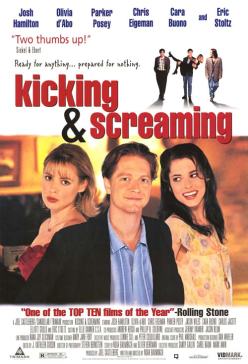
Kicking & ScreamingIn a few weeks, I will turn 22, the same age as the characters in Noah Baumbach’s “Kicking & Screaming.”  While watching the film, I couldn’t help but wonder if I was getting a glimpse of my very own future.  Hopefully I’ll get my life in a bit more order than these washed-up college grads struggling to find direction after their paths are no longer pre-ordained…

Though the movie is nearing its second decade, it does not appear to have aged at all.  “Kicking & Screaming” provides a portrait of prolonged adolescence and delayed adulthood that is both entertaining and enlightening.  It takes the cake as my “F.I.L.M. of the Week” because my identification with the film went beyond just recognizing the characters.  I think I may be these characters.

Baumbach effortlessly captures the seemingly timeless sensation of emerging from college and knowing all the ideas that changed the world yet having very few ideas of one’s own.  (Or perhaps he was just one of the first people to observe what A.O. Scott recently lamented as “The Death of Adulthood in American Culture.”)  His film is less concerned with forward plot progression as a kind of stewing yet spirited stasis, aligning rather nicely with the disposition of the characters.

“Kicking & Screaming” presents the lives of four male pals from their graduation night onward, letting us watch as they bicker pithily at each other to delude themselves of their own importance while doing relatively little with their newly printed degrees.  Sure, the sniping is quite pretentious, but at least they are educated and self-aware enough to realize that.

As they continue to interact with the milieu of their university from the perspective of a lingerer, pathetic hilarity ensues with every remark.  So long as you can find their musings palatable, “Kicking & Screaming” will have you hooting and hollering.  And perhaps you might not; it’s entirely possible that I will no longer find the film amusing if once I move beyond the current stage in my life.  But I get the sense I’ll always enjoy this movie given its sharp understanding of a very specific condition.

(And just to clear the air, this is NOT the same “Kicking and Screaming” that stars Will Ferrell, Robert Duvall, Mike Ditka, and Josh Hutcherson.  Classic mixup.)


F.I.L.M. of the Week (September 19, 2014)

19 09 2014

All About My MotherIf you’ve been paying attention to recent trends in cinema, you’ll note that this isn’t a particularly great time for women.   Oscar-nominated actress Jessica Chastain recently remarked, “the female characters, very rarely do they get to speak to another female character in a movie, and when they do it’s usually about a guy, not anything else. So they’re very male-centric, Hollywood films, in general.”

Five years after Kathryn Bigelow won Best Director, women still only direct less than 5% of studio releases and 10% of indie films.  Not to mention, they comprised only 14% of the lead roles in 2013.  And yet, women make up half the population and a slight majority of the cinematic viewing audience.  What gives?

If you are looking for a film that actually gives women the spotlight and attention they deserve, you ought to check out my pick for “F.I.L.M. of the Week,” Pedro Almodóvar’s “All About My Mother.”  This Academy Award winner for Best Foreign Language Film boasts a female-centric ensemble probing all sorts of gender issues.  Almodóvar takes the time to give each character real humanity and inner life, two things which should sadly be a no-brainer for women in film (but often are not incorporated).

If you have the chance, be sure to familiarize yourself with “All About Eve” and “A Streetcar Named Desire” before dipping your toes in “All About My Mother.”  They certainly aren’t required to understand the film, but having some knowledge of them will unlock reservoirs of meaning beneath its surface.  Almodóvar engages audiences who enter with this cultural context in a very astutely observed conversation about the ways in which we internalize meaningful works of art.

Flowing from that, “All About My Mother” mainly concerns itself with the roles females play in society.  The film follows Cecilia Roth’s Manuela, a consummate matriarch mourning the tragic loss of her only son, as she brings and holds together a group of women all struggling with gender-related issues.  Pregnancy, cross-dressing, jealousy, suspicion … you name it, this film has it.  Almodóvar expertly juggles many characters and ideas, somehow managing to never drop a single one.  The experience feels nothing short of enlightening (and even 15 years later, still needs to make its way onto some Hollywood executives’ desks).


F.I.L.M. of the Week (September 12, 2014)

12 09 2014

True Adolescents

Though the world of a great movie may feel hermetically sealed while you watch it, all sorts of factors outside of it have decided the manner in which you get to experience it.  I’ve made the argument before that the 2008 financial collapse has infiltrated the content of films, yet it probably exerted an even greater influence by limiting our access to a whole world of independently created cinema.

Back in 2009, a small dramedy by Craig Johnson called “True Adolescents” played the SXSW Film Festival.  It was well-received and went on to play some smaller local festivals, but it sat around for three years waiting for theatrical distribution.  Before the economic malaise (or even now in our platform-agnostic present day), this is the kind of film that would be a no-brainer for a company like Fox Searchlight to pick up.  Due to the unfortunate timing of its release, however, it wound up getting a minuscule release thanks to Cinedigm.

Perhaps with “The Skeleton Twins,” Johnson’s second feature which is getting a much wider rollout courtesy of Roadside Attractions, people will begin to discover the joy of which they were robbed years ago.  While the production is small-scale, the film pays off big with its richly observed script and properly defined characters.

The man-child is getting a little tired thanks to brute repetition by Seth Rogen and friends, but it feels good as new in “True Adolescents” thanks to a very authentic incarnation by Mark Duplass.  His Sam has clearly blown past the twentysomething mark and is well into his thirties, hapless and essentially hopeless.

Hoping for some easy sympathy, he goes to crash with his aunt (played by a pre-Oscar win Melissa Leo) and winds up being forced to work for her charity.  Sam gets the distinct pleasure of taking his teenage cousin Oliver and his friend Jake on a camping trip.  I’m not too far removed from that adolescent mindset to know that it takes a special kind of person to handle boys of that age; suffice to say, Sam lacks the requisite saintliness.

As with any narrative centering around a journey in the great outdoors, an inner journey takes place in the characters.  But that’s pretty much where “True Adolescents” stops falling in line with what you expect it to do.  Writer/director Craig Johnson provides a surprising amount of depth within the familiar framework, opting to explore deeper into the complex characters at every turn where melodrama or clichés would be easier.  It’s a real treat to watch him embrace the true in the title of his film rather than the latter word.


F.I.L.M. of the Week (August 22, 2014)

22 08 2014

As I said in my review of “Only Lovers Left Alive,” I have not seen enough of Jim Jarmusch’s work to make a definitive statement as to whether or not he is a great director. But I have seen Jarmusch’s 2005 Cannes prize winner “Broken Flowers,” which is enough to inform me that he has at least one great film to his name.

This dryly humorous pick for the “F.I.L.M. of the Week” is second wave Bill Murray at his best (yes, even better than “Lost in Translation“).  He seems to have reached a status where he seems to reject the need for validation through actively courting our laughs, instead just allowing the comedy arise naturally from the events.  Murrray can then just sit back, maintain a stolidly unruffled facade, and just let the bizarre run-ins of “Broken Flowers” guide his reactions.

In the film, Jarmusch casts him as an aging Don Juan – appropriately named Don Johnston – served with a letter that suggests he fathered a child 19 years prior.  Don would be content to never investigate any further, but his inquisitive neighbor Winston (Jeffrey Wright) insists that he go visit the potential mothers.  So, in a sort of inverted “Mamma Mia,” Don takes off on a series of painfully awkward encounters with former lovers.

The parade of women, including Sharon Stone, Frances Conroy, Jessica Lange, and Tilda Swinton, always entertains.  But Jarmusch isn’t just wheeling out stereotypes or stock characters.  “Broken Flowers” takes each of these women and sets them on an unpredictable but well-imagined path after their split with Don.  It can’t help but raise the question of what exactly his effect on these women was.

To say too much more of what each woman brings to the film is to spoil the fun.  But just dive head first into “Broken Flowers” for off-beat fun throughout and a startling conclusion that packs an unexpected punch.