F.I.L.M. of the Week (December 27, 2013)

27 12 2013

The year 2014 is fast approaching, which portends a myriad of things for people.  For many, it is a fresh start, a chance to renew lapsed goals and resolve to become a better person.  Yet for all of us, it is an inescapable marker of time slipping through our fingers.  For what is a year but just two signposts of elapsed time, a set of brackets to contain our ups and downs?

Mike Leigh’s “Another Year,” my pick for the final “F.I.L.M. of the Week” in 2013, looks at this widely-recognized span of time from a refreshingly realistic angle.  It’s not a tale that escalates dramatically like a conventional fictional plot.  Rather, Leigh presents four chapters – one for each season – in the lives of ordinary people going about their business.  There is not necessarily any grand significance to their trials and triumphs, but in simply recognizing these normally unrecognized moments, Leigh grants them a beautiful dignity.

To detail the occurrences of “Another Year” in any great detail would be to spoil the flow of the picture.  Like many films by Mike Leigh, it involves a large ensemble cast who are more than just actors in the movie – they are true collaborators.  Their characters drop in and out of the story with the exception of the two anchors of the film, the old married couple Tom and Gerri Hepple (Jim Broadbent and Ruth Sheen, respectively).  They are a solid bedrock for their many friends, steady and resolute from their many years of experience weathering whatever is thrown at them.

There’s no indication that the year chronicled in “Another Year” is one of any particular challenge for Tom and Gerri.  Both continue to work their jobs, tend their house, care for their grown son, and love each other.  They even manage to stay relatively unfazed by their erratic friend Mary, played by Lesley Manville in what should have been an Oscar-nominated performance. (Sadly, confusion over whether she was a leading or a supporting actress may have cost her a shot at a trophy she deserved to win.)

As she endures a particularly biting mid-life crisis with an accompanying lack of direction and self-worth, Mary provides the tension that makes “Another Year” more than just pure naturalism.  Manville is nothing short of stunning in the role, providing just about every emotion one can feel over the course of a year within the film.  Leigh closes with a long-held shot of her face, and it is truly devastating.  Not unlike the final shot of “Zero Dark Thirty,” all the action and events of the film are ultimately reflected in the face.  And in “Another Year,” the events are life itself, in all its small victories and tough disappointments.


F.I.L.M. of the Week (August 30, 2013)

30 08 2013

“Football doesn’t build character,” says Coach Bill Courtney, “it reveals it.”  It’s one of many wise maxims uttered by the sage volunteer football coach in the documentary “Undefeated,” my pick for “F.I.L.M. of the Week.”  It’s a great watch during football season, an inspiring and rousing time for everyone.

Directors Daniel Lindsay and T.J. Martin did not win the Oscar for Best Documentary Feature because they made a superb sports movie.  “Undefeated” is a football film with surprising insights that extend deceptively far beyond the field.  It’s got everything you love about “The Blind Side” without everything that I hated about “The Blind Side.”

The film brilliantly uses football to shine a light on problems plaguing inner-city communities such as this one in Memphis: poor education, lack of sufficient funding and facilities, absent fathers, and a lack of positive role models, just to name a few.  Over the course of the season, many of these issues come to a head, threatening to derail all the hard work of Manassas High’s fledgling and upstart football team.

With a quiet and understated lens, Lindsay and Martin catch Coach Courtney dealing with these the best way he knows how: with patience, understanding, and character above all.  Courtney himself grew up without the strong presence of his father, and he has chosen to pay it forward out a kind and generous heart.  It’s remarkable to see the way he and his team are able to overcome so many obstacles on the field and in their community.  Sure enough, we see all the heart and character laid bare before our eyes as promised by Courtney.


F.I.L.M. of the Week (August 23, 2013)

23 08 2013

“I let the street speak to me,” says Bill Cunningham of his work.  A fashion reporter for The New York Times, Cunningham rides his bike around the streets of the city capturing the look and feel of the moment.  His column has been a staple of the “Sunday Style” section for decades.

Richard Press’ documentary “Bill Cunningham New York,” my pick for the “F.I.L.M. of the Week,” takes a look at the man behind the byline.  As it turns out, there’s quite a story behind the octagenerian reporter never caught without his simple coat and a camera.  He’s an enigmatic figure at the Times: no one knows where he came from, but many suspect he’s from a moneyed background.  Wherever his origins are, he’s as comfortable with the world of high society as he is with the fashion of the street.

Press does a great job in his documentary of laying out the significance of Cunningham and his column.  While many people dismiss fashion, it’s undeniable that Cunningham has provided the world with a guerilla-style documentation of the way we live.  If culture expresses itself in our wardrobe, then Cunningham’s column may be a defining artifact of the times.

But as “Bill Cunningham New York” ambles on, we observe that the subject is so devoted to his job that there’s actually very little Bill Cunningham for the film to document.  He truly is his work.  That’s a frightening thought for some people; for Cunningham, however, there could be no other way of life worth living.  He has no romantic history, just a love affair with fashion and society.  And Press makes sure that we not only understand and appreciate that passion but also take away a little of it ourselves.


F.I.L.M. of the Week (August 16, 2013)

16 08 2013

As the summer begins to wrap up, it might be a good time to squeeze in a viewing of Francois Ozon’s steamy “Swimming Pool,” my selection for the “F.I.L.M. of the Week.”  While this scintillating thriller makes the most sense for a seasonal watch, I’m fully convinced it could stand up in any of the other nine months of the year.  It’s a completely engaging film with a plot that will envelop you entirely as it prepares for a killer final act.

The action begins when Charlotte Rampling’s Sarah Morton, a British mystery author beginning to hit a creative wall, settles into her boss’ French country house to get her creative juices flowing.  Just as she begins to find enough quietude in the locale to write a new book, Sarah gets an unexpected house guest: her publisher’s daughter, the young and capricious Julie (Ludivine Sagnier).  The two mix like oil and water as the crotchety Sarah refuses to entertain any of Julie’s whims.

However, as we dive deeper into “Swimming Pool,” we begin to see that Sarah is deriving a sort of perverse inspiration from Julie’s various romantic exploits.  As she begins to observe, the real-life drama begins to spill onto the page … or perhaps it’s the other way around?  Ozon throws the boundary between reality and fiction into complete question towards the film’s finale, one that leaves us reeling for days.

That conclusion would not work, though, were it not for Ozon’s tight and precise direction throughout “Swimming Pool.”  He makes every moment build tension until it bursts by the end.  It also helps that Rampling and Sagnier are quite a devious duo, playing with and off each other in brilliant ways.  Combining all their power makes for one refreshingly original and captivating thriller.


F.I.L.M. of the Week (August 9, 2013)

9 08 2013

With Amazon.com’s Jeff Bezos buying up the Washington Post this week, I felt it would be an appropriate time to revisit Andrew Rossi’s documentary “Page One: Inside the New York Times.”  The film, which takes a magnifying glass to the paper’s 2010 calendar year, is still fresh even though the news is old.  It’s packed with enough relevant and insightful discussion of the news industry in the age of Twitter that it stands as my pick of the “F.I.L.M. of the Week.”
Rossi follows the reporters and editors of The New York Times as they deal with various journalistic challenges, including Julian Assange’s WikiLeaks revelations and the bankruptcy of the Tribune media companies.  Each provide fascinating fodder for thought on the role of the press in maintaing an open society and an informed citizenry.  Rossi’s camera catches all sorts of intriguing behind-the-scenes action to give the film the pop of an “All the President’s Men” (or even 2009’s Oscar-nominated doc “The Most Dangerous Man in the World“).

But as the slogan of the film hints, “Page One” is most concerned with the state of the paper – because as we are aware, we can get the news from a whole host of sources now.  No one is more painfully aware of this than the staff of The New York Times themselves, feeling tangible effects from the digital revolution in tandem with the collapse of their old advertising model.  They show how often we take the news for granted, often times as if it were some kind of public good.

The documentary finds a fun protagonist in David Carr, the paper’s media reporter whose blunt but always intelligent observations on the state of the industry provide a firm center for the film.  He’s an unconventional reporter who took a wild journey to end up at The New York Times, but he’s also a compelling cheerleader for the necessity of conventional journalism and the integrity that comes with it.

Carr and “Page One” make me proud to spend $8 a month to gain access to the newspaper, a decision announced during the timeframe covered in the film.  While I’m sure the monetization of my support has been helpful, the battle clearly isn’t over as I get endless mailers asking me to add home delivery to my subscription package…


F.I.L.M of the Week (August 2, 2013)

2 08 2013

As soon as I tell you the plot of Lynn Shelton’s “Humpday,” my selection for the “F.I.L.M. of the Week” (First-Class, Independent Little-Known Movie), you’ll immediately jump to unfair conclusions about it. You’ll inevitably start to imagine what it must be like and decide it’s not your cup of tea. I know because I, too, judged it unfairly based on the story. But once you get past that, I promise you that it’s a fantastic and well-observed comedy that feels incredibly real.

“Humpday” is about two heterosexual male friends, one of which is married, considering making a gay porn video.

While I don’t want to say too much, don’t worry, this is NOT a pornographic movie. There’s no sex, not even artistically or obliquely done. There’s no nudity, either, because the film is not about the pornographic film industry (I’d recommend Paul Thomas Anderson’s “Boogie Nights” if you want to see that, though). “Humpday” is a movie about relationships between people and the nature of intimacy.

Old friends Ben (Mark Duplass) and Andrew (Joshua Leonard) reunite after many years and find themselves locked into a dare to film an amateur scene for an adult film festival. Neither wants to be the one that backs down, so what ensues is a series of conversations between friends and lovers about what the basis of the ties that bind them to each other.

Shelton’s film takes an unconventional approach to get to these central questions of interpersonal connections, but the result is incredibly rewarding drama and insightful wisdom. “Humpday” is all brains and heart – no skin.


F.I.L.M. of the Week (July 26, 2013)

26 07 2013

Some movies are truly once in a lifetime.  My pick for the “F.I.L.M. of the Week,” Kevin MacDonald’s singular documentary “Life in a Day,” is one such picture.  It’s a film that may actually be able to merit the term universal as it attempts to capture not one shared experience but all worldwide collective experiences using the incredible democratic medium of YouTube.  (And camera crews were dispatched to less wired-in areas of the globe, for those of you concerned about underrepresented viewpoints.)

The experiment was simple: MacDonald and producer Ridley Scott asked people to submit whatever was happening in their lives to YouTube on Saturday, July 24, 2010.  I remember the promotion of the film being all over the site and nearly filmed something myself.  But for whatever reason, I ultimately chose not to, probably out of shame or fear or uncertainty.

Thankfully, there were tons of people who did not share my reservations and were willing to let the world see a little bit of their life.  The worldwide collage that MacDonald assembles is nothing short of earth-shattering as it encompasses as close to the full range of human experience as possible in an hour and a half.  He includes the ordinary and the extraordinary, the highest peaks and the lowest valleys, the big events and the small miracles.

In this catchall of global life, we the audience are renewed by observing how we are all so alike yet also so unique and distinct  We see how the act of recording can ascribe some sort of significance to just any other day.  Yet the miracle of “Life in a Day” is the way it also convinces us that just the act of living itself is significant in and of itself, and we ought to be proud to live each and every day.  A whole world of emotions and experiences awaits us when we wake up; it’s up to us, however, to give them meaning.


F.I.L.M. of the Week (July 19, 2013)

19 07 2013

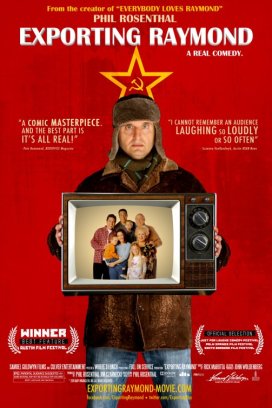
Exporting RaymondIt’s all too easy to throw around the word universal; you can look and see I’m guilty of it myself.  While a nice idea, it is a little naive to assume that there can truly be an experience that unites the entire world.  It’s an especially tempting descriptor for comedies, which often play to broadly shared feelings to illicit the desired response.
But in my pick for the “F.I.L.M. of the Week,” Phil Rosenthal’s documentary “Exporting Raymond,” we get a hilarious crash-course in how great a cultural divide can be.  Rosenthal, the creator of the hit CBS sitcom “Everybody Loves Raymond,” takes us along for the ride as he advises Russian television personnel as they struggle to adapt his show for their market.  To his surprise, more has to be changed than just the language.

As creative staff and executives prepare “Voroniny” to hit the Russian small screen, Rosenthal finds himself explaining things about Ray Barone and his family that he took for granted as just being understood.  The entire way in which Americans enact concepts of family, gender, and power are foreign to the Russians.  Rosenthal finds himself in the precarious position of trying to maintain the integrity of “Everybody Loves Raymond” without setting it up for failure in the Russian marketplace.

For those like myself who found Ray’s antics quite relatable, “Exporting Raymond” is a gentle and well-meaning reminder that our response to his character is largely conditioned by the culture in which we watch him.  Rosenthal shows us how hard intercultural communication can be, but he ultimately demonstrates how valuable the additional understanding we gain really is.


F.I.L.M. of the Week (June 21, 2013)

21 06 2013

As I’ve said, I don’t like Sofia Coppola movies.  And I think I liked “The Virgin Suicides” not because of her but in spite of her.  Perhaps because the films feels nothing like the rest of her work it’s my pick for the “F.I.L.M. of the Week.”

I’m certainly glad I held out on watching the film until I completed Jeffrey Eugenides’ novel, the source text for the film.  “The Virgin Suicides” is a richly observed tale of five sisters who each take their own lives over the course of a single year.  But it’s not from their point of view; it’s told from the perspective of their neighbors, observing their lives from a cool distance.  Specifically, it’s from the point of view of some young boys in the neighborhood who do not just watch – they peer, gaze, and spy.

Suicide becomes an excellent metaphor for the breakdown of community in modern America, a disease that grows when we place each other under a microscope.  It’s what happens when we treat the people in our lives as objects of fascination, not people.  Coppola bottles up this frustration with the suburban social dynamic and regurgitates it on screen with Eugenides’ vision totally intact.

She ultimately cannot compete with all the layers and detail of a novel, but film has never been a medium easily able to indulge in tangents and side stories.  Coppola aims to get at the feeling and mood of “The Virgin Suicides,” and she succeeds at communicating that eerie melancholy.  While we get to know the tragedy of the Lisbon sisters, we never really know anybody.  To paraphrase F. Scott Fitzgerald, we are both within and without of the story.

It turns out Sofia Coppola is actually a great narrative filmmaker, provided that narrative originally belonged to someone else.  Though “The Bling Ring” is adapted from a magazine article, so we will see if the streak continues.  But even if it doesn’t, “The Virgin Suicides” captures the improbable lightning of a novel in a succinct and memorable bottle of a film.


F.I.L.M. of the Week (June 14, 2013)

14 06 2013

Looking for the ultimate counter-programming this summer?  Heaven knows Hollywood is giving us plenty of comic book films this summer, be it a new Iron Man or a rebooted Superman.  But while those films may feature a man of steel, they certainly don’t feature a man who’s real in the same way that comic book film “American Splendor” does.

Imagine a comic book adaptation where a Woody Allen type (only with even more self-loathing) was the superhero.  Well, Paul Giamatti’s Harvey Pekar is hardly super … or a hero.  He’s just a protagonist, the main character of his life trying to live to fight another day.  Writer/directors Shari Springer Berman and Robert Pulcini find the herculean struggle in these everyday battles and draw them out in appropriately stylized ways.

Why “American Splendor” is my pick for “F.I.L.M. of the Week,” however, is not necessarily because it’s an alternative/indie comic book movie.  Make no mistake about it, this is no “Kick-Ass.”  Berman and Pulcini are incredibly dexterous filmmakers who find clever ways to blur conventional lines in cinema.  Their film is both documentary and narrative, both animated and live-action.

That’s right, the film toggles between different modes of storytelling.  If it sounds weird, it looks and feels just right.  In fact, I think it’s the only way “American Splendor” could have been adapted.  Conventional technique could never pin down such an unconventional person and character like Harvey Pekar.  The multi-pronged approach works on so many levels, all of which I won’t attempt to pin down in a brief review.

But while it experiments with the form in exciting ways, it never forgets what Harvey Pekar said so brilliantly through his “American Splendor” comics for years.  At the end of the day, it’s all about the story of life.  We all have to live it, and everyone has issues that make them want to scream.  “American Splendor,” with emotional potency to spare, makes Harvey’s journey a vivid and infinitely relatable one.  He’s the comic book protagonist we need (but probably don’t deserve).


F.I.L.M. of the Week (April 26, 2013)

26 04 2013

I’ve now (finally) caught up with David Lynch’s “Blue Velvet” and “Mulholland Dr.”  Those films have given me an idea of what the term Lynchian really means.  Yet while both of those movies have their merits, the director made an entirely different movie called “The Straight Story” that’s virtually unrecognizable in his ouvre.

I saw this simple, straightforward film at the age of 7 upon its release in 1999.  Even then, its beauty was not lost on me.  I recently watched it again only to find that my critical instincts from a very young age were completely vindicated, so I figured it would make an excellent pick for the “F.I.L.M. of the Week.”

Though it’s easy enough for a child to understand, this is a film that works for everyone ages 7 to 77.  “The Straight Story” is about family, love, and dedication at its purest.  The late Richard Farnsworth, nearing the end of his life as the movie was shot, pours his heart and soul into the role of Alvin Straight.  He’s a simple country man in deteriorating health unable to drive a car to visit his ailing and estranged brother, Lyle (Harry Dean Stanton).

But that doesn’t stop the iron-willed Alvin.  He decides to buy a tractor and drive it from his home in Iowa all the way up to Lyle in Wisconsin.  At a speed of never more than 6 miles per hour, Alvin and his trailer chug through America’s heartland.  Along the way, he meets fascinating people that give the journey a powerful emotional component.

Lynch has called “The Straight Story” his most experimental film, a strange distinction given some of the bizarre things that have happened in some of his other movies.  However, the film isn’t merely worth remembering due to the fact that the raw, unadulterated compassion is emanating from David Lynch.  It’s one of  the sweetest, most heartfelt films I’ve ever seen from any filmmaker, period.  This is the ultimate family movie, so gather everyone around the television and watch it with the whole crew.


F.I.L.M. of the Week (April 19, 2013)

19 04 2013

I’m sure when you hear the words avant-garde or experimental cinema, your first instinct is to run as far as possible in the opposite direction.  There’s no shame in that; heck, it was how I felt for a very long time.  But now I’ve realized that sometimes to find the most exciting and challenging ideas that film has to offer, you might have to venture outside of the mainstream.

That impulse was how I stumbled upon “Koyaanisqatsi,” Godfrey Reggio’s masterpiece of picture and sound that is my pick for the “F.I.L.M. of the Week.”  Over 30 years after its initial release, the film still manages to be jolting and provocative.  It asks tough questions about modern life and our relationship to nature, suggesting that perhaps we are living out the translation of the title: life out of balance.

It engages the audience in this conversation, however, without saying a single word.  No title cards either until the ending credits.  So it’s even more silent than a Chaplin film like “Modern Times” or 2011’s “The Artist.”  Don’t be daunted though!  It’s not hard to pull meaning from this film.

The images are tremendously powerful, speaking volumes in the absence of dialogue.  Yes, that means you can’t text and watch “Koyaanisqatsi.”  But with all that extra attention that has to be paid, just think of all you can observe.  I highly recommend just sitting back and letting the film wash over you like a perfume.  Look at the beauty and simplicity of the natural world … and then contrast it with the hectic industrial and urban world.  Watch how they are different, and yet somehow similar.  See how “balance” was constructed in 1983 … and marvel at how we still grapple with the same issues.


F.I.L.M. of the Week (January 18, 2013)

18 01 2013

When you think of the films of Spike Lee, I can imagine some of the things that come to mind are didactic, pugnacious, and aggressive political commentary.  In other words, you would think of a movie that looks nothing like “Inside Man,” a tight thriller about the perfect bank robbery.  But precisely because it resists the trappings of a typical Spike Lee movie, it’s my pick for the “F.I.L.M. of the Week.”  (And also because it’s an AWESOME movie!)

You’ve seen plenty of movies about bank robbers, but none quite like Clive Owen’s Dalton Russell.  He’s got a master plan to pull off the perfect heist, one that slowly and cryptically unveils itself in Spike Lee’s film.  Russell is interested in more than just getting quickly in and out with the money; he’s willing to play the long game with the police and the hostages in unconventional ways.  The tension is high as you wait to see when, if ever, his master plan will unravel.

Remarkably, it manages to hold up as some curious players with some very powerful ulterior motives enter the fray.  Namely, there’s the wild-card of Jodie Foster’s power broker tampering with everything she can to keep some secrets hidden inside the bank.  With so many people operating in the shadows and shades of grey, it makes the the quest of the righteous Detective Keith Frazier (Denzel Washington) all the more urgent and compelling.

There’s rarely a dull moment in “Inside Man,” and Lee manages to pull it off without ever needing to pull out a boombox and blare “Fight the Power.”  There’s a little bit of commentary on multiculturalism in New York, but it’s hands-off and not particularly distracting from the point of the film.  Which is, of course, to entertain for two hours and then yank the rug out from underneath the audience.


F.I.L.M. of the Week (January 11, 2013)

11 01 2013

Melquiades Estrada

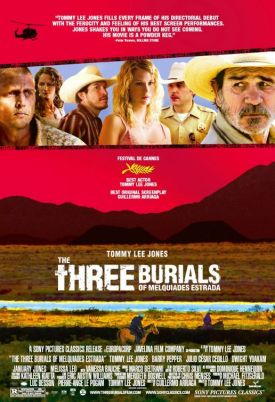
Most people recognize Tommy Lee Jones’ calling as an actor.  The Academy sure does, giving him one Oscar in 1993 for “The Fugitive” and a chance at another one in 2012 for “Lincoln.”  But what few people know is that if Jones gave up his day job and took up directing full-time, he would be incredibly successful.

Just take a look at his debut feature, “The Three Burials of Meliquiades Estrada,” and tell me the man does not have serious talent.  While I was watching it, I kept thinking about all the reasons why I shouldn’t like it or that it shouldn’t be working.  But it did, and for that very reason, it’s my pick for the “F.I.L.M. of the Week.”

Jones’ film is based in a strong script from Guillermo Arriaga, one full of tenderness and deliberation.  And perhaps the best sign of a good director is to let the story shine brightly and take precedence.  Though maybe Jones’ style isn’t flashy, the appropriately ambling pace and quaintness of “The Three Burials of Melquiades Estrada” feels like just the right fit.

Jones also lends his acting talents to the film, bringing the movie an undeniable sense of Texas gallantry and steadfastness.  As Pete Perkins, a noble ranch hand, he goes to whatever means necessary to ensure that his friend Melquiades Estrada gets a proper burial.  It takes him across the border, crosses his paths with various interesting people, and entangles complicated alliances.  But he will keep his word to Melquiades at all costs.

He also manages to get fine performances out of his cast, which includes a very physically committed Barry Pepper along with January Jones and Melissa Leo well before they were mainstream names.  But the real triumph of “The Three Burials of Melquiades Estrada” is, well, Tommy Lee Jones himself.  He makes the film feel so natural and easygoing, almost as if every other movie is a NASCAR racer and his is a horse clipping along.  It’s that kind of brilliant direction where you almost think the film is directing itself.  Pretty impressive for a first film.


F.I.L.M. of the Week (January 4, 2013)

4 01 2013

The recession has manifest itself in many obvious ways in American cinema.  There has been the vilification of the rich in movies like “Arbitrage” and “Wall Street: Money Never Sleeps,” excoriation of big business excess in “Tower Heist” and “Margin Call,” and glorification of the average joe worker-bee in “Win Win” and “The Company Men.”

Though “Take Shelter”, my pick for the “F.I.L.M. of the Week,” does not indulge in direct tapping of the zeitgeist, perhaps it best embodies it.  In a statement posted on the film’s website, director Jeff Nichols wrote:

“I believed there was a feeling out in the world that was palpable. It was an anxiety that was very real in my life, and I had the notion it was very real in the lives of other Americans as well as other people around the world.”

This brilliant realization of such post-recessional anxieties has made his “Take Shelter” a superb film that plays timely now but I suspect will ring timeless in the future.

“Take Shelter” opens with its protagonist, Curtis, experiencing a rain of motor oil.  This is quickly revealed to be a hallucination, but it feels like a very real way to bring some internal storms to expressionistic life.  The movie’s magical realism is a perfect compliment to the beguiling veracity of Michael Shannon’s performance as Curtis, a man who puts on a brave face for his family in tough times but ultimately struggles with some very deep demons.

As these apocalyptic delusions get worse, Curtis becomes a sort of modern-day Noah (nothing like Steve Carell’s hokey character in “Evan Almighty,” I’ll have you know).  He quietly sets out to protect his wife and daughter from a cataclysmic event that apparently only he is able to recognize on the horizon.  This tension builds until he ultimately explodes in a fit of rage directed towards a community that doesn’t understand his worries.  In the hands of Shannon, these harbingers of doom sound completely righteous, almost like the words of a prophet.

Grounding the film in an unfair and unkind reality, on the other hand, is Jessica Chastain as Curtis’ loving wife Samantha.  She plays a very different kind of Madonna than her mother in “The Tree of Life,” one fiercely committed to the safety and stability of her family and doesn’t hesitate to fight for it.  She’s the heart and soul of “Take Shelter,” trying to work through Curtis’ torments with patience and level-headedness.  Sweet as can be, it really makes an impact when she snaps after Curtis puts a preventative tornado shelter in their backyard above their own daughter’s health.

All the while, Nichols punctuates the superb performances of Shannon and Chastain with sporadic bursts of nightmarish imagery.  Whether it’s a biting dog, masses of birds, or the mysterious motor oil, Nichols sets the mood for a constantly shape-shifting modern American anxiety.  No matter who watches this and when they watch it, I believe they will find something floating in the ambience of “Take Shelter” that will accurately represent their inner fears.