REVIEW: Spotlight

22 11 2015

SpotlightMany a procedural, be it “Zodiac” or “Zero Dark Thirty,” has created suspense by following a straight, chronological line towards its ultimate result or finding. Tom McCarthy’s “Spotlight,” a story of the Boston Globe‘s uncovering of widespread sexual abuse within the Catholic Church, takes a slightly different approach to achieve a similar goal. His screenplay, co-written with Josh Singer, treats the journalistic investigation like solving a Rubik’s Cube.

In order to understand the magnitude of the discovery made by the Spotlight team, a four-person squad of the Globe‘s finest inquirers, it is crucial to grasp just how complex and intertwined all the key players were. The molestation was committed by over eighty priests in the Boston area, which alone is a staggering and abhorrent finding. But the complex web of officials in the church, in the government and in the community who enabled the abuse and remained complicit in their silence makes for the real story. Not even the press, celebrated as it is in the film, gets off without a slap on the wrist.

“Spotlight” respects the work of the team enough not to simplify their work into a simplified narrative. It feels effortless to watch and manageable to comprehend since McCarthy directs the proceedings with great agility, pivoting from one strand of thought to another without ever causing motion sickness. Perhaps only when the film nears its foregone conclusion, the publication of the earth-shattering article, do we fully realize just how many crossed wires they had to untangle.

Read the rest of this entry »


REVIEW: Secret in Their Eyes

21 11 2015

Remaking a movie from another language requires more than just translating the dialogue. When done right, a complex series of subtle changes must take place to transplant the story across cultures.

Secret in Their Eyes,” a remake of the 2009 Argentinian film of the same (sans definite article), moves an intriguing thriller from 1970s Buenos Aires to 2000s Los Angeles. Naturally, that country’s “Dirty War” of state terrorism, which provides the setting for the original film, must be changed as America has no such equivalent. The closest equivalent that writer/director Billy Ray finds? Post-9/11 terrorism.

Yawn.

Juan José Campanella’s film dealt with tragedies that his country was still reluctant to acknowledge. Billy Ray milks the nation’s public anguish of this millennia for lazy dramatic stakes. Drawing parallels between the two changes the very nature of the story from a politically-tinged thriller to something that amounts to little more than a feature-length episode of a serialized crime drama.

Not even the talented cast of Chiwetel Ejiofor, Nicole Kidman and Julia Roberts can elevate the material back to the level of its Oscar-winning source. Ray’s script, which cuts between a murder in 2002 and its continuing aftermath in 2015, intertwines its threads to such clunky effect that “Secret in Their Eyes” never has a chance to gain any momentum. He favors big, explosive moments from his actors as opposed to giving them rich, internal characters to work with on the page.

We know from films like “12 Years a Slave” that Ejiofor is capable of communicating so much with just his eyes, yet his tortured protagonist Ray from “Secret in Their Eyes” never gets the chance to draw us into his pain. He’s a counterterrorism agent with a crush on one colleague, Nicole Kidman’s Claire, and a friendly working relationship with another, Julia Roberts’ Jess. When a routine check on a body turns out to be Jess’ daughter, the boundaries between protecting the country and pursuing justice get rather murky.

The occasional ethical question about the merits of retribution gets raised here and there, but it’s usually forgone for yet another opportunity to watch Roberts hysterically contort her face. C+2stars


REVIEW: The Hunger Games: Mockingjay – Part 2

20 11 2015

Much like the “Harry Potter” series, the final installment of “The Hunger Games” departs radically from the formula of all entries that came prior. “Mockingjay – Part 2” does not actually feature the Hunger Games themselves, the main event that involves children killing children to placate the masses of a dystopian future. Without this intense action set piece to which the story can build, everything else cannot help but feel like a bit of a letdown.

“Mockingjay,” for many fans of the series, represented the least of Suzanne Collins’ books. So, in a sense, it is not terribly surprising that “The Hunger Games: Mockingjay – Part 2” ends on a similarly underwhelming note. But even that is unlikely to put a damper on what will surely be one of the highest grossing films of the year; the four-year relationship Jennifer Lawrence built between viewers and her Katniss Everdeen is truly remarkable.

Without the games, “Mockingjay – Part 2” seems rather confused as to what kind of movie it wants to be. Some aspects of political semantic games and propaganda messaging remain from Part 1, primarily at the outset. These leftovers just further serve to reinforce the sense that a two-part finale was an unnecessary protraction of events.

Read the rest of this entry »


F.I.L.M. of the Week (November 19, 2015)

19 11 2015

Jack Goes BoatingAs I watched the climax of “The Hunger Games” series, my mind drifted away from the action on screen thanks to the presence of a fairly blatantly digitized Philip Seymour Hoffman. The resemblance was uncanny, sure, but everything about his facial expressions and mannerisms were wrong.

These pixels, as directed by someone behind a computer, went for obvious. Hoffman never went for what was expected. He always mined the ugliest parts of the soul and dredged up compellingly raw responses.

It’s a pity that he only got one chance to step behind the camera because it really showed a more sensitive, tender side than we ever saw from him. “Jack Goes Boating,” the directorial debut of Philip Seymour Hoffman, is a film of simplicity. Yet in the absence of complication comes a rushing of heart in this wonderfully touching love story.

Hoffman stars as Jack, a socially awkward but good-natured limousine driver. He’s not necessarily looking for romance, but his co-worker Clyde (John Ortiz) tries to set him up with someone. That person is Amy Ryan’s Connie, a similarly sweet woman who stands as her own greatest obstacle. (Meanwhile, little does Clyde know that trying to facilitate one relationship will put the one with his wife under duress.)

Don’t expect fireworks or cinematic bravura from “Jack Goes Boating,” but anticipate feeling unexpectedly moved as these two battered souls make their best attempt at love. Hoffman and Ryan are wholly affecting as they struggle to overcome their own personalities to make the impression and connection they so desire. It’s a real shame we did not get to see more of this vulnerable, lovable and embraceable Philip Seymour Hoffman in his all too brief lifetime.


REVIEW: Brooklyn

18 11 2015

BrooklynSincerity has gone out of style in the world of adult filmmaking, perhaps as a sort of defense mechanism against the ever encroaching threat of extinction. (That’s just speculation on my part, though.) So it always feels refreshing when a film like “Brooklyn,” triumphant in its emotionality and lack of irony, manages to break through the cracks. The film’s combination of a pure heart and gorgeous craftsmanship produces an experience that lifts the soul.

Director John Crowley takes an unabashedly classical approach to telling the story of Saoirse Ronan’s Eilis, an Irish immigrant to New York in the 1950s. “Brooklyn” may look and feel like a film made in that time period, but it never falls back on retrograde worldviews or attitudes. Screenwriter Nick Hornby simply takes Colm Tóibín’s novel and allows it to soar as a tender tale of a young woman finding her voice and her home – two things with obvious relevance today.

Eilis leaves behind her widowed mother and unmarried older sister in small town Ireland not out of any great desire to start a new life. In fact, the arrangements for her to live and work in the heavily Irish concentrated Brooklyn get made almost entirely by others. Faced with the choice between an unsatisfying present and an uncertain future, Eilis lets her family nudge her towards taking the fork in the road.

Read the rest of this entry »


REVIEW: Room

17 11 2015

It’s easy to think the most impressive cinematic achievements are the ones that transport us to new worlds of an artist’s creation. (Case in point: “Star Wars.”) But there is something to be said for those films that can take the familiar and make it feel new and radically different. I speak not of freshly presenting plot points but rather an entire way of seeing, and Lenny Abrahamson’s “Room” achieves such a feat.

The film assumes the perspective of five-year-old Jack (Jacob Tremblay) as he gains self-awareness of his place in the world. Problem is, that world is extremely socially constructed by his mother, Brie Larson’s “Ma.” She, assumed disappeared and dead, is held captive inside a shed by a vile man who eventually impregnates her. Rather than explain their dire situation to Jack, Ma decides to teach him that their room is the entirety of the world.

The tiny space, instead of feeling claustrophobic, seems limitless when filtered through a childlike curiosity and innocence. As he begins to make sense of the world around him, it inspires us to think deeply about the small assumptions make about our surroundings on a daily basis.

Emma Donoghue adapted “Room” from her own novel of the same name, and it is told by Jack in the first person. For over 300 pages, the depth and breadth of his observational eye forges quite the bond between reader and character over time. In a way, it almost does not feel fair to expect a movie to match that scope in just two short hours. Abrahamson and Donoghue do a wonderful job translating the story to the screen, though something may feel lost – or at least somewhat less substantial – to those who know the book.

Even so, everyone should expect to be bowled over by stunning performances from Tremblay and Larson. The way each struggles to assert the primacy of their own needs while caring for the other proves compelling and often gut-wrenching. This is particularly true for Larson’s Ma, who has no choice but to wrestle with the darkest of her feelings and impulse in captivity. After five years of such intensive, performative positivity, living an untruth takes its toll. “Room” celebrates when her selflessness wins out but never judges her for needing some personal space – a tricky balance beautifully managed by all involved. B+3stars


REVIEW: Truth

16 11 2015

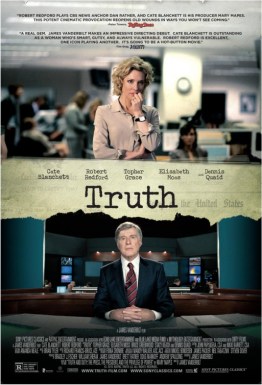
TruthHere’s something that generally serves as harbinger for an undeveloped movie: if a movie has to say its title multiple times to continually telegraph its themes. Bonus points if said theme is also the film’s title.
Truth” is obsessed with, well, the truth and asking questions as it pertains to journalistic inquiry. James Vanderbilt’s film follows a “60 Minutes” squad led by Cate Blanchett’s Mary Mapes as they dig deeper into then-President George W. Bush’s dubious military record. Their investigation appears to uncover preferential treatment that kept him out of Vietnam.

However, that finding comes under intense scrutiny after a document’s authenticity cannot be proven. The fallout ultimately claims the position of longtime CBS evening news anchor Dan Rather, played unconvincingly by the great Robert Redford. Needless to say, this is pretty much a nightmare for the newsroom, yet somehow writer/director Vanderbilt tries to spin some shades of gray from it.

The argument, so it seems, is that Bush somehow deserved to be caught and that Mapes had every right to question him without airtight facts. I can only assume he wagers that the world would be better had Bush not been re-elected, journalistic ethics be damned. He has an “All the President’s Men”-level faith in the power of reporters to bring down a president with none of the respect for the rigorous procedures that allow them to speak truth to power.

What could have been a cautionary tale about confirmation bias – the interpretation of information to suit the narrative in one’s head – essentially just tries to turn Mapes into some kind of martyr. Blanchett does her best to sell this angle, mixing and matching elements from her performances in “Blue Jasmine” and “Notes on a Scandal” to make it work. But even she cannot transcend the victimization complex that plagues her character on the page, so the net result of “Truth” ends up being negative for the fourth estate. B-2stars


REVIEW: Spectre

15 11 2015

Sam Mendes made a great Bond film with writers John Logan, Neal Purvis, and Robert Wade in “Skyfall” because they embraced a tricky opposition between the past and the future.  Could the unabashedly old-fashioned spy James Bond survive in a more gritty, grey world without sacrificing his core identity? They found that the answer was yes by striking a balance between these two forces vying for the soul of 007.

The band gets back together for “Spectre” (plus an additional writer in Jez Butterworth, architect of many a frustrating script in the past two years) and finds themselves preoccupied by the same kind of debate. This time, instead of the fear of age leading to obsolescence, the anxiety stems from post-Snowden malaise.

When a government has the ability to do its dirty work with drones and collect information on all its citizens through their devices, who needs human intelligence likes James Bond? This question is being seriously debated outside the world of the movie, and kudos to “Spectre” for not ignoring the elephant in the room. But the way Mendes and the writers choose to resolve the tension feels rather disappointing.

They use this threat as an excuse to retreat to some of the most outdated aspects of the character. Womanizing abounds as Bond pity romances a grieving widow to extract a key plot point. And Bond’s reward for neutralizing a key opponent? The “Bond girl,” Lea Seydoux’s Madeleine Swann, immediately feels the need to let him take her to bed. Simply put, there is a way to let James Bond be the ultimate man that does not require denying women agency. “Spectre” does not care to find that way as “Casino Royale” did, justifying lazy misogyny because of a rather facile challenge to Bond’s relevancy.

Read the rest of this entry »


REVIEW: Burnt

14 11 2015

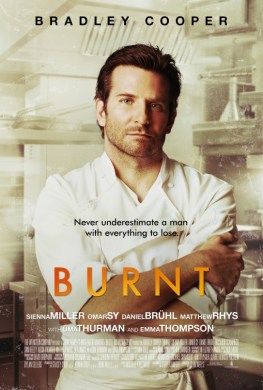
BurntBradley Cooper is among the most interesting American actors working today, so it’s a shame that he chose such an uninteresting project like “Burnt” at perhaps the apex of his stardom. For the man who was a crucial part in powering the first non-tentpole film to the top of the yearly box office since 1998, such a conventional tale told with little panache cannot help but disappoint.
That’s not to say that “Burnt” is empty of any merit or entertainment, though. In fact, it plays at around the same register as “Aloha,” Cooper’s unfairly savaged starring vehicle from earlier in 2015. John Wells’ film and Steven Knight’s script produce modest results from a modest effort, where Cameron Crowe went all out only to wind up with a mixed bag of failures and successes. Either way, the fact that Bradley Cooper can emerge from these two movies untarnished by their narrative struggles further attests to his place in the pantheon of his generation’s finest actors.

Perhaps someone could psychoanalyze Bradley Cooper to determine what keeps bringing him back to these stories of redemption. In 2005, he starred in an ill-fated TV comedy called “Kitchen Confidential” as a star chef seeking a comeback after personal issues put his career in jeopardy. In 2012, he changed the way most audiences in “Silver Linings Playbook” as Pat Solitano, a bipolar man seeking to put his life back together after a meltdown gets him institutionalized.

Four Oscar nominations later, in 2015, Cooper still seems to feel some need to prove himself through the character of Adam Jones in “Burnt,” a chef seeking a coveted third Michelin star in London after drug and alcohol abuse wrecked his last restaurant. (Sound familiar?) Jones is loud, brash and kind of a nightmare to handle. But he swaggers about with such authority that a crack team of cooks with global roots lines up to endure his abuse and work with him.

Read the rest of this entry »


REVIEW: Meet the Patels

13 11 2015

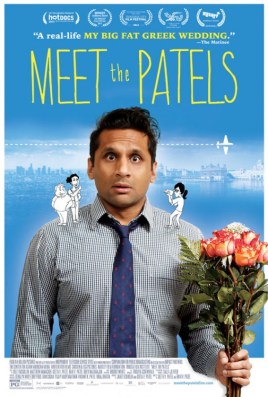
Meet the PatelsIf someone were to cross the cross-cultural outlandish humor of “My Big Fat Greek Wedding” with the sociological insight of Aziz Ansari’s book “Modern Romance,” it would probably look a lot like the documentary “Meet the Patels.” This real-life tale of alternatively bristling with and embracing Indian marriage traditions, shot like the wackiest home movie ever, proves every bit as enlightening as it is entertaining.

I’m not sure what prompted Geeta Patel to pick up the camera and start recording her brother Ravi’s quest for lifelong companionship, but I am certainly glad the two collaborated to make this endearing chronicle of romance. The film begins with Ravi reeling from a breakup with a red-haired white girl, a two-year relationship he managed to keep entirely secret from his conservative Indian parents. Pushing 30 with no prospects of marriage in the traditional Western fashion, Ravi decides to embrace the means that brought his parents together.

For anyone who thinks the idea of an “arranged marriage” sounds like something barbaric out of a corny princess movie, I dare you to watch “Meet the Patels” with an open mind. Then, try telling me the system doesn’t sound more effective than the no strings attached, no labels, swipe right or Netflix and chill methods favored by many these days as a means of starting a relationship. Gone are the days of meeting your betrothed 15 minutes before exchanging vows; instead, in the United States, an intensive network of like-minded Indian singles attempts to find compatibility for life.

The process turns out to be quite frustrating and nerve-wracking for Ravi, although it is fun and thought-provoking to watch from the other side of the camera. (Geeta certain has a lot of fun, that’s for sure!) The candor and honesty with which “Meet the Patels” portrays relationships, both romantic and familial, makes it truly moving to watch unfold. It is not dependent on reality for its effectiveness, but it certainly helps that we have actual stakes for which to cheer.

And best of all, it might even encourage you to live and communicate more transparently with your own loved ones. That’s certainly how I felt, at least. A-3halfstars


F.I.L.M. of the Week (November 12, 2015)

12 11 2015

Boy AWe still live in a time where deeply internal, emotional performances from male screen actors are rare – especially from younger ones. Perhaps because most major roles for men are written with external, goal-driven motivations as opposed to looking within, the smart career move is to position oneself for those. But every once in a while, a miraculous turn appears.
Such is the case with “Boy A,” which features a young Andrew Garfield at his most sensitive and powerful. Before he became a household name in films like “The Social Network” and “The Amazing Spider-Man,” Garfield got a chance to get in touch with a side of himself that is seldom seen from men these days. His contemplative performance, nestled within a story that asks tough moral questions, makes this an obvious choice for my “F.I.L.M. of the Week.”

I must admit, I tried to watch “Boy A” a few years ago and turned it off after about 20 minutes. I don’t know what changed from then to now, but I am so glad I gave it a second chance. From its opening moments, I found myself riveted and drawn into the headspace of Garfield’s character, Jack Burridge. Initially, we do not quite understand why he seems unable to supersede the guilt and shame that plagues him. But we can sense the weight of the past in Jack’s every word and action, burdening him so heavily that he cannot move forward into the future.

“Boy A” doles out the specifics of Jack’s situation in a very deliberate manner. We know that he has just been released from some sort of facility and a new identity to become a productive member of society. Some flashbacks to Jack’s childhood are intercut into the action, though they pale in comparison to the information we get just from looking at his face in the present day. The raw emotion captured by director John Crowley proves nothing short of gut-wrenching to watch play out. Jack is clearly a tender, wounded soul, yet he struggles to believe he is worthy of redemption. We, the viewers, feel no such ambiguity after observing just how poignantly Garfield bares his vulnerabilities before us.


REVIEW: Tomorrowland

11 11 2015

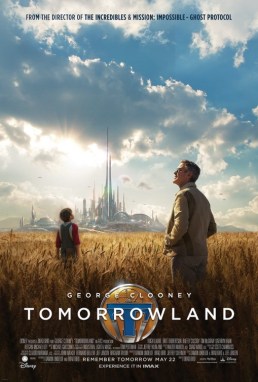
TomorrowlandDisney’s expensive attempt at an experiment, “Tomorrowland,” begins with a rather preposterous proposition: the company has some kind of monopoly on optimism and innovation. The takeaway is, essentially, you’re an earth-hating pessimist unless you chant “It’s a Small World After All” in your sleep. (I’ll only make a parenthetical note here that the Futurist art movement inspired Benito Mussolini and the Fascists in Italy.)
The relentless attempts of co-writer/director Brad Bird, as well as his fellow scribes Damon Lindelof and Jeff Jensen, to associate hope and positivity with the Disney brand makes the experience feel like enduring a two hour infomercial. Or like a feature-length entrance video at a Disney theme park. Fashionable thought it may be to bash the gloominess of the present day, such a simple-minded response to the challenges we face only makes those hurdles appear more imposing.

Even when putting this distressing ideology at bay, “Tomorrowland” still proves a dull, uninspiring experience. The two plus hours revolve around the teenage Casey Newton (Britt Robertson) as a pin leads her on an adventure that takes her to a different dimension with George Clooney’s curmudgeonly inventor Frank Walker. This separate space, known as Tomorrowland, exists as a haven for intellectuals to escape the growing chaos of the world.

Naturally, a discussion of the merits and downfalls of Golden Age Thinking ensues, but it feels entirely unconvincing and disingenuous. This propaganda piece of shameless branding offers a Disney answer, not a real one. C2stars


REVIEW: Suffragette

9 11 2015

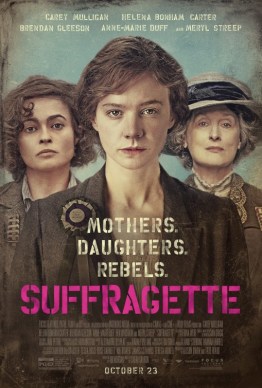
SuffragetteSuffragette” feels somewhat like the cinema’s equivalent of getting a flu shot. It’s a necessary boost of social consciousness that is good for the way it keeps the world honest. But is it fun or enjoyable, something worth looking forward to? Ehh.

Sarah Gavron’s direction gives some urgency to the century-old tale of British women gaining the right to vote that might otherwise reek of mothballs. The film does not need its scrolling list of dates for women’s suffrage worldwide before the credits to convey this. Good filmmaking renders fact recitation dull at worst, unnecessary at best.

Though Gavron’s frequent use of shaky-camera as a shorthand for intense moment is rather uninspired, “Suffragette” feels appropriately militaristic and angry given its subject. She conveys this most effectively when Abi Morgan’s script focuses on the women’s suffrage movement and the splintering divisions within its ranks. Some prefer a more aggressive, confrontational approach; others, however, support playing the politics of respectability to eventually curry enough favor for their right to vote.

Thankfully, the world seems in agreement that women should have the right to determine their own destiny by casting a vote at the ballot box. Yet these sections that specifically examine the challenges of organizing social action prove so compelling because they are applicable to plenty of modern movements, be it LGBTQ rights, Occupy Wall Street, or Black Lives Matter. At times, “Suffragette” even recalls “Selma” in the way it presents a fascinatingly nuanced but generalizable portrayal of organizing collective civil disobedience.

Read the rest of this entry »


REVIEW: The Peanuts Movie

8 11 2015

Long before anyone ever talked of “spirit animals,” Charlie Brown from the “Peanuts” comic strip got me. He serves as a walking disproof of the maxim of the great philosopher Jagger, “You can’t always get what you want, but if you try sometime, you just might get what you need.” For someone like me, who seems to have never left their teenage clumsy phase in many ways, his resilience in the face of consistent belly-flops in the arena of life has always been somewhat inspiring.

Though the Peanuts gang has never left the funnies page of the newspaper and still remains present in popular culture, “The Peanuts Movie” ensures that they will not fade to relic status anytime soon. I had strong reservations when Fox announced that the BlueSky animation team would adapt the comics into CGI, yet the way they capture the essence of Charles Schulz’ squiggles with the latest technology actually proves quite fun to watch. The whole movie, directed by Steve Martino, manages that tricky balance between appealing to the old guard of fans while extending a welcome to the new generation.

Unlike a Pixar outing, which plays differently for children and adults, “The Peanuts Movie” works for kids and kids at heart. The film packs a wealth of wisdom with its simplicity of spirit, embracing the old-fashioned charm with little modification. In fact, the movie unabashedly pilfers a number of moments straight from the Peanuts holiday specials. Yet somehow, the joy of watching Linus fend off Sally Brown’s advances, Lucy bossily fume, or Schroeder professing his admiration for Beethoven is not dampened by the familiarity.

The film gets a narrative throughline courtesy of Charlie Brown trying to win over a new girl at school, conveniently named The Little Red-Haired Girl. (Wasn’t kidding about it being old-fashioned.) We all know he has what it takes to impress her, so long as he can get out of his own way … a task easier said than done for Charlie Brown. The missteps and unlucky breaks come fast and furious for our embattled hero, with each one further gaining our sympathy.

Ultimately, Charlie Brown’s tribulations reaffirm the values of dignity and self-esteem in spite of tremendous challenges. This lesson might not be novel, but it will never go out of style.  B+3stars


REVIEW: Batkid Begins

28 10 2015

Batkid BeginsIf your memory of inspirational Internet stories only extends as far as the last Upworthy story your random high school acquaintance shared on Facebook, the documentary “Batkid Begins” will make sure you never forget the ultimate triumph of our connected world.  For one day, everyone united for good in order to fulfill the wish of a 5-year-old leukemia survivor, Miles Scott. That wish, of course, was to be Batman and save his city.

Director Dana Nachman takes us behind the scenes into how it all happened, from the first interview with the Make-a-Wish Foundation to a minute-by-minute account of the day “Batkid” saved San Francisco Gotham City. It’s nothing short of astounding to see the way Miles’ story strikes a chord with people across the world. From President Obama chiming in on Twitter, retirees flying in from Ohio to volunteer, or good-hearted fans across the world sending in fan mail, Batkid seemed to redeem a small portion of humanity by fulfilling a wish to get back a little bit of the childhood that cancer took away from him.

Admittedly, the documentary does play somewhat like a glorified promo video for Make-a-Wish. But given how committed they were to achieving this desire for such a nobel cause, how could anyone portray these overachievers as anything other than great humanitarians? Unabashedly extolling the virtuous side of our souls feels entirely appropriate in “Batkid Begins.”

Perhaps most impressively, Nachman avoids any maudlin or weepy moments. This is a celebration of life, after all! Who knows if we can expect the same from the Julia Roberts fictional remake in the works.  B+3stars