REVIEW: Tammy

12 07 2014

With their collaboration on “Tammy,” writer/star Melissa McCarthy and writer/director Ben Falcone construct what may very well be the cinematic equivalent of Sarah Palin’s infamous “bridge to nowhere.”  It’s a film about a road trip to nowhere that gets everyone involved in its making nowhere.

Coming off an Oscar nomination and three box office hits, it’s a shame McCarthy spent what was likely carte blanche with the studios on a project that offers nothing new for her talents.  Even though she was so heavily involved with the film’s creation, “Tammy” offers little humor other than jokes at the expense of her character’s weight or lacking mental capacity.  It’s almost as if she wants the two characteristics to be linked, which baffles me.

Was the point is to prove that McCarthy can play the woman-child archetype as well as, say, Vince Vaughn can play the man-child?  Or that a character like McCarthy’s Tammy can pull in a romantic conquest in spite of her figure and eccentric personality?  I could maybe see “Tammy” sounding like a great feminist victory in its premise, yet in execution, the movie is every bit as bumbling as its titular character.  If McCarthy really wanted to do something radical, she should have made a film where her figure was never addressed at all.

Over the course of 96 minutes (that feel much longer), Falcone and McCarthy give us a whole lot of time on the road with Tammy and her grandmother Pearl, an alcoholic played by Susan Sarandon.  Tammy and Pearl don’t quite have any grand purpose to be road tripping in the first place other than … well, something had to give “Tammy” a plot!

The quite-literal journey in the story is the perfect opportunity to explore a similar progression in the protagonist, but they can never quite figure out what virtues or values Tammy is going to discover.  The film toys with the idea of her gaining self-appreciation while also contemplating a familial love angle, never taking the time to fully develop one or the other.  It ultimately slaps on an ending favoring a rediscovered bond between its two female leads, and the conclusion feels rather unearned.

That’s not to say that McCarthy did not earn the opportunity to make “Tammy,” though.  The fact that this is film she chose to make from that position, however, is likely to remain a question mark for the rest of her career.  C-1halfstars


REVIEW: Dawn of the Planet of the Apes

11 07 2014

Dawn of ApesThe dominant attitude that seems to prevail when making sequels is to give people more of the same.  If it functioned well enough the first time to justify a second helping, something had to be working, right?

Matt Reeves’ “Dawn of the Planet of the Apes,” on the other hand, completely defies the logic.  While Rupert Wyatt’s 2011 series reboot “Rise of the Planet of the Apes” focused on scientific ethics and human progress, its follow-up goes in a completely different direction.  If it weren’t for the astonishing motion-capture apes, the casual onlooker might not even be able to pair the films in the same series.

I must applaud Fox, the studio willing to front the $170 million budget, for allowing a new director to take one of their most vital franchises into uncharted territory.  Reeves uses no marquee names (unless you count Gary Oldman), focuses mainly on the apes, and never caves to a large-scale battle that could level an entire urban area.  That was likely not an immediately confidence-inspiring vision, especially given the tepid commercial reception to Reeves’ 2010 arty horror film “Let Me In.”

But “Dawn” works so well because it does not feel tethered to anyone’s agenda other than that of its creative team.  The film has the ability to explore what the series can be as opposed to how much it can stretch what it already is.  Reeves makes some exciting discoveries with this freedom that further energize what was already a fascinating franchise.  He leaves us excited for whatever sequel may follow, despite leaving no obvious indications of what the next film might entail.

Read the rest of this entry »


F.I.L.M. of the Week (July 11, 2014)

11 07 2014

Gimme the Loot

I saw plenty of crap on the Croisette back in 2012, mainly because I was so obsessed with seeing hyped Cannes official competition titles like “On the Road” and “Cosmopolis.”  Not only did those turn out to be duds, but the time I spent trying to see them precluded me from finding smaller gems at the festival.  Had I been smart, I would have sought out a film like “Gimme the Loot,” Adam Leon’s feature debut that percolates with an exciting energy.

This pick for “F.I.L.M. of the Week” (for those who might have forgotten, that’s First-Class, Independent Little-Known Movie) announces the arrival of a fresh new voice in cinema.  Leon, in just 75 minutes, crafts an engaging film that tells a more complete narrative than some films twice its length.  (Cough, “Django Unchained.”)

Leon also looks at New York, quickly becoming the hipster capital of indie cinema, from an invigoratingly different perspective – that of two teenaged graffiti artists.  “Exit Through the Gift Shop” this is not, though.  Out to prove they can accomplish the mythical feat of “bombing,” or tagging with graffiti, the big apple at Shea Stadium, Malcolm (Ty Hickson) and Sophia (Tashiana Washington) scour across the city to procure the necessary funds to gain the access they need.

Their quest takes them head to head with rivals, awkwardly phoning in old debts, and trying to swindle clueless upper-class whites.  Malcolm and Sophia split up for a good chunk of the film, but the joys of “Gimme the Loot” come from watching their interactions.  Hickson and Washington set up such a fun, interesting dynamic between their characters that feels nothing less than authentic.  The friendship is so believable that they might as well be siblings, bluntly bickering from a place of deep love.

Leon allows the film to play to the strength of his performers, yet it still reflects his prowess as a filmmaker.  It highlights a class and race divide in New York City without ever being preachy … or without really even calling attention to itself.  When it comes to cinematic treats, this is one sweet loot.


REVIEW: Life Itself

10 07 2014

Life ItselfFilm critic Roger Ebert inspired many people and touched countless lives, ranging from saving Martin Scorsese from self-implosion to many much smaller-scale interactions.  One such example is a brief response to a blog comment he made to a then-sixteen year-old movie writer who had just decided to try his hand at scribbling down his opinions about film.

In case you hadn’t guessed, that writer was me, and I still count that sentence among the greatest compliments I have ever received.  (It still, to date, features underneath the name of my site in the header of my blog.)  It likely didn’t take him more than five seconds to write, but it may very well have provided the fuel to sustain the site beyond just dipping my toe in the uncharted waters of the blogosphere.

Life Itself,” Steve James’ documentary on Ebert, provides the ultimate celebration of his life and work.  He gathers an eclectic group of friends and admirers, a tribute to just how wide-reaching Ebert’s influence and esteem truly was.  Anecodotes and commentary range from members of the critical establishment like A.O. Scott and Richard Corliss to filmmakers who he befriended over the years, such as Scorsese, Werner Herzog, Errol Morris, Ramin Bahrani (“At Any Price“), and Ava DuVernay (“Middle of Nowhere“).

Read the rest of this entry »


REVIEW: Jodorowsky’s Dune

9 07 2014

Jodrowsky's DuneCannes Film Festival – Director’s Fortnight, 2013

Is it possible that one of the most influential forces in the history of cinema as we know it was a film that wasn’t actually made?  That’s the case made by director Frank Pavich in his documentary “Jodorowsky’s Dune,” a celebration of a landmark in science-fiction cinema that never left pre-production.  And darned if we aren’t educated, entertained, and slightly awe-struck by the time the film ends.

The popular novel “Dune” ultimately did meet the silver screen in David Lynch’s 1984 cult classic.  But that would pale in comparison the version Alejandro Jodorowsky, Mexican master of the surreal, was planning in the mid-1970s.  Involving everyone from Pink Floyd to Orson Welles and even Salvador Dalí, his take on “Dune” would certainly be unlike anything the movies had ever seen.

But rather than mourning the midnight movie that could have been, Pavich uses his documentary as a platform for celebrating the boundless creativity of Jodorowsky and all the obstacles such a singular vision can create.  It’s undeniably fun to watch Jodorowsky interviewed about all his grandiose plans, and such energy serves as a wonderful reminder of how blissful it is to watch a director revel in the joy of moviemaking.

Pavich also takes care to show us all the ways in which Jodorowsky’s unfinished project trickled out into the industry and popped up in several landmark films.  Featuring appearances by acclaimed filmmakers like Nicolas Winding Refn (who dedicated his Cannes 2013 entry “Only God Forgives” to Jodorwosky) along with rabidly zealous journalists such as Devin Faraci and Drew McWeeny, “Jodorowsky’s Dune” makes for one heck of a party for the cinema.  Its allure is practically impossible to resist if you love movies.  B+3stars


REVIEWS: Nymphomaniac, Vols. I and II

8 07 2014

Nymphomaniac

There was understandably a lot of talk surrounding the alleged pornographic content of Lars Von Trier’s “Nymphomaniac,” a two-part, four hour opus on human sexuality.  It got plenty of coverage online – thank you, always horny Internet users who fall for the first click-bait title about sex – and I honestly was never quite sure if the actors were participating in live acts or not.

But I sat through the entire film (albeit in two sittings) and hardly found the explicit content to be the most off-putting thing about it.

In fact, it rather made sense for a movie like this to show sexuality so openly since it is literally about all the complications and eccentricities of the libido.  That doesn’t make it easy to watch, nor does it make portraying sex acts artistic.  It does, however, give them some sense of place (unlike the rather unnecessarily extended scenes in “Blue is the Warmest Color“).

No, what made “Nymphomaniac” tough to watch and downright insufferable at times is Von Trier’s seemingly never-ending supply of pretentious commentary.  He structures the film as a conversation about the travails of sex addict Joe, played with dogged dedication by Charlotte Gainsbourg, with professor Seligman (Stellan Skarsgard).  As they walk through her life, each provides intellectual commentary on the very nature of sexuality.

Von Trier clearly has a lot to say, and his appraisals can be quite enlightening.  Yet he writes the film in such a haughty, overblown tone that it can’t help but get quite aggravating at a certain point.  Von Trier supplies endless metaphors and then unpacks them completely rather than letting us explore them.  The experience of “Nymphomaniac” is akin to locking yourself in a room for four hours with Von Trier, who greets you from his ivory tower mentality with the exhortation, “sit down and let me educate you about sex because I know everything about it!”

Read the rest of this entry »


REVIEW: Bad Words

7 07 2014

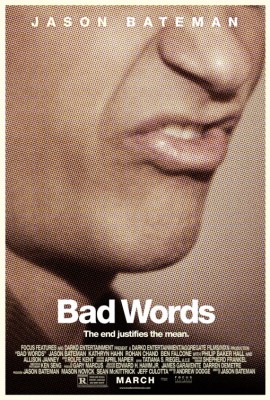
Bad WordsJason Bateman has long been saddled with the reputation as a go-to guy for playing the uptight, no-nonsense straight man in comedy.  After having finally watched “Arrested Development,” I can see why he got typecast – he’s quite skilled at it.  But too much of a good thing can get quite boring, and he’s rarely given a great supporting cast to whom he can react.

It appears that in order to get a different kind of role, Bateman had to step behind the camera himself for “Bad Words.”  His performance recalls two others in films that also began with the same word: Billy Bob Thornton in “Bad Santa” and Cameron Diaz in “Bad Teacher.”  Bateman tackles a character, Guy Trilby, who is more or less irredeemably rotten to the core, save the one classic written-in soft spot that gets exposed over the course of the film.

Guy exploits a loophole in a national spelling bee – he never graduated from middle school – and enters himself into competition at the ripe old age of 40.  His presence alone angers parents, but they’d probably put a bullet through his head if they knew the shenanigans he pulled to fluster their kids.  Stuck in arrested development as an 11-year-old bully, Guy ruthlessly humiliates vulnerable and insecure teenagers into making mistakes at the microphone.

Bateman and writer Andrew Dodge clearly intend these moments to be funny, but all too often, “Bad Words” seems too far away from any sort of moral compass.  Rather than eliciting laughs, they activate our sympathy and pity for the kids Guy is picking on.  It’s not unlike the feeling I had watching “The Wolf of Wall Street,” wondering how I could possibly find humor and levity at the expense of someone else’s livelihood.

Read the rest of this entry »


REVIEW: The Sacrament

6 07 2014

The SacramentIt’s hard to think of any stylistic development of the past five years with quite the impact of found footage.  Once “Paranormal Activity” arrived out of nowhere with a resounding bang, it seemed like its DIY cinema verité aesthetic could be found wherever you looked.  From cop films (“End of Watch“) to superhero movies (“Chronicle“) and even teen party flicks (“Project X“), everyone was doing it – perhaps as a cost-cutting measure, or maybe just to fall in line with the newest trend.
Yet very few of these movies have actually committed to the style as the main vehicle for storytelling.  Ti West, on the other hand, employs it as more than a half-hearted gimmick in “The Sacrament.”  Under his direction, the camera becomes our eyes and ears, our only means of accessing the events of the narrative.  West’s dedication pays off in spades as his film constitutes one of the most absorbing and frightening experiences of the year.

I do wish West hadn’t been quite so beholden to recreating the Jonestown mass sacrifice (that’s the one with the Kool-Aid) since his command the technique creates a truly ominous atmosphere.  He doesn’t entirely recreate the famous cult settlement, but West does little more than essentially plant it in the present day.

The camera through which we experience “The Sacrament” comes courtesy of Vice reporters Jake and Sam (Joe Swanberg and AJ Bowen), who join colleague Patrick (Kentucker Audley) as he goes to check the safety of his sister Caroline (Amy Seimetz) at the mysterious commune Eden Parish.  The film begins with their extended journalistically-oriented overview of the group’s calm facade lasting nearly 45 minutes … but then the Vice team more or less causes the collapse of the Parish’s fragile community.

West, in the final hour, lets loose into an absolutely nightmarish terror.  “The Sacrament” quickly and efficiently shows the allure of a charismatic leader like Eden Parish’s “Father” (Gene Jones) and how quickly he can self-destruct the edifice he has built.  It’s not redefining the subgenre of cult horror, but West crafts one scarily good movie that ought to give anyone a potent fright.  B+3stars


REVIEW: They Came Together

5 07 2014

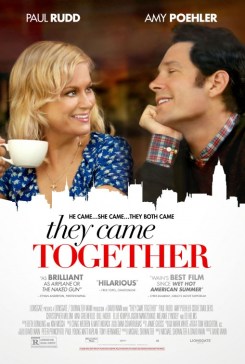
They Came TogetherGenres naturally go through cycles, and right now, the romantic comedy is in a bit of a slump.  When I started writing this blog nearly five years ago, it was riding high with smash hits like “The Proposal” and “The Ugly Truth.”  If you look at the market now, there hasn’t really been a rom-com hit since 2011’s “Crazy Stupid Love,” largely because those kinds of movies just aren’t being made.

Why exactly they have gone out of fashion so dramatically is anyone’s guess.  It’s likely a combination of many factors, but two films point out some of the reasons why no one is rushing to finance “28 Dresses.”  Back in 2009, “(500) Days of Summer” took a revisionist angle on the genre, pointing out many romantic comedy conventions that needed to be reworked in order to be more in touch with the audience.

And now, in 2014, “They Came Together” marks the point where the genre’s hallmarks are so recognizable that they can be mercilessly sent up in an unrelenting satire.  David Wain, the great mind behind “Wet Hot American Summer” and “Role Models,” dismantles the romantic comedy with confidence and pinpoint accuracy.

His script lays bare all the subtext that most of us blindly accept when we encounter a standard genre pic, pointing out everything from the stereotypes of the characters (clumsy girl, non-threateningly masculine guy) to the role of New York City (like another character).  “They Came Together” is at its best when Wain performs his point-by-point deconstruction of all the clichés that normally trap the genre, due largely in part to how wonderfully Paul Rudd and Amy Poehler can cut up while sending up the trademarks.

“They Came Together” winds up coming slightly undone, however, by the sophomoric silliness that fills the moments that aren’t so brutally self-aware.  Wain is usually quite clever with his comedy (the notable exception being “Wanderlust“), and here, he drops to the level of Seth MacFarlane in “Family Guy” or “Ted.”  It’s funny on occasion but wildly inconsistent overall with one joke bombing and the next hitting the sweet spot.  Thankfully, it never quite stoops to the level of the movies it lambasts, but Wain might have had one of the most spectacular spoofs of all time on his hands had he just stuck to the more high-minded humor.  B-2stars


F.I.L.M. of the Week (July 4, 2014)

4 07 2014

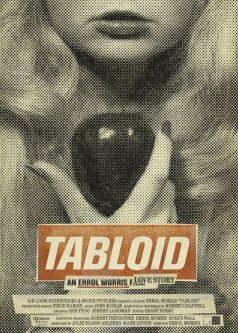
sTabloidOn the occasion of the United States’ 238th birthday, why not celebrate a lesser-trumpeted American fascination? (Not that freedom, liberty, and equality aren’t nice.). This is a value we share with pretty much the whole world, and we might have even invented it.

The concept to which I’m referring, if you haven’t caught on by now, is celebrity culture and our seemingly insatiable desire for every salacious detail of their lives. Incisive documentarian Errol Morris explored this predilection in his 2011 film “Tabloid,” a compulsively entertaining tale that played out in cheap, gossipy newspapers in the 1970s. It gets my pick as the “F.I.L.M. of the Week” because of the way it provides non-stop ridiculous fun even while posing some peculiarly perplexing issues to ponder.

It was described as “a story with something for everyone,” and they weren’t kidding.  Joyce McKinney’s rise to tabloid infamy had all the bizarre elements of a Hollywood movie: sex, cults, brainwashing, kidnapping … and maybe love, depending on who you ask.  After falling in love with the devoutly Mormon man Kurt, Joyce refuses to let their relationship be torn apart by the customary mission.  She organizes a team to go extract him from England, and crazy hijinks ensue that give Joyce an unusually bright-shining 15 minutes of fame.

Morris lets McKinney tell her own story on her terms, but he certainly doesn’t take it at face value.  He amasses a whole host of other subjects with their own ties to the events, be they participants or the tabloid reporters that made her and then destroyed her.  “Tabloid” provides a fascinating tussle for the truth; we’re never quite sure who to believe or trust.  Everyone has their own motive for spinning the narrative their own way.  Who can say if we’ll ever know what actually happened or why people acted in the way they did.

The film clips along thanks to Morris’ quite literally ripped-from-the-headlines aesthetic.  (Newspaper clippings abound, dispersed throughout the interviews and the archival footage.)  For people like me who weren’t alive in that era, “Tabloid” serves as a reminder that E! and the reality TV phenomenon didn’t just come out of nowhere; our culture has a rich history of using whatever the predominant news media is to elevate the average citizen to superhuman status only to bring them right back down to earth.


REVIEW: Snowpiercer

3 07 2014

SnowpiercerDirector Bong Joon Ho, like many cinephiles, is a big fan of Tilda Swinton.  And at the 2011 Cannes Film Festival, he tracked her down and professed his admiration at a brunch.  Afterwards, they mutually decided they would work together on something in the future.
Joon Ho was in the process of writing “Snowpiercer,” and he feared there would not be a part for Swinton in the script.  But then he had a stroke of genius: he would cast Swinton, no stranger to playing some rather gonzo roles, as the authoritative Minister Mason.  This part, however, was initially written for a man.

Swinton gets made-down quite amusingly by the hair and makeup department, pairing her with a drab wig and some nasty dentures.  She’s not her usually chic self, but Swinton isn’t identifiably masculine, either.  Joon Ho doesn’t change any of the personal pronouns in the script, so Mason is still referred to as a he.

Swinton’s performance, then, is not one that doesn’t choose a gender but seems to transcend our understanding of the binary altogether.  As a whole, “Snowpiercer” relishes in this spirit of breaking boundaries.  It can’t necessarily be tied down to one genre, constantly surprising us with each turn.

Read the rest of this entry »


REVIEW: Begin Again

2 07 2014

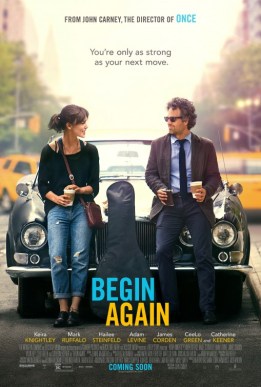
Begin AgainJohn Carney’s “Begin Again” was first screened for audiences under the title “Can A Song Save Your Life?”  An interesting question, to be sure, but perhaps not the right one … or at least not the one preoccupying most viewers.  Their biggest question is (or ought to be), can these songs save this movie?
The answer is, well, not exactly.  “Begin Again” flaunts some pleasant ditties, including a few from Maroon 5’s Adam Levine (great for boosting soundtrack sales) and several from the surprisingly smooth pipes of Keira Kinghtley.  But they are rather breezy and generic tunes, not quite the game-changing classics Carney and his film make them out to be.

While I’m not a music critic (and do not intend to masquerade as one), I do feel that I can comment on how the tracks are incorporated into the film with relative authority.  And in “Begin Again,” the songs play out rather like music videos, with the one exception of Knightley’s strikingly beautiful opening number about isolation in the Big Apple.  Furthermore, they never reveal anything about the characters participating in their creation (see the Coen Brothers’ “Inside Llewyn Davis” for a masterclass).

These songs reflect the larger issue with “Begin Again,” which is that it provides a surface-level treatment of just about everything it touches.  Carney occasionally proffers a profound musing on music, both its art and its commerce, but never really explores them fully.

Read the rest of this entry »


REVIEW: The Immigrant

1 07 2014

immigrant_noquote_finalCannes Film Festival – Official Competition, 2013

Over a year ago, I had the distinct honor to attend a panel in memory of my hero in the realm of film criticism, the late Roger Ebert, in Cannes.  His widow, Chaz, was in attendance a little over a month after his passing.  We all took a “500 Thumbs Up for Roger” picture (if you like a good Where’s Waldo puzzle, try to find me in this picture) and signed a book letting Chaz know how much her husband meant to everyone who cherishes film.

But it was not the words that I left her that mattered that day; rather, it was the words she left me and everyone else in attendance.  Kicking off the panel, she remarked, “Roger said that the cinema expands your imagination.  And when it’s done well, what it will do is allow the individual to be transported beyond linear boundaries and to take you to a world that you hadn’t seen before and allow you inside and outside to become a better person.”

People that take the time to write seriously about these illusionary worlds of light, shadow, and pixel have most likely achieved this exhilarating narrative transport.  It’s a difficult and thus extremely rare feat for a film to pull off.  Yet the sensation feeds the soul in such a sublime manner that it’s worth seeking out even if it means wading through seemingly endless mediocrity.

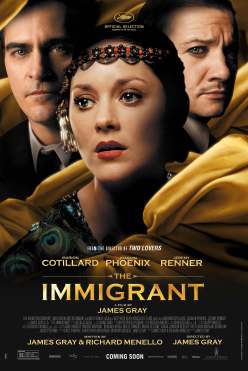
By year’s end, I manage to let the awards hype delude myself into thinking I have experienced this transcendent feeling multiple times.  In actuality, however, these little miracles only occur every few years or so.  I’m overjoyed to report that James Gray’s “The Immigrant” is one such film.

Most movies nowadays return me to the same spot from which I departed.  This masterpiece, on the other hand, picked me up at one place and deposited me at a higher ground.  The story of “The Immigrant” alone left me feeling spiritually enriched.  The complete package assembled by producer, writer, and director Gray left me renewed and reaffirmed in the power of the cinema.  I remain so stunned in slack-jawed awe at this exquisitely beautiful work that few words can fully capture my strong sentiments.

Read the rest of this entry »


REVIEW: Like Father, Like Son

30 06 2014

Like Father Like SonThe title of the film “Like Father, Like Son” might lead you to think its as banal and thoughtless as the clichéd phrase from which it derives its name.  That couldn’t be farther from the truth about the movie, however.  Kore-Eda Hirokazu’s masterfully observed and delicately realized familial drama is one of the most thought-provoking films I have ever had the privilege to see.

Hirokazu begins with a somewhat well-established premise of nature vs. nature, but there’s nothing familiar about where he ultimately takes us in “Like Father, Like Son.”  The lives of two families, the wealthy Nonomiyas and the working-class Saikis, are upended when it is revealed that their six-year-old sons were switched in the hospital.

Where to go from there presents the first of many wrenching dilemmas faced by the characters.  As their comfortable patterns of life are shattered, everyone affected is forced to rethink what exactly it means to be a parent and a child.  To be fair, it’s more about what it means to be a father, although that shouldn’t preclude any gender from grappling with the questions raised by the film.

Read the rest of this entry »


REVIEW: The Lunchbox

29 06 2014

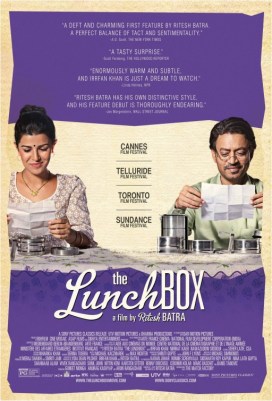
The LunchboxLondon Film Festival, 2013

Could a film possibly be a romantic comedy if the two leads don’t end up together … or if they never even meet?  Because that’s precisely the film that “The Lunchbox” is.  And darned if it didn’t make my heart flutter.

Ritesh Batra’s first film is absolutely disarming as it reminds us the power that unexpected relationships can wield.  He doesn’t hold back the sentimentality, allowing us rich emotional connection with the characters, yet Batra does not cave to its pressures for perfect resolution.

“The Lunchbox” is nothing if not honest, and we feel all the more enriched by his sidestepping of the gushy genre cliches.  In fact, the film recalls an indie-fied “You’ve Got Mail,” only replacing the capitalist undertones from “There Will Be Blood” with the foodie fix of “Julie & Julia.”

It all begins when a frustrated housewife, Nimrat Kaur’s charming Ila, tries to enliven her tired marriage by making her husband an especially tasty lunch that he can enjoy on his break.  While much of “The Lunchbox” reflects more globally shared feelings and frustrations, the dabbawalas system of couriers bring meals from wives at home to their husbands at work marks a facet that’s distinctly Mumbai.  Yet on this fateful day, the dabbawala does not deliver Ila’s lunchbox into the correct hands.

Read the rest of this entry »