REVIEW: The Skin I Live In

28 03 2012

Pedro Almodóvar’s latest film, “The Skin I Live In,” is quite possibly the most bizarre, disturbing, unnerving, and twisted movie I’ve ever seen.  And naturally, I loved every minute of it.

Almodóvar is one of the best, if not the best, working writer and director dealing with the theme of obsession, particularly in his recent works “Talk to Her” and “Broken Embraces.”  While this doesn’t quite reach the thematic and intellectual brilliance of the former, “The Skin I Live In” provides a great deal more in-the-moment thrills that will have your jaw on the floor.  I often think of myself as desensitized to shocking, lurid movies, and boy, was I wrong as this had me agape from the entirety of the last act.

So it should go without saying that if you don’t have a high tolerance for rape, sexuality, and plastic surgery, this is not the movie for you.  But if you think you can handle it, then by all means, dive into Almodóvar’s weird world of revenge fantasy.  “The Skin I Live In” first masquerades as a modern “Pygmalion” with Antonio Banderas’ Robert Ledgard, a scientist, researcher, and surgeon, developing a dangerously close relationship with a specimen to whom he has endowed perfect skin.  However, Almodóvar shifts the narrative back a few years, opens the blinds, and makes us realize that nothing is as it seemed.

Creative and original to an almost deranged point, “The Skin I Live In” makes for quite a tumultuous watching experience for those with the stomach to stick with it to the end.  Amidst the uncomfortable nudity, the unsettling sexual assaults, and the stunning twists, there are ethical questions aplenty raised.  How far is too far, the movie consistently asks – and Almodóvar is willing to go to the moon and beyond to make his film one you won’t stop thinking about.  A-


REVIEW: Extremely Loud and Incredibly Close

27 03 2012

I absolutely love the Oscars, and despite the cries of many naysayers, I believe they are overall a very good thing for film artistry and industry.  As tone-setters and taste arbiters, they have enormous influence over how and when movies get made.  This ability is not without a downside, though.  It may have scored a Best Picture nomination, but Stephen Daldry’s “Extremely Loud and Incredibly Close” as a piece of art is a victim of the Academy process.

The framework is there for the cinematic adaptation of Jonathan Safran Foer’s incredible novel to be equally as compelling and emotionally moving.  But Daldry, who was still shooting a new scene for the movie on December 1 (yes, just weeks before the movie opened!), leaves us with merely a glimpse of what could have been.  He shows us how much potential the movie has, yet we are constantly left seeing the rough edges that should have been ironed out in post-production.  Tonally, it has some very rough swings, too.  If he had taken a few more months, really wrestled with the material, and released it in 2012, “Extremely Loud and Incredibly Close” would have been a deserving Best Picture nominee – and dare I say it, a formidable threat to be a winner.

At a certain point, though, I have to stop mourning a movie that doesn’t exist.  Daldry made the movie that he made, and it does have some remarkable moments sprinkled sporadically throughout that really hit home.  He gets fine performances out of Sandra Bullock and Max von Sydow; Thomas Horn has flashes of brilliance every now and then, but his precociousness often errs towards the side of a grating whine.  Nevertheless, there were a number of scenes that just don’t work as well as they should, and knowing the source novel, I would periodically cringe.

Read the rest of this entry »


REVIEW: Real Steel

26 03 2012

What’s more American than virtually remaking “Rocky,” replacing Sylvester Stallone with a robot, set in the heartlands?  That’s “Real Steel” in a nutshell, a Hugh Jackman vehicle that director Shawn Levy proclaims as a classic expression of Americana.  Well, for starters, America deserves better than this.

Levy is under the delusion that his movie has a place on the American kitchen table next to the apple pie; I’m here to tell you that the only place “Real Steel” belongs with apple pie is when the dessert is stale, rotten, and in a garbage bag.  Its tired, unoriginal story combined with mildly stimulating visuals make for a lackluster watch.  Levy also gets a bit genre-confused, wedding the sports film to the sci-fi with little success.  I still think there’s hope in genre cross-pollination, but I hope no one looks back and thinks that “Real Steel” or “Cowboys & Aliens” were ahead of their time.  Both are feeble, flailing attempts to give a little shimmer to tarnished brands.

However, I suppose it is rather effective at communicating the age-old American myths.  Any deadbeat dad, in this case Hugh Jackman, no matter how estranged, can reconnect with his son, here played by an incredibly hyperactive Dakota Goyo.  Anyone can succeed if they have friends with faith in them, here Evangeline Lilly (who is far from her glory days on “Lost” when she was my huge crush).  But most of all, anyone can beat the odds and be a winner with hard work and faith – even a robot.  That’s the American dream, but it’s been realized before … and better.  C-


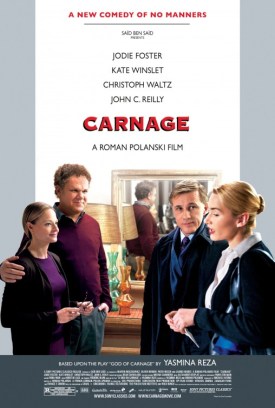
REVIEW: Carnage

25 03 2012

Every medium has its distinct storytelling capabilities.  The written word can inundate us with rich details and vivid characterization.  The stage can engage our hearts and our eyes with proximity and unflinching reality.  Film can wow us through fast manipulation of image and story that words or actors alone cannot illuminate.  Some, but not many tales can bounce between the different media.  Those that make the jump require strenuous retooling to fit the expressive purposes of their newfound home.

The fatal flaw of Roman Polanski’s “Carnage” is that it is merely a carbon copy of its source play, Yasmina Reza’s Tony Award-winning play “The God of Carnage.”  The two masters of their respective crafts, collaborators on the script, ultimately fail to realize what is cinematic about the story.  As a result, it just feels like a performance of the play itself (which I have read and deeply admire!) merely caught on film.

Now don’t get me wrong, I’m certainly happy that more people will be exposed to Reza’s keen insights into our primal natures.  Not everyone can afford to see it on Broadway, nor are touring or repertory companies going to be performing this in every town.  But it does the work a disservice to merely slap it onto a screen when it belongs on a stage.

Read the rest of this entry »


SAVE YOURSELF from “The Company Men”

24 03 2012

It must be tough to make a movie about unemployment after “Up in the Air.”  After Jason Reitman’s film so ingeniously brought employees who had actually been downsized in front of the camera to tell their stories, it felt to me like there was no other way to ever achieve the same candid honesty.  I can imagine writer/director John Wells, who had to premiere his film “The Company Men” at Sundance only a month after Reitman’s hit theaters, probably muttered a few expletives under his breath when he realized he had to compete with it.
Yes, it does portray in pretty clear detail the effects of the 2008 financial collapse on the hard-working employee, but did it really pick the right protagonist?  Granted I really don’t care for Ben Affleck unless he’s behind the camera, yet his Bobby Walker is suffering a crisis of luxury, not one of necessity.  Is that the story of the recession?  Tears shed over selling the Porsche and spousal fights over the country club membership.  You would think that having to move back in with his parents temporarily was equivalent to moving below the poverty line.

When it’s not indulging us with the sob stories of siblings sharing beds (when the children who were really affected by the recession were sleeping on the floor), it’s giving us another indictment of post-too big to fail corporate America a la “Margin Call” and “Wall Street: Money Never Sleeps.”  We get it, Hollywood, you think the corporate world is full of sleazes like Jim Salinger (Craig T. Nelson) who will actually say he works for the shareholders and not for the good of his employees.  The man can’t even muster up any sympathy when one of his longest-tenured staffers commits the most clichéd act of desperation in film!

Depression is a sentiment a movie needs to earn to be justified, and “The Company Men” ultimately just wallows in self-pity rather than putting its stark depiction of a catastrophic time in American history to good use.  When a protagonist seriously considers underemployment as a long-term alternative, then I start to question a film’s social compass.  Yes, psychological satisfaction is important from your vocation … but does it balance with the intrinsic disappointment from not realizing your own sense of worth and potential?  Such a decline in our guiding philosophy might be one of the sadder aspects of the recession.


REVIEW: The Hunger Games

23 03 2012

From the very beginning of “The Hunger Games,” it is very clear that this literary adaptation has in common with “Harry Potter” only the hype surrounding their release.  While Rowling and an army of talented directors transported us to a universe accessible only in our wildest imaginations, writer/director Gary Ross shows no such inclinations in bringing Suzanne Collins’ best-seller to the big screen.  As her novel is meant to hold a mirror up to our own reality-TV saturated culture, he plants the film in an America just a little bit of social upheaval removed from our current one.

He has no interest in sweeping formalist cinematography that basks in the beauty of castles and countryside.  Ross’ style adheres more closely to the films of Danny Boyle with a kinetic desire propelling every shot; watching the struggles in the wilderness harkens more to Aron Ralston’s fight against nature in “127 Hours” than it does to anything in the Forbidden Forest.  The editing is more deliberate, too, lingering on the actors to communicate internal monologues with their eyes rather than conveying that the editor forgot to take their Ritalin.

Of course, not everything in the film looks as gritty as District 12 and as unyielding as the Arena.  The Capitol, where the rich and the elites bask, is embellished to the maximum for an especially emphasized contrast.  The men and women look like they walked out of Hunter S. Thompson’s acid trip, and their lavish makeup and attire are nothing short of ridiculous.  (So don’t be surprised if “The Hunger Games” takes home a technical Oscar or two next February.)

All of this makes Panem, a strange society born from the ashes of an America that tore itself apart, a fascinating place to build a story of triumph over the odds.  16-year-old Katniss Everdeen, played by Jennifer Lawrence, volunteers to participate in the Hunger Games in place of her younger sister.  The Games require the competitive edge of an Olympic athlete in addition to the cut-throat inclinations of a Real Housewife of Beverly Hills, and it gets worse for Katniss as class bias is institutionalized in the rigid caste society of Panem.

Read the rest of this entry »


F.I.L.M. of the Week (March 23, 2012)

23 03 2012

Before Gary Ross was making us hunger for “The Hunger Games,” he was making thoughtful dramas with insights into society and the individual (which makes him an excellent fit to be at the helm of Suzanne Collins’ hit trilogy). He wrote Tom Hanks’ “Big” and directed a real crowd-pleasing hit with “Pleasantville,” my pick for the “F.I.L.M. of the Week.” I was expecting it to be a gentle satire of 1950s culture and television, but it wound up surprising me and insightfully looking deeper at the narrow-minded times both then and now.

The high-concept dramedy follows the adventures of 1990s teenage siblings David and Jennifer, played respectively by Tobey Maguire and Reese Witherspoon pre-superstardom, after being magically transported through the television into the world of the series Pleasantville. It’s your typical ’50s utopian small town where the sun always shines, the kids all innocently gather at the diner, mom is happy in the kitchen, and dad is bringing home the bacon. The world is as simple as the color scheme it’s shot in: black and white.

But as the Beatniks and Betty Friedan would later show us, the American Dream of the 1950s was not without a dark underside. People were still unhappy; they just didn’t have the channels to express it, so they repressed it. David slowly begins to introduce color into Pleasantville, showing people that they can see and feel as they were meant to feel.

Change is never easy, though, and it is never met without opposition. The town begins to divide on what they perceive as the shifting moral values being advocated by David and his colorful crew. Ross assembles a fine ensemble cast, including Jeff Daniels, Joan Allen, William H. Macy, and J.T. Walsh to vivify the conflict. While we relish the performances and the story during the movie, we are left to linger with the challenging thematic probing that asks us to apply the color litmus test to our own world.


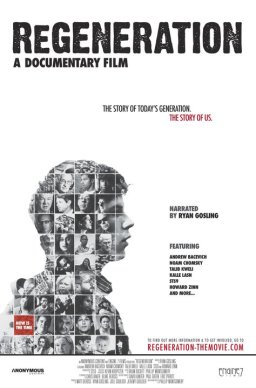
REVIEW: ReGeneration

22 03 2012

Reynolda Film Festival

If you’re a concerned enough citizen to make the conscientious effort to watch “ReGeneration,” a documentary about the apathy of our culture, you will still be shocked and dismayed by the findings of the film.  It’s depressing to know that even a movie like this only captures the tip of the iceberg and perhaps even more so to implicate yourself in buying into and selling out to the problem.  Writer/director Phillip Montgomery has no desire to sugarcoat our reality, opening the movie with this quote from Martin Luther King: “We will have to repent in this generation not merely for the vitriolic words and actions of the bad people, but for the appalling silence of the good people.”

In less than 80 minutes, Montgomery takes a sociological look at why the world is the way it is, why it seems to be spiraling out of control, and if there is any hope to change it.  That’s a lot of ambition for one film, let alone one that short.  “ReGeneration” feels sprawling but never cumbersome, a remarkable accomplishment for a movie that tackles some of the most pressing issues of the day.

Montgomery makes the movie’s overarching cynicism about our consumer-driven apathetic culture palatable by collecting a variety of opinions and explanations that run the full spectrum of experience and perspectives.  From Noam Chomsky to STS9 to a panel of high school students, everyone gets a chance to weigh in on the issues.  We value some people’s thoughts more than others, but it’s great to see that everyone gets a chance to speak out and speak up.

Really, it’s the average American that makes “ReGeneration” a standout, stand-up-and-clap documentary.  Whereas “Inside Job,” the only recent documentary I would dare compare this to in scope, was largely a mouthpiece for Charles Ferguson through his narrator Matt Damon, Montgomery hands the microphone over to the people to narrate their own story.  (If you watch this movie to hear Ryan Gosling, prepare to be disappointed; he has at best ten lines in the film.)  It’s an appropriate move on his part because, as the movie points out, our problems cannot be solved by one person acting alone.  It must be us as a community, rising out of our seats, and redefining what it means to be happy, concerned, involved, and free.  A-


REVIEW: I Am Not a Hipster

21 03 2012

Reynolda Film Festival

Destin Cretton’s film “I Am Not a Hipster,” despite what its title might insinuate, does a fantastic job of deconstructing the modern hipster culture.  In one heated scene near the climax, musician Brook (Dominic Bogart) makes a distinction between “art,” which he makes, and “fun,” which his friend and manager Clark (Alvaro Orlando) makes.  His angry rant is as much a reaction against the YouTube and Hipstamatic-happy culture that makes the world replete with kitsch and devoid of much meaning as it as against Clark’s show.

But to call society the main concern of Cretton’s film is to miss the point.  His film is quintessentially Sundance, small-scale filmmaking applied to intimate storytelling.  Cretton narrows his focus on one character, Brook, and really explores who he is, what made him, and how he responds because of and in spite of that.

The film feels like it’s treading familiar grounds when it portrays Brook’s family drama of loving sisters, a dead mother, and an estranged father.  But when it dares to look into whether anyone has the right to mope around simply because they are an artist, as the stereotype of the hipster has come to represent, it is insightful and compelling.

Cretton, who fully understands the indie scene of San Diego, portrays it honestly and candidly.  The pretension is there, the scruffy fashion is there, the prickliness is there.  Above all, the humanity is there, and that’s what  makes “I Am Not a Hipster” a movie that is both illuminating and worthwhile.  B


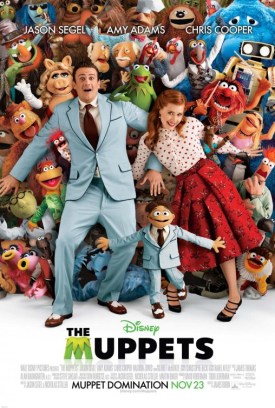
REVIEW: The Muppets

20 03 2012

The allure of “The Muppets” is that Jason Segel and company, just as Jim Henson was several decades ago, are totally convinced that such a thing as innocent comedy exists and works.  The film opens with a blissfully catchy song-and-dance number, “Life’s a Happy Song,” basically consisting of every character expressing their exuberant love for life.  It’s totally absorbing and a fun toe-tapper.

Allow yourself to be transported by it and the rest of the movie, you’ll find that Segel’s Gary and Walter the Muppet can quickly make you forget about our crushing deficit, our crippled economy, our melting planet, our foreign entanglement, and just about anything else keeping you from thinking the world is great.  The song isn’t totally ignorant, though; it lays the groundwork for the conflict of the film, Gary’s friendship with Walter disturbing his romantic relationship with Mary (Amy Adams).

The rest of the movie proceeds on a similar trip of joy, re-introducing the Henson crew of Muppets to a generation that unfortunately doesn’t know them very well.  That’s a crying shame which Segel happily corrects here, capturing all the effervescence of the Muppets just like it was the 1970s and they were hosting Mark Hamill and Elton John on the show.  We find them all in strange places in the present day – Miss Piggy in Paris as a magazine editor, Gonzo selling toilets, Fozzie in a bad Muppets cover band – that all add to the hilarity for those that know them.

Read the rest of this entry »


REVIEW: Tinker Tailor Soldier Spy

19 03 2012

The impressive accomplishments in Tomas Alfredson’s “Tinker Tailor Soldier Spy” are manifold.  The first, and perhaps what will stick with me the most, is how immaculately crafted the movie is.  Every aspect below the line is crisp and precise, be it Alberto Iglesias’ subtle score, Hoyte van Hoytema’s swift camerawork, Maria Djurkovic’s richly detailed sets, or the unbelievably meticulous control over sound and silence.  “Hugo” may have been the Academy’s technical darling of 2011, but this movie can rival its excellence in all those categories (except maybe visual effects).

The second is Gary Oldman’s performance as George Smiley, one of his finest on-screen roles yet.  Much was made of how criminal it was that the lauded character actor had not received an Oscar nomination before “Tinker Tailor,” and thankfully now that has been corrected.  But there is much more to this work than merely endowing Oldman with the epithet “Academy Award nominee.”

Oldman shows his mastery of understatement playing Smiley, a man of few words.  When he’s not speaking, we never have a doubt that Oldman is totally within his character’s mind, never moving a pore without purpose.  When he is speaking, Oldman is forceful and commanding, owning the screen that includes one of the largest casts of acclaimed British actors outside the “Harry Potter” series.  It’s an acting master class from one of the industry’s best and brightest, definitely one Hollywood could learn a lesson or two from as well.

Read the rest of this entry »


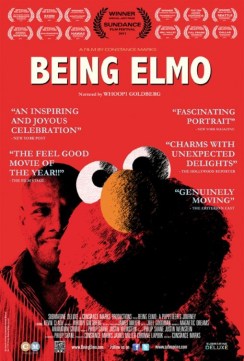
REVIEW: Being Elmo

18 03 2012

In a year that saw nostalgia being wielded in various powerful ways, “Being Elmo” was able to wield it in one of the most powerful ways – at least for those of us lucky to grow up with “Sesame Street.”  Constance Marks’ emotionally potent documentary achieves the unusual, shining the light on one person while also shining a light on the audience.  It tells the story of a man living out the American Dream but brings to life our dream of returning, for however brief a time, to the bliss of childhood innocence.

I had never fallen out of love with Elmo and the rest of Jim Henson’s puppets, but I had forgotten that for many years of my life, I was so madly in love with them.  I’m what you would have called a “Sesame Street” junkie.  I watched it all the time growing up whether it was on PBS or one of my many VHS tapes.

Big Bird, Snuffy, Grover, and Elmo weren’t just characters; they were my friends.  They taught and reinforced solid moral values, showing how to be kind and decent.  For all those who decry television replacing institutions as a primary agent of socialization and dissemination of acceptable social behaviors, I’m sorry the kids you know didn’t grow up watching “Sesame Street.”

“Being Elmo” follows Kevin Clash, the puppeteer who brought Elmo to life, from his childhood in tough economic conditions to traveling across the world with his creation.  From the very beginning, it is evident that Clash is absolutely in love with the craft of puppetry, and it is this passion that allows him to triumph over his upbringing.  This joy also makes him the perfect Elmo, who is the most pure expression of love on television.

In experiencing Clash’s exuberance making Elmo move, we are reminded of why Jim Henson’s felt-covered humanity has resonated with the entire world for decades.  We are treated to falling in love with Elmo all over again through “Being Elmo.”  The movie is so great at showing how the unfettered positivity made the character the most recognizable on “Sesame Street.”  It made me gush tears when this joy is shown at its most extreme – Clash visiting Make-a-Wish patients whose request to meet Elmo before dying.

I love Elmo.  I love “Being Elmo.”  And I love that now it makes me want to watch “Elmo’s Song” every time I feel really happy or really sad.  A-


REVIEW: Margin Call

17 03 2012

If anyone ever wanted to know about the problems facing rich white people, tell them to pop “Margin Call” into their DVD player.  When it’s not faintly allegorizing what “Inside Job” had the balls to hit dead on, it’s dealing with the pathetic plight of financial sector employees like 23-year-old Seth Bregman (Penn Badgley) who is only bringing home $250,000 per year at an entry level position.  Clearly he can related to little orphan Annie when she sang that it’s a hard knock life for us.

Writer/director J.C. Chandor, in his first feature, narrates the film much like a play, letting the principal characters guide the story.  Aside from maybe one line from a security guard, you won’t hear the voice of the people who will be most affected by the actions in this movie.  There’s one scene in an elevator where Demi Moore’s Sarah Robertson and Simon Baker’s Jared Cohen gravely discuss the implications of their conduct, and in between them is a cleaning lady.  In one of the few great touches of the film and with an almost macabre sense of dark humor, Chandor makes sure that she is totally oblivious to the grave implications of what’s happening in the building she cleans.

“Margin Call” was the beneficiary of chance when the Occupy movement began right around its October 2011 release date, and there are several lines which I feel could have been ripped straight off their cardboard signs.  His portrayal of the investment bankers are shallow, simply becoming more evil and out-of-touch with the more money they make.  The sweeping generalizations of the film are about as ill-conceived as his “magic formula” that predicts the coming of the 2008 financial crisis; I’m wondering if even he knew what on earth it was.  There’s no attempt to explain what a CDO is, or even what on earth these traders do.  There’s great complexity to the system beyond his adaptation of “Baby’s First Guide to Capitalism,” believe it or not.

There are some decent acting moments that make “Margin Call” a watchable movie, and the script has just above the requisite amount of intrigue to keep your attention.  But with all these “one percenter”s just talking about how to spend their millions in convertibles, you wouldn’t think that the world economy was about to collapse.  I know that exists, but if you want to demonize rich people, why not just make a movie only about CEOs of investment banks in September 2008.  C


F.I.L.M. of the Week (March 16, 2012)

16 03 2012

Before Alexander Payne won his second Oscar for “The Descendants,” he still had game.  “Citizen Ruth,” my pick for the “F.I.L.M. of the Week,” was his first feature film back in 1996, and it still has all the clever humor and heart of his later, more acclaimed works.  A razor-sharp satire of the abortion debate and the rest of the ridiculous culture wars of the ’90s, Payne leaves no party blameless, subjecting them all to scrutiny and criticism.

His protagonist, once again, is not someone easy to identify with; we merely experience the movie through them and become all the more aware of their flaws.  Here, it’s Ruth Stoops (Laura Dern), an irresponsible child trapped in a woman’s body (figuratively speaking, this isn’t “Benjamin Button” after all).  She’s addicted to huffing fumes, putting her own life in danger and giving no attention to the lives of her young children.  Now, she’s in trouble with the law for the sixteenth time … and pregnant.

Ruth’s first thought is to get an abortion as she can barely take care of herself.  But before she can act, she is ambushed by the two sides of the abortion debate, fervent Bible-clutching pro-lifers and free-spirited sexually loose pro-choicers.  To them, Ruth is little more than a tally to add to their team’s score, a prize to be swayed and won.  They objectify her and will do anything to placate her, truly pulling out all the stops to convince her to choose their side.

Deciding whether or not to bring a child into the world is such a human decision, yet no one really seems to care about the baby in the whole debacle.  Payne shows how horrifying the rhetoric from both camps has become as to remove all humanity from the discussion; even Ruth, the woman at the center of the controversy, sways throughout the film based on who can offer her the most money.  Dern’s performance is a little cartoonish and annoying at times, but I would watch anyone act if they were endowed with the words of Alexander Payne.


REVIEW: Young Adult

15 03 2012

You’ll have to pardon my French throughout this review, but there’s no other way to put it.  “Young Adult” is Diablo Cody’s courtroom drama-style comedy that puts the bitch on trial, both the Hollywood archetype and a very peculiar bitch of her own creation.  It’s really a genius work that serves as a genre deconstruction as well as a story of narcissism and self-loathing in the Facebook age that can stand up on its own two feet.  Then factor in the irresistible pathos of Jason Reitman, a director who tells the most authentic emotional narratives of anyone working in Hollywood today, and you’ve got one of the best movies of 2011.

In anyone else’s hands, Charlize Theron’s Mavis Gary would be a totally unsympathetic, curmudgeonly home-wrecker.  Her vile acts of shameless selfishness draw first our shock, then our ire.  Every minute longer she lingers on the screen, we hate her all the more.  She’s toxic, knows it, and does nothing to change it.

But dare I say it, I actually related to Mavis – way more than I should have, in fact.  While we can’t deny her agency for all her awful deeds, Cody refuses to let her be totally written off as someone mean-spirited down to her core.  Her story takes Mavis back to the root of her problems, her hometown of Mercury, Minnesota.  We get to see the society that spawns the psychotic ex-prom queen, forcing us to wonder how much of her fate is due to society and circumstance.

Read the rest of this entry »