REVIEW: Triple 9

7 03 2016

John Hillcoat’s “Triple 9” makes for quintessential tough cinema – and in more ways than one. It’s hard-edged in content as a brutal crime plot breaks out in the Atlanta underworld but also somewhat tough in form; Matt Cook’s screenplay proves challenging to follow as more than broad strokes on many occasions. The sprawling tale of interwoven cops, criminals and robbers weaves a complicated web of characters.

Yet while the lack of numerous balls juggled during “Triple 9” are somewhat of a liability, they also become a strength when events take a brutally ironic turn in the second half. The film becomes almost like a classic piece of Russian literature with its cruel reversals of fate, though Cook somewhat overloads the dramatic irony by having characters mull over the impossible “coincidence” time and again. With lightly sketched characters, they become less like people and more akin to pieces to form an allegory about humanity as a whole.

Even without much in the way of characterization, the actors still shine through, namely Casey Affleck as the film’s de facto moral center, officer Chris Allen. (Others, like Aaron Paul and Kate Winslet, play up glorified caricatures.) Meanwhile, editor Dylan Tichenor, the man who cut masterpieces as varied as “Boogie Nights” and “Zero Dark Thirty,” provides excellent tension as Allen falls into the crosshairs of cops who serve the local Russian mafia bosses. The two of them almost manage to turn the film into a Coen-esque spin on a tale like “The Departed.” But even a watered-down version of that idyllic fantasy film would be worth watching – as “Triple 9” is, too. B2halfstars


Dr. Strangelove and American Fascism

6 03 2016

In recent months, I have grappled frequently with the idea that a form of fascism may be rising in America. Recent events have surprised me, as they have shocked others. But the other day, I remembered a paper I wrote nearly 5 years ago in a Cold War literature class, and it reminded me that I should not be surprised at all. Stanley Kubrick gave us a pretty great idea of how America would fall prey to fascist ideals, albeit in a more existential and oblique way. Here’s the text of that essay, unaltered from its original submission in November 2011.

During the Cold War, America was ostensibly fighting the Soviet Union. However, in his 1964 film “Dr. Strangelove,” Stanley Kubrick makes the case that while locked in this battle, the country was still plagued by the remnants of fascism lingering from World War II. Through the proceedings of the United States government with former Nazi scientist Dr. Strangelove in the War Room, Kubrick shows that in the efforts of President Merkin Muffley and his advisors to prevent a state-executed nuclear holocaust, the country falls prey to fascist ideals.

America was so committed to destroying fascism in World War II that they were even willing to ally with the Soviet Union, a nation with a conflicting political ideology. At the war’s outset, both countries feared the rapid expansionist policies of Hitler. But as the clash continued, they also grew to fear the Nazi’s dehumanizing and barbaric applications of technology to commit genocide sanctioned by the highest-ranking officials of the party, including Hitler himself. The two countries ultimately forced Nazi capitulation and dismantled the fascist government, writing the history of the war as if bringing Hitler to his demise was tantamount to destroying the most perniciously evil being on the planet.

President Muffley fears even being mentioned in the same sentence as the Fuhrer, judging his own decisions against the notorious legacy: “I will not go down in history as the greatest mass murderer since Adolf Hitler.” With the development of the atomic bomb – a testament to human scientific progress yet also a means to achieve ends of Nazi proportions – world superpowers the Soviet Union and the United States began to stock up on nuclear weapons to keep the world from destroying itself. To maintain this fragile peace, they kept the world in a climate of fear as an apocalyptic meltdown loomed.

History defines the Cold War in terms like deterrence and mutually assured destruction; Kubrick, however, has a different vocabulary for the contentions between America and Russia. Through satire, he breaks down what he perceives to be the ridiculousness of such strategies to a juvenile game of comparing penis size. The drive for war is tied into the male sex drive through consistent use of phallic imagery, ranging from cigars and missiles to a fuel nozzle. Many of the characters carry sexually connotative names, including references to male studs (General Buck Turgidson), perversity (Dr. Strangelove), and aphrodisiacs (Captain Mandrake).

One character that does not fit the mold is President Merkin Muffley, whose first and last names are slang references to the female pubic region. The contrast between he and the generals is further drawn by exaggerated physical differences. While Turgidson and the other men in the War Room are big, bulky men with deep voices, Muffley is balding, timid, and nebbish and talks in higher, nasal tones. Such a characterization of the most powerful man in the country hardly conjures an image comparable to the fiery, militaristic Adolf Hitler.

At the beginning of the film, Muffley appears immune to many of the ideas of the other generals in the War Room. He can reason conscientiously in the presence of these men, taking into account the lessons of history before hastily jumping to a decision. Muffley is able to make clear distinctions even when pressured by grandiosely worded arguments:

TURGIDSON. Mr. President, we are rapidly approaching a moment of truth both for ourselves as human beings and for the life of our nation. Now, the truth is not always a pleasant thing, but it is necessary now make a choice, to choose between two admittedly regrettable, but nevertheless, distinguishable post-war environments: one where you got twenty million people killed, and the other where you got a hundred and fifty million people killed.
MUFFLEY. You’re talking about mass murder, General, not war.

Turgidson’s rhetoric employs an appeal to pathos, a ploy that Muffley can reject because it requires him to personally make the choice to kill millions of people. He equates such a deliberate decision with Hitler’s calculated extermination of those he considered less superior. Muffley also fears another parallel between himself and Hitler because the Nazi dictator also claimed justification for slaughter by saying it served his country’s best interests.

Dr. Strangelove (2)

However, Dr. Strangelove exposes that the President’s fear may only be of the image associated with fascism. The femininity implied by Muffley’s appearance and name suggest that he is more prone to be swayed by logical and intellectual arguments than the testosterone-fueled generals. With the world in peril, Muffley turns specifically to Strangelove for advice on how to proceed in the face of – and later, the aftermath of – the triggering of the Doomsday Machine.

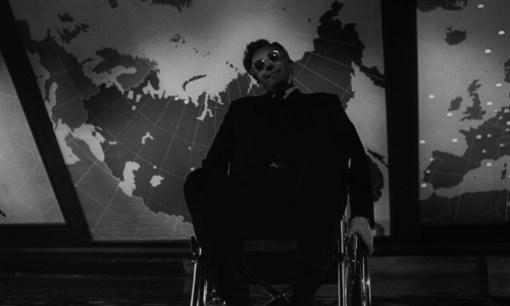
Strangelove, the director of weapons research and development for the United States, is a brilliant ex-Nazi scientist bound to a wheelchair. Dr. Strangelove champions the computerization of the Doomsday Machine, claiming that it becomes all the more effective because it lacks the human element to make the decision to stop it: “Because of the automated and irrevocable decision making process which rules out human meddling, the doomsday machine is terrifying.”

Muffley initially fears the machine when informed of its existence, but once told that he would not have to be implicated in triggering it, he calls it “fantastic.” Unlike when talking with Turgidson, he is now comfortable with the idea of causing the death of millions only because the killing will be impersonal. While this development might disassociate him with the face of Nazi Germany, Muffley appears to have failed to realize that, ironically, he is advocating the use of technology to achieve similar outcomes.

The ease of lapsing into fascism is most evident in the final scene. After the bomb Major Kong rides into the ground detonates, the world is in ruins and on the brink of apocalypse. With a nuclear holocaust on the horizon, Dr. Strangelove begins to propose mineshaft survival measures that sound eerily reminiscent to Nazi programs like the Final Solution and eugenics. He encounters slight opposition from Muffley though:

MUFFLEY. I would hate to have to decide who stays up and who goes down.
STRANGELOVE. That would not be necessary, Mr. President. A computer could be set and programmed to accept factors from youth, health, sexual fertility, intelligence, and a cross section of necessary skills.

Muffley gives a tacit approval to Strangelove’s ideas by not really questioning their validity. Much like with the Doomsday Machine, Dr. Strangelove is able to allay the President’s fears by adding in the allure of technology, thus removing a sense of personal responsibility from whatever occurs. At the same time, Strangelove is enabling Muffley to commit a much more systematic extermination than the Nazis could have ever carried out because of the advanced technological capabilities of the United States without having to outwardly look as treacherous as Hitler.

Kubrick juxtaposes Muffley’s regression to fascist ideals with Dr. Strangelove’s bodily relapse back into its old Nazi habits. When asked by President Muffley if it would truly be possible for humans to survive in the mineshafts for 100 years, Strangelove’s voice gets higher and faster in excitement; he also refers to the President as “Mein Fuhrer,” a slip he quickly corrects. Soon after, his right hand begins acting up, seig-heiling Muffley against his will after exalting the values of the military.

After he furiously beats it into submission, his wayward right hand curls up under his chin in the pose of the famous statue “The Thinker” and then proceeds to choke him. This image harkens back to one of Kubrick’s central messages: anyone, even a genius that can ponder the deepest questions of humanity and existence, can be strangled by the impulses of their right side. Here, the right side is literally Strangelove’s spastic hand, but figuratively, it is the ultra-right leanings of fascism.

Even as Dr. Strangelove begins to outwardly show his fascist tendencies, Muffley and General Turgidson do not question his political motivations. In fact, they even seem to contemplate it further. While Muffley sits in pensive silence, Turgidson begins to apply his American sexually driven jingoism to Strangelove’s Nazi ideas:

TURGIDSON. We must be increasingly on the alert to prevent them from taking over other mineshaft space, in order to breed more prodigiously than we do, thus, knocking us out in superior numbers when we emerge! Mr. President, we must not allow a mineshaft gap!

Turgidson’s comment demonstrates that Strangelove’s intellectual fascism has quickly become intertwined with the American ideology. Immediately following this outburst, Dr. Strangelove gets up out his wheelchair and begins to walk, declaring: “I have a plan … Mein Fuhrer! I can walk!” His rise from the wheelchair and subsequent unapologetic reference to Muffley as his Fuhrer echoes what Kubrick views as a nascent American fascism coming to full bloom.

Dr. Strangelove

Strangelove, like the political ideology he supports, was not exterminated by World War II but only confined to a wheelchair and imported to the United States in a weakened form. Dr. Strangelove and fascism both lurk in the secret depths of the American government, waiting to attach itself to the masculine-fueled drive for war and experience a revival. In a film replete with irony, perhaps the cruelest and hardest to face is Kubrick’s prediction that the United States will one day come to resemble the very thing it fought to eradicate.

Despite being satirical in tone, Kubrick’s “Dr. Strangelove” offers many criticisms of American culture not confined to just the Cold War epoch. During a time when an insidious enemy threatens to destroy the fabric of society itself, it becomes all too easy to look to the horizon and let the foundations of America rot. If policing communism – or any other threat – means a regression into fascist ideals, the United States may not be a savior but rather a danger to the world and to itself. In their strenuous effort not to look bad, Kubrick suggests that America may have forgotten to actually be good.

If the country cannot change its ways, perhaps the United States is headed down a path similar to the one tread by the Weimar Republic, Germany’s post-World War I government. In a volatile world shaken up by global conflict, it easily fell victim to forces that would commit monstrous atrocities.


REVIEW: Eddie the Eagle

5 03 2016

The inspirational sports movie has certainly seen better days, as most now hew to the same audience-tested formula to equate athletic victory with a larger triumph over adversity. Either screenwriters penning or executives green-lighting these movies seem to regard this widely accepted set of conventions like the recipe for Coca-Cola, as if only one specific combination of ingredients can bottle up happiness.

Films like Dexter Fletcher’s “Eddie the Eagle,” however, prove otherwise. While everything about the actual story might indicate it perfectly fitting the standard mold, the film functions more like a loving nod to the classics rather than a dutiful servant to their legacy. Through protagonist Eddie, the ideals of effort and self-worth receive top billing over achievement and self-satisfaction.  If it has to send a message, at least Fletcher goes for one somewhat different than the norm.

These principles are not just tacked on at the end or through a big motivation speech, either. They begin at the start of “Eddie the Eagle,” when the eponymous character declares he will go to the Olympics and screenwriters Sean Macaulay and Simon Kelton never declare the goal out of reach. Despite some difficulties with his knees as a youngster in working class England, they never milk his physical challenges for easy sympathy. In fact, they get Eddie all grown up by the end of the opening credits!

From there, the film maintains Eddie’s cock-eyed optimism as he sets his sights on the 1988 Winter Olympic Games in Calgary. The question is never if but how, and he find the answer in the sneaky backdoor of ski jumping. Since the U.K. has not sent anyone for the sport in decades, all Eddie (Taron Egerton) needs to do is complete a jump in sanctioned competition to qualify. His quest for bottom of the barrel results recalls the fun of “Silver Linings Playbook” where Bradley Cooper and Jennifer Lawrence’s characters dance for literally mediocre marks from the judges.

But more than anything, it recalls “Million Dollar Baby” with its relationship of an eager mentee paired with a jaded coach, a role assumed here by Hugh Jackman. His Bronson Peary, a disgraced former American Olympian, reluctantly helps Eddie reach the lowest common denominator. With a Vangelis-style score behind it, “Eddie the Eagle” takes flight as our jumping friend triumphs over the elite British Olympians who scorned his lack of Oxbridge pedigree. The coke-bottle classes Eddie sports magnify wonder in Egerton’s doe eyes, allowing us a window into the untarnished goodness of his soul. For the hundred or so minute runtime, the film makes a convincing case for the eternal endurance of this endearing, indomitable spirit. B+3stars


REVIEW: Camino

4 03 2016

CaminoFantastic Fest, 2015

The danger of seeing successive films at a festival is that their cumulative effect can prove quite draining, making the later films in the day enervate rather than energize. “Camino” is one such film that fell victim to the festival effect for me, but let me be clear – I do not think the fault is entirely my own.

I drifted in and out of sleep for large portions of Josh C. Waller’s film, yet every time I opened my eyes, I could figure out exactly what I had missed. The script is just that simple. “Camino” marks another uninspired entry into the canon of “Final Girl” movies, where a lone female survivor outlasts everyone else in the film for some intrinsic virtue. Zoë Bell’s protagonist, war photographer Avery Taggert, lacks any kind of exceptional gumption that merits our investment of energy or empathy.

The film follows Taggert on assignment in Colombia, where she ultimately must flee and fight for her life after capturing a rather damning incident on camera. Her journey for survival, riddled with cliches and void of tension, is the kind of thing I would gladly sleep through in any kind of viewing environment. Waller makes an unabashed B-movie with “Camino,” but who really cares when that film is made from a C-grade screenplay? C2stars


F.I.L.M. of the Week (March 3, 2016)

3 03 2016

The Private Lives of Pippa Lee

Robin Wright has become an iconic ice queen thanks to her role as Claire Underwood on “House of Cards;” if looks could kill, a glance from her character would bring down Elsa’s entire crystal castle on someone. Wright has been in the industry for over three decades now, enchanting audiences in films from “The Princess Bride” to “Forrest Gump,” yet her talents only now feel sufficiently realized as she nears 50.

But away from her projects that capture the public imagination, Wright quietly turns in great performances on much smaller scales. One such film is Rebecca Miller’s “The Private Lives of Pippa Lee,” a gentle yet stirring feminist drama that showcases the full range of Wright’s talents. She shines as a wife coming to the realization of the many ways in which she is held hostage by domesticity. While Miller’s might not bring the aesthetic rigor of Todd Haynes to the so-called “women’s picture,” her keen understanding of how societal roles constrain female freedoms more than earns it the honor of my “F.I.L.M. of the Week.”

In many ways, Wright’s titular Pippa Lee is a very similar character to Claire Underwood. Both are women defined by ambition that we can sense but never see, and their faces will never truly express their deepest desires. The key difference comes from what goes on underneath those belying facades. Claire looks to seize power at all cost. Pippa just wants to know freedom outside the titles of “daughter,” “wife” and “mother” in which she has dwelled her entire life.

“The Private Lives of Pippa Lee” begins with Wright’s character coming to the realization that she no longer wishes to maintain all the charades to keep the plates spinning in her life. With an aging older husband (Alan Arkin) settling into a senior living facility, she finally has some breathing room to evaluate what she wants in life – not just what she needs. Miller also traces back her history, showing how the young Pippa (Blake Lively) learned the limited avenues available to women in American society. The primary influence, of course, was her mother Suky (Maria Bello), a flighty housewife always pretending to star in an idyllic commercial.

To watch Miller’s film is to be moved by Pippa’s journey towards self-actualization, yet pure emotional outpouring is not the entire modus operandi. Miller also illuminates the narrow categorizations into which we sort women by demonstrating the judgment they face for daring to step outside of them. Empathy is part of the equation. A broadened worldview is the larger takeaway.


REVIEW: Zoolander 2

2 03 2016

Decades-delayed sequels from “Anchorman” to “Scream” and even “Monsters University” tend to fall into some trap of relying on nostalgia for or nodding towards the original film. To some extent, if the makers do not strike while the iron is hot, they have to remind people that the iron existed in the first place. And, not to overload the metaphor, but by employing a heavy hand with said iron, they can burn a hole through the cloth of the new creation.

Given the fashion origins of the “Zoolander” series, it would only make sense that the 15-years-in-the-making second installment would hew all too close to its predecessor. In many ways – and perhaps in the ones that count – it does. But multi-hyphenate Ben Stiller does have a few new tricks up the sleeves for his old character, and even more than just a new signature look to go alongside Blue Steel and Magnum.

In another delightfully absurd caper, the pretty, dumb Derek Zoolander once again gets caught up in a tale of international intrigue. This time, it involves a conspiracy to murder good-looking celebrities and bring the fashion elite of the world to the slaughter. And, once again, it sidetracks so Derek can resolve some familial issues as well as tension with fellow model Hansel (Owen Wilson). Oh, and there’s a music montage

All in all, however, “Zoolander 2” breaks enough from the original to make the team’s efforts worthwhile. Much of the fun comes from the new characters like Kyle Mooney’s Don Atari, a pitch-perfect parody of über-trendy hipsters, and Kristen Wiig’s Alexanya Atoz, an en vogue fashion designer with enough Botox in her face to rejuvenate an entire school’s worth of soccer moms. (It’s best not to mention Penelope Cruz’s Interpol agent Valentina Valencia or Benedict Cumberbatch’s transphobic punchline All.) The whole affair is predictably stupid, though anyone who remembers the first “Zoolander” ought to expect just that. Nostalgia sometimes makes people remember things as better than they really are, and “Zoolander 2” is essentially a chip off the old block. B2stars


REVIEW: Whiskey Tango Foxtrot

1 03 2016

There is no requirement that a war film – or a film set in a war – grapple existentially or philosophically with that conflict. But, at the very least, it should at least make for more than just wallpaper for another narrative. Such is the case in Glenn Ficarra and John Requa’s “Whiskey Tango Foxtrot,” based on Kim Barker’s memoir about her experiences covering the dog days of the American presence in Afghanistan.

Very few people – except maybe a few U.S. senators – go to fictionalized accounts of wartime stories and expect the level of historical discourse that might accompany a documentary. (Looking for a great one about Afghanistan? Find “Restrepo” or “The Oath” online.) A certain level of simplification is expected, if not practically mandated to connect with moviegoers who might not know the locations of Iraq and Afghanistan on a globe. It’s not that “Whiskey Tango Foxtrot” fails at providing context, like Michael Bay’s “13 Hours,” that proves so bothersome. It’s that the film doesn’t even try.

Were it not for the occasional gunshots and explosions, one could easily mistake the war zone of Afghanistan for any oppressive third-world country. Tina Fey’s protagonist Kim Barker bops around the “Ka-bubble” of Kabul less in search of a hard-hitting story and more in search of herself. She takes the wartime correspondent position in America’s Forgotten War as a means of rescuing herself from becoming forgotten as well. Facing a midlife crisis from her dead-end relationship and desk-bound career, she hops on the plane to Afghanistan with the same gusto of Elizabeth Gilbert in “Eat Pray Love.”

Read the rest of this entry »


REVIEW: Zootopia

29 02 2016

ZootopiaTalking animals, a town whose title mashes up “zoo” and “utopia,” the Disney brand – all good signs for an evening of escape away from the madness of the world around us that seems to be going to hell in a handbasket, right? Actually, wrong. “Zootopia,” the latest in-house effort from the Mouse House, actually feels more plugged into contemporary problems than many “issues” movies manufactured during prestige season.

Given the escalation of the American presidential election even in the past month, writers Jared Bush and Phil Johnston could not have imagined how relevant the message of their script would become when they started writing back in 2013. The titular city of “Zootopia” is a metropolis of the animal kingdom and a hotbed of diversity, like New York City or Houston. Predatory animals like tigers and foxes have learned to live in harmony with their former prey like rabbits and sheep due to the evolution and adaptation of their culture.

The promise of this pluralism attracts optimistic young bunny Judy Hopps, voiced by Ginnifer Goodwin. Never one to let her size or species discourage her unbridled enthusiasm for justice, she defies the odds to become the first rabbit cop in Zootopia. The average family film would simply let Hopps flounder for a bit and eventually find her footing by tapping into some inner strength. With all due respect to the charms of “Wreck-It Ralph” or “Frozen,” the lessons of “Zootopia” go much deeper. They examine the very tenets that form the (now seemingly shaky) foundations of our society.

Read the rest of this entry »


Live Blogging the 2015 Academy Awards!

28 02 2016


11:01 P.M. Yes, I did get up to scream and cheer for that. What a fun surprise!
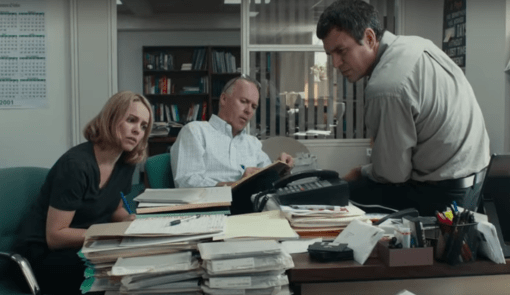
Rachel McAdams Michael Keaton Mark Ruffalo Spotlight

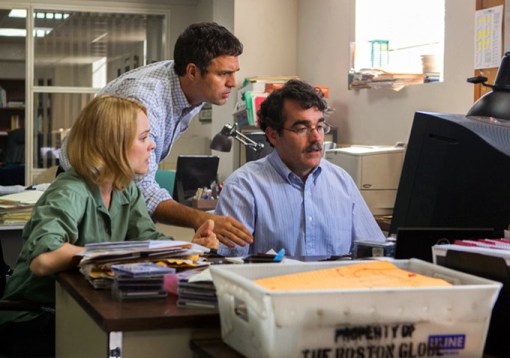
11:00 P.M. BEST PICTURE: “SPOTLIGHT

10:58 P.M. Leo even broke character there for a second to show feelings, whoa! Glad to see a great actor get his due. And you know it wouldn’t be Leo without a political bent to his speech.

10:55 P.M. BEST ACTOR: LEONARDO DICAPRIO, “THE REVENANT”

10:49 P.M. In case Brie Larson wasn’t already on my good side, she just got there permanently by thanking film festivals and moviegoers for the success of her film. Bravo!

10:48 P.M. BEST ACTRESS: BRIE LARSON, “ROOM

10:40 P.M. Didn’t Iñárritu have enough time to talk last year? Get him off the stage.

10:38 P.M. BEST DIRECTOR: ALEJANDRO G. INARRITU,THE REVENANT

10:31 P.M.Room” deserved a better intro than it got.

10:28 P.M. Wow, people were not too happy with “The Hunting Ground” losing. But at least Sam Smith brought it home with a good speech.

10:26 P.M. BEST ORIGINAL SONG: “WRITING’S ON THE WALL,” “SPECTRE”
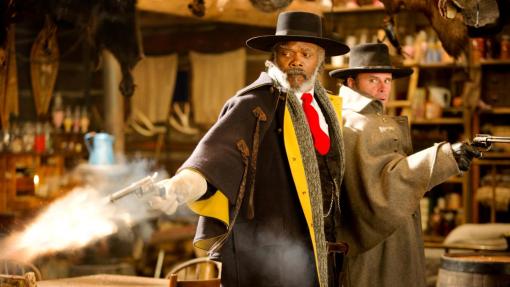
Samuel L. Jackson Walton Goggins The Hateful Eight

10:22 P.M. BEST ORIGINAL SCORE: ENNIO MORRICONE, “THE HATEFUL EIGHT

10:15 P.M. Rachel McAdams and Kate Winslet crying are all of us. (And Chris Pine from last year.)

10:15 P.M. Wow. I’m so moved to witness a moment that can truly change the dialogue around sexual abuse in our culture.

10:10 P.M. I’m glad that some of my favorite films of the year – “Inside Out,” “Amy” and “Son of Saul” have won Oscars in their niche categories.
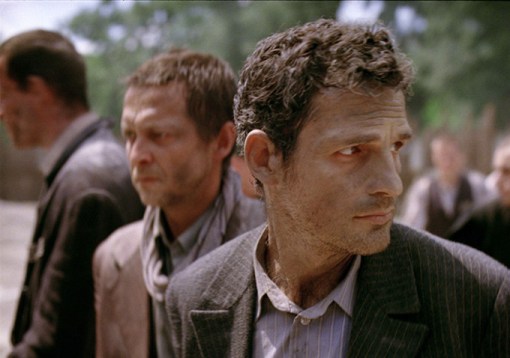
Son of Saul

10:08 P.M. BEST FOREIGN LANGUAGE FILM: “SON OF SAUL

10:05 P.M. BEST LIVE ACTION SHORT: “STUTTERER”

9:58 P.M. I miss Alan Rickman so much already!

9:56 P.M. Dave Grohl doing the In Memoriam is an odd choice.

9:53 P.M. Slay, CBI. The diversity and inclusion problem is bigger than the Oscars. Change is necessary at a more institutional level.

9:43 P.M. BEST DOCUMENTARY: “AMY

9:40 P.M. The “Mad Max” joke from Louis C.K. is how everyone is feeling right now.

9:40 P.M. BEST DOCUMENTARY SHORT: “THE GIRL IN THE RIVER”

9:36 P.M. That was a very nice speech by Mark Rylance. I’m glad to see Spielberg guide another actor to victory. Hard to believe that’s only the second performance he’s directed to victory.

9:32 P.M. BEST SUPPORTING ACTOR: MARK RYLANCE, “BRIDGE OF SPIES”

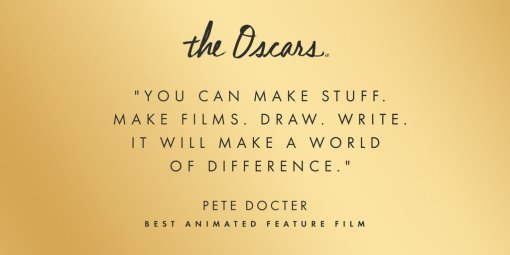
9:23 P.M. This is the quote that got me.
CcWfxR7UEAAXlXa

9:22 P.M. Kate Winslet’s glasses are so badass that they need their own Twitter account.

9:13 P.M. So, yeah, I started crying during Pete Docter’s speech.
Inside Out

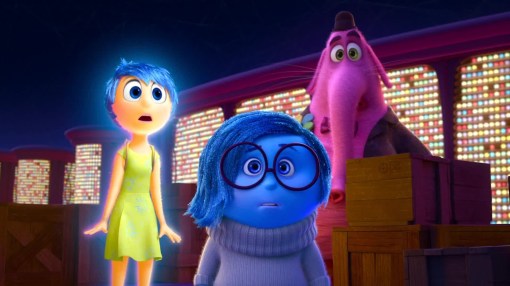
9:12 P.M. BEST ANIMATED FEATURE: “INSIDE OUT

9:10 P.M. Are they trying to make me cry with a “Toy Story” appearance…

9:09 P.M. When you go 6/6 and then drop 5 in a row…

tumblr_m6oyvgQWRk1rpbrv4o1_500.jpg

9:08 P.M. BEST ANIMATED SHORT: “BEAR STORY”

9:06 P.M. People proudly waving their money in the air out there…

9:00 P.M. Jacob Tremblay getting up to look at the “Star Wars” characters is what the world needs right now.

8:58 P.M. So is this our “surprise” of the night? Let’s hope there’s still some magic left for “The Big Short” to pull through in Best Picture…
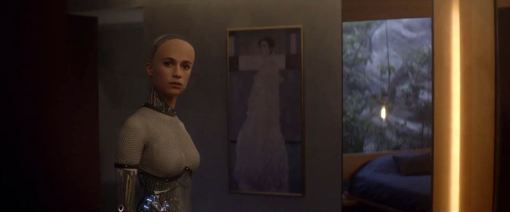
Ava

8:56 P.M. BEST VISUAL EFFECTS: “EX MACHINA

8:55 P.M. Andy Serkis laying the groundwork to one day have the Academy recognize his incredible craftsmanship…

8:52 P.M. BEST SOUND MIXING: MAD MAX: FURY ROAD

8:50 P.M. Going to guess that there was an F-bomb in there.

8:49 P.M. BEST SOUND EDITING: MAD MAX: FURY ROAD

8:48 P.M. This is so sad.

8:40 P.M. BEST FILM EDITING: MAD MAX: FURY ROAD

8:38 P.M. Wait, there’s a special box for all the DPs to sit together? That’s awkward…
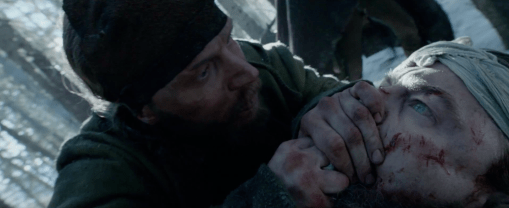
Tom Hardy Leonardo DiCaprio The Revenant

8:37 P.M. BEST CINEMATOGRAPHY: “THE REVENANT

8:34 P.M. Lighten up, Leo! Lighten up like your belt made your jeans light!
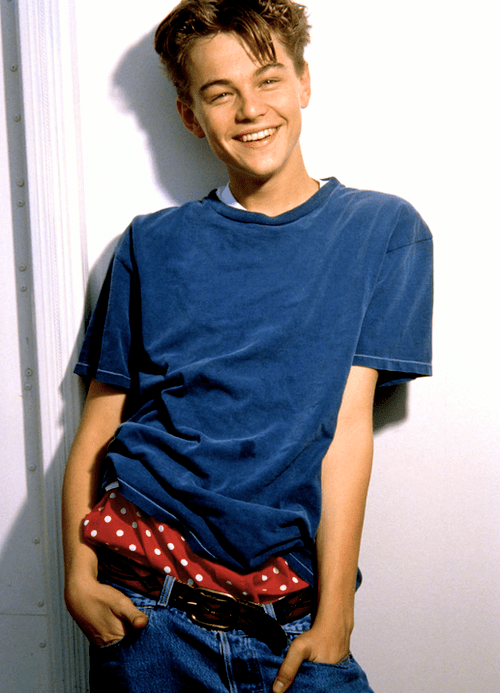
tumblr_mx0s8tPUTZ1r146jzo1_500.png

8:31 P.M. Does them playing “Live and Let Die” mean that J.Law will start dancing soon?

8:30 P.M. Leo and Iñárritu NOT amused by the bear joke.

8:27 P.M. And the announcer just talks right over Margot Robbie trying to pronounce the artists’ names.

8:27 P.M. Not the biggest fan of “Mad Max” but hard to argue with all these wins for its impeccable craftsmanship.

8:27 P.M. BEST MAKEUP AND HAIRSTYLING: “MAD MAX: FURY ROAD

8:25 P.M. My gosh, they are just blowing through these tech categories…

8:24 P.M. BEST PRODUCTION DESIGN: “MAD MAX: FURY ROAD

8:22 P.M. Sheesh, did they play off Jenny Bevan with “Ride of the Valkyries?”

8:20 P.M. BEST COSTUME DESIGN: “MAD MAX: FURY ROAD

8:19 P.M. Only Cate Blanchett could pull off giving a spiel like that on the go…

8:12 P.M. BEST SUPPORTING ACTRESS: ALICIA VIKANDER, “THE DANISH GIRL

8:08 P.M. I was worried there for a second that Kerry Washington was not going to get to talk…

8:02 P.M. What on earth was that Stacy Dash thing? Was she in on that joke?

7:53 P.M. YES YES YES “THE BIG SHORT.” The big win I wanted tonight.
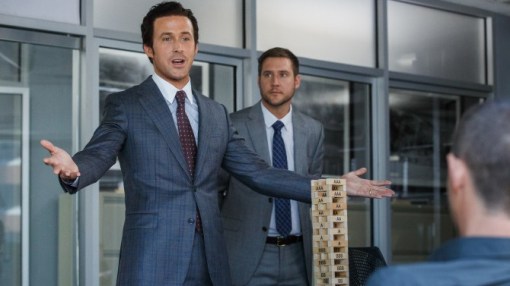
The Big Short

7:52 P.M. BEST ADAPTED SCREENPLAY: “THE BIG SHORT”

7:48 P.M. Mics are so hot, picking up every word of Charlize up there…
Spotlight

7:47 P.M. BEST ORIGINAL SCREENPLAY: “SPOTLIGHT

7:43 P.M. Awkward cutaway to Leo during joke using him…

7:38 P.M. To be honest, I thought the same thing about the Smith family crying sour grapes.

7:33 P.M. Opening montage not nearly as spectacular nowadays when I see them all the time on Vimeo/YouTube.

7:31 P.M. Well, that graphic was an interesting way to start.

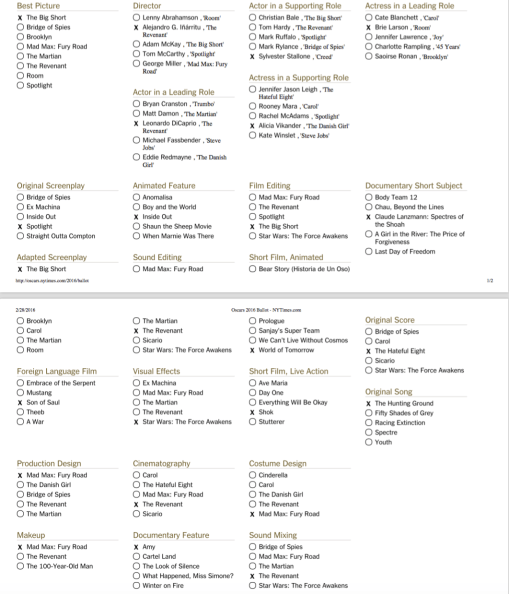
6:36 P.M. Here’s my official ballot. Hoping against hope that “The Big Short” will prevail.
Screen Shot 2016-02-28 at 5.03.42 PM

6:29 P.M. Told myself I wasn’t going to live blog … but couldn’t resist. Stay tuned.


REVIEW: The Secret in Their Eyes

22 02 2016

When reviewing Billy Ray’s 2015 film “Secret in Their Eyes,” I compared it rather unflatteringly to the 2010 Argentinian film upon which it was based, Juan José Campanella’s “The Secret in Their Eyes.” More separates them than a definite pronoun and a culture swap. The remake is a pulpier, more genre-laden crime flick while the Oscar-winning original is a more character-based drama with political overtones.

Or, at least that’s what I thought … until I watched “The Secret in Their Eyes” again for a more detailed comparison. I might have overly trumpeted the virtues of Campanella’s film in anger over two wasted hours of my time watching the revamp. Truth is, I found the film somewhat above average when I first saw it in 2010. It has not gotten much better with age.

Campanella marries the noirish thriller with overwrought melodrama and never quite finds a satisfying register for his film. As retired Argentinian judiciary official Benjamín Espósito (Ricardo Darín) reflects back on the one case he never quite cracked by writing a novel, the antics just never prove twisted or politically charged enough to elicit gasps or prove thoughts. It straddles that awkward line between entertainment and art, selling itself convincingly as neither. The film is fine to watch – just not quite to the level of being recommendable, though. B2halfstars


REVIEW: Our Brand Is Crisis

21 02 2016

Admittedly, the circumstances under which I saw David Gordon Green’s “Our Brand Is Crisis” might have exerted a particularly strong influence on my reaction. Had I gone to see it in theaters back in October, I could have done so with the luxury of writing off the candidacy of Donald Trump as a political sideshow. But now, watching at home in mid-February, that farce has become a force in American democracy with undeniable ramifications for our country.

“Our Brand Is Crisis” was conceptualized, shot and likely finished before the Trump phenomenon came about, so I do not wish to imply in any way that the film paved the way for such a demagogue. But given how few people saw it theatrically, most viewers will encounter the film with the presence or specter of the Donald firmly planted in the public consciousness. Cultural products may not substantially shape our society, but they can reflect its values in intentional or unexpected ways. “Our Brand Is Crisis” feels like a film in the latter camp.

Sandra Bullock stars as as political strategist “Calamity” Jane Bodine, a character who is the polar opposite of Trump in many ways. She is a for-hire, behind-the-scenes operative, obsessively focused on the minutiae of getting her candidates into first place. Mixing intellectual prowess with practical problem-solving, Jane in her zone is truly a force to be reckoned with. For that precise reason, the campaign for a struggling Bolivian presidential contender brings her off the sidelines and out of retirement.

Read the rest of this entry »


REVIEW: Entertainment

20 02 2016

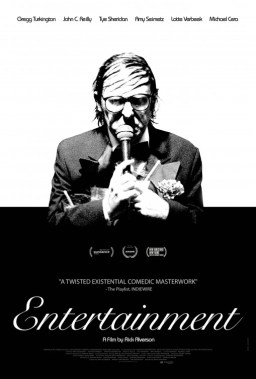
EntertainmentRick Alverson’s “Entertainment” definitely has a lot to say, make no mistake. It’s nice to see a film titled after a concept that engages deeply with that idea.

Alverson sets up an interesting dialectic between two touring performers, a mime played by Tye Sheridan and a comedian played by Gregg Turkington. The former opens each show, deftly calibrating his moves to respond to the crowd and givng them their money’s worth. The latter, however, self-consciously stumbles his way through a stand-up routine that might have killed were it delivered in 1984. When it starts to bomb, the comedian often fires back at the crowd in seeming self-sabotage.

Perhaps this is the very tension between entertainment and art playing itself out in allegorical form. One comforts the audience while the other confronts them. One is harmless fun; the other, a provocative thorn. Alverson’s film definitely takes the form of the comedian, never easily indulging the whims of easy crowd-pleasing in its 100 minutes.

But as “Entertainment” wore on, the film started to feel thin on ideas. Yes, there is value in watching Turkington’s comedian slowly grow more and more agitated with audiences and wrestle with his own performance. Yet Alverson might have incited that same intellectual response from a short film, one that more tersely conveys the same ideas. Heck, it could have even wrestled with a new set of ideas about what people look for in a video of that length. B-2stars


REVIEW: How I Live Now

19 02 2016

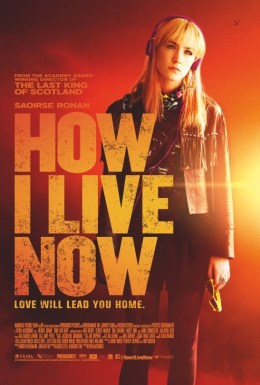
How I Live NowPlot-wise, not a lot separates Kevin MacDonald’s “How I Live Now” from prestige film “Atonement.” (And yes, going beyond the fact that both feature Saoirse Ronan.) The two films feature the discovery of young, passionate love that gets torn asunder by global warfare. Rather than follow the male into battle, both choose to focus primarily on the female experience on the outskirts of the conflict, where they pine for the restoration of a harmonious world.

But execution and tone set them apart. “How I Live Now” takes place in a nondescript, undeveloped dystopian present-day that erupts into World War III, and it feels more like a bad plot device than any meaningful social commentary. The film is based on a YA novel by Meg Rosoff, and MacDonald struggles to transcend those origins – try as he might to make it more adult with a more tense R-rating.

Ronan gives it her all, too, as protagonist Daisy, a constantly put-out teen who finds meaning in romance with George MacKay’s Eddie after being unceremoniously shipped across the sea to the U.K. But even acting the heck out of her character does not change the fact that Daisy is a whiny, angst-ridden adolescent whose idea of real love is fantasizing about Eddie’s shirtless torso. It may be tough for her to be a young person in a world forcing her to grow up and face the ugliness of humanity. However, it is probably tougher for “How I Live Now” being a teen movie and trying to parade around as a tale for adults. B-2stars


F.I.L.M. of the Week (February 18, 2016)

18 02 2016

The Overnighters“They’re sending people that have lots of problems, and they’re bringing those problems with us,” Donald Trump notoriously said about Mexican immigrants. “They’re bringing drugs. They’re bringing crime. They’re rapists. And some, I assume, are good people.” The rhetoric surrounding migrants and outsiders has reached a fever pitch of incivility and inhumanity (not to mention incorrectness) in America. The current war is being waged on two fronts – against Mexicans and other Hispanics in the south and against Syrian refugees in the east.

Jesse Moss’ gripping documentary “The Overnighters” exposes the hateful animus behind such vitriolic missives that are alarmingly becoming normalized in American culture. His document of the North Dakota oil boom and bust shows what we don’t talk about when we talk about migrants by showing how a small community reacts to an influx of out-of-state visitors. Moss captures the conversations about the urban poor stripped of racial coding and immigrants without religious intolerance.

The result is one of the most important works I have ever selected for “F.I.L.M. of the Week.” I truly cannot urge enough people to watch “The Overnighters.” (Hint: As of publication, it is currently available to stream on Netflix.)

The film is equal parts inspiring and disheartening. In an election season where people of faith will turn a blind eye to religious intolerance if a candidate professes loyalty to the Bible over the Constitution, Lutheran pastor Jay Rienke’s efforts to live out the core Christian message of loving thy neighbor take on an outsized level of importance. A great deal of down-and-out workers drive up to his state in search of paying work, only to find that such jobs have become unattainable. Rather than let them suffer, Reinke opens the doors of his church in Williston, North Dakota, to help house and support these men.

But, of course, many in his community choose not to see his charity as providing any help. Motivated by fear, they impugn his aid as promoting indigence and vagrancy. The people of the town prove extremely hesitant to provide any sort of hand to these defeated jobseekers, hoping that maybe these migrant workers will just leave so that Williston can maintain some semblance of “home” to them. Change that is not wholly positive for them is just not a change they are interested in making.

Reinke calls the migrant workers “a gift” while also acknowledging “a burden that comes along with it.” The back half of the film just becomes devastating to watch as that burden begins to subsume him. Rather than substantively debate what the community’s role should be in helping the helpless, the townspeople deploy small points and broad labels to divert attention away from addressing the real issues. (Sound familiar?) The betrayal of Williston and the fall from grace make for a literary-like American tragedy unfolding in real life. And anyone who watches “The Overnighters” ought to work their hardest to make sure that Moss’ film does not become an allegory for our nation as a whole in 2016.


REVIEW: Tanner Hall

17 02 2016

Tanner HallWithin the walls of any boarding school, there are many stories that can be told. Tatiana von Fürstenberg and Francesca Gregorini’s “Tanner Hall” chooses to tell far too many of them.

There’s the bookish Fernanda, played by Rooney Mara, who sees her fragilely constructed milieu disrupted by the arrival of an old friend, the spontaneous rabble-rouser Victoria (Georgia King). She’s also flirting with an older, married Gio (Tom Everett Scott).

Then, there’s Brie Larson’s Kate, a charismatic troublemaker who loves to tease their dorm room advisor, Mr. Middlewood (Chris Kattan). That eventually turns into all-out advances on him, exploiting his sexually frustrated marriage with his aggressive wife (Amy Sedaris).

Perhaps if a single story thread had gotten the full-length feature consideration, “Tanner Hall” might have more pop to it. But with all crammed into 90 minutes, each character gets short shrift. Every part of the film feels unsatisfying and underdeveloped.

The chief fascination of “Tanner Hall” now is how the film presages the rise of Mara and Larson, with each giving performances that so neatly represent the actresses they have matured to become. Mara is every bit as pensive and withdrawn as she is in a film like “Carol,” while Larson remains a ball of energy and charm. C-1halfstars