Sam Mendes made a great Bond film with writers John Logan, Neal Purvis, and Robert Wade in “Skyfall” because they embraced a tricky opposition between the past and the future. Could the unabashedly old-fashioned spy James Bond survive in a more gritty, grey world without sacrificing his core identity? They found that the answer was yes by striking a balance between these two forces vying for the soul of 007.
The band gets back together for “Spectre” (plus an additional writer in Jez Butterworth, architect of many a frustratingscript in the past two years) and finds themselves preoccupied by the same kind of debate. This time, instead of the fear of age leading to obsolescence, the anxiety stems from post-Snowden malaise.
When a government has the ability to do its dirty work with drones and collect information on all its citizens through their devices, who needs human intelligence likes James Bond? This question is being seriously debated outside the world of the movie, and kudos to “Spectre” for not ignoring the elephant in the room. But the way Mendes and the writers choose to resolve the tension feels rather disappointing.
They use this threat as an excuse to retreat to some of the most outdated aspects of the character. Womanizing abounds as Bond pity romances a grieving widow to extract a key plot point. And Bond’s reward for neutralizing a key opponent? The “Bond girl,” Lea Seydoux’s Madeleine Swann, immediately feels the need to let him take her to bed. Simply put, there is a way to let James Bond be the ultimate man that does not require denying women agency. “Spectre” does not care to find that way as “Casino Royale” did, justifying lazy misogyny because of a rather facile challenge to Bond’s relevancy.
Bradley Cooper is among the most interesting American actors working today, so it’s a shame that he chose such an uninteresting project like “Burnt” at perhaps the apex of his stardom. For the man who was a crucial part in powering the first non-tentpole film to the top of the yearly box office since 1998, such a conventional tale told with little panache cannot help but disappoint.
That’s not to say that “Burnt” is empty of any merit or entertainment, though. In fact, it plays at around the same register as “Aloha,” Cooper’s unfairly savaged starring vehicle from earlier in 2015. John Wells’ film and Steven Knight’s script produce modest results from a modest effort, where Cameron Crowe went all out only to wind up with a mixed bag of failures and successes. Either way, the fact that Bradley Cooper can emerge from these two movies untarnished by their narrative struggles further attests to his place in the pantheon of his generation’s finest actors.
Perhaps someone could psychoanalyze Bradley Cooper to determine what keeps bringing him back to these stories of redemption. In 2005, he starred in an ill-fated TV comedy called “Kitchen Confidential” as a star chef seeking a comeback after personal issues put his career in jeopardy. In 2012, he changed the way most audiences in “Silver Linings Playbook” as Pat Solitano, a bipolar man seeking to put his life back together after a meltdown gets him institutionalized.
Four Oscar nominations later, in 2015, Cooper still seems to feel some need to prove himself through the character of Adam Jones in “Burnt,” a chef seeking a coveted third Michelin star in London after drug and alcohol abuse wrecked his last restaurant. (Sound familiar?) Jones is loud, brash and kind of a nightmare to handle. But he swaggers about with such authority that a crack team of cooks with global roots lines up to endure his abuse and work with him.
If someone were to cross the cross-cultural outlandish humor of “My Big Fat Greek Wedding” with the sociological insight of Aziz Ansari’s book “Modern Romance,” it would probably look a lot like the documentary “Meet the Patels.” This real-life tale of alternatively bristling with and embracing Indian marriage traditions, shot like the wackiest home movie ever, proves every bit as enlightening as it is entertaining.
I’m not sure what prompted Geeta Patel to pick up the camera and start recording her brother Ravi’s quest for lifelong companionship, but I am certainly glad the two collaborated to make this endearing chronicle of romance. The film begins with Ravi reeling from a breakup with a red-haired white girl, a two-year relationship he managed to keep entirely secret from his conservative Indian parents. Pushing 30 with no prospects of marriage in the traditional Western fashion, Ravi decides to embrace the means that brought his parents together.
For anyone who thinks the idea of an “arranged marriage” sounds like something barbaric out of a corny princess movie, I dare you to watch “Meet the Patels” with an open mind. Then, try telling me the system doesn’t sound more effective than the no strings attached, no labels, swipe right or Netflix and chill methods favored by many these days as a means of starting a relationship. Gone are the days of meeting your betrothed 15 minutes before exchanging vows; instead, in the United States, an intensive network of like-minded Indian singles attempts to find compatibility for life.
The process turns out to be quite frustrating and nerve-wracking for Ravi, although it is fun and thought-provoking to watch from the other side of the camera. (Geeta certain has a lot of fun, that’s for sure!) The candor and honesty with which “Meet the Patels” portrays relationships, both romantic and familial, makes it truly moving to watch unfold. It is not dependent on reality for its effectiveness, but it certainly helps that we have actual stakes for which to cheer.
And best of all, it might even encourage you to live and communicate more transparently with your own loved ones. That’s certainly how I felt, at least. A- /
We still live in a time where deeply internal, emotional performances from male screen actors are rare – especially from younger ones. Perhaps because most major roles for men are written with external, goal-driven motivations as opposed to looking within, the smart career move is to position oneself for those. But every once in a while, a miraculous turn appears.
Such is the case with “Boy A,” which features a young Andrew Garfield at his most sensitive and powerful. Before he became a household name in films like “The Social Network” and “The Amazing Spider-Man,” Garfield got a chance to get in touch with a side of himself that is seldom seen from men these days. His contemplative performance, nestled within a story that asks tough moral questions, makes this an obvious choice for my “F.I.L.M. of the Week.”
I must admit, I tried to watch “Boy A” a few years ago and turned it off after about 20 minutes. I don’t know what changed from then to now, but I am so glad I gave it a second chance. From its opening moments, I found myself riveted and drawn into the headspace of Garfield’s character, Jack Burridge. Initially, we do not quite understand why he seems unable to supersede the guilt and shame that plagues him. But we can sense the weight of the past in Jack’s every word and action, burdening him so heavily that he cannot move forward into the future.
“Boy A” doles out the specifics of Jack’s situation in a very deliberate manner. We know that he has just been released from some sort of facility and a new identity to become a productive member of society. Some flashbacks to Jack’s childhood are intercut into the action, though they pale in comparison to the information we get just from looking at his face in the present day. The raw emotion captured by director John Crowley proves nothing short of gut-wrenching to watch play out. Jack is clearly a tender, wounded soul, yet he struggles to believe he is worthy of redemption. We, the viewers, feel no such ambiguity after observing just how poignantly Garfield bares his vulnerabilities before us.
Disney’s expensive attempt at an experiment, “Tomorrowland,” begins with a rather preposterous proposition: the company has some kind of monopoly on optimism and innovation. The takeaway is, essentially, you’re an earth-hating pessimist unless you chant “It’s a Small World After All” in your sleep. (I’ll only make a parenthetical note here that the Futurist art movement inspired Benito Mussolini and the Fascists in Italy.)
The relentless attempts of co-writer/director Brad Bird, as well as his fellow scribes Damon Lindelof and Jeff Jensen, to associate hope and positivity with the Disney brand makes the experience feel like enduring a two hour infomercial. Or like a feature-length entrance video at a Disney theme park. Fashionable thought it may be to bash the gloominess of the present day, such a simple-minded response to the challenges we face only makes those hurdles appear more imposing.
Even when putting this distressing ideology at bay, “Tomorrowland” still proves a dull, uninspiring experience. The two plus hours revolve around the teenage Casey Newton (Britt Robertson) as a pin leads her on an adventure that takes her to a different dimension with George Clooney’s curmudgeonly inventor Frank Walker. This separate space, known as Tomorrowland, exists as a haven for intellectuals to escape the growing chaos of the world.
Naturally, a discussion of the merits and downfalls of Golden Age Thinking ensues, but it feels entirely unconvincing and disingenuous. This propaganda piece of shameless branding offers a Disney answer, not a real one. C /
Recently, I’ve begun contributing some pieces to Movie Mezzanine, a site run by a lot of people who started with WordPress blogs like this one back in the late 2000s/early 2010s. If the page isn’t on your radar, put it there. Tons of really great writers post some provocative, insightful scholarship there is out there on the Internet.
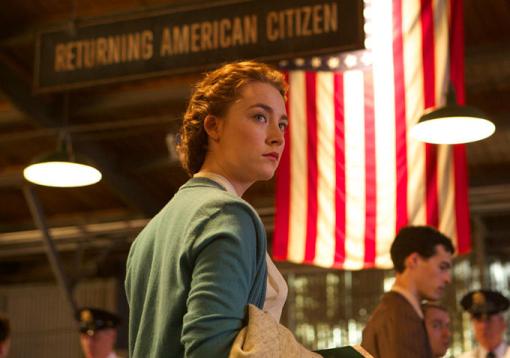
A nice perk of being able to post there is the incredible doors it opens for me to talk with some amazing talent. The latest of such is John Crowley, director of the new film “Brooklyn.” My full review is coming soon, although the interview has already been posted over at Movie Mezzanine. You can read about how the Dardennes influenced the film as well as how Crowley works with established cinematography teams and upstart young actors.
I work with an editor over there who provides valuable feedback, such as where pieces can be truncated. A few questions were omitted from the interview as it ran on Movie Mezzanine, but I wanted to give my good and faithful readers here at Marshall and the Movies a chance to read them!
These questions were asked at the beginning of the interview.
MARSHALL
I got to see the film at the New York Film Festival, and it really played like gangbusters with my theater – in particular some of the humor about the ethnic groups. Was it comforting to to have those screenings go over well?
JOHN CROWLEY
It was very satisfying, during one of the Q&As, somebody said, “How many weeks did you shoot in New York for?” And I was able to say, “Two days.” It [the question] was a bit of a gaffe, so that felt like we were able to pass muster.
You never know what’s going to play with what audience. It’s been fascinating as we’ve been doing the rounds and watching what audiences take away from it, but it felt like the New York audience was able to embrace the film and make it theirs.
MARSHALL
Why was the choice made to premiere the film at Sundance? Obviously that’s one of the best launching pads for any movies, but you don’t normally see films so classically made there. [Fox Searchlight does not include the Sundance Film Festival’s laurels in any of the marketing materials for Brooklyn.]
JOHN CROWLEY
I think it was about timing, basically. I don’t know that there was a huge strategic decision behind it. We finished the film in December [2014], and depending on the calendar of when you finish it, people go for the next festival. Sundance was that next one.
We didn’t think we wanted to wait until Cannes – it didn’t particularly feel like a Cannes film even though, I agree, it didn’t feel like a Sundance film either. So when it was submitted to Sundance, I thought they might go, “Oh, this isn’t enough of whatever we want.” It might not be edgy enough; it might not be indie enough. And that wasn’t their response. They were very happy to have the film there.
So that was the main reason. I don’t think any of us really wanted to sit on it for six months and then try and do something with Telluride and Toronto.
The following was at the tail end of our conversation.
MARSHALL
Ok, one last question – is there an area of Brooklyn that hasn’t been addressed on the press tour that you’d like to talk about?
JOHN CROWLEY
Oh, gosh – that’s a question I’ve never been asked.
No, not necessarily. People have commented on the quality of the entire cast, which is rather lovely. Down to every last part, it was lovingly stitched together. That was a great joy, building this rather beautiful mosaic and wanting every part to be vivid and real.
MARSHALL
I even felt sympathy for Dolores [a minor character at Eilis’ boarding home in Brooklyn, roundly despised by all the other girls] – she was so sweet even as she was annoying.
JOHN CROWLEY
Yes, exactly. That’s a wonderful performance from Jane Murray. I think we’ll be hearing a lot more from her.
I can’t honestly say there is [a question I haven’t gotten to answer]. You’ve asked the most surprising question by asking what hasn’t been talked about.
MARSHALL
I always want to give people the chance to answer the right question. If there’s one question that I can ask to help someone’s vision shine through, I want to ask it.
JOHN CROWLEY
The style in which I did it was almost invisible; that’s why I don’t necessarily describe myself as an auteur. I don’t try to put myself forward in the frame. I say look at this rather than look at me. That’s the thing that informs everything that I do.
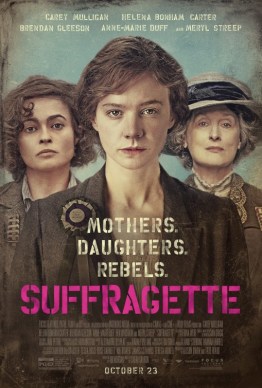
“Suffragette” feels somewhat like the cinema’s equivalent of getting a flu shot. It’s a necessary boost of social consciousness that is good for the way it keeps the world honest. But is it fun or enjoyable, something worth looking forward to? Ehh.
Sarah Gavron’s direction gives some urgency to the century-old tale of British women gaining the right to vote that might otherwise reek of mothballs. The film does not need its scrolling list of dates for women’s suffrage worldwide before the credits to convey this. Good filmmaking renders fact recitation dull at worst, unnecessary at best.
Though Gavron’s frequent use of shaky-camera as a shorthand for intense moment is rather uninspired, “Suffragette” feels appropriately militaristic and angry given its subject. She conveys this most effectively when Abi Morgan’s script focuses on the women’s suffrage movement and the splintering divisions within its ranks. Some prefer a more aggressive, confrontational approach; others, however, support playing the politics of respectability to eventually curry enough favor for their right to vote.
Thankfully, the world seems in agreement that women should have the right to determine their own destiny by casting a vote at the ballot box. Yet these sections that specifically examine the challenges of organizing social action prove so compelling because they are applicable to plenty of modern movements, be it LGBTQ rights, Occupy Wall Street, or Black Lives Matter. At times, “Suffragette” even recalls “Selma” in the way it presents a fascinatingly nuanced but generalizable portrayal of organizing collective civil disobedience.
Long before anyone ever talked of “spirit animals,” Charlie Brown from the “Peanuts” comic strip got me. He serves as a walking disproof of the maxim of the great philosopher Jagger, “You can’t always get what you want, but if you try sometime, you just might get what you need.” For someone like me, who seems to have never left their teenage clumsy phase in many ways, his resilience in the face of consistent belly-flops in the arena of life has always been somewhat inspiring.
Though the Peanuts gang has never left the funnies page of the newspaper and still remains present in popular culture, “The Peanuts Movie” ensures that they will not fade to relic status anytime soon. I had strong reservations when Fox announced that the BlueSky animation team would adapt the comics into CGI, yet the way they capture the essence of Charles Schulz’ squiggles with the latest technology actually proves quite fun to watch. The whole movie, directed by Steve Martino, manages that tricky balance between appealing to the old guard of fans while extending a welcome to the new generation.
Unlike a Pixar outing, which plays differently for children and adults, “The Peanuts Movie” works for kids and kids at heart. The film packs a wealth of wisdom with its simplicity of spirit, embracing the old-fashioned charm with little modification. In fact, the movie unabashedly pilfers a number of moments straight from the Peanuts holiday specials. Yet somehow, the joy of watching Linus fend off Sally Brown’s advances, Lucy bossily fume, or Schroeder professing his admiration for Beethoven is not dampened by the familiarity.
The film gets a narrative throughline courtesy of Charlie Brown trying to win over a new girl at school, conveniently named The Little Red-Haired Girl. (Wasn’t kidding about it being old-fashioned.) We all know he has what it takes to impress her, so long as he can get out of his own way … a task easier said than done for Charlie Brown. The missteps and unlucky breaks come fast and furious for our embattled hero, with each one further gaining our sympathy.
Ultimately, Charlie Brown’s tribulations reaffirm the values of dignity and self-esteem in spite of tremendous challenges. This lesson might not be novel, but it will never go out of style. B+ /
If your memory of inspirational Internet stories only extends as far as the last Upworthy story your random high school acquaintance shared on Facebook, the documentary “Batkid Begins” will make sure you never forget the ultimate triumph of our connected world. For one day, everyone united for good in order to fulfill the wish of a 5-year-old leukemia survivor, Miles Scott. That wish, of course, was to be Batman and save his city.
Director Dana Nachman takes us behind the scenes into how it all happened, from the first interview with the Make-a-Wish Foundation to a minute-by-minute account of the day “Batkid” saved San Francisco Gotham City. It’s nothing short of astounding to see the way Miles’ story strikes a chord with people across the world. From President Obama chiming in on Twitter, retirees flying in from Ohio to volunteer, or good-hearted fans across the world sending in fan mail, Batkid seemed to redeem a small portion of humanity by fulfilling a wish to get back a little bit of the childhood that cancer took away from him.
Admittedly, the documentary does play somewhat like a glorified promo video for Make-a-Wish. But given how committed they were to achieving this desire for such a nobel cause, how could anyone portray these overachievers as anything other than great humanitarians? Unabashedly extolling the virtuous side of our souls feels entirely appropriate in “Batkid Begins.”
Perhaps most impressively, Nachman avoids any maudlin or weepy moments. This is a celebration of life, after all! Who knows if we can expect the same from the Julia Roberts fictional remake in the works. B+ /
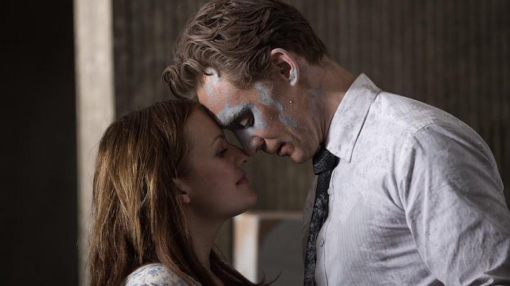
If Ben Wheatley’s achievement in High-Rise were likened to anything, it might have to be juggling fire. Not merely content to cautiously play with fire, he lights a few torches and tosses them back and forth into the air. Having perfect form seems almost beside the point as execution gets subjugated by the power of sheer ambition. The mere ability to keep so many dangerous objects in orbit without self-immolating inspires wonder.
Wheatley’s cinematic iteration of J.G. Ballard’s novel, adapted for the screen by his wife Amy Jump, is the kind of filmmaking so outlandish and ballsy that it might even be illegal in some parts. The film lingered in development hell for four decades but arrives at the perfect time both socially and artistically. For a story that deals heavily with class conflict and economic inequality, High-Rise has only become more topical with each passing year. Furthermore, all its idiosyncrasies make Wheatley’s gonzo style a perfect match of director with material.
The film uses its titular structure, a Brutalist skyscraper containing all the necessary supplies for a self-sustaining community, as a microcosm of our stratified social strata. But where many stories obliquely commenting on the de facto arrangements that organize our world opt for obvious allegory, Wheatley finds a more satisfying film by exploring the realm of the metaphorical. Not everything in High-Rise corresponds directly to a recognizable counterpart in the real world, which allows Wheatley the ability to operate at higher levels of ambiguity.
Over the course of nearly two hours, the film takes its audience on a thrill ride akin to the Tower of Terror at Disneyland as it goes back and forth between the Caligula-esque exploits of the top floors’ wealthy residents and the grunge of the working class who dwell towards the bottom. The closest thing the film has to an entry point is Tom Hiddleston’s Robert Laing, a doctor who seems to fall somewhere between the two divisions.
Laing is more often witness to the proceedings than an active participant in the war that breaks out, yet in a way, that makes him all the more ideal to experience the escalating absurdity through. Calling him a blank slate does a disservice to Hiddleston’s captivating performance, though he does serve that function ins some part.
When someone roasts a dog or bludgeons their enemy with a BAFTA trophy – both of which happen in High-Rise – there is something rather refreshing about not being told precisely how to feel. Many events that take place come with no obvious response, and Wheatley allows us the chance to react as we feel appropriate. But be it laughter, fear, shock or disgust, our mouths are wide open in awe regardless. And since the ideas come flying fast and furious, with a new thought arriving before the last one has a chance to settle in, there is simply no choice but to see High-Rise again. B+ /
There’s an odd feeling when you watch a filmmaker’s work in reverse, starting with their most well-known project and regressing back to their origins. Perhaps you can see the roots of their latest film in their beginnings, or maybe you can even see the leaps and bounds they make as a filmmaker. If the work is not perfect, you also cannot help but wonder, “Would I have recognized this director as a talent to watch?”
All these things swirled in my head when viewing Alice Rohrwacher’s “Corpo Celeste,” her 2012 debut that preceded her Cannes Grand Prix winner “The Wonders.” I saw her latest at the New York Film Festival in 2014 and attended a screening where she participated in a Q&A. When asked at the close what advice she had for aspiring filmmakers, the Italian writer/director had a simple maxim: “Do good movies!”
But is that what she makes? In a word, yes. Perfect though they are not, interesting and compelling they most certainly are.
Rohrwacher’s film follows Marta, a teenage girl in a small Italian village, as she undergoes the ritual of confirmation. The process proves rather eye-opening for her as she peers into the corrupt, patriarchal Catholic Church that dominates her community with a rather iron fist. While “Corpo Celeste” does paint the church in an unflattering light – they are mean to baby kittens, for heaven’s sake! – it is ultimately the kind of movie that makes the case that we should care put our faith confidently in people, not blindly in authority.
The journey is harrowing, but Rohrwacher grants us scant access to Marta’s headspace through all the tribulations. The camera mostly gazes at her, never really opening up a window into her psyche. When we want to feel, we’re mostly left to watch. Still, “Corpo Celeste” does lay the groundwork for this filmmaker to make the more powerful “The Wonders,” so the film does serve a great purpose for Rohrwacher. It just serves its audience slightly less. B /
Ever wondered what it would look and sound like if Aaron Sorkin took a pass at adapting “No Country for Old Men?” It might resemble Ridley Scott’s “The Counselor,” a film taken from a script by great novelist Cormac McCarthy himself. For someone so sparse and minimalistic in prose, his first screenplay sure feels bombastic.
It’s hard to fathom that someone so widely lauded as one of the most significant writers of our time could turn in a work full of fortune-cookie dialogue and overwrought, self-serious drama. (Wait, maybe this was the blueprint for season 2 of “True Detective.”) At times, it even feels like McCarthy has to be pulling some kind of elaborate prank on his audience. How else could anyone possibly explain why “The Counselor” goes on a bizarre tangent to depict Cameron Diaz’s Malkina sexually pleasuring herself on the windshield of a Ferrari?
Or perhaps McCarthy needs a strong authorial buffer like the Coen Brothers to translate into the medium of cinema. (John Hillcoat really just didn’t cut it on “The Road.”) Ridley Scott assembled quite the cast to bring the writer’s vision to life, but none of these talented thespians can transcend the schlock of the script. It even renders Michael Fassbender almost ineffective, and that’s really saying something.
In somewhat of a change of pace, McCarthy goes heavy on conversation and light on characterization. His saga of greed, money and jealousy set along the U.S.-Mexico border plays as little more than a collection of connected events since the various personalities involved never get explored in much depth. There’s at once too much and not enough happening in “The Counselor.” Rather than trying to resolve these contradictions, I’d rather just forget that all involved even spent their time on this. C /
Since he burst onto the scene with 1997’s “Good Will Hunting,” Matt Damon usually seems to play some version of that titular character. He’s had many a memorable movie and role in his decades-long career, but they almost inevitably come from the same mold of a loud, often brash man’s man. Damon might be one of the best at his particular brand of swagger, though it comes at the cost of getting caught up in an individual creation of his.
That changes for Damon with “The Martian,” a movie that reminds us of his star power since he’s tasked with essentially carrying it all on his shoulders. While boasting a terrific ensemble, the heart of the story is a one-man show. Damon’s Mark Watney, a NASA botanist on a manned mission to Mars, gets stranded on the red planet after being presumed dead in a dust storm by the rest of his crew.
Like Sandra Bullock in “Gravity” or James Franco in “127 Hours,” Damon rises to the occasion of keeping things moving and interesting with no one to act opposite. This challenge actually brings out the best in Damon, as a matter of fact. For an actor who often draws strength from being the most powerful person in a given scene, not having anyone to beat makes him turn inwards. The result is one of his most heartfelt, moving performances to date.
While he focuses on survival, all of NASA works tirelessly on Watney’s rescue. This goes far beyond his fellow astronauts, led by Jessica Chastain’s steely yet humane Captain Lewis. Entire new spacecrafts must be built and engineered, which brings out the best in both jet propulsion lab head head Bruce Ng (Benedict Wong) and Donald Glover’s young astrodynamicist Rich Purnell. (Yes, Childish Gambino.) China also gets involved in the humanitarian mission, making sure that NASA director Teddy Sanders (Jeff Daniels), Mars mission director Vincent Kapoor (Chiwetel Ejiofor), and PR head Annie Montrose (Kristen Wiig) earn their salaries.
Almost as if anticipating that the majority of people who saw his film would be through Netflix, Cary Joji Fukunaga opens “Beasts of No Nation” with a shot of some young African boys playing soccer literally through the outer shell of a television set. The film was shot with the likely intention of a sizable theatrical release, so I made the decision to pay more than a monthly Netflix subscription fee to see it screened in this way.
As with the majority of critics who saw it projected (most at one of the three fall festivals at which it played in September 2015), I was wowed by the stunning visuals as well as the immersive aural experience. I simply cannot imagine this work packing the same punch when the vast foliage of a jungle is reduced to mere pixels even with good bandwidth, nor do I think the layers of complex sound would even be discernible by fraying earbuds. But, hey, tons more people could see it?!
Though as I sat there, particularly in the film’s more conventional third act, I wondered how many times I might have paused the movie or looked down at my cell phone if watching “Beasts of No Nation” at home. Fukunaga does not shy away from the horrors of civil war, including the separation of families, the slaughter of the innocent, and the conversion of young children into killing machines. He never goes overboard with gore or violence, yet the impact always gets felt like a dagger in the chest.
It takes a very particular mindset to watch this film, not to mention an iron will to stick through its unsparing depiction of atrocity. (Seriously, it’s enough to make anyone remotely squeamish run back to finish the first season of “Grace and Frankie.”) Fukunaga also does not provide much of a strong narrative arc to keep a light at the end of “Beasts of No Nation” faintly visible throughout. He offers little comfort to its viewers as they follow Abraham Atta’s young Agu in his reluctant transition from child to killer under the aegis of Idris Elba’s warlord known only as Commandant.
The film plays like reading Agu’s biography – albeit one told with a bit of a tacked-on inspirational bent – rather than watching a story about him. Yet even at this pace, Fukunaga still finds a great rhythm for his audience, jolting them out of complacency as soon as they settle into a lull. Who knows how well that tactic is employed, however, on viewers who make liberal use of their television remote. B /
Generally, when I read any piece of criticism that refers to a movie as some kind of “metaphor for capitalism,” I cringe inside. It usually feels like an easy fallback, a way to sound smart when they just purely enjoyed something. But in the case of Sebastián Silva’s “The Maid,” it actually applies.
My pick for the “F.I.L.M. of the Week” is a worker’s dilemma in a nutshell. Silva, with co-writer Pedro Peirano, examine the dynamics of economic competition from the perspective of well-ensconced maid Raquel (Catalina Saavedra). Her experience is highly personal, yet it also an excellent metaphor for what people are forced to do when efficiency trumps humanity.
Raquel has served a well-to-do Chilean family for over two decades, caring for their children and tending to their house. They have a great fondness for her, yet she also knows her place in the pecking order. After all these years, Raquel assumes a certain amount of job security, though that all changes when family matriarch Pilar decides she needs an extra set of hands around the house.
Raquel had gotten somewhat complacent and lackadaisical about her work, but this new threat jolts her into action. Knowing she needs to fight tooth and nail to keep her relatively comfortable position means the claws come out. Pilar tries out two maids to work alongside Raquel, one more seasoned and another of more spry youth. Neither is any match for the malicious attacks Raquel has in store for them as she tries to scare them off.
Somehow, Silva finds that tiny area between black comedy and borderline pathetic drama. Raquel is slightly sympathetic in her desired ends yet absolutely repulsive in her chosen means to achieve that goal. She’s ultimately only as good as the system that spawned her, one that forces her to get nasty to stay afloat.
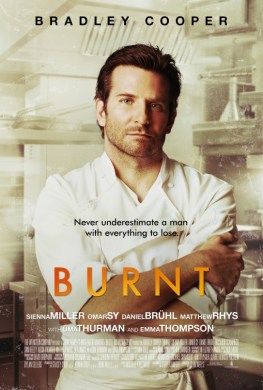 Bradley Cooper is among the most interesting American actors working today, so it’s a shame that he chose such an uninteresting project like “
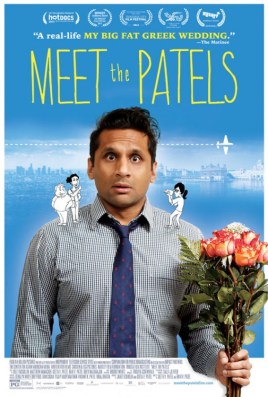 If someone were to cross the cross-cultural outlandish humor of “My Big Fat Greek Wedding” with the sociological insight of Aziz Ansari’s book “Modern Romance,” it would probably look a lot like the documentary “
 We still live in a time where deeply internal, emotional performances from male screen actors are rare – especially from younger ones. Perhaps because most major roles for men are written with external, goal-driven motivations as opposed to looking within, the smart career move is to position oneself for those. But every once in a while, a miraculous turn appears.
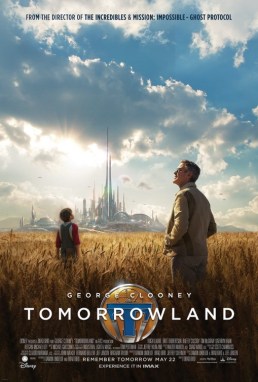 Disney’s expensive attempt at an experiment, “
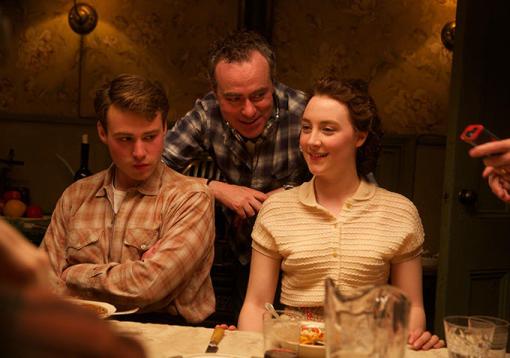
 “
“
 If your memory of inspirational Internet stories only extends as far as the last Upworthy story your random high school acquaintance shared on Facebook, the documentary “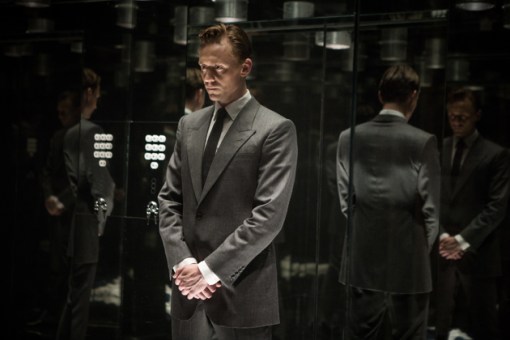
 There’s an odd feeling when you watch a filmmaker’s work in reverse, starting with their most well-known project and regressing back to their origins. Perhaps you can see the roots of their latest film in their beginnings, or maybe you can even see the leaps and bounds they make as a filmmaker. If the work is not perfect, you also cannot help but wonder, “Would I have recognized this director as a talent to watch?”
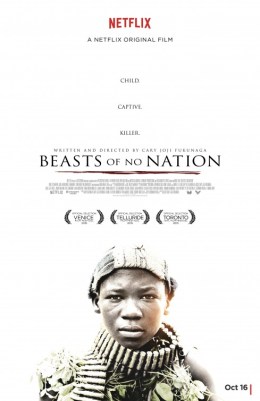 Almost as if anticipating that the majority of people who saw his film would be through Netflix, Cary Joji Fukunaga opens “
 Generally, when I read any piece of criticism that refers to a movie as some kind of “metaphor for capitalism,” I cringe inside. It usually feels like an easy fallback, a way to sound smart when they just purely enjoyed something. But in the case of Sebastián Silva’s “The Maid,” it actually applies.

 Marshall and the Movies
Recent Comments